Wednesday, December 31, 2025
Home Blog Page 1139

Russia says Israel cannot carry out ‘collective punishment’ of Gazans

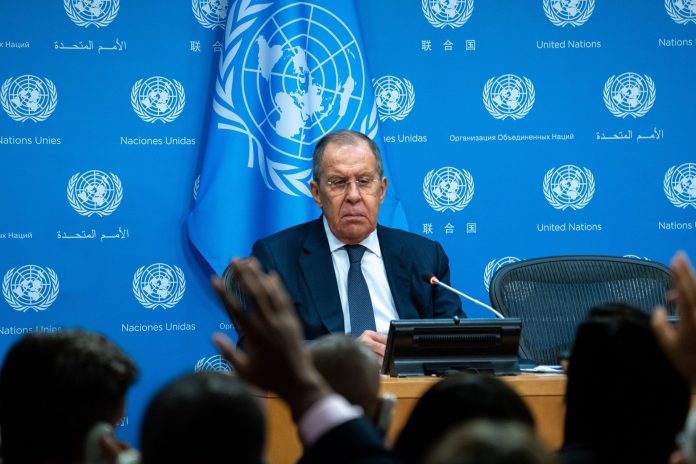
Sergei Lavrov

Speaking virtually at the Doha Forum on Sunday, Sergey Lavrov told Al Jazeera’s diplomatic editor James Bays the unprecedented attack by Hamas inside the Israeli territory did not happen in a vacuum.

It was due to “decades and decades of a blockade [in Gaza] and decades and decades of unfulfilled promises to the Palestinians that they would have a state, living side to side with Israel in security and good neighbourliness”, he said.

At least 18,000 Palestinians have been killed in Gaza since October 7 – 70 percent of them women and children, prompting rights bodies and experts to call it a “genocide”.

Addressing the Doha Forum, a two-day global meeting being held in the Qatari capital, Lavrov stated the ongoing war in Gaza is about “cancel culture” – a recent phenomenon that refers to the mass withdrawal of support to public figures or celebrities who did things in the past that are no more acceptable today.

“Whatever you don’t like in the events which lead to a situation, you cancel,” he added.

Russian President Vladimir Putin has called Israel’s assault in Gaza a failure of US diplomacy and suggested that Moscow could be a mediator in the decades-long Israeli-Palestinian conflict.

Moscow has also condemned this week’s US veto of a United Nations Security Council resolution calling for a humanitarian ceasefire in Gaza. Dmitry Polyanskiy, Russia’s representative at the UN, stressed US diplomacy was “leaving scorched earth in its wake”.

Shortly after Lavrov spoke at the Doha Forum, Israeli Prime Minister Benjamin Netanyahu held a telephone conversation with Putin, expressing his “displeasure” at Moscow’s positions against Israel at the UN and other global forums.

“The prime minister emphasised that any country that would suffer a criminal terrorist attack such as Israel experienced would act with no less force than the one Israel is using,” read a statement from Netanyahu’s office.
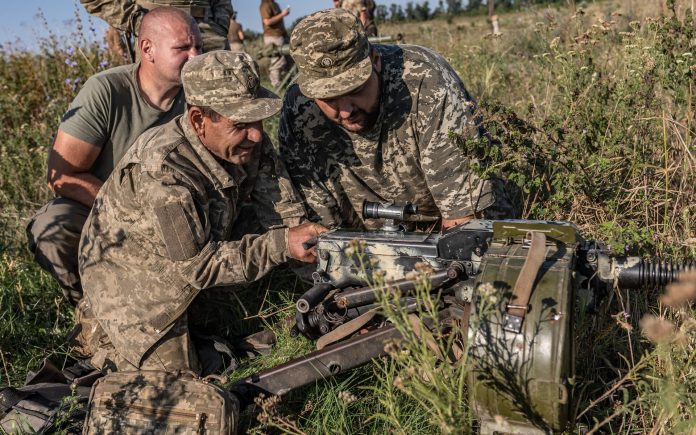
Americans see Ukraine as a burden: Polls

Russia Ukraine War

In a survey conducted by The Financial Times and the Michigan Ross business school, 48% of Americans said they believed their nation was spending too much on military and financial aid to Kiev. Only 27% said the amount was right, and 11% believed the US was not spending enough. The British newspaper reported the results on Sunday.

GOP voters were the most likely to say the US assistance to Ukraine was excessive, with 65% of Republicans giving that answer, compared to 52% of independents and 32% of Democrats.

The shifting attitudes were also reflected in a Pew survey on the same issue, the results of which the pollster released last Friday. In that study, 31% of respondents said the US was spending too much, compared to 29% who supported the current level, 18% who considered it not sufficient, and 22% who said they were not sure.

Last week, senators from the Republican opposition blocked a White House request for over $110 billion in additional foreign security spending, of which more than $60 billion was earmarked for Ukraine.

The administration of President Joe Biden has argued that if the US stopped funding Ukraine, American soldiers would have to fight Russians directly. He insisted that Moscow would attack NATO after beating Ukraine, prompting a rebuke from the Kremlin.

Just 33% of Americans surveyed in the Pew poll said Russia was a major threat to the US, while 34% called it a minor threat, and 10% said it posed no threat at all. Democrats were more likely than Republicans to perceive Russia as a major threat, with a 40% to 27% gap.

Republican Senator J.D. Vance made the case for the skeptical position on bankrolling Ukraine that some lawmakers in his party share during CNN’s State of the Union program on Sunday.

“The idea that Ukraine was going to throw Russia back to the 1991 borders was preposterous. Nobody actually believed it,” he told host Jake Tapper. Opponents want Biden to explain “what $61 billion is going to accomplish that a hundred billion dollars hasn’t.”

Both surveys were conducted online, between December 5 and 6 and between November 27 and December 3, respectively. The FT-Michigan Ross poll reflects the opinions of 1,004 registered voters, and has a margin of error of ±3.1 percentage points. The Pew survey involved 5,203 people, and has a margin of error of ±1.8 percentage points.

Kiev has announced Ukrainian president Volodymyr Zelensky will pay a visit to the US on December 12. He is set to meet with his American counterpart who extended the invitation, according to the White House.

“Among the key topics at the talks in Washington will be the continuation of defense cooperation between Ukraine and the United States, in particular, joint projects for the production of weapons and air defense systems, as well as coordination of efforts of the two states next year,” the announcement on Sunday said.

White House Press Secretary Karine Jean-Pierre confirmed Zelensky’s visit in a statement, adding that the meeting is intended “to underscore the United States’ unshakeable commitment to supporting the people of Ukraine as they defend themselves against Russia’s brutal invasion”. The “urgent needs” of the country will be discussed “as Russia ramps up its missile and drone strikes,” Washington stressed.

WHO confirms almost 450 attacks on health services in Gaza, West Bank since early October

WHO

Speaking at a special session organized by the WHO executive board on the health situation in the occupied Palestinian territories, Tedros emphasized the catastrophic impact of conflicts on the health situation in Gaza.

“More than 17,000 people are reported to have died in Gaza, including 7,000 children and we don’t know how many are buried under the rubble of their homes. More than 46,000 injuries have been reported,” he said.

As many as “1.9 million people have been displaced – almost the entire population of the Gaza Strip – and are looking for shelter anywhere they can find it. Nowhere and no one is safe in Gaza”, he added.

He emphasized that health should never be a target, saying on average, there is one shower unit for every 700 people and one toilet for every 150 people, and there are worrying signals of epidemic diseases including bloody diarrhea, and jaundice. According to him, only 14 hospitals out of the original 36 are partially functional.

“As more and more people move to a smaller and smaller area, overcrowding, combined with the lack of adequate food, water, shelter and sanitation, are creating the ideal conditions for disease to spread.”

The WHO chief emphasized their support for UN Secretary-General Antonio Guterres’ call for a permanent and urgent humanitarian cease-fire to ensure the delivery of critical aid to those in urgent need in the Gaza Strip.

“A cease-fire is the only way to truly protect and promote the health of the people of Gaza. I deeply regret that the Security Council was unable to adapt a resolution on such a cease-fire last Friday,” he continued, referring to the US veto blocking the international calls for a truce.

Israel, in response to the Oct. 7 attack by Palestinian group Hamas, launched air and ground attacks on the besieged enclave, killing thousands of Palestinians, mostly civilians, and forced some 1.9 million people to flee their homes. Gazans also face severe shortages of food, water and other basic goods as only a trickle of aid is allowed in.

The WHO has also agreed on a resolution, the first by any United Nations agency, calling for immediate access to vital humanitarian aid and an end to the fighting in Gaza.

The resolution – calling for the “immediate, sustained and unimpeded passage of humanitarian relief, including the access of medical personnel” – was adopted by consensus at the end of a special session of the WHO’s Executive Board on Sunday.

It also called on “all parties to fulfill their obligations under international law” and reaffirmed “that all parties to armed conflict must comply fully with the obligations applicable to them under international humanitarian law related to the protection of civilians in armed conflict and medical personnel.”

The special meeting of the executive board was only the seventh in the WHO’s 75-year history.

The passage of the resolution “underscores the importance of health as a universal priority, in all circumstances, and the role of healthcare and humanitarianism in building bridges to peace, even in the most difficult of situations”, the WHO underlined after the meeting.

Yemen blocks Israel-bound ship in Red Sea, forces it to turn back

Houthi Fighter Yemen

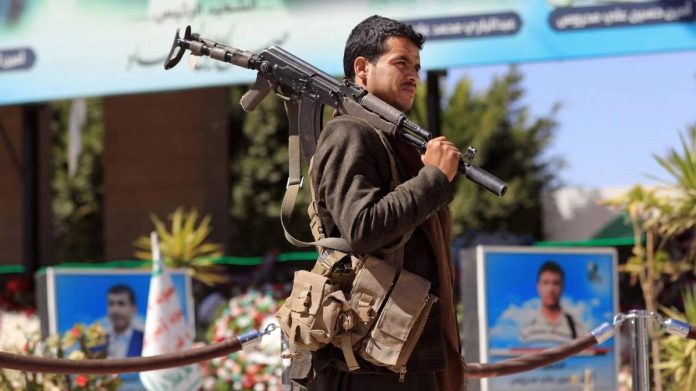
Al-Mayadeen television news network, citing a statement released by Yemen’s Defense Ministry, reported on Sunday that “a proper interaction was carried out with the ship, but it did not pay heed to our warnings.”

The statement added that the vessel was subsequently “blocked from passing through and was forced to turn back.”

On Saturday, spokesman for the Yemeni Armed Forces Brigadier General Yahya Saree warned that if Gaza does not receive the food and medicines it needs, all the ships passing through Yemen’s territorial waters towards the occupied territories would turn into a “legitimate target.”

He emphasized that all ships from around the world can continue their commercial activity, except those related to the Israeli regime or destined for the ports of the occupied territories.

Yemenis have declared their open support for Palestine’s struggle against the Israeli occupation since the regime launched a devastating war on Gaza on October 7 after the territory’s Palestinian resistance movements carried out a surprise retaliatory attack, dubbed Operation Al-Aqsa Storm, against the occupying entity.

The relentless Israeli military campaign against Gaza has killed at least 18,000 people, most of them women and children, in Gaza since. More than 49,000 people have been wounded as well.

On December 4, the Yemeni army targeted two Israeli ships in the Red Sea as they were attempting to cross the Bab el-Mandeb Strait.

Reports have shown that Israeli shipping companies have already decided to reroute their vessels in fear of attacks by Yemeni forces.

Yemeni forces have also launched missile and drone attacks on targets in the Israeli-occupied territories of Palestine after the occupying regime’s aggression on Gaza.

Putin says Ukraine’s leaders have gone ‘totally crazy’ 

Vladimir Putin

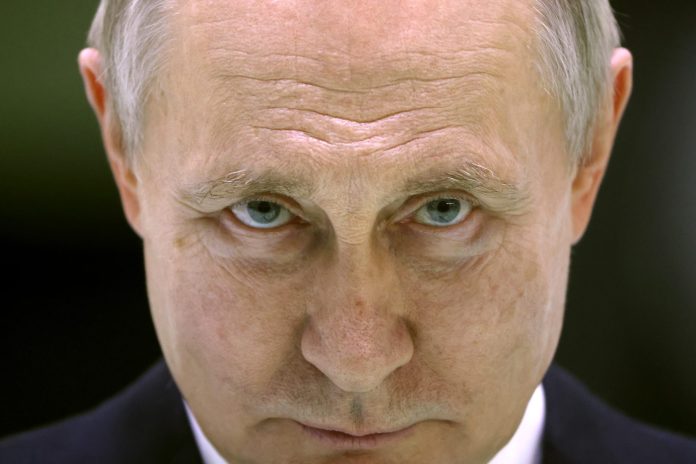
The president made the remarks earlier this week when he hosted distinguished servicemen at the Kremlin to award them “Hero of Russia” medals. Excerpts from Putin’s speech on the sidelines of the event were published by Russian journalist Pavel Zarubin on Sunday.

“We would never have done anything like [the military operation] if they had not started to destroy Russia in our historical territories, expel people from there, declared Russians a non-indigenous ethnic group in Ukraine. Have they gone completely crazy? Are they completely – how can I put it more bluntly – nuts?” Putin told the medal recipients.

The president was apparently referring to Ukraine’s Law On Indigenous Peoples, adopted in 2021. The legislation recognized only three ethnic groups – Crimean Tatars, Crimean Karaites and Krymchaks (Crimean Jews) – as the country’s indigenous peoples.

The legislation denied indigenous designations to Russians, which amounted to at least one fifth of Ukraine’s population, according to various estimates, and to other minorities, such as the ethnic Hungarians and Belarusians who reside in the country’s west and north, respectively. Moreover, all three ethnic groups recognized by the ‘indigenous peoples’ law predominantly live in Crimea, which split from Ukraine in 2014 and joined Russia after a peninsula-wide referendum.

In addition to questionable ethnic policies, the Ukrainian leadership has been openly courting and honoring Nazis, Putin said, invoking a recent scandal in Canada’s House of Commons.

The legislature celebrated Ukrainian-Canadian Yaroslav Hunka, a 98-year-old Waffen SS veteran, hailing him as a “Canadian hero” who’d “fought the Russians” during World War II. The whole body, with Ukrainian President Volodymyr Zelensky in attendance, engaged in a standing ovation to honor Hunka.

“And who exactly fought Russians during the war? Nazis. Everyone knows that and the Ukrainian president knows that. The entire parliament stood up and applauded him. What is it, if not a manifestation of Nazism?” Putin asked, adding that a large proportion of Nazi atrocities were committed by Ukrainian nationalists who collaborated with them.

“They are not just fools, they are also neo-Nazis. It’s an obvious fact. They are ready to cooperate with just anyone to try and hurt Russia,” the president noted.

The Hunka affair triggered a major international scandal, which led to the downfall of the House Speaker Anthony Rota, who accepted entire responsibility for inviting the Waffen SS veteran to the legislature. Russia has charged Hunka in absentia with genocide, claiming that archive documents serve as evidence that he and fellow SS Galicia members had killed at least 500 civilians in late February 1944, and Moscow is now seeking the extradition of the Nazi veteran.

Hamas part of Palestinian political landscape: PA premier

Hamas

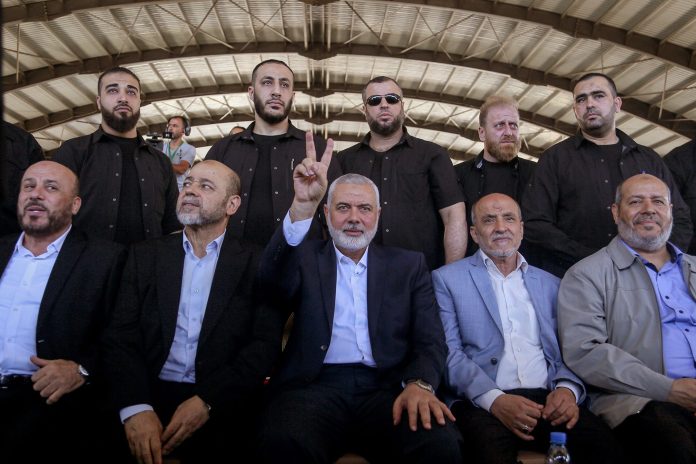
“Hamas is part of the Palestinian political map, and if Israel claims that it will eliminate, this will not happen, and it is unacceptable to us,” Shtayyeh said in a speech at the 21st edition of the Doha Forum in Qatar.

The Palestinian premier called for halting the Israeli “genocide” in the Gaza Strip.

“The Palestinian Authority did not leave Gaza. Rather, we supply it with electricity, water, and health equipment, and we did not abandon Hamas,” Shtayyeh added.

Hamas has ruled the Gaza Strip since 2007 after ousting the security forces of the Ramallah-based Palestinian Authority following infighting.

Shtayyeh said the Gaza conflict requires a political solution, not a security one.

“Israel has always wanted a security solution and has failed on this issue. The United States has also failed,” he continued, adding, “Israel has not achieved any political goal (in Gaza). It is only taking revenge and killing anything that confronts it.”

Shtayyeh said the US should also be held responsible for Israel’s attacks on Gaza, adding Washington gives Israel “the greenest of green lights” in Gaza.

Israel has launched relentless air and ground attacks on the Gaza Strip following a cross-border attack by Hamas on Oct. 7, killing almost 18,000 Palestinians and injuring more than 49,200 others, according to health authorities in the Palestinian enclave.

The Israeli death toll in the Hamas attack stood at 1,200, according to official figures.

Iran calls on EU to adopt measures to stop Israel’s attacks against Gaza

Josep Borrell & Hossein Amir Abdolahian

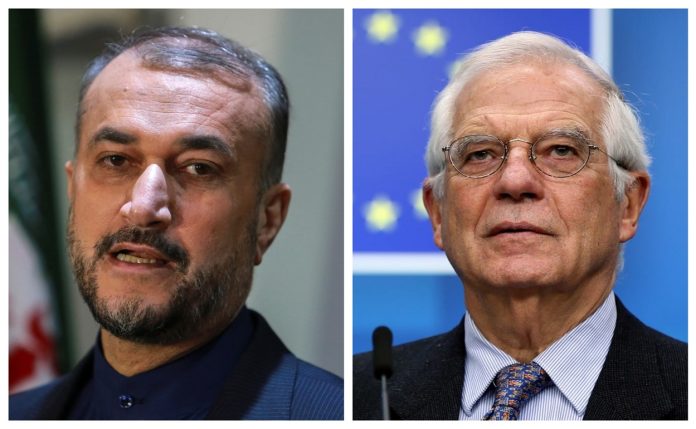
In a letter to the EU foreign policy chief Joseph Borrell on Sunday, Amirabdollahian highlighted the recent positions of the European side, emphasizing the urgent need to establish an enduring ceasefire, halt the massacre of civilians in Gaza, and adhere to international humanitarian law.

He also touched upon the urgent delivery of aid to the displaced people of Gaza, and appreciated the EU official’s stance on declaring settlement construction as a flagrant violation of international humanitarian law while condemning the the settlers’ violence in the West Bank.

The foreign minister requested the EU official to take more effective steps to permanently cease the Zionist regime’s attacks on the Gaza Strip, completely lift the blockade, and end the occupation.

Israel launched the war on Gaza on October 7 after the territory’s Palestinian resistance movements waged the surprise Operation Al-Aqsa Storm against the occupying entity in response to the Israeli regime’s decades-long campaign of bloodletting and devastation against Palestinians.

The health ministry in the Hamas-run Gaza Strip on Sunday said the death toll from the Israeli war on Gaza had risen to at least 18,000, most of them women and children. There were an additional 49,200 wounded.

Tel Aviv has also cut off one of the most densely populated places in the world from basic supplies, such as water, electricity, and fuel. Shortage of medical supplies and food has left 2.3 million Palestinians at risk of starvation.

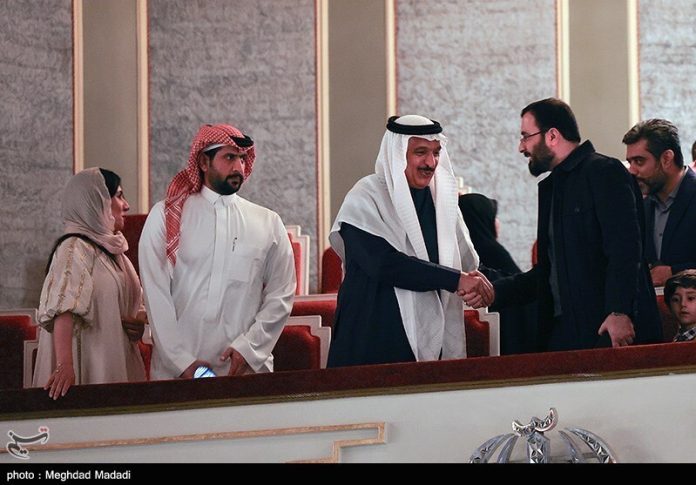
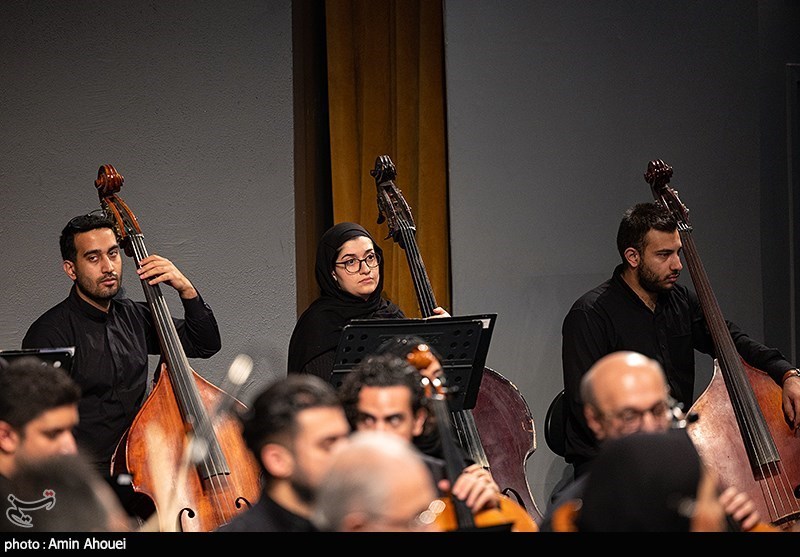
Saudi envoy to Iran attends Majid Entezami’s orchestra performance

Sharing his experience on X, he highlighted the orchestra’s rendition of renowned composer Majid Entezami’s masterpieces.

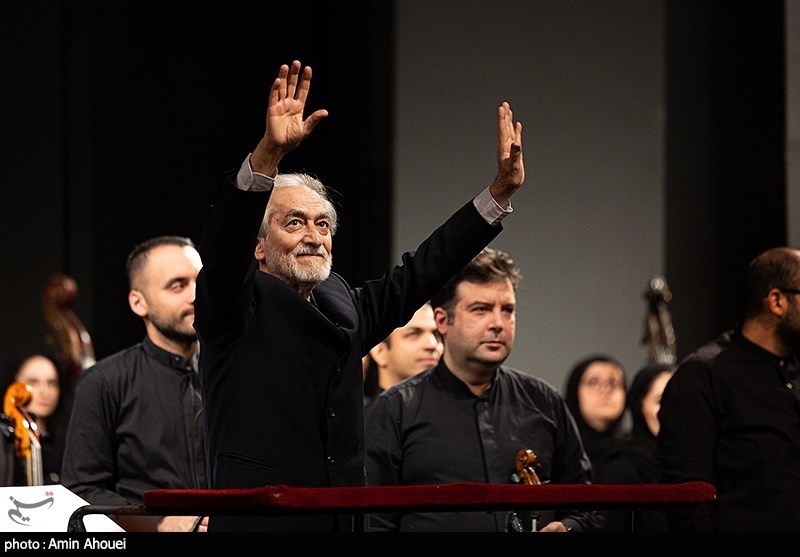
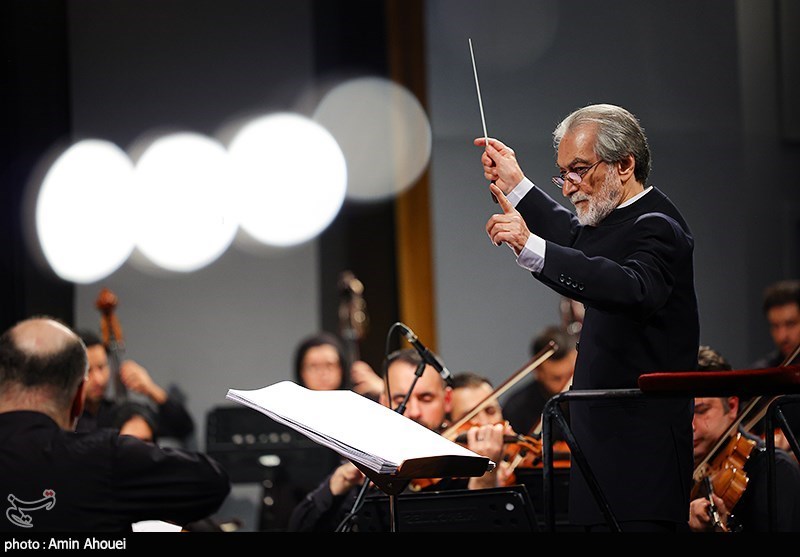
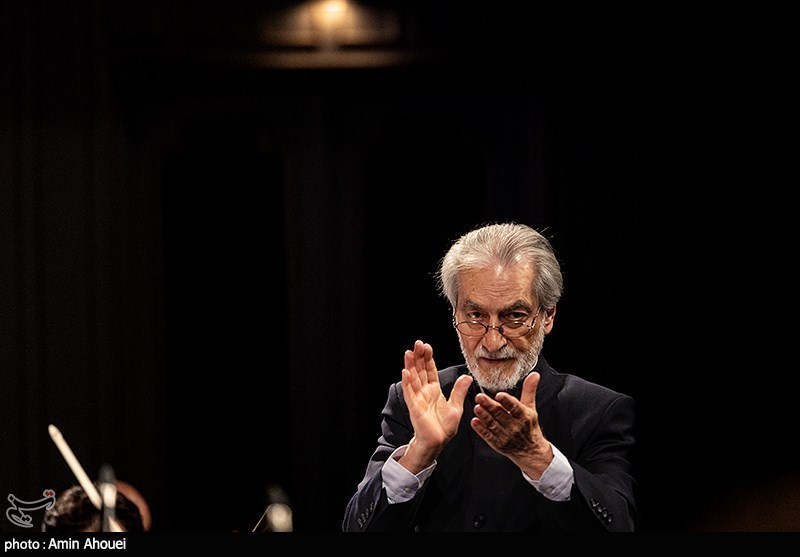
Entezami’s decade-long absence from the stage ended with the orchestra’s rendition of his selected works, including the epic symphony of Khorramshahr.

The performance, enriched by a fusion of Iranian and classical instruments, was further elevated by the Rodaki Foundation Choir’s accompaniment.

This event not only marked a triumphant return for Entezami but also showcased the orchestra’s prowess in delivering unforgettable musical experiences, blending cultural heritage with classical artistry.

Swedish facing trial in Iran for “gathering intel for Israel”

Iran Court

The prosecutor’s representative stated that the accused had been in contact with agents of the Zionist regime and engaged in activities aimed at gathering information to benefit the Zionist regime against Iran.

Furthermore, it was noted that the defendant’s presence in Iran occurred while acting as a delegation member of the European Commission. Simultaneously, there were allegations of collaboration with European and Israeli intelligence institutions and services in Iran, purportedly under the cover of employment by the European Union, in conjunction with the United Nations High Commissioner for Refugees.

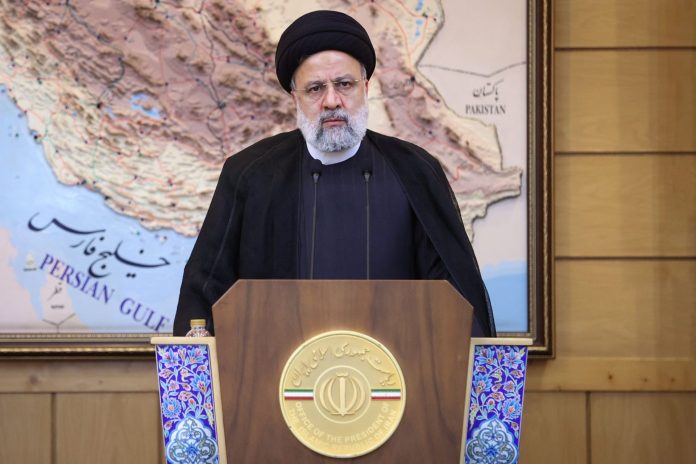
Iran’s Raisi: U.S. primary supporter of killing of women, children in Gaza

Ebrahim Raisi

Raisi said: “While the world demands an end to the Zionist war crimes in Palestine, the U.S.’s veto of the UN Security Council ceasefire resolution proves it is the root cause of this war & crimes, and it’s fueling Israel’s mass killing machine. It is the main supporter of the massacre of innocent Gazan women and children.”

The draft resolution proposed by the United Arab Emirates received support from thirteen members of the Security Council, with Britain choosing to abstain.

The voting took place after UN Secretary General Antonio Guterres on Wednesday officially alerted the 15-member council about the international risks posed by the Israeli war on Gaza.

The US and Israel oppose a ceasefire because they believe it would only benefit Hamas.

Israeli strikes have so far killed more than 17,700 people, most of them women and children, and injured nearly 48,800 others in its relentless air and ground attacks on Gaza since October 7.

According to the UN, around 80 percent of the inhabitants of Gaza are displaced, nearly 1.8 million people, and more than 1.1 million are seeking refuge in UNRWA shelters.