Sunday, December 28, 2025
Home Blog Page 110

Shamkhani: “If we returned to 1990s, we would definitely build nukes”

Iran leader advisor Shamkhani in stable medical condition

Shamkhani commented on several key national security issues, including the strategic calculus behind closing the Strait of Hormuz. “To close the Strait of Hormuz, one must be at the very end of the line — we have not reached that point yet,” he stated.

Addressing speculation about possible Israeli regime’s involvement in the helicopter crash that led to the martyrdom of former Iranian President Seyyed Ebrahim Raisi, Shamkhani said: “Given the technical capability of the investigative teams, no evidence of foreign involvement has been found. However, it is possible that the incident was beyond our technical capacity to determine.”

He also referred to the downing of the Ukrainian passenger plane by Iran in January 2020 and the reason behind the three-day delay in the official announcement of the cause. “After the incident, I informed the President. Some believed the incident may have resulted from U.S. electronic warfare, and that is why there was a three-day delay in publicly announcing the results of the investigation,” Shamkhani said.

His remarks—particularly the acknowledgment that he would have supported Iran’s acquisition of a nuclear weapon if history were reversed—mark one of the most candid statements from a senior Iranian official on the country’s past strategic considerations.

Over 75% of Americans support additional sanctions on Russia: Survey

Russia Ukraine War

The poll, which survey 2,413 U.S. registered voters and was conducted between Oct. 1-2, showed overwhelming bipartisan support for additional sanctions on Moscow.

More Republican voters than Democrats supported the additional sanctions with 86% of Republican in favor of the new measures, while 71% of Democratic voters agreeing that the U.S. should impose the measures. Only 23% of respondents were opposed to new sanctions entirely.

The results illustrate the contrast between the prevailing views of the American public and the policies of the Trump administration.

Although Trump has at times threatened to impose new sanctions on Russia, he has seldom followed through on those threats and has consistently shot down domestic and international appeals to get tough on Moscow.

While Trump has reportedly called upon G7 partners to impose their own tariffs on China and India over their purchases of Russian oil, he has been reluctant to impose his own measures, having set shifting deadlines on their implementation.

In August, Trump made progress on implementing additional economic pressures, signing an executive order imposing a 25% tariff on imports from India in response to New Delhi’s continued purchase of Russian oil.

Later in September, Trump again shifted the deadline for new Russian sanctions stating that he would impose tougher sanctions on Moscow once European allies fully cease purchasing Russian oil.

When asked if the U.S. should impose tariffs on countries that buy Russian oil, a majority, some 57%, of respondent believed that countries should be punished for the imports.

Two-thirds of voters from Trump’s Republican Party supported the tariffs, while 55% of Democrats thought countries should be punished. Only 32% of respondents disagreed “for fear of antagonizing Russia.”

Despite a lack of economic pressure, last month, the Trump administration approved its first military support package for Ukraine under the NATO-funded Prioritized Ukraine Requirements List (PURL).

Respondents to the poll also overwhelmingly believed that the Trump administration should continue to provide weapons in addition to imposing further economic sanctions with 68% of respondent in agreeance.

The online poll is considered accurate +/- 1.99 percentage points 19 times out of 20.


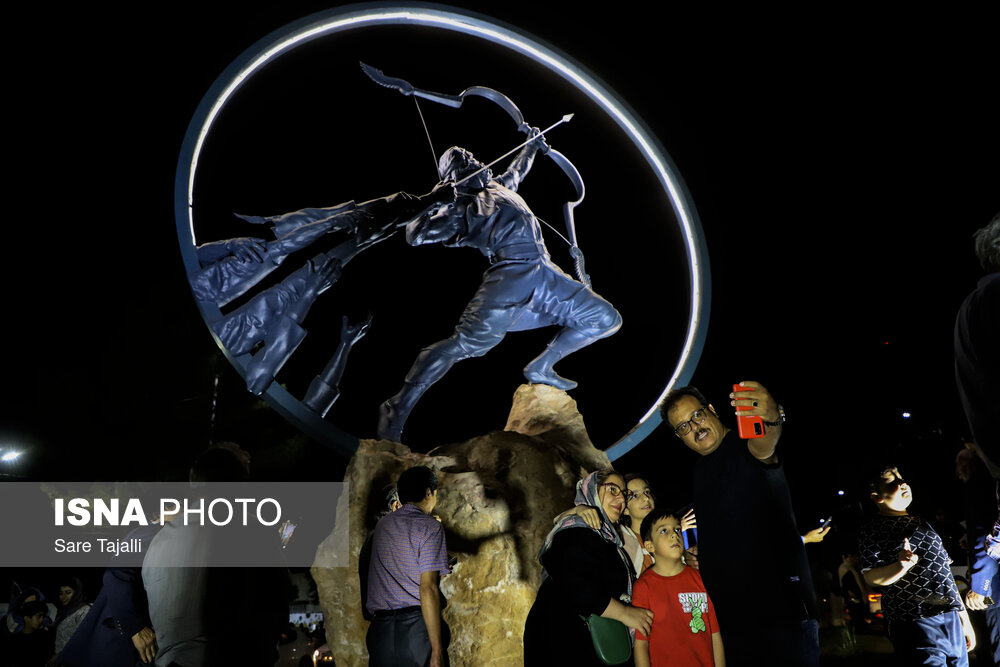
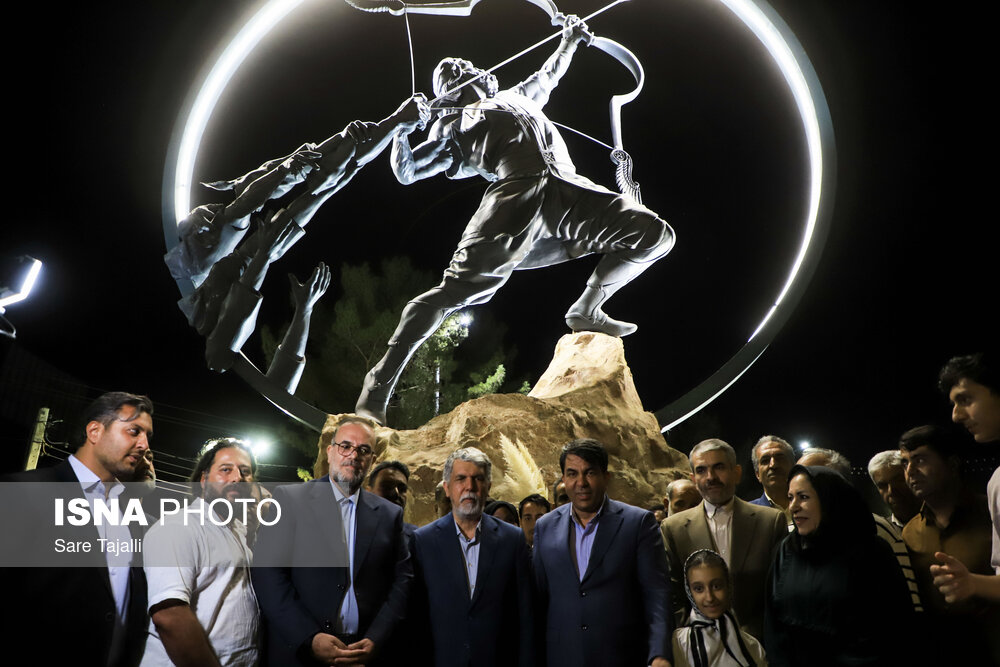
Iran marks National Hafez Day with ceremonies in Shiraz

The annual ceremony was held at his mausoleum in Shiraz with the participation of officials, cultural figures, and researchers from across Iran and abroad.

Hafez, whose full name was Khajeh Shams al-Din Mohammad Hafez Shirazi, is celebrated as one of the most beloved poets in Persian literature.

Known for his mastery of the ghazal, he blended themes of love, spirituality, and philosophy in verses that remain deeply rooted in Iranian culture.

His profound familiarity with the Qur’an infused his poetry with layers of mystical meaning, earning him the title Lisan al-Qyeb, or “Tongue of the Unseen.”

Beyond Iran, Hafez’s poetry has influenced great literary figures such as Johann Wolfgang von Goethe, whose West-Eastern Divan was inspired by the Persian master’s work.

National Hafez Day, observed annually on October 12 (Mehr 20 in the Iranian calendar), serves not only to honor a towering figure of Persian culture but also to highlight the enduring dialogue between Eastern and Western literary traditions.

Iran parliament chief: Gaza ceasefire marks failure of Zionist egime’s plots

Bagher Ghalibaf

Speaking before lawmakers on Sunday, Mohammad Baqer Qalibaf stressed that Israeli Prime Minister Benjamin Netanyahu, in an attempt to restore a lost sense of security among the occupiers of Palestinian land, had set out clear goals — the destruction of Hamas, the release of Israeli captives by force, and the complete evacuation of the Gaza Strip.

Qalibaf continued: “After two years of genocide and the massacre of women and children, the steadfastness of Gaza’s resilient people and the support of all components of the Resistance Front made the world rise up against these 21st-century Nazis. In the end, the United States and the Zionist regime were forced to accept defeat and sign a ceasefire agreement through which they achieved none of their declared objectives.”

According to Qalibaf, despite the heavy human cost paid, the Palestinian people have not only imposed their demands on the criminal regime but have also turned the Zionists into the most hated figures in the world. “The world has entered an era of awakening that is irreversible and cannot be silenced,” he added.

The Speaker further stated that governments, international courts, and competent judicial bodies are expected to seriously pursue the prosecution of the criminal leaders of the Zionist regime and other perpetrators and instigators of the genocide in Gaza.

He warned that the credibility of these institutions must not be allowed to become a plaything in the hands of a few unrestrained criminals.

Qalibaf also emphasized the global community’s responsibility to prevent the Zionist regime from violating its commitments, noting that the Palestinian people and resistance groups remain vigilant and aware in this regard.

He also paid tribute to the martyrs of the resistance and reaffirmed: “The Islamic Republic of Iran supports any initiative aimed at ending the war crimes and genocide in Gaza, as long as it reflects the will of the Palestinian people.”

Qalibaf added that a permanent end to the genocide, cessation of aggression and occupation, withdrawal of occupying forces, lifting of the siege on Gaza, and unrestricted entry of food, medicine, and essential supplies are among the urgent demands of the Palestinian people and resistance groups — demands that Iran strongly upholds.

UK, US, NATO flew 12-hour patrol on Russian border amid tensions in Europe

“This was a substantial joint mission with our US and NATO allies,” Defence Minister John Healey said on Saturday, as concerns rise that Russia’s war in Ukraine will spill over into Europe.

“Not only does this provide valuable intelligence to boost the operational awareness of our Armed Forces, but sends a powerful message of NATO unity to [Russian President Vladimir] Putin and our adversaries,” he added.

The mission involved an RC-135 Rivet Joint surveillance jet and a P-8A Poseidon maritime patrol aircraft flying from the Arctic region past Belarus and Ukraine, supported by a US Air Force KC-135 refuelling plane.

British officials stated that the operation followed several incursions into the airspace of NATO members, including Poland, Romania, and Estonia.

In recent weeks, Poland and its allies have reinforced air defences amid increasing Russian drone activity. Earlier this month, Warsaw deployed additional systems along its border with Ukraine – which stretches about 530km (330 miles) – after unidentified drones briefly entered Polish airspace.

Poland temporarily closed part of its airspace southeast of Warsaw in late September during a major Russian assault across Ukraine. It was the second such incident this year, with Polish and NATO forces previously intercepting Russian drones that crossed the border – marking their first direct military engagement with Moscow since the full-scale invasion of Ukraine began in 2022.

Elsewhere, airports in Germany, Denmark, Norway and Poland have at times also temporarily suspended flights due to sightings of unidentified drones. Romania and Estonia have directly accused Russia, which has dismissed the claims as “baseless”.

Putin has pledged a “significant” response to what he called “Europe’s militarisation”, rejecting suggestions that Moscow plans to attack NATO as “nonsense”.

“They can’t believe what they’re saying, that Russia is going to attack NATO,” he said on Thursday at a foreign policy forum in Sochi.

“They’re either incredibly incompetent if they truly believe it because it’s impossible to believe this nonsense, or they’re simply dishonest.”

Putin added he was closely monitoring Europe’s military build-up and warned that Russia would not hesitate to respond.

“In Germany, for example, it is said that the German army should become the strongest in Europe. Very well. We hear that and are watching to see what is meant by it,” he continued, noting, “Russia will never show weakness or indecisiveness. We simply cannot ignore what is happening.”

Relations between Moscow and the European Union have continued to deteriorate since Russia’s 2022 invasion of Ukraine, driving the bloc to strengthen its collective defences amid fears the war could spill across NATO borders.


US guiding Ukrainian attacks on Russian energy facilities: FT

Russia Ukraine War

US officials previously made no secret of their data-sharing with Kiev, but never confirmed their involvement in targeting Russia’s energy assets.

When asked earlier in October about Washington’s possible role in Kiev’s strikes deep into Russian territory, Kremlin spokesman Dmitry Peskov said that it was “obvious” to Moscow that “all of NATO and US infrastructure is being used to collect and pass on intelligence to the Ukrainian side.”

The FT said in an article on Sunday that Washington started sharing this data after a call between US President Donald Trump and Ukraine’s President Volodymyr Zelensky in mid-July, in which Trump reportedly asked his interlocutor if Kiev could strike Moscow with American-supplied long-range weapons. The White House later claimed that Trump was “merely asking a question, not encouraging further killing.”

According to the sources, the US intelligence is being used by Ukraine to plan the routes and the altitudes for its drones to travel and to choose the best timing for the attacks.

The unnamed officials claimed the Americans have also been setting target priorities for Kiev. However, one of the sources claimed the Ukrainians selected the sites themselves and were then provided data by the US.

Washington sees the Ukrainian strikes on the energy facilities as an “instrument” to harm Russia’s economy and push it towards a diplomatic settlement of the conflict, one of the officials told FT.

Russian President Vladimir Putin stated in early September that Moscow has been tolerating Ukrainian attacks against civilian infrastructure inside Russia “for too long” and that it will not be doing so anymore. The intensification of Russian missile and drone raids on Ukraine in recent weeks has led to large-scale blackouts in the capital Kiev and other cities.

Earlier this week, Putin stressed that there is understanding in both Moscow and Washington about what direction to move in to achieve a peaceful settlement of the Ukraine conflict. However, he noted that several “complicated issues” still need to be resolved to reach that goal.

Zelensky calls on Trump to use Gaza ceasefire momentum to broker peace in Ukraine

Trump and Zelensky discussed Ukraine’s request for the US to allow the delivery of Tomahawk cruise missiles to bolster Kyiv’s ability to conduct long-range strikes inside Russia, among other issues, according to Axios.

This follows Trump’s suggestion that he had “sort of made a decision” about selling Tomahawks to NATO countries in order for them to be supplied to Ukraine.

“If a war can be stopped in one region, then surely other wars can be stopped as well – including the Russian war,” Zelensky wrote on Facebook, a day after Moscow launched a massive drone and missile attack on Ukraine’s energy infrastructure that triggered widespread blackouts in Kyiv and elsewhere.

“I informed President Trump about Russia’s attacks on our energy system – and I appreciate his willingness to support us,” Zelensky stated, adding that they had a “very positive and productive” discussion on “concrete agreements” for strengthening Ukraine’s air defences.

The phone call took place amid mounting concern in Kyiv over both the increasing scale of Russian air attacks and Ukraine’s ability to counter ever more sophisticated aerial assaults involving hundreds of drones at a time, and more effective Russian countermeasures against Kyiv’s air defences.

The commander in chief of Ukraine’s armed forces, Oleksandr Syrskyi, warned that Russia was stepping up its air raids.

“New challenges await us ahead. Over the past month, the enemy has increased the number of air attack weapons and although our air defence is about 74% effective, we need to make additional efforts to cover the rear energy sector, critical infrastructure and logistics,” said Syrskyi.

Earlier this week, Russia launched 465 attack drones and decoy drones, as well as 32 cruise and ballistic missiles, against Ukraine.

The latest talks between Trump and Zelensky come amid ongoing discussions in Washington over whether to provide Ukraine with the Tomahawk cruise missiles Kyiv has long been seeking, a move Russia’s president, Vladimir Putin, has warned would be a “completely new, qualitatively new stage of escalation”.

The phone call between the two leaders comes amid a warming of relations between the US president and Zelensky.

The Ukrainian president stated in his nightly address on Friday that Russia was taking advantage of the world being “almost entirely focused on the prospect of establishing peace in the Middle East”, and called for strengthening Ukraine’s air defence systems and tighter sanctions on Russia.

“Russian assets must be fully used to strengthen our defence and ensure recovery,” he said in the video, posted to X.

Meanwhile, the UK prime minister, Keir Starmer, France’s president, Emmanuel Macron, and Germany’s chancellor, Friedrich Merz, announced in a joint statement on Friday they were ready to coordinate and move toward using “the value of the immobilised Russian sovereign assets to support Ukraine’s armed forces and thus bring Russia to the negotiation table”.

They aimed to do this “in close cooperation with the United States,” the statement added.


China warns of retaliation over US tariff ultimatums

US China Flags

The warning came as part of an official statement released by China’s Ministry of Commerce on Sunday. The response followed US President Donald Trump’s plan to impose a 100% tariff on Chinese imports, citing Beijing’s new restrictions on rare earth exports – vital materials used in products from smartphones to fighter jets.

“China’s position on the trade war is consistent: we do not want it, but we are not afraid of it,” the ministry stated.

The renewed friction threatens to derail a possible meeting between Trump and Chinese President Xi Jinping, scheduled to take place on the sidelines of the APEC summit in South Korea in late October or early November.

The meeting had been viewed as an opportunity to revive dialogue between the world’s two largest economies. Trump has spent much of the year raising import duties on trading partners to force concessions. China, however, has refused to bend, relying on its economic leverage to counter US pressure.

“Willful threats of high tariffs are not the right way to get along with China,” the Commerce Ministry said.

“If the US insists on going the wrong way, China will surely take resolute measures to protect its legitimate rights and interests,” it warned.

Both countries have accused each other of breaching the trade ceasefire by introducing new restrictions. Trump has accused China of “becoming very hostile,” claiming Beijing is “holding the world captive” by limiting access to rare earths.

Beijing’s new export rules now require foreign companies to obtain special approval before exporting goods containing even minimal amounts of Chinese-sourced rare earth elements.

In August, the US and China agreed to prolong a tariff truce after a trade war in which both sides imposed ever-increasing duties. Under the 90-day extension, US tariffs on Chinese imports were reduced from 145% to 30%, while China’s tariffs on American products dropped from 125% to 10%. The extension is set to expire in November.


Chinese hostage freed in Iran, two kidnapping gangs of foreign nationals dismantled

Iran Police

Police spokesman General Saeed Montazerolmahdi said the Chinese citizen, identified as Ding Xi Zhu, was rescued by the Criminal Investigation Department of western Tehran province in Eslamshahr, near the capital.

The kidnappers, described as undocumented migrants, had held him in a residential complex and demanded ransom from his family.

Four suspects were arrested, and the freed hostage was transferred to the Chinese Embassy in Tehran via Interpol Iran.

Separately, Western Tehran police commander General Kiomars Azizi reported that two organized kidnapping groups operating in Shahriar and Robat Karim had been dismantled.
Ten suspects – all undocumented migrants – were detained, and two hostages were rescued within 24 hours.

According to Azizi, one group, made up of four Pakistani nationals, lured foreign victims to a garden in Shahriar under false pretenses before demanding money from their families.
The second group, with six members, deceived victims by promising illegal transfers abroad.

Police officials said investigations are continuing and stressed a zero-tolerance policy toward organized crime and illegal immigration.

Veteran Iranian actor Mohammad Kasebi dies at 75

In a statement shared with the Ministry of Culture, Kasebi’s daughter expressed deep sorrow over her father’s death, describing him as “a kind husband, loving father, and a noble man.”

Born on May 25, 1951, in Tehran, Kasebi began his artistic career at the age of 13 in Youth Theater and joined the Tehran Theater Department in 1971.

Although initially admitted to study medicine, he chose to pursue acting and graduated from the College of Dramatic Arts in 1974.

Kasebi was among the founding members of the Islamic Art and Thought Center, later known as the Art Bureau, and contributed to establishing Iran’s Performing Arts Center.

He gained national recognition for his roles in popular television series as well.

He also starred in acclaimed films including Father (1995), and The Wall, earning several nominations and awards at the Fajr Film Festival.