Sunday, December 28, 2025
Home Blog Page 110

Iranian army chief: 12-Day war taught us lessons equal to 12 years

“We experienced a fully hybrid war in which the enemy combined advanced technology with political, media, security, and intelligence tools”, Hatami noted during a meeting with members of the Iranian Parliament’s National Security and Foreign Policy Commission.

“Based on those lessons, we have adopted new approaches to deal with any kind of threat, measures that will result in more effective responses and harsher punishment for the enemy.”

Hatami added that the success in the 12-day defensive campaign was the result of three key elements: the decisive leadership of the commander-in-chief, the Armed Forces’ active role, and the steadfastness of the Iranian people.

“These factors led to our victory and the Zionist regime’s failure to achieve its goals against the Islamic Republic”, he said.

He further stressed that throughout history, Iran has been vulnerable to aggression whenever its ruling system was weak.

“However, during the eight-year Sacred Defense, under Imam Khomeini’s divine leadership and with the unity of the people and the Armed Forces, Iran’s sovereignty and territorial integrity were preserved”, Hatami said.

NATO conducts nuclear drills

The two-week Steadfast Noon exercise comes amid what Moscow has described as rampant anti-Russian hysteria among the Western European nations, accusing NATO of militarizing the continent and preparing for a direct confrontation.

Announcing the drills on Friday, Rutte said they help ensure that NATO’s nuclear deterrent remains “as effective as possible.”

This year’s Steadfast Noon is being hosted by the Netherlands, with Volkel Air Base serving as the main operating site. Supporting elements will be stationed at bases in Belgium, the UK, and Denmark.

According to NATO, the exercise will involve around 70 aircraft from 14 member states, including both conventional and dual-capable aircraft. About 2,000 personnel are taking part, supported by surveillance, air-to-air refueling, and command-and-control aircraft. NATO has emphasized that no nuclear weapons will be used during the exercise.

Moscow has yet to comment on the current drills, but has previously condemned past Steadfast Noon exercises, saying they “lead to nothing but ratcheting up tensions” which are already high due to the Ukraine conflict.

Russian officials have accused Western European nations of uniting in what Kremlin aide Yury Ushakov has called a collective “anti-Russian frenzy.” Ushakov said the region has been speaking in an “extremely belligerent, extremely negative” voice against Moscow while spreading “brazen lies” about it.

Earlier this month, President Vladimir Putin said Western Europe has been “whipping up hysteria” about an alleged threat of war with Russia, calling such concerns a “nonsense mantra” and urging leaders in the region to focus on domestic issues instead.

Putin has also advocated for extending nuclear arms controls, calling on the US to agree to prolong the 2010 New START treaty for another year and refrain from taking steps that could break the current balance.


Russia ‘gambling with war’ through airspace violations: EU

NATO has boosted its defences along its eastern borders as it accused Moscow of testing the alliance’s air defences with drone incursions into several members and by flying military jets in Estonian airspace.

“Every time a Russian drone or plane violates our airspace, there is a risk of escalation, unintended or not. Russia is gambling with war,” Kallas said during a visit to Kyiv.

“To keep war at bay, we must translate the economic power of Europe into military deterrence,” she added.

Kallas was in Kyiv for talks on military and financial support for Ukraine, and especially its energy infrastructure, as Russia has resumed attacks on power plants ahead of winter.

Ukraine on Monday was forced to introduce power cuts across seven central and eastern regions as a result of the attacks, which Kyiv has called “cynical.”

“The enemy wants to affect the spirit and mood of our population,” Ukrainian Foreign Minister Andriy Sybiga said during a joint press conference with Kallas.

“This is especially cynical on the eve of winter,” he added.

Ukraine retaliates by targeting Russian oil refineries, aiming to hamper funding of its war machine.

It has launched more than 30 strikes on Russian energy sites since the beginning of August, also triggering a spike in petrol prices inside Russia.

Kallas also indicated that Brussels backed the delivery of US long-range Tomahawk missile supplies to Ukraine.

“We welcome all tools that make Ukraine stronger and Russia weaker,” she stated.

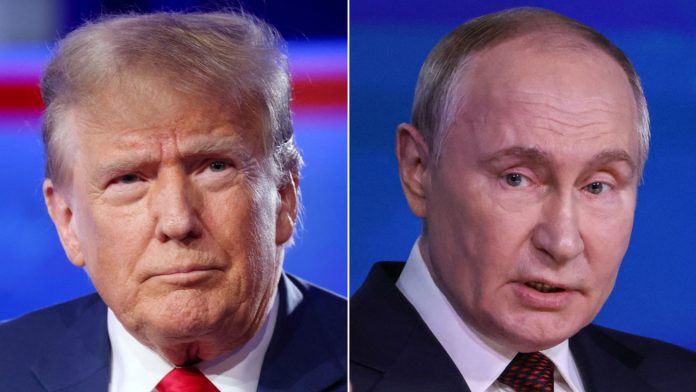
US President Donald Trump said Sunday he may warn Russian counterpart Vladimir Putin that Ukraine could get the cruise missiles if Moscow does not end its invasion.

Moscow has warned against supplying Ukraine with Tomahawks, saying it would be a major escalation.

Tasnim exclusive images: Dozens of Palestinian prisoners freed from Israel’s Ofer prison as exchange begins

Exclusive footage and photos published by Tasnim showed heightened Israeli security measures around the prison compound as buses carrying released prisoners departed toward Ramallah.

Families of the detainees gathered outside the Ramallah Cultural Center, awaiting the return of their relatives amid uncertainty about the full list of names included in the exchange.

Tasnim correspondent Lama Abu Hilu reported that despite the start of the release process, many families remained unaware of whether their relatives were among those freed, following repeated delays and procedural obstacles by Israeli authorities.

In total, 251 Palestinian prisoners serving life sentences and 1,719 others are expected to be freed and transferred to Gaza as part of the ongoing prisoner exchange deal.

Kurdish leader says reached first deal on merging forces with Syria’s army

Abdi, who heads the powerful Syrian Democratic Forces (SDF), had met Syrian interim President Ahmed al-Sharaa in Damascus last week, along with US envoy Tom Barrack and US commander Brad Cooper.

While the Kurdish forces — who control large swathes of Syria’s oil-rich northeast — had signed an agreement with the new Syrian authorities in March to merge their civil and military institutions, the deal’s terms were not implemented.

“What is new in our recent talks in Damascus is the shared determination and strong will to accelerate the implementation of the terms” of the agreement, Abdi told AFP in an interview at a military base in the northeastern city of Hasakeh on Sunday.

“The most important point is having reached a preliminary agreement regarding the mechanism for integrating the SDF and the (Kurdish) Internal Security Forces within the framework of defence and interior ministries,” he added.

The Washington-backed SDF and Kurdish security forces consist of around 100,000 male and female members, according to them.

The SDF played a vital role in the fight against the Islamic State group in Syria, which ultimately led to the jihadist organisation’s territorial defeat in the country in 2019.

Abdi said that military and security delegations from his forces are currently in Damascus to discuss the mechanism for their integration.

After the fall of longtime leader Bashar al-Assad in December, Sharaa announced the dissolution of all armed groups, to be absorbed by state institutions.

Abdi explained that “the SDF will be restructured through its integration into the defence ministry”, as part of several formations.

However, some disagreements remain.

“We demand a decentralised system in Syria… we have not agreed on it,” he added, as they are “still discussing finding a common formula acceptable to all”.

He stressed that they “agree on the territorial integrity of Syria, the unity of national symbols, the independence of political decision-making in the country, and the fight against terrorism”.

“We all agree that Syria should not return to the era of war, and that there should be stability and security. I believe these factors are sufficient for us to reach a permanent agreement.”

During the last meeting with Sharaa, Abdi said he had called for “modifying or adding some clauses to the existing constitutional declaration” announced in March, particularly those related to “guaranteeing the rights of the Kurdish people in the constitution”.

“There was a positive response to this matter, and we hope this will happen soon,” he added.

Abdi also expressed his gratitude to the United States and France for facilitating negotiations with Damascus.

Asked about Damascus’s main backer Turkey, which has always been hostile to the SDF, Abdi stated “any success of the negotiations will certainly depend on Turkey’s role”, expressing hope that it will play a “supportive and contributing role in the ongoing negotiation process”.


Hamas releases all living Israeli hostages in Gaza Strip

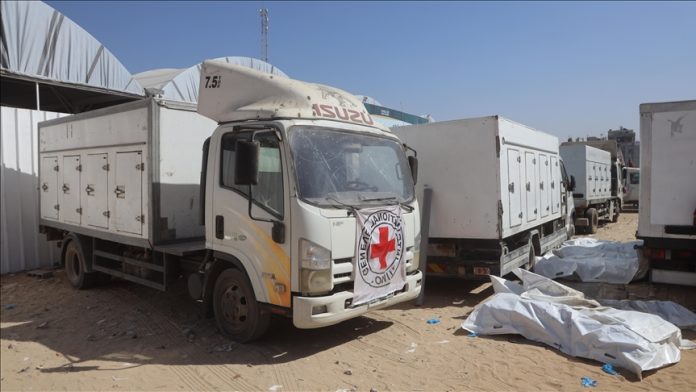
The hostages were handed over to Red Cross teams in two groups in the Gaza Strip.

In exchange for the released Israeli hostages, 1,968 Palestinian prisoners, including 250 sentenced to life, will be released under the ceasefire agreement between Israel and Hamas.

US President Donald Trump announced Wednesday that Israel and Hamas had agreed to the first phase of a 20-point plan he laid out on Sept. 29 to bring a ceasefire to Gaza, release all Israeli captives being held there in exchange for around 2,000 Palestinian prisoners, and a gradual withdrawal of Israeli forces from the entire Gaza Strip.

Phase one of the Gaza ceasefire agreement took effect at midday Friday. Israeli forces completed a gradual withdrawal to the so-called yellow line, triggering a 72-hour window for the exchange process.

A second phase of the plan calls for the establishment of a new governing mechanism in Gaza without Hamas’ participation, the formation of a security force comprising Palestinians and troops from Arab and Islamic countries, and the disarmament of Hamas.

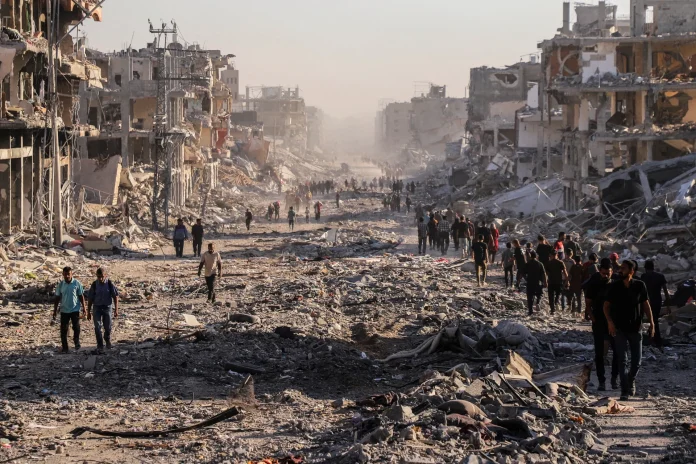
Since October 2023, Israeli attacks have killed over 67,000 Palestinians in the enclave, most of them women and children, and rendered it uninhabitable.


Iran reaffirms commitment to NPT and safeguards, criticizes Europe’s “hostile” approach

Esmail Baghaei

Speaking on Monday, Baqaei said that Iran has sought to maintain constructive engagement with the IAEA under the framework of the Cairo understanding. However, he added, “the opposite parties, particularly the three European countries, have failed to take advantage of the goodwill approach.”

Baghai, emphasized that for the Islamic Republic of Iran, October 18 marks the end of UN Security Council Resolution 2231 concerning the Iran nuclear deal and the lifting of restrictions outlined in the resolution.

He stated, “We believe that Resolution 2231 should conclude on schedule. The Security Council has not made any decision on this, and what has been announced is the result of actions by three European countries— the UK, France, and Germany.”

Referring to the strikes by the US and Israel in June against Iran, he pointed out that Iran had already warned that any hostile measures, including attempts to revive previously annulled UNSC resolutions, would render implementation of the Cairo understanding impossible.

Baqaei noted that while diplomatic exchanges continue, “there is currently no plan for new meetings or contacts in the coming days.”

Addressing a reported message from Israeli prime minister Benjamin Netanyahu conveyed via Russian President Vladimir Putin claiming Israel does not want to pursue the path of hostilities with Iran, Baqaei said Iran “listens to friendly countries but remains fully alert,” stressing that Iran will preserve its defensive posture given Israel’s record of “deception.”

He criticized the latest joint anti-Iran statement by the UK, France and Germany as “repetitive and insincere,” urging Europe to demonstrate independence and restore its diplomatic credibility.

Ukraine to get Tomahawks if ‘war not settled’: US

Trump stressed that Ukraine “would like to have Tomahawks,” but he would discuss that with Putin.

“I might say, look, if this war is not going to get settled, I’m going to send them tomahawks,” he said.

Putin has repeatedly emphasized that Moscow was ready to end the conflict, but the “root causes” of it need to be addressed first, including the rights of the Russian population living in Ukraine, neo-Nazi divisions, NATO expansion.

Moscow has repeatedly accused the authorities in Kiev of being unwilling to end hostilities.

Trump has recently claimed he actually made the decision on whether Ukraine will get long-range Tomahawk missiles, but will have to “ask the question where are they sending them.”

Tomahawks cost an estimated $1.3 million each and have a range of 2,500km (1,550 miles), meaning that they could potentially reach Moscow and far beyond.

Commenting on the prospects of the missiles being supplied to Ukraine, Putin stressed that “our response would be the strengthening of the Russian Federation’s air defenses.” He also argued that Ukrainian forces would be unable to operate such a sophisticated system without the “direct participation of American military personnel.”

Reuters, citing anonymous sources, reported that the US was unlikely to supply Tomahawks to Ukraine, as the current inventories were committed to the US Navy and other uses.

The Financial Times also reported that some people inside Trump’s inner circle were skeptical as to the Tomahawks’ ability to change battlefield dynamics.

Isreal’s war on Gaza ‘over’: Trump

He has just boarded Air Force One, taking off for Israel ahead of the hostage releases.

Trump is expected to address Israel’s parliament as well as meet Prime Minister Benjamin Netanyahu and the families of the hostages. Later, leaders from more than 20 countries will join the US president in Egypt for a summit on Gaza’s future. Israel and Hamas representatives will not be attending the ceremony.

”The war is over. Okay? You understand that?” Trump stated when asked if he was confident that the conflict between Israel and the Palestinian group was finished.

Trump will be accompanied on his visit to the region by Secretary of State Marco Rubio and Secretary of Defense Pete Hegseth, along with a host of other high-ranking administration officials.

“Everybody’s very excited about this moment in time. This is a very special event…Everybody’s cheering at one time. That’s never happened before,” he told reporters.

According to the deal unveiled by President Trump in late September, all 48 Israeli hostages, dead and alive, will be recovered from the enclave. Israel is in turn required to free 250 Palestinians serving life sentences and 1,700 Gazans detained since 2023.


Ukraine warns Russia exploiting lack of ‘attention’ on war

Volodymyr Zelensky

Diplomatic efforts to end Russia’s three-and-a-half year invasion of Ukraine have stalled in recent months.

Moscow has meanwhile renewed its campaign of air strikes against Ukraine’s energy grid, cutting power to hundreds of thousands of people ahead of winter.

In separate calls with US President Donald Trump and France’s Emmanuel Macron on Sunday, Zelensky requested more missiles and help strengthening his country’s “long-range capabilities”.

“Russia is now taking advantage of the moment — the fact that the Middle East and domestic issues in every country are getting maximum attention,” Zelensky said in a readout of his call with Macron.

Trump met Russian President Vladimir Putin for talks in August but failed to extract any kind of peace deal.

In his call with Trump on Sunday, his second in two days, Zelensky stated that the two countries would work to strengthen Ukraine’s “defence capabilities”.

“We agreed with President Trump that our teams, our military would handle everything we discussed,” Zelensky added, without elaborating.

The White House did not immediately comment on the call.

Zelensky has in recent weeks lobbied Washington to supply Kyiv with long-range Tomahawk cruise missiles, a request that the White House says it is considering.

Russia says that supplying the missiles to Ukraine would risk rupturing its ties with the United States and cause a new round of escalation.

Kremlin spokesman Dmitry Peskov renewed that warning on Sunday, warning Moscow could treat any launches of the missile as though they were carrying nuclear warheads.

“Just imagine, a long-range missile takes off and flies, and we know it could be nuclear-armed. What is the Russian Federation to think?” Peskov told a reporter from state television.

Russia launched its full-scale invasion of Ukraine in February 2022, describing it as a “special military operation” to demilitarise the country and prevent the expansion of NATO.

Kyiv and its European allies say the war is an illegal land grab that has resulted in tens of thousands of civilian and military casualties and widespread destruction.

Millions of Ukrainians have been forced to leave their homes since 2022, while Russia now occupies around a fifth of Ukrainian territory — much of it ravaged by fighting.