Wednesday, December 31, 2025
Home Blog Page 1069

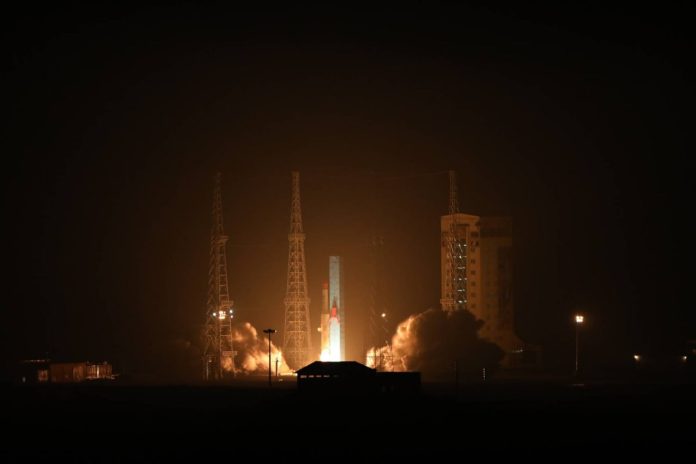
Iran sends 3 satellites into orbit simultaneously

Iran Satellite

Satellite Mahda along with two nanosatellites, Kayhan-2 and Hatef-1, were sent into outer space on Simorgh-1 satellite carrier.

They satellites were injected into an elliptical orbit with a minimum altitude of 450 kilometers and a maximum of 11-hundred.

The most prominent achievement of this launch was the multiple injection operation, which was successfully carried out.

Mahda is one of the lightweight satellites developed by the Iran Space Research Center used to test home-made satellite systems.

Kayhan 2 is a cubic-shaped nanosatellite used to stabilize the space-based positioning system technology.

The nanosatellite is capable of locating positions locally and independently of global positioning systems.

Hatef 1 is a cubic-shaped nanosatellite designed and developed to stabilize narrow-band telecommunications technology in the Internet of Things domain.

It’s the first time that Iranian space experts have launched three domestically developed satellites into orbit simultaneously.

Iran has made major breakthroughs in its space sector by developing and launching numerous satellites.

Iran on Saturday January 20, sent satellite Soraya into an orbit 750 kilometers above the earth. It was launched on satellite carrier Qa’em, which is capable of carrying cargo weighing up to 100 kilograms.
US presses China to rein in Iran for backing Yemen’s Houthis: Report

Yemen Houthis Red Sea

Sullivan made the request during candid talks with his Chinese counterpart in Bangkok on Saturday, Reuters reported.

The talks were held ahead of an expected springtime call between President Joe Biden and Chinese leader Xi Jinping as Washington and Beijing seek to restore diplomatic engagement on global security and economic issues.

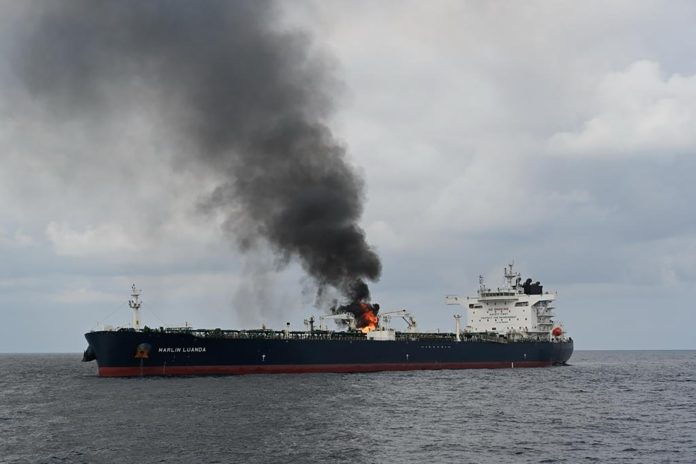
The Houthis have carried out a string of drone and missile attacks on ships in the Red Sea region in recent months, following the outbreak of the war in Gaza. They have vowed to continue targeting any Israel-linked vessels until the blockade of the Palestinian enclave is lifted and the hostilities are stopped.

Iranian officials have reiterated that the armed groups in the region “are not directed by Tehran and do not take orders from Tehran”.

In response, Washington has formed a military coalition against Yemeni forces in the Red Sea and endangered maritime navigation in the strategic waterway.

The US and the UK, backed by several countries, have struck tens of targets at several locations in Yemen in recent weeks.

The increased risks faced by ships in the Red Sea have forced the world’s biggest freight firms to avoid the Suez Canal and sent insurance costs soaring. Instead of Suez – the quickest cargo route from Asia to Europe – many vessels are now diverting round the Cape of Good Hope, incurring higher expenses on fuel, maintenance and wages.

Container freight rates for key global trade routes have also surged after the US and UK launched airstrikes on targets in Yemen with the stated goal of protecting maritime commerce in the Red Sea and the Bab-el-Mandeb straits, the world’s busiest routes.

Number of journalists killed due to Israeli war on Gaza rises to 120: Media office

Gaza War

“The number of journalists killed since the start of the genocidal war on the Gaza Strip has risen to 120, after our colleague Iyad Al-Rawwagh, a broadcaster and presenter at Al-Aqsa Voice radio station, was killed by Israeli treachery in the Nuseirat refugee camp in the central Gaza Strip,” said the office.

On Monday, the government office announced Israel “assassinates journalists in an attempt to obscure the Palestinian narrative and erase the truth”.

Since the beginning of the war, Israel has also arrested about 10 journalists whose names have been identified, it added.

Despite a provisional ruling by the International Court of Justice, Israel continues its onslaught on the Gaza Strip, where at least 26,257 Palestinians have been killed, mostly women and children, and 64,797 injured since Oct. 7, according to Palestinian health authorities.

The Israeli offensive has left 85% of Gaza’s population internally displaced amid acute shortages of food, clean water, and medicine, while 60% of the enclave’s infrastructure was damaged or destroyed, according to the UN.

UN agency calls on countries to reconsider funding suspensions

UNRWA

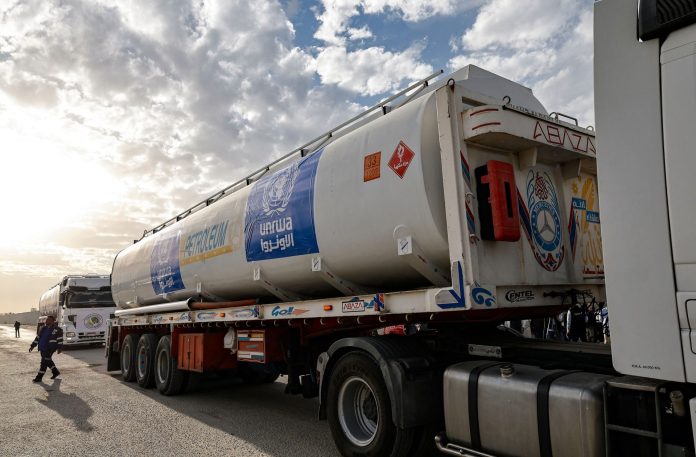
Commisioner-General Philippe Lazzarini said the UN Relief and Works Agency for Palestinian Refugees in the Near East (UNRWA) provides food and health care in shelters for more than a million people in the besieged enclave.

“Many are hungry as the clock is ticking towards a looming famine,” Lazzarini said in a statement Saturday.

“The lives of people in Gaza depend on this support and so does regional stability.”

Several countries, including the US, the UK, Germany, have announced they would temporarily pull funding from UNRWA after the agency announced it had fired employees who were allegedly involved in the October 7, 2023, Hamas attacks, Lazzarini added.

The Israeli government has not released details of the evidence concerning the alleged UNRWA involvement. Lazzarini stressed the highest investigative authority of the UN has already taken action, and an independent review by external experts is forthcoming.

Lazzarini also highlighted this week’s ruling from the International Court of Justice, which instructed Israel to enable more humanitarian assistance to prevent a genocide in Gaza.

“The only way that this can be done is through cooperation with international partners, especially UNRWA as the largest humanitarian actor in Gaza,” he continued.

The UNRWA has also shared posts highlighting its role in responding to the humanitarian situation in Gaza, as some of its largest funders have said they will withdraw or review their donations.

“UNRWA is the primary humanitarian agency in Gaza, with over 2 million people depending on it for their sheer survival,” the agency said in a social media post.

UNRWA noted it is providing shelter for about 1 million displaced people, including in its school buildings, as well as food and other assistance.

“93 percent of displaced families in southern governorates of Gaza have reported inadequate food consumption. People are desperate, hunger stalks everyone,” UNRWA added.

Hamas has also announced in an official statement released Saturday that it condemns Israel’s “threats and blackmail” against the UNRWA.

The group criticized the relief agency’s decision to fire the accused employees in Gaza and called for an “impartial investigation” into Israel’s allegations.

Hamas also slammed a claim made by Israel’s UN ambassador that the World Health Organization (WHO) is in “collusion” with the Palestinian movement, calling that a “hollow accusation”, and stressing the importance of these agencies in providing aid in the besieged enclave.

The Israel Defense Forces claimed facilities of the main United Nations relief agency in Gaza were used for “terrorist purposes”.

US judge deliberates suit accusing Biden of failing to stop genocide in Gaza

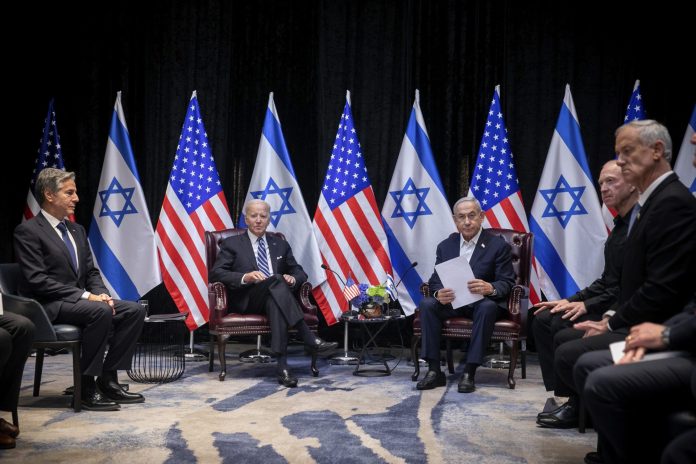
Benjamin Netanyahu and Joe Biden

The lawsuit, which claims that Biden failed to fulfil his obligations to international and federal law, was originally filed by several plaintiffs as a last-ditch attempt to stop the deaths of their family members in Gaza.

Despite multiple attempts by the Biden administration to dismiss the case, US District Judge Jeffrey S White allowed for a live hearing.

Some of those who testified spoke directly from Gaza, including Dr. Omar al-Najjar, who spoke from a hospital in Rafah.

“I have nothing left but my grief … They weakened us for years and continued to unleash bullets and missiles on our lifeless bodies,” stated Najjar, who was the first among several Palestinians who testified.

Following the hearing, Judge White lamented that the case was the “the most difficult case” he had ever presided over.

“In 27 years this is the most difficult case to have come before this court in terms of facts and law,” he added.

“Testimonies we heard were horrifying and gut-wrenching,” he continued.

“To the [Palestinian] witnesses we heard today… I say you have been seen and heard… I will study your testimonies and the law and fulfill my constitutional obligation… this is the most difficult judicial decision in my life and I will take it with the utmost seriousness.”

The judge is expected to issue a decision in the coming days.

The plaintiffs are asking the judge for an injunction that would halt any additional military aid or diplomatic support to Israel in its ongoing siege of Gaza, where more than 26,000 Palestinians, including more than 11,000 children, have been killed in recent months.

Laila el-Haddad, a Palestinian American and plaintiff in the case, told Middle East Eye that the case “signifies that you cannot dismiss genocide – or complicity in genocide – so easily”.

“We consider this a huge victory and a sign that our efforts are making a difference,” Haddad continued.

For some of the Palestinian plaintiffs in the US lawsuit, the case was a final attempt to put a stop to Israel’s carnage in Gaza. However, in addition to the case continuing in California, the legal battle to label Israel’s military campaign in Gaza a genocide has grown.

In December, South Africa submitted its case against Israel at the International Court of Justice (ICJ), accusing the country of genocide in Gaza.

Some of the Palestinian plaintiffs in the Oakland case were at The Hague the week during the ICJ hearings, showing support for the case and highlighting its interconnectedness with their legal battle inside the US – the largest supporter of Israel and its military.

Israel poised to attack Lebanon: Report

Hezbollah

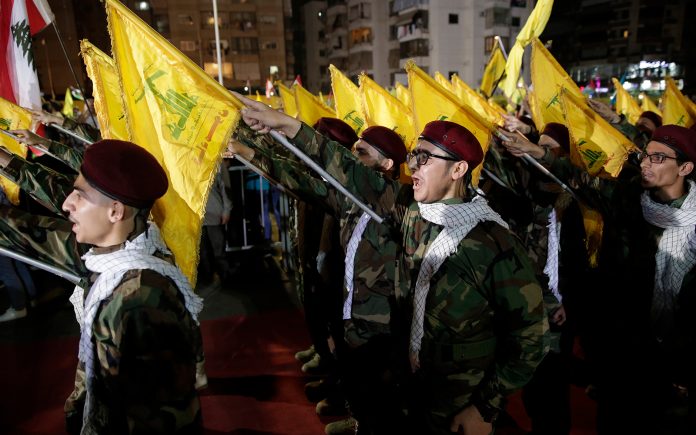
Hezbollah has been firing rockets and mortar shells at Israeli positions amid the ongoing Israel-Hamas war in the Gaza Strip. The barrages have prompted retaliatory strikes from the Israeli army.

According to LBCI, an intelligence report about Israel’s plans has been provided to Hezbollah by an unnamed Arab country.

The potential IDF campaign would be aimed at compelling the fighters to abide by the UN Security Resolution 1701, which was adopted after the end of the previous Israel-Lebanon war in 2006, the news agency added. The UN document facilitated the creation of a demilitarized zone along the Israeli-Lebanese border.

The situation further escalated this month after an Israeli strike killed Hamas deputy leader Saleh al-Arouri in Beirut.

Last week, Israeli Chief of Staff Lieutenant General Herzi Halevi said that the possibility of the conflict with Beirut is “much higher than it was in the past”. He added that the Israel Defense Forces (IDF) were in a state of “increasing readiness” for cross-border attack.

Lebanese Foreign Minister Abdallah Bou Habib, meanwhile, stated that the involvement of other countries in the Israel-Hamas fighting would be “unacceptable”. He also warned that a war with Lebanon would not be “a picnic” for Israel.

The secretary-general of Lebanon’s movement Hezbollah, Sayyed Hassan Nasrallah, has also expressed the powerful group’s readiness to fight and stressed Lebanon has no fear of war or US and Israeli threats.

Earlier this month, US Secretary of State Antony Blinken traveled to the Middle East to try and prevent a full-blown war between Israel and Hezbollah.

According to the Washington Post, US officials are concerned that Netanyahu may want to attack Israel’s northern neighbor amid the growing criticism of his government’s failure to prevent the Hamas October 7 incursion, which left around 1,200 people dead. The report also suggested that the IDF would find it “difficult to succeed” in a two-front war against Hamas and Hezbollah.

US, Iraq start formal talks on winding down Washington-led military coalition

US troops Iraq

Iraqi Prime Minister Mohammed Shia al-Sudani as well as top-ranking officials from both the Iraqi armed forces and the US-led coalition met in Baghdad on Saturday.

The joint commission began “the commencement of the first round of bilateral dialogue between Iraq and the United States of America to end the Coalition in Iraq”, Al-Sudani’s office said in a statement.

“Military experts will oversee ending the military mission of the Global Coalition against Daesh [ISIL], a decade after its initiation and after its successful achievement of its mission in partnership with Iraqi security and military forces,” it added.

Currently, there are about 2,500 US troops still deployed in Iraq as part of the coalition that was formed in 2014 to help the Iraqi government defeat Daesh.

The US says its aims to set up a committee to negotiate the terms of the mission’s end were first discussed last year.

But as Israel’s war on Gaza ramps up, American forces in Iraq and Syria have faced frequent strikes by “Iran-allied groups”, resulting in Washington’s retaliatory attacks and Iraqi complaints of US “aggression” against its territory.

Since Daesh lost its hold on Iraq, officials have called for the withdrawal of coalition forces, especially after a US air strike in January 2020 killed Iranian top commander Qassem Soleimani and Iraqi militia leader Abu Mahdi al-Muhandis outside Baghdad airport.

Iraqi officials have complained that the US attacks violate its sovereignty.

On Thursday, Washington announced it agreed with Baghdad on the launch of “expert working groups of military and defence professionals” as part of the joint commission.

The three working groups would investigate “the level of threat posed by ISIS [ISIL], operational and environmental requirements, and strengthening the growing capabilities of the Iraqi security forces”, al-Sudani’s office noted.

US Pentagon deputy press secretary Sabrin Singh also acknowledged that the US military footprint in the Arab country “will certainly be part of the conversations as it goes forward”.

While the US has said the decision to discuss withdrawal from Iraq was decided upon before October 7, Daesh in Iraq took credit for the decision and claimed in a statement that it “proves that the Americans only understand the language of force” and promised to continue its attacks.

Ukraine claims US promised to seize Russian assets

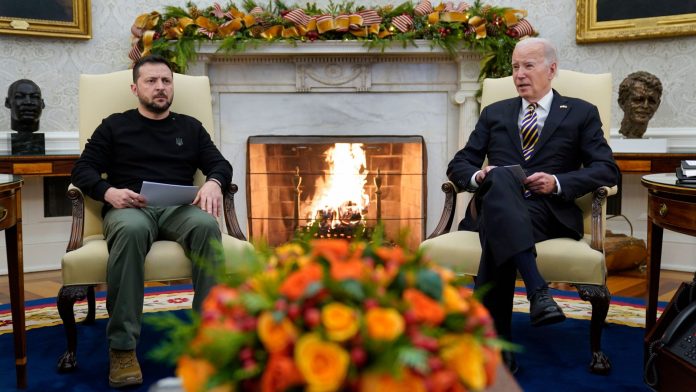
Biden Zelensky

Washington and its allies have blocked some $300 billion of Russian central bank assets as part of sanctions in response to Moscow’s military operation in Ukraine. Around $200 billion of that money is held in the EU.

Politico has reported that it asked Shmygal if he was concerned that US funding for the Kiev government would come to a complete stop if Donald Trump won the presidential election in November and returned to the White House for his second term.

”We have all the assurances from the US about long-term support for Ukraine – for example, the seizure of Russian assets to fund the Ukrainian recovery,” he claimed.

On Wednesday, a US Senate committee approved the “Rebuilding Economic Prosperity and Opportunity (REPO) for Ukrainians Act”, which should help pave the way for such a move by Washington. If it passes both houses and is signed into law by President Joe Biden, Washington could seize the Russian central bank assets, using such a measure against a country that it’s not directly at war with for the first time in history.

Reuters reported this week, citing a senior official in Brussels, that the EU will be unlikely to join the US in confiscating the Russian funds as there’s no agreement on such a step between the bloc’s member states.

Earlier in January, Russian Deputy Foreign Minister Sergey Ryabkov warned that Moscow would respond to a possible seizure of its assets by the West, inducing tit-for-tat measures.

Previously, Kremlin spokesperson Dmitry Peskov said that the confiscation of Russian funds would amount to “outright theft” by the West. He told reporters that it would undermine the trust in the US and EU financial systems around the globe.

Shmygal also stated that Kiev is “working hard with the administration of President Biden and with Congress to have support for 2024”. As for the continuation of the aid in 2025, “we’ll see how conditions develop”, he stressed.

”I believe that any president of the US will support our fight for civilized values, our mutual values,” the Ukrainian PM added.

The US has provided Ukraine with around $111 billion in economic and military support amid the conflict with Russia. But the flow of funds subsided dramatically in recent months as Republican lawmakers continue to resist attempts by the White House to push through another $60 billion in assistance for Kiev.

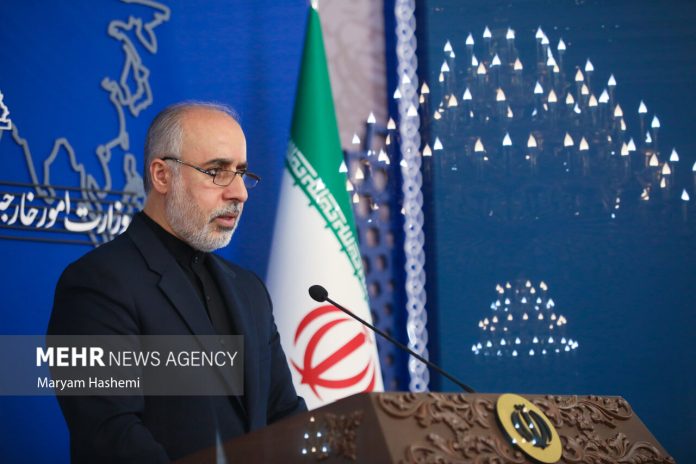
Iran condemns killing of Pakistanis in border area, says probe launched

Nasser Kanaani

Nasser Kanaani noted that the responsible bodies have launched an investigation into the attack, adding that Iran and Pakistan will not let the enemies damage brotherly relations between the two nations.

The Foreign Ministry spokesman further extended his sympathies to the Pakistani government and the families of the victims.

Meanwhile, the security deputy to the governor of Sistan and Baluchestan says three armed people shot dead the Pakistanis in Sirkan before fleeing the scene.

The Pakistani government has also warned of plots by the enemies of the two nations to tarnish their ties.

Poll: Only 15% of Tehran residents will go to polls in Iran’s upcoming elections, 30% nationwide

Iran Election

According to Khabaronline news outlet, the survey also shows that the nationwide turnout will be 30 percent.

This is 6 points down compared to previous polls conducted several months ago that put the percentage of the voter turnout in the elections at 36 percent.

The opinion poll shows, those who will not vote made such a decision for three reasons.
Some said Iran has no efficient parliament or elections. Others blamed what they described as corruption in the ruling system for their decision to not go to the polls, while others say they are disappointed with the country’s future.

Meanwhile, those who said they would vote were asked whose advice they would take while they cast their ballots. The majority of the respondents, 36 percent, said they would take former president Mahmoud Ahmadinejad’s advice while 30 percent said they would follow President Ebrahim Raisi.

The next officials who wield influence over the voters are Parliament Speaker Mohammad Bagheri Ghalibaf, 20 percent, former president Seyed Mohammad Khatami, 16 percent, and former president Hasan Rouhani, 10 percent.

The elections are scheduled for March 1, 2024.