Sunday, December 28, 2025
Home Blog Page 106

Temporary ceasefire declared after Pakistan-Afghanistan clashes

Pakistan’s Foreign Ministry said on Wednesday that the ceasefire would come into effect at 6pm local time (13:00 GMT). Both countries would make sincere efforts through dialogue to find a solution to the standoff, which was complex yet resolvable, the ministry added.

The ceasefire announcement came after renewed fighting killed and wounded dozens in a remote border area spanning southeastern Afghanistan’s Spin Boldak district and Pakistan’s Chaman district overnight on Tuesday.

Both sides accused the other of triggering the clashes.

In a post on X, Afghan Taliban spokesman Zabihullah Mujahid accused Pakistani forces of initiating the border fighting by firing “light and heavy weapons” at Afghanistan, killing 12 civilians and injuring more than 100.

Ali Mohammad Haqmal, a press spokesman in Spin Boldak district, put the civilian death toll at 15. The AFP news agency quoted a district hospital official as saying 80 women and children are among the wounded.

Mujahid claimed Afghani forces returned fire, killing “a large number” of Pakistani soldiers, seizing Pakistani weapons and tanks and destroying Pakistani military installations.

But Pakistani authorities blamed the Afghan Taliban for first firing on a Pakistani military post and other areas near the border, causing the clashes that also wounded four of its own civilians. The Reuters news agency quoted unnamed security officials as saying six Pakistani soldiers were killed in the violence, which one official said lasted around five hours.

Najibullah Khan, a resident of Pakistan’s Chaman district, stated the clashes forced some people living near the border to flee.

“People are in a very difficult situation. Shells are falling in people’s homes,” he added.

In a statement, Pakistan’s army announced its forces had “effectively repulsed” the attack from Afghanistan’s Taliban, killing from 15 to 20 of their members and injuring others. It also noted it had repelled separate Afghan Taliban attacks earlier in the night in Kurram district further north.

“The insinuations that the attack was initiated by Pakistan, are outrageous and blatant lies, just like the claims of capturing Pakistani posts or equipment,” said the military statement.

“The Armed Forces stand resolute and fully prepared to defend the sovereignty and territorial integrity of Pakistan,” the statement read.

The conflict had subsided as of 05:30 GMT, according to Afghanistan’s Taliban.

With Afghanistan on edge amid the tensions on the border, two explosions were heard in central Kabul on Wednesday evening, AFP reported.

Taliban government spokesman Zabihullah Mujahid said an oil tanker and a generator had exploded, sparking fires in the capital.

Tensions between Afghanistan and Pakistan have been especially fraught since Saturday, when both sides traded fire across multiple border regions, resulting in dozens of casualties on each side.

Although the clashes halted on Sunday after appeals from Saudi Arabia and Qatar, most border crossings between Pakistan and Afghanistan have remained closed.

Over the weekend, Kabul announced that in retaliation for what it called repeated violations of Afghan territory and airspace, it targeted several Pakistani military posts and killed 58 Pakistani soldiers.

Pakistan’s military reported lower figures, saying it lost 23 soldiers and killed more than 200 “Taliban and affiliated terrorists” in retaliatory fire along the frontier.

Pakistan accuses Kabul of harbouring fighters with the Taliban-allied Pakistan Taliban, known by the acronym TTP, which has carried out numerous deadly attacks in Pakistan.

Kabul denies the charge, noting it does not allow its territory to be used against other countries.

Muttaqi addressed Pakistan-Afghanistan relations during a press conference in India, adding while both countries want a positive relationship, “there are certain groups in Pakistan that are trying to stir up unrest”.

NATO must purchase more US arms for Ukraine: Pentagon chief

Moscow has repeatedly stated that Western arms shipments cannot change the balance of power on the battlefield, arguing that Ukraine’s chronic manpower shortage, fueled by mass draft avoidance and desertion, undermines any material advantage.

Speaking alongside NATO Secretary General Mark Rutte, Hegseth praised the Prioritized Ukraine Requirements List (PURL) initiative and said the European members must spend more funds through it.

“Our expectation today is that more countries donate even more, that they purchase even more to provide for Ukraine,” Hegseth stated.

Rutte noted there was “firepower coming out of our defense industry” to bolster Ukrainian forces.

US President Donald Trump recently claimed that with European funding for American weapons, Ukraine could still achieve its territorial goals – a reversal of his earlier assessment that the county had “no cards” to play. Trump is expected to soon announce whether the US will approve deliveries of long-range Tomahawk cruise missiles to Kiev, a move Moscow has warned would mark a serious escalation but would not significantly alter the frontline situation.

The Russian government has accused European backers of Kiev of prolonging the conflict at the expense of Ukrainian lives, arguing that the former are unwilling to admit the failure of their strategy.

Meanwhile, European NATO members continue to bear the economic fallout of their sanctions policy against Russia. Having rejected affordable Russian energy, many EU economies have faced surging production costs and widespread industrial bankruptcies, while the US has benefited from increased investment inflows and higher sales of liquefied natural gas to Europe.


‘No winners’ in trade war: China

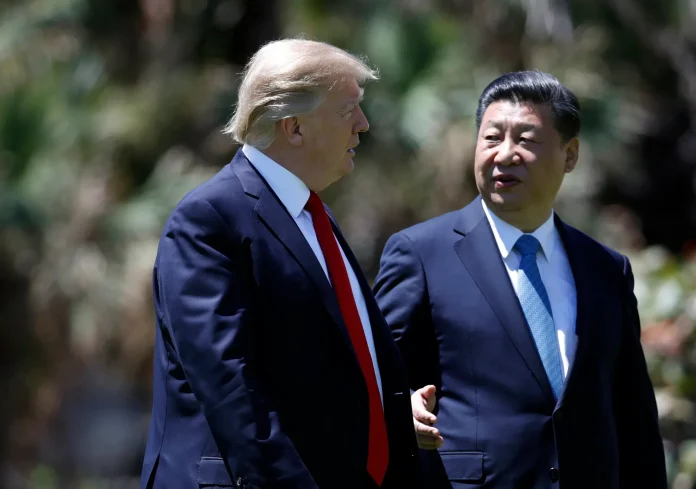
Trump issued the threat Tuesday after slamming Beijing’s halt of US soybean purchases as an “economically hostile act”.

“We are considering terminating business with China having to do with Cooking Oil, and other elements of Trade, as retribution,” Trump said on his Truth Social platform.

While tensions between Washington and Beijing have eased from their peak earlier in the year, a truce struck by the leaders remains shaky.

Beijing imposed fresh controls on the export of rare earth technologies and other items last week, leading Trump to warn Friday that he would roll out an additional 100 percent tariff on the country’s goods from November 1.

China’s foreign ministry on Wednesday announced that trade disputes were “not in the interests of any party” when asked about Trump’s threat on cooking oil, which is used for biofuels including biodiesel and sustainable aviation fuel.

“The two sides should resolve relevant issues through consultation on the basis of equality, respect and mutual benefit,” spokesman Lin Jian told reporters at a regular briefing.

“China’s position on China-US economic and trade issues is consistent and clear,” he added.

The United States was the biggest purchaser of Chinese used cooking oil last year, buying 1.27 million tonnes, a rise of more than 50 percent from 2023.

That accounted for more than 40 percent of Chinese exports of the product, according to the US Department of Agriculture.

Beijing on Wednesday also defended its latest export controls on rare earths as protecting global security, after the European Union’s trade chief Maros Sefcovic said the restrictions were unjustified and called for a response.

China is the world’s leading producer of the minerals used to make magnets crucial to the auto, electronics and defence industries.

Chinese leaders had “made clear their position” on its latest policies, Lin said.

Controls were implemented “to better safeguard world peace and regional stability and fulfill international obligations such as non-proliferation”, he added.


WFP warns aid cuts risk pushing 13.7mn into extreme hunger

It warned that six key operations — in Afghanistan, the Democratic Republic of Congo (DRC), Haiti, Somalia, South Sudan, and Sudan — “are currently facing major disruptions, which will only get worse by year-end”.

“WFP is facing a staggering 40 percent reduction in funding, with projections of $6.4 billion compared to $9.8 billion in 2024,” the Rome-based agency wrote in a new report.

“The humanitarian system is under severe strain as partners pull back from frontline locations, creating a vacuum,” it added.

It did not name any one country, but noted a report in The Lancet medical journal about the huge impact of cuts to US assistance.

Donald Trump slashed foreign aid after returning as US president in January, dealing a heavy blow to humanitarian operations worldwide.

“Programme coverage has been slashed and rations cut. Life-saving assistance to households in Catastrophe (IPC Phase 5) is at risk, while preparedness for future shocks has dropped drastically,” the report said.

The IPC, the Integrated Food Security Phase Classification (IPC), is a UN-backed initiative that measures hunger and malnutrition around the world.

Across the world, “WFP estimates that its funding shortfalls could push 10.5 to 13.7 million people currently experiencing Crisis (IPC Phase 3) levels of acute food insecurity into Emergency (IPC Phase 4)”, it noted.

“The world is facing hunger issues on a scale never seen before — and the funds needed to help us respond are woefully insufficient,” stated WFP Executive Director Cindy McCain.

“We are watching the lifeline for millions of people disintegrate before our eyes.”

The WFP announced that just 600,000 people will get its food aid this month in DRC, down from a planned 2.3 million, while less than 10 percent of those in need are getting assistance in Afghanistan, despite soaring malnutrition rates.

In South Sudan, expensive airdrops in famine-risk areas are under threat due to funding constraints, WFP said, while in Haiti, families are receiving half the agency’s standard monthly rations.

Global hunger “is at record levels”, with 319 million people facing acute food insecurity, including 44 million in emergency levels of hunger, the agency said.

The UN formally declared a famine in Gaza earlier this year, while the WFP said Wednesday that the number of people categorised as “in famine or on the brink” has doubled in just two years to 1.4 million across five countries.

Rising hunger levels not only put lives at risk but also undermine regional stability and fuel the displacement of communities, McCain stressed.

“We are at risk of losing decades of progress in the fight against hunger,” she added.

Iraqi parliamentary candidate killed

The incident is the first killing of a candidate ahead of Iraq’s parliamentary elections, scheduled for November 11.

“A bomb exploded under the vehicle of Safaa al-Mashhadani, a current member of the Baghdad Provincial Council and a candidate for parliament. He died instantly and three of his bodyguards were seriously wounded,” the source, who requested anonymity as they were not allowed to brief the media, told AFP.

The source explained that “the incident occurred at dawn on Wednesday in Tarmiyah”, located 40 kilometres north of the capital and part of the Baghdad province.

Mashhadani was running with the Sovereignty Alliance, one of Iraq’s largest Sunni Muslim coalitions, led by businessman Khamis al-Khanjar and parliament speaker Mahmoud al-Mashhadani.

The coalition condemned the “cowardly crime”, calling it “an extension of the approach of exclusion, targeting, and treachery pursued by the forces of uncontrolled weapons and terrorism, all of which seek to silence free national voices”.

According to the coalition, Mashhadani “fought and struggled for his people and his city of Tarmiyah, against both terrorism and the forces of uncontrolled weapons”.

The majority of Iraq’s 329 lawmakers represent Shiite parties aligned with neighbouring Iran.

The upcoming elections are the sixth since the 2003 US-led invasion of Iraq, which toppled longtime ruler Saddam Hussein.


AEOI chief: Iran’s ties with IAEA based on parliamentary law; agency has not condemned attacks on nuclear sites

Mohammad Eslami

Speaking to reporters after a cabinet meeting, Mohammad Eslami stated that “Iran’s interaction with the IAEA will be based on the parliamentary law, and the Supreme National Security Council, relying on AEOI reports, is the authority to assess and approve such cooperation.”

He criticized the IAEA for failing to fulfill its legal responsibilities toward Iran, noting that the agency “has not yet condemned attacks on Iran’s nuclear facilities” nor taken adequate measures to protect confidential information related to the country’s nuclear industry.

Eslami emphasized that inspectors’ presence in Iran occurs only under conditions approved by national authorities.

“Inspections are limited to cases coordinated by the Foreign Ministry and the Supreme National Security Council — such as visits to the Bushehr and Tehran reactors,” he said.

He also announced plans to open a new radiation processing center in northwestern Ardabil Province to support agricultural production and expand Iran’s national irradiation network.

Eslami further noted that Iran and Russia recently renewed agreements to build large- and small-scale nuclear power plants, including new units in Bushehr and Hormozgan provinces.

Iran’s FM: US, E3 claims on anti-Tehran resolutions having no legal validity

Abbas Araghchi

Iran’s Foreign Minister emphasized that the claims made by the United States and the three European countries — the United Kingdom, France, and Germany — regarding the reimposition of the previously terminated UN Security Council resolutions against Iran are invalid and must not be recognized by any country as having legal effect.

Seyed Abbas Araqchi made the remarks on Wednesday at the 19th Mid-Term Ministerial Meeting of the Non-Aligned Movement in Kampala, the capital of Uganda, noting that the expiration date of UN Security Council Resolution 2231 on Iran’s nuclear issue is October 17, 2025.

Araqchi said that the three European countries have misused the JCPOA’s dispute resolution mechanism and the UN Security Council in an attempt to restore the canceled resolutions against Iran — a move that was opposed by several Security Council members, including two permanent members.

The Iranian foreign minister called on members of the Non-Aligned Movement to oppose the misuse of international institutions — especially the UN Security Council — for blackmailing and exerting pressure on developing nations.

Referring to the criminal aggression by the Zionist regime and the United States against Iran last June, Araqchi described the attack as a clear example of lawlessness and rogue behavior by the two regimes and warned of the continued threats they pose to international peace and security.

He also described the issue of Palestine as one of the most important international matters, saying that resolving it is impossible without addressing its root cause — occupation and the deprivation of the Palestinian people’s fundamental right to self-determination.

Araqchi stressed that the Islamic Republic of Iran supports all efforts to stop the genocide of Palestinians, end the occupation of Gaza, ensure the unhindered delivery of humanitarian aid, and rebuild the Strip.

He also reaffirmed Iran’s firm position on ending the impunity of the Zionist regime and bringing its perpetrators of war crimes to justice.

Kiev mayor warns of ‘difficult’ winter amid Russia attacks

Russia Ukraine War

Speaking to the Kiev24 broadcaster, Klitschko said the upcoming winter “will be difficult,” and urged citizens to plan ahead.

“It is necessary to develop different scenarios, including the bad ones,” he added.

He urged residents of the Ukrainian capital to “be ready, which means having a supply of water, a supply of food for emergency storage, warm clothes, that is, in case the situation that was last week can be repeated.”

Last week, Kiev officials reported a “massive” Russian drone and missile attack which they said targeted the capital’s energy infrastructure. The barrage reportedly struck one of the city’s main electricity suppliers, causing widespread blackouts.

The Russian Defense Ministry confirmed that its forces had launched a large-scale strike on Ukraine’s energy facilities in response to what it described as “the Kiev regime’s terrorist attacks on Russian civilian sites.” Moscow has repeatedly said it does not target civilians.

The devastating attack on Kiev also fueled a long-running feud between Klitschko and Ukrainian leader Volodymyr Zelensky. The latter said last week that he was “not satisfied” with the capital’s defense. While he did not refer to Klitschko by name, Zelensky insisted that criticism of people failing to do their jobs was fully justified.

Klitschko defended his actions, stating that “all measures were implemented in accordance with the requirements of the General Staff.”

He also pointed to damage beyond the capital, writing: “Given all the hype and manipulation that has been going on in recent days, I have one question: didn’t Klitschko also protect critical infrastructure facilities across the country that were damaged by enemy missiles and drones?”


Execution halted at last moment in case of murdered Tehran University student

Evin Prison

Hamidreza Haji Esfandiari, the attorney representing Khaleghi’s family, said the convicted killer, identified as Ahmad, was brought to the gallows and even had the noose placed around his neck when the victim’s family decided to stop the execution.

“The family of the victim had certain conditions, but I cannot disclose their details,” Esfandiari said, adding that the conditions were “not related to blood money or financial matters.” The convict has been granted a two-month reprieve.

Khaleghi, a business management undergraduate at the University of Tehran, was attacked on February 12, 2025, while returning to his dormitory.
He was stabbed by two motorcycle thieves and later died of his injuries at the hospital.

The Ministry of Science, the University of Tehran, and the Faculty of Management had previously condemned the incident and urged swift justice.

The judiciary confirmed the suspects’ arrest and trial earlier this year, leading to the death sentence now temporarily suspended.

Trump announces start of ‘phase 2’ of Gaza ceasefire accord

Gaza War

“All twenty hostages are back and feeling as good as can be expected,” Trump wrote on his social media company Truth Social.

“A big burden has been lifted, but the job is not done. The dead have not been returned, as promised! Phase Two begins right now!!!” he added.

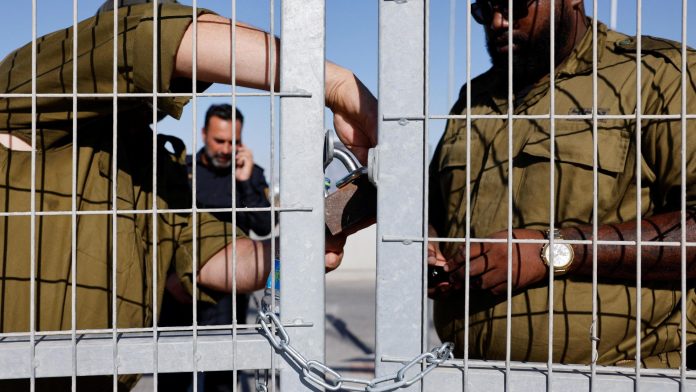
Hamas and Israel carried out a hostage-prisoner swap that saw hundreds of Palestinian prisoners released from Israel’s notorious Ofer military prison and other prison facilities in the Negev Desert. All 20 living Israeli hostages were also released.

Trump and Egyptian President Abdel Fattah al-Sisi convened a high-level summit Monday in the Egyptian resort town of Sharm el-Sheikh, bringing together world leaders to garner international support for Trump’s Gaza ceasefire plan.

Phase two of the US deal calls for the establishment of a new governing mechanism in Gaza, the formation of a multinational force and the disarmament of Hamas.

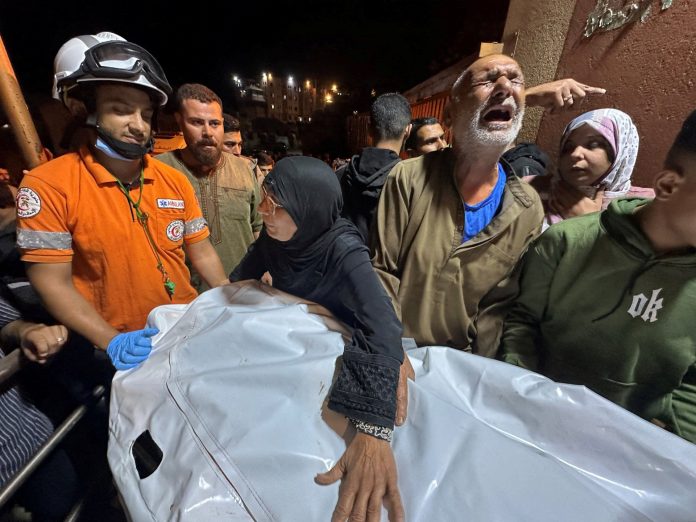
Israeli attacks killed more than 67,000 Palestinians in Gaza, most of them women and children, since October 2023, leaving the enclave largely uninhabitable.