Sunday, December 28, 2025
Home Blog Page 105

Widely acclaimed Iranian filmmaker Nasser Taghvai laid to rest in Tehran

The ceremony was attended by a large number of artists, colleagues, and cultural figures who gathered to pay their final respects to one of Iran’s most influential film directors.

Taghvai passed away on Tuesday at the age of 84. Born in 1941 in Abadan, he was regarded as one of the pioneers of a movement in Iranian cinema that later came to be known as the “Iranian New Wave.”

His works were known for their distinctive style, strong storytelling, and deep engagement with social and cultural themes.

Throughout his career, Taghvai directed several acclaimed films and television series that helped shape modern Iranian cinema.

He was often described as an auteur, a filmmaker whose personal vision and artistic identity were evident in every work he created.

More in pictures:

FM Araghchi: NAM members reject ‘snapback’ mechanism, support Iran’s position

Abbas Araghchi

Speaking to state media following the NAM Foreign Ministers’ Meeting in Kampala, Uganda, Araghchi said the final communiqué of the summit emphasized that Resolution 2231 remains valid and must be implemented according to its timetable.
He noted that under Article 8, the resolution is due to expire on October 18.

Araghchi explained that the final document, which includes more than 1,500 clauses, incorporated several proposals from Iran. Among them were strong condemnations of US and Israeli attacks against Iran, slamming them as “heinous and unacceptable.”

The statement also expressed solidarity with the Iranian people and separately condemned attacks on Iran’s nuclear facilities and recent terrorist operations in Lebanon.

He added that the declaration of support for Iran’s stance on the “snapback” issue represents a major diplomatic achievement, noting that most NAM members, which amount to over 100 countries, sided with Iran, Russia, and China in rejecting the US and European interpretation of the mechanism.

Top Iranian lawmaker defends decision to skip Sharm el-Sheikh summit

Speaking on a live political talk show on Wednesday evening, Ebrahim Azizi stated that attending the summit would have required Iranian officials to engage in dialogue, or even pose for a photograph, with the US president, whom he castigated for waging war along with Israel against Iran.

“Those who say we should have been there do not understand America,” he said.

Azizi criticized the notion of “peace” promoted by Washington, describing it as “arrogant and humiliating.”

He emphasized that Iran’s absence from the gathering was the best course of action, as taking part would not have advanced the country’s interests.

The summit in Sharm el-Sheikh brought together regional and international leaders to discuss developments in the Middle East.

Iran’s decision not to participate has drawn mixed reactions domestically, but Azizi insisted that avoiding engagement with the US was consistent with Tehran’s principles and strategic considerations.

Gaza health ministry finds signs of torture on Palestinian bodies returned by Israel

Medical teams are continuing to examine, document and prepare the bodies for delivery to families “in line with approved medical procedures and protocols”, the Health Ministry said in a statement on Wednesday.

Under a ceasefire deal backed by US President Donald Trump and aimed at ending the two-year Gaza war, Israel was to turn over the bodies of 15 Palestinians for every deceased Israeli returned. The remains of 45 people were returned on Monday.

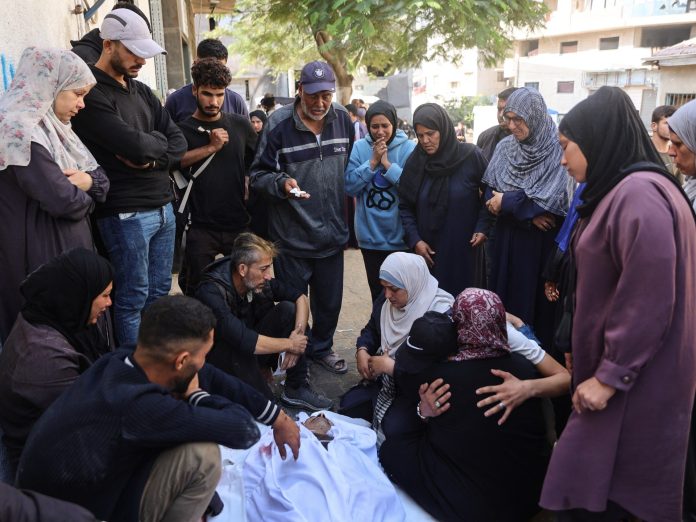
Palestinians awaited information about the bodies that arrived at Nasser Hospital on Tuesday and Wednesday. The forensics team described disturbing conditions, bearing signs of physical abuse.

Some of the Palestinian bodies were blindfolded and handcuffed, indicating “field executions” may have taken place, medical sources told Al Jazeera.

Israel is expected to hand over more bodies, though officials have not said how many are in its custody or how many will be returned. It remains unclear whether the bodies were dug up from cemeteries by the Israeli army during its ground offensive or if they belong to detainees who were killed during the Israeli assault. Throughout the war, Israel’s military has exhumed bodies as part of its search for the remains of captives.

As forensic teams examined the first remains returned, the Health Ministry on Wednesday released images of 32 unidentified bodies to help families recognise missing relatives.

Many appeared decomposed or burned. Some were missing limbs or teeth, while others were coated in sand and dust. Health officials have said Israeli restrictions on allowing DNA testing equipment into Gaza have often forced morgues to rely on physical features and clothing for identification.

The forensics team that received the bodies said some arrived still shackled or bearing signs of physical abuse.

“There are signs of torture and executions,” Sameh Hamad, a member of a commission tasked with receiving the bodies at Nasser Hospital, said.

The bodies belonged to men aged 25 to 70. Most had bands on their necks, including one who had a rope around his neck. Most of the bodies wore civilian clothing, but some were in uniforms, suggesting they were Palestinian fighters.

Hamad added the Red Cross provided names for only three of the dead, leaving many families uncertain of their relatives’ fate.

Israel’s war on Gaza has killed nearly 68,000 Palestinians since October 2023, according to the Health Ministry. Palestinian officials say the true toll could be far higher, with tens of thousands of bodies believed to be under the rubble.

Thousands more people are missing, according to the Red Cross and Palestinian Central Bureau of Statistics.

The Health Ministry released a video showing medical workers examining the bodies, saying the remains would be returned to families or buried if left unidentified.

Rights groups and a United Nations Commission of Inquiry have accused Israel of committing genocide in Gaza, and South Africa has filed a case alleging Israel committed genocide at the International Court of Justice. Israel denies the accusations.


Trump claims Modi told him that India would stop importing Russian oil

“He’s a friend of mine, we have a great relationship … we have a great relationship – no, we were not happy with him buying oil from Russia because that let Russia continue on with this ridiculous war where they’ve lost a million and a half people,” Trump said from the Oval Office as he criticized Russian President Vladimir Putin’s war in Ukraine.

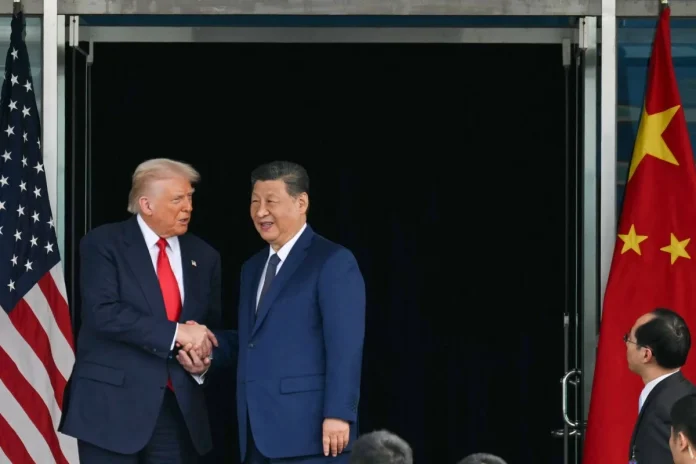
“I was not happy that India was buying oil, and (Modi) assured me today that they will not be buying oil from Russia. That’s a big step. Now we’ve got to get China to do the same thing,” Trump added.

India “is a significant importer of oil and gas,” its Ministry of External Affairs announced in a statement Thursday, without naming Russia nor referencing Modi’s purported assurance that he would stop Russian oil imports.

“Ensuring stable energy prices and secured supplies have been the twin goals of our energy policy. This includes broad-basing our energy sourcing and diversifying as appropriate to meet market conditions,” it noted.

“Where the US is concerned, we have for many years sought to expand our energy procurement. This has steadily progressed in the last decade.”

Trump has for months been calling on India to cease purchasing Russian oil, citing India’s continued purchases of cheap Russian oil in escalating his trade war. In August, Trump announced a 25% tariff on India as a penalty for importing Russian oil and gas, building on a previously announced 25% tariff rate.

In a follow-up exchange on Wednesday, Trump called Modi “a great man, and he loves Trump.”

“He’s assured me there will be no oil purchased from Russia – I don’t know, maybe that’s a breaking story, can I say that?” Trump continued.

“There will be no oil, he’s not buying his oil from Russia, it started – you know, you can’t do it immediately, it’s a little bit of a process, but the process is going to be over with soon.”

And he suggested India’s move to cease Russian oil imports would speed the end of the war in Ukraine.

“If India doesn’t buy oil, it makes it much easier, and they’re not going to buy, they assured me they will, within a short period of time, they will not be buying oil from Russia,” Trump said, adding, “And they’ll go back to Russia after the war is over.”

India has long been reliant on Russia for crude oil to support its booming economy and growing population, now at more than 1.4 billion people.

The world’s most populous nation is already the third-biggest consumer of oil globally, and with India’s consumption rate still growing rapidly, it is expected to surpass China by 2030, according to Reuters.

US war department threatens Russia

Speaking at Ramstein military base on Wednesday ahead of a meeting of countries coordinating military support for Ukraine, he lauded NATO members’ recent militarization push.

“If this war does not end, if there is no path to peace in the short term, then the United States, along with our allies, will take the steps necessary to impose costs on Russia,” Hegseth said.

“If we must take this step, the US War Department stands ready to do our part in ways that only the United States can do,” he added.

On Sunday, President Donald Trump stated that he could supply Ukraine with US-made Tomahawk cruise missiles if the Ukraine conflict “is not going to get settled,” and admitted that it would be “a new step of aggression.”

The longer-range variants of the cruise missile can strike targets up to 2,500km (1,550 miles) away, potentially threatening the Russian capital and other cities.

Supplies of the missiles to Ukraine would represent a “new stage of escalation,” since US troops would have to be directly involved in using them, President Vladimir Putin said earlier this month.

Russian Foreign Ministry spokeswoman Maria Zakharova said on Wednesday that Ukraine’s President Volodymyr Zelensky wanted to use the Tomahawks to conduct “new terrorist attacks” against Russia “aimed at escalating the conflict.”

Moscow has blamed the pause in direct Russian-Ukrainian peace talks on Kiev, arguing that it lacks interest in a settlement, emboldened by Western military support.

“Russia is ready for a peaceful settlement,” but continues its military operation “due to the lack of alternatives,” Kremlin spokesman Dmitry Peskov noted on Monday.

Moscow appreciates Trump’s peace efforts, and hopes he can help “encourage the Ukrainian side to be more proactive and more prepared for the peace process,” he added.

NATO keeps massive forward military presence on Russia’s doorstep: Defense chief

NATO

Belousov made his remarks at a joint session of the Russian and Belarusian defense ministries on Wednesday. Cooperation between Moscow and Minsk remains a key factor in maintaining regional stability in light of the “openly hostile actions” of the West, he stated.

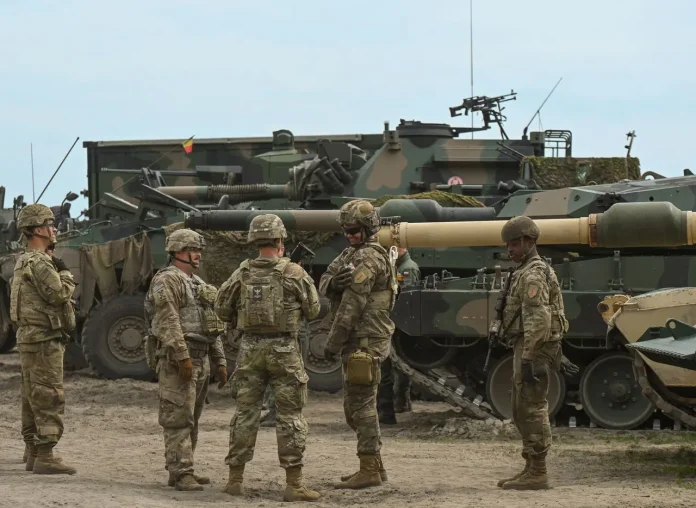
“The Alliance maintains a massive forward military presence on its eastern flank,” Belousov said, adding, “The total strength of NATO troops involved in the exercises held on its eastern flank amounted to roughly 60,000.”

This year alone, the US-led military bloc held almost a dozen drills in Scandinavia, Central and Eastern Europe as well as the Baltics and the Black Sea, which involved thousands of soldiers each.

Just one series of exercises, dubbed Defender 25, which was held throughout May and June, involved a total of 25,000 troops. The forces were deployed along the entire eastern border of the bloc, from Norway in the north to Bulgaria and Greece in the south, as part of the three-phase drill.

Other major NATO exercises included the 10,000-strong ‘Joint Viking 2025’ held in Norway in March, as well as the 16,000-strong ‘Hedgehog’ held in Estonia in May. The developments came amid increasingly belligerent statements from the European NATO members, which have repeatedly presented Russia as a threat since the escalation of the Ukraine conflict in February 2022.

Moscow has repeatedly stated that it has no intention to attack any NATO nations, calling such accusations unfounded.

It nonetheless warned that the bloc’s active involvement in the Ukraine conflict through weapons supplies and other assistance to Kiev risks a direct confrontation between Russia and NATO.

Last month, Politico reported that EU officials were increasingly worried about tensions with Moscow potentially spilling into a major conflict akin to World War I. Russia, in turn, expressed its concerns over the fact that World War III was seriously being discussed in the West as a potential scenario.


Iran’s president calls on Islamic nations to unite for peace

Masoud Pezeshkian

His remarks came during a Wednesday meeting where the president discussed the ongoing tensions between Afghanistan and Pakistan, two neighboring Muslim nations.

Pezeshkian said that the conflicts and disagreements among Islamic nations are not the desires of their peoples but rather the result of plots by enemies of Islam and international Zionism.

He expressed deep concern over the recent events between Afghanistan and Pakistan, saying that the recent events between these two brotherly, Muslim, and neighboring countries have caused deep concern and sorrow among all countries in the region, including Iran.

The Muslim nations, especially those with shared roots and cultures in the region, have an unbreakable bond of faith, history, and culture, the president emphasized.

Citing the teachings of the Holy Quran, he reminded that the believers are brothers, urging nations to work together for peace, justice, and progress.

Pezeshkian proposed that fostering dialogue and strengthening brotherly ties could serve as effective strategies to reduce tensions between Afghanistan and Pakistan.

He affirmed that Iran is committed to utilizing all its resources and efforts to diminish tensions, promote dialogue, and reinforce brotherly connections between the two neighboring countries.

The region needs peace, cohesion, and cooperation more than ever, Pezeshkian emphasized, expressing confidence that the governments and peoples of Afghanistan and Pakistan will navigate their challenges with wisdom and ultimately choose the path of friendship, collaboration, and mutual trust.


Syria says won’t wait for global community to reform economy

Syria War

Mohammed Yisr Barnieh, who spoke at the International Monetary Fund in Washington, was part of Syria’s first delegation to the Fund and the World Bank’s semi-annual gathering of central bank governors and finance ministers since the Syrian war broke out in 2011.

Barnieh serves as finance minister in the country’s transitional government, set up earlier this year by Ahmed al-Sharaa after his forces ousted Syria’s long-serving strongman Bashar al-Assad.

Without the IMF and other international financial institutions, Syria “cannot move ahead,” Barnieh said.

“But if you are slow, we will move without you.”

“What we need from the IMF and World Bank is capacity building, knowledge transfer, technology, know how, expertise and so on,” he continued, adding, “We don’t need money from them.”

“I’m not excluding borrowing down the road, but now we have no intention whatsoever,” he added, saying, “We want to make sure that our house (is) in order.”

Syria’s government faces a monumental challenge in rebuilding the country’s war-torn economy after more than 15 years of war — something Barnieh estimated would likely cost “tens of billions” of dollars.

Barnieh said his immediate priorities were to restore “confidence and trust” with both the public and the private sector.

This, he added, included a focus on restoring fiscal credibility, simplifying Syria’s overly complex taxation system, and tackling its huge debt burden.

“If you look at our reform agenda now, every single piece of reform is focused on how to create the ecosystem to support the private sectors and how to create the ecosystem to support attracting foreign investment.”

“I’m sure one day, everybody will realize that Syria is a good place to invest,” he continued, stating, “My message is: Do not wait…It will take quite some time, but then the opportunity will be missed.”

Addressing the US-Syria relationship, Barnieh said it was improving every day, and that Syria was moving ahead with reforms despite ongoing sanctions.

“We are very optimistic about the Syria-US relationship, and we are very optimistic of seeing American companies, American banks, American and international organizations in Syria,” he added.


Al-Sharaa to Putin in Moscow: Syria seeks to ‘redefine’ Russia ties

Al-Sharaa made the statement on Wednesday while meeting with Putin in Moscow during his first state visit to the country that has been hosting al-Assad since his exile from Syria 10 months ago.

“We are trying to restore and redefine in a new way the nature of these relations so there is independence for Syria, sovereign Syria, and also its territorial unity and integrity and its security stability,” al-Sharaa told Putin in the Kremlin.

The Syrian leader assured that Damascus would honour all past agreements with Moscow.

“There are bilateral relations and shared interests that bind us with Russia, and we respect all agreements made with it,” he added.

According to Syrian officials cited by the Reuters and AFP news agencies, al-Sharaa, who once headed the Syrian branch of al-Qaeda under the name Abu Mohammed al-Julani, plans to use today’s meeting with Putin to request Moscow hand over al-Assad.

But there was no mention of the sensitive diplomatic matter in al-Sharaa’s brief televised remarks at the beginning of the meeting.

Welcoming al-Sharaa, Putin hailed decades of “special relations” between the two countries, in which he claimed Moscow was always guided by Syrian people’s interests, and said his government wanted to expand them.

He also lauded recent parliamentary elections in Syria – the first since al-Assad’s overthrow – saying the process would strengthen ties between all political forces.

“I believe that this is a great success for you, because it leads to the consolidation of society, and despite the fact that Syria is currently going through difficult times, it will nevertheless strengthen ties and cooperation between all political forces in Syria,” stated Putin.

Despite having been on opposite sides of the battle lines of Syria’s 13-year war that Moscow intervened in, the new rulers in Damascus have taken a pragmatic approach to relations with Moscow, as they have with other foreign powers.

For Damascus, maintaining ties with Russia is important for rebuilding the war-shattered country and shoring up international legitimacy for the government.

In a recent interview with US network CBS, al-Sharaa stressed, “Russia has close and longstanding relations with Syria, which relate to the basic structure of the state and to energy and food, for which Syria depends partly on Russian supplies, as well as some old strategic interests”.

Russia, for its part, has retained a presence at its air and naval bases on the Syrian coast, and the Kremlin has voiced hope for negotiating a deal to keep the outposts. Moscow has also reportedly sent oil shipments to Syria.