
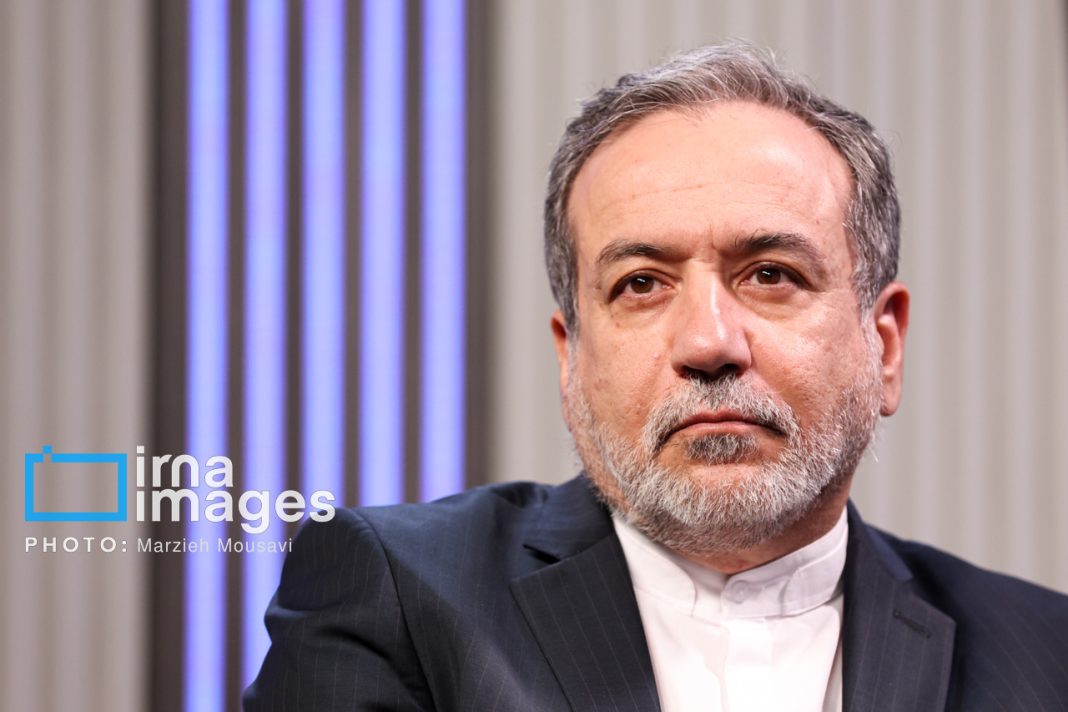
In an interview, Araqchi said the main obstacle in Iran–US relations today — and the reason negotiations have not resumed — is Washington’s approach rooted in imposing its will and pursuing maximalist demands.
“Unfortunately, we have repeatedly witnessed this behavior in our interactions with them,” he noted.
Araqchi emphasized that if the US side demonstrates readiness for a “fair and balanced agreement based on mutual interests,” Iran would certainly consider it.
He said the Americans entered the talks with a “zero-enrichment policy.” “From the outset, we made clear that such a thing is impossible and that a middle-ground solution must be found,” he stated.
Araqchi stressed that the door to negotiations and mediation is always open, provided that the rules are respected.
“We have never left the negotiating table, because diplomacy is an integral part of our principles and approach,” he added.
“No country can be deprived of its legitimate rights,” he continued.
“Transparency and confidence-building can be demanded, and we are ready for that. But abandoning our fundamental rights is never an option.”
“The only way forward is a balanced solution that considers the interests of all parties,” Araqchi said.
Commenting on the US position, he added: “If you want zero enrichment, there will be no agreement between us. But if you want zero bombs, then we can reach an agreement – it is entirely achievable.”
Araqchi said the two sides had come “very close to an agreement,” and that five rounds of negotiations mediated by Oman had produced “multiple solutions” capable of resolving the issues. “But these solutions were rejected in Washington, and ultimately the pro-war forces prevailed, pushing the country and the region onto a regrettable path,” he said.
Referring to the 12-day June war, Araqchi acknowledged that it inflicted heavy losses and significant costs on Iran, but also brought strategic benefits.
“Most importantly, our missiles and weapons were tested for the first time in an actual war. We used these capabilities fully, and all strengths and weaknesses became clear to us.”
He stressed that Iran’s defensive posture is now stronger than before the June conflict, “both in terms of the quantity and quality of our weapons and missile capabilities.”
