Tuesday, January 13, 2026
Home Blog Page 998

CENTCOM chief expresses deep concern about Iran-China-Russia alliance

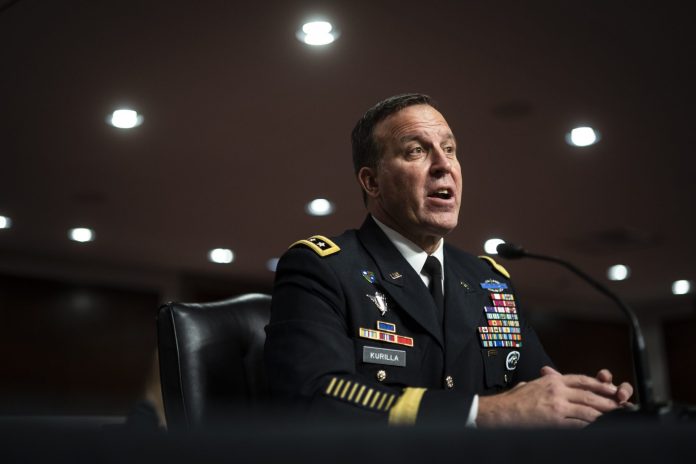
General Michael Kurilla

Speaking during a US House Armed Services Committee hearing on Thursday, Kurilla said he is “very concerned” about the “global implications” of the partnership between the three countries.

“Collectively, Iran, Russia, and China are strengthening their relationships and fostering a chaotic landscape favorable to their exploitation,” he added.

“The ramifications of this partnership will have global implications.”

He also referred to Iran’s capability to produce drones and export crude oil despite US sanctions.

“What we see is Iran reliant on China and Russia is reliant on Iran. Iran sells 90% of its oil, all US sanctioned, to China,” Kurilla continued.

Iran, China and Russia have over the past years forged strategic relations and strengthened their cooperation in various fields.

The partnership between the three countries could herald a new multipolar world order, intended to replace the current unipolar American-led order.

Earlier this month, Iran, Russia and China held joint naval drills in the Gulf of Oman, marking the fifth such exercise since 2019.

Officials said the goal of the “Marine Security Belt 2024” drills was to strengthen the security of international maritime trade, combating piracy and maritime terrorism, among others.

The exercises took place against the background of an unprecedented US and Western naval presence in West Asia and signaled a strengthened tripartite alliance amidst evolving global geopolitical dynamics.

Featuring advanced missile systems and new warships, the exercises sent a clear message to the West and regional players about the trio’s readiness to safeguard their interests and assert their influence in critical maritime corridors.

The collaboration among China, Iran, and Russia within the realm of military exercises underscores a mutual desire to enhance maritime security while also challenging the existing global power structures led by the US.

The drills came just a week after NATO’s Nordic Response exercises, the most expansive NATO drills since the Cold War ended in 1991. Nordic Response incorporated military participation of NATO’s newest member states Sweden and Finland.

Ukraine may soon ‘fall’: Macron

France Macron

According to the report, Macron on Wednesday held a political event at the Elysee Palace, where, among other things, the upcoming elections to the European Parliament were discussed.

“Ukraine could fall very quickly,” Macron said during the event, as relayed to the outlet by a participant at the gathering.

Earlier, at a press conference with Czech President Petr Pavel, Macron said that European countries should not place limits on themselves when talking about helping Ukraine to prevent the spread of defeatist sentiment. Against this background, Macron emphasized the importance of securing military aid for Ukraine and expressed support for the Czech initiative to purchase artillery shells from third countries outside the EU.

On February 26, speaking after a conference on Ukraine in Paris, Macron did not unequivocally rule out potential sending Western land troops to the zone of the special military operation in Ukraine. He also vowed that Western states would “do what is needed” to prevent Russia’s victory in this conflict.

In a March 17 interview with Le Parisien daily newspaper, Macron stated that ground operations could be necessary at a certain point “to confront Russian forces” in Ukraine.

UN chief to EU: Stop adopting ‘double standards’ on Ukraine and Gaza

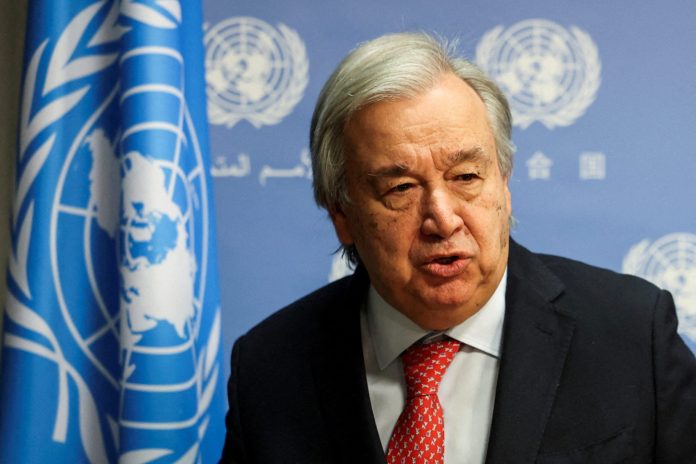
António Guterres

“The basic principle of international humanitarian law is the protection of civilians. We must stick to principles in Ukraine as in Gaza without double standards,” Guterres told reporters ahead of a summit of EU leaders in Brussels on Thursday.

Ireland’s outgoing prime minister, Leo Varadkar, touched on the same double standards in his own comments to journalists.

“The response to the appalling crisis in Palestine has not been Europe’s finest hour, quite frankly,” Varadkar said.

“I think it has been undermining particularly our efforts to defend Ukraine because so many countries in the global south – also known as most of the world – interpret Europe’s actions in relation to Ukraine versus Palestine as double standards. I think they have a point.”

The EU responded to the Ukraine conflict by imposing 13 packages of economic sanctions on Moscow and funnelling more than €80 billion ($86.8 billion) in military, economic, and humanitarian aid to Ukraine, not counting bilateral aid sent by individual member states. By contrast, the European Commission will spend just €150 million on aid to Gaza this year.

While EU leaders have repeatedly accused Russia of targeting civilians in Ukraine, the civilian death toll in Gaza has long ago eclipsed the casualty count from Ukraine. Nearly 32,000 Palestinians – most of them women and children – have been killed in five months of fighting in Gaza, three times as many civilians as have died in two years of conflict in Ukraine, according to figures from the UN and the Gaza Health Ministry.

With Israel maintaining a near-total siege on Gaza, famine is “imminent” in the enclave, a UN food security watchdog warned in a report this week. The report states that 70% of Gaza’s 2.3 million residents are currently facing “catastrophic hunger,” and that two out of every 10,000 people there will die daily from starvation, malnutrition, and disease if not helped immediately.

EU leaders adopted a joint statement at this week’s summit calling for “an immediate humanitarian pause leading to a sustainable ceasefire” in Gaza. The statement urges “the Israeli government to refrain from a ground operation in Rafah,” explaining that “such an operation would have devastating humanitarian consequences and must be avoided.”

Located in southern Gaza, Rafah is home to more than a million displaced Palestinians from other parts of the territory. Israeli Prime Minister Benjamin Netanyahu said on Wednesday that he is “determined” to send troops into Rafah, despite international condemnation.

Ahead of the European Council meeting in Brussels, the European Union’s foreign policy chief, Josep Borrell, said that the situation in Gaza is “not (just) a humanitarian crisis,” but “the failure of humanity.”

He added that he hopes the council “will send a strong message to Israel: Stop blocking, stop preventing the food to come into Gaza and take care of the civilians.”

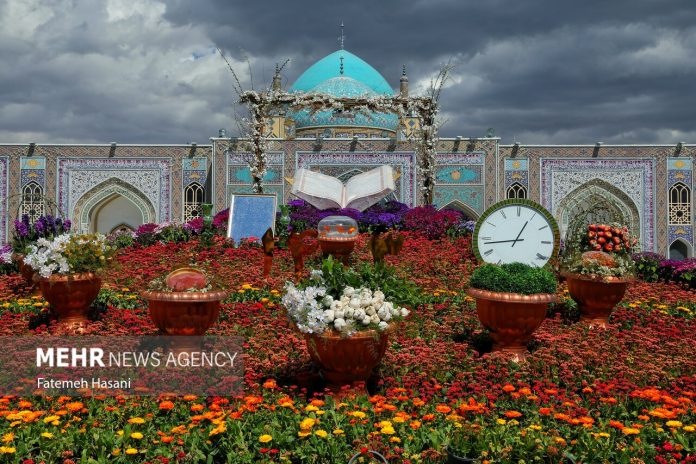
Nowruz, a millennia-old tradition

Nowruz

It heralds the beginning of the spring and is celebrated across the Persian-speaking countries and communities in Iran, Republic of Azerbaijan, Uzbekistan, Afghanistan, Pakistan, Tajikistan, Turkmenistan, and parts of Turkey, Iraq, Kyrgyzstan, Kazakhstan, and India.

Iranians prepare for Nowruz for weeks ahead of the event by spring cleaning and buying new clothes, especially for children, and items they need for the New Year.

They celebrate the last Wednesday of the year, known as Charshanbe Suri, with fireworks and bonfires.

On the eve of the New Year, Iranian families get together and eat Sabzi Polo Mahi, or herbed rice with fried fish.

Iranians usually start the New Year with prayers and reciting verses from the holy Qur’an as well as divination by the poems of Hafez.

They set the symbolic Haft Seen table, which includes seven items that start with the sound “s” in Farsi.

Iranians say there is a history behind each element. Serkeh, or vinegar, symbolizes patience and immortality, sumac brings love and compassion, Seeb, or apple represents health and fertility, Senjed, silverberry, simulates love and affection, Sabzeh, green sprouts, symbolizes rebirth, Seer, or garlic, is a symbol of protection in the face of affliction, and Samanu, a sweet paste made from germinated wheat and wheat flour, represents affluence.

During the 13-day holidays, Iranians usually journey across the country or prefer to stay at home and visit their families and relatives nearby.

The holidays culminate in Sizdah Bedar, which is literally translated from Persian to “the 13 day out” which has its roots in triskaidekaphobia, fear of the number 13 as bad luck.

People go outdoors in Sizdah Bedar, or Day of Nature, and camp out to chase away the bad luck and bring in good vibes instead.

About 300 million people worldwide celebrate Nowruz, with traditions and rituals that slightly vary in each country.

At the initiative of several countries that share the event, including Iran, Afghanistan, India and Turkey, the UN in 2009 listed Nowruz as an international event.

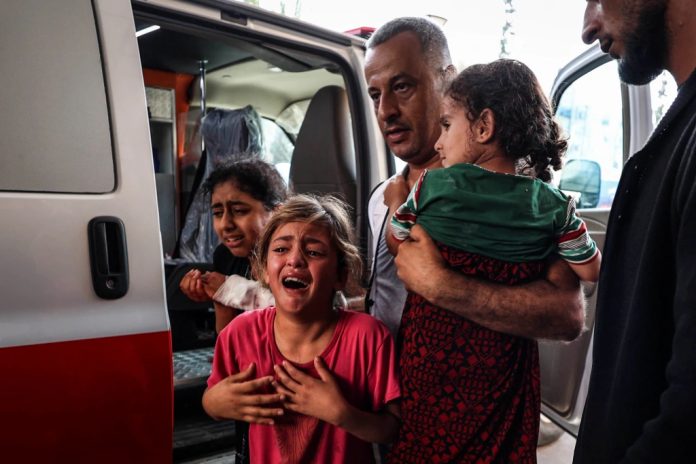
World will be judged for children suffering in Gaza Strip: WHO chief

Gaza War

“Rafiq is one of many children and young people in northern Gaza who are starving and suffering from grievous injuries. History will judge us all for what these children are enduring,” Tedros wrote on X.

He also demanded a cease-fire and urgent “unfettered, scaled-up humanitarian access” in Gaza.

Tedros noted at a news conference on Thursday that 16% of children younger than 5 in northern Gaza are malnourished — a rate that was less than 1% before the current conflict erupted.

He added almost all families are food insecure, with adults reducing their meals so that children can eat.

Tedros expressed concern about attacks on the Shifa Hospital and its surroundings, where 30,000 displaced Palestinians from northern Gaza have taken refuge from the Israeli bombardment, stating that access to the facility is impossible.

He also indicated that there are reports of health workers at the hospital being detained, noting that the WHO had to cancel a planned aid mission to the medical center Thursday due to security concerns.

Tedros said children in Gaza are dying from the combined effects of malnutrition, disease and lack of water and sanitation.

“The future of an entire generation is seriously at risk,” he added.

He expressed satisfaction with the recent delivery of food to Gaza via air and sea routes, but emphasized that expanding land crossings would enable large-scale deliveries to prevent famine.

“Our requests for aid delivery are often blocked or denied,” he stated.

Tedros urged Israel to open more border crossings to Gaza and accelerate the entry and distribution of water, food, medical supplies, and other humanitarian aid.

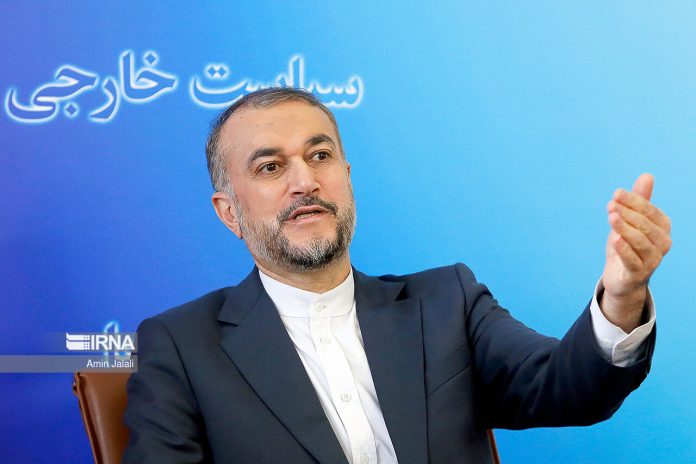
Israel trapped in Gaza quagmire: Iran FM

Hossein Amirabdollahian

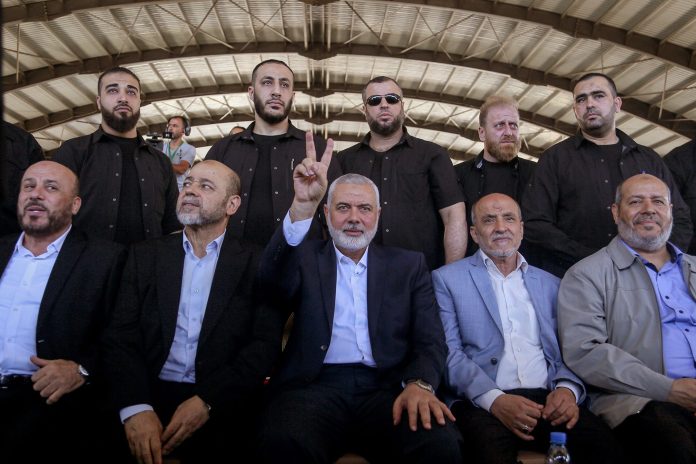
Amirabdollahian made the remarks during a phone call with Ismail Haniyeh, the head of the political bureau of the Palestinian Islamic resistance movement Hamas, on Thursday.

Haniyeh stressed the high spirit and power of the resistance fighters in standing up against the Zionist enemy’s war machine and the slaughter.

However, he said the humanitarian situation, especially in the northern Gaza Strip, is critical and stressed that the international community should take an immediate measure to deliver humanitarian aid to the people in Gaza and counter the inhumane Zionist regime’s policy of imposing famine and starvation against the people in Gaza, especially children.

The head of the political bureau of Hamas also touched on the latest political and regional efforts to stop the genocide and push for a prisoner exchange deal.

He said the conditions set by Hamas for the release of the captives are in accordance with the legitimate demands of the Palestinian people, noting that the Zionist regime stymies the process.

Haniyeh held Netanyahu and the Zionist regime responsible in case the talks fail.

For his part, Amirabdollahian said, “The world is aware that Netanyahu has reached the end of the line and is only struggling for his survival.”

The Iranian foreign minister echoed remarks by Leader of the Islamic Revolution Ayatollah Seyyed Ali Khamenei, that “With the people’s steadfastness and the Palestinian resistance, the Israeli regime is caught in a quagmire in the Gaza war.”

Meanwhile, the top Iranian  diplomat briefed Haniyeh on Iran’s latest diplomatic efforts and consultations, including active participation in international meetings on Palestine.

In a sharp criticism of the United Nations Security Council, Amirabdollahian stressed that responsible international institutions should take an urgent measure to stop the massacre of homeless people, women and children in Gaza and the Palestinian territories and immediately deliver unrestricted international humanitarian supplies to everyone in entire Gaza.

Israel has waged a military offensive on the Gaza Strip since an Oct. 7. Nearly 32,000 Palestinians, mostly women and children, have since been killed in Gaza, and more than 74,200 injured amid mass destruction and shortages of necessities.

US urges Qatar to pressure Hamas with expulsion from Doha as Gaza ceasefire negotiations stalled

Hamas

The pressure from the US came at a time when talks between Hamas and Israel had stalled, before the Palestinian group came back to the table with a new set of demands which were discussed this week in Doha.

The indirect talks, held between Israel and Hamas under Qatari and Egyptian mediation, were the first to be held in Doha at that level in weeks and are set to resume on Friday.

The message was delivered by Blinken to Qatar’s Prime Minister and Minister of Foreign Affairs Sheikh Mohammed bin Abdulrahman Al-Thani in a meeting in Washington on March 5, sources familiar with the matter said.

US officials stated that Qatar, which has been a critical partner to the US in efforts to reach a ceasefire deal, understood the message and received it without major pushback.

Qatari officials did not comment on the specific meeting but added that they are exerting immense pressure on Hamas. It is unclear if Qatar delivered the warning to Hamas leaders.

Hamas established a political office in Doha in 2012, with senior members of the group based there permanently. As a result, Qatar plays a crucial role in the region between Hamas and other nations.

While Blinken’s message this month was tough, the Joe Biden administration has been actively discussing with Qatar its relationship with Hamas since the group carried out its military operation on October 7.

On Thursday, Blinken said that the “gaps are narrowing” between Israel and Hamas to get a temporary ceasefire in exchange for the release of hostages, but conceded that “there’s still real challenges”.

“We’ve been working, as you know, with Egypt, with Qatar and with Israel to put a strong proposal on the table. Hamas responded to that,” Blinken stated during news conference in Cairo, Egypt, with Egyptian Foreign Minister Sameh Shoukry.

Blinken added he still believes a deal is possible, despite “difficult work to get there”.

“The teams are working every single day on this,” he said., adding, “There’s still real challenges. We’ve closed the gaps but there are still gaps.”

As Israel prepares for a possible operation in the Rafah region of Gaza, Blinken said the US believes Hamas “can be effectively dealt with without a major ground operation in Rafah”. He added a ground operation would “be a mistake”, and officials will outline alternative plans when an Israeli delegation goes to Washington, DC, next week.

UN: Satellite images show 35% of Gaza’s buildings destroyed or damaged

Gaza War

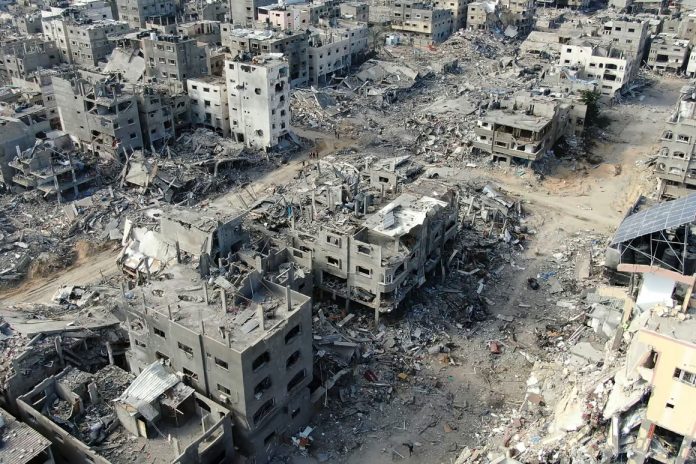
It found that 35 percent of all buildings in Gaza – 88,868 structures – had been damaged or destroyed. Among these, it identified 31,198 structures as destroyed, 16,908 as severely damaged, and 40,762 as moderately damaged.

This represents an increase of nearly 20,000 damaged structures compared to the previous assessment it did based on images taken in January when the total figure stood at 30 percent.

“The governorates of Khan Younis and Gaza have experienced the most significant rise in damage, with Khan Younis seeing 12,279 additional damaged structures and Gaza experiencing 2,010,” UNOSAT said.

“Khan Younis City has been hit particularly hard, with 6,663 newly destroyed structures,” it added.

Israel has waged a deadly military offensive on the Gaza Strip since an Oct. 7 cross-border attack by the Palestinian group Hamas in which some 1,200 Israelis were killed.

Nearly 32,000 Palestinians, mostly women and children, have since been killed in Gaza, and nearly 74,200 injured amid mass destruction and shortages of necessities.

The Israeli war has pushed 85% of Gaza’s population into internal displacement amid a crippling blockade of most food, clean water and medicine, while 60% of the enclave’s infrastructure has been damaged or destroyed, according to the UN.

Israel stands accused of genocide at the International Court of Justice, which in January issued an interim ruling ordering Tel Aviv to stop genocidal acts and take measures to guarantee that humanitarian assistance is provided to civilians in Gaza.

Russia announces new gains in Donbass, eastern Ukraine

Russia Ukraine War

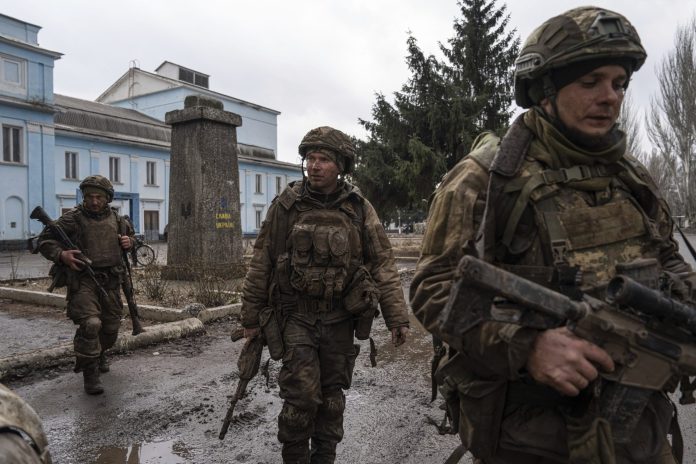
The village forms part of the Orlovka-Tonenkoye-Berdychi line, located to the northwest of the town. Over the past 24-hour period, Ukrainian forces have lost over 320 soldiers, a tank, four other armored and up to seven unarmored vehicles, according to Moscow’s estimates.

Earlier this week, the Russian military announced the liberation of Orlovka, effectively cutting the line in half and disrupting Ukrainian communications between Tonenkoye and Berdychi, with the latter continuing to see active combat.

The Ukrainian military has claimed it established stable defensive positions along the Orlovka-Tonenkoye-Berdychi line following the fall of Avdeevka. The defenses are primarily based on a system of ponds and canals stretching along the three villages.

Nevertheless, the combat situation along the line has promptly escalated, with the Ukrainians actively pouring reserves into the area, seeking to stabilize the front line. According to the Russian side, Kiev’s forces have been losing some 400 soldiers in the area daily, after repeatedly staging unsuccessful counterattacks.

The Orlovka-Tonenkoye-Berdychi line has seen the combat debut of US-supplied M1 Abrams tanks, which had long remained in reserve. A batch of 31 tanks was pledged to Kiev by the Pentagon early last year for a long-hyped yet ultimately disastrous summer counteroffensive. The tanks fully arrived in Ukraine only in mid-autumn, by which time the push was largely over. Prior to the fall of Avdeevka, the tanks had stayed away from the front line, starring in Ukrainian propaganda videos rather than participating in actual combat. At least four tanks of the type have been destroyed since late February, according to the Russian military.

World Cup Qualifiers: Iran dominates Turkmenistan 5-0

Iran Football Team

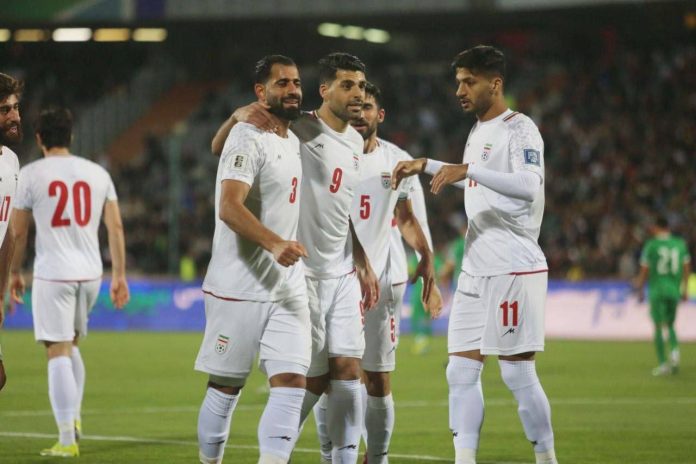
The match highlighted Iran’s formidable offensive prowess, with Mohammad Hossein Kananizadegan opening the floodgates with a goal in the 10th minute, followed swiftly by Sardar Azmoun’s precise strike in the 12th minute.

Kananizadegan continued his stellar performance, netting another goal in the 48th minute before Mohammad Mohebi added to the tally with a goal in the 56th minute.

Omid Noorafkan capped off the victory with a goal at the 91st-minute mark.

With Amir Ghalenoei in charge as the gaffer, Iran’s national football team have been unstoppable in Group E, collecting seven points and an impressive goal difference of nine.

With previous victories against Hong Kong and a draw against Uzbekistan, Iran’s journey to the World Cup appears promising.