Wednesday, December 24, 2025
Home Blog Page 986

US asked Iran to rein in Yemen’s Houthi strikes in secret talks: Report

Yemen Houthis

In keeping with past negotiations, the US and Iran didn’t engage directly but relied on Omani officials to carry messages. The meeting underlines how both Tehran and Washington are tapping backchannels to prevent their shadow war sparked by Israel’s war on Gaza from spilling over into a more intense regional conflict.

The White House’s top Middle East advisor Brett McGurk and Iran envoy Abram Paley led the talks on the US side, while Iranian Deputy Foreign Minister Ali Bagheri Kani represented Tehran, according to the FT.

McGurk has conducted several trips to the region since 7 October when the war between Israel and Palestine broke out after the Hamas-led attack on southern Israel. In January, Axios reported that he was set to visit Qatar and Egypt as part of efforts to reach a hostage deal between Hamas and Israel.

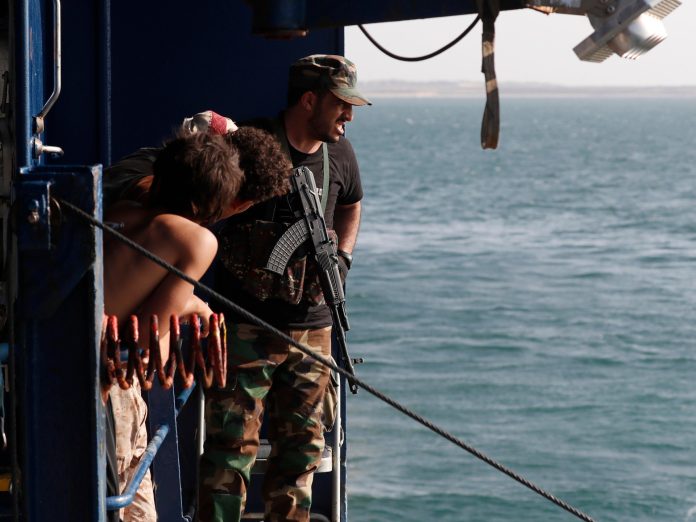
The Houthis began attacking commercial vessels in the Red Sea in November, in a move they said was done in solidarity with the Palestinians in the besieged enclave.

The US and UK have responded with direct strikes on the Houthis, but have so far been unable to deter the group backed by Tehran. On Monday, the group claimed responsibility for an attack on a Liberian-flagged merchant ship.

The US accuses Iran and Lebanese Hezbollah of arming, training and providing intelligence to the Houthis, but western officials say the Houthis also operate with some degree of autonomy.

Iranian officials have repeatedly stressed that the resistance groups in West Asia are not directed by Tehran and do not take orders from Tehran.

The Joe Biden administration sees indirect communication channels as “a method for raising the full range of threats emanating from Iran”, the FT said. The White House negotiators conveyed to the Iranians “what they need to do in order to prevent a wider conflict, as they claim they want”.

A second round of talks, reportedly scheduled for last month, was delayed because McGurk was focused on trying to help broker a ceasefire in the Israel-Hamas war. The conflict in Gaza also derailed efforts by the US to negotiate de-escalation measures with Iran, including limitations on the Islamic Republic’s uranium enrichment, the FT added.

Israel will lose Gaza war even if it invades Rafah: Hezbollah leader

Israeli Army

“The Israeli army today is tired and exhausted on all fronts,” Sayyed Hassan Nasrallah said in a televised address on Wednesday, adding, “The enemy’s senior experts acknowledge the strategic losses.”

Israel launched the war against Gaza on October 7 after Al-Aqsa Storm, a surprise operation by the coastal sliver’s resistance groups against the occupied territories that was staged in retaliation for the intensification of Tel Aviv’s decades-long crimes against Palestinians.

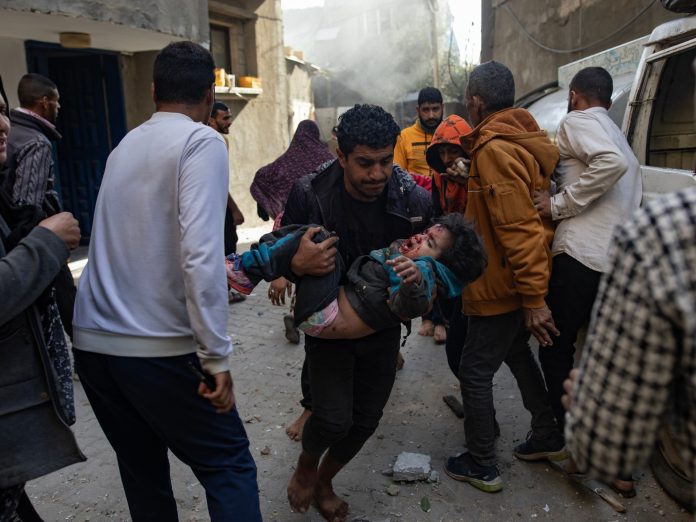
The regime has so far during the war killed more than 31,300 Gazans, most of them women, children, and adolescents.

“Gaza, which resists, fights, and endures in a scene close to a miracle and astonishing the world, is the culture of the Qur’an and it is a divine proof for the whole world,” Nasrallah said.

So far, during the military onslaught, the Israeli army has officially acknowledged losing around 590 forces and officers as a result of the resistance’s operations. The fatalities include 248, who have been killed in ground battles.

Narallah, however, asserted, “The number of its dead is very large and much greater than [what has been] announced,” adding, “We announce our martyrs on live broadcasts, but the enemy hides its dead, and this has an impact on the Israeli army.”

The Hezbollah leader noted that “on the northern front, there is extreme secrecy about the losses in terms of [Israeli] soldiers, military vehicles, and others.”

Lebanon’s al-Mayadeen television network reported recently that the Palestinian resistance’s operations against the Israeli forces in the northern Gaza Strip had confirmed the presence and strength of the resistance, and refuted the Israeli claims of imposing control over northern Gaza.

“After five months, the Israeli army has a shortage of personnel and wants to recruit 14,500 officers and soldiers and even wants to recruit the Haredim (ultra-Orthodox Israelis),” Nasrallah added.

He also pointed to a pledge by Tel Aviv to invade the southern Gaza city of Rafah, where the majority of the coastal territory’s 2.4-million-strong population has taken refuge from the ravages of the war.

The regime claims that by conducting the invasion, it will have realized its ambition of “eliminating” the Gaza-based resistance movement of Hamas.

Nasrallah, however, radically rejected the claim.

“Today, in the sixth month [of the war], [Israeli Prime Minister Benjamin] Netanyahu stands up to say that if we do not go to Rafah, we will lose the war,” the Hezbollah leader said.

“We say to Netanyahu that even if you go to Rafah, you have lost the war and you cannot eliminate Hamas or the resistance, despite all the massacres,” he added.

“One of the signs of defeat for the enemy is that the occupation is negotiating with Hamas in the sixth month of the war,” Nasrallah stated, adding, “Hamas is negotiating today on behalf of the resistance and not from a position of weakness, and it sets the conditions.”

He reminded that resistance fronts all across the region, namely in Lebanon, Iraq, and Yemen, were performing their duty towards lending support to their fellow resistance fighters in Gaza.

“We affirm our stand with the Palestinian resistance factions, especially with the leadership of Hamas…and we continue on the support fronts,” the Hezbollah leader said.

The pro-Palestinian operations staged by the regional resistance movements have seen them firing numerous missiles, drones, and rockets against Israeli targets or those belonging to the occupying regime’s supporters.

Yemeni forces have been targeting Israeli vessels or those heading towards the occupied territories’ ports, while Iraq’s Islamic Resistance have been firing numerous missiles and drones towards the occupied territories.

The resistance fronts have also been striking American targets in protest at the United States’ all-out political, military, and intelligence support for the war.

“The Islamic resistance in Iraq and its sending of marches and missiles to the entity is ongoing and ongoing,” Nasrallah noted, commending the Arab country’s resistance movements’ pro-Gaza operations.

“The support fronts are completing their work and we praise the Yemen front and its effects and blessings are very great, especially on the enemy’s economy,” he stated.

“Neither the Americans nor the British nor the Europeans who followed them were able to prevent the Yemeni brothers from striking ships heading to occupied Palestine,” Nasrallah said.

He was referring to anti-Yemeni strikes by the United States or those of its allies in the UK and Europe that have been launched in a failed attempt to stop Yemen’s pro-Palestinian operations.

Nasrallah, meanwhile, noted that the United States could easily end the ongoing aggression against Gaza and the simultaneous attacks that the Israeli regime has been staging against Lebanon.

“With the stroke of a pen, US President Joe Biden can stop the aggression in Gaza and Lebanon.”

Report finds Israel’s dishonest use of ‘humanitarian protective measures’ resulted in killing of more Palestinians in Gaza

Gaza War

The supposed measures have been part of Israel’s defence against charges of genocide levelled against it by South Africa at the ICJ for its conduct during its war on Gaza.

Forensic Architecture, which is based at London’s Goldsmith’s University, also suggested in its report, published on Wednesday, that what Israel characterises as humanitarian evacuations of Gaza residents may amount to their forced displacement, itself a war crime.

The research group has previously won recognition for its multi-disciplinary open-source research on conflict and state violence. It has presented evidence to the United Nations Security Council, the International Criminal Court and the European Court of Human Rights, among others.

In its defence against charges of genocide at the ICJ on January 12, Israel cited the existence of its Civilian Harm Mitigation Unit as evidence of the efforts its military made to avoid civilian casualties.

Among other items, lawyers representing Israel pointed to the efforts of the Unit to provide advance notice to civilians in targeted areas, including leafleting, radio broadcasts, and telephone calls, as well as providing maps detailing corridors to places it designated as safe.

Israel’s claims, as well as gaining significant traction in the international media, have also been a mainstay of its justification for its continued military campaign against Gaza.

But according to the study, Israel’s “evacuation orders” have “produced mass displacement and forced transfer, and contributed to the killings of civilians throughout Gaza”.

Since the war began in October, approximately two million Palestinians in Gaza have been displaced from the north to the south. Of these, the report notes, an overwhelming body of research, including its own, “documented Palestinian civilians being bombed, shot at, executed, arrested, tortured, treated in a degrading manner, and forcibly disappeared by the Israeli military along roads, corridors and zones declared ‘safe’”.

The outcome, Forensic Architecture noted, has been the deaths of more than 30,000 people in Gaza, more than 70 percent of whom are women and children, with thousands more missing, and tens of thousands more wounded.

The damage inflicted upon the population has been exacerbated by what the report called the “unparallelled and catastrophic levels of infrastructural destruction and agricultural damage, and the systematic targeting of vital civilian structures, including hospitals, schools, religious and cultural heritage sites, bakeries, and homes”.

Rather than serve as humanitarian measures intended to protect life, the study alleged that Israel’s evacuation orders have facilitated “displacement, fatalities, and genocidal acts” against Palestinians in Gaza.

Poor mapping, referred to within the report as “cartographic terror”, has also served to sow confusion and panic among Gaza’s displaced due to incorrect and vague instructions.

Forensic Architecture said that information provided by Israel to Palestinians in Gaza, ostensibly to provide them with access to safe zones, has been confusing, “resulting in cases of targeting and military bombardment of routes and zones designated as ‘safe’ by the Israeli military”.

Moreover, the report noted, the evacuation orders have often facilitated the movement of displaced civilians to areas of active Israeli military operations which, in numerous cases, has resulted in significant civilian fatalities.

Among the examples detailed are the January attacks on Khan Younis, Rafah and al-Mawasi, all of which had previously been deemed safe. The attacks resulted in numerous casualties, including children.

Under international law, civilians evacuated from conflict zones have to be provided with appropriate care during their displacement, with humanitarian chiefs noting in November that any safe zone must have “the essentials for survival, including food, water, shelter, hygiene, health assistance, and safety”.

However, the study said that since the conflict began on October 7, Israel has failed to provide protection for the displaced population, depriving “them of access to adequate food and water, humanitarian assistance, fuel, shelter, clothes, hygiene, sanitation, and medical care”, contravening the January ruling by the ICJ stipulating the acts Israel must undertake to avoid a potential conviction for genocide.

In other instances, large numbers of civilians were “knowingly” directed to areas that had been subjected to an evacuation order less than 24 hours previously and had since become unlivable.

Concerns were also raised about the arbitrary manner in which the Israeli military chose to redefine the status of civilians who were unable to leave the locations specified by the army’s evacuation orders.

One leaflet cited within the report warned civilians that “whoever chooses not to leave north Gaza to the south of Wadi Gaza [the stream bisecting the strip] might be identified as an accomplice in a terrorist organisation”, an injunction the authors note was in place throughout the campaign and effectively served to redefine Palestinian civilians unable to evacuate the region as potential combatants.

Iraqi security advisor does not rule out presence of Mossad agents in Erbil

Mossad

Baghdad is actively seeking information on Mossad’s activities within Iraq, he stated.

Al-Araji’s comments were made during an interview with Iraq’s Al-Ahed television channel, referencing Iran’s January missile attack on a facility near Erbil, which Tehran identified as a Mossad center.

Al-Araji acknowledged the possibility of “the presence of individuals with foreign passports from European countries who are collaborating with Mossad in Erbil”.

In January, he had claimed the targeted facility was not a Mossad headquarters, a conclusion he reached after personally inspecting the site.

At the time, Iran’s Islamic Revolution Guards Corps (IRGC) stated that their attack was aimed at a gathering of Israeli agents in a residence owned by Kurdish oil magnate Peshraw Dizayee.

Al-Araji told Al-Ahed that he had conveyed the findings of the investigation into the attack to Iraqi Prime Minister Mohammad Shia al-Sudani.

Iran has voiced concern for years that Western intelligence services, primarily those of the US and Israel, have intensified their anti-Iran operations based in Iraq’s Kurdistan region.

In his remarks, the Iraqi politician also addressed the presence of American troops in Iraq, affirming that the Arab government is resolutely working to conclude the mission of the US-led coalition in the country.

Al-Araji emphasized that Iraq does not require foreign military presence on its soil. He said the nation’s security forces are fully equipped to handle security challenges.

However, he said the government requires additional time to negotiate the withdrawal of American forces from Iraq.

Presently, Iraq is engaged in discussions with Washington to terminate the coalition’s presence.

These talks were initiated in January to reevaluate the US-led coalition’s role in Iraq, following a series of American strikes against the anti-terrorism Popular Mobilization Forces (PMF), which form part of Iraq’s security apparatus.

In 2020, Iraq enacted legislation to expel foreign troops, a move prompted by the US assassination of Iranian General Qassem Soleimani and PMF’s Deputy Commander Abu Mahdi al-Muhandis.

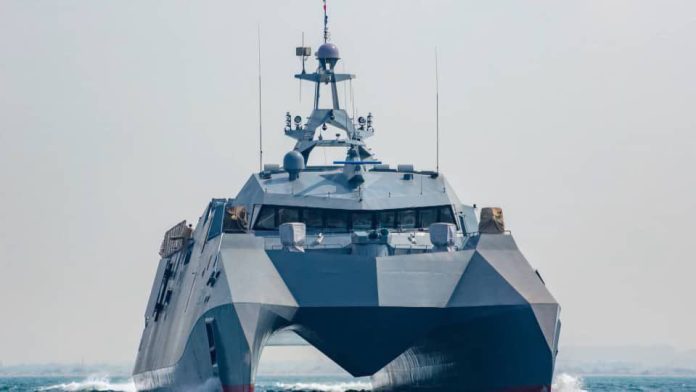
IRGC deploys new warships in joint drills with Russia, China

Shahid Soleimani military watercraft

Commander of the IRGC Navy’s Imam Ali Base in Chabahar, Rear Admiral Mohammad Nozari, said that Shahid Mahmoudi, Shahid Soleimani, and Shahdi Abu Mahdi al-Muhandis warships, Tondar-class Shahid Tavassoli frigate, as well as IRGC maritime helicopters and marines participated in the Maritime Security Belt 2024 war game.

Nozari noted that the IRGC warships, equipped with indigenously-manufactured sophisticated munitions, can undertake long-haul missions in oceans and open seas, and ensure prolonged naval presence.

The IRGC Navy has partaken in the naval exercise with three domestically-developed warships and two frigates, noting that the drills cover an expanse of 17 thousand square kilometers, and the exercise area includes three of the world’s five strategic straits, located in the northern Indian Ocean region, which is a crucial hub for energy and trade traffic globally, he added.

The senior IRGC Navy commander described consolidation of security in the region, promotion of multilateral cooperation among the participating countries, and the participants’ demonstration of jointly safeguarding global peace and maritime security as among the principal objectives of the Maritime Security Belt 2024 drills.

He further stated that the exercise features a variety of tactical maneuvers such as rescuing vessels on fire, liberating hijacked merchant vessels, striking designated targets, conducting night aerial target operations, and other tactical and operational drills.

Meanwhile, Rear Admiral Mostafa Tajeddini, spokesman for the joint war game, stated naval forces of Iran, Russia and China have successfully conducted a photo exercise (PHOTOEX), and practiced formation of various tactical patterns.

Tajeddini highlighted that all stages of the naval exercise are being monitored by the Islamic Republic of Iran Navy and the IRGC helicopters.

The two-day Maritime Security Belt 2024 naval drills kicked off on Tuesday. The naval and airborne units of the Islamic Republic of Iran Navy, together with their Chinese and Russian counterparts, are participating in the exercises.

Naval delegations from Azerbaijan, Kazakhstan, Oman, Pakistan and South Africa have taken part in the drills as observers.

Iranian filmmaker Farhadi acquitted of plagiarism accusation

A Hero Movie

Azadeh Masihzadeh, a former student of the Iranian filmmaker, had accused Farhadi of copying her documentary.

However, the Iranian court issued a verdict on Wednesday in the copyright infringement case based on the opinions of three prominent professors of Tehran University, experts and lecturers in the field of intellectual property rights, as well as four official art experts, who unanimously dismissed the plaintiff’s claims as baseless.

The ruling reads, “After separately examining the contents of the case and analyzing the legal and artistic aspects of the matter, all seven experts found the claims of the plaintiff invalid and ruled that the accusations against the filmmaker of the movie A Hero were baseless.”

Farhadi had earlier denied that his film movie is a work of plagiarism.

A Hero is the story of a man who finds a bag full of money and returns it, despite being on leave from prison over his debt.

The movie won the Grand Prix of the 2021 Cannes Film Festival.

Farhadi, a two-time Oscar winner, is considered one of the most prominent filmmakers of Iranian and world cinematography of the 21st century.

He rose to greater prominence becoming one of the few directors worldwide to have won the Academy Award for Best International Feature Film twice, for “A Separation” in 2011 and “The Salesman” in 2016.

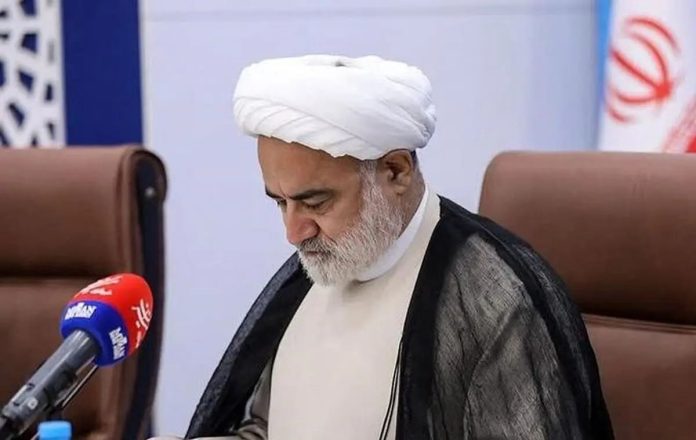
Iranian top judiciary official resigns over sons’ corruption charges

Iran’s First Deputy of the Judiciary Mohammed Mosaddegh

The Iranian Judiciary, in a statement, announced the Judiciary chief Gholam-Hossein Mohseni-Eje’i, accepted his deputy’s resignation because of his own insistence and “in order to remove the suspicion of any influence in the case.”

The Judiciary quoted Mohseni-Eje’i as saying: “Although your presence in this position does not and will not affect the handling of the mentioned case, based on your request and the points you raised, your resignation will be accepted.”

The now-former first deputy’s sons were involved in a case of large-scale embezzlements from banks.

According to the court verdict for the main in the case, 20 thousand billion tomans ($4.73 million) should be returned to the country’s banking system.

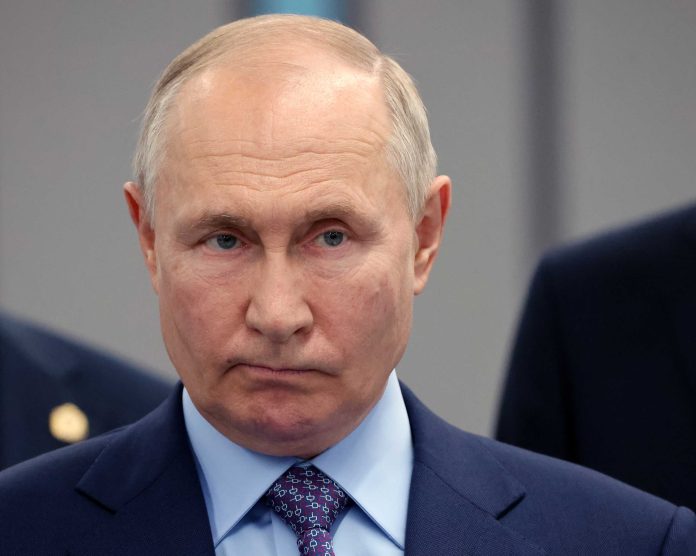
Putin warns west Russia ready for nuclear war

Vladimir Putin

Putin, speaking just days before a March 15-17 election which is certain to give him another six years in power, said the nuclear war scenario was not “rushing” up and he saw no need for the use of nuclear weapons in Ukraine.

“From a military-technical point of view, we are, of course, ready,” Putin, 71, told Rossiya-1 television and news agency RIA in response to a question whether the country was really ready for a nuclear war.

He added the U.S. understood that if it deployed American troops on Russian territory – or to Ukraine – Russia would treat the move as an intervention.

“(In the United States) there are enough specialists in the field of Russian-American relations and in the field of strategic restraint.”

“Therefore, I don’t think that here everything is rushing to it (nuclear confrontation), but we are ready for this,” the president stressed.

The war in Ukraine has triggered the deepest crisis in Russia’s relations with the West since the 1962 Cuban Missile Crisis and Putin has warned several times that the West risks provoking a nuclear war if it sends troops to fight in Ukraine.

Putin sent tens of thousands of troops into Ukraine in February 2022, triggering full-scale war after eight years of conflict in eastern Ukraine between Ukrainian forces on one side and pro-Russian Ukrainians and Russian proxies on the other.

Western leaders have promised to defeat Russia in Ukraine, but after two years of war, Russian forces control a little under one fifth of Ukrainian territory.

In a U.S. election year, the West is grappling with how to support Kyiv against Russia which has bolstered its army with hundreds of thousands of men and is rearming much faster than the West.
Kyiv says it is defending itself against an imperial-style war of conquest designed to erase its national identity. Russia says the areas it controls in Ukraine are now Russia.

Putin reiterated that the use of nuclear weapons was spelled out in the Kremlin’s nuclear doctrine, its policy setting out the circumstances in which Russia might use its weapons.

“Weapons exist in order to use them,” Putin stated, adding, “We have our own principles.”

Russia and the United States are by far the largest nuclear powers, controlling more than 90% of the world’s nuclear weapons.

Putin also stressed Russia was ready for serious talks on Ukraine.

“Russia is ready for negotiations on Ukraine, but they should be based on reality – and not on cravings after the use of psychotropic drugs,” he continued.

Reuters reported last month that Putin’s suggestion of a ceasefire in Ukraine to freeze the war was rejected by the United States after contacts between intermediaries.

If the United States conducted nuclear tests, Russia might do the same, he added in the wide-ranging interview.

“It’s not necessary … we still need to think about it, but I don’t rule out that we can do the same.”

Iran: Israel actions in Gaza have sounded alarm for “most unprecedented humanitarian disaster” of century

Gaza War

Amirabdollahian has submitted separate letters to Antonio Gutters, Secretary Generals of the United Nations, the president of the UN Security Council (UNSC), the secretary general of the Organization of Islamic Cooperation (OIC), as well as the foreign ministers of Muslim and non-Muslim countries on the incidents in Palestine, warning about the repercussions of the Zionist regime’s ongoing aggressive moves in the holy month of Ramadan.

In the letters, the Iranian foreign minister has stated, “With the advent of the holy month of Ramadan and under these circumstances that we witness the continuation of the United Nations Security Council’s failure to stop the war against the Gaza Strip and the West Bank in Palestine amid the United States’ open and deliberate obstruction of any effective move by the Council through extremely resorting to the right of veto, it is absolutely necessary and incumbent upon the international community to find practical ways and take serious measures to support the Palestinian people, immediately stop the military strikes against the Gaza Strip, and get it out of the current dire situation.”

Amirabdollahian has further said that “the continuation of the genocide in the Gaza Strip and Rafah and war crimes in the West Bank, as well as preventing the delivery of humanitarian aid and food to the Gaza Strip by the Israeli regime and the regime’s implementation of starvation of the people living in Gaza with the goal of continuing the genocide and the destruction of women and children have sounded the alarm for the most unprecedented humanitarian disaster in this century”.

“It is now evidently clear that one of the dangerous goals of the Israeli regime in completely blockading the Gaza Strip and preventing the delivery of immediate and sufficient humanitarian aid, is to set the stage for social and civil collapse, and to ruin all signs of Palestinian life and identity, and to forcibly displace those living in the Gaza Strip and the West Bank, and making them migrate to the neighboring countries and this approach proves that the criminal regime is deliberately pursuing the policy of total annihilation of the Palestinian nation and identity,” the letters read.

The Iranian top diplomat noted that the Islamic Republic of Iran strongly condemns the Israeli regime’s moves to separate the north of the Gaza Strip from the south, resort to starvation for the forced migration of people from northern Gaza, plan attacks on Rafah, bar people from returning to their residential areas in Gaza, and prevent the access of the UN aid agencies to all the residents of the region.

He pointed out it is the immediate responsibility of the international community and organizations, especially the UN, to stop the disaster.

Amirabdollahian added, “After the slaughter of over 31,000 Palestinian people during the past months, by preventing the delivery of immediate humanitarian aid and food to the Gaza Strip, the Israeli regime is now seeking to pursue the mass, gradual and painful killing of the remaining people in Gaza. Hence, in this critical situation, Your Excellency, as the Secretary General of the United Nations, are expected to prevent the humanitarian disaster of the contemporary century from unfolding by once again invoking Article 99 of the United Nations Charter and other possible mechanisms.”

The Iranian foreign minister concluded the letters, writing, “On the first day of the holy month of Ramadan, by warning about the open genocide of a nation, I emphasize once again on the necessity to take effective measures in order to stop the occupying Israeli regime from any possible aggression in Holy Al-Quds against Palestinian worshipers during the holy month of Ramadan.”

Defense minister: Iran self-sufficient in making drone engines, five-fold increase in defense products exports

Mohammad Reza Ashtiani

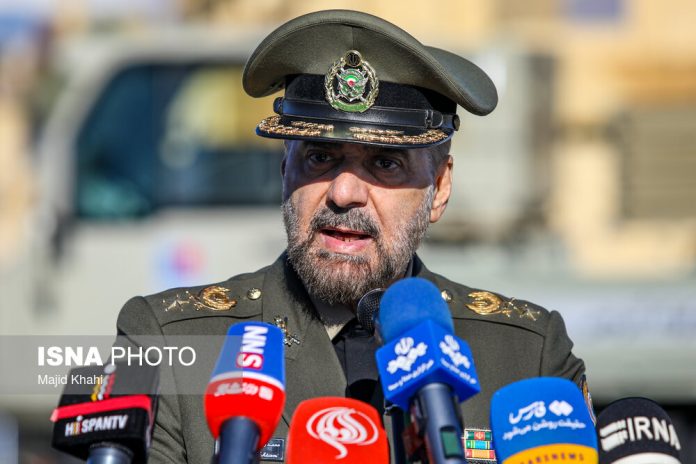
Addressing reporters on the sidelines of a cabinet meeting on Wednesday, the defense minister said the export of defense products “had a surge of about 4 to 5 times compared to the last 2 years. Due to the innovations and the weapons that are made, this amount will increase further in the coming years.”

Brigadier General Ashtiani added Iran is pursuing its aerospace agenda and is expanding its activities to launch new satellites into orbit next year.

He also commented on the maritime drills being held by the Iranian, Russian, and Chinese naval forces near the Sea of Oman, saying the maneuvers pursue multiple goals, including a display of power and upgrading cooperation among allied forces.

The defense minister also said Iran has increased its interaction in the fields of security and defense with other countries, including Armenia, Qatar, Russia and Turkey.