Monday, December 22, 2025
Home Blog Page 950

US bracing for “inevitable” Iran’s attack

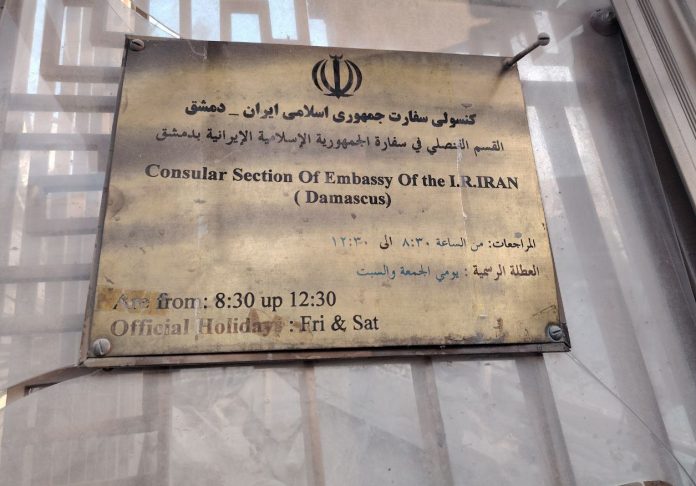
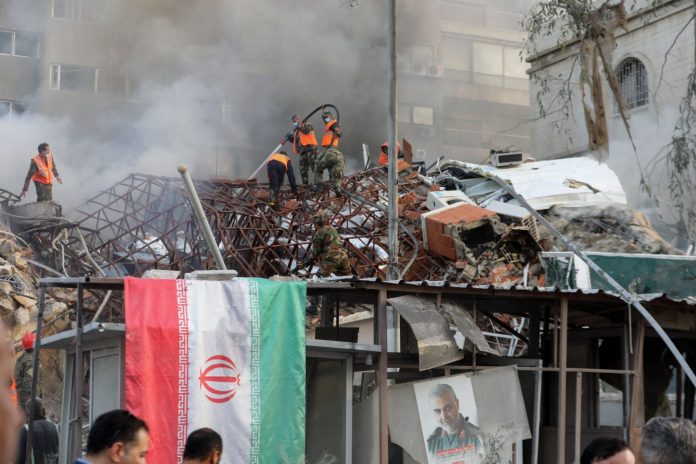
Israeli strike on Iranian consulate in Syria

A senior official told CNN that the US government believes retaliation by Iran is “inevitable”, and added that the Israelis share this assessment. Officials warned that an attack could come as soon as next week.

According to officials who spoke to NBC News and CBS News, American intelligence suggests that Iran could use “a swarm” of Shahed kamikaze drones and cruise missiles, and that Tehran could target an Israeli diplomatic or consular facility.

The potential attack was discussed during a phone call between President Joe Biden and Israeli Prime Minister Benjamin Netanyahu on Thursday, CNN reported.

There were no major attacks on US personnel in the region since late January when a kamikaze drone killed three soldiers stationed at a remote outpost near the Jordanian-Syrian border.

Leader of the Islamic Revolution Ayatollah Seyyed Ali Khamenei promised that Israel will “receive a slap in the face”. Officials in Tehran also made threats against the US, although Washington claimed that it was unaware that the strike on Iran’s mission in Damascus would happen.

UN chief warns Israel has brought ‘relentless death and destruction’ to Gaza Strip

Gaza War

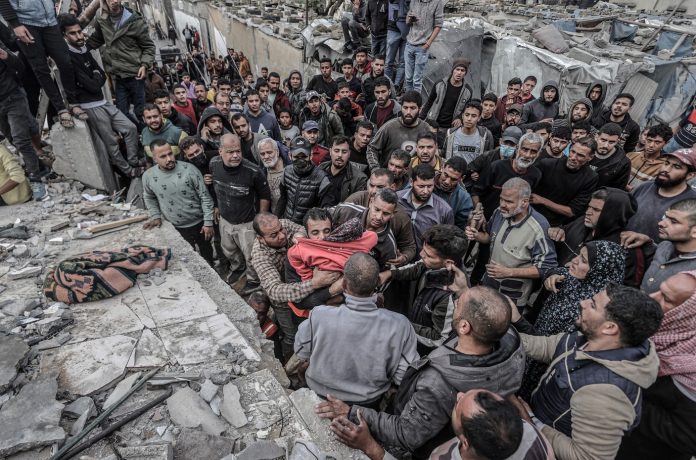
In a speech marking six months since Israel’s war on Gaza began, the UN chief said that “nothing can justify the collective punishment of the Palestinian people”.

“Lives are shattered. Respect for international humanitarian law is in tatters,” he added.

“During my visit to the Rafah crossing 10 days ago, I met veteran humanitarians who told me categorically that the crisis and suffering in Gaza is unlike any they have ever seen,” Guterres said, adding that long lines of trucks with aid continued to face “obstacle after obstacle”.

“When the gates to aid are closed, the doors to starvation are opened.”

“More than half the population – over a million people – are facing catastrophic hunger. Children in Gaza today are dying for lack of food and water,” he continued, adding, “This is incomprehensible, and entirely avoidable.”

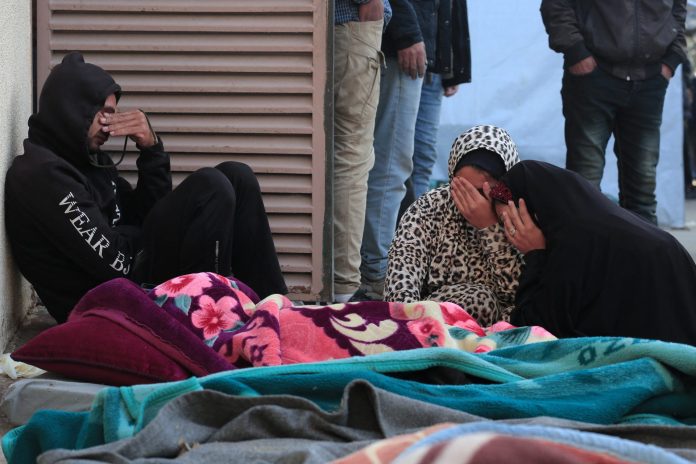
Since Israel’s war on Gaza began on October 7, more than 33,000 people have been killed, according to health authorities. Hundreds of thousands have also been displaced and aid organisations warn that the strip is on the brink of famine.

The UN secretary-general said he sincerely hoped Israel will quickly and effectively boost aid access to the Gaza Strip.

Israel has approved the reopening of the Beit Hanoon (Erez) crossing into northern Gaza and temporary use of Ashdod port in southern Israel after US President Joe Biden demanded steps to alleviate the humanitarian crisis in Gaza, saying conditions could be placed on US support for Israel if it did not act.

Global outrage at the humanitarian crisis in the Palestinian enclave of 2.3 million people escalated after an Israeli air attack on Monday killed seven people working for US-based food charity World Central Kitchen.

The UN says nearly 200 humanitarian workers have now been killed in the war.

Guterres also said he was “deeply troubled” by reports that the Israeli military has been using artificial intelligence to help identify bombing targets in Gaza. The Israeli military has denied AI was used to identify suspected fighters and targets.

“No part of life and death decisions which impact entire families should be delegated to the cold calculation of algorithms,” the UN chief added.

Guterres also called Hamas’s October 7 attack “a day of pain for Israel and the world”, said he mourned for those killed “in cold blood”, and called for the unconditional release of all the captives still held in Gaza.

Israel has announced some 1,200 people were killed during the October 7 attack and more than 200 taken captive – dozens of whom have since been released.

Poll shows public support for Netanyahu’s government in decline amid Gaza war

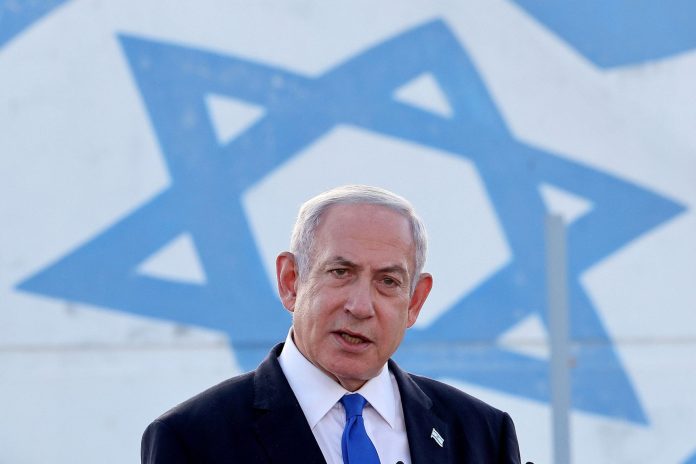
Benjamin Netanyahu

A poll published on Friday by the Israeli daily Maariv highlights a consistent decline in the Likud Party’s popularity, led by Netanyahu, similar to previous polls conducted after Oct. 7, 2023, the date the devastating war on Gaza commenced.

The latest poll, conducted by Lazar Institute on a random sample of 528 Israelis with an estimated error rate of 4.4%, showed that if elections were held today, the National Unity party would secure 32 seats in the 120-seat Knesset up from its current 12 seats.

In contrast, the poll indicated that the Likud party would only secure 17 seats, down from its current 32 in the parliament.

The opposition Yesh Atid party led by opposition leader Yair Lapid would obtain 15 seats, the poll said.

Meanwhile, the opposition New Hope party led by Gideon Sa’ar, which withdrew from the National Unity party, would obtain four seats.

The opinion poll showed the group supporting Netanyahu would win 44 seats, while the group against him would win 66 seats.

To form a government in Israel, at least 61 votes are required in the Knesset. This suggests that if elections were held today, Netanyahu would not be able to form a government.

Given Netanyahu’s reluctance to hold early elections, there is no imminent prospect of a vote in Israel.

The poll also showed that 42% of participants support holding elections now, while 50% say that elections must be held after the war.

Regarding the protests demanding a hostage exchange deal with Hamas, 46% of the participants considered that the escalation of protests “does not promote” the return of Israeli hostages, while 31% of the protests supported the escalation, at a time when 23% did not specify their opinions.

Israel has waged a deadly military offensive on Gaza since an Oct. 7 cross-border attack led by Hamas in which nearly 1,200 Israelis were killed.

Nearly 33,100 Palestinians have since been killed and more than 75,700 injured amid mass destruction and shortages of necessities.

The Israeli army has also imposed a blockade on the Gaza Strip, leaving most of the population, particularly residents of the north, on the verge of starvation.

The Israeli war has pushed 85% of Gaza’s population into internal displacement amid acute shortages of food, clean water, and medicine, while 60% of the enclave’s infrastructure has been damaged or destroyed, according to the UN.

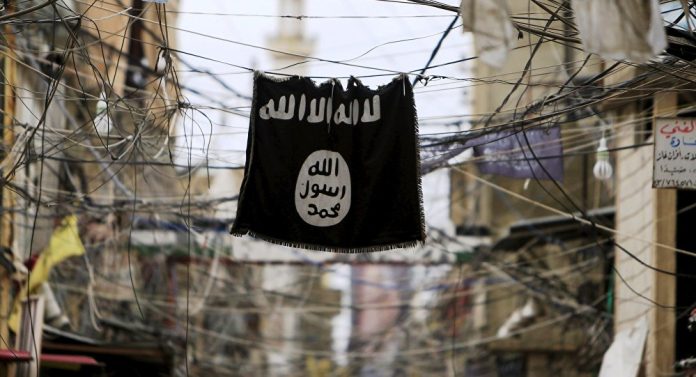
Iran arrests senior Daesh militant in Alborz

Daesh

General Saeed Montazer al-Mahdi said Mohammad Zaker, alias Ramesh, who is a top leader of terrorist group’s operations was nabbed in Mahdasht.

The police spokesman said the police had Ramesh and his team on their radar and acted on a “timely tip-off” by a citizen.

The senior police official said the individuals “were placed in the police intelligence net in two separate operations,” adding the police caught them after shooting at their car.

Meanwhile, eight other people who were accompanying the terrorists were also arrested, the police official further said, adding details will be announced later.

General Montazer al-Mahdi said the terrorist group was planning to carry out a suicide attack on Eid al-Fitr, a festivity which marks the end of the holy fasting month of Ramadan, expected to fall on Wednesday.

The arrest comes days after Iranian intelligence forces nabbed two members of the Daesh Khorasan terrorist group in the holy shrine city of Qom, south of Tehran.

In recent years, Iran has been targeted by a couple of terrorist attacks by Daesh, which reared its head in Iraq and Syria, but spread to other parts of the region and beyond. However, it was militarily defeated in 2017.

Hezbollah chief: Iran to respond to Israeli deadly attack on Syria consulate

Israeli strike on Iranian consulate in Syria

Nasrallah made the remarks in a televised speech broadcast in the capital Beirut on Friday on the occasion of the International Quds Day. The pro-Palestinian event is held on the last Friday of the holy month of Ramadan every year based on a call by the late founder of the Islamic Republic Imam Khomeini.

He noted that, despite six months of war on Gaza, Israeli Prime Minister Benjamin Netanyahu has stopped short of realizing all of the goals he had been seeking to achieve through the military campaign, including elimination of the coastal sliver’s resistance groups and returning those who were taken captive by the resistance during al-Aqsa Storm.

“The massacres and starvation that the enemy is waging in Gaza is aimed at mounting pressure and intimidation, since the enemy has no horizon before it, neither in the field, nor in negotiations,” he said.

“Netanyahu and his coalition have no choice but to stop the war, and this in itself is a loss for them.”

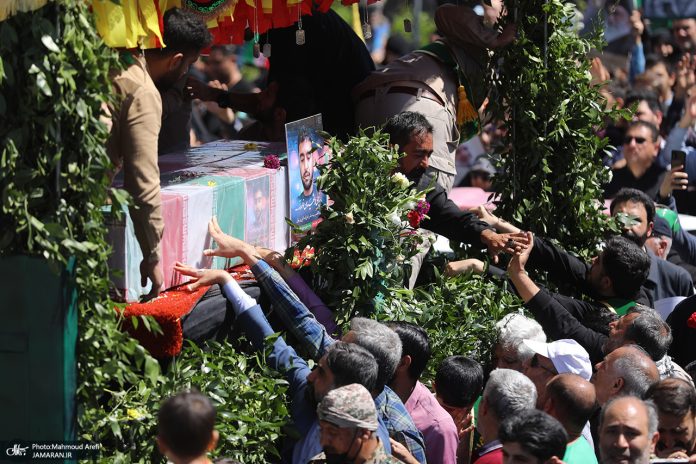
The Hezbollah leader also pointed to the recent terrorist attack by the Israeli regime against the consular section of Iran’s Embassy in the Syrian capital Damascus, which killed seven members of the IRGC.

“Be certain that the Iranian response regarding the issue of the Iranian consulate will inevitably come,” he stated.

“The foolishness that was committed by Netanyahu concerning the attack on the Iranian consulate will open the door to resolution of this battle,” Nasrallah predicted.

Pakistan says looking forward to President Raisi’s visit to Islamabad

Ebrahim Raisi

Addressing her weekly press briefing, فhe Pakistani Foreign Ministry spokesperson, Mumtaz Zahra Baloch, offered Islamabad’s invitation to President Raisi for an official visit.

“Pakistan and Iran have re-engaged and revived all bilateral channels of communication that existed prior to January and there are a number of areas of cooperation including in the trade domain,” she said.

“There is a high-level delegation from Iran currently in Pakistan where all aspects of bilateral relations between Pakistan and Iran will be discussed,” added the spokesperson.

She did not announce any date for President Raisi’s anticipated visit. Still, she said, “I can underline that the people of Pakistan and the Government of Pakistan are looking forward to the visit at an early date.”

In a phone conversation with Pakistani prime minister on March 5, President Raisi said Iran is ready to expand all-out relations with Pakistan.

Shehbaz Sharif stated that Iran and Pakistan can take effective steps to secure their mutual interests based on the deep friendship between their people.

The two neighboring countries witnessed an escalation of cross-border tensions over Iran’s counter-terrorism operations. On January 16, Iran launched simultaneous drone and missile attacks on two bases of Jaish ul-Adl, a terror outfit that was formed in 2012 and has conducted several attacks on Iranian soil in recent years.

The group claimed responsibility for an attack in December 2023 on a police station in the southeastern city of Rask that killed at least 11 Iranian police officers.

On January 10, another attack by the group on a police station in the city killed one officer.

Pakistan carried out strikes on January 17 against, what it called were, bases of the separatist Baloch Liberation Front and Baloch Liberation Army in regions close to Iran’s border which Tehran slammed as unbalanced.

The two countries fully restored ties in the next weeks as ambassadors resumed duties in late January.

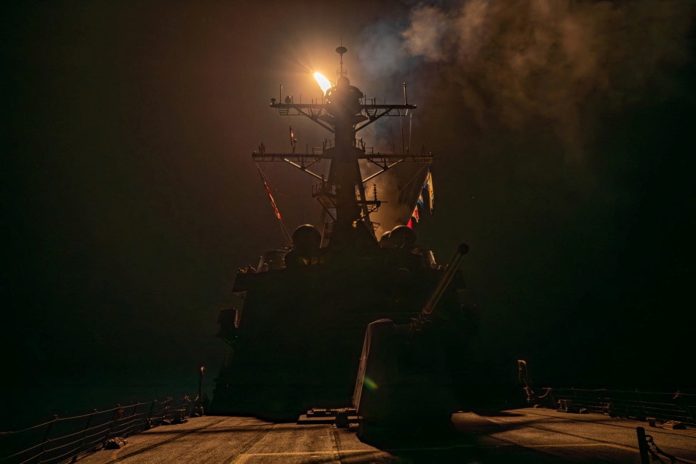
Houthis say dozens killed in US-UK airstrikes on Yemen since January

US UK Yemen Attack

Abdulmalik al-Houthi disclosed the figures in a televised address aired by the Houthi-run Al-Masirah television channel on Thursday.

He said in the past three months, his group had recorded 424 raids and naval shelling by the US and UK on Yemen.

Al-Houthi stressed that raids had failed to prevent the group from carrying out its operations in the Red Sea against Israel-linked ships.

He noted that his group has so far targeted 90 Israeli, American and British ships and vowed to continue its military operations in the Red Sea and Arabian Sea.

In support of the Gaza Strip, the Houthi rebels have carried out dozens of drone and missile attacks on the Israeli-linked commercial vessels traversing the Red Sea, disrupting shipping traffic through one of the world’s most important maritime corridors. As a result, many major shipping companies have stopped using the Suez Canal and are instead redirecting ships around the Cape of Good Hope in southern Africa.

After the US and the UK conducted a number of strikes on Houthi facilities in Yemen, the group warned it would now also attack ships affiliated with both nations.

Attacks on vessels in the Red Sea region decreased traffic via the Suez Canal, a vital route between Asia and Europe that ordinarily handles about 15% of global maritime trade.

Iran says has communicated with US following Syria strike

Mohammad Jamshidi added that Iran called on the US to get out of the way if it wants to not get hit.

According to Jamahidi, t Washington urged Tehran to not hit US targets when it intends to exact revenge on the Israeli regime for its recent attack on the Iranian Embassy in Damascus.

The attack by the Zionist regime killed Seven iranian military advisors including General Mohammad Reza Zahedi.

The attack angered many people in Iran with officials including leader of the Islamic Revolution vowing an appropriate response to the aggression.

After Iran threatened to respond to the Israeli bombing of its embassy, the Zionist regime has put its forces and embassies in foreign countries on high alert and shut down several diplomatic missions.

Israel restricts Palestinians’ access to Al-Aqsa Mosque on Quds Day

Al-Aqsa Mosque

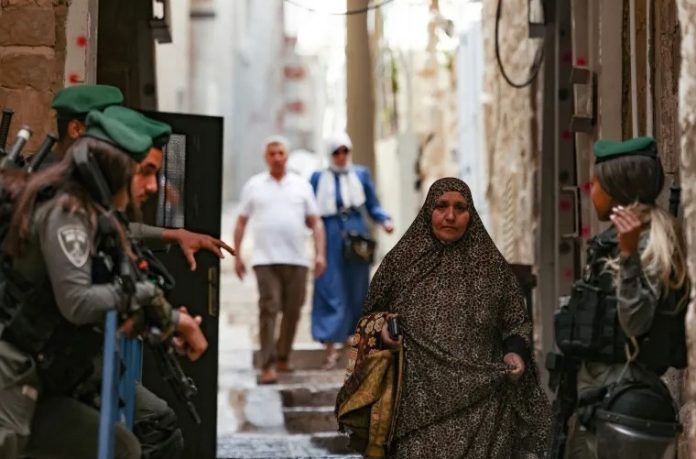
The Israeli army deployed its forces at the crossings leading to Jerusalem, scrutinizing the identities of Palestinians and denying entry to some of them.

The Qalandia crossing in northern Jerusalem and the Checkpoint “300” in the south of the city witnessed active movement at the entry gates from the West Bank toward Jerusalem.

A 78-year-old Palestinian, Ibrahim Abayat, told Anadolu that he was prevented Friday morning from reaching Jerusalem without any valid reason.

He pointed out that he had obtained a special permit three days ago but the Israeli forces refused to allow his entry.

Nihaya Nassar, 71, stated the Israeli authorities prevented her from entering Jerusalem under the pretext of not obtaining a special permit.

This special permit requires the issuance of a magnetic card which takes 12 days to obtain, Nassar continued, adding she was sad to have missed the last Friday of the Muslim holy month of Ramadan.

On Saturday night, tens of thousands of Palestinians are expected to celebrate Laylat al-Qadr, the holiest night of Ramadan, in the Al-Aqsa Mosque.

The Israeli police announced on Thursday that it will deploy 3,600 personnel in the city of East Jerusalem between Friday prayers and Saturday morning.

Before the start of Ramadan, the Israeli government announced that “during the Fridays throughout the month of Ramadan, people from Judea and Samaria (the Torah name for the West Bank) will be allowed to enter Jerusalem subject to possessing a valid magnetic (security) permit and assessing the security situation.”

The army added that only men over the age of 55, women over the age of 50, and children under the age of 10 will be allowed into Jerusalem.

The new measures do not include residents of the Gaza Strip, where Israeli authorities prohibit their entry into Jerusalem except with special permits.

Israel has waged a deadly military offensive on Gaza since an Oct. 7 cross-border attack by the Palestinian resistance group Hamas, in which nearly 1,200 Israelis were killed.

More than 33,000 Palestinians, mostly women and children, have since been killed and more than 75,600 injured amid mass destruction and shortages of necessities.

The Israeli army has also imposed a blockade on the Gaza Strip, leaving most of the population, particularly residents of the north, on the verge of starvation.

The Israeli war has pushed 85% of Gaza’s population into internal displacement amid acute shortages of food, clean water, and medicine, while 60% of the enclave’s infrastructure has been damaged or destroyed, according to the UN.

UN rights council demands halt to weapons sales to Israel

Gaza War

The resolution — which passed with 28 of the council’s 47 member states voting in favour, six opposed and 13 abstaining — marked the first time the United Nations top rights body has taken a position on the bloodiest-ever war to beset the besieged Palestinian territory.

Meirav Eilon Shahar, Israel’s ambassador to the UN in Geneva, slammed the resolution as “a stain for the Human Rights Council and for the UN as a whole”.

The strongly worded text called on countries to “cease the sale, transfer and diversion of arms, munitions and other military equipment to Israel… to prevent further violations of international humanitarian law and violations and abuses of human rights”.

It stressed that the International Court of Justice ruled in January “that there is a plausible risk of genocide” in Gaza.

Friday’s resolution, which was brought forward by Pakistan on behalf of all Organisation of Islamic Cooperation (OIC) member states except Albania, also called for “an immediate ceasefire” and “for immediate emergency humanitarian access and assistance”.

“We need you all to wake up and stop this genocide, a genocide televised around the world,” Palestinian ambassador Ibrahim Mohammad Khraishi told the council before the vote.

Shahar meanwhile told council members that “a vote yes is a vote for Hamas”.

Key ally, Washington, heeded Israel’s call to vote no, as did Germany, Argentina, Bulgaria, Malawi and Paraguay.

US ambassador Michele Taylor agreed that “far too many civilians have been killed in this conflict and that every civilian death is a tragedy”, acknowledging that “Israel has not done enough to mitigate civilian harm”.

But she stated Washington could not support the text, which she said contained “many problematic elements”, including its failure to specifically condemn Hamas and its October 7 attacks.

Friday’s vote came after the UN Security Council in New York last week also finally passed a resolution calling for a ceasefire, thanks to an abstention from Washington.

The war in Gaza war began after Hamas’s October 7 attack, which resulted in the deaths of about 1,200 people in Israel.

Palestinian fighters also took more than 250 hostages on October 7, and 130 remain in Gaza, including 34 who the army says are dead.

Since then, Israel’s relentless military assault has killed at least 33,000 people, mostly women and children, according to the health ministry in the besieged enclave.

While the rights council resolution did not name Hamas, it did condemn the firing of rockets at Israeli civilian areas and demanded “the immediate release of all remaining hostages”.

It repeatedly named Israel, demanding that it end its occupation of all Palestinian territories and “immediately lift its blockade on the Gaza Strip and all other forms of collective punishment”.

The text, which was revised late on Thursday removing several references to genocide, continued to express “grave concern at statements by Israeli officials amounting to incitement to genocide”.

And it urged countries to “prevent the continued forcible transfer of Palestinians within and from Gaza”.

It warned in particular “against any large-scale military operations in the city of Rafah” in the south of the densely populated Gaza Strip, where well over one million civilians are sheltering, warning of “devastating humanitarian consequences”.

The resolution also condemned “the use of starvation of civilians as a method of warfare in Gaza”, where the UN has warned that famine is looming.

The text insisted on the “imperative of credible, timely and comprehensive accountability for all violations of international law” in Gaza.

It called on UN war crimes investigators — tasked with probing the rights situation in the occupied Palestinian territories even before October 7 — to look into all “direct and indirect transfer or sale of arms, munitions, parts, components and dual use items to Israel … and “analyse the legal consequences of these transfers”.