Sunday, December 21, 2025
Home Blog Page 938

Iran produces unique pollinating module for drones

Iran produces unique pollinating module for drones

Amin Talaeezadeh, CEO of Sharif Agricultural Robotics Company (Sharif Agrobot), said the aerial pollination module has been manufactured for the first time in the country, and it works in the form of powder spraying.

According to Talaeezadeh, the module has been tested on two drones: DJI T16 and Sharif Agrobot S20, and a key feature of the device is that it can work completely independently without connection to any wire and with its own battery and sensors.

To use it, simply remove the tank of your sprayer drone and install the pollinator module instead, he said.

Currently, the technology used to make the UAV is only owned by the United States and Iran but the Iranian company’s module is better equipped and smarter than the US one, the official added.

Israel ‘in complete panic’ over Syria attack response: Military aide to Iran’s Leader

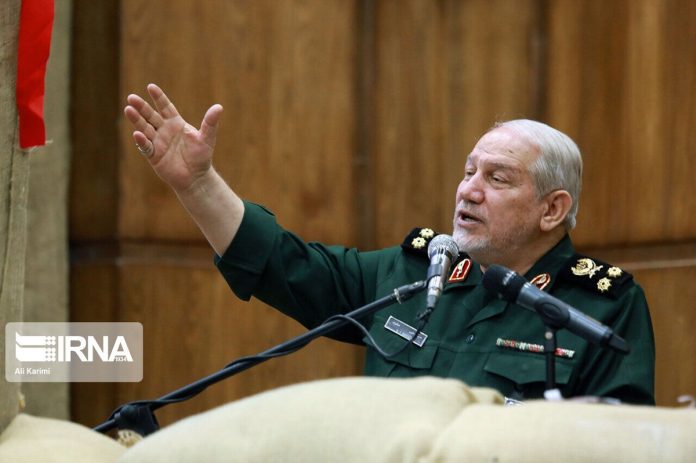
Major General Yahya Rahim Safavi

Rahim Safavi added the Israeli regime has put on hold its invasion of Rafah, in southern Gaza, pending Iran’s response as to when and where it might happen.

Referring to the explicit stance of the Supreme Leader regarding the retaliatory attack against the Zionist regime, he said the warning has rocked all political and military organizations of the Zionist regime.

General Rahim Safavi said the differences among Israel’s political and military ranks have intensified as everybody knows the consulate of a country is regarded as its land.

The top Iranian military figure said by the grace of the Almighty God, the Israeli regime and its American supporters will be defeated.

He added the victory of the Resistance Front and the Palestinian nation is certain, in a move led by Iran.

Rahim Safavi went on to say that contrary to the US and Israel’s plans, a new Middle East and West Asia will come into existence with Iran and the Resistance Front being as the central theme, and the Israeli regime as well as the US as the losers.

Ukrainian soldiers feel betrayed by new conscription rules: Report

Russia Ukraine War

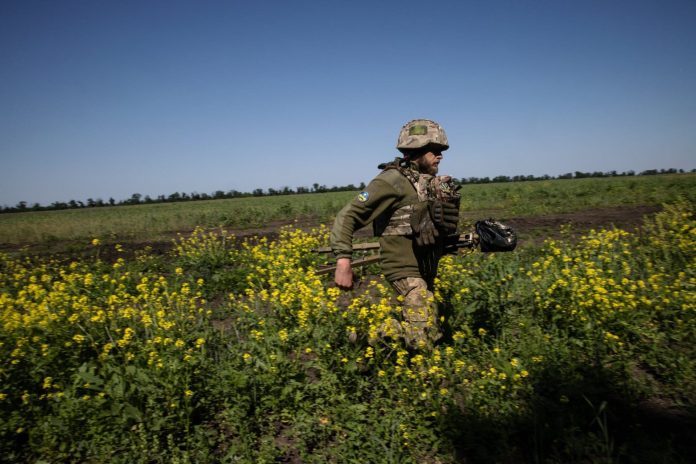
The parliament in Kiev approved the long-debated law but without the demobilization clause, reportedly at the urging of General Aleksandr Syrsky, the commander-in-chief of Ukraine’s armed forces. This means that everyone drafted into the armed forces will have to serve until the conflict is over.

“It’s a disaster,” AFP quoted a 46-year-old artilleryman on the Donetsk front, identified only as Alexander.

“When a person knows when he is going to be demobilized he will have a different attitude. If he is like a slave then it will not lead to anything good,” he added.

Soldier Yegor Firsov posted a rant about the new law on Facebook, arguing that the troops already in service have been “demotivated” by the last-minute change and feel “fooled and used”.

“It says our efforts are not appreciated,” Firsov wrote, according to Politico’s EU edition, which noted the discontent among “war-weary troops”.

Ukraine has mobilized tens of thousands of troops since the conflict with Russia escalated in 2022. Kiev has struggled to keep frontline units above 35% strength, however, due to mounting casualties. President Volodymyr Zelensky recently signed a law allowing the conscription of 25-year-olds, despite warnings of a possible demographic collapse.

Kiev’s military appears to have been the driving force behind removing the demobilization provision. A letter from Syrsky to Defense Minister Rustem Umerov urged him to leave the matter to a future bill, as the military could ill-afford losing tens of thousands of fighters come February 2025, according to the Guardian.

On Friday, Ukrainian Defense Ministry spokesman Dmitry Lazutkin confirmed that demobilization was excluded at Syrsky’s request and endorsed his judgment because he “understands the operational situation” and “the threats and risks facing the state”, the New York Times reported.

Lazutkin has previously admitted that the troops fighting since 2022 “are getting tired and exhausted”, but said that now was not the time for “hasty” decisions. The government will draft a separate bill on rotation and demobilization, he added, but this could take up to eight months.

If and when Zelensky signs the bill into law, it will force all men aged 18-60, including Ukrainian nationals residing outside the country, to register for conscription. Summons for mobilization would become automated and the punishments for defying them more severe, while local governments would be required to help with the process.

Kiev has not made public how many troops it intends to raise through the new measures. The Washington Post noted that the “unpopular” mobilization of hundreds of thousands “risks stoking panic”.

Germans do not believe Ukraine can win war against Russia: Survey

Russia Ukraine War

The number of skeptics in Germany continues to grow, according to the survey results from Politbarometer. While in August, 70% of respondents said they did not see Kiev winning, currently as many as 82% of those surveyed do not believe it can prevail.

Less than half of Germans want their government to send more military aid to Ukraine, the poll showed. According to the data, 42% of respondents are in favor of stronger support, while 31% want it to remain at the same level and 22% believe that it should be reduced.

Germans are increasingly concerned about the possibility of a bigger conflict breaking out on the European continent that would require direct involvement of the nation’s armed forces, Politbarometer found. As many as 53% of respondents called such a prospect either a “serious” or “very serious” concern.

Most people in Germany also believe that the military would not be up to the task of fighting a full scale war. Almost 80% of respondents said that the German armed forces, or Bundeswehr, would be poorly positioned in the event of conflict, even as part of NATO. Only 13% said otherwise.

The Politbarometer survey was conducted by the Mannheim Research Group on behalf of ZDF between April 9 and April 11 and involved 1,254 eligible voters across Germany.

The data comes a month and a half after another poll showed that only 10% of people across 12 EU countries believed that Ukraine could triumph over Russia on the battlefield. Twice as many respondents (20%) expected Moscow to emerge victorious and 37% of those questioned believed that the conflict would end with some form of compromise, the results published by the European Council on Foreign Relations (ECFR) in late February showed.

One Palestinian killed, several injured in settler attack on West Bank village

West Bank

The attack, which lasted for hours, came after an Israeli teenager went missing from their settlement, with Israeli security forces and hundreds of volunteers forming a huge search party to look for him.

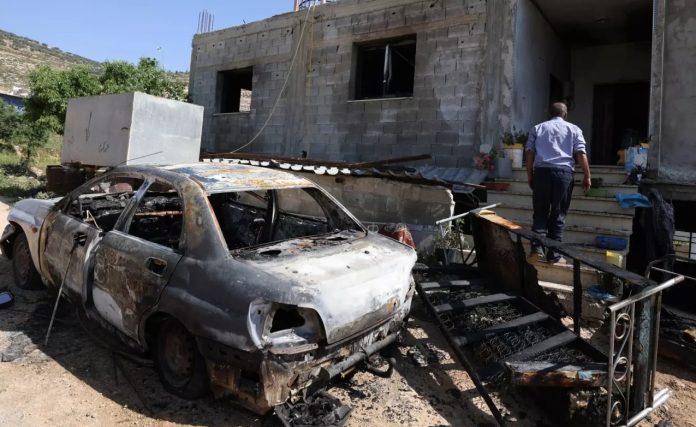
Around 1,500 Israeli settlers, many of whom armed, stormed the village of al-Mughayyir, northeast of Ramallah, shooting at residents and setting houses and cars on fire, under the army’s protection.

The Palestine Red Crescent Society reported 25 people were wounded, eight of whom were hit by live fire. The slain man was later identified by his family as 26-year-old Jihad Abu Alia.

Kazem al-Hajj, one of the activists campaigning against Israeli settlements in the village, told Middle East Eye that the attack was the most horrific in recent years.

“As soon as the village residents heard of the settlers’ attack, they tried to confront them by heading to the northern area. Jihad Abu Alia was one of them, but he was hit by settlers’ bullets in the head and fell to the ground immediately,” added Hajj.

Abu Alia bled to death after Israeli soldiers prevented ambulances from reaching the wounded.

During the rampage, settlers set fire to more than 40 Palestinian facilities and 50 vehicles in al-Mughayyir, causing nearby agricultural lands to catch fire as well.

“The scene was terrible, clouds of smoke filled the village, and the sound of ambulances did not subside amid the intense and continuous shooting,” Hajj continued.

The settlers came from the Mallahi outpost, which they established over the past two years above the Jabeit Israeli army camp, which was originally built on Palestinian land north of Ramallah.

Hajj added the village has been under daily attacks by settlers “pursuing a policy of pastoral settlement to control village lands” with clear protection from Israeli soldiers.

Several hours after the attack started, the Israeli army withdrew from the village, but remained at its entrances, imposing a total closure and erecting checkpoints.

Israeli troops also stormed several neighbouring Palestinian villages and conducted search operations backed by a helicopter.

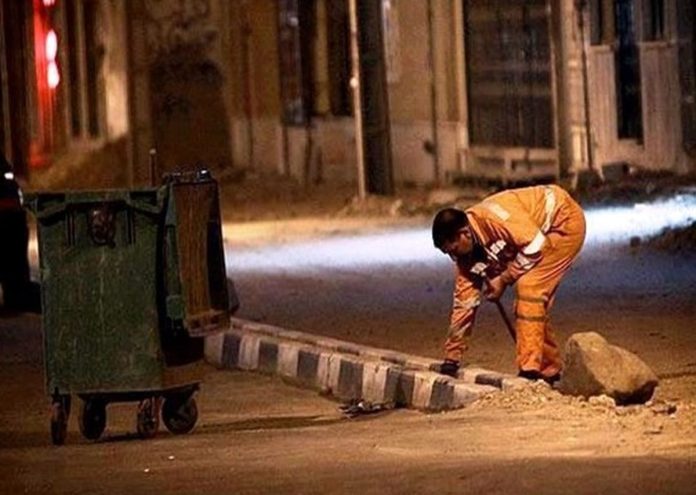
Street sweeper sacrifices life to unclog sewage canal to ward off inundation

Street sweeper

The sweeper gets inside the canal and removes mud and debris after the sewer was inundated by rainwater.

More in the attached video:

IRGC naval forces seize Israeli-linked ship in Persian Gulf

IRGC Boat Persian Gulf

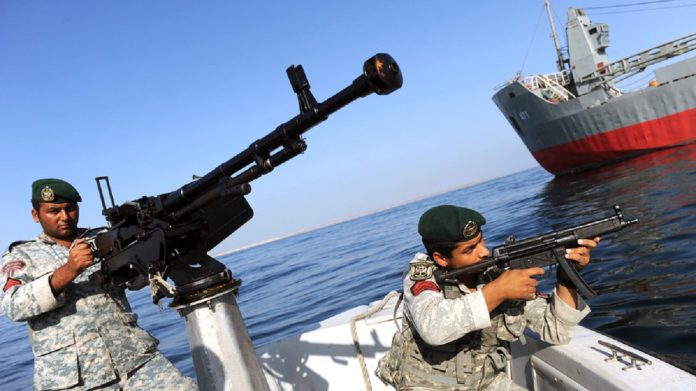
Some sources say the ship named MSC Aries is a Portuguese-flagged vessel that belongs to London-based company Zodiac Maritime Agency.

The company is owned by an Israeli billionaire.

In February 2023, another ship belonging to the company was attacked in the Persian Gulf.

Report: Iran ahead of other OPEC members in terms of rise in crude output in March

Iran Oil

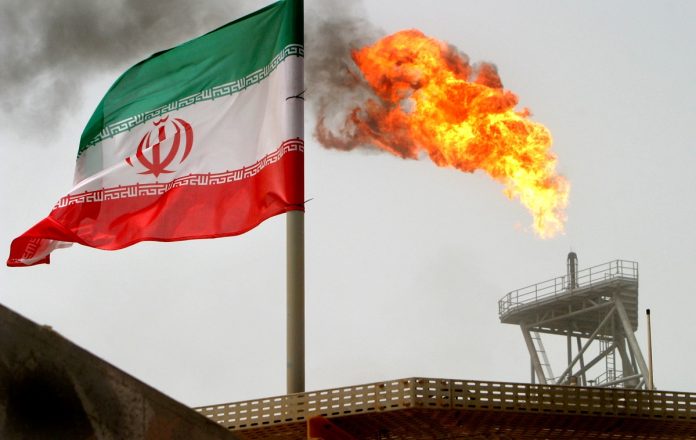
A report by OPEC’s Secretariat indicates that overall output by the 133 member states hovered around 26 million 604 thousand bpd in March, 3 thousand bpd more than the figure in February.

Based on the report, Iran maintained its third place among OPEC producers after Saudi Arabia with an output of 9 million 37 thousand bpd and Iraq with a crude production of 4 million 194 thousand.

The production rise comes as Iran is under draconian US sanctions.

Persian Gulf states warn US not to conduct attacks against Iran from their territory or airspace

US Aircraft Carrier

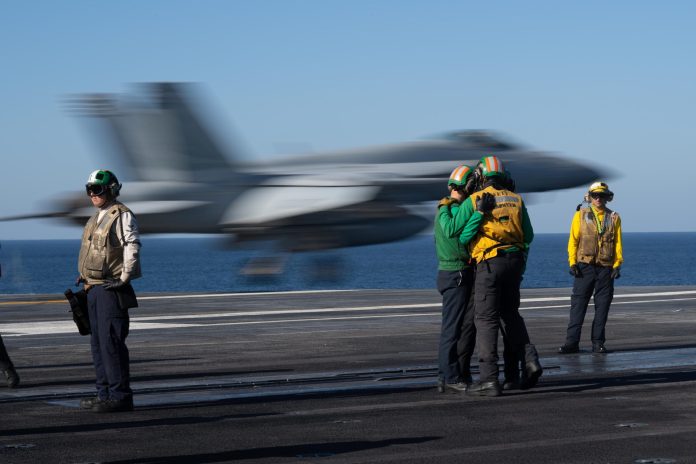
The US’s Persian Gulf allies are working overtime to shut down avenues that could link them to a US reprisal against Tehran or its “proxies” from bases inside their kingdoms, according to a senior US official who spoke with MEE on condition of anonymity.

As tensions flare, Saudi Arabia, the UAE, Oman and Kuwait have raised questions about the intricate details of basing agreements that permit tens of thousands of US troops to be stationed across the oil-rich peninsula.

They are also moving to prevent US warplanes from flying over their airspace in the event the US conducts a retaliatory strike on Iran.

The US has spent decades investing in military bases in the Persian Gulf. Given their close proximity to Iran, those airbases would be the most convenient launching pads for Washington against Tehran, current and former US officials tell MEE.

The Persian Gulf monarchies’ reluctance is complicating the Joe Biden administration’s preparation as it war games how to respond to a potential Iranian attack on Israel. Current and former US officials told MEE they believe an attack is imminent, as has been previously reported elsewhere.

“It’s a mess,” a senior US official told MEE.

The official, along with two former senior US officials, who spoke with MEE, outlined three scenarios the White House is planning for Iran’s expected retaliation for a strike on its consulate in Damascus, Syria, earlier this month that was blamed on Israel.

Iran could strike Israel directly from its territory. A second option would be a coordinated attack by “Iran’s proxies” on Israel, using the paramilitaries in Iraq, Yemen’s Houthis, and Lebanon’s Hezbollah.

A third option could combine the two. The Houthis struggled to breach Israel’s US-supplied Iron Dome defence system immediately after 7 October, but the Biden administration is concerned a multi-faceted attack could overwhelm those defences.

Iran could also strike Israeli embassies – including those in the Middle East – or Israeli troops in the occupied West Bank and Gaza.

President Biden stated he informed Prime Minister Benjamin Netanyahu that the US’s commitment to Israel’s security was “ironclad”.

But the Biden administration is divided over what level of support to give Israel, current and former US officials told MEE.

The president’s highest-ranking national security officials have staked out different positions, with some like Maher Bitar, the director of intelligence at the National Security Council, urging restraint while Brett McGurk, Biden’s top Middle East envoy, is advocating for a tougher response, sources tell MEE.

The Biden administration’s fear of becoming embroiled in a wider Middle East war ahead of US elections is also weighing on those discussions.

The Persian Gulf states’ cold feet amid the crisis comes after years of complaining that the US has not done enough to protect them from attacks by “Iran’s proxies”, particularly the UAE and Saudi Arabia. Riyadh and Abu Dhabi viewed the Biden administration’s response to Houthi drone and missile attacks as tepid, and have moved to patch up ties with Tehran.

Persian Gulf leaders are now walking a tightrope between their US ally, Iran, and their populations, who are seething with anger at Israel over its offensive on Gaza that has killed more than 33,000 Palestinians, mainly women and children.

The US has at least 40,000 troops in the Middle East. The majority are located in the oil-rich Persian Gulf states, where they are based at a string of strategic air and naval bases.

Saudi Arabia’s Prince Sultan Airbase is home to the US’s 378th Air Expeditionary Wing which operates F-16 and F-35 jet fighters. The US operates MQ-9 Reaper drones and jet fighters out of the UAE’s Al Dhafra Air Base. Kuwait’s Ali al-Salem Air Base is home to the 386th Air Expeditionary Wing.

Qatar’s Al Udeid Air Base hosts the regional headquarters for US Central Command. It has also hosted some Israeli military officials, MEE has previously reported, but it’s not clear if those officials are still in the country.

The island kingdom of Bahrain is home to around 9,000 US troops who belong to the headquarters of the US Naval Forces Central Command and the US Fifth Fleet.

Oman also allows the US military overflights and port calls.

The Middle East has been on alert since the Hamas-led 7 October attacks on southern Israel killed around 1,200 people. Israel responded by launching a ferocious offensive on the Gaza Strip.

The immediate spark putting the region on the brink of a wider war was a strike blamed on Israel on Iran’s consulate in Damascus that killed several top commanders in the Islamic Revolutionary Guard Corps, including General Mohammad Reza Zahedi, the head of IRGC operations in Syria and Lebanon.

On Wednesday, the Leader of Iran’s Islamic Revolution Ayatollah Seyyed Ali Khamenei said that Israel “must be punished” for the consulate attack, which he equated to a strike on Iranian “soil”.

Western countries have told their citizens in the region to be on high alert. Israel has indicated that it will strike back if Iran does attack.


Russia says tested top secret nuclear-capable missile

Russia Nuclear Weapons

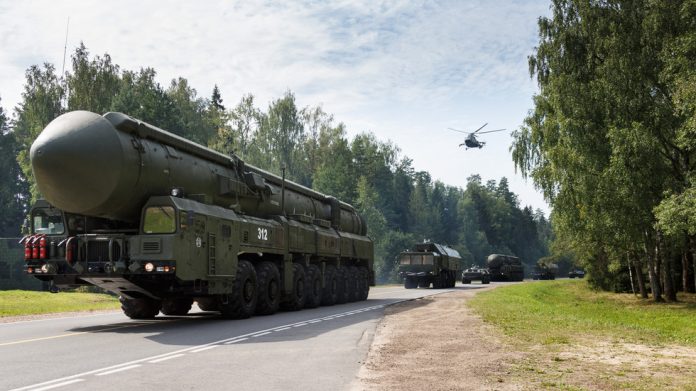
According to the Russian military, the Strategic Missile Forces “successfully launched ICBM of a mobile ground-based missile system” from the interservice test facility near Volgograd. The test was successful and indicated “the high reliability of domestic missiles, ensuring the strategic security of the country”.

The type of system tested was not specified. Russia currently uses the RS-24 Yars (known by NATO as the SS-29) missiles as its mobile nuclear deterrent, but has reportedly been developing a successor for this system as well.

The Yars – a Russian acronym for “atomic deterrence rocket” – entered service just a few years ago, fully replacing the RT-2PM2 Topol-M (SS-27) system. The solid-fueled missile is intended to carry multiple thermonuclear warheads and can be deployed from mobile vehicles or silos.