Monday, December 22, 2025
Home Blog Page 920

Yemen’s Houthis claim responsibility for strikes on UK oil tanker, U.S. drone

Yemen Houthis

Houthi military spokesperson Yahya Saree said that Yemen’s naval forces struck a British oil tanker in the Red Sea with missiles.

Saree also added the military also shot down an American MQ-9 drone in Sa’ada province.

The new operations were also a show of solidarity with Palestinians in the Gaza Strip, amid the Israeli genocide there, he continued.

The spokesman stressed that the Yemeni armed forces will continue operations in the Red and Arabian Seas as well as the Indian Ocean until the Western-backed Israeli genocide comes to a halt.

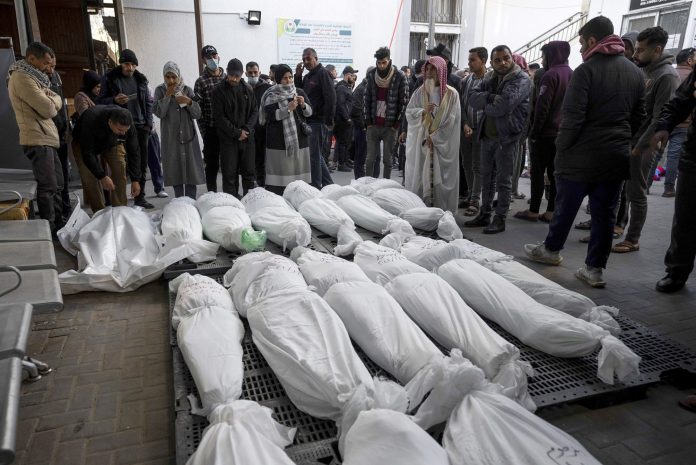
Since the start of the brutal campaign in Gaza, the regime has killed more than 34,000 Palestinians and injured over 77,000 others. It has cut off fuel, electricity, food and water to the more than two million Palestinians living there.

The maritime attacks have forced some of the world’s biggest shipping and oil companies to suspend transit through one of the world’s most important maritime trade routes.

Tankers are instead adding thousands of miles to international shipping routes by sailing around the continent of Africa rather than going through the Suez Canal.

The pro-Palestine maritime campaign has also prompted airstrikes by the U.S. and its allies on Yemen – in violation of the Yemeni sovereignty and international law.

In consequence, Yemen’s armed forces have declared U.S. and British vessels as legitimate targets.

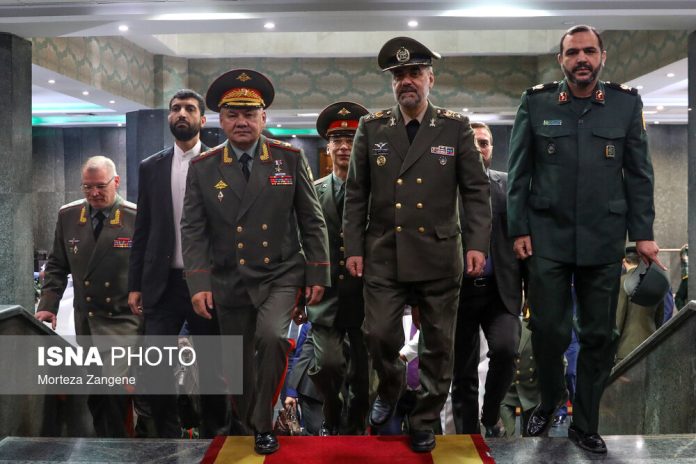
Tehran and Moscow need to boost defense cooperation to improve regional peace: Iranian defense chief

Sergei Shoigu and Mohammad Reza Ashtiani

Ashtiani made the remarks in a meeting with his Russian counterpart Sergei Shoigu on the sidelines of the 21st meeting of the Shanghai Cooperation Organization (SCO) Defense Ministers in Astana, Kazakhstan, on Friday.

He said Tehran and Moscow should oppose unilateralism in global issues.

He thanked Russia for condemning Israel’s illegal and unlawful airstrikes against Iran’s diplomatic premises in the Syrian capital of Damascus on April 1 and expressing support for Tehran’s legitimate response.

“Terrorist attacks in Russia and Iran are the outcome of support of Western countries, especially the United States, for terrorist groups,” Ashtiani emphasized.

On April 1, the Israeli regime carried out terrorist airstrikes on the consular section of Iran’s embassy in the Syrian capital, which killed two generals of the Islamic Revolution Guards Corps (IRGC), Brigadier General Mohammad Reza Zahedi and General Mohammad Hadi Haji Rahimi, as well as five of their accompanying officers.

In retaliation, the IRGC targeted the occupied territories on April 13 with a barrage of drones and missiles. The retaliatory strikes, dubbed Operation True Promise, inflicted damage on Israeli military bases across the occupied Palestinian territories.

Elsewhere in the conversation, the Iranian defense chief warned that the North Atlantic Treaty Organization (NATO) and some Western countries are taking steps in line with the policy of expansion to the East.

He urged the Shanghai Cooperation Organization (SCO) member states to use the body’s capacities to thwart common threats.

For his part, the Russian defense minister slammed Israel’s attacks on Iran’s diplomatic premises in Damascus and said Tehran’s response was in accordance with the legitimate right of self-defense.

Ashtiani and Shoigu also hailed the successful experience of Iran and Russia in the fight against terrorism in the region and called for the expansion of cooperation to counter terrorist threats, separatism and extremism.

The Iranian and Russian defense chiefs emphasized that the developments in the South Caucasus are important to the two countries’ interests, noting that the presence of extra-regional powers in this region is detrimental to common interests.

They said that the 3+3 format, which is being implemented in the presence of all the countries of the Caucasus region, is an appropriate framework for solving problems, according to a statement by Iran’s Defense Ministry.

The 3+3 format includes three southern Caucasus countries (Azerbaijan, Armenia, Georgia) and three neighboring countries (Russia, Turkey and Iran).

Iran was one of the countries that proposed the formation of a 3+3 group in line with its foreign policy of resolving problems, differences and challenges faced by countries in the region.

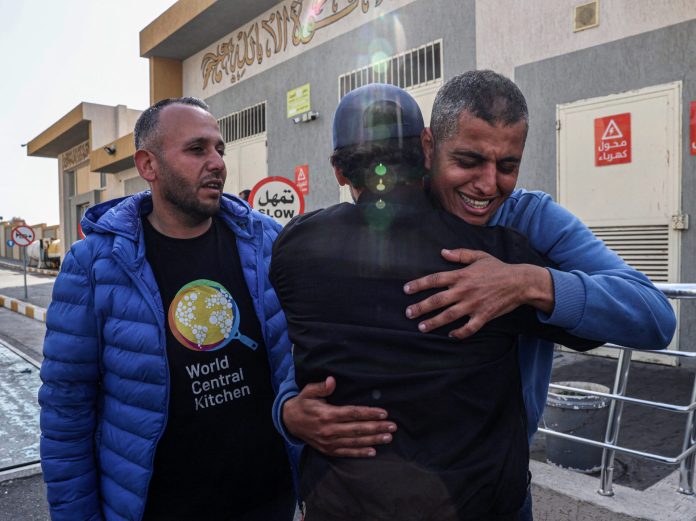
Aid groups targeted despite sending location to Israeli military: Report

World Central Kitchen

The NYT obtained and examined visual evidence and internal communications on six aid group operations that were hit by air raids even after their locations were shared with the Israeli military.

The six aid groups are Doctors Without Borders (MSF), Medical Aid for Palestinians (MAP), International Rescue Committee (IRC), Enabel, ANERA, and World Central Kitchen (WCK). They are all in direct communication with the military and are based in Western nations that are known to be Israel’s strongest allies.

The investigation notes that despite the Israeli military using a system known as deconfliction, where aid groups share locations with the army to avoid being caught between friendly fire in war-torn areas, incidents still occurred.

NYT highlights the many times aid workers have been attacked despite the system being used. Although World Central Kitchen workers coordinated their location with the army and travelled in a clearly marked vehicle, their envoy was still struck, killing seven aid workers, which Israel had dubbed a mistake.

American aid group ANERA shared emails with the NYT, revealing that the group had repeatedly sent the Israeli military coordinates and photos of their staff shelters.

This included a two-story residential building where aid worker Mousa Shawna and his six-year-old son resided when it was struck by an Israeli airstrike weeks before the WCK incident. The military confirmed that the location was being processed in their system.

Visuals from the aftermath of airstrikes targeting MSF, MAP and IRC compounds show buildings clearly marked and logos visible on the bedding and luggage in the wreckage.

The military claimed they were targeting “terror activity” at the MSF building, which the group has denied.

“Coordinates had been provided to the proper actors for both of these structures that were hit. It is standard for us to provide coordinates to actors involved in conflicts,” a spokesperson for MSF told The New Arab.

The publication obtained text messages between MAP and IRC, revealing that a month before the 18 January attack on their residential compound, the Israeli military was informed of the locations and used “high-level diplomatic channels” to deconflict the compound.

The building was also in a neighbourhood that Israel had designated as a humanitarian zone that was safe for civilians.

“The New York Times investigation clearly shows that the Israeli army is responsible for the attacks on aid workers, but still, the Israeli state is not facing any accountability,” Aseel Baidoun, Acting Director of Advocacy and Campaigns at MAP, told The New Arab.

Baidoun also noted that the Israeli government offered six conflicting explanations for the attack.

These ranged from being unaware of the attack and denying any involvement to claiming the building was mistargeted due to a defective missile fin. Most recently, Israel stated that the damage was not caused by a bomb but by a piece of aircraft fuselage discharged by the pilot of an Israeli fighter jet.

“The variety of responses highlights a continued lack of transparency regarding what occurred. It is clear from this experience that the Israeli military and government are either unable or unwilling to properly investigate this serious incident,” Baidoun added, calling for a full, independent and timebound investigation into the 18 January attack and all reported attacks on aid workers.

“We need to secure concrete assurances from the Government of Israel that attacks against aid workers and health workers will not occur in the future.”

Over 200 aid workers have been killed since 7 October in Gaza, which is more than three times as many aid workers killed in any single recorded conflict in a single year, according to the United Nations. Many suspended operations following the WCK strike, and MAP and IRC were forced to suspend their work at Nasser Hospital in Khan Younis.

In light of the killing of seven WCK aid workers, aid groups have been blunt, saying there is nothing more they can do to protect staff in the Gaza Strip, asserting that it’s up to Israel to avoid killing them. The United Nations has also appealed for direct coordination with the Israeli military.

Iranian Sepahan’s coach Morais converts to Islam

Jose Manuel Ferreira de Morais

Morais told a press conference on Friday, “I changed (my religion) some time ago… and for that reason I’m a member of the Iranian family.”

The former Portuguese player has been at the helm of Sepahan in Iran’s Isfahan since 2022.

Other football stars like Franck Ribery, Clarence Seedorf, Nicolas Anelka and Paul Pogba have also converted to Islam in the past.

Hamas says ‘serious’ about captives’ release but not without ceasefire in Gaza

Gaza War

Khalil al-Hayya, a member of the group’s political bureau, said that Hamas “is serious about releasing Israeli captives within the framework of an agreement” that also ensures the release of thousands of Palestinian prisoners in Israeli jails.

He told Al Jazeera Arabic in a televised interview that Hamas will not accept a truce without a permanent ceasefire and a complete halt of Israel’s assault on the Gaza Strip.

The Israeli bombardment has killed more than 34,000 people – mainly women and children – since the current conflict started in October.

An “unhindered return” of Palestinians across the besieged enclave to their homes, along with the reconstruction of Gaza and “an end to the crippling siege” imposed on it were among the four conditions that al-Hayya reiterated.

Hamas had submitted its response to a United States amendment on April 13 and is still waiting for a reply from Israel and the mediating parties, he added.

White House national security adviser Jake Sullivan stated on Friday that he saw fresh momentum in talks to end the war in Gaza and return the remaining Israeli hostages.

“I believe that there is a renewed effort under way involving Qatar and Egypt as well as Israel to try to find a way forward,” Sullivan told MSNBC in an interview.

“Do I think that there is new momentum, new life in these hostage talks? I believe there is.”

Talks on a ceasefire between Israel and Hamas have been in limbo with the two sides showing few signs that they are ready to compromise on their demands.

But international mediators – Qatar, the US and Egypt – have been engaged in intense behind-the-scenes talks to secure a deal.

Top Israeli officials have repeatedly called Hamas’s demands “delusional” and have claimed an Israeli withdrawal from the Gaza Strip would amount to losing the war.

Egyptian, Israeli and US officials reportedly held in-person and remote meetings on Wednesday that sought concessions to break the deadlock in the months-long negotiations.

On Friday, Egypt sent a delegation to Israel with the hope of brokering a ceasefire agreement, two officials told The Associated Press news agency.

Top intelligence official, Abbas Kamel, was leading the team and planned to discuss a “new vision” for a prolonged ceasefire in the enclave, an Egyptian official said.

Friday’s talks were set to be initially focused on a limited exchange of captives for Palestinian prisoners and the return of a significant number of displaced Palestinians to their homes in northern Gaza “with minimum restrictions”, the unnamed official added.

Meanwhile, the US and 17 other countries issued an appeal for Hamas to release captives as a pathway to end the crisis in Gaza.

“We call for the immediate release of all hostages held by Hamas in Gaza now for over 200 days,” read the statement on Thursday by the leaders of Argentina, Austria, Brazil, Bulgaria, Canada, Colombia, Denmark, France, Germany, Hungary, Poland, Portugal, Romania, Serbia, Spain, Thailand and the United Kingdom.

It added that the “deal on the table to release the hostages would bring an immediate and prolonged ceasefire in Gaza, that would facilitate a surge of additional necessary humanitarian assistance to be delivered throughout Gaza, and lead to the credible end of hostilities”.

Hamas responded to the letter on Friday, saying it regretted that the countries had not emphasised “the necessity of a permanent ceasefire” in Gaza and the withdrawal of Israeli forces from the territory.

The Palestinian group called on the US and the international community to apply pressure on Israel to end “the crime of genocide” being committed against Palestinians in Gaza.

The back-and-forth comes as Israel has significantly increased its military activities across the enclave and is proceeding with plans for a ground invasion of Rafah in the south, where some 1.5 million displaced Palestinians are taking shelter.

The humanitarian situation in Rafah – bordering Egypt – and across Gaza remains dire, with the United Nations and others repeatedly stressing the need for Israel to allow more aid in.

Eleven-year-old Husam is one of more than 600,000 children who have sought refuge in Rafah, which was designated a “safe zone” even as the Israeli military continues to pound it from the air in preparation for a ground assault.

“We’re afraid people will resort to killing each other for food,” he told Al Jazeera, adding, “A person’s psyche wears out with fear. It’s a slow death.”

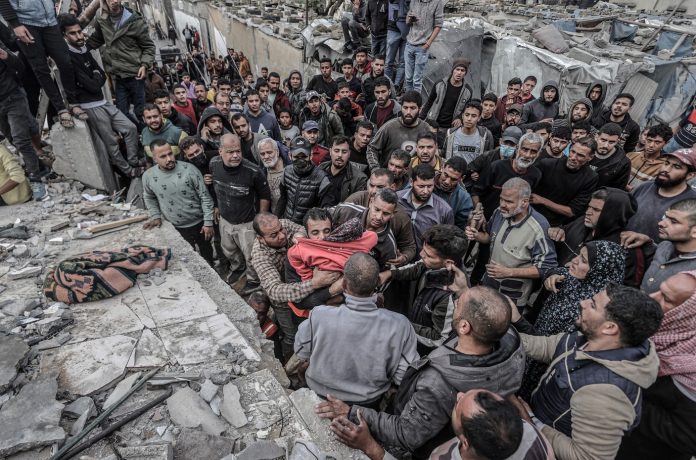
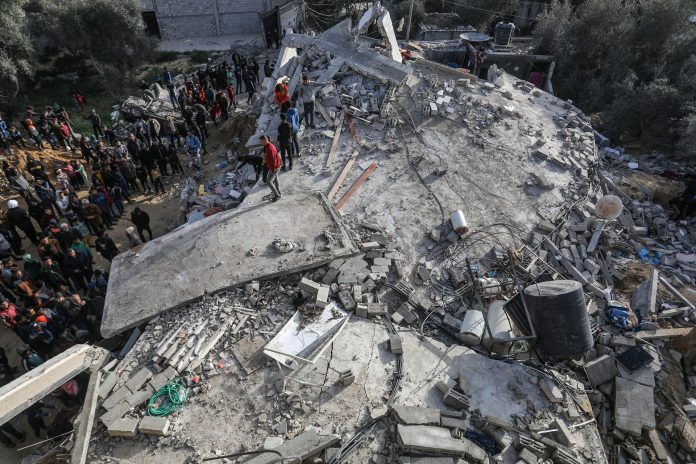
UN says it could take 14 years to clear debris in Gaza Strip

Gaza War

Israel’s military campaign against the blockaded enclave has reduced much of the narrow, coastal territory of 2.3 million people to a wasteland with most civilians homeless, hungry and at risk of disease.

Pehr Lodhammar, senior officer at the United Nations Mine Action Service (UNMAS), told a briefing in Geneva on Friday that the war had left an estimated 37 million tons of debris in the widely urbanised, densely populated territory.

He added that although it was impossible to determine the exact number of unexploded ordnance found in Gaza, it was projected that it could take 14 years under certain conditions to clear debris, including rubble from destroyed buildings.

“We know that typically there’s a failure rate of at least 10% of land service ammunition that is being fired and fails to function,” he continued, stating, “We’re talking about 14 years of work with 100 trucks.”

At least 34,300 Palestinians have been killed and 77,00 wounded in Israel’s military offensive on Gaza since Oct. 7, according to Gaza’s health ministry.

US will not sanction Israeli army units accused of rights violations in West Bank: Report

Israeli Army

In a letter obtained by the ABC, US Secretary of State Antony Blinken outlines the assessment to House Speaker Mike Johnson.

The US determination says it “will not delay the delivery of any U.S. assistance and Israel will be able to receive the full amount appropriated by Congress,” Blinken wrote.

“The Israeli government has presented new information regarding the status of the unit and we will engage on identifying a path to effective remediation for this unit,” he told Johnson.

“But this will have no impact on our support for Israel’s ability to defend itself against Hamas, Iran, Hezbollah, or other threats,” he added.

Nearly 490 Palestinians have been killed and 5,000 others injured in attacks by the Israeli army and illegal settlers in the occupied West Bank since last October, the Health Ministry has announced.

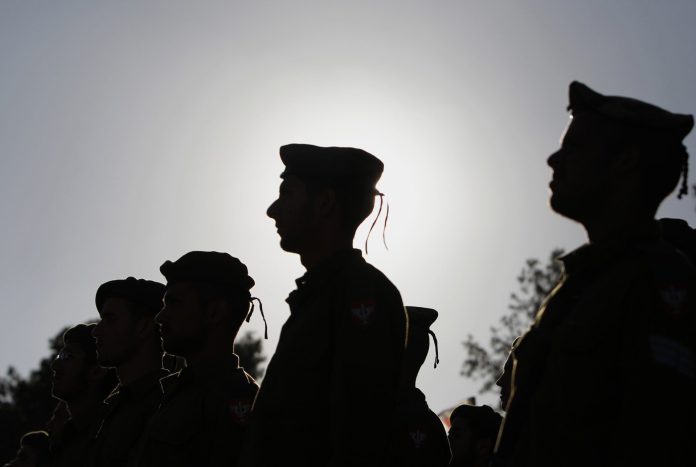
The Netzah Yehuda Battalion is a special Israel Defense Forces (IDF) unit composed primarily of ultra-Orthodox Jews.

More Americans have little, no confidence in Israeli PM: Survey

Benjamin Netanyahu

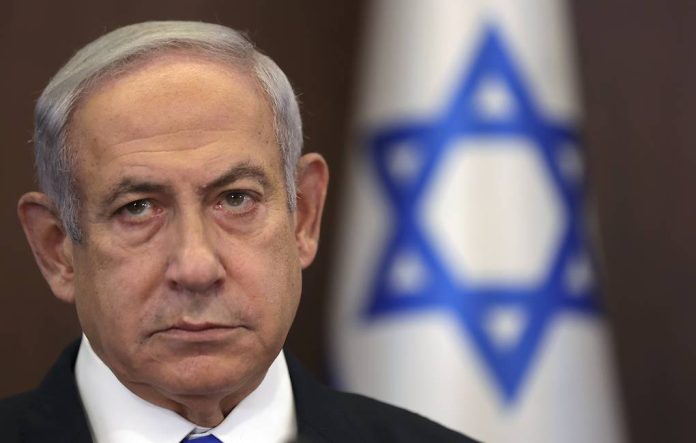
The report, issued by Pew Research Center, found 53 percent of U.S. adults said they have little or no confidence in Netanyahu doing the “right thing” regarding world affairs, including 25 percent who said they have no confidence in him at all.

The share of Americans with no confidence in the Israeli prime minister increased 11 percentage points since last year, when 42 percent shared the sentiment.

Only 9 percent of U.S. adults in the latest survey said they have “a lot” of confidence in his handling of world affairs, while 21 percent said they have some, Pew found. These are slight drops from last year, when 8 percent said they have a lot of confidence and 24 percent said they have some.

The center noted the decrease in confidence could be connected to a shift in recognition of Netanyahu. In 2023, 26 percent of Americans said they had never heard of him, while only about 15 percent said the same this year.

The findings come as Netanyahu faces mounting scrutiny over Israel’s wartime military campaign in Gaza, which has killed more than 34,000 Palestinians since early October, according to local health authorities.

He has pushed back against characterizations that Israel is not doing enough to protect civilian lives and vowed to push forward in eliminating the threat of Palestinian armed group Hamas, which has ruled Gaza since 2007.

The war has raged on for nearly seven months since Hamas launched a surprise attack on southern Israel last October, in which fighters killed about 1,200 people and took roughly 250 others hostage. Cease-fire negotiations remain stalled despite increasing pressure from leaders around the world.

Pew also found Americans’ sentiment about Netanyahu varies across party lines. Republicans and Republican-leaning independents have much more positive views of the Israeli leader than Democrats and those who lean Democratic — 51 percent to 13 percent.

About 38 percent of Democrats and Democratic leaners said they have no confidence in Netanyahu at all, compared to 13 percent of Republicans who said the same, according to the poll.

Views also vary among age groups, with older Americans more likely to have positive views of Netanyahu than younger ones.

Among Americans age 50 and older, 42 percent have at least some confidence in him to do the right thing with world affairs, while about a quarter of ages 30 to 49 said the same. Only 13 percent of adults under 30 have at least some trust, per the survey.

Iran, China defense chiefs call for Gaza ceasefire

Gaza War

Ashtiani was speaking in a meeting with his Chinese counterpart on the sidelines of the 21st confetence of defense ministers of the Shanghai Cooperation Organization in Astana, Kazakhstan.

He thanked China for its policy on the region, especially its condemnation of the Israeli regime’s attack on the consulate of the Islamic Republic of Iran in Damascus on April 1.

Referring to Iranian President Ebrahim Raisi’s visit to China and the signing of the comprehensive partnership treaty between the two sides, the Iranian defense minister said that in order to solve regional and international security issues, greater cooperation is necessary.

China’s defense chief also spoke about the developments in West Asia, condemning the Zionist regime’s attack on the Iranian consulate section.

Dong Jun said the attack violates international law and that China supports Iran’s legitimate right to respond to the act of aggression.

China’s defense minister further underscored the need for the continuation of cooperation between Tehran and Beijing in the military and defense spheres.

He called for a ceasefire in the Gaza Strip and the delivery of humanitarian aid to people in the region.

President Raisi: Iran, Africa determined to expand ties

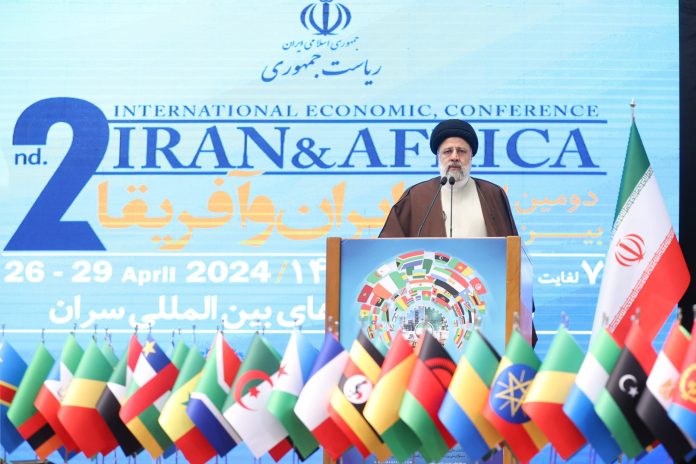
Addressing the 2nd Iran-Africa International Summit in the Iranian capital Tehran on Friday, President Raisi told the participants from over 30 African Union (AU) member states that the gathering is an indication that both sides are determined to further push their ties.

He drew a contrast between the Iranian and Western approaches towards Africa, saying “The westerners want Africa for themselves, but we want Africa for itself.”

The Iranian president highlighted the African continents’ colonial past when its wealth and resources were plundered.

President Raisi said Iran is ready to share its technological achievements with Africa despite the threats and sanctions by the West, but stressed that the existing problems for financial and money transfer should be removed to achieve the goals.

“We have some capabilities for exporting technical and engineering services, and there are capabilities in Africa. If these capabilities are combined, a complementary economy will be formed,” he said.

He noted that Iran has over 10,000 knowledge-based firms that have catapulted the country’s exports by over two billion dollars, adding their products can help Africa solve its problems in different spheres.

He named agriculture, industry, medicine, healthcare, and building refineries and power plants as some of the areas that can help Iran forge stronger ties with Africa.

“Overseas cultivation is another important capacity. Raw materials can be supplied for all economic operators and production centers by Africa at a reasonable price,” he explained.