Thursday, December 25, 2025
Home Blog Page 909

Ground invasion of Rafah would be “intolerable”: UN chief

Gaza War

“A ground invasion in Rafah would be intolerable because of its devastating humanitarian consequences and because of its destabilizing impact in the region,” the UN chief warned.

Guterres added he had made a “very strong appeal” to both the Israeli government and the leadership of Hamas to “go an extra mile” to reach a ceasefire agreement.

“This is an opportunity that cannot be missed,” he continued.

He called on the Israeli government and Hamas leadership to agree to a ceasefire deal after Hamas announced it has accepted a deal proposed by Egypt and Qatar.

He urged the parties to “go the extra mile needed to make an agreement come true and stop the present suffering”, according to a statement issued by Stéphane Dujarric, spokesperson for the secretary general.

The UN human rights chief Volker Türk has also called Israel’s demand for Palestinians to relocate from Rafah in southern Gaza as inhumane.

“Gazans continue to be hit with bombs, disease, and even famine. And today, they have been told that they must relocate yet again as Israeli military operations into Rafah scale up. This is inhumane. It runs contrary to the basic principles of international humanitarian and human rights laws, which have the effective protection of civilians as their overriding concern,” Türk said in a statement.

Türk criticized Israel for “forcibly relocating” hundreds of thousands of people to areas already heavily destroyed and where there is little shelter and virtually no access to humanitarian assistance necessary for their survival.” He added that there is nowhere safe outside of Rafah.

He also warned that those who don’t comply with international human rights laws must be held accountable.

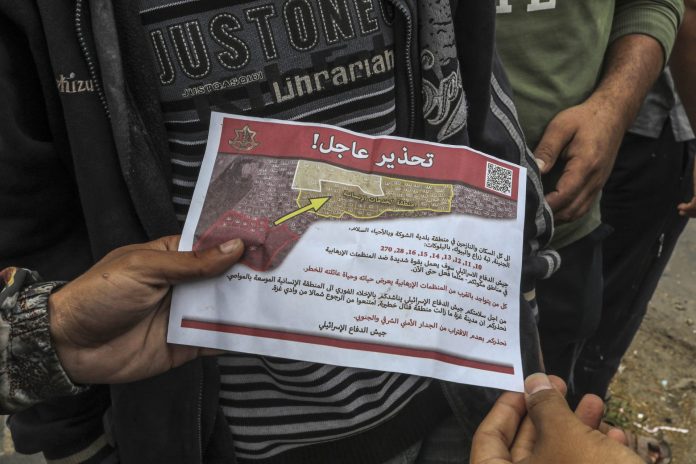
The Israeli military told people in eastern Rafah to “evacuate immediately” on Monday, after Israeli Defense Minister Yoav Galant told troops in Gaza to expect “intense action” in the southern city “in the near future”.

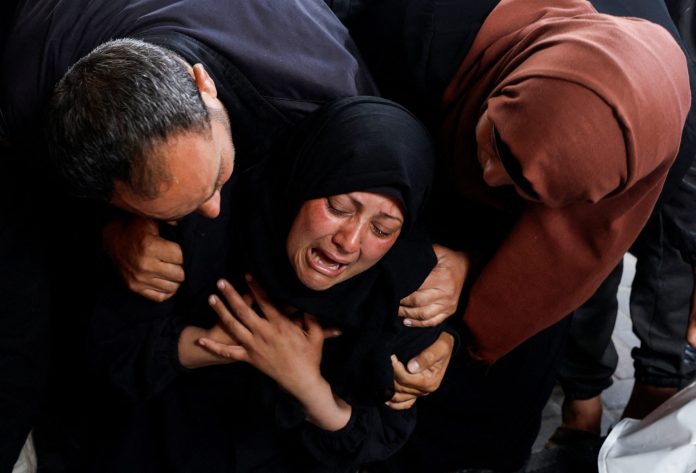
At least 34,735 people, mostly women and children, have been killed and 78,018 wounded in Israel’s assault on Gaza since October, according to Palestinian authorities. The offensive has destroyed much of Gaza and a near-total siege has pushed parts of it to the brink of famine.

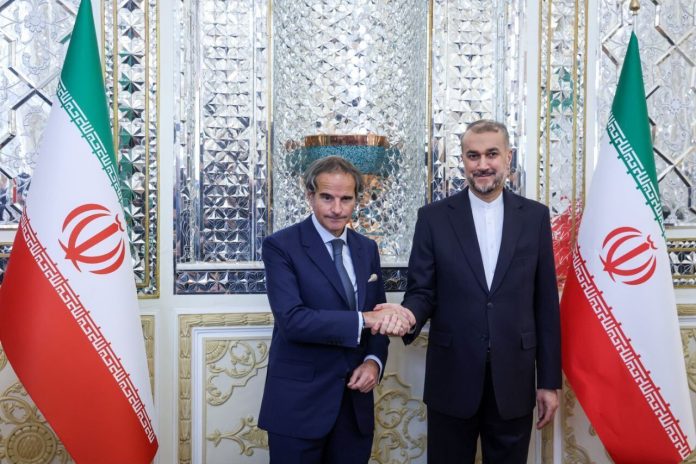
IAEA chief tours Iran’s historic Khaju Bridge

Rafael Grossi

Grossi was accompanied by the head of the Atomic Energy Organization of Iran (AEOI) Mohammad Eslami on the Monday night tour.

The Safavid-era masterpiece spans 133 meters in length and 12 meters in width and stands as one of the region’s most distinguished architectural marvels.

The IAEA director general arrived in Tehran on Monday morning to hold talks with Iranian officials and take part in Iran’s first international conference on nuclear sciences and technologies in Isfahan.

Israel declines Gaza ceasefire proposal, continues Rafah attack

Gaza War

“The war cabinet unanimously decided that Israel continues the operation in Rafah in order to put military pressure on Hamas, to facilitate the release of our hostages and to achieve other war objectives. At the same time, even though the Hamas proposal is far from Israel’s mandatory requirements, Israel will send a delegation to the talks to seize the opportunity to reach an agreement on terms acceptable to Israel,” the press office said.

The Israeli military carried out strikes against targets belonging to the Hamas movement in the eastern Rafah on Monday, the Israel Defense Forces (IDF) added.

“The IDF is currently conducting targeted strikes against Hamas terror targets in eastern Rafah in the southern Gaza Strip. Details to follow,” the IDF wrote on its Telegram channel.

On Monday, Hamas announced that it had agreed to the provisions of the Gaza ceasefire deal, proposed by mediators from Egypt and Qatar. The deal will include three stages, each lasting 42 days. The movement added that it now awaits Israel’s response.

Iran FM calls for IAEA impartiality, welcomes close cooperation

Amirabdollahian Grossi

Grossi who is visiting Iran to participate in the 30th national nuclear conference of the country as well as the first International Conference on Nuclear Science and Technology, on Monday met with Iranian Foreign Minister Hossein Amirabdollahian.

Amirabdollahian said the IAEA chief’s visit to Iran comes at the right time, particularly given the complicated and sensitive situation in the region.

The Iranian foreign minister emphasized the importance of the position and role of the IAEA, saying, “Your Excellency’s impartial and professional position as the director general of the agency, in addition to effective assistance in cooperation between Iran and the Agency, is also effective in restoring stability and security to the region.”

The top Iranian diplomat described some threats by the Israeli authorities to use nuclear bombs as a clear threat to regional and international peace and security and called for the IAEA response to such dangerous statements by the authorities of a regime that has an arsenal of nuclear weapons.

He also highlighted the history of the US non-compliance with the previous agreements on Iran’s nuclear program, saying cooperation between Iran and the IAEA should not be influenced by the “unstable and contradictory policy and behavior of Washington.”

He added that this cooperation should continue in the right direction and at the same time the two sides should feel that this cooperation results in a breakthrough.

IAEA chief Rafael Grossi for his part praised Iran’s policy to recognize and strengthen the reassuring cooperation with the agency.

Grossi underscored that bolstering cooperation between Iran and the IAEA will lead to the failure of those who are seeking to escalate the conflict, tension and confrontation in the region.

Grossi further stressed the importance of consultations between Iran and the agency to reach an understanding for the purpose of resolving all issues.

US says reviewing Hamas response to Gaza ceasefire proposal, opposes Rafah invasion

Gaza War

Officials at the White House and Department of State were tight-lipped about the ceasefire talks on Monday, but they reasserted that the release of Israeli captives in Gaza remains a top priority for the US.

State Department spokesperson Matthew Miller said Washington will “withhold judgement” on Hamas’s response to the deal until it has time to fully review it.

“I can confirm that Hamas has issued a response. We are reviewing that response now and discussing it with our partners in the region,” he added.

Miller declined to say whether Hamas agreed to a US-backed offer or to a different version of the proposal.

The administration of US President Joe Biden has been pushing for a temporary ceasefire for months, arguing that such an agreement would get Israeli captives out of Gaza, allow for more aid to enter the territory and provide a chance for a lasting solution to the war.

Hamas had announced earlier on Monday that it informed Egyptian and Qatari mediators of its agreement to a deal proposed by the two countries.

Hamas official Khalil al-Hayya later told Al Jazeera Arabic that the agreement would include three phases, starting with a halt in the fighting that would allow people in Gaza to move freely within the territory.

It would end with the complete withdrawal of Israeli troops from Gaza, a permanent ceasefire and the reconstruction of the enclave.

The three interconnected stages, al-Hayya said, would all see exchanges of Israeli captives in Gaza and Palestinian prisoners in Israel.

He added that the ball is now in Israel’s court, stating, “We have put forward what we have. We have put forward our positive stance and agreement to the proposal.”

CIA Director Bill Burns has been in the region since Friday to help advance the ceasefire talks, but it is not clear whether he endorsed the deal that Hamas accepted.

Israel’s war cabinet announced it would engage in further talks to discuss the proposal, but it added that Israel’s military will push on with its operation in the southern Gaza city of Rafah, despite growing international concern for the civilians sheltering there.

“Israel’s war cabinet has unanimously decided that Israel will continue the operation in Rafah to exert military pressure on Hamas in order to advance the release of our hostages, destroy Hamas military and governing capabilities and ensure that Gaza does not pose a threat to Israel in the future,” an Israeli government spokesperson said in a statement.

“Meanwhile, even though the Hamas proposal is far from Israel’s necessary requirements, Israel will send a delegation to mediators to exhaust the possibility of reaching an agreement under conditions acceptable to Israel,” the spokesperson added.

Biden also held a phone call with Israeli Prime Minister Benjamin Netanyahu on Monday and stressed US opposition to a ground offensive in Rafah.

“The president reiterated his clear position on Rafah,” the White House announced in a statement.

More than 1.5 million Palestinians are sheltering in Rafah, which also serves as the main gateway for humanitarian aid entering Gaza.

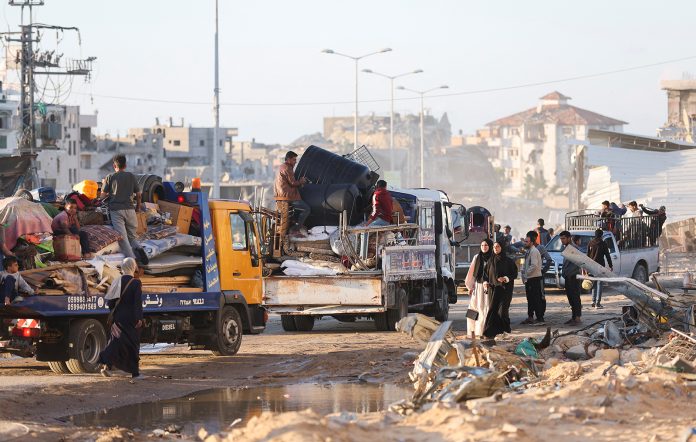
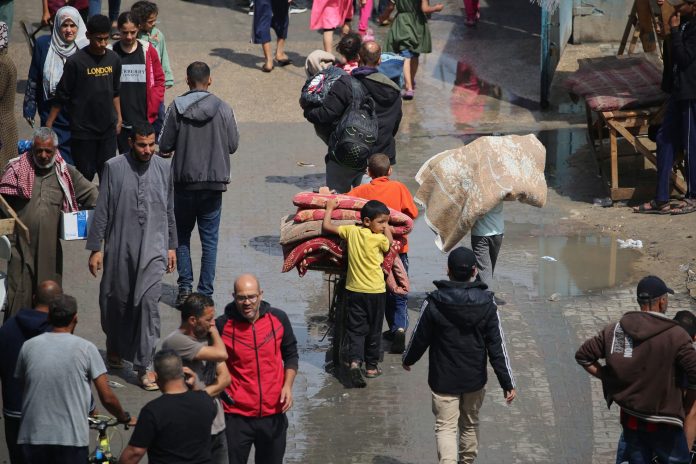
But the Israeli military has stepped up its bombardment of the city and ordered about 100,000 people in eastern Rafah to evacuate.

On Monday, Miller stated the US opposition to an assault on Rafah is separate from the push for a ceasefire.

“We cannot support an operation in Rafah as it is currently envisioned,” the State Department spokesperson said, adding that the US has not seen a credible plan to protect the civilians trapped in the city.

“Even absent this latest response [by Hamas], we have made clear that we do not support Israel launching a full-scale military operation in Rafah.”

White House national security spokesperson John Kirby also told reporters on Monday that “nothing changed” in the US stance towards an Israeli assault on Rafah.

“The president was very direct — and consistently so — this morning that we don’t want to see major ground operations in Rafah that put these people at greater risk,” Kirby added.

Still, Kirby stressed that US support for Israel’s security “remains ironclad”. Last month, Biden approved more than $14bn in additional military aid to Israel.

Palestinian rights advocates have argued that mere verbal criticism of Israeli policies is not enough, and they have called on Biden to instead cut off military support to the US ally.

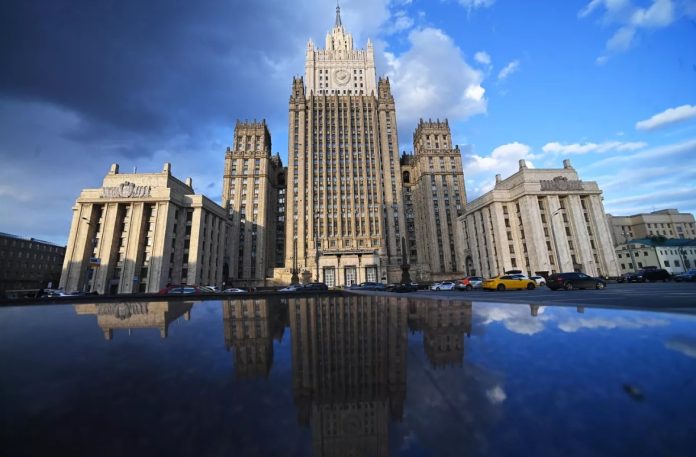
Russia summons British, French ambassadors

Russian Foreign Ministry

The envoys were seen visiting the building housing the ministry in central Moscow separately, but neither the UK’s Nigel Casey nor France’s Pierre Levy offered any comments to the press outside.

Moscow will retaliate against British targets in Ukraine or elsewhere if Kiev uses UK-provided missiles to strike Russian territory, the Foreign Ministry told London’s ambassador on Monday.

Casey was summoned to the ministry following remarks by British Foreign Secretary David Cameron to Reuters that Ukraine has the right to use long-range missiles sent by the UK to strike deep inside Russia. The remark appears to be a policy shift compared to previous claims by Western officials that Kiev is given weapons on the condition that they only be used within what Ukraine claims as its sovereign territory.

”Casey was warned that the response to Ukrainian strikes using British weapons on Russian territory could be any British military facilities and equipment on the territory of Ukraine and beyond,” the Russian Foreign Ministry said in a statement following the meeting.

According to the Russian Foreign Ministry, Cameron’s statements to the contrary “de facto recognized his country as a party to the conflict”.

Russia understands Cameron’s comments as “evidence of a serious escalation and confirmation of London’s increasing involvement in military operations on the side of Kiev”, the ministry added.

Casey was urged to “think about the inevitable catastrophic consequences of such hostile steps from London and to immediately refute in the most decisive and unequivocal manner the bellicose provocative statements of the head of the Foreign Office”.

Earlier in the day, the Russian Defense Ministry announced an exercise to test deployment of non-strategic nuclear weapons. President Vladimir Putin ordered the exercise after “provocative statements and threats” by Western officials, the military announced.

Levy was also summoned to the Foreign Ministry. Moscow has not yet disclosed the details of the meeting.

French President Emmanuel Macron has for months been advocating for what he calls “strategic ambiguity” regarding the Ukraine conflict. The idea is to keep the option of deploying NATO troops in Ukraine on the table to prevent a Russian victory. Russian Foreign Minister Sergey Lavrov suggested in an interview last week that the rhetoric stems from Macron’s wish to use “Russophobic” messages to boost the French position in the EU.

Also on Monday, Berlin announced that it was recalling its ambassador in Moscow, Alexander Lambsdorff, for consultations. The envoy is expected to return to Russia in a week.

The German government attributed the move to claims that Russia’s foreign intelligence service (SVR) was behind a cyber operation to snoop on senior members of the Social Democratic Party of Chancellor Olaf Scholz and other targets in the country. Moscow has described those allegations as baseless.

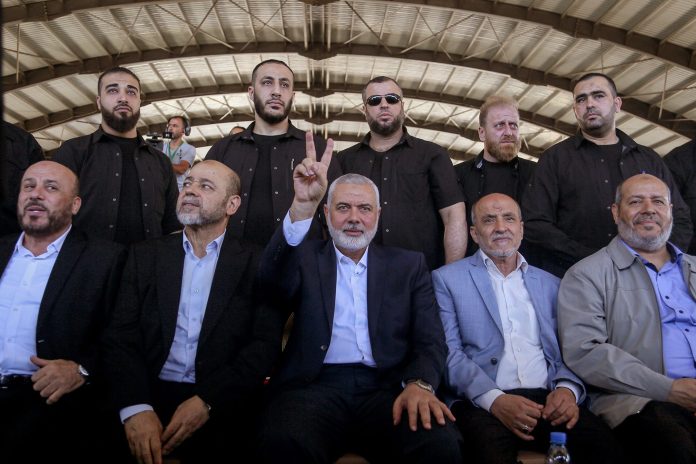
Hamas says accepted Qatari-Egyptian proposal for Gaza ceasefire

Hamas

“Ismail Haniyeh, head of the political bureau of Hamas movement, conducted a telephone call with the prime minister of Qatar, Sheikh Mohammed bin Abdulrahman Al Thani, and with the Egyptian intelligence minister, Mr Abbas Kamel, and informed them of Hamas’s approval of their proposal regarding a ceasefire agreement,” the group said in a statement published on its official website.

The statement was released after people started to flee the city of Rafah in the southern Gaza Strip after Israel ordered tens of thousands of people to evacuate as fears grew of a full-blown military assault there. More than 1.4 million displaced Palestinians have sought shelter in the area.

After the Hamas announcement, crowds of people gathered to cheer and celebrate in Rafah.

Israel and Hamas have been engaged in indirect talks mediated by Qatar and Egypt over a potential ceasefire in the Gaza war and an exchange of Israeli captives for Palestinian prisoners.

Egyptian and Hamas officials have previously said a potential ceasefire would take place in several stages in which Hamas would release Israeli captives it is holding in exchange for Israeli troop pullbacks from Gaza.

It had not been clear whether the deal would meet Hamas’s key demands of a permanent ceasefire, a complete Israeli withdrawal from Gaza and the return of displaced families to their homes.

Earlier, Hamas had warned Israel that any ground military operation in Rafah would have serious consequences for the regime as the Palestinian resistance movement is fully prepared to defend its people in the southern Gaza city.

The Palestinian movement also called on the international community to take urgent action to stop the regime’s planned offensive on Rafah.

Hamas cautioned that any incursion into Rafah threatens the lives of hundreds of thousands of defenseless civilians, including children, women and the elderly.

“The actions taken by the terrorist occupation army in preparation for an attack on the densely populated city of Rafah … have resulted in massacres of innocent civilians.”

Official: Hundreds of buildings Destroyed in recent fire in northern Iranian village 

Iran Fire

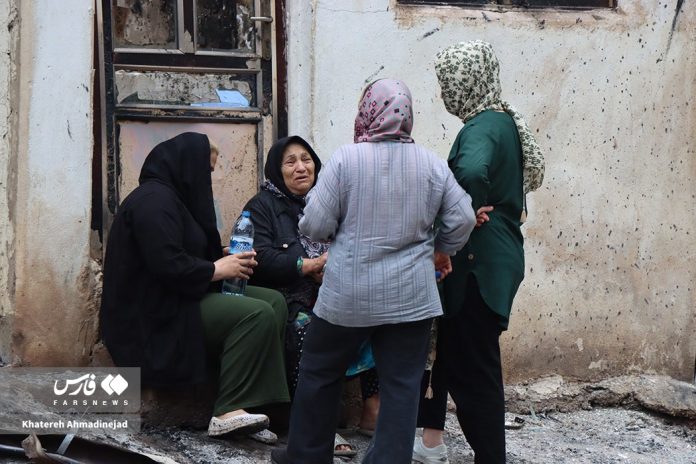
The governor of Gilan said in a report to the Iranian president Ebrahim Raisi that the buildings were totally destroyed in the blaze that broke out a few days ago in a shrine in the village of Emamzadeh Ebrahim, near the city of Shaft.

Asadollah Abbasi also said the interior minister has ordered to pay loans to the people affected by the incident, due to the extensiveness of the incident.

Local officials say 118 properties had insurance coverage while a number of households were not insured.

There are no reports of casualties due to the fire. The cause of the incident is under investigation.

Gilan Province hosts millions of tourists throughout the year and it is one of the most popular tourist hubs of Iran.

The village of Emamzadeh Ebrahim, named after a son of the seventh Shia Imam, is a major mountainous tourist attraction.

The shrine of Emamzadeh Ebrahim is a major religious site in the region too.

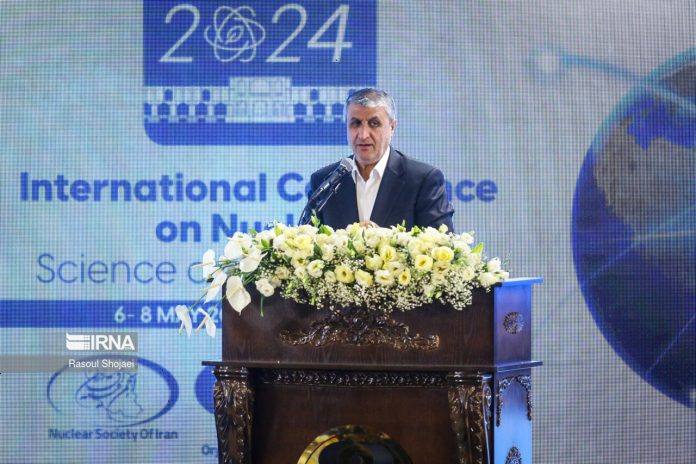
Iran’s atomic chief: Tehran ready to transfer nuclear capabilities to other countries 

Mohammad Eslami

Mohammad Eslami said this is a time when the world is facing climate change and the collective will of nations to reduce carbon emissions to zero has become a covenant.

Esmali added that Iran will also work faster to boost its nuclear technology capabilities to achieve clean and sustainable energy.

He noted that Iran intends to produce 20,000 megawatts of nuclear power by 2040 and will implement its plans in the northern and southern coasts of the country.

The Iranian atomic chief added that although bullying powers aim to not let Iran realize its goals as it pushes ahead with its nuclear energy program, the country’s International Nuclear Science and Technology Conference was welcomed by high-profile figures and they participated in the event despite the obstacles.

“Our goal is to show the achievements of Iran’s nuclear technology to the world, and we are ready to transfer its capabilities to other countries so that a different scientific system is created”, Eslami said.

Israeli offensive in Gaza’s Rafah would compound “unbearable tragedy”: UN

Gaza War

“An Israeli military offensive will lead to an additional layer of an already unbearable tragedy for the people in Gaza,” the commissioner-general of UNRWA, Philippe Lazzarini, posted on X on Monday.

“It will make even more difficult to reverse the expansion of the already man made famine.”

“What is needed is a ceasefire now not new forced displacement and anxiety of endless suffering,” he added.

This came as negotiations for a ceasefire and the release of hostages once again stalled.

UN Special Rapporteur on Palestine Francesca Albanese has also warned that Israel’s possible attack on Rafah would be an “attack on the civilian population” and a “massacre”.

The Israeli army issued immediate evacuation orders on Monday for Palestinians in the eastern neighborhoods of Rafah and called on them to move to the town of al-Mawasi in southern Gaza.

Around 100,000 Palestinian civilians are estimated to be living in the areas to be evacuated, according to Israeli Army Radio.

Rafah is home to more than 1.5 million displaced Palestinians, who have taken refuge from the war launched by Israel following a Hamas attack last Oct. 7 that killed nearly 1,200 people.

Since then, the Israeli onslaught has killed more than 34,600 Palestinians, mostly women and children, besides causing a humanitarian catastrophe.

Nearly seven months into the Israeli war, vast swathes of Gaza lay in ruins, pushing 85% of the enclave’s population into internal displacement amid a crippling blockade of food, clean water and medicine, according to the UN.

Israel stands accused of genocide at the International Court of Justice. An interim ruling in January said it is “plausible” that Israel is committing genocide in Gaza and ordered Tel Aviv to stop such acts and take measures to guarantee that humanitarian assistance is provided to civilians there.