Sunday, December 28, 2025
Home Blog Page 886

Let Ukraine freely strike Russia with western weapons: NATO head

Russia Ukraine War

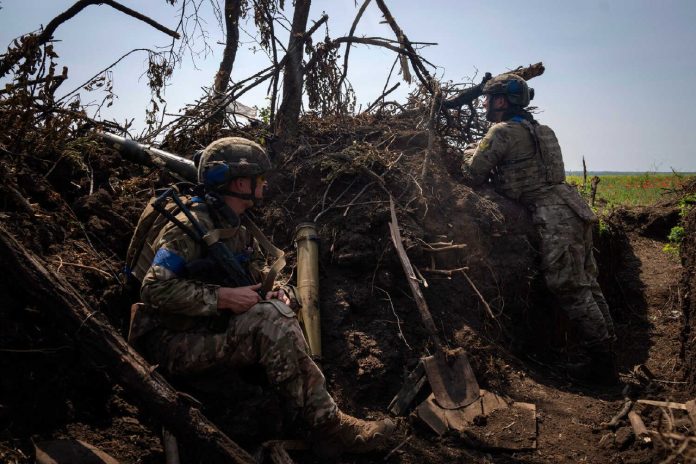
“The time has come for allies to consider whether they should lift some of the restrictions they have put on the use of weapons they have donated to Ukraine,” Stoltenberg said on Friday in an interview with The Economist. “Especially now when a lot of the fighting is going on in Kharkov, close to the border, to deny Ukraine the possibility of using these weapons against legitimate military targets on Russian territory makes it very hard for them to defend themselves.”

Stoltenberg noted that some NATO members have already lifted restrictions on using their weapons to attack targets in Russian territory. Asked whether he was referring to the US as the one major holdout, he said, “I think what we see now demonstrates the need to reconsider those restrictions, not least because we have fighting going on along the border between Russia and Ukraine.”

However, according to Moscow such rhetoric about alleged restrictions on the use of US munitions are false and designed to maintain the illusion that the West is not part of the conflict. Russian Foreign Minister Sergey Lavrov said that US weapons, such as ATACMS missiles armed with cluster warheads, have already been used on attacks inside Russia, including strikes against civilian targets.

“We proceed from the fact that American and other Western weaponry strikes targets on the territory of Russia, primarily civilian infrastructure and residential areas,” he told reporters on Friday.

The NATO chief’s comments come at a time when Western leaders are making increasingly bold statements about attacks on Russian territory. US President Joe Biden held back on sending long-range weapons to Ukraine in the early days of the conflict with Russia, citing concern over the possibility of triggering a wider conflict. When more advanced weaponry was later approved, it came with strings attached, including a prohibition on hitting Russian territory. However, as the New York Times reported on Thursday, views on those restrictions have shifted as Russian forces make battlefield gains.

After making a “sobering” visit to Kiev earlier this month, US Secretary of State Antony Blinken reportedly began urging the administration to let the former Soviet republic use American weapons as it sees fit. A group of US lawmakers sent a letter to Secretary of Defense Lloyd Austin earlier this week, pressing him to give the Ukrainians the permissions they have requested.

Stoltenberg said he believes NATO members can thread the geopolitical needle by supporting Ukraine’s defense without becoming direct parties to the conflict. “We provide training, we provide weapons, ammunition to Ukraine, but we will not be directly involved from NATO territory in combat operations over or in Ukraine,” he said. “So, that’s a different thing.”
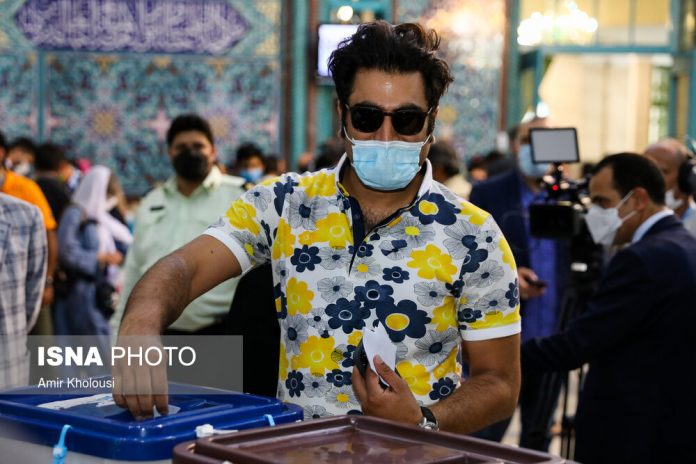
Former officials, disqualified candidates among likely candidates in Iran’s presidential elections

Fresh from the funeral and burial ceremonies for the late president and his companions, the country is speculating on the likely candidates who will run for the chief executive’s office.

Tasnim news agency, close to the principlists’ camp, have cited anonymous sources that Abdolnaser Hemmati former governor of the Central Bank under former president Hassan Rouhani and Mohammad Reza Aref, former vice president during Mohammad Khatami’s presidency, are the likely candidates of the reformists.

The news agency also reported that veteran politician and former parliament speaker Ali Larijani has not ruled out filing for candidacy in the election, a claim not dismissed by Larijani’s advisor Mansour Haghighatpour.

Haghighatpour told Entekhan news outlet that Larijani is weighing the situation “so that he would not be bitten for the second time,” referring to his disqualification in the 2021 presidential election by the Guardian Council.

“Ali Larijani is not unwilling to participate in the elections, but in a meeting he had with the officials of one of the parties, he has apparently made his candidacy conditional on fulfillment of certain demands,” he explained.

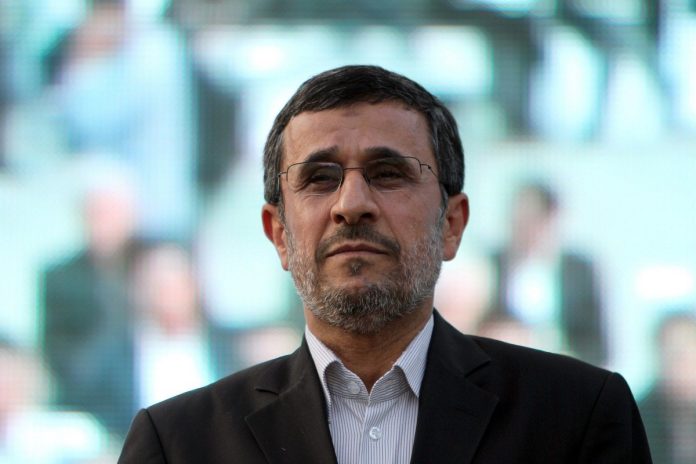
Former Iranian president Mahmoud Ahmadinejad, who was also disqualified by Iran’s vetting body in 2017, has hinted he might step on board as a candidate.

Following the demise of President Raisi last Sunday, Leader of the Islamic revolution Ayatollah Seyyed Ali Khamenei, under the constitution, designated vice president Mohammad Mokhber as the caretaker chief executive ordering him to hold a new round of the presidential vote withing 50 days.

Yemen’s Houthis say targeted three Israeli-linked ships

Yemen Houthis

Houthi military spokesperson Yahya Saree made the announcement in the capital Sana’a on Friday. He was addressing a thousands-strong rally held in support of Palestinians in the Gaza Strip, who are enduring a genocidal Israeli war.

“The first operation targeted the Israeli ship MSC Alexandra in the Arabian Sea with a number of ballistic missiles,” he said.

“The second operation was carried out by the Navy, the Air Force, and the Missile Force, targeting the ship Yannis as it was passing through the Red Sea” towards the occupied territories, he added.

“The third operation was carried out by the Missile Force, targeting the Israeli ship Essex in the Mediterranean Sea,” Saree stated.

Yemen began the strikes after October 7, when the Israeli regime launched the war against Gaza that has so far killed at least 35,800 Palestinians, mostly women and children, and injured 80,200 more.

The Yemeni forces began the operations by hitting the Israeli vessels or those heading towards the ports of the occupied Palestinian territories that could pass through Yemen’s maritime areas.

Rights groups urge Biden to halt Israel arms transfers after ICJ ruling

Gaza War

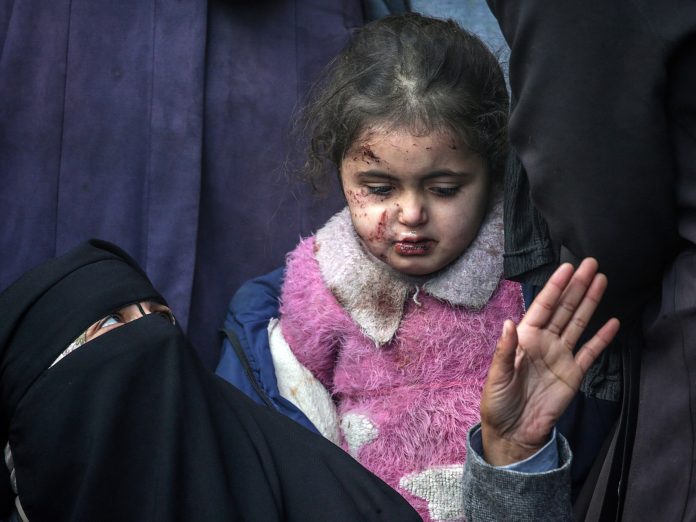
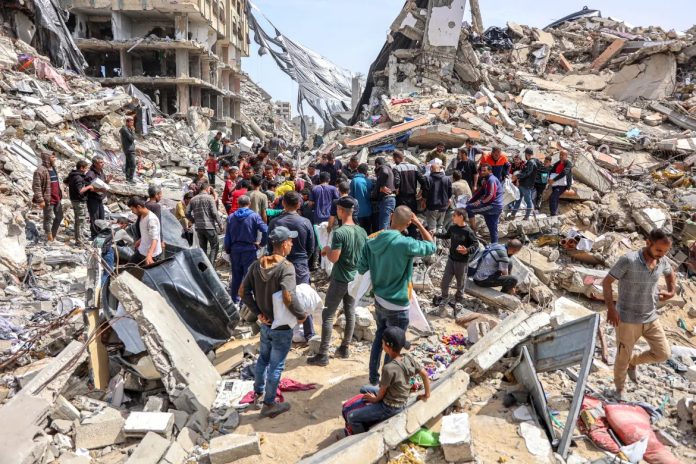
The United States has faced months of pressure to suspend military assistance to Israel as the Palestinian death toll in the Gaza Strip rose steadily and a humanitarian crisis deepened across the besieged enclave.

Biden himself has publicly opposed Israel’s offensive in Rafah – where the majority of Gaza’s displaced residents had gathered – and his administration suspended one shipment of weapons to Israel over its concerns.

Yet despite saying in early May that he would withhold more weapons if the country went ahead with a large-scale operation in Rafah, Biden has largely backed away from using such leverage as Israeli leaders rejected Washington’s warnings.

On Friday, Sarah Leah Whitson, executive director of Democracy for the Arab World Now (DAWN), stated the International Court of Justice’s order “leaves no ambiguity about what should follow: an arms embargo on Israel”.

“Continued US arms transfers to Israel would constitute deliberate defiance of the Court’s orders and make our government complicit in genocide,” she said in a statement.

Citing the “immense risk” to Palestinians in Gaza, the ICJ announced Israel must “immediately halt its military offensive, and any other action in the Rafah Governorate, which may inflict on the Palestinian group in Gaza conditions of life that could bring about its physical destruction in whole or in part”.

Friday’s order did not offer a final determination on whether Israel is committing genocide in Gaza, as alleged by South Africa, which brought the case before the international tribunal.

Still, the court’s provisional ruling “opens up the possibility for relief” for the people of Rafah, said Balkees Jarrah, associate director of the international justice programme at Human Rights Watch (HRW).

“But only if governments use their leverage, including through arms embargoes and targeted sanctions, to force Israel to urgently enforce the court’s measures,” Jarrah added.

Rights observers also noted that the ruling creates a foundation for the UN Security Council to take more resolute action against Israel.

The US – one of five members on the council with veto power – has repeatedly shielded Israel from Security Council action since the Gaza war began in early October.

Michael Schaeffer Omer-Man, director of Israel-Palestine research at DAWN, said the ICJ’s ruling should push the US to “support any UNSC actions to enforce the Court’s order”, or risk appearing “again before the entire world as the guarantor of Israeli impunity”.

Nihad Awad, national executive director of the Council on American Islamic Relations, also urged Biden to honour the ICJ’s ruling “by immediately ending all military assistance to Israel’s genocide”.

“Israel is clearly attempting to make Gaza uninhabitable. It must be stopped from completing this monstrous goal,” Awad stated in a statement.

Israel continues to enjoy widespread support among senior Biden administration officials, including the US president himself, as well as lawmakers from both major parties.

Still, a growing number of legislators in Washington, DC, have demanded a clearer accounting of whether Israel is using American weapons in Gaza in violation of US and international law.

Israel’s bombardment of Gaza has killed nearly 36,000 Palestinians, most of them women and children, while its siege on the coastal territory has led to dire shortages of humanitarian aid and pushed Palestinians to the brink of starvation.

UN chief pays respects to late Iranian president, foreign minister

António Guterres

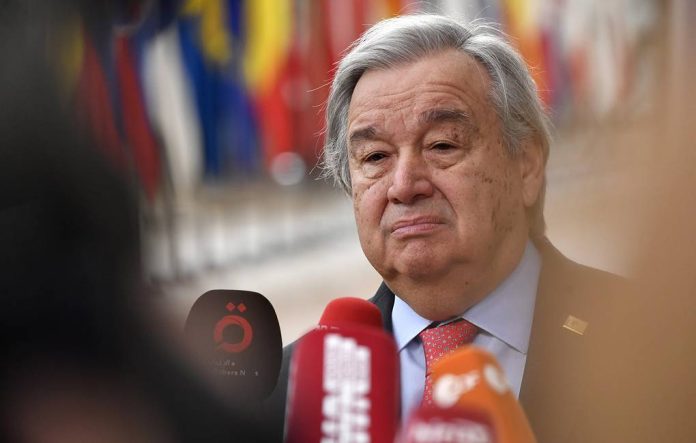
Deputy Secretary General Amina Mohammed accompanied Gutters who signed a memorial book in honor of the late Iranian President Ebrahim Raisi and Foreign Minister Hossein Amirabdollahian as well as six other companions.

The UN officials sympathized with the Iranian government and nation and the families of the victims.

Earlier on Friday, the UN General Assembly President Dennis Francis paid homage to the Iranian officials at the premises.

Iran’s Ambassador and Permanent Representative to the United Nations Amir Saeed Iravani welcomed Francis.

Also on Friday, the UN General Assembly observed a minute of silence for the late president and his entourage who died in the incident in northwestern Iran when they were returning from a ceremony to inaugurate a dam on the border with the Republic of Azerbaijan.

Saudi crown prince calls Iran interim president, urges ties improvement

Mohammad bin Salman

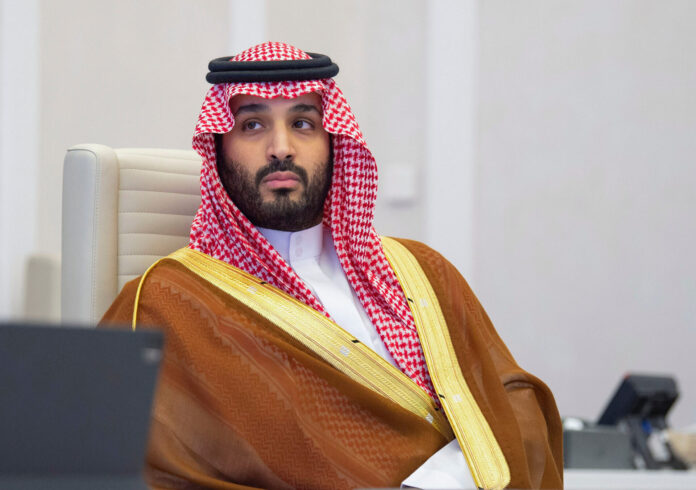
Mokhber made the remarks in a phone conversation with Saudi Crown Prince Mohammed bin Salman on Friday as the latter offered his condolences to the Iranian government and nation over the martyrdom of President Ebrahim Raisi, Foreign Minister Hossein Amirabdollahian and their companions in a helicopter crash in the northeastern province of East Azarbaijan on Sunday.

He described ties between Iran and Saudi Arabia as crucial for the Muslim world, saying, “Despite some powers’ opposition, our relations have reached a good level and the region is in desperate need of such relations.”

Mokhber urged the two countries to increase economic exchanges, remove obstacles and meet mutual needs in order to further improve political relations.

He emphasized that the loss of popular and hardworking President Raeisi is painful but will not make any change in Iran’s diplomatic path.

He noted that Tehran and Riyadh will continue to boost cordial relations as in the past.

The interim president stressed the importance of pursuing the policy of neighborliness and expansion of relations among all the countries in the region which will guarantee regional stability and prosperity.

Mokhber also hailed Saudi Arabia’s King Salman bin Abdulaziz and the crown prince’s messages of sympathy with Iran over the tragic incident and the participation of the country’s foreign minister in ceremonies to pay tribute to the late president and his entourage.

The Saudi crown prince, for his part, said Iran and Saudi Arabia play a key role in the region and the Muslim world and added that improved mutual relations will lead to a bright future.

Salman expressed Riyadh’s readiness to boost economic cooperation with Tehran.

He stressed the need to continue President Raisi’s path to develop mutual and regional ties.

The passing of President Raisi and Foreign Minister Amirabdollahian was very painful for Saudi Arabia, he said, vowing to continue expansion of ties with Iran.

The conversation comes as it was in March 2023 and under the tenure of President Raisi that Iran and Saudi Arabia agreed to restore diplomatic ties after seven years.

The tragic helicopter crash engulfed Iran in shock and grief and generated a groundswell of support and solidarity from Muslims and non-Muslims across the world.

Leader of the Islamic Revolution Ayatollah Seyyed Ali Khamenei, expressing his deep sorrow over the “martyrdom-like passing”, announced five days of national mourning on Monday.

US announces $275Mn arms package for Ukraine

Russia Ukraine War Weapons Arms

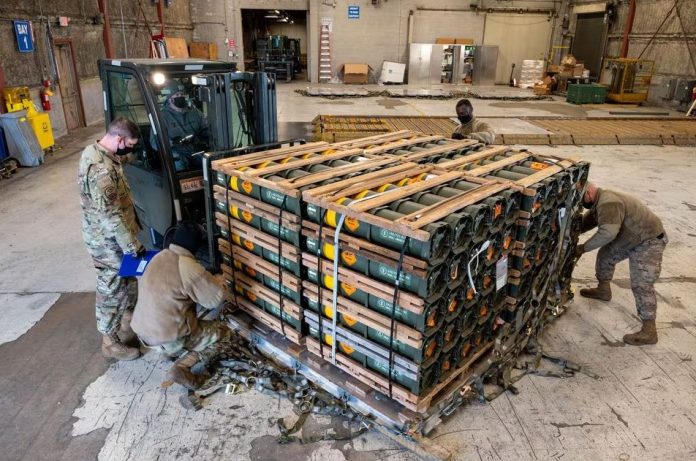
“The United States is announcing today a significant new drawdown of weapons and equipment for Ukraine,” Blinken said in a statement.

“This $275 million package, which is part of our efforts to help Ukraine repel Russia’s assault near Kharkov, contains urgently needed capabilities including: ammunition for HIMARS; 155mm and 105mm artillery rounds.”

The new package also includes tube-launched, optically-tracked, wire-guided missiles; Javelin and AT-4 anti-armor systems; precision aerial munitions; small arms and additional rounds of ammunition and grenades; demolitions munitions; anti-armor mines; tactical vehicles; body armor; chemical, biological, radiological and nuclear protective equipment; and other equipment.

Blinken confirmed that US assistance from previous packages has already been delivered to the front lines in Ukraine.

The weapons package comes as Kiev is being pressured on multiple fronts, with Russian troops advancing in both Ukraine’s Kharkov Region and Russia’s Donetsk People’s Republic. In early May, Moscow’s forces launched a push into northeastern Ukraine towards the city of Kharkov, capturing more than a dozen settlements along the way.

The goal of the operation is to create a buffer zone between Kiev-controlled territory and Russia’s Belgorod Region, in an effort to curb Ukrainian attacks on the local civilian population, President Vladimir Putin has said.

Over the past week, Moscow liberated Andreevka and Klescheevka in the Donetsk People’s Republic, closing in on the Ukrainian-held city of Chasov Yar, the Russian Defense Ministry reported.

The latest aid package comes amid a push among Kiev’s war sponsors to lift restrictions on using Western-supplied armaments to strike “internationally recognized” Russian territories.

However, according to Moscow, this rhetoric is designed to maintain the illusion that the West is not part of the conflict, while in fact Kiev is using Western arms against “civilian infrastructure and residential districts” well outside the conflict zone on a daily basis, Russian Foreign Minister Sergey Lavrov stressed.

US preparing for ‘prominent’ role in post-war Gaza: Report

Gaza War

Politico reported details of discussions within the administration of US President Joe Biden about what a post-war settlement should look like, citing four officials and a leaked document from the Department of State.

The US reportedly wants to retain a “civilian adviser” to any future security force, likely based in Egypt or Jordan. American forces, however, would “never enter Gaza itself” in order to avoid the impression that Washington was “dictating the future of the territory”.

A classified document from March envisioned an American filling the role of a “director-general” of the future security mission, according to the outlet. Under that proposal, the force would consist of roughly 2,000 Palestinians and 1,000 troops from Arab-speaking nations. It would be commanded by an officer from Israel, the Palestinian Authority, or “ideally” Egypt.

The timeline for the implementation of Washington’s plans are unclear, according to a US intelligence assessment described by Politico earlier this week. The document said Israel had managed to reduce the strength of Hamas forces by up to 35% since the group’s attack on Israel last October. However, it has recruited thousands of new fighters in recent months, a source in the intelligence community told Politico.

The Pentagon’s widely reported efforts to deliver humanitarian aid via a floating pier have been undermined by logistical and security issues. No food reached starving Palestinians between last Friday and Tuesday of this week, spokesman Pat Ryder told reporters, blaming the delay on local NGOs that were tasked with distributing the aid.

The US has refused to work with the United Nations Refugee Agency, a prominent provider of humanitarian aid in Gaza, after Israel accused some of its employees of involvement in the October 7 attack. Last month, the UN announced it had closed or suspended its probes into the allegations because Israel had failed to provide any evidence substantiating its claims.

Late Iran’s president had great faith in Palestinian cause, resistance: Hezbollah Chief

Funeral Procession Iran's President

Sayyed Hassan Nasrallah made the remarks during a speech that he delivered in the Lebanese capital Beirut as a means of paying tribute to the president and his companions, who were martyred in a helicopter crash in northwestern Iran on Sunday.

Nasrallah also called Iran’s Foreign Minister Hossein Amirabdollahian, who was also martyred in the incident, “a believer in the resistance and its movements.”

The Hezbollah leader described the tragic incident as “very painful and very sad in Iran and abroad”.

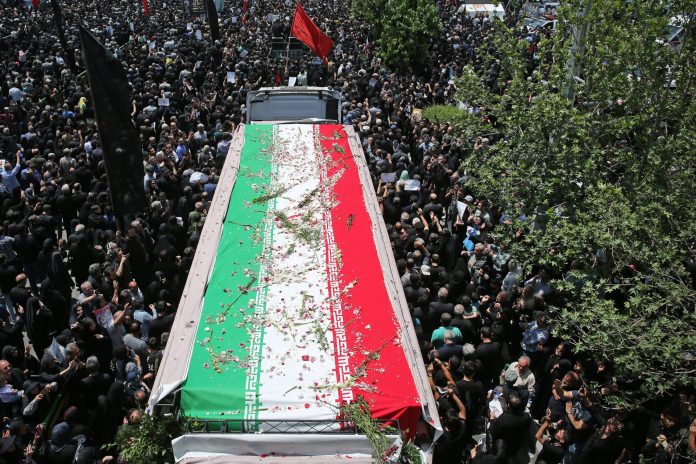
He noted that the martyrs’ funeral was attended by millions across the Islamic Republic.

“The funeral processions is the third largest in the history of mankind after Imam Khomeini and Martyr Qassem Soleimani,” Nasrallah said, referring respectively to the late founder of the Islamic Republic and the former commander of the Quds Force of Iran’s Islamic Revolution Guards Corps (IRGC).

The massive turnout, he observed, was a testament to the Iranian people’s “loyalty, allegiance, and firm commitment to the path of Imam Khomeini and to the leadership of the Islamic Republic of Iran”.

The tragedy has, however, neither “weakened” the country nor “shaken” it, the Hezbollah chief said, saying the country remains a key supporter of the Palestinian cause of liberation from Israeli occupation and aggression.

“This support is [even] increasing and is clearly visible,” he stated.

Elsewhere in his remarks, Nasrallah pointed to the October-present war that the Israeli regime has been waging against the Gaza Strip following Al-Aqsa Storm, a retaliatory operation by Gaza’s resistance movements.

“The enemy acknowledges the severe suffering it faces and acknowledges its impotence and failure,” he added.

The Hezbollah chief was apparently referring to Tel Aviv’s failure so far to realize the objectives that it has been seeking to achieve through the military onslaught, including destroying Gaza’s resistance groups and enabling the release of those who were taken captive during Al-Aqsa Storm.

“Today, as we are in the eighth month of the war on Gaza, the Israelis themselves, in power and the opposition, all agree that what the entity has experienced this year is unprecedented,” Nasrallah said.

He noted the International Criminal Court (ICC) Prosecutor Karim Khan’s recent application for arrest warrants against Israeli war criminals, including Prime Minister Benjamin Netanyahu, over their atrocities in Gaza.

“Who would have believed that the time would come when the International Criminal Court would request the issuance of arrest warrants against Zionist officials, and this is one of the results of the Al-Aqsa Storm,” the Hezbollah leader said.

He also asserted that if the Israeli regime kept up the war “it will go to the abyss”, warning that the regional resistance groups had “surprises” in store for the regime.

“You must expect surprises from our resistance,” Nasrallah added, addressing Netanyahu.

The Hezbollah leader, meanwhile, hailed the European trio of Spain, Ireland, and Norway’s recent recognition of the Palestinian state.

“The recognition of the Palestinian state by a number of European countries represents a great loss for the occupation,” he stressed.

Former President Ahmadinejad says mulling filing for candidacy in Iran’s presidential election

Mahmoud Ahmadinejad

Ahmadinejad resurfaced on Tuesday in a meeting of the Assembly of Experts after a long time of keeping a low profile and no-show, raising speculations that he is back in the political scene.

A group of his supporters gathered in front of the former president’s house to ask him to stand as a candidate in the presidential elections scheduled to be held on June 28.

Ahmadinejad said, “I am weighing the situation to decide whether to register as a candidate for the presidential election or not.”

“We have to wait for sweet developments in the country and the developments that are to the benefit of the people,” he added, without explaining further.

A two-term president from 2005 to 2013, Ahmadinejad was disqualified in April 2017 by the Guardian Council to run for the office for a third term.

The Iranian constitution mandates a presidential election within 50 days to fill the void created after the death of President Raisi and seven other companions on Sunday in a helicopter crash.