Sunday, December 28, 2025
Home Blog Page 872

Iran caretaker FM: Lebanese resistance ‘anchor of peace, stability’ in region

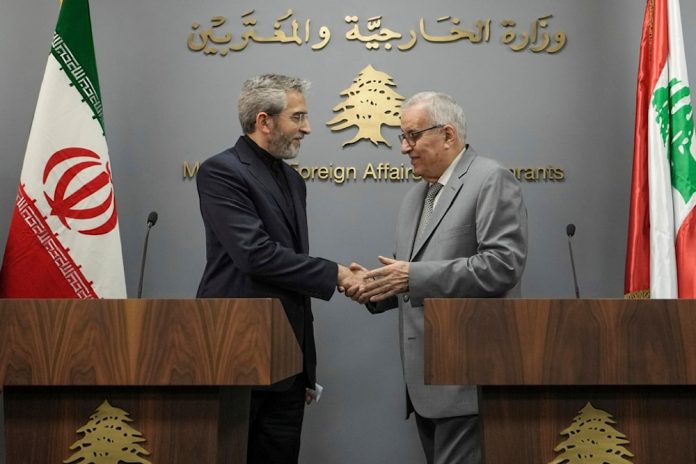
Bagheri made the remarks on Monday in a joint press conference with the Lebanese Foreign Minister Abdallah Bou Habib.

The Iranian foreign minister also pointed to the strong relations between Iran and Lebanon and noted, “The ties are a key indicator of stability in the region.”

Bagheri said Iran has always made efforts to restore peace and stability to Lebanon and help the country remain on the path of progress.

The two diplomats had earlier held talks on the latest developments in the region, including the Israeli aggression on the Gaza Strip and its recent raids on Rafah.

The Iranian interim foreign minister said, “We agreed that all regional countries, especially Islamic states, should take a collective action to counter the Zionist aggression and support the Palestinian people, especially in Rafah.”

He said both sides emphasized on Iran’s initiative to hold an extraordinary meeting of the foreign ministers of the Organization of Islamic Cooperation (OIC) member states in order to take a joint and decisive measure in this regard.

Zelensky claims China is ‘Putin’s tool’

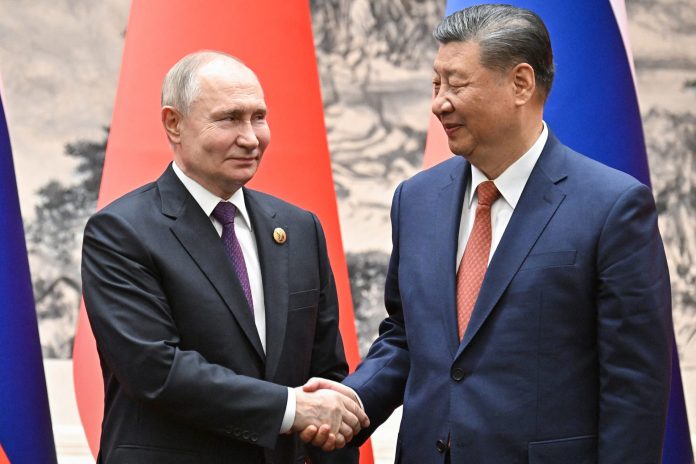
Putin Xi

Zelensky fired a rare diplomatic broadside at Beijing on Sunday following his surprise appearance at the Shangri-La Dialogue, an annual security conference organized by the International Institute for Strategic Studies (IISS) in Singapore.

“Russia, using Chinese influence on the region, using Chinese diplomats also, does everything to disrupt the peace summit,” Zelensky claimed at a press conference, referring to Swiss-hosted talks on the Ukraine conflict that are planned for later in June.

“It is unfortunate that such a big, independent, powerful country as China is an instrument in the hands of [Russian President Vladimir] Putin,” the Ukrainian leader added.

He also made vague allegations that China is providing Russia with military assistance, despite Beijing insisting this is not the case. Zelensky claimed to have “intelligence that somehow, some way, some things come to Russia’s markets via China”, asserting that unspecified “elements of Russia’s weaponry come from China”.

“We do not expect military support from China. We have never asked them,” the Ukrainian leader stated.

“But we do not expect China to provide defense support to Russia.”

The remarks came shortly after Chinese Defense Minister Dong Jun reiterated Beijing’s neutral stance on the conflict between Moscow and Kiev, stating Beijing stands “firmly on the side of peace and dialogue.”

China “has not provided weapons to either side, and has strict control over exports of dual-use goods”, Dong said during his speech at the Shangri-La conference earlier in the day.

The Ukrainian-sponsored “peace conference” in Switzerland is set to take place on June 15–16 at the Burgenstock Resort near Lucerne. While more than 160 countries have been invited, many have reportedly opted to abstain or send minor officials.

Moscow has been excluded from the event, with Kiev arguing it would have attempted to derail the talks. This week, Beijing said it would not be sending a delegation for the summit, arguing that both parties to the conflict must be present at any peace talks.

Israel says will not accept rule of Hamas in Gaza at any stage

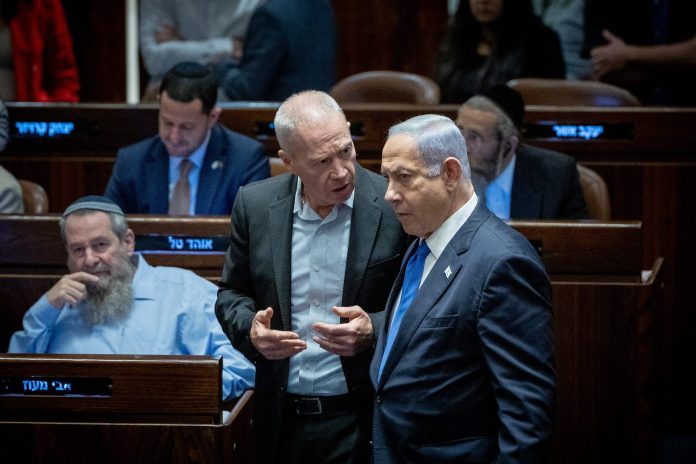
Netanyahu Gallant

“While we conduct our important military actions, the defence establishment is simultaneously assessing a governing alternative to Hamas,” Gallant said in a statement on Sunday.

“We will isolate areas, remove Hamas operatives from these areas, and introduce forces that will enable an alternative government to form – an alternative that threatens Hamas,” Gallant added.

“On one hand, military action and on the other the ability to change the government. [This] will lead to the achievement of two of the goals of this war: the dismantling of the Hamas government and its military power, and the return of the hostages. We will not accept the rule of Hamas in Gaza at any stage in any process aimed at ending the war.”

Pressure is mounting on Israel’s government after Biden announced the proposal on Friday, saying it was an “Israeli” truce deal and urging Hamas to accept it. The group that has governed the Gaza Strip since 2007 reacted “positively” to the US president’s statements.

Far-right Israeli Finance Minister Bezalel Smotrich and National Security Minister Itamar Ben-Gvir have vowed to quit the Benjamin Netanyahu-led government if the ceasefire proposal is accepted.

Ophir Falk, Israel’s senior foreign policy adviser, stated Biden’s plan is a “deal we agreed to – it’s not a good deal, but we dearly want the hostages released, all of them”.

White House national security spokesperson John Kirby said if Hamas agrees to Biden’s ceasefire proposal to end the war, the United States expects Israel to also accept the plan.

“This was an Israeli proposal. We have every expectation that if Hamas agrees to the proposal – as was transmitted to them, an Israeli proposal – then Israel would say ‘yes’,” Kirby said in an interview on the ABC News programme This Week.

More than 100,000 Israeli demonstrators took to the streets of Tel Aviv on Saturday demanding that the Netanyahu-led coalition sign on to the truce proposal.

On Sunday, an Israeli official told US news outlet CBS that Netanyahu and his war cabinet have approved Biden’s ceasefire proposal and are awaiting Hamas’s response.

The official maintained that Netanyahu would not agree to a permanent ceasefire without fulfilling Israel’s war goals, including returning all Israeli captives held in Gaza and the “destruction” of Hamas and its capabilities.

Over 40% of Israelis believe Hamas will maintain control over Gaza: Poll

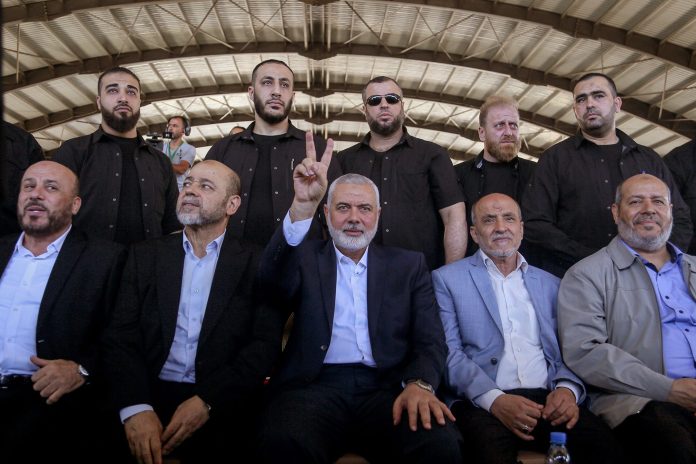
Hamas

The poll shows that 40 percent of Israelis support the proposal for a ceasefire in Gaza announced by the US president this week. Twenty-seven percent oppose the plan.

Additionally, 32 percent of Israelis believe that the country’s army will dismantle Hamas and 42 percent believe that it will continue to control the Gaza Strip.

Finally, 55 percent of Israelis support expanding war with Lebanon’s Hezbollah to the country’s north. Hezbollah and the Israeli army have been involved in exchanges of fire since the outbreak of Israel’s war on Gaza, which has led to the evacuation of residents of northern Israel.

Recently, US intelligence sources told Politico only 30 to 35 percent of Hamas fighters have been killed after more than seven months of Israel’s military operations against the Palestinian group in the besieged enclave.

According to Politico, the majority of fighters who were members of the Palestinian movement prior to the 7 October attack in southern Israel are still alive, even as the death toll in Gaza has reached over 36,000 dead, mostly women and children.

In addition, around 65 percent of Hamas’ tunnel infrastructure remains intact, Politico’s sources said, and thousands of new members are said to have been recruited to the group in recent months.

On Friday, Biden called on Israel and Hamas to accept a three-phase deal which includes the release of hostages in Gaza, the withdrawal of Israeli soldiers from the enclave, a permanent ceasefire, and an exchange of prisoners.

Russia warns IAEA’s resolution against Iran can deteriorate situation

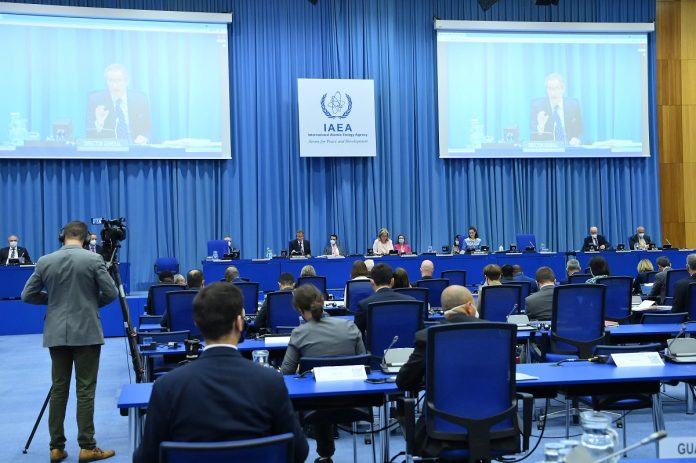
IAEA Board of Governors

In a post on his X account on Sunday, Ulyanov warned against the repercussions of a resolution against Iran ahead of the regular meeting of the IAEA’s Board of Governors.

“The June session of the IAEA Board of Governors will start tomorrow. It doesn’t promise to be quiet,” Ulyanov wrote.

He expressed hope that no resolution against Iran will be approved during the session.

“Such a resolution by definition can’t bring positive results but can seriously deteriorate the situation,” the Russian envoy emphasized.

Board discussions are expected to include, among other issues: verification and monitoring in the Islamic Republic of Iran in light of United Nations Security Council resolution 2231 (2015) and Treaty on the Non-Proliferation of Nuclear Weapons (NPT) Safeguards Agreement with the country.

Three diplomats said on Wednesday that the European parties to the 2015 nuclear deal — Britain, France and Germany — have circulated a draft resolution against Iran ahead of the UN nuclear watchdog’s board meeting and appear determined to push it.

However, reports suggest that the US and its European partners, known as the E3, were divided over the issue, with Washington fearing any resolution could risk further escalation in the region.

Head of the Atomic Energy Organization of Iran (AEOI) Mohammad Eslami said last month that the Islamic Republic will continue to cooperate with the IAEA to resolve disputed issues surrounding its nuclear program. He added that Iran had sorted out almost half of the issues raised by the agency about its nuclear sites.

In November 2022, the US and its European allies ratified a draft resolution which criticized Iran for what it called a lack of cooperation with the agency. Russia and China voted against the motion.

Iran rejected the resolution as politically-motivated, as the country has more facilities under the IAEA supervision and has also allowed more inspections of its nuclear activities by the UN nuclear watchdog than other countries.

Maldives says will ban Israelis from entering country over Gaza war

Maldives

The president’s office noted that the Cabinet decided to change laws to prevent Israeli passport holders from entering the country and to “establish a subcommittee to oversee the process”.

Nearly 11,000 Israelis visit the Maldives every year, or 0.6 percent of the total tourist arrivals.

In response, Israel’s foreign ministry recommended that Israeli citizens not travel to the Maldives. The recommendation, the Israeli ministry added, includes Israelis with dual citizenship.

“For Israeli citizens already in the country, it is recommended to consider leaving, because if they find themselves in distress for any reason, it will be difficult for us to assist,” the ministry said in a statement.

The Maldives lifted a previous ban on Israeli tourists in the early 1990s and moved to restore relations in 2010. However, normalisation attempts were scuttled following the toppling of President Mohamed Nasheed in February 2012.

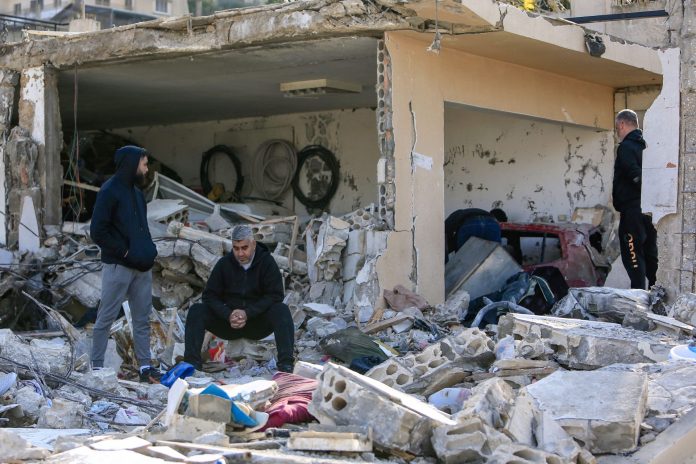
Israel destroyed 50k housing units in northern Gaza: Palestinian official

Gaza War

The figure was given by the chairman of the Emergency Committee for Northern Gaza Municipalities, during a press conference on Sunday.

“Some 50,000 housing units have been destroyed, and sewage networks and roads have been bulldozed in most municipalities of northern Gaza,” the official, whose name was not given by Palestinian media outlets, said.

The official noted that “35 water wells, schools, and UNRWA facilities have been destroyed, and an imminent famine is threatening northern Gaza.”

The official also declared “Jabalia [refugee camp] and Beit Hanoun [both in northern Gaza] as disaster areas due to the indescribable destruction” caused by Israel’s genocidal war.

The Palestinian official’s warning came a day after the UN agency for Palestinian refugees, UNRWA, said in a post on X social media platform that as a result of the Israeli aggression, “Gaza has been reduced to rubble and Palestinian families have to survive in inhumane conditions with scarce water, food and supplies”.

UNRWA’s Commissioner General Philippe Lazzarini has also described the destruction caused by Israeli forces in Jabalia refugee camp as “horrific”, adding that “thousands of displaced people have no choice but to live amid the rubble and in destroyed UNRWA facilities.”

It was about a month ago that a UN official said the destruction caused by Israel’s war on the Gaza Strip is unseen since the Second World War, estimating that the reconstruction of the Palestinian territory could take 80 years and cost up to $40 billion.

Abdallah al-Dardari, UN assistant secretary-general and director of the UN Development Program’s regional office for the Arab states, added that the Israeli aggression has completely or partially destroyed 72 percent of all residential buildings in Gaza.

According to Palestinian Health Ministry in Gaza, the regime’s genocide has so far claimed the lives of 36,400 civilians, mostly women and children, while leaving 82,600 others injured.

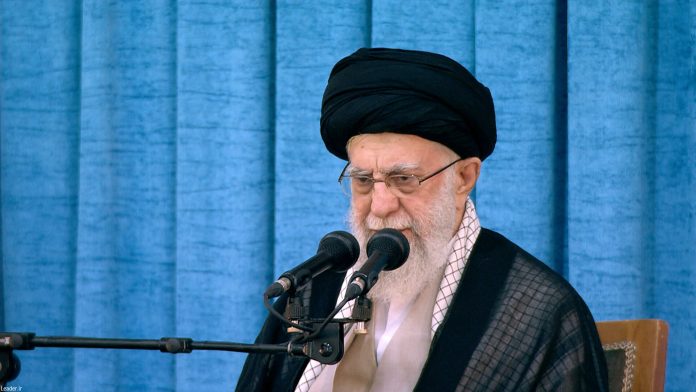
Iran’s Leader: Operation Al-Aqsa Storm put Zionist regime on path of annihilation

Ayatollah Khamenei

The Leader made the remarks in a speech on Monday at a ceremony to mark the 35th anniversary of the passing of the founder of the Islamic Republic of Iran, Imam Khomeini, at his mausoleum in southern Tehran.

Noting that that the late Imam Khomeini had put a huge emphasis on issue of Palestine since the onset of the Islamic Revolution in Iran, Ayatollah Khamenei said Palestine today has become the number one issue for the Muslim world.

The Leader also stated that today Imam Khomeini’s predictions regarding Palestine have materialized.

Ayatollah Khamenei cited the confessions in the West that Operation Al-Aqsa Storm has left Israel no way to get out of the current predicament, as “it has changed the questions in the ground.”

Praising the Palestinian nation for continuing to defend the resistance movements in face of occupying regime, the Leader said, “Operation Al-Aqsa Flood was an irreparable blow to Zionist regime.”

On the domestic front, the Leader hailed the achievements by the late Iranian President Ebrahim Raisi who died in a helicopter crash along with his companions last month.

“The martyrdom of late President Raisi and his companions was a great loss of Iranian nation,” he said, explaining “President Raisi made Iran greater in the eyes of the world.”

Stressing that the presidential election set to be held on June 28 in Iran is of “very high significance”, the Leader called for a high turnout in the forthcoming polls.

Netanyahu aide says Biden’s Gaza plan ‘not a good deal’ but Israel accepts it

Israeli Army

Ophir Falk, chief foreign policy adviser to Netanyahu, said Biden’s proposal was “a deal we agreed to – it’s not a good deal but we dearly want the hostages released, all of them”.

“There are a lot of details to be worked out,” he stated in an interview with Britain’s Sunday Times.

Falk added that Israeli conditions, including “the release of the hostages and the destruction of Hamas” have not changed.

On Friday, Biden detailed a three-phase plan submitted by the Netanyahu government to end the war on Gaza, which includes the release of captives by Hamas, the withdrawal of Israeli troops from the enclave, a permanent ceasefire and an exchange of prisoners.

Hamas has provisionally welcomed the Biden initiative, saying it “included positive ideas”.

Netanyahu meanwhile insisted on Hamas’s destruction and the return of the captives before a permanent ceasefire can be put in place.

Falk reiterated Netanyahu’s position that “there will not be a permanent ceasefire until all our objectives are met”.

Netanyahu is under pressure to keep his coalition government intact.

While many Israelis are urging the prime minister to embrace the deal, his far-right allies, National Security Minister Itamar Ben Gvir and Finance Minister Bezalel Smotrich, are threatening to topple his government if he does.

Netanyahu’s right-wing coalition holds a slim majority in parliament and is dependent on his far-right allies.

If the ultra-nationalist parties quit, it could expose Netanyahu to new elections and prosecution on longstanding corruption charges, in addition to scrutiny over security failures that led to the war.

But on Saturday, opposition leader Yair Lapid, who last week accused Netanyahu of prioritising his political survival, was quick to offer his support to the prime minister if he adopted the new ceasefire proposal.

Lapid, whose party holds 24 seats in parliament, stated on Saturday that Netanyahu could rely on his party’s votes to secure a deal.

“The Israeli government cannot ignore” Biden, Lapid continued, adding, “There is a deal on the table, and it needs to be done. I remind Netanyahu that he has a safety net from us for the hostage deal if Ben Gvir and Smotrich leave the government.”

A huge demonstration in Tel Aviv on Saturday night, led by families of the captives, called on Netanyahu to strike a ceasefire agreement.

On Sunday, an Israeli official told US news outlet CBS that Netanyahu and his war cabinet have approved Biden’s ceasefire proposal and are awaiting Hamas’s response.

The official maintained that Netanyahu would not agree to a permanent ceasefire without fulfilling Israel’s war goals, including returning all Israeli captives held in Gaza and the “destruction” of Hamas and its capabilities.

White House national security spokesperson John Kirby has stated if Hamas agrees to President Joe Biden’s ceasefire proposal to end the war, the US expects Israel to also accept the plan.

“This was an Israeli proposal. We have every expectation that if Hamas agrees to the proposal – as was transmitted to them, an Israeli proposal – then Israel would say yes,” Kirby said in an interview on the ABC News programme This Week.

Netanyahu stressed a day earlier that its military goal had remained unchanged and that the end of the war would not occur until Hamas had been “destroyed”.

Iran summons China’s ambassador over islands dispute statement

Persian Gulf

Citing the special and privileged relations between Iran and China, the Director General of the Persian Gulf Department of the Iranian Foreign Ministry, Mohammad Alibak, stressed that Tehran expects Beijing to respect its national sovereignty over the trio islands and correct its stance.

Iran’s protest came after China renewed its support for the UAE’s claim over the three Iranian islands of the Lesser Tunb, the Greater Tunb and Abu Musa in a final statement of a joint meeting.

The Chinese envoy said he would inform Beijing of Iran’s protest.