Friday, January 2, 2026
Home Blog Page 831

Dozens killed in Israel attack on Gaza school

Gaza War

The attacks on Tuesday came as Hamas warned that the stepped-up Israeli offensive could jeopardise mediated ceasefire talks, a new round of which is set to begin in the capital of Qatar, Doha.

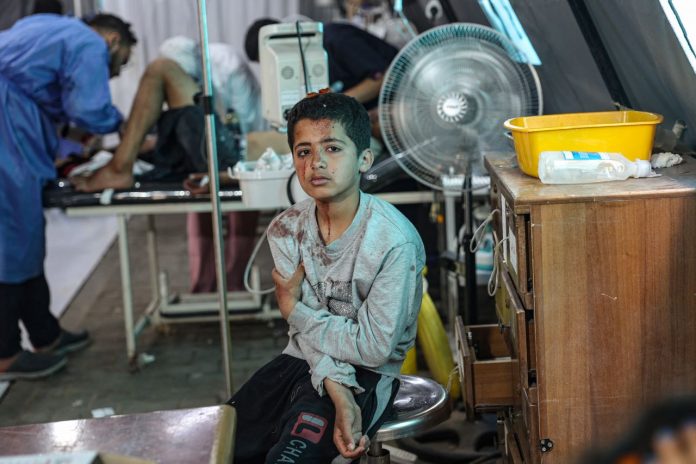
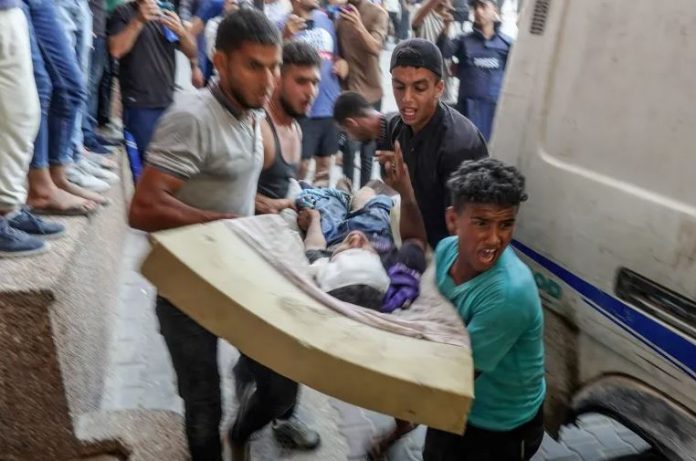
In the town of Abbasan, east of Khan Younis in southern Gaza, an Israeli air attack on the al-Awdah school killed at least 30 people and wounded more than 50, most of them women and children, according to Palestinian medics.

Exclusive footage from the school, obtained by Al Jazeera, shows young Palestinians playing football in the building’s yard as dozens of people watch on. Then, a loud explosion is heard, sending people running for cover.

A Palestinian boy told Al Jazeera he lost several relatives in the attack. “We were sitting and a missile fell and destroyed everything,” he said, sobbing.

“I lost my uncle, my cousins and my relatives,” he added.

Elsewhere in Gaza, Israel also bombed the central Bureij camp, killing at least 17 people, 14 of whom were children. Israeli soldiers also raided a house in central Deir el-Balah, killing three more people.

Hamas described the attack on the al-Awda school an “extension of the war of extermination against our people by the Zionist terrorist government” and called on people in Arab and Muslim nations to escalate protests against the war.

Josep Borrell, the European Union’s top diplomat, also condemned the attack, saying in a post on X, “For how long are innocent civilians going to bear the brunt of this conflict?”

He added, “It is imperative to immediately reach a ceasefire to bring respite to hundreds of stranded civilians, free all the hostages, deliver the needed humanitarian aid.”

The attacks come as CIA director William Burns and Israel’s Mossad chief David Barnea prepare to travel to Qatar on Wednesday, after Burns held talks with Egypt’s President Abdel Fattah el-Sisi in Cairo, seeking to push for a ceasefire in Gaza.

The renewed efforts come after Hamas made concessions last week, including dropping a key demand that Israel commit upfront to an end to the war before signing a ceasefire agreement. Instead, Hamas said it would push for the move in negotiations planned during an initial six-week ceasefire.

But Ismail Haniyeh, the leader of the group, stated on Monday that Israel’s escalating assault has threatened talks at a crucial time and could bring negotiations “back to square one”.

Haniyeh, who spoke with Qatari and Egyptian mediators, issued a statement warning “of the disastrous repercussions of what is happening in Gaza City, Rafah and other areas across the Gaza Strip”.

He stressed that Israeli Prime Minister Benjamin Netanyahu and “his army bear full responsibility for the collapse of this negotiation path”.

At least 38,243 people have been killed and 88,243 wounded in Israel’s war on Gaza since October. The death toll in Israel from the Hamas-led attacks on October 7 is estimated at 1,200, with dozens of people still held captive in Gaza.

US, allies to dispatch 5 strategic air defense systems to Ukraine

Joe Biden

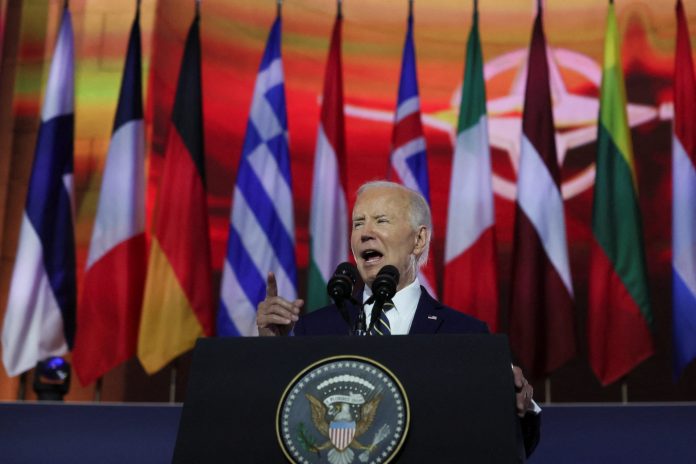
“Today, I’m announcing a historic donation of air defense equipment for Ukraine,” Biden said in remarks at the summit being held in Washington, D.C.

He added the U.S., along with Germany, Netherlands, Romania and Italy, “will provide Ukraine with the equipment for five additional strategic air defense systems and in the coming months, the United States and our partners intend to provide Ukraine with dozens of additional tactical air defense systems.”

Biden stated that the U.S. will make sure that Ukraine “gets this assistance before anyone else gets it” and that Ukraine will receive dozens of additional interceptors over the next year. He said interceptors will help Ukraine protect civilians against Russian missiles.

The new package follows a White House announcement last month that the U.S. would send Ukraine air defense missiles that were contracted for purchase by other countries after Kyiv pleaded with its supporters to send at least seven Patriot missile systems.

“Make no mistake, Russia is failing in this war,” the president continued, adding, “Make no mistake, Ukraine can and will stop [Russian President Vladimir Putin].”

Biden is set to meet with Ukrainian President Volodymyr Zelensky on Thursday. Biden’s remarks come ahead of the president’s highly anticipated press conference Thursday at the end of the summit.

Biden also said NATO has grown stronger and that Russia is “failing” in its war in Ukraine, as he vowed the alliance will continue standing up for freedom amid a rise in threats across the globe.

“Together, we built a global coalition to stand with Ukraine,” Biden stated, adding, “Make no mistake, Russia is failing in this war. More than two years into [Russian President Vladimir] Putin’s war of choice, its losses are staggering. More than 350,000 Russian troops, dead, wounded … many young people have left Russia because they no longer see a future in Russia.”

NATO leaders will gather Wednesday and Thursday at the Walter E. Washington Convention Center to draft a joint communiqué on policy, including support for Ukraine.

Iran sentences bandits to death, imprisonment for robbery

Iran Court

The trio, hitherto known as the Sadr Highway Suspects, were charged with ‘causing unrest’ and ‘complicity in Moharebeh (waging war against God)’ for an armed robbery on the highway north of the Iranian capital Tehran.

The convicts on two bikes reportedly stopped a car on April 14 to steal money and valuables and fled the scene.

They were arrested a month later in a northern Iranian city and remanded in custody waiting for trial.

The verdict can be appealed in the Supreme Court.

WHO warns against dire medical crisis amid new Gaza evacuation orders

Gaza War

Dr. Tedros Adhanom Ghebreyesus, the WHO director-general, stressed the severe impact these orders are having on the already limited medical services in the region.

“There’s really no safe corner in Gaza,” said Ghebreyesus in a statement.

“The latest reports on evacuation orders in Gaza City will further impede delivery of very limited life-saving care.”

The WHO has reported that key hospitals such as Al-Ahli and Patient Friendly hospitals are out of service.

Patients from these hospitals have been forced to either self-evacuate, were given early discharges, or referred to other hospitals.

Kamal Adwan and Indonesian hospitals, which are now responsible for these patients, are grappling with severe shortages of fuel, beds, and trauma medical supplies.

The Indonesian Hospital is currently operating at triple its capacity, struggling to cope with the influx of patients.

Al-Helou Hospital, located within the blocks affected by the evacuation order, continues to operate but only partially.

Meanwhile, As-Sahaba and Al-Shifa hospitals, which are near the evacuation zones, remain functional for now, though their status is precarious given the proximity to conflict areas.

Additionally, six medical points and two primary healthcare centers fall within the evacuation zones, further straining the healthcare infrastructure.

Ghebreyesus warned that these critical medical facilities could quickly become non-functional due to hostilities in their vicinity or obstructions to access.

The WHO has called for a cease-fire to ensure that medical aid can reach those in dire need and that the wounded can receive proper care.

WHO spokesperson Tarik Jasarevic told a UN press briefing in Geneva that of 36 hospitals in Gaza, only 13 are partially functioning.

Jasarevic stressed that patients and medical staff evacuated three hospitals in one week in southern Gaza in fear of intensified military activities that could render the health facilities non-functional or inaccessible.

While the cumulative bed capacity at the six partially functional hospitals in southern Gaza, including three in Deir al Balah and three in Khan Younis, now stands at 1,334 beds, he said that there are a total of 11 field hospitals in the strip — three had to temporarily shut down, and four are partially functioning, due to the Rafah hostilities and reduced access.

Most of the field hospitals in Rafah are relocating to the central area, he added.

The spokesperson, citing the Palestinian Health Ministry, underlined that 34 people have died of malnutrition and dehydration.

In Kamal Adwan Hospital alone, Jasarevic said, 60 severe acute malnutrition cases were detected last week, and two patients were admitted to the stabilization center.

Since mid-October, 865,000 cases of upper respiratory infections, 485,000 cases of diarrhea, 96,417 cases of lice and scabies, 60,130 cases of skin rashes, 10,038 impetigo cases, and 9,274 cases of chickenpox have been reported in displaced people shelters, according to the spokesperson.

“No WHO trucks have passed last week into Gaza since Karem Shalom remains closed,” he added.

Ex-Iranian diplomat: “We negotiated with Saddam, so we can talk to Trump too”

Trump

In an exclusive interview with Entekhab news outlet, Ahmadi shared insights into the Trump administration’s attempts at diplomacy and the internal dynamics that influenced U.S. foreign policy towards Iran.

Ahmadi disclosed that during Trump’s presidency, the former US president made two attempts to meet with then Iranian Foreign Minister Mohammad Javad Zarif.

He said: These efforts were part of Trump’s broader approach to renegotiate various international agreements.”

Ahmadi added that Trump criticized the NAFTA agreement as flawed but eventually entered negotiations with Canada and Mexico after receiving positive signals from both countries. The outcome was essentially the same agreement under a new name, which Trump then presented to his voter base as a victory.

Ahmadi further explained that within the Trump administration, there was a notable difference in attitudes towards Iran. While Trump often highlighted the economic benefits that European countries derived from doing business with Iran and focused on pragmatic issues, his National Security Advisor John Bolton and Secretary of State Mike Pompeo held much more hardline, ideological positions.

The former Iranian diplomat, who had once served at the Permanent Mission of the Islamic Republic of Iran to the United Nations in New York noted: “Even in situations where Trump was inclined towards negotiating with Iran, Bolton’s influence was a significant barrier.

Israeli soldiers allowed to shoot at Gazans ‘virtually at will’: Report

Israeli Army

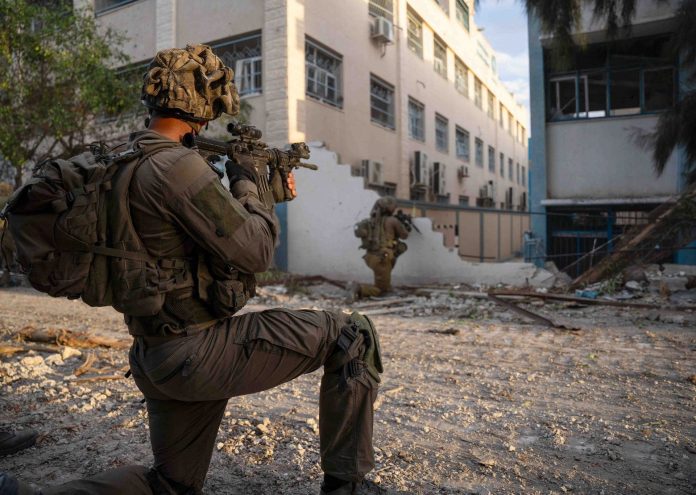
Israeli soldiers told the outlets of near-total absence of firing regulations, “with troops shooting as they please, setting homes ablaze, and leaving corpses on the streets” all with their commanders’s blessings.

“There was total freedom of action,” B., an anonymous soldier who served in Gaza, said, adding, “If there is [even] a feeling of threat, there is no need to explain — you just shoot.”

B. stated that when someone is approaching.

“it is permissible to shoot at their centre of mass [their body], not into the air. It’s permissible to shoot everyone, a young girl, an old woman.”

Even when dealing with Israeli hostages in the besieged enclave, soldiers “didn’t have a specific directive”, as the incident in which the army accidentally killed three hostages did not cause any significant changes to the open-fire regulations.

Soldiers even freely fired at civilians entering so-called “no-go zones”, and their corpses are often left to rot, only removed ahead of the arrival of humanitarian aid convoys so that “images of people in advanced stages of decay don’t come out”.

Flouting a United Nations Security Council resolution demanding an immediate cease-fire, Israel has faced international condemnation amid its continued brutal offensive on Gaza since an Oct. 7, 2023 attack by Palestinian group Hamas.

Nearly 38,200 Palestinians have since been killed, mostly women and children, and nearly 88,000 others injured, according to local health authorities.

Nine months into the Israeli war, vast tracts of Gaza lie in ruins amid a crippling blockade of food, clean water, and medicine.

Russia responds to Ukraine hospital attack claims

Russia Ukraine War

Speaking to reporters on Tuesday, Peskov stressed that Russia “does not strike civilian targets” and that all strikes carried out by the Russian military are exclusively aimed at “critical infrastructure facilities and military targets that are somehow related to the regime’s military potential”.

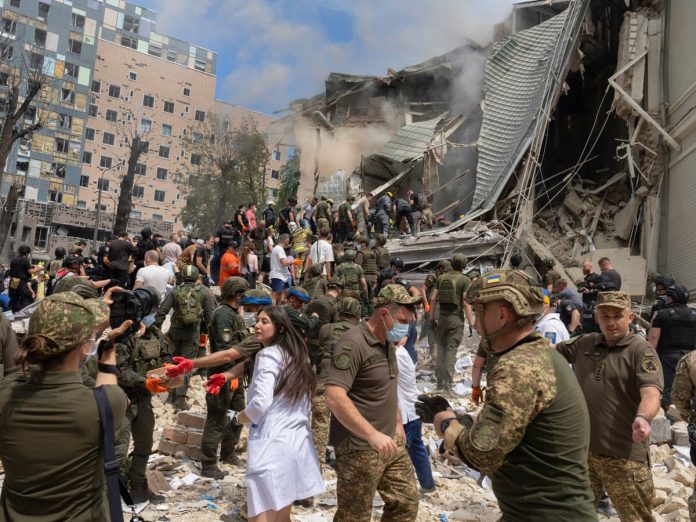
Regarding Ukraine’s accusations that Moscow intentionally hit the hospital in Kiev, Peskov pointed to the official statement by the Russian Defense Ministry, which “absolutely rules out that there were strikes on any civilian targets. It states that we are talking about the fall of an anti-missile”.

The Russian Defense Ministry reported on Monday that it had conducted a large-scale attack using long-range high-precision weapons to strike Ukrainian military industry facilities and aviation bases. The attack was said to be in response to Kiev’s continued attempts to cause damage to Russian energy and economic facilities.

The ministry stated that all the intended targets were hit and rejected Kiev’s claims of Russian missiles striking civilian facilities as “absolutely untrue”.

“Numerous published photos and video footage from Kiev clearly confirm the fact of destruction due to the fall of a Ukrainian air defense missile launched from an anti-aircraft missile system within the city,” the ministry noted.

It also accused Kiev of attempting similar “hysterics” in the past, especially before large international summits, such as the NATO gathering in Washington that kicked off on Tuesday. The Russian Defense Ministry suggested that the incident at Okhmatdet is being used by the Ukrainian authorities to ensure continued funding and the continuation of the conflict.

Russia’s ambassador to the US, Anatoly Antonov, has also suggested that the hospital tragedy is seen by Kiev’s Western backers as a “perfect gift” to justify further escalation of the conflict and the continuation of hostilities.

The Western press is “whipping up hysterics” and hiding relevant facts about the tragedy, Antonov claimed, including Moscow’s assessment that the incident was caused by a Ukrainian air defense missile.

Pro-Kiev media outlets have claimed that the weapon that struck the hospital was a Russian air-launched Kh-101 cruise missile. However, others have argued that the projectile, which can apparently be seen in a video filmed from a distance by a witness, was probably an AIM120 fired by a NASAM missile system or an interceptor fired by the MIM-104 Patriot missile system. Western donors have provided Ukraine with this type of US-developed weapon.

Official: De-dollarization, Rial’s immunity from sanctions in Iran-Russia monetary agreement

Dollar

Mohsen Karimi referred to the CBI governor’s remarks on the first monetary agreement between Iran and Russia and the connection of Russia’s “Mir” card network to Iran’s “Shetab” network, starting from the first week of September.

Karimi stated that four significant and strategic actions were on the agenda of the two countries’ central banks. Two of these actions, establishing correspondent relations in national currencies and connecting the two countries’ banking messaging infrastructures, had already been completed, enabling all Iranian and Russian banks to send standard banking messages to each other.

The Deputy for International Affairs of the CBI added that these two actions have been finalized and will be operational in the coming weeks. This means that Iranian and Russian travelers can use their bank cards in both ATMs and point-of-sale terminals in both countries.

Karimi elaborated on the recent monetary agreement between Iran and Russia, stating that the agreement involves a liquidity swap line between the two central banks. This approach is aimed at de-dollarization and reducing sanction risks. In other words, it renders each country’s national currency immune to sanctions.

President-Elect Pezeshkian: Enhancing Pakistan ties Iran’s inviolable foreign policy

Masoud Pezeshkian

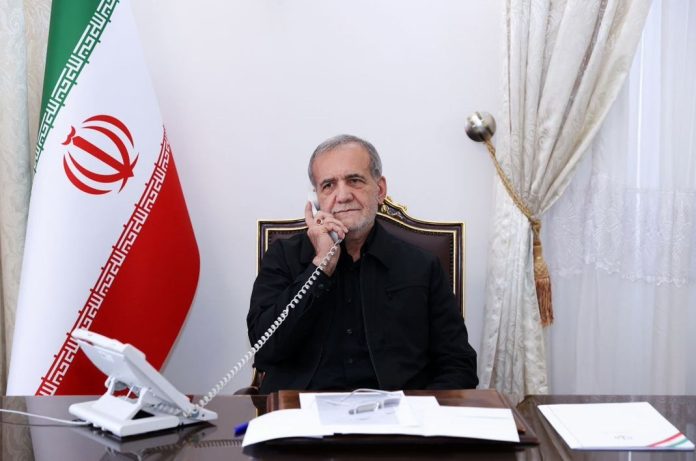
Pezeshkian, in a phone call with Pakistan’s Prime Minister Shehbaz Sharif on Tuesday, said Iran is ready to implement bilateral agreements with its eastern neighbor in various political, economic and security fields.

He said, “The long-standing relations and the deep cultural, religious and civilizational relations between the two countries have formed the most important foundation of the relations between the two great countries of the Islamic world in all dimensions.”

The Iranian president-elect, however, said, “There are many unused capacities for the promotion of cooperation between Iran and Pakistan, which we hope will be used with joint efforts to upgrade relations.”

He also expressed hope that the friendly and fraternal goals of the two countries will be realized in the new era.

Sharif, in turn, offered Pezeshkian his felicitations on his victory in the recent snap presidential elections to replace the late President Ebrahim Raisi, who died in a helicopter crash in May.

The Pakistani premier noted that the successful holding of elections and smooth transition of power in Iran indicate that the foundations of power in the country are based on democracy.

Israel army admits much of Hamas tunnel network in Gaza still in ‘good functional state’

Hamas

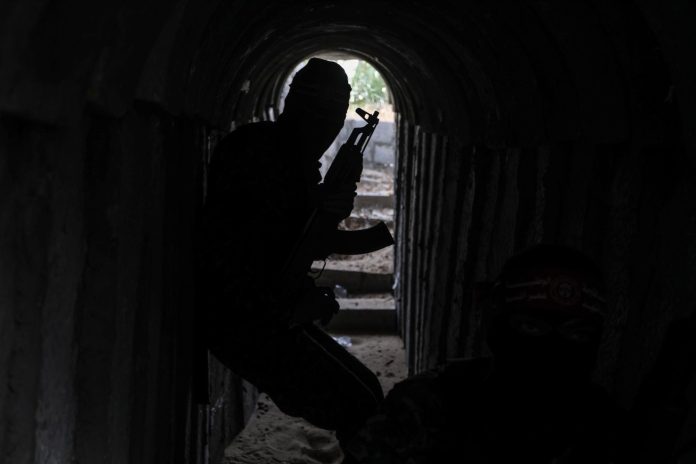
The Hamas tunnels are in good shape in central Gaza, most of Rafah in the south, and Shejaiya in the north, the TV report says.

In Khan Younis, in the south of the strip, many tunnels that were targeted by the IDF have been fixed up, as have the factories in the area that produce the concrete to build the tunnels.

Even though the IDF has been focused on tackling Hamas in Rafah in recent weeks, functional tunnels in the area enable Hamas to get close to the Israeli border, and only a few routes have been destroyed on the Philadelphi Route along the Gaza-Egypt border, the report adds.

Tunnels in Gaza City are in a medium to good state, and enable Hamas to gain proximity to the Israeli border, it adds.

Overall, were the war to end now, the report says, “Hamas still has the capacity to organize an incursion close to the border and perhaps even across it, [albeit] not on the scale of the past.”

Senior Israeli defense officials in January assessed that Hamas’s Gaza tunnel network was between 350 and 450 miles long, an astounding figure given that the enclave is only some 140 square miles in total size.

After seven months of Israel’s military operations against the Palestinian group in the Gaza Strip, US intelligence sources told Politico only 30 to 35 percent of Hamas fighters have been killed.

In addition, around 65 percent of Hamas’ tunnel infrastructure remains intact, Politico’s sources said, and thousands of new members are said to have been recruited to the group in recent months.

The report comes as Washington has become increasingly concerned about the viability of Israel’s stated aim of destroying the Palestinian group.