Thursday, January 1, 2026
Home Blog Page 815

Japan puts sanctions on four Israeli settlers in West Bank over acts of violence

Israeli settlers

Violent acts by some Israeli settlers in the West Bank have increased dramatically since last October, said Japan’s Chief Cabinet Secretary Yoshimasa Hayashi.

In this situation and taking into account the steps taken by the G7 countries and others, Japan decided to designate the four Israeli settlers involved in violent acts as targets for asset freezing, he explained.

“Japan will steadily implement these asset freezing measures and continue to strongly urge the Israeli government to completely freeze settlement activities in cooperation with the international community, including the G7,” Hayashi added.

Britain, the United States and Canada have sanctioned some individual Israeli settlers in response to heightening violence in the West Bank amid Israel’s war in Gaza.

Palestinian groups, including, Hamas, Fatah, agree to achieve ‘comprehensive national unity’ under PLO

China Hamas Fatah

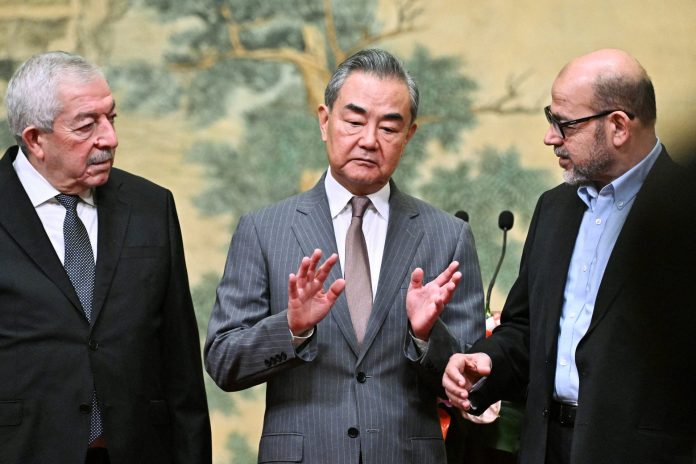
The announcement was made in a joint statement at the conclusion of a two-day meeting in Beijing following China’s invitation to intra-Palestinian talks.

The statement said the Palestinian groups “agreed on achieving a comprehensive national unity that includes all Palestinian factions within the frame of PLO, and on the commitment to the establishment of the independent Palestinian state with Jerusalem as its capital, in accordance with the UN resolutions and ensuring the right of return as based in resolution 194.”

The Palestinian groups also agreed on “uniting national efforts” to stop the Israeli genocide in Gaza and to resist attempts to expel Palestinians from their lands.

The Fatah Movement, Hamas Movement, Palestinian Front for the Liberation of Palestine (PFLP), Democratic Front for the Liberation of Palestine (DFLP), and other Palestinian groups took part in the talks.

Chinese Foreign Minister Wang Yi described the deal as an agreement to rule the Gaza Strip together once the ongoing war ends.

“The most prominent highlight is the agreement to form an interim national reconciliation government around the governance of post-war Gaza,” he stated.

“Reconciliation is an internal matter for the Palestinian factions, but at the same time, it cannot be achieved without the support of the international community.”

Earlier in April, China’s Foreign Ministry spokesman Lin Jian said Fatah and Hamas representatives held “consultations on advancing intra-Palestinian reconciliation and for in-depth and candid dialogue” in Beijing.

Before the April talks, the groups also met in Moscow in February.

Similar rounds of talks were held in the past years in Turkey, Algeria, and Egypt, but none resulted in a breakthrough in the Palestinian reconciliation process.

The Palestinian Territories of the West Bank and Gaza Strip have been politically divided since June 2007 due to sharp disagreements between the Fatah and Hamas movements.

Hamas won the majority of seats in the 2006 legislative elections. It has since taken control of the Gaza Strip, while Fatah has ruled over the West Bank.

Tel Aviv on Tuesday slammed the agreement between Palestinian factions aimed at maintaining control over the Gaza Strip following Israel’s ongoing war.

Israeli Foreign Minister Israel Katz said Tel Aviv will not allow a joint control of Gaza by Hamas and Fatah.

“In reality, this won’t happen because Hamas’s rule will be crushed,” Katz wrote on X.

“(Palestinian President Mahmoud) Abbas will be watching Gaza from afar. Israel’s security will remain solely in Israel’s hands,” he added.

Japan says ready to help revive JCPOA; Iran ‘ready for any talks’

Nuclear Negotiations in Vienna

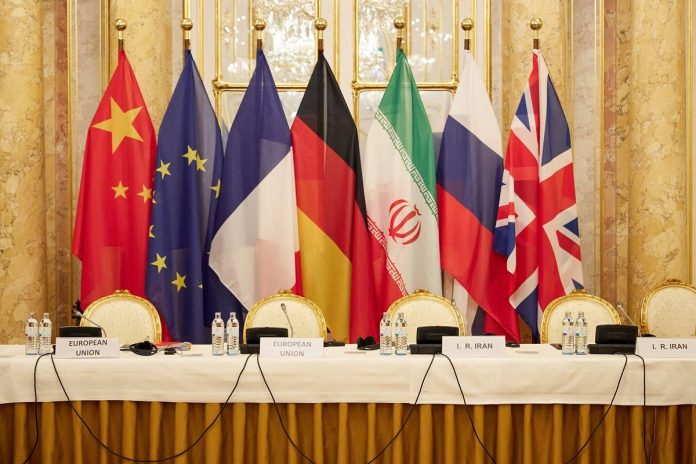
Speaking to Iran’s President-Elect Massoud Pezeshkian on the phone on Monday evening, Kishida said, “The international community, including Japan, has great expectations from your future administration for effective interaction in this regard.”

Pezeshkian noted it was the US, under former president Donald Trump, that pulled out of the landmark nuclear accord known as the Joint Comprehensive Plan of Action (JCPOA), adding, “However, Iran has always been and is ready for any dialogue in this field, within the framework of its national interests and to uphold the rights of the Iranian nation.”

Both sides stressed that Iran and Japan need to expand ties on a platform of “95-year-old diplomatic and friendly ties, and a history of more than a thousand years of interactions between the two nations.”

The ongoing Israeli massacre in the Gaza Strip against the Palestinians also came up during the phone call, with Pezeshkian saying, “Unfortunately, the Zionist regime’s attacks on Gaza, as a clear example of crime and genocide, have been going on for more than 280 days and nights.”

He added, “We hope Japan, as a non-permanent member of the (United Nations) Security Council as well as the G7, will make more efforts to put pressure on the regime and its supporters in order to stop the aggression on Gaza.”

Kishida said, “Japan will seriously pursue its active diplomacy to establish a ceasefire, deliver aid supplies to the Palestinians in Gaza and prevent the spread of conflicts in the region, and I hope that we will have constructive and effective cooperation with Iran in this direction.”

Three Bangladeshi nationals given life in prison by UAE

Bangladesh Protest

On Monday, the Abu Dhabi Federal Court of Appeal handed out the three life sentences, as well as 10-year prison terms for 53 others, for participating in demonstrations.

Those convicted will be deported to Bangladesh at the end of their sentences, according to Emirati news agency WAM.

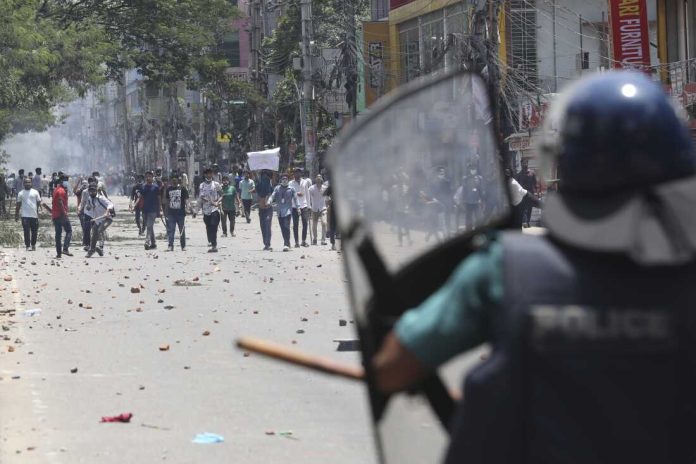
The demonstrators were protesting against a Bangladesh High Court verdict that was set to reintroduce a quota system in the country, reserving 30 percent of government jobs for the descendants of veterans who fought in the country’s independence war in 1971.

Mass protests against the quota system, led by students who believed the move to be anti-meritocratic, were violently cracked down on by authorities in Bangladesh last week, with at least 170 protesters killed.

Over the weekend, Bangladesh’s Supreme Court scrapped the High Court verdict and recommended that only five percent of jobs should be set aside for the relatives of veterans.

Videos emerged on Friday of scores of protesters in the UAE, including in Dubai, rallying against Bangladesh’s government. Dozens of Bangladeshi nationals were immediately arrested.

Unauthorised protests are banned in UAE, a country where freedom of expression is severely restricted.

The Emirates’ attorney general ordered an immediate investigation into the protests on Friday.

Anwar Gargash, adviser to the UAE presidency, said: “The Attorney General’s decision to refer the protesters to trial is within the legal framework to maintain the state model and prevent the export of other countries’ problems to the UAE.”

The demonstrators were charged with deliberately disrupting transportation, inciting protests, rioting, causing damage to property and sharing content about the demonstrations online, according to WAM.

“This just shows how quick the UAE authorities are to stamp on any form of freedom of expression,” James Lynch, co-founder of Fair Square, which campaigns for workers’ rights in the Persian Gulf, told Middle East Eye.

He added that all speech was cracked down on, whether it was concerned with UAE domestic politics, foreign policy issues related to the Emirates, like on Israel and Palestine, or issues where the UAE’s role was not significant, like in Bangladesh.

“Simply the idea of protest, of criticism and dissent, [is] discouraged,” Lynch continued, noting, “Migrant workers are heavily restricted from expressing themselves in any form.”

Bangladeshis reportedly make up about seven percent of the UAE’s population. They are the third-largest immigrant community in the Emirates, after Indians and Pakistanis.

The vast majority of the UAE’s population of 9.2 million is made up of migrants, with only around 10 percent being Emirati citizens.

Palestinian rights advocates describe Gaza genocide as Biden’s legacy

Joe Biden

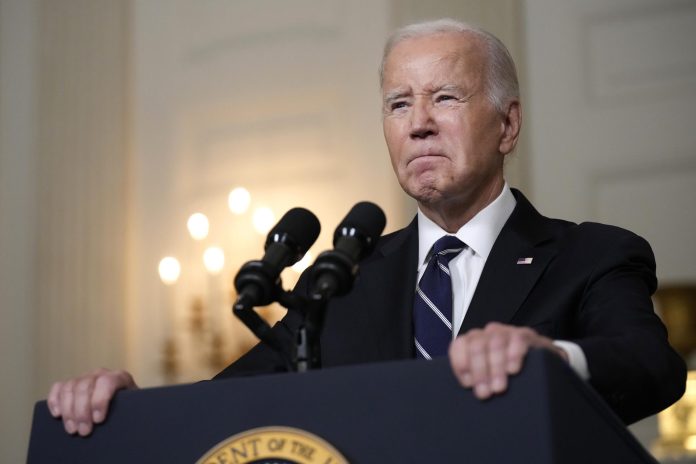
While political leaders showered Biden with compliments, bombs continued to rain down on the besieged enclave, killing dozens and sparking another wave of mass displacement in Khan Younis.

For many Palestinian rights advocates, the carnage and abuses in Gaza will define Biden’s place in the history books, as the US remains steadfast in its support of Israel’s war in the Palestinian territory.

“He’ll be remembered for the hundreds of thousands killed, injured and displaced in Gaza,” said Abed Ayoub, the executive director of the American-Arab Anti-Discrimination Committee (ADC).

“There is no way around it. ‘Genocide Joe’ is what he’s going to be remembered as.”

Since Israel’s war on Gaza started on October 7, Biden has offered the government of Israeli Prime Minister Benjamin Netanyahu unconditional military and diplomatic support.

Only once did Biden withhold a shipment of bombs to Israel over humanitarian concerns — and even then, he released part of that cargo a couple months later, amid pressure from Netanyahu.

Israel’s war, meanwhile, has killed more than 39,000 Palestinians, displaced hundreds of thousands, fuelled a man-made hunger crisis and destroyed large parts of the territory. United Nations experts and other observers have warned of a “risk of genocide” in Gaza.

Ayoub told Al Jazeera that, despite Biden’s domestic achievements, the president will rank among the worst in US history due to his unconditional support for Israel.

The US Campaign for Palestinian Rights (USCPR) echoed that comment.

“Nothing will erase the fact that Biden’s legacy is — and always will be — genocide,” the group announced in a statement.

The US president has been a stalwart supporter of Israel throughout his decades-long political career.

He frequently calls himself a Zionist and argues that Jews across the world would not be safe without Israel.

He put that worldview into policy during his presidency, as he pushed on with Former President Donald Trump’s pro-Israel doctrine. Biden kept the US embassy in Jerusalem and refused to reverse the Donald Trump-era decision to recognise Israel’s claims to the occupied Golan Heights in Syria.

He also aggressively pursued formal ties between Israel and Arab states, a goal Trump advanced with the 2020 Abraham Accords.

That push for normalisation, however, came without progress towards the recognition of an independent Palestinian state or the dismantling of systemic anti-Palestinian discrimination.

The outbreak of the war in Gaza further underscored Biden’s pro-Israel policies.

Weeks after the conflict started, Biden travelled to Israel and publicly embraced Netanyahu in what many critics have described as a “bear hug”.

That sign of friendliness was widely understood to be an endorsement of Netanyahu’s response in Gaza, after the Palestinian group Hamas attacked southern Israel on October 7.

Even early in the conflict, human rights groups accused Israel of horrific violations rising to the level of genocide — a push to destroy the Palestinian people.

Within the first week alone, the Israeli military announced it had unleashed 2,000 strikes across Gaza — a strip of land roughly the size of Las Vegas.

Biden has since authorised continuous arms transfers and more than $14bn in additional aid to sustain Israel’s Gaza offensive. Moreover, his administration has vetoed three United Nations Security Council proposals that would have called for a ceasefire.

Hatem Abudayyeh, the chair of the US Palestinian Community Network (USPCN), stated Biden will be remembered above all for enabling Israel’s “crimes against humanity”.

“He could’ve turned the tap of money and weapons off in October, but he allowed this genocide to happen. He is complicit, and that’s what will be written on his tombstone,” Abudayyeh told Al Jazeera.

Following his entry into politics in 1970, Biden quickly rose from local to national prominence, mounting a successful dark-horse campaign to represent Delaware in the US Senate in 1972.

After nearly four decades in Congress, he became vice president under Barack Obama, and in 2021, he won the presidency himself.

The president does not hail from a political dynasty, and he is not an exceptional orator. His success in politics is often credited to his interpersonal skills and ability to project empathy.

That sense of compassion, however, never extended to Palestinians, activists say.

“For nine and a half months, President Biden has funded and armed the brutal Israeli genocide of Palestinians in Gaza, making the US government directly complicit in the killing of at least 39,000 people, including over 15,000 children,” Jewish Voice for Peace Action said in a statement on Sunday.

“Americans have watched in horror and outrage as Biden sent the Israeli government the weapons it used to wipe out entire generations of Palestinian families, to destroy hospitals, bakeries, schools, mosques, churches, universities, refugee camps, homes and Gaza’s entire health care system and electricity and water grids.”

Beyond policy, Biden’s rhetoric at times seemed dismissive of Israeli atrocities and Palestinian suffering.

“I have no notion that the Palestinians are telling the truth about how many people are killed. I’m sure innocents have been killed, and it’s the price of waging a war,” the US president said in October.

But that stance caused Biden troubles both domestically and abroad.

Even before Biden delivered a disastrous debate performance on June 27, the 81-year-old had started to trail his Republican rival Trump in public opinion polls.

Parts of the Democratic base — including young people, progressives, Arabs and Muslims — voiced frustration and anger with his support for Israel.

Groups like the USCPR argued that Biden’s age and debate performance were only one factor in the pressure that forced him from the presidential race.

“It was not Biden’s failed debate that showed he is unfit to lead,” USCPR noted, adding, “It was the tens of thousands of bombs he sent to kill Palestinian families. It was his callous, dystopian disregard for Palestinian lives.”

Other commentators likewise argued that Biden failed to show enough concern for the humanitarian crisis unfolding in Gaza.

IRGC says seized foreign tanker smuggling fuel in Persian Gulf

IRGC Boat

All 12 crew members with Indian and Sri Lankan nationalities were also arrested.

The second naval zone of the IRGC said in a statement on Monday that the vessel with the flag of Togo was carrying over 1.5 million liters of smuggled fuel.

The Belt Guse tanker was seized off the coast of the southern port city of Bushehr. It was smuggling fuel in an “organized way”.

Late in January, the IRGC Navy also confiscated a foreign tanker carrying two million liters of smuggled fuel in the southern waters.

The IRGC Navy has been using state-of-the-art detection tools over recent years to monitor all movements in the Persian Gulf and maintain the security of the marine route.

It has over the past years foiled several attacks on both Iranian and foreign tankers in the strategic Persian Gulf region and other high seas.

Israel confirms two more captives dead in Gaza

Israel Hostages

Alex Dancyg, 75, and Yagev Buchstav, 35, who were taken by Hamas fighters during the October 7 attacks on Israel from their homes near the Gaza fence, were declared dead on Monday after a review by Israeli authorities including health experts.

They are believed to have died several months ago, the military announced, but did not comment on previous claims by Hamas, or provide details about the manner of their deaths. Their bodies have not been recovered.

Hamas had announced the death of the two captives in March, saying Buchstav died due to lack of food and medicine, and Dancyg was killed by Israeli military attacks.

Buchshtav’s wife, Rimon Kirsht Buchshtav, was taken to the besieged territory with him by Palestinian fighters. She was one of the people released on November 28 as part of an exchange agreement with Hamas.

The two captives died in Khan Younis in the southern part of the enclave, but the Israeli military announced this is unrelated to its latest planned ground invasion of the area announced on Monday.

The air raids and artillery shelling of the area that came shortly after the announcement of a new order to flee has killed dozens and wounded tens of others, according to health officials in Gaza.

Out of about 250 people who were taken on October 7, a total of 116 captives are believed to remain in the besieged enclave, with more than 40 confirmed dead in the Israeli military attacks.

On June 8, the Israeli military launched a daylight operation in central Gaza’s Nuseirat that led to the rescue of four captives held in the enclave. At least 270 Palestinians were killed during the assault, which was supported by many air attacks in the area.

Over 39,000 Palestinians have been killed as a result of the relentless pounding of the Gaza Strip by the Israeli military, and more than 89,800 injuries have been recorded by health authorities.

Israeli citizens continue to hold protests in Tel Aviv and other areas to call for a ceasefire agreement to ensure the captives are brought back safely from Gaza.

In demonstrations this week, they demanded that Prime Minister Benjamin Netanyahu prioritise achieving a captive deal over a planned trip to the United States, where he will deliver a speech to Congress.

Gaza death toll surges past 39,000

Gaza War

A ministry statement said that some 89,818 others have been injured in the assault.

“Israeli forces killed 23 people and injured 91 others in three ‘massacres’ against families in the last 24 hours,” the ministry announced

“Many people are still trapped under rubble and on the roads as rescuers are unable to reach them,” it noted.

Flouting a UN Security Council resolution demanding an immediate cease-fire, Israel has faced international condemnation amid its continued brutal offensive on Gaza since an Oct. 7, 2023 attack by Palestinian group Hamas.

Over nine months into the Israeli war, vast tracts of Gaza lie in ruins amid a crippling blockade of food, clean water and medicine.

Iranian wild goats and leopards spotted in northwestern protected area of Kaghazkonan 

Iranian wild goats

Males, called Kal, have long, sword-like horns. The biological range of this mammal includes Europe and Asia Minor to Central Asia and the Middle East.

The Iranian leopard, which is among the endangered species, has a small population and Iranian authorities have been making a strenuous effort to prevent the species from extinction.

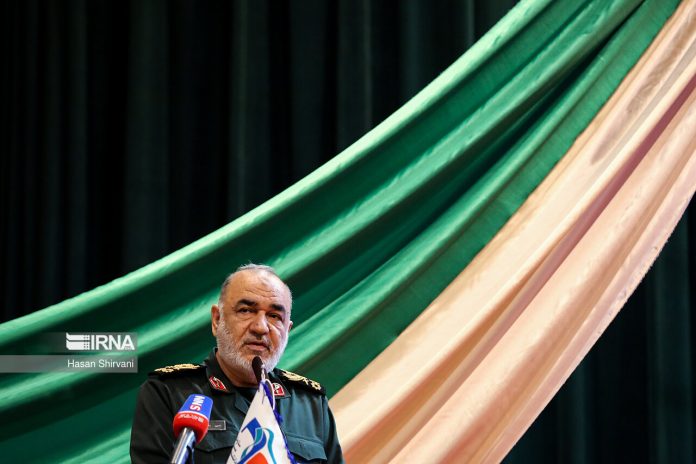
IRGC cmdr.: Protecting borders means enemy policies at bay 

Hossein Salami

Brigadier General Hossein Salami pointed out that establishing the security of the Islamic Republic is not limited to a narrow strip, but it’s the establishment of security in all Islamic borders.

According to the IRGC commander, deepening the credibility and authority of Iran with regard to security is a big task that is taking shape thanks to the efforts of the revolutionary forces.

General Salami added that the enemies aim to gradually cross the borders with a plan and strategy and turn the unstable regions of Iran into the country’s center in a creeping and accelerated movement, but to no avail.