Monday, December 29, 2025
Home Blog Page 81

Iran, Russia to build 8 new nuclear power plants

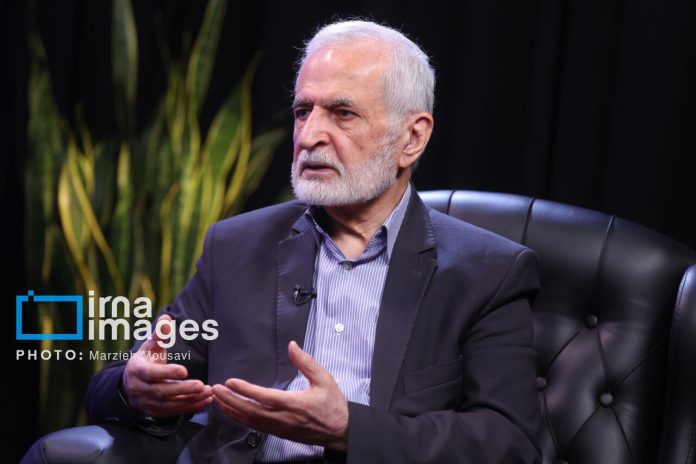
The announcement came during President Masoud Pezeshkian’s meeting with senior officials of Iran’s nuclear industry.

Eslami stated that Iran’s nuclear sector, despite decades of pressure since the 1979 Islamic Revolution, has continued to advance as a symbol of scientific self-reliance. He highlighted that under the guidance of the Supreme Leader, the Atomic Energy Organization has transformed into a pioneering, knowledge-based institution dedicated to technological innovation and commercialization.

According to Eslami, the organization is currently implementing the third year of its long-term strategic roadmap, which envisions producing 20,000 megawatts of nuclear electricity by 2041.

He said multiple feasibility and design studies have been completed to achieve this goal, emphasizing that the plan is economically viable and will attract investors due to its self-sustaining financial model.

Referring to the agreement with Russia, Eslami explained that following the successful operation of the first Bushehr nuclear power plant in 2013, a new contract was concluded between Tehran and Moscow for the construction of four additional reactors in Bushehr and four others at sites to be announced by the Iranian government.

He added that additional nuclear plants will be established in various regions to ensure clean, stable power generation, including projects in Darkhovin (Khuzestan Province) and a newly initiated nuclear power project on the Caspian coast in Golestan Province.

Eslami reaffirmed that Iran remains committed to producing 20,000 megawatts of nuclear electricity, citing continuity even during wartime as proof of the program’s resilience.

He stressed that the completion of these new plants will secure Iran’s position among leading nations in peaceful nuclear energy production.

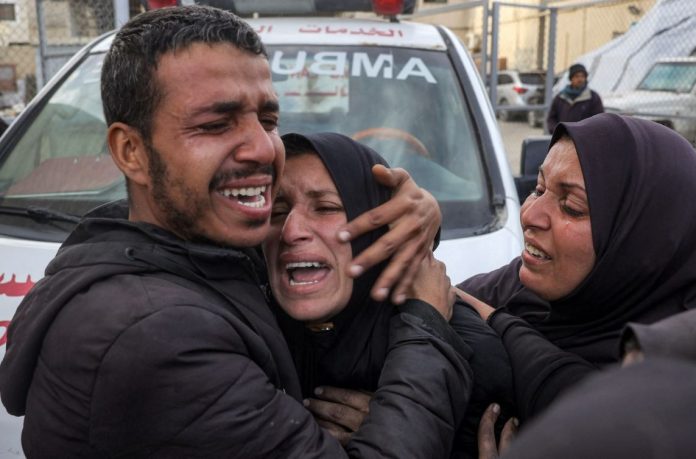
Hamas refutes US accusations that it looted aid trucks in Gaza

Hamas

In a statement, Hamas called the US accusations “unfounded” and “part of an attempt to justify the further reduction of already limited humanitarian aid, while covering up the international community’s failure to end the blockade and starvation imposed on civilians in Gaza.”

“All manifestations of chaos and looting ended immediately after the withdrawal of the (Israeli) occupying forces, proving that the occupation was the only party that sponsored these gangs and orchestrated the chaos,” it added.

Hamas said over 1,000 Palestinian police and security forces had lost their lives and hundreds were injured while trying to provide protection for humanitarian aid convoys and ensure that assistance reaches those in need.

It affirmed that none of the international or local institutions, nor any driver working with the aid convoys, has filed any report or complaint about looting by Hamas.

“This clearly demonstrates that the scene cited by the US Central Command is fabricated and politically motivated to justify blockade policies and the reduction of humanitarian aid,” it stressed, blaming the US for failing to document the ongoing Israeli attacks despite the ceasefire, including the killing of 254 Palestinians and wounding of 595 others.

CENTCOM had shared drone footage allegedly showing an aid truck being looted by Hamas operatives in the enclave.

Hamas said the average number of aid trucks entering Gaza does not exceed 135 per day, while the rest are commercial trucks that Gaza’s population cannot afford, “despite our repeated calls to increase the number of humanitarian aid trucks and reduce commercial shipments.”

“The US adoption of the Israeli narrative only deepens Washington’s immoral bias and places it squarely as a partner in the blockade and the suffering of the Palestinian people,” it added.

The ceasefire took effect on Oct. 10 under US President Donald Trump’s 20-point plan.

Phase one of the deal includes the release of Israeli hostages in exchange for nearly 2,000 Palestinian prisoners. The plan also envisages the rebuilding of Gaza and the establishment of a new governing mechanism without Hamas.

Israel has killed more than 68,500 people, mostly women and children, and injured over 170,600 others in attacks in Gaza since October 2023.


Syrian president to discuss sanctions, reconstruction during US visit: FM

Syria’s new Foreign Minister Asaad Hassan al-Shibani

Ahmed al-Sharaa is expected in the US capital in early November, Syria’s top diplomat Asaad al-Shaibani told a panel at the Manama Dialogue in Bahrain.

“This visit is certainly historic,” he said.

“Many topics will be discussed, starting with the lifting of sanctions,” Shaibani continued, adding: “Today we are fighting (the Islamic State)… any effort in this regard requires international support.”

Discussions will also revolve around reconstruction after more than a decade of war, he stated.

The foreign ministry in Damascus confirmed the trip would be the first ever visit to the White House by a Syrian president.

On Saturday, US envoy to Syria Tom Barrack said Sharaa was heading to Washington “hopefully” to sign an agreement to join the international US-led alliance against the Islamic State (IS).

Though it will be Sharaa’s first visit to Washington, it will be his second to the US after a landmark UN trip in September, where the former militant became the first Syrian president in decades to address the UN General Assembly in New York.

In May, the interim leader, whose fighters ousted longtime ruler Bashar al-Assad late last year, met US President Donald Trump for the first time in Riyadh during a historic visit that led to the US leader vowing to lift economic sanctions on Syria.

Syria and Israel remain technically at war, but they opened direct negotiations after Assad was toppled last December.

Trump has expressed hope that Syria will join other Arab countries that have normalised ties with Israel under the so-called Abraham Accords.

But Shaibani stated that “regarding Syria and the Abraham Accords, this is an issue that is not being considered and has not been discussed”.

“We do not want Syria to enter a new war, and Syria is not currently in a position to threaten any party, including Israel,” added Shaibani.

He stated that the negotiations underway were focused on “reaching a security deal that does not undermine the 1974 agreement (cementing a ceasefire with Israel) and does not legitimise any new reality that Israel might impose in the south”.


NATO would need several weeks to respond to ‘Russian threat’: Euractiv

NATO

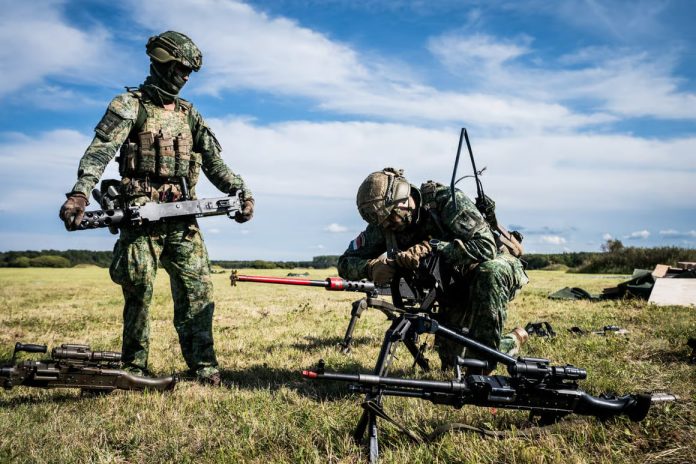
Moscow strongly opposes any NATO troop presence in Ukraine, saying Kiev’s aspiration to join the bloc was one of the key causes of the conflict. The Russian Foreign Ministry has warned that the presence of NATO forces in the neighboring state could trigger an “uncontrollable escalation with unpredictable consequences.”

A spokesperson for the Portuguese Armed Forces told Euractiv that moving tanks across the continent requires diplomatic permits from every country they cross. The transfer of heavy equipment is a “highly complex logistical operation” involving transportation on platforms and heavy trucks along both maritime and land routes, the spokesperson said.

Troop movements depend on existing relationships between national armed forces and the speed at which permits are granted, the outlet noted, adding that the authorities process these requests slowly.

An unnamed EU country requires 45 days’ notice to issue cross-border permission, according to a 2025 report from the European Court of Auditors, as cited by Euractiv. In 2018, the European Council set a standard time frame of five working days for these procedures.

NATO Defense College researcher Yannick Hartmann told the outlet that additional delays could result from mandatory security checks. Although NATO members could use a special customs declaration for military transport when entering or exiting the EU, it is up to the national authorities to process these types of requests, Euractiv said.

Maxime Corday, a senior researcher at the French Institute for International and Strategic Affairs, told the outlet that the absence of a unified legal framework within the EU leaves procedures inconsistent across member states.

EU and NATO officials have repeatedly cited the ‘Russian threat’ to justify increasing defense spending, boosting weapons production, and reintroducing military conscription. President Vladimir Putin has said Russia has “no reason and no interest – geopolitical, economic, political, or military – to fight NATO countries.”


Ukraine says thousands lose power supply after Russia attacks on frontline region

Russia Ukraine War

As winter nears, Russia has stepped up missile and drone strikes on Ukraine’s power grid, triggering outages and forcing Kyiv’s emergency crews to race to repair damage and manage rolling blackouts.

The attack on Zaporizhzhia left two people wounded and reduced buildings to rubble, the regional governor, Ivan Federov, wrote on the Telegram messaging app.

“Crews will restore power as soon as the security situation allows,” Fedorov said on Telegram, where he posted nighttime photographs of buildings with facades and windows torn off.

Zaporizhzhia endures near-daily Russian artillery, missile and drone strikes that have destroyed homes, crippled utilities and killed scores, as Moscow pressures Ukraine’s defences and disrupts links between its south and the rest of the country.

Fedorov stated that the overnight attack wounded two people. Russia’s 800 strikes on 18 settlements in the region killed one person and injured three over the 24 hours into Sunday morning, he added.

Two people died as a result of Russia’s overnight drone attack on Odesa on Ukraine’s Black Sea coast, Ukraine’s state emergency service said on Telegram.

Both sides deny targeting civilians in the war that Russia launched with a full-scale invasion on Ukraine in 2022, but thousands have been killed in the conflict, the vast majority of them Ukrainian.


Iran’s FM voices deep concern over ‘tragic’ killing of civilians in Sudan

Abbas Araghchi

In a post on his X account on Saturday, Araghchi said he had conveyed Iran’s “deep sorrow and concern over the tragic killing of innocent civilians” in the southwestern city of El Fasher, during a phone conversation with his Sudanese counterpart, Mohieldin Salem.

He added that he also expressed Iran’s solidarity with Sudan.

El Fasher has emerged as the new epicenter of global concern amid a sharp escalation in Sudan’s prolonged conflict, marking a fresh phase of violence, siege, and mass displacement across North Darfur.

After an 18-month siege that trapped nearly 1.2 million civilians, the Rapid Support Forces (RSF) announced on Sunday that they had captured the Sudanese Armed Forces (SAF)’s final stronghold in El Fasher.

Araghchi criticized the division of terrorism into “good” and “bad” categories by some countries and their support for those who, in their own words, carry out the “dirty work” in pursuit of their interests.

“Such deplorable double-standards, long espoused by Western governments, have no place in 2025,” the top Iranian diplomat stated.

He stressed the importance of condemning “terrorism and violence against innocent people, in any form and anywhere in the world.”


President Pezeshkian: Iran fully supports peaceful nuclear development

During a visit to the Atomic Energy Organization of Iran (AEOI) on Sunday, President Pezeshkian toured an exhibition showcasing the latest achievements in nuclear medicine and radiopharmaceutical production and held talks with senior industry officials.

He commended Iranian scientists for their contributions to public health, describing their work as “a form of scientific jihad and sincere service to the nation.”

President Pezeshkian called for accelerating innovation in radiopharmaceuticals and nuclear technology, citing their vital role in healthcare and national economic growth.

“The world powers fear Iran’s scientific independence,” he said. “We have repeatedly declared that producing nuclear weapons is not on our agenda. Our goal is to meet human needs through technology, not to build bombs.”

The president also urged greater efforts to communicate the peaceful applications of nuclear technology and to counter “biased propaganda that equates nuclear energy with weaponry.”

He concluded that his government will “rebuild nuclear facilities with even greater strength” and ensure Iran secures a stronger position in the global technology market.

Iran confirms receiving messages on possible resumption of talks with US

Iran US Flags

Government Spokesperson Fatemeh Mohajerani said on Sunday that the Ministry of Foreign Affairs “has received messages for the resumption of talks” with Washington, adding that it would elaborate on their content “at an appropriate time.”

Her remarks followed reports by the Iraqi outlet Baghdad Al-Youm, which claimed that Washington had sent a message to Tehran via Oman expressing readiness to restart nuclear negotiations that have been stalled.

The report further alleged that the message conveyed the intention of US President Donald Trump to pursue a new agreement with Iran.

However, senior Iranian lawmaker Esmaeil Kowsari, a member of the Parliament’s National Security and Foreign Policy Committee, said the moves to resume talks were “psychological operations.”

He said, “Whenever we have negotiated with the Americans, directly or indirectly, they have failed to honor their commitments.”

Kowsari cited historical examples of US noncompliance, including the unfulfilled promise to release Iran’s frozen assets following the 1979 takeover of US embassy in Tehran.

Iranian officials have not confirmed any ongoing or scheduled negotiations but maintain that messages between parties are routinely exchanged through diplomatic intermediaries such as Oman.

Tomahawks won’t bring Ukraine peace: Russia

Maria Zakharova

She made the remark after CNN reported that the Pentagon had given the White House approval to supply the Tomahawks to Ukraine, after concluding that the move would not deplete US stockpiles. Nevertheless, President Donald Trump has declined to provide the missile, which is capable of striking targets deep inside Russia.

“As the current situation and previous years have shown, it is clear that militarization and arms deliveries – especially to a terrorist regime – will not lead to a settlement. Moreover, such actions would contradict the campaign promises made by the current US administration,” Zakharova told reporters on Saturday.

Trump has long promised to mediate an end to the conflict between Russia and Ukraine and revived direct negotiations with Russia earlier this year. However, no breakthroughs were achieved during his rare summit with Russian President Vladimir Putin in Alaska in August or in the renewed Russian-Ukrainian talks in Istanbul.

Trump recently postponed a planned summit with Putin in Hungary’s capital, Budapest, and imposed additional sanctions on Russia’s oil trade. At the same time, he rejected Ukrainian leader Vladimir Zelensky’s request for the Tomahawks, saying the weapons were needed “to protect our country.”

Trump also stated that Ukrainian troops would have to undergo extensive training to operate the missiles.

“We know how to use it, and we’re not going to be teaching other people,” he added.

Putin warned last month that he would consider the delivery of Tomahawks as a further escalation and promised a “very strong response.”


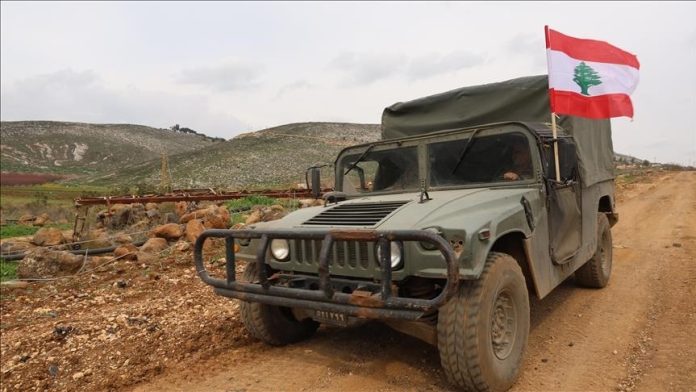
Israeli air attack kills four in Lebanon, straining fragile ceasefire

In a statement on Saturday, the Lebanese Health Ministry announced that the Israeli raid in the town of Kfarsir in the Nabatieh district also wounded three.

The state-run Lebanon News Agency reported that the strike, which involved a “guided missile”, targeted a car at about 2:15pm (16:15 GMT).

The attack came a day after Lebanese President Joseph Aoun accused Israel of escalating strikes in response to his offer to negotiate a more lasting end to the cross-border attacks.

The conflict began in 2023 when Hezbollah began launching attacks on Israel in solidarity with Palestinians in Gaza, in the wake of the Hamas-led October 7 attacks on southern Israel. After more than a year of fighting, the two sides agreed to a ceasefire in November 2024.

Despite the truce, Israel has kept troops in five areas of southern Lebanon and has continued near-daily air raids, repeatedly violating the truce. Israel claims it is targeting Hezbollah, but civilians, first responders and journalists have also been killed.

According to the United Nations, Israeli troops have killed at least 111 civilians in Lebanon since the ceasefire went into effect.

Aoun, who called for negotiations with Israel in mid-October, after United States President Donald Trump brokered a ceasefire, said his proposed talks seek to “end the Israeli occupation”.

For its part, Israel has claimed Lebanon’s government has not upheld its side of the ceasefire by failing to constrain and disarm Hezbollah.

The armed group rejects the pressure for it to disarm.

In another sign of heightening tensions, Aoun earlier this week instructed Lebanon’s armed forces to confront any new Israeli incursion in the south.

The order came hours after Israeli soldiers entered the border town of Blida.

They stormed the town hall, killing municipal worker Ibrahim Salameh, who had been sleeping there, the state-owned National News Agency (NNA) said.

Israel’s military said the operation was meant to destroy Hezbollah infrastructure, saying that soldiers had opened fire in response to an “immediate threat”.

They did not provide further details or evidence behind the killing.