Friday, December 26, 2025
Home Blog Page 752

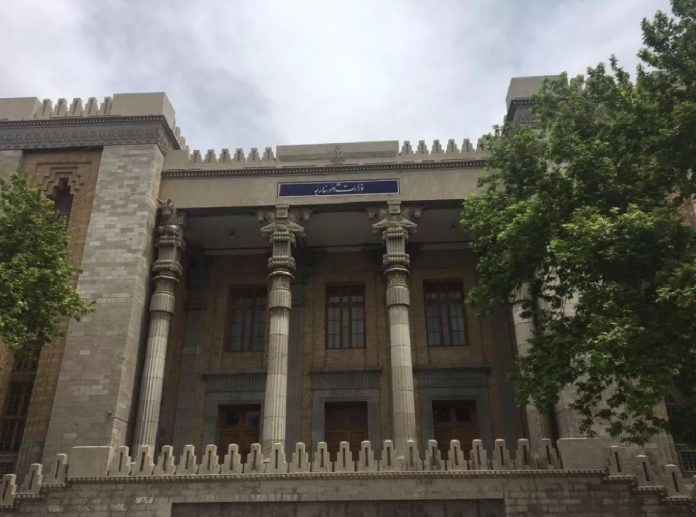
Iran summons Australia’s envoy over homosexual content

The Iranian Foreign Ministry

The message was posted on the embassy’s Instagram page.

The head of the regional division at the Iranian Foreign Ministry who summoned the envoy, severely rapped the move by the Australian embassy, describing it as having “norm-breaking content”.

The Iranian official said the post published by the Australian embassy runs counter to the Iranian and Islamic culture, customs and manners. He also called on the envoy to correct the situation and refrain from repeating such moves in future.

Elsewhere, the Iranian Foreign Ministry official said the move is against international legal rights and the Vienna Diplomatic Convention regarding the behavior of the diplomatic envoys.

The Australian ambassador, in turn, affirmed that the move was not done on purpose to target the values of the Iranian people and society.

McConville added he would convey the concerns and stances of the government of the Islamic Republic of Iran to Canberra.

In the Instagram post, the Australian embassy said they seek to create an environment in which everyone particularly LGBTQ+ are protected.

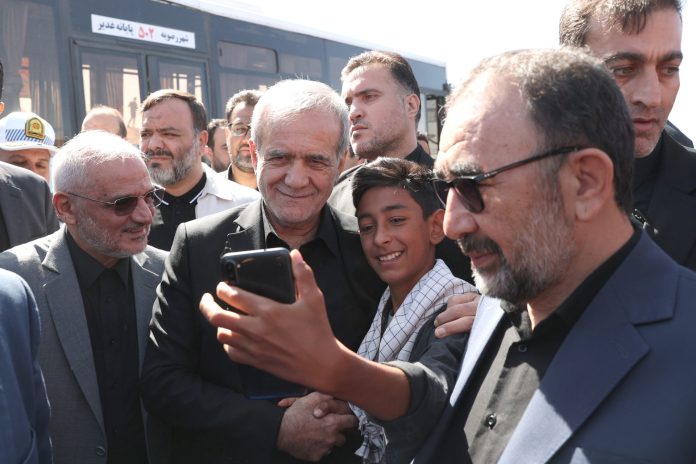
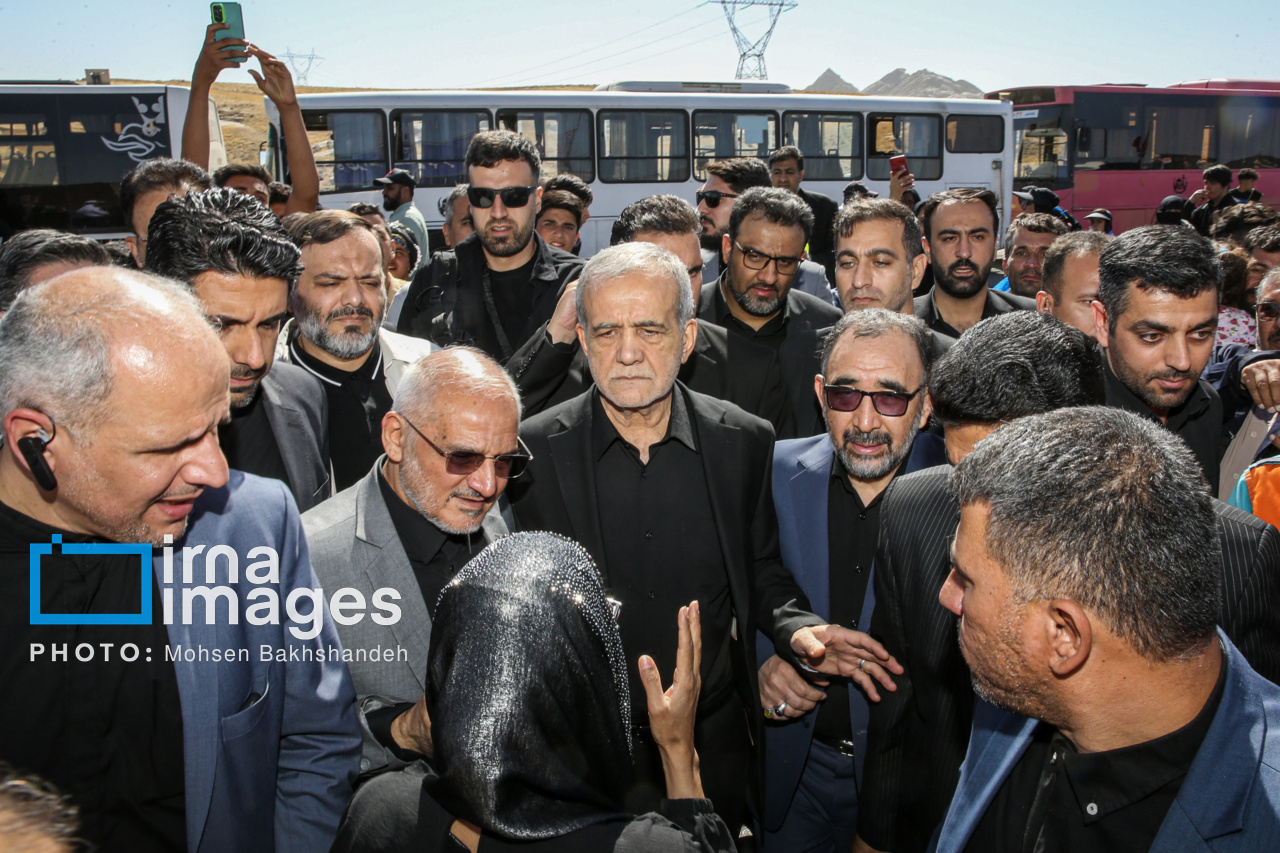
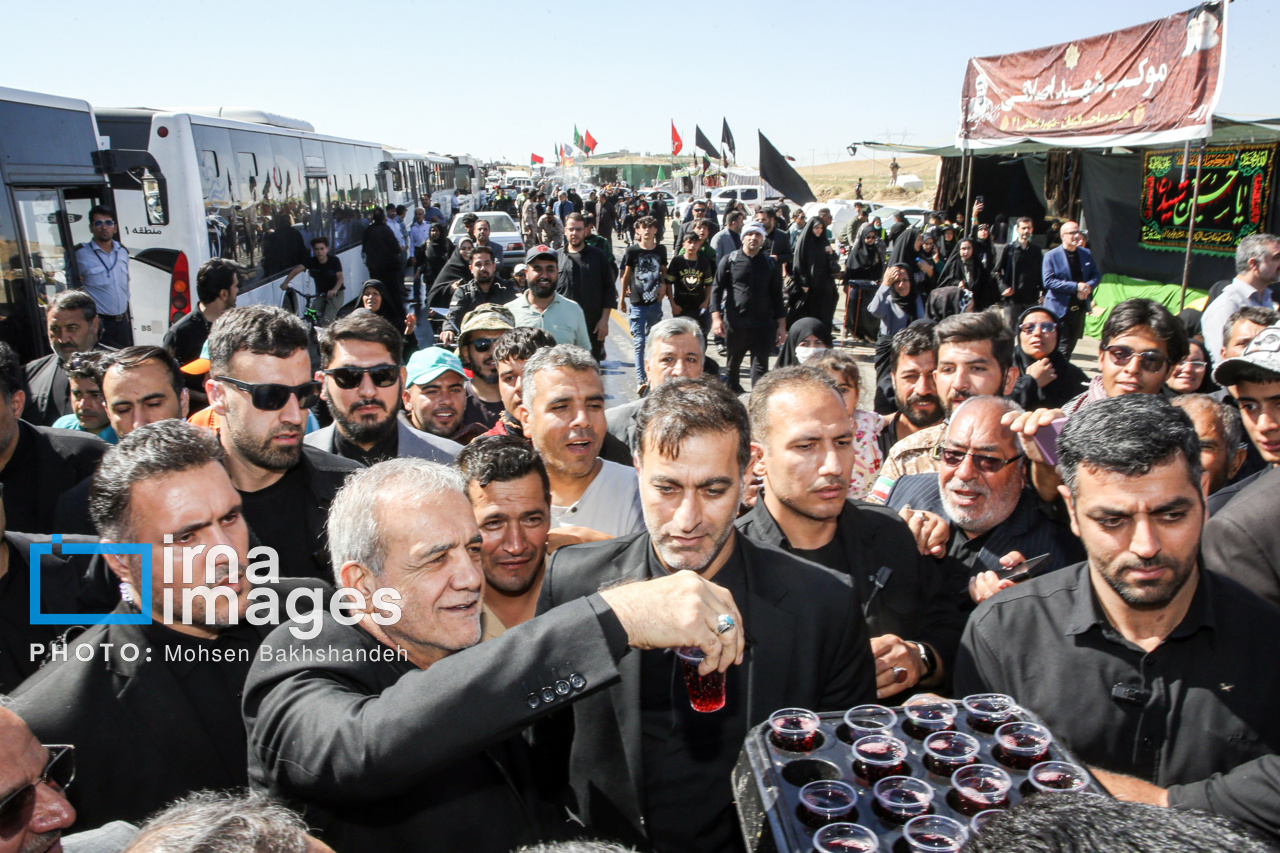
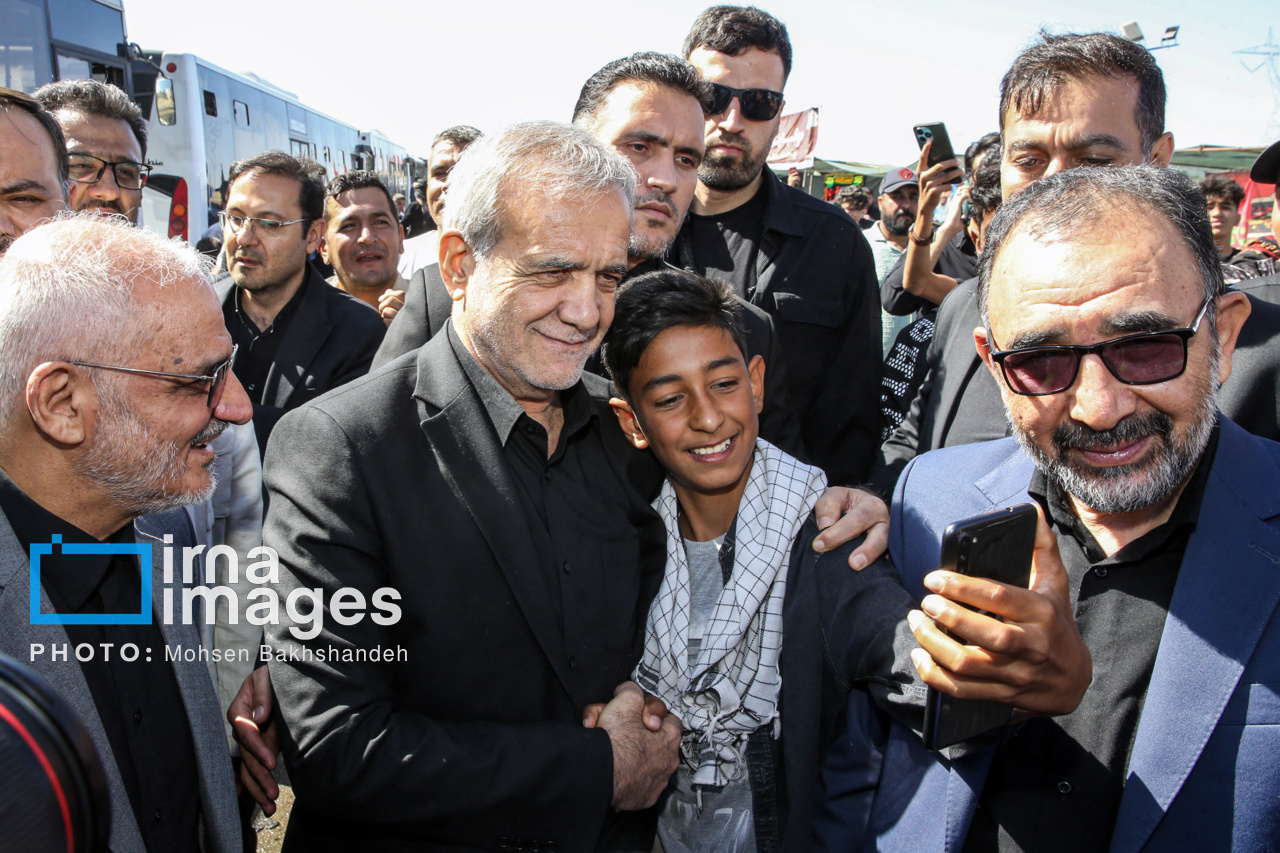
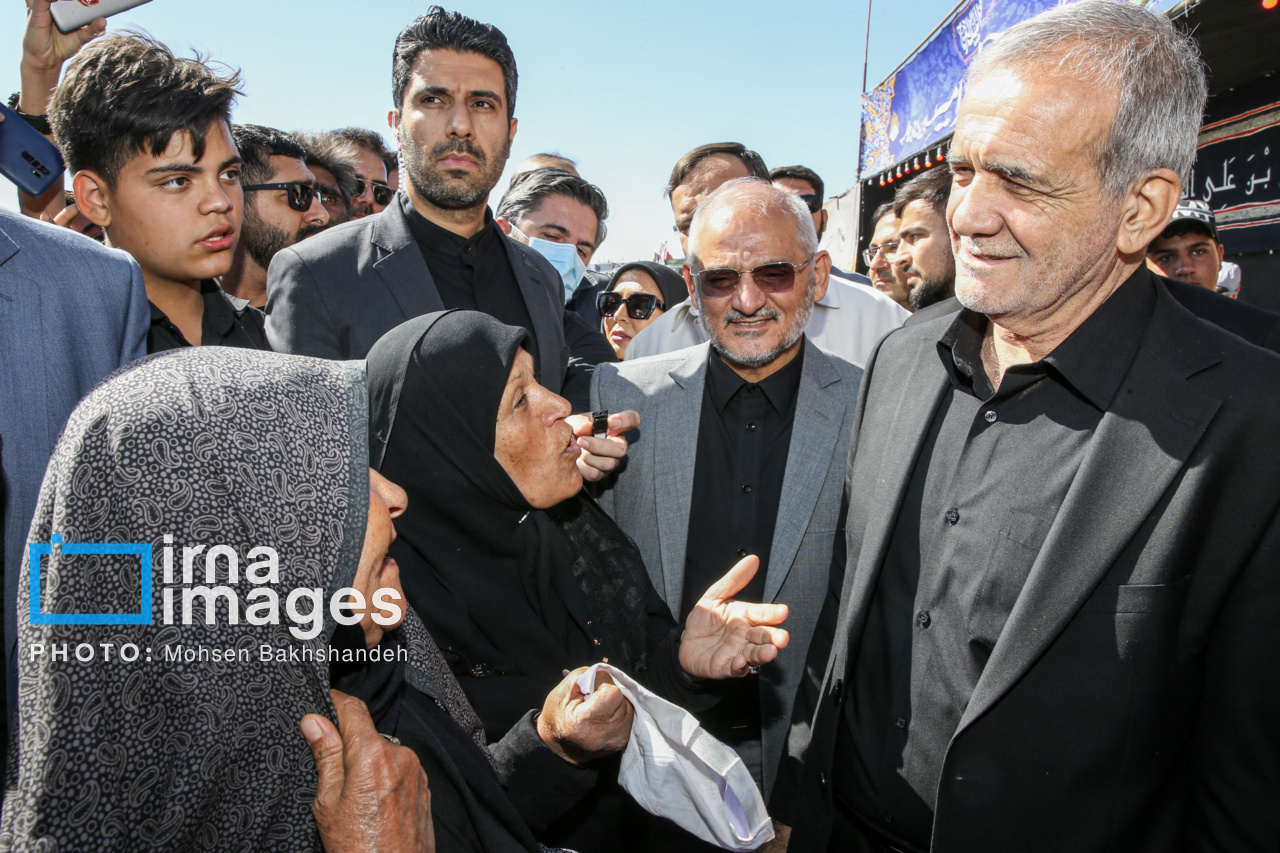
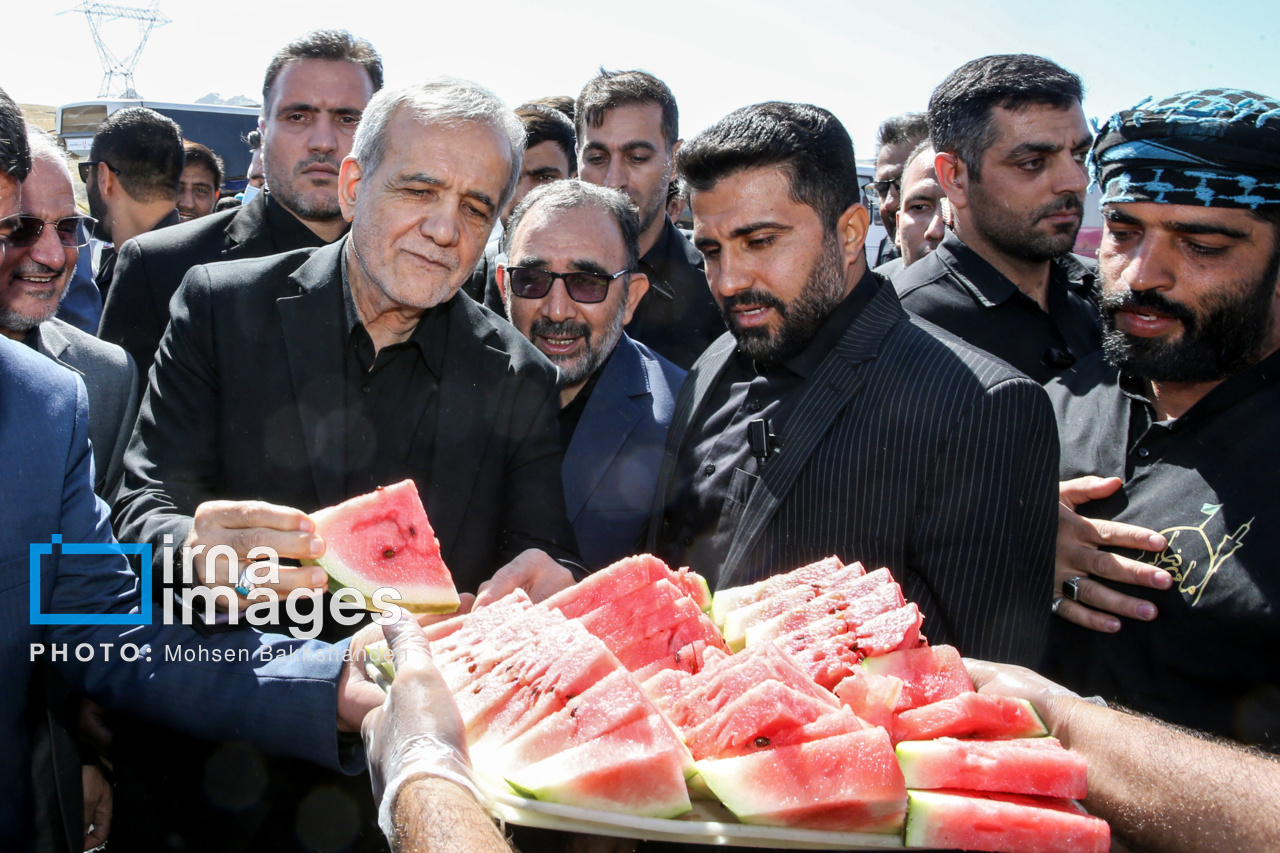
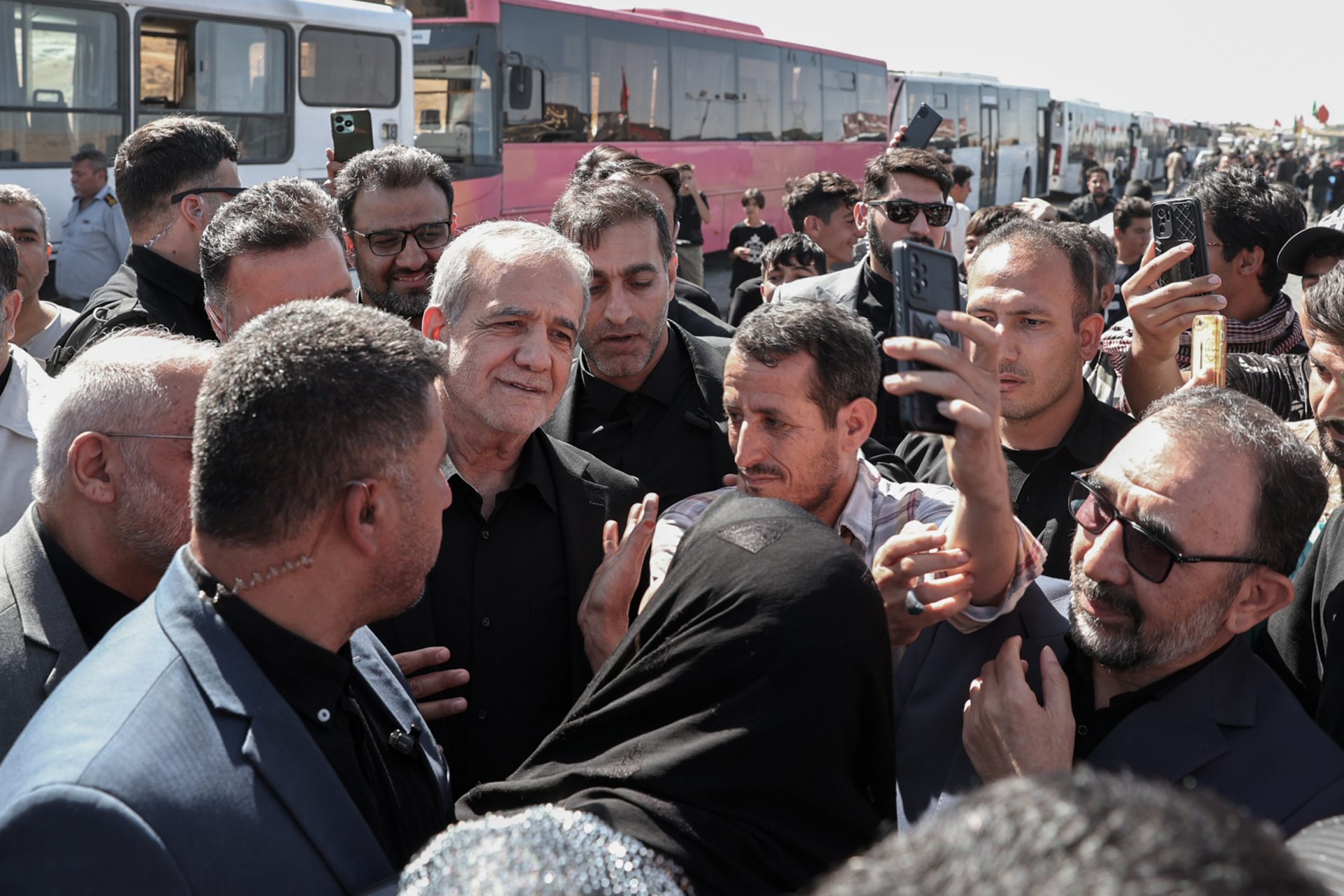
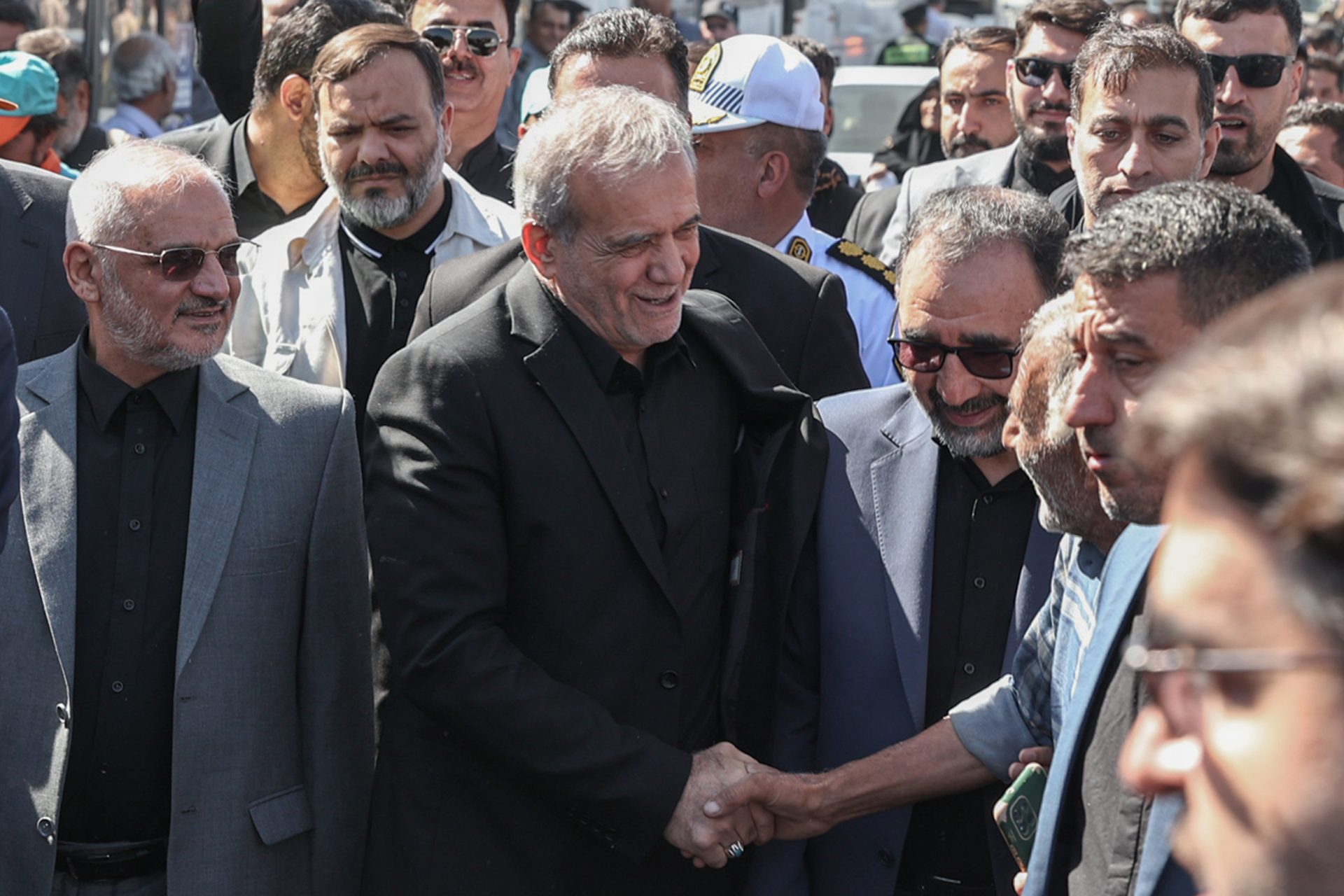
Iranian president breaks protocols again, engages warmly with the public in Mashhad

Defying usual security protocols, the President was seen enjoying watermelon and juice among the people, creating a rare and informal atmosphere.

In a particularly notable moment, the President stopped his security detail from intervening when a woman approached him to express her concerns directly. He listened attentively to her grievances, demonstrating a personal and engaged approach.

Despite repeated mentions of strict protocols by his officials, it appears the president has yet to fully adapt to the standard security limitations, preferring instead to maintain a closer connection with the people.

These images and reports of the president’s actions in Mashhad have quickly gained attention online:

Piazza appointed Iranian men’s National Volleyball team’s coach

Italian volleyball coach Roberto Piazza

The head of Iran’s Volleyball Association announced that Piazza, among the top 12 coaches in the world, was picked from among several candidates after a thorough study.

The decision came after the Iranian team’s disappointing results in the 2024 Olympic Games, which demoted it to 17th place in the FIVB World Ranking.

Piazza, 56, will be the head coach of the Iranian men’s national volleyball team until the 2028 Los Angeles Olympics.

The veteran coach took up coaching in 1990 and has a history of coaching several national teams, including those of the Netherlands, from 2019 to 2024, and Qatar in 2016. He has also served as the assistant coach of the Russian national team from 2009 to 2010, besides steering many clubs in the world.

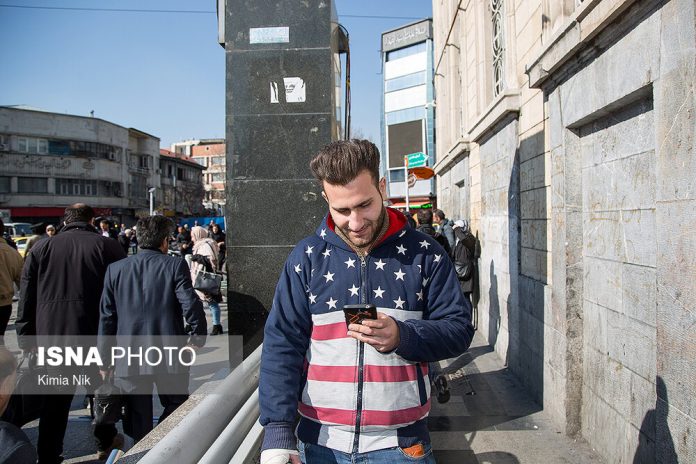
Official: Illegal import of iPhones costs Iran $900mn

Abdolmahdi Asadi told Tehran-based ISNA news agency that the government’s refusal to officially register iPhone 14 and 15 in Iran has wasted hundreds of millions of dollars in backchannels.

He also warned in case the new administration of President Massoud Pezeshkian does not remove the ban, the loss of foreign currency will soar to 1.3 billion dollars after iPhone 16 is released later this year.

There has been no official explanation on the reason behind the ban, but there are speculations suggesting that the restriction was made out of concerns that the phones can be used to connect to the Starlink satellite internet service and help Iranians bypass the government’s restrictions on accessing the internet. However, experts have refused the argument on technical grounds.

Asadi said there are unconfirmed reports that the Iranian minister of industries is in favor of removing the ban and opening the legal path to import the popular phones.

iPhones account for over a third of Iran’s mobile phone imports, according to unofficial data.

Poll: 92% of Iranians want high-quality foreign cars, even at cost of binning 3mn jobs at home

The opinion poll, conducted on Monday in a live television program named Plus One, broadcast by the state-run IRIIB, touched on the thorny issue that has touched many raw nerves inside the country over the low-quality automobiles produced by mainly the two giant manufactures, Iran Khodro and Saipa.

This edition of the program put a magnifying glass on the cars produced in Iran and asked the audience if they choose “imports of high quality foreign cars” or “employment of three million people in the automobile industry and the related industries.”

The result of the survey showed that more than 92 percent of people’s priority is to import quality cars.

Currently, Iranians have very few options when it comes to buying a car. They have to choose between domestically-produced cars, notoriously known as ‘chariots of death’, which ironically come at high prices or buy used foreign cars, exports of which were banned in 2018, at least three times higher than the international price tags.

Chinese automobiles, which are viewed skeptically in the Iranian market over their lower quality compared to European, Japanese and South Korean cars, are also assembled in Iran but cost the users an arm and a leg.

Israel looking for ‘imaginary victory’ in Gaza: Hamas

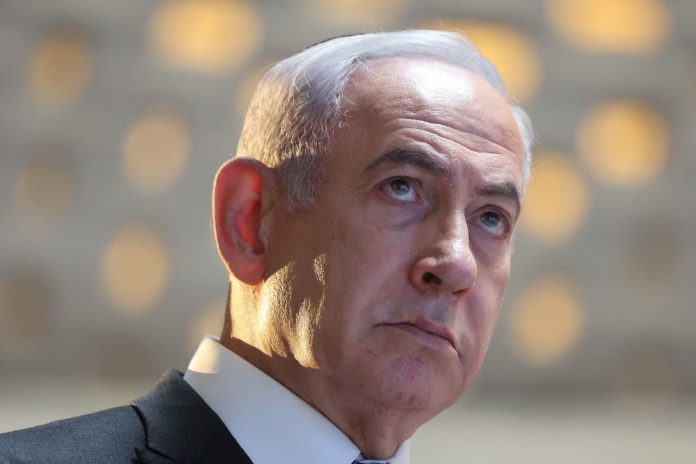
Izzat Al-Rishq, a member of Hamas’s political bureau, was commenting on a speech by Netanyahu during which he insisted on keeping the Gaza-Egypt border area known as the Philadelphi Corridor under the Israeli army’s control, claiming it is necessary for achieving the war on Gaza’s goals.

“Netanyahu’s statements are the speech of a desperate person who is looking for an imaginary victory that he has not succeeded in marketing to his audience after 10 months of his Nazi war against our people in the Gaza Strip,” Al-Rishq said.

He “confirms with his statements that he is the one obstructing the exchange deal and the cease-fire agreement”, Al-Rishq continued.

He added that any delay in his “approval and commitment to what was reached on July 7 (in a cease-fire proposal) means putting the lives of more prisoners at risk,” referring to the recent deaths of six Israeli captives in Gaza, saying “Netanyahu bears responsibility for the lives and safety of the prisoners held by the resistance.”

Netanyahu had reaffirmed his intention to maintain Israeli troops in the Philadelphi Corridor.

“If we withdraw, we won’t (be able to) return there — not for 42 days and not for 42 years,” Israel’s Channel 12 quoted him as saying at a Cabinet meeting.

He was referring to the first 42-day phase of a proposed Gaza cease-fire and hostage swap deal with Hamas.

Netanyahu claimed that the Philadelphi Corridor, a demilitarized area on the border between Gaza and Egypt, is a “lifeline” for Hamas.

Contrary to his insistence on the Philadelphi Corridor, his Defense Minister, Yoav Gallant, called Sunday for the immediate convening of the Security Cabinet to reverse its decision to keep forces in the corridor.

Israel estimates that more than 100 hostages are still being held by Hamas in Gaza, some of whom are believed to have been already killed.

For months, the US, Qatar and Egypt have been trying to reach an agreement between Israel and Hamas to ensure a prisoner exchange and a cease-fire and allow humanitarian aid to enter Gaza. But mediation efforts have been stalled due to Netanyahu’s refusal to meet Hamas’s demands to stop the war.

Israel’s ongoing war on the Gaza Strip has killed nearly 40,800 Palestinians, mostly women and children, and injured over 94,200 others, according to local health authorities.

An ongoing blockade of the enclave has led to severe shortages of food, clean water and medicine, leaving much of the region in ruins.

Israel faces accusations of genocide for its actions in Gaza at the International Court of Justice.

Iran marks National Day Against British Colonialism

Born in 1882 in the southern Iranian port city of Bushehr, Rais- Ali organized popular resistance against British forces after the invasion of Iran in 1915 and etched his name in history as an Iranian independent fighter and anti-British colonialism activist.

After British forces took over Delvar, Rais-Ali’s uprising in nearby Tangestan lasted for nearly seven years in order to secure Iran’s independence.

The national hero was shot dead by a traitor on September 2, 1915, at the age of 33, when his forces were staging a counterattack against the invading British forces.

Rais-Ali’s house in Delvar has been transformed into a museum displaying some of his personal items and historic documents, along with various types of guns.

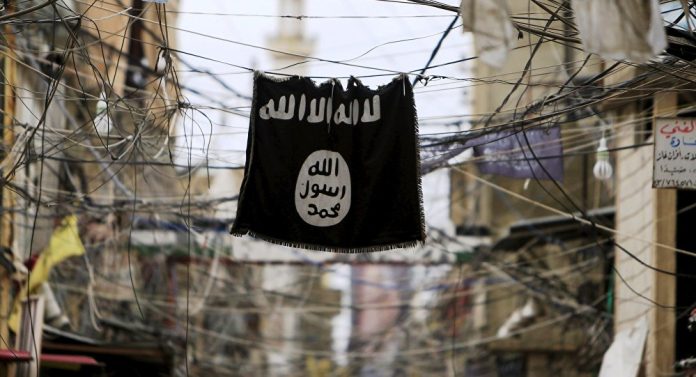
US says captured Daesh leader in Syria

Daesh

CENTCOM forces, working with Syrian Democratic Forces (SDF), captured Khaled Ahmed al-Dandal on Sunday, according to a release on Monday, just days after five Daesh foreign terrorist fighter detainees fled the Raqqah Detention Facility.

Three of the escapees remain at large, according to CENTCOM, after SDF recaptured two others. Al-Dandal was assessed as a “facilitator” aiding efforts of detained Daesh fighters.

More than 9,000 Daesh detainees are held in over 20 SDF detention facilities in Syria, the military said, and Daesh wants to free its detained fighters and “subsequently fuel a Daesh revival.”

Gen. Michael Erik Kurilla, CENTCOM commander, called the numbers “a literal and figurative ‘Daesh Army’ in detention”.

“If a large number of these Daesh fighters escaped, it would pose an extreme danger to the region and beyond,” Kurilla said in a statement, adding that the US will continue to work with the international community to repatriate the Daesh fighters to their countries of origin.

Last week, the US military and Iraqi Security Forces targeted Daesh militants in a separate raid that left at least 15 of the group’s operatives dead in Western Iraq.

The latest developments come as threats from terrorist groups such as Daesh come into new focus three years after the US withdrawal from Afghanistan, worrying security experts. Last month, Daesh-affiliated actors carried out a stabbing attack in Germany and threatened a Taylor Swift concert in Austria.

Hamas warns Gaza hostages will return ‘in coffins’ if Israel continues military onslaught

“[Israeli Prime Minister Benjamin] Netanyahu’s insistence on freeing the captives through military pressure instead of reaching a deal means they will go back to their families in coffins. Their families have to choose between receiving them dead or alive,” Abu Obeida, spokesman for the Qassam Brigades, said in a statement on Monday, two days after the bodies of six captives were recovered by Israel.

“Netanyahu and the army are fully responsible for the death of the captives after they intentionally hindered any prisoners’ exchange deal,” it added.

The statement from the Qassam Brigades came shortly after Netanyahu said the six captives whose bodies were recovered from a tunnel in southern Gaza’s Rafah area had been “executed” by Hamas.

“I ask for your forgiveness for not bringing them back alive,” Netanyahu stated during a televised news conference earlier on Monday as protests over the deaths continued for a second day in Israel.

“We were close, but we didn’t succeed. Hamas will pay a very heavy price for this,” he added.

Hamas has claimed that the six captives were killed in Israeli air strikes.

Meanwhile, protests in Israel over the deaths of the captives continued with angry demonstrators saying they could have been returned alive if Netanyahu’s government had signed a ceasefire with Hamas.

Months of stop-start negotiations mediated by the United States, Qatar and Egypt have so far failed to reach an accord on a Gaza ceasefire proposal laid out by President Joe Biden in May.

The Palestinian group wants an agreement to end the war and get Israeli forces out of Gaza while Netanyahu says the war can only end once Hamas is defeated.

Netanyahu not doing enough to secure hostage agreement: Biden

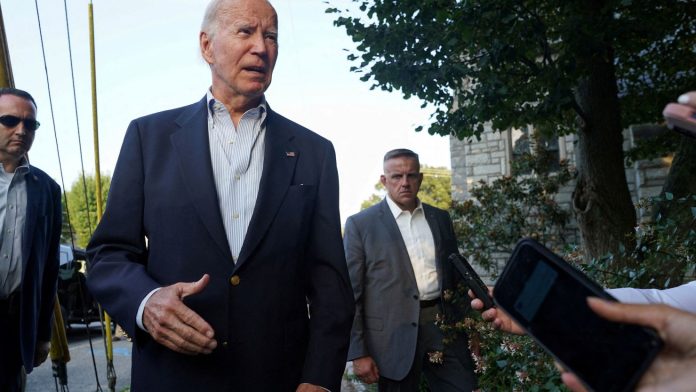
Biden was speaking to reporters at the White House after Israeli forces over the weekend recovered the bodies of six hostages, including 23-year-old American-Israeli Hersh Goldberg-Polin, from a tunnel in Gaza.

That has sparked criticism of the Biden administration’s Gaza ceasefire strategy and ratcheted up pressure on Netanyahu from Israelis to bring the remaining hostages home.

Asked whether he thought Netanyahu was doing enough to reach a hostage deal, Biden said “No”.

Netanyahu appeared to push back when asked about Biden’s comments, saying pressure should be applied to Hamas, not Israel, particularly after the hostages’ deaths.

“And now after this we’re asked to show seriousness? We’re asked to make concessions? What message does this send Hamas? It says, kill more hostages,” he told a news conference in Jerusalem.

Netanyahu stated he did not believe Biden or anyone serious about achieving peace would ask Israel to make more concessions and that instead it was Hamas that needed to do so.

Asked if he was planning to present a final hostage deal to both sides this week, Biden told reporters: “We’re very close to that.”

“Hope springs eternal,” he added when asked whether a deal would be successful.

Biden stated later in the evening that he plans to talk to Netanyahu “eventually” but did not specify a clear timeline when asked. Biden and Netanyahu have spoken several times amid Israel’s war in Gaza.

Biden and Vice President Kamala Harris also met with the US hostage negotiation team, during which the president expressed “devastation and outrage” at the hostages’ murders, and they discussed the next steps in efforts to free the remaining captives, the White House announced.

Biden’s fresh criticism of Netanyahu comes as he and Harris, who has replaced the president at the top of the Democratic ticket for the Nov. 5 election, face increased calls for decisive action to end Israel’s nearly 11-month-old war in Gaza.

The conflict has sown divisions among Democrats, with many progressives pressing Biden to restrict or at least place conditions on US weapon supplies to Israel, Washington’s chief Middle East ally.

The latest bloodshed in the decades-old Israeli-Palestinian conflict was triggered on Oct. 7 when Hamas attacked Israel, killing 1,200 and taking about 250 hostages, according to Israeli tallies.

Israel’s subsequent assault on the Hamas-governed enclave has since killed over 40,000 Palestinians, according to the local health ministry, while also displacing nearly the entire population of 2.3 million, causing a hunger crisis and leading to genocide allegations at the World Court.

Responding to Biden’s remarks on Netanyahu “not doing enough” during ceasefire talks, senior Hamas official Sami Abu Zuhri stressed the comments are an acknowledgement that Israel’s leader is undermining efforts.

Any proposal for a permanent ceasefire and complete Israeli withdrawal from Gaza would be received positively, Abu Zuhri added.

Another senior Hamas leader said Netanyahu’s new conditions, which did not exist previously, demonstrated that he has no desire to reach a ceasefire agreement in Gaza that allows for a hostage-prisoner swap.

“What became clear to all parties following the negotiations is that the occupation (Israeli government) led by Netanyahu doesn’t want to reach a deal,” Hussam Badran, responsible for the group’s national relations file, told Anadolu.

He added that “whenever there is a kind of proposal or consensus between us and the mediators, we find that Netanyahu is putting new conditions that didn’t exist in the past”.