Friday, December 26, 2025
Home Blog Page 750

Ukraine to hold seized Russia land indefinitely: Zelensky

Russia Ukraine War

“We don’t need their land. We don’t want to bring our Ukrainian way of life there,” he told NBC News in a translated interview.

The Ukrainian leader said “hold[ing]” the territory is vital to his “victory plan” to end the war, which has stretched more than 2-and-a-half years since Russia invaded Ukraine.

It has been nearly a month since Ukrainian troops launched a surprise attack into the western Kursk region in Russia on Aug. 6. Since then, an estimated 180,000 people have been evacuated from the Kursk region, and Ukraine has captured about 450 square miles of Russian territory, marking the first time the nation’s sovereignty has been violated since World War II.

More than 100 Russian soldiers were captured as prisoners of war, some of whom were later swapped with Russia for Ukrainian prisoners.

Zelensky told NBC News the Aug. 6 mission was a “pre-emptive strike” to prevent Russian forces from establishing a buffer zone along Ukraine’s border. He declined to say whether Ukraine is planning to attempt to take more Russian land.

“I will not tell, I’m sorry,” he said, per NBC.

“With all respect, I can’t speak about it. I think the success is very close to surprise.”

The incursion forced Russia to divert some troops from parts of eastern Ukraine to the Kursk region, according to Col. Gen. Oleksandr Syrskyi, Ukraine’s commander-in-chief. He claimed an estimated 30,000 Russian troops were moved to the Kursk area.

Zelensky last week stated he is planning to eventually present a peace plan to President Joe Biden and current White House candidates, Vice President Kamala Harris and former President Donald Trump. This plan is four stages, he added, with the first being the incursion into the Kursk region.

Zelensky said he plans to attend the United Nations General Assembly in New York this month, during which he plans to meet with Biden and present the plan. He will also share with Harris and Trump, given the uncertainty of who will win the 2024 election, he added.

Part of his proposals include holding onto the seized Russian land, he told NBC and stated, “For now, we need it.”

The Ukrainian president revealed the Biden administration was not informed of Kyiv’s plans to cross into Russia, noting it was not a “question of lack of trust”, but rather to prevent the Russians from having time to prepare.

“I shrunk to the maximum the circle of people who knew about this operation,” Zelensky continued, adding, “I think it was one of the reasons why it was successful.”

While Kyiv has made progress in the Kursk region, Russian attacks have continued.

The Russian armed forces have eliminated more than 9,300 Ukrainian servicepeople and 80 tanks during military operations in the border areas of the Kursk Region, the defense ministry announced on Tuesday.

On Monday, President Vladimir Putin stated Ukraine’s incursion into Russia’s Kursk Region has failed to achieve its intended goal of halting the advance of Moscow in Donbass.

He added that Russia has been making great strides in key areas of Donbass, advancing at a pace that has not been seen in a “long time”.

The president stressed that Kiev’s provocation in Kursk Region would inevitably fail and that Moscow would “deal with the Ukrainian bandits” who have entered Russian territory with the aim of destabilizing the situation at the border.

After that, Putin suggested, Kiev may come to realize that it needs to resolve the conflict through negotiations, and reiterated that Moscow has never refused to hold such talks.

However, the president noted that the Ukrainian leadership was likely not interested in ending the fighting, given that it would have to hold new presidential elections as soon as martial law in the country was lifted.

Iranian veteran boxyer murdered on a Tehran suburb 

Crime Scene

The murder happened on Tuesday evening. Mohammadreza Golmohammadi, Isa Golmohammadi’s son, confirmed the news, saying his father was killed by 11 bullets and 5 stab wounds.

The garden’s guard has reportedly told interrogators that two women came to the place along with Isa Golmohammadi, adding that he himself saw the women shoot the victim and take away his cellphone.

The suspects behind the murder are at large but police have started a manhunt to arrest them.

Isa Golmohammadi was head of the Boxing Board of East Azarbaijan Province and was a member of the Board of Directors, the spokesman of the Boxing Federation and the head of Iran’s national under-23 boxing team.

West Bank city declared ‘disaster area’ amid Israeli assault

Israel Palestine West Bank

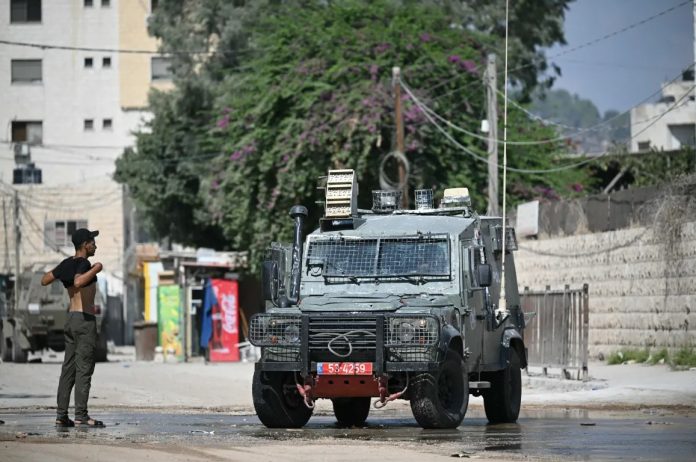
Speaking to Anadolu on Wednesday, al-Obaidi said the Israeli army is working to divide Jenin by bulldozing its streets and infrastructure.

“The Israeli army is continuing to destroy the infrastructure in Jenin and its camp,” he added.

The Israeli army last week launched its largest military operation in the northern West Bank in two decades, killing at least 33 people and causing massive destruction.

“Jenin is a disaster-stricken city, it looks like an earthquake had struck the city,” the mayor said, adding, “Main streets were destroyed and electricity and water networks were cut off.”

He said the Israeli army had separated the city’s neighborhoods from each other, estimating the losses at some 50 million shekels ($13.5 million) since the start of the Israeli operation.

“Our losses are estimated at around 100 million shekels ($27 million) since Oct. 7, 2023,” he continued, adding, “The Israeli offensive is still ongoing and this means more destruction and killings.”

Tension has been running high across the occupied West Bank as Israel pressed ahead with its brutal onslaught on the Gaza Strip, which has killed more than 40,800 Palestinians, mostly women and children, since Oct. 7 last year.

At least 685 people have since been killed and more than 5,700 injured by Israeli fire in the West Bank, according to the Health Ministry.

The escalation followed a landmark opinion by the International Court of Justice on July 19 that declared Israel’s decades-long occupation of Palestinian land unlawful and demanded the evacuation of all settlements in the West Bank and East Jerusalem.

Iranian striker Taremi on Inter’s Champions League squad list

Mehdi Taremi

Simone Inzaghi has just unveiled the defending Serie A champions’ 23-man squad for the 2024-25 Champions League.

Inzaghi has included the newly-hired Taremi on the list to play along the other three strikers, namely Lautaro Martinez, Marcus Thuram, and Marko Arnautovic.

The Inter manager has surprisingly picked injured winger Tajon Buchanan over Argentinean talent Palacios, although the Canadian defender is not expected to play before the end of December due to a fracture.

The Nerazzurri will start the Champions League in Manchester on September 18 against Pep Guardiola’s Manchester City.

In the 2023-24 Champions League, the Italian side reached round 16 but were eliminated by Atletico Madrid.

“Danger of Iran’s missile program remains in question as Tehran threatens Israel over Hamas leader assassination”

Iran Missile Attack

The program was behind Tehran’s unprecedented drone-and-missile attack against Israel in April, when Iran became the first nation to launch such a barrage since Iraqi dictator Saddam Hussein lobbed Scud missiles at Israel in the 1991 Gulf War.

But few of the Iranian projectiles reached their targets. Many were shot down by a U.S.-led coalition, while others apparently failed at launch or crashed while in flight. Even those that reached Israel appeared to miss their marks.

Now a new report by experts shared exclusively with The Associated Press suggests one of Tehran’s most advanced missiles is far less accurate than previously thought.

The April attack showed “some ability to strike Israel”, said Sam Lair, a research associate at the James Martin Center for Nonproliferation Studies who worked on the analysis. But “if I were supreme leader, I would probably be a little disappointed”.

If Iranian missiles are not able to hit targets precisely “that recasts their role”, Lair added.

“They’re no longer as valuable for conducting conventional military operations. They may be more valuable simply as terror weapons.”

As an example, he recalled the harassing missile fire seen on cities in the Iran-Iraq war in the 1980s, when Iran could fire a variety of missiles at a large city and hope some got through.

Iran has repeatedly stressed it will retaliate for the killing of Haniyeh. Israel is widely suspected of carrying out the assassination, though it has not claimed it.

Supreme Leader Ayatollah Seyyed Ali Khamenei has tacitly acknowledged the country’s failure to strike anything of importance in Israel.

“Debates by the other party about how many missiles were fired, how many of them hit the target and how many didn’t, these are of secondary importance,” Ayatollah Khamenei said, adding, “The main issue is the emergence of the Iranian nation” and the Iranian military “in an important international arena. This is what matters.”

Retaliation had been expected for days after a suspected Israeli strike on April 1 hit an Iranian diplomatic compound in Damascus, Syria, killing two Iranian generals and five officers, as well as a member of the Lebanese group Hezbollah.

Footage aired on state television showed that Iran’s April 13 attack began with Commander of the Islamic Revolution Guards Corps (IRGC) Major General Hossein Salami speaking by telephone with IRGC Aerospace Commander Brigadier General Amir Ali Hajizadeh.

“Start the ‘True Promise’ operation against Zionist regime’s bases,” he ordered.

As the missiles headed skyward, people across Iran stopped what they were doing and pointed their mobile phones at the launch noise from their cars and the balconies of their homes. Videos analyzed by the AP showed multiple launch sites, including on the outskirts of Arak, Hamadan, Isfahan, Kermanshah, Shiraz, Tabriz and Tehran.

Grainy footage later released through pro-Iranian military social media accounts showed missiles thundering off truck-based mobile launchers. Iran’s bomb-carrying Shahed drones leaped off metal stands, their engines whirring like lawnmowers through the night sky. Some were launched by pickup trucks racing down runways.

The triangle-shaped drones went first, taking hours to reach their targets. Then came the Paveh cruise missiles, taking a shorter time, and finally the Emad, Ghadr and Kheibar Shekan ballistic missiles, which needed only minutes, according to an analysis by the Wisconsin Project on Nuclear Arms Control. Drones and missiles also came from Yemen, likely fired by the Iranian-backed Houthi rebels.

Israeli officials estimated that Iran launched 170 drones, 30 cruise missiles and 120 ballistic missiles.

The U.S., the United Kingdom, France and Jordan all shot down incoming fire. The Americans claimed to have downed 80 bomb-carrying drones and at least six ballistic missiles. Israeli missile defenses were also activated, though their initial claim of intercepting 99% of the projectiles appeared to be an exaggeration.

The attack “was very clearly not something symbolic and not something trying to avoid damage”, stated Fabian Hinz, a missile expert and research fellow at the International Institute for Strategic Studies who studies Iran. It was “a major attempt to overcome Israeli defenses”.

U.S. officials, who spoke on condition of anonymity to discuss intelligence matters, told the AP they assessed that 50% of the Iranian missiles failed at launch or crashed before reaching their target.

In the aftermath, analysts at the James Martin Center for Nonproliferation Studies examined the strike on the Nevatim Air Base some 65 kilometers (40 miles) south of Jerusalem in the Negev Desert. The center’s experts long have studied Iran and its ballistic missile program.

The base came into immediate focus after the suspected Israeli strike on the Iranian diplomatic mission in Syria. Iran’s ambassador to Syria, Hossein Akbari, claimed that the strike was conducted by Israeli F-35Is, which are based at Nevatim.

The air base also figured into “Iranian military propaganda”. Iranian state television aired footage in February of a Revolutionary Guard test that targeted a mock-up resembling F-35I hangars at Nevatim. Ballistic missiles, including some of the kinds used in the April attack on Israel, destroyed the mock-up.

In the attack, at least four Iranian missiles struck Nevatim, as seen in satellite images and footage released by the Israeli military.

The only debris found in the area — collected from the Dead Sea — suggests Iran used Emad missiles to target Nevatim, the analysts said. The liquid-fueled Emad, or “pillar” in Farsi, is a variant of Iran’s Shahab-3 missile built from a North Korean design with a reported range of 2,000 kilometers (1,240 miles). That indicates the Emads were likely fired from the Shiraz area, which is within the estimated limits of the missile’s likely capabilities, the analysts said.

Based on Iran’s focus on the F-35I, the James Martin analysts assumed the likely target point for the Iranian fire would be a cluster of aircraft hangars. The position also serves as a near-central point within the Nevatim base itself.

That offers “a much more valuable target” than just “poking holes in the runway”, Lair said. But none of the Iranian missiles directly hit those hangars.

Assuming Iran targeted the hangars, the James Martin analysts measured the distance between the hangars and the impact zones of the missiles. That gave an average of about 1.2 kilometers (0.75 miles) for the “circular error probable” — a measurement used by experts to determine a weapon’s accuracy based on the radius of a circle that encompasses 50% of where the missiles landed.

That’s far worse than a 500-meter (1,640-foot) error circle first estimated by experts for the Emad. After a U.N. weapons ban on Iran ended in 2020, Iran separately advertised the Emad to potential international buyers as having a 50-meter (164-foot) circle — a figure that is in line with top missile specifications for systems deployed elsewhere, said Hinz, the IISS missile expert.

The results from April’s attack were nowhere near that precise.

“This means the Emad is much less accurate than previous estimates indicated,” Lair continued, adding, “This indicates the Iranians are a generation behind where previous assessments thought they were in accuracy.”

The poor performance may be attributable to electronic warfare measures designed to confuse the missile’s guidance system, as well as potential sabotage, poor missile design and the distances involved in the attack.

In the past, Iranian threats to retaliate against Israel generally took the form of either attacks by Iranian-backed forces in the Mideast or attacks aimed at Israeli targets elsewhere, such as embassies or tourists aboard.

Geography limits the options for a direct Iranian military attack. Iran shares no border with Israel, and the two countries are some 1,000 kilometers (620 miles) apart at the shortest distance.

Iran’s air force has an aging fleet led by F-14 Tomcats and Mikoyan MiG-29 fighter jets from the Cold War, but they would be no match for Israel’s F-35Is and its air defenses. That means Iran again would need to rely on missiles and long-range drones.

It could also enlist help from allied militias such as Lebanon’s Hezbollah and Yemen’s Houthi rebels to overwhelm Israel’s defenses. Israel and Hezbollah exchanged heavy fire on Aug. 25.

Always present in the background is the risk that Tehran could develop a nuclear weapon, a threat that Iranian officials have repeated in recent months. While Iran insists its nuclear program is peaceful, Western intelligence agencies and the International Atomic Energy Agency say Tehran had an organized military nuclear program until 2003.

U.S. intelligence agencies announced in a report in July that Iran has “undertaken activities that better position it to produce a nuclear device, if it chooses to do so”. However, building a weapon and miniaturizing it to put on a ballistic missile could take years.

“Iran has the largest inventory of ballistic missiles in the region and continues to emphasize improving the accuracy, lethality and reliability of these systems,” the report from the director of national intelligence said.

“Iran probably is incorporating lessons learned” from the April attack, it added.

Iran says only a fraction of its available military resources were used in the retaliatory airstrikes against Israel.

In an interview in early May, Brigadier General Hajizadeh stressed that during Iran’s punitive strikes — dubbed Operation True Promise — the United States, Britain and France came to the help of Israel in a bid to repel Iran’s attacks.

He, however, added that his country stood against the superpowers and their allies by using only 20 percent of what it had prepared in order to take action against Israel.


US warns Pakistan of ‘ramifications’ over business agreements with Iran

Iran Pakistan Gas Pipeline

“We will continue to enforce our sanctions against Iran. And as a matter of course, we also advise anyone considering business deals with Iran to be aware of the potential ramifications of those deals,” Matthew Miller, the spokesperson for the US Department of State, told reporters in response to a question about Pakistan’s push to complete the pipeline and seek a US sanctions waiver.

“At the same time, helping Pakistan address its energy shortage is a priority for the United States, and we continue to discuss energy security with the Government of Pakistan.”

The Pakistan-Iran gas pipeline, known as the Peace Pipeline, is a long-term project between Tehran and Islamabad, which has faced delays and funding challenges for over two decades. The pipeline would transport natural gas from Iran to neighboring Pakistan.

Pakistan announced in March it would seek a US sanctions waiver for the pipeline, to which the US responded publicly, saying it did not support the project and cautioned about the risk of sanctions in doing business with Tehran.

Widespread media reports this week suggested Iran had slapped Pakistan with a final notice to finish its part of a cross-border gas pipeline or face international arbitration and possibly billions of dollars in fines.

The pipeline deal, signed in 2010, envisaged the supply of 750 million to a billion cubic feet per day of natural gas for 25 years from Iran’s South Pars gas field to Pakistan to meet its rising energy needs. The pipeline was to stretch over 1,900 kilometers (1,180 miles) — 1,150 km within Iran and 781 km within Pakistan.

Tehran says it has already invested $2 billion to construct the pipeline on its side of the border, making it ready to export. Pakistan, however, did not begin construction and shortly after the deal said the project was off the table for the time being, citing international sanctions on Iran as the reason.

In 2014, Pakistan asked for a 10-year extension to build the pipeline, which expires in September this year. Iran can take Pakistan to international court and fine the country. Local media has reported Pakistan can be fined up to $18 billion for not holding up its half of the agreement.

Faced with a potential fine, Pakistan’s government earlier this year gave the go ahead in principle to commence plans to build an 80 km segment of the pipeline. In March, Pakistan announced it would seek the sanctions’ waiver.

Recently, Pakistan’s Foreign Ministry spokesperson announced that Islamabad does not need to consult others on the important projects. Mumtaz Zahra Baloch also stressed that Islamabad is in contact with Tehran.

Iran has the world’s second-largest gas reserves after Russia, according to BP’s Statistical Review of World Energy.

Ukraine’s FM quits, Zelensky purges several ministers

Ukraine Zelensky Kuleba

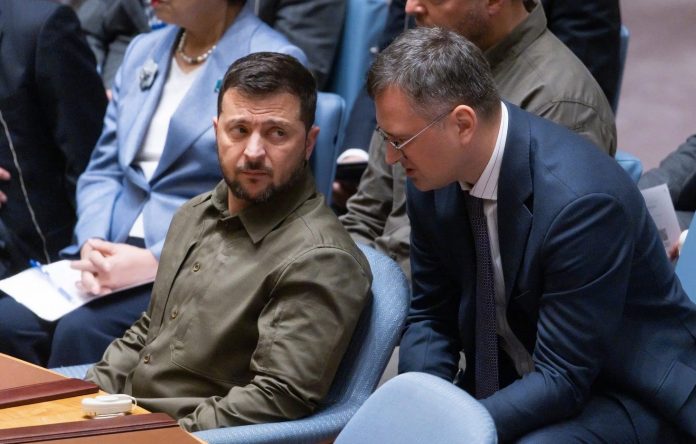
Zelensky’s deputy head of office, Rostislav Shurma, was fired on Tuesday, according to a decree posted on the office’s website. No reason was given for his dismissal.

Deputy Prime Minister for European Integration Olga Stefanishina, Minister for Strategic Industries Aleksandr Kamyshin, Minister of Justice Denis Maliuski, and Minister of Environmental Protection Ruslan Strilets were all relieved of their posts on Tuesday.

Rumors about Kuleba’s imminent departure started circulating as soon as the other changes in the cabinet were announced.

The Ukrainskaya Pravda newspaper previously claimed that Kuleba’s most likely replacement will be Andrey Sibiga, a former ambassador described by the Ukrainian as both Zelensky’s deputy chief of staff and Kuleba’s own deputy. The prediction on Tuesday evening cited a source in Zelensky’s office. Prime Minister Denis Shmigal will reportedly keep his job, the outlet claimed.

The cabinet purge comes after the official expiration of both Zelensky’s presidential mandate and that of the Ukrainian parliament. The Ukrainian constitution provides only for the extension of parliamentary terms, but Zelensky has argued the martial law announced in February 2022 allows him to postpone all elections indefinitely.

Meanwhile, some sources in Kiev have told Western outlets that Zelensky’s chief of staff, movie producer Andrey Yermak, de facto runs the country. Zelensky’s office has denied this.

Rumors of Kuleba’s impending ouster have swirled since March, following the resignation of Foreign Ministry spokesman Oleg Nikolenko, one of his proteges. The outlet Strana reported that Zelensky was acutely displeased with the diplomatic service, and was considering replacing Kuleba with his foreign policy adviser Igor Zhovkva.

Nothing came of that rumor, however, and Kuleba continued browbeating the West into giving Kiev more weapons, ammunition and cash to fight against Russia.

“If decisions are taken, Ukraine is successful on the ground. If they are not taken, then do not complain about Ukraine, complain about yourself,” Kuleba told EU foreign ministers last week, demanding “bold decisions” from the bloc. Kiev has been blaming restrictions on the use of weapons provided by the US and its allies for its deteriorating frontline fortunes.

After Brussels, Kuleba went to Poland, where he managed to offend his hosts – and a key country for supplying Ukraine with Western aid – by calling certain Polish territories “Ukrainian lands” and suggesting that the displacement of ethnic Ukrainians from Poland’s territory in 1947 was equivalent to the massacres of Poles by Ukrainian nationalists that Warsaw has described as genocidal.

Sources: Iranian envoy chides Moscow over shift on strategic corridor in Caucasus

Zangezor Corridor

The reaction by Kazem Jalali came after Russia supported Azerbaijan’s demand to get unimpeded access to its enclave Nakhchivan by opening the corridor through Armenia, which would cut off Iran’s direct access to Armenia.

Moscow made the policy shift after a recent trip by Russian President Vladimir Putin to Azerbaijan. In an interview during Putin’s visit, Russian Foreign Minister Sergei Lavrov openly supported opening the controversial corridor.

The change of stance angered officials in Iran.

On Tuesday, the Director General of the Iranian Foreign Ministry’s Eurasia Directorate, Mojtaba Damirchilou, summoned Russian Ambassador in Tehran Alexei Dedov, reiterating Iran’s opposition in to any change to internationally recognized borders.

High-ranking Iranian officials, including the Leader, have issued multiple warnings that they will not allow any changes in the status quo in the Caucasus amid the escalating tensions between Armenia and Azerbaijan.

This is not the first time Russia, considered Iran’s strategic ally, has ignored the Iranian interests in its interactions with other countries. Late last year, Moscow sparked outrage in Iran by siding with the United Arab Emirates over a territorial dispute with Iran on three Iranian islands in the Persian Gulf.

Many believe that, considering the tectonic shift in Russia’s foreign policy, Tehran also needs to revise its policies towards Moscow.

Hamas says US new proposals on Gaza ceasefire absurd, in favor of Israel

Gaza War

Osama Hamdan, who is Hamas’s representative in Lebanon and also a member of the group’s politburo, in an interview with Al-Jazeera Arabic rejected Washington’s new proposals saying they contain nothing new which are only aimed at buying time for Israel to commit more crimes.

“There is nothing new except what we hear in the media and what is being discussed with mediators about the US president’s intention to present a new proposal,” he said.

“However, it is clear that the US administration has largely been a partner to the occupation in all the acts of genocide committed in Gaza,” he stated.

Hamdan urged Washington to pressure Netanyahu into abiding by an already-agreed-upon deal on July 2, instead of proposing new initiatives.

“What is needed is not a new initiative; what is needed is to compel Netanyahu to adhere to what was presented and agreed upon by the resistance on July 2nd. This is the solution, not more negotiations with no horizon,” he added.

“The American talk of presenting an initiative is an attempt to absorb the anger resulting from the failure of ‘Israel’ and the US, and another attempt to buy time to give Netanyahu more opportunities to kill the Palestinian people.”

According to Hamdan, Israel’s full withdrawal from all Gaza, including the Philadelphi Corridor and a permanent ceasefire are part of that deal and the resistance will not back down from its demands.

The remarks came after the White House said a new initiative for a Gaza ceasefire was set to be announced on Friday.

Hamas has reportedly accepted an Egyptian-Qatari proposal, which includes a ceasefire, a complete withdrawal of Israeli troops from Gaza, an exchange of prisoners, reconstruction of the territory, and the lifting of Israel’s blockade.

However, Israel rejected the ceasefire deal, with prime minister Benjamin Netanyahu saying a withdrawal of the occupation forces from the Gaza Strip would “leave Hamas intact”.

Hamdan added on Tuesday night that “Netanyahu was clear and explicit that he would not accept any new initiatives during his press conference” on Monday.

Netanyahu said that Israel would not relinquish control over a strategic corridor along the Gaza-Egyptian border.

On Monday night, Hamas said Netanyahu’s comments are an acknowledgment of his desperation and liability for the failure to reach a ceasefire deal in Gaza.

Izzat al-Rishq, a member of the political bureau of Hamas, stated that the Israeli prime minister and his criminal war cabinet have failed to achieve any of their declared objectives in Gaza except for numerous massacres in the besieged coastal sliver.

The Hamas official placed full responsibility for the lives and safety of Israeli captives in Gaza on Netanyahu, emphasizing that he insists on killing them and overlooks their situation despite resistance factions’ reasonable care for their safety and proper treatment.

In Tel Aviv, Netanyahu is also under immense criticism for blocking a truce deal with his insistence on continued Israeli control of the Philadelphi Corridor and central Gaza’s Netzarim Corridor.

The Israeli opposition has blasted Netanyahu’s comments that Philadelphi is essential for Israel to achieve its war aims as “baseless political spin.”

Israel has killed almost 40,800 Palestinians in Gaza since October 2023.

US close to dispatching long-range cruise missiles to Ukraine: Report

US Missile

According to the news agency, the inclusion of JASSMs in a new weapons package for Kiev is expected to be made public this fall. Sources noted, however, that discussions on the missiles are ongoing and that a final decision has yet to be made. They also claimed that the actual delivery of the weapons could take “several months”, as the US authorities would need to work through the technical details of the step.

Developed by Lockheed Martin, JASSMs could enable Kiev’s army to strike targets some 300km inside the Russian border, or up to 500km for some longer-range and more exclusive versions.

It is unclear from the report which of the two types the US is believed to be planning to give Kiev. One source claimed there were also efforts to make the missiles compatible with non-Western fighter jets in Ukraine’s current inventory, as the country has so far received only the first batch of F-16s it was promised.

One of the sources claimed that giving Ukraine JASSMs is considered a sensitive issue, as it would add pressure on Washington to ease restrictions on Kiev’s use of its weaponry. While Ukraine has already received the go-ahead from several Western states to hit “legitimate” targets within Russia with their weapons, the US has so far authorized the use of its weapons only to defend against cross-border attacks but not for “deep strikes” into the Russian territory.

Kiev has been demanding for months that its Western backers stretch the allowed strike range and authorize the use of Western weapons for hitting targets deep inside Russia. During a recent trip to the US by senior officials from Kiev, they reportedly showed the Americans a list of targets far beyond Russia’s borders that they want to attack.

Moscow has long warned the West against allowing Kiev to strike Russian territory, which it would consider an escalation of hostilities. Russia has also threatened to supply similar military equipment to enemies of the West in retaliation, should its warnings not be heeded.

Commenting on Kiev’s wish-list of Russian targets, Moscow’s ambassador to Washington, Anatoly Antonov, cautioned that the US “will not be able to sit it out across the ocean” if it lifts restrictions on Ukraine’s use of its missiles, and that all Western-supplied equipment will inevitably be destroyed.