Saturday, December 27, 2025
Home Blog Page 719

Zelensky appeals to a broad alliance of nations to help ‘force Russia into peace’

Zelesnky

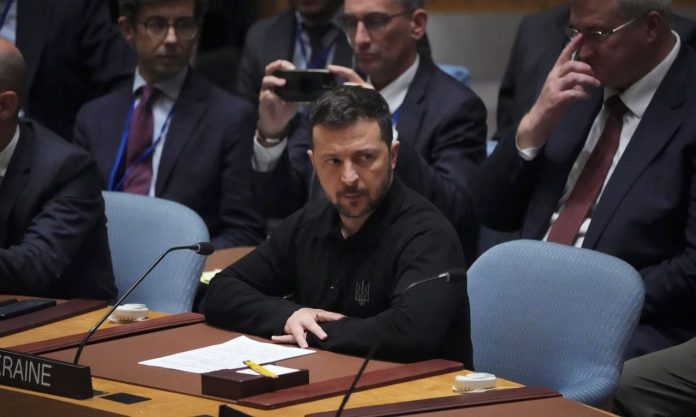
Addressing the council, of which Russia is a permanent member, Zelenskyyaccused Moscow of committing “international crimes” by targeting Ukrainian civilians and energy infrastructure, and claimed he had proof that Putin is plotting to target three Ukrainian nuclear power plants to further degrade the country’s energy grid.

After thanking Ukraine’s allies for their support, the Ukrainian leader appealed to countries further afield, calling on Brazil, India and countries across Africa and Latin America, to increase pressure on Russia to halt the war, saying “all [countries] are equally important for peace without exceptions”.

Many of those countries have economic or close diplomatic ties with Russia, and have given greater credence to Putin’s claims that Russia was provoked into the war by the west.

“We know some in the world want to talk to Putin,” Zelensky continued, noting, “To meet, to talk, to speak. But what could they possibly hear from him? That he’s upset because we are exercising our right to defend our people? Or that he wants to keep the war and terror going, just so no one thinks he was wrong?”

He added: “It’s insane.”

Zelensky later this week will travel to the White House to meet with President Joe Biden and discuss his “victory plan” – a roadmap for Ukraine to end the war with greater western support. In his speech, he said that further pressure was needed to conclude a peace with Russia after it had been “doing things that cannot possibly be justified under the UN charter”.

“That’s why this war can’t be conquered by talks,” Zelensky continued, adding, “Action is needed … Putin has broken so many international laws and rules that he won’t stop. Russia can only be forced into peace, and that is exactly what’s needed, forcing Russia into peace as the sole aggressor in this war, the sole violator of the UN charter.”

In an interview that aired on ABC on Tuesday, Zelensky said Ukraine needed greater support from the west to win the war, but conceded that the time for negotiations was nearing.

He has repeatedly called on the US and UK to drop their restrictions on the use of long-range missiles against targets deep inside Russia, despite concerns in the Biden administration that those attacks could lead to further escalation of the war.

“I think that we are closer to the peace than we think,” Zelensky stated in the interview, adding, “We are closer to the end of the war. We just have to be very strong, very strong.

“The plan of victory is strengthening of Ukraine. That’s why we’re asking our friends, our allies, to strengthen us. It’s very important.”

Trump campaign claims ex-president briefed on alleged assassination threats by Iran

Donald Trump

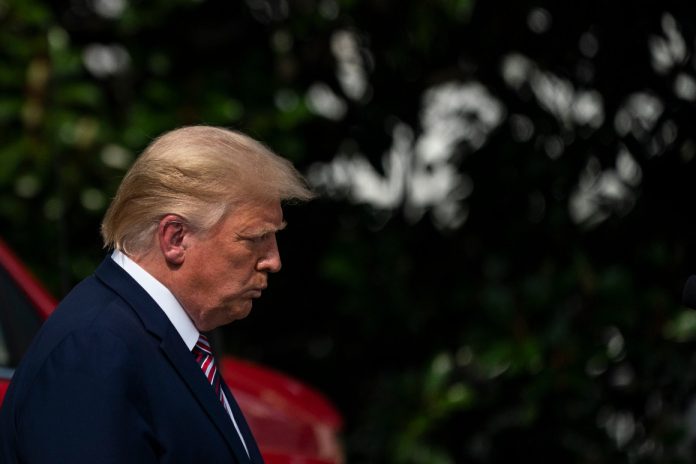
“President Trump was briefed earlier today by the Office of the Director of National Intelligence regarding real and specific threats from Iran to assassinate him in an effort to destabilize and sow chaos in the United States,” the campaign announced in a statement.

The campaign added that intelligence officials have identified that Iranian threats have “heightened in the past few months” and US government officials were working to protect Trump and ensure the elections were not impacted.

Trump stated later on his Truth Social site there were “big threats” on his life by Iran, adding Iranian moves did not succeed “but they will try again”.

There has been no comment yet from Tehran.

Iranian officials have repeatedly warned that the revenge promised for the assassination of General Qassem Soleimani is “definitive”, stressing that the Americans should know that Tehran will not pass over the blood of the anti-terror commander.

The top general was targeted in a US drone strike directly ordered by Trump near the Baghdad International Airport on January 3, 2020. The attack also killed the deputy chief of Iraq’s Popular Mobilization Units (PMU) Abu Mahdi al-Muhandis among others.

Five days later, Iran, which had vowed to avenge Soleimani’s assassination, launched a barrage of missiles at the US-run Ain al-Assad airbase in Iraq’s western province of Anbar.

President Pezeshkian urges West to abandon double standards regarding “Israel’s crimes”

Pezeshkian Macron

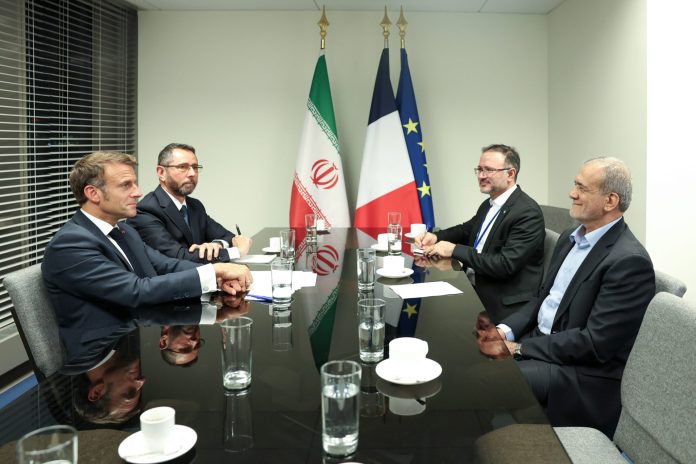
During their meeting in New York on Tuesday night, President Pezeshkian stated that the Israeli regime has killed thousands of innocent civilians in Gaza and Lebanon, while self-proclaimed human rights advocates in the West remain silent.

He added that the inaction of Western countries and others has emboldened Israel to further expand its crimes in Palestine and Lebanon.

The Iranian president also referred to the assassination of the Hamas leader in Tehran by the Israeli regime, stating that the Islamic Republic exercised restraint to avoid further escalating tensions, but now Israel has invaded Lebanon.

He criticized the US and other Western supporters of Israel for labeling the regime’s onslaught against Palestinian and Lebanese people as “self-defense.”

President Pezeshkian also warned that the continuation of the Israeli regime’s actions could lead to the situation spiraling out of control.

In addition, he expressed Tehran’s willingness to resolve issues with France, including those related to Iran’s nuclear program, emphasizing that the Islamic Republic has never sought nuclear weapons.

For his part, Macron expressed concern over the regional situation, noting that France has strongly condemned Israel’s invasion of Lebanon and is making efforts to stop it.

State Department ignored US assessments that Israel blocked humanitarian aid to Gaza: Report

Gaza War

Investigative news outlet ProPublica reported on Tuesday that the US Agency for International Development (USAID) told the State Department in a late April report that Israel was subjecting US humanitarian aid destined for Gaza to “arbitrary denial, restriction and impediments”.

ProPublica said that officials in the State Department’s refugee bureau also found in April that “facts on the ground indicate US humanitarian assistance is being restricted”.

But in May, Blinken delivered a State Department report to Congress with a different conclusion.

“We do not currently assess that the Israeli government is prohibiting or otherwise restricting the transport or delivery of US humanitarian assistance,” the State Department announced in its May 10 assessment.

The leaked memos would have had major implications on US policy had they been adopted by Blinken, including on US weapons shipments to Israel.

That’s because US law bans security assistance to a country that “prohibits or otherwise restricts, directly or indirectly, the transport or delivery of United States humanitarian assistance”.

The US provides Israel with at least $3.8bn in military aid annually, and this year, Biden approved an additional $14bn in assistance to help fund the Israeli government’s Gaza war efforts.

That support has drawn widespread condemnation and scrutiny as the Gaza war drags on.

The State Department’s May report, which ultimately concluded that Israel was not blocking US aid to Gaza, at the same time outlined how Israeli officials had encouraged protests to block the assistance from reaching Palestinians.

The document also added that Israel implemented “extensive bureaucratic delays” on the delivery of aid and launched military strikes on “coordinated humanitarian movements and deconflicted humanitarian sites”.

The Israeli military has killed more than 41,000 Palestinians in Gaza while enforcing a strict siege on the territory that has brought its population to the verge of famine.

At least 34 Palestinian children have died of malnutrition this year, according to the Gaza Government Media Office.

In March, CIA Director Bill Burns recognised that Palestinians in Gaza are starving.

“The reality is that there are children who are starving,” Burns told US senators during a briefing, adding, “They’re malnourished as a result of the fact that humanitarian assistance can’t get to them.”

Earlier this year, the White House acknowledged Israeli efforts to block US aid to Gaza, as well.

Israeli Finance Minister Bezalel Smotrich had publicly stated that he was blocking US-provided flour for Gaza, prompting a White House response.

“I wish I could tell you that flour was moving in, but I can’t do that right now,” White House spokesperson John Kirby told reporters on February 15.

ProPublica reported on Tuesday that US Ambassador to Israel Jack Lew urged Blinken to accept Israeli assurances that Israel was not blocking aid to Gaza.

“No other nation has ever provided so much humanitarian assistance to their enemies,” Lew told subordinates, according to the report.

The International Court of Justice has ruled that Gaza is under Israeli occupation.

Under the Fourth Geneva Convention, an occupying power has the “duty of ensuring the food and medical supplies of the population” in the territory it occupies.

Beijing can play crucial role in stopping Israel crimes: Iran president to China FM

Pezeshkian China Foreign Minister

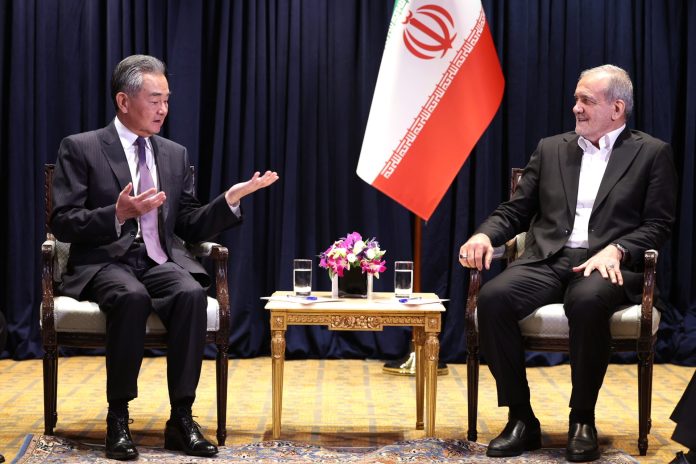
In a meeting with Chinese Foreign Minister Wang Yi on the sidelines of the 79th session of the United Nations General Assembly in New York, President Pezeshkian emphasized Beijing’s potential role in establishing peace and security both in the region and globally.

He condemned the Zionist regime’s crimes, asserting that it does not respect any legal framework and that its crimes cannot be tolerated by the world’s awakened consciences.

The president further said the regime is shamelessly killing women and children and targeting hospitals and schools in Gaza and Lebanon, as it is unable to counter Hamas and Hezbollah.

Additionally, President Pezeshkian advocated for strengthening ties with China, underscoring the importance of the strategic partnership agreement between the two countries.

He also praised China’s Belt and Road Initiative, describing it as crucial for ensuring long-term security and economic development in the region.

In response, Wang referred to the situation in Gaza, reiterating China’s longstanding support for Palestinian rights in international forums.

He also reaffirmed Beijing’s commitment to implementing the 25-year strategic partnership agreement with Iran.

The minister further highlighted the deep historical ties between Iran and China, noting, “Unlike some other countries, we see the new era as a valuable opportunity to deepen relations with Iran.”

Hezbollah confirms death of senior commander in Beirut

Lebanon War

On Telegram, the Lebanese group announced that the “mujahid leader” Ibrahim Muhammad Qubaisi “Hajj Abu Musa” was killed on Tuesday.

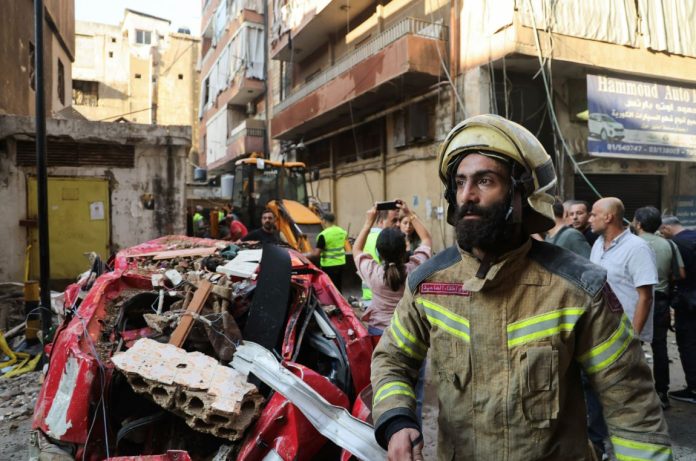
Hezbollah made no mention of the location or manner of his death, but Israel earlier claimed to have targeted and killed him in a strike on a residential area in the southern suburbs of Beirut.

The strike killed six people in total and wounded at least 15 others, according to the Lebanese government.

The Israeli military claimed that Qubaisi was responsible for recent rocket attacks on Israel.

The assassinations came as part of the Israeli regime’s escalation against Lebanon, which has been targeting the country since October 7, when the regime launched a genocidal war on the Gaza Strip.

As part of the escalation, the regime carried out extensive airstrikes against southern and eastern Lebanon on Monday, killing at least 569 people, including 50 children and 94 women, and wounding 5,000 others.

The attacks came less than a week after the regime killed 38 people, including three children and seven women as well as Ibrahim Aqil, another one of Hezbollah’s senior commanders, in an attack on a residential building in a southern Beirut suburb.

A couple of days earlier, it had also detonated thousands of booby-trapped pagers and walkie-talkie radios across the country, killing at least 39 people and wounding 3,000 others.

Hezbollah has been responding to the aggression with numerous operations against the occupied Palestinian territories.

Lebanese Foreign Minister Abdallah Bou Habib has voiced disappointment with US President Joe Biden’s remarks about the escalating crisis between Israel and Lebanon on Tuesday, but said he still hoped Washington could intervene to help.

Half a million people are estimated to have been displaced in Lebanon, he said. He added Lebanon’s prime minister hoped to meet with US officials over the next two days.

The United States “is the key … to our salvation”, he told an event in New York City hosted by the Carnegie Endowment for International Peace.

Top US officials have repeatedly stressed that they do not want to see an all-out war in Lebanon, but have not announced concrete steps towards that goal.

Iranian President says Tehran ready to engage on JCPOA, urges all parties to abide by commitments

Pezeshkian UN

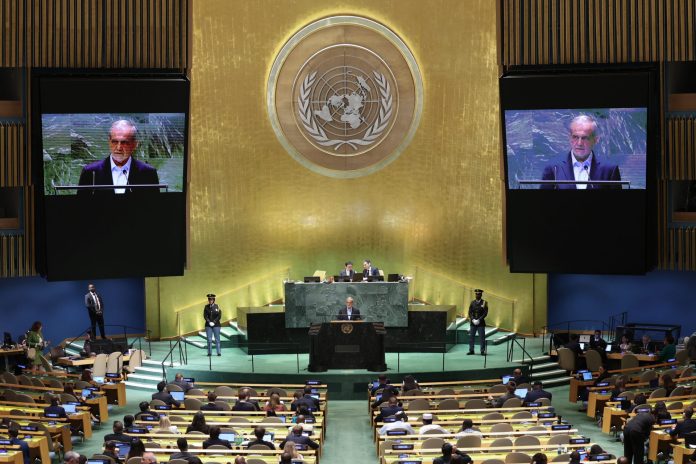
In his first speech at the UN’s annual gathering of world leaders on Tuesday, Pezeshkian also strongly criticised Israel for “its genocide in Gaza” and its “atrocities”, “crimes against humanity” and “desperate barbarism” in its war on the Palestinian territory as well as attacks on Lebanon.

“I aim to lay a strong foundation for my country’s entry into a new era, positioning it to play an effective and constructive role in the evolving global order,” Pezeshkian told the UNGA.

“We seek peace for all and have no intention of conflict with any country … Iran opposes war and emphasises the need for an immediate cessation of military conflict in Ukraine,” he added.

“We are ready to engage with participants of the 2015 nuclear deal. If the deal’s commitments are implemented fully and in good faith, dialogue on other issues can follow,” he stressed.

Directly addressing the American people, Pezeshkian listed a number of Iranian grievances, including crippling sanctions placed on Iran by the United States and the 2020 assassinating of Iranian General Qassem Soleimani in a US drone strike during the era of former President Donald Trump.

The US, under Trump, abandoned the 2015 nuclear pact between Tehran and six world powers in 2018 and reimposed tough sanctions on Iran. Efforts since to revive the pact have failed.

The Iranian president’s speech came as the head of the International Atomic Energy Agency (IAEA), Rafael Grossi, said that he sensed a greater willingness by Iranian officials to engage with the agency in a more meaningful way and that he hoped to travel to Tehran in October.

Grossi held talks with Iranian Foreign Minister Abbas Araghchi on the sidelines of the UNGA on Tuesday.

“What I see is an expressed willingness to re-engage with us in a more meaningful fashion,” Grossi told Reuters in an interview.

Pezeshkian said the Israeli regime has been defeated in its genocidal war on the Gaza Strip and now cannot “repair its myth of invincibility” through resorting to barbarism against Lebanon.

He was referring to the regime’s failure in the face of the Gaza-based resistance movement Hamas in the Palestinian territory and the escalation of the regime’s attacks against Lebanon since the onset of the war.

As part of the escalation, the regime carried out extensive airstrikes against southern and eastern Lebanon on Monday, killing at least 569 people, including 50 children and 94 women, and wounding 5,000 others.

The attacks came less than a week after the regime killed 38 people in an attack on a residential building in a southern suburb of Lebanon’s capital Beirut. A couple of days earlier, it had also detonated thousands of booby-trapped pagers and walkie-talkie radios across the country, killing at least 39 people and wounding 3,000 others.

Pezeshkian said, “The insane Israeli barbarism in Lebanon should be stopped before setting the region and the world on fire.”

“Naturally, the blind and terrorist crimes of the past days and the extensive aggression against Lebanon that shed the blood of thousands of innocent people will not remain unanswered,” he added.

“Those governments that stand in the way of cessation of this terrible catastrophe and still call themselves defenders of the human rights, have to bear the consequences [of these atrocities],” the president noted.

Pezeshkian, meanwhile, pointed to the regime’s killing of more than 41,000 Palestinians, mostly woman and children, during the course of the Gaza war that began on October 7.

“The people of the world have witnessed the nature of the Israeli regime throughout the past year. They have seen how the regime’s rulers perpetrate crimes,” he said.

The regime, though, refers to its “genocide, war crime, and state terrorism as ‘legitimate defense’ and identifies hospitals, kindergartens, and schools as ‘legitimate military targets,’” the president added.

Biden administration delaying Israeli request to replenish munitions and missile interceptors: Report

Israel Lebanon

Israel submitted an “extensive” three-page request last week for additional munitions and armaments to the Biden administration, a senior US official and former US official told MEE.

Israel did not request new types of weapons but is looking to replenish stockpiles from its US ally which have been depleted, as fighting with Hezbollah escalates, the current and former US officials said.

One weapons system that Israel is asking the US to refill are interceptors for the Arrow missile defense system, the current and former US officials told MEE.

Analysts and former US officials say it would be used if Israel came under attack from long-range missiles fired by Iran, Hezbollah or the Houthis in Yemen.

Last week’s request includes more US military aid and foreign military sales, the latter of which Israel buys with its sovereign funds.

Behnam Ben Taleblu, a senior fellow at the Foundation for Defence of Democracies, told MEE it is not surprising the Biden administration would seek to put new roadblocks on weapons transfers, which is “consistent with other signs from the Biden administration that it is prioritising de-escalation over deterrence”.

US officials are concerned that Israel’s intense bombing campaign inside Lebanon could escalate into a full-blown regional war, and there are signs that the Biden administration is frustrated with Israel.

Unlike during previous rounds of tension, Biden has not spoken on the phone with Prime Minister Benjamin Netanyahu since Israel detonated thousands of explosive pagers and walkie-talkies in Lebanon last week.

Biden is also not scheduled to meet Netanyahu when he is in the US for the United Nations General Assembly.

“My team has been in constant contact with their counterparts, and we’re working to de-escalate in a way that allows people to return to their home safely,” Biden said on Monday, as he hosted UAE President Mohamed bin Zayed al-Nahyan at the White House.

Over the weekend, John Kirby, the US National Security Council spokesperson, told ABC News the US is warning Israel against launching a full-scale war on Hezbollah.

“We don’t believe that a military conflict, and we’re saying this directly to our Israeli counterparts . . . we don’t believe that escalating this military conflict is in their best interest,” Kirby added.

In May, the US announced it was leveraging arms transfers to head off an Israeli invasion of the southern Gaza city of Rafah, with the White House saying it delayed two shipments of 500-pound bombs and 2,000-pound bombs. Israel invaded Rafah and in July the US resumed shipments of 500-pound bombs to Israel.

In August, the US approved a $20bn weapons sale to Israel.

If a full-blown regional war erupts, Israel will need the Arrow system, which is one part of its layered air defence systems.

The Arrow system uses interceptors to shoot down ballistic missiles flying at high altitudes. Israel uses the Iron Dome to intercept short-range projectiles, and David’s Sling to intercept medium-range projectiles.

The Arrow 2 is used to intercept long-range atmospheric missiles that are likely to be fired by Iran and Hezbollah. Arrow 3 is used to intercept high-altitude missiles outside the atmosphere, that analysts say the Houthis and Iran are capable of firing.

The Arrow system intercepted most of the ballistic missiles fired by Iran at Israel in April when the Islamic Republic retaliated for an Israeli strike on its consulate in Damascus, Syria, analysts say.

Israel is also running through offensive munitions at a fast pace, US officials tell MEE, and at least some of the missiles and bombs need to be refilled.

Footdragging on the Israeli request is coming from some quarters of the State Department and the White House, the current and former officials say.

On Monday, Israel launched hundreds of strikes across Lebanon, in what was the deadliest day of fighting between Israel and Hezbollah since the 2006 Lebanon war. The air raids continued on Tuesday, leaving at least 569 people, including women and children, killed and hundreds injured, according to Lebanon’s health ministry.

Israel’s ability to target senior Hezbollah commanders and missile sites depends on its fighter jets having a steady stream of munitions from the US.

Joint Direct Attack Munitions – kits that provide GPS navigation to unguided bombs – allow Israel to strike targets based on its intelligence.

Fabian Hinz, a research fellow at the International Institute for Strategic Studies, said footage of Israel’s strikes on Monday also suggests they are using “electro-optical imaging infrared seekers” to guide warheads.

“In Israeli imagery of strikes on cruise missiles inside houses, you can basically see a video feed being relayed to the operator until the last minute,” Hinz added, which is an indication of infrared seekers being used.

Hezbollah boasts around 150,000 missiles and rockets. It began retaliating against Israel on 8 October in solidarity with besieged Palestinians in the Gaza Strip.

Until now, Hezbollah has concentrated its fire on northern Israel, displacing around 60,000 Israeli civilians. On Monday it began widening its attacks to the suburbs of Haifa.

The US has provided almost unconditional military support to Israel since the Hamas-led attacks on 7 October on southern Israel, and Tel Aviv’s subsequent invasion of Gaza.

A new investigation by ProPublica revealed on Tuesday that US officials have maintained a steady supply of arms to Israel despite USAID and the head of the State Department’s Bureau of Population, Refugees and Migration concluding that Israel was blocking aid into Gaza. The State Department’s bureau went so far as to say that the Foreign Assistance Act should be triggered to freeze $830m in weapons sales to Israel.

United Nations General Assembly 2024: UN chief warns Lebanon on ‘brink’

António Guterres

“Gaza is a non-stop nightmare that threatens to take the entire region with it. Look no further than Lebanon,” Guterres said at the opening of the UN’s annual gathering.

“We should all be alarmed by the escalation. Lebanon is at the brink. The people of Lebanon, the people of Israel, and the people of the world cannot afford Lebanon to become another Gaza.”

War featured prominently in the UN chief’s remarks, with references to Gaza, Lebanon, Ukraine, Sudan, and other ongoing conflicts.

“Nothing can justify the abhorrent acts of terror committed by Hamas on October 7, or the taking of hostages – both of which I have repeatedly condemned,” added the 75-year-old former prime minister of Portugal.

“And nothing can justify the collective punishment of the Palestinian people,” he continued.

The UN chief stressed, “the speed and scale of the killing and destruction in Gaza are unlike anything in my years as secretary-general. More than 200 of our own staff have been killed, many with their families. And yet the women and men of the United Nations continue to deliver humanitarian aid.”

“The international community must mobilise for an immediate ceasefire. The immediate and unconditional release of the hostages and the beginning of an irreversible process towards the two-state solution.”

“For those who go on and their mining that goal with more settlements, more land grabs, more incitement, I ask: What is the alternative?

“How could the world accept one state in which a large number of Palestinians would be included without any freedom, any rights or dignity,” he stated.

The Israeli army has launched waves of deadly air raids against Lebanon since early Monday, killing at least 558 people, including 95 women and 50 children, and injuring 1,835.

Hezbollah and Israel have been engaged in cross-border warfare since the start of the Israeli war on the Gaza Strip, which has killed nearly 41,500 victims, mostly women and children, following a cross-border attack by Hamas last Oct. 7.

The international community has warned against the strikes on Lebanon, as they raise the specter of spreading the Gaza conflict regionally.

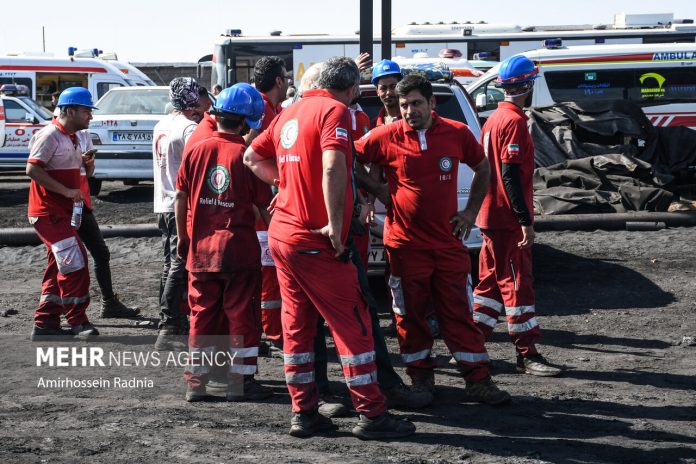
Death toll in Iran mine accident rises to 49

Iran mine

Mohammad Ali Akhundi, the head of the Crisis Management in South Khorassan Province, where the deadly incident happened, said that all other trapped miners are considered dead, but dismissed reports that the rescue operation has stopped.

At least 69 miners were reportedly working in the coal mine in Tabas on Saturday at 22:21 local time (18:51 GMT) when the mine collapsed after a blast.

Officials say the explosion happened due to gas accumulation and attribute the high number of casualties to lack of alarm systems, the import of which is not possible due to the US-led sanctions.