Wednesday, December 31, 2025
Home Blog Page 674

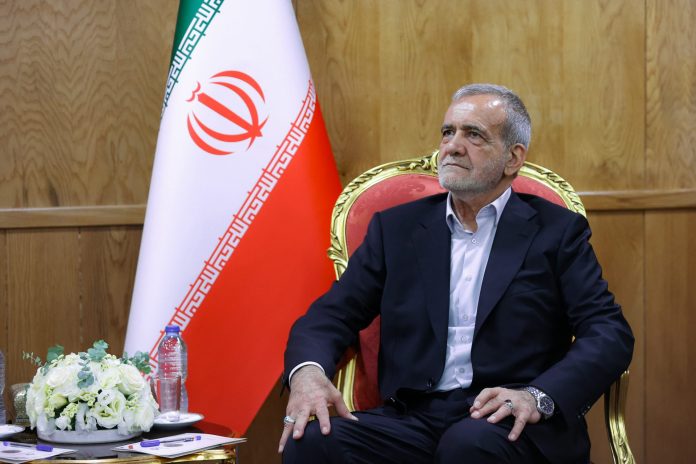
Iranian vice president: Joining FATF under review by administration

Masoud Pezeshkian

In an interview with Borna news agency, Majid Ansari expressed hope that the necessary groundwork would be laid to remove obstacles related to FATF compliance.

He noted that Iran has joined two out of the four FATF conventions, with the Palermo and CFT conventions still pending review by the Expediency Council.

The Iranian vice president emphasized that expert evaluations are ongoing by relevant authorities, and he is optimistic about achieving positive outcomes.

Iran has been on the FATF’s “grey list” since 2016 due to concerns about its “inadequate anti-money laundering (AML) and counter-terrorist financing (CFT) measures”, which has caused financial restrictions on the country.

Last month, Iranian Minister of Economy and Finance Abdolnasser Hemmati stated that his ministry is responsible for organizational follow-up on FATF, adding they are pursuing this matter based on the president’s guidelines.

Hemmati said the president has ordered the necessary actions to lift restrictions and suspend FATF’s countermeasures within the framework of national interests, while also addressing domestic concerns on joining the task force.

Iran’s relationship with the FATF has been complex and politically sensitive due to internal and external pressures.

Many politicians in Iran believe that adopting FATF standards will hand over a considerable part of the country’s financial system to the West.

In his first press conference, President Pezeshkian stressed that Iran has no choice but to join the task force.
Israel’s attacks against Lebanon suggest rejection of ceasefire: PM

Lebanon War

Mikati made his comments during a meeting with the head of the UN Interim Force in Lebanon (UNIFIL), Gen. Arnaldo Lazaro, held in Beirut on Friday.

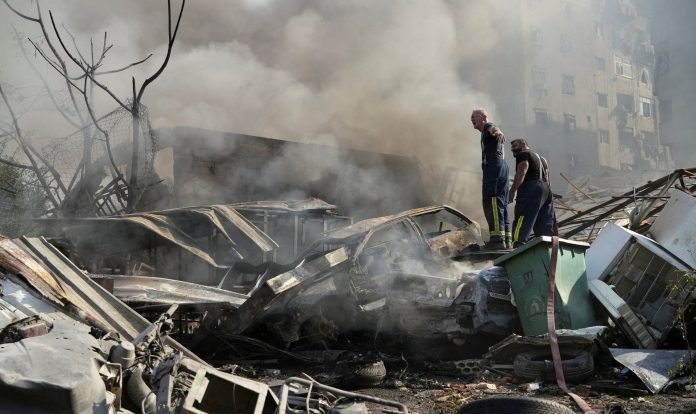
According to a statement from the Prime Minister’s office, Mikati emphasized that “the recent escalation by Israel is a clear indication of its rejection of all efforts aimed at achieving a cease-fire and fully implementing UN Security Council Resolution 1701″.

The meeting took place amid US suggestions of a potentially positive atmosphere leading to an agreement to end hostilities in Lebanon.

However, Mikati noted that similar diplomatic attempts regarding the situation in Gaza have not yielded results, while “Israeli atrocities have intensified on both fronts”.

Israel launched a massive air campaign last month in Lebanon against what it claims are Hezbollah targets in an escalation in a year of cross-border warfare between Israel and the group since the start of Israel’s assault on Gaza.

Nearly 2,900 people have been killed and more than 13,000 injured in Israeli brutal offensive since last October, according to Lebanese health authorities.

Israel expanded the conflict by launching an incursion into southern Lebanon on Oct. 1.

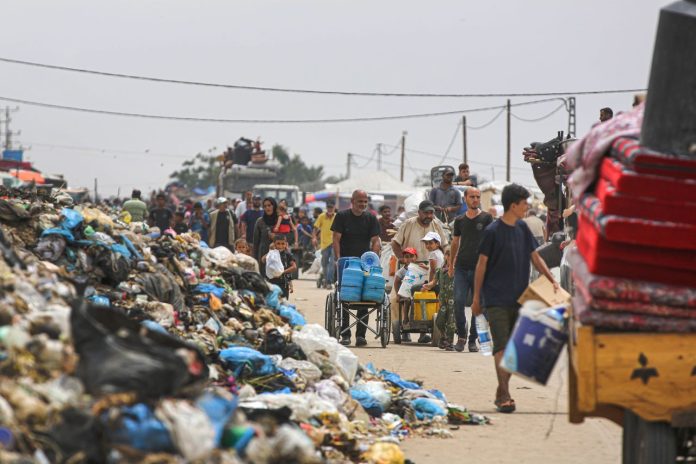
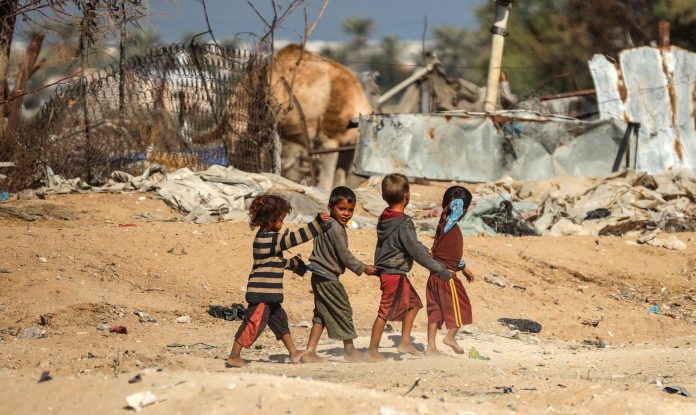
Condition in northern Gaza Strip is “apocalyptic”: Senior UN officials

Gaza War

“The entire Palestinian population in North Gaza is at imminent risk of dying from disease, famine and violence,” they said in a statement signed by the acting UN aid chief Joyce Msuya, heads of U.N. agencies, including UN children’s agency UNICEF and the World Food Programme, and other aid groups.

Israel began a wide military push in northern Gaza last month.

“Humanitarian aid cannot keep up with the scale of the needs due to the access constraints. Basic, life-saving goods are not available. Humanitarians are not safe to do their work and are blocked by Israeli forces and by insecurity from reaching people in need,” they added.

They urged all parties fighting in Gaza to protect civilians and called on Israel to “ceases its assault on Gaza and on the humanitarians trying to help”.

The Israeli army has killed more than 1,200 Palestinians in northern Gaza, forced half of the population to flee from bombardments, and left the other half trapped without water or food for nearly three weeks, the Palestinian Civil Defense has announced.

The regime has continued its devastating offensive on the Gaza Strip since a cross-border incursion by Hamas last October, despite a UN Security Council resolution demanding an immediate cease-fire.

More than 43,000 people have since been killed, mostly women and children, and over 101,000 injured, according to local health authorities.

The Israeli onslaught has displaced almost the entire population of the territory amid an ongoing blockade that has led to severe shortages of food, clean water and medicine.

Israel also faces a genocide case at the International Court of Justice for its actions in Gaza.

US announces new Middle East military deployments amid Iran-Israel tension

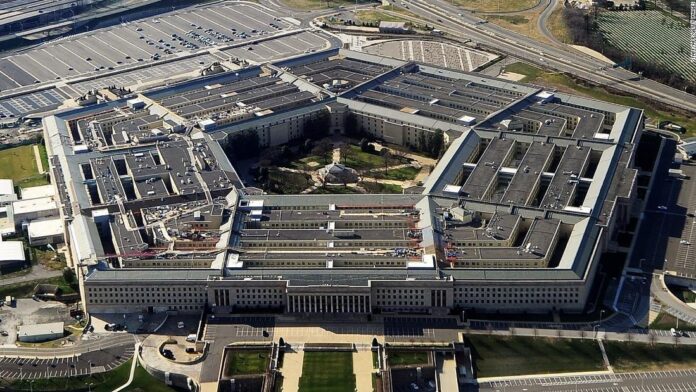
Pentagon

“In keeping with our commitments to the protection of U.S. citizens and forces in the Middle East, the defense of Israel, and de-escalation through deterrence and diplomacy, the Secretary of Defense ordered the deployment of additional ballistic missile defense destroyers, fighter squadron and tanker aircraft, and several U.S. Air Force B-52 long-range strike bombers to the region,” spokesman Pat Ryder said in a statement.

The forces will begin to arrive in the coming months as the USS Abraham Lincoln Carrier Strike Group prepares to depart, he added.

The statement came amid media reports that claim Iran is preparing to strike Israel in the coming days, possibly before the US presidential election on Nov. 5.

“These deployments build on the recent decision to deploy the Terminal High Altitude Area Defense (THAAD) missile defense system to Israel as well as DoD’s sustained Amphibious Ready Group Marine Expeditionary Unit (ARG/MEU) posture in the Eastern Mediterranean,” said Ryder.

The US will take “every measure necessary” to defend its people if “Iran, its partners, or its proxies use this moment to target American personnel or interests in the region,” he added.

Last Saturday, the Iranian Air Defense Forces said in a statement that the country’s integrated air defense system successfully intercepted and countered the Israeli strikes targeting military locations in Tehran, Khuzestan, and Ilam provinces.

The attacks caused limited damage in some locations and the dimensions of the incident are under investigation, the statement added.

Tehran has strongly condemned the Israeli assault as a blatant violation of international law and the UN Charter, reiterating the country’s right to defend itself against foreign acts of aggression. Iran has stressed that it is not looking for war but will not abandon its right to give an appropriate and firm response to Israel’s latest act of aggression.

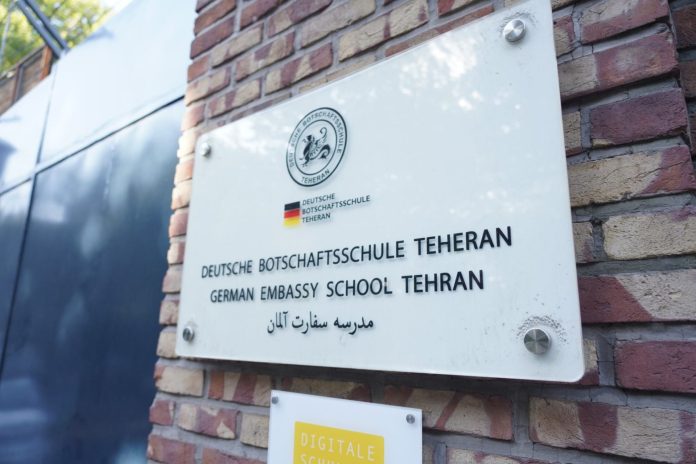
Senior Iranian journalist calls for closure of German Embassy in Iran

In a recent editorial titled “German Embassy or Israeli Consulate?” Hossein Shariatmadari questioned the legitimacy of the German Embassy in Iran, citing undeniable evidence of “the German government’s Zionist identity.”

Shariatmadari’s comments come in response to Germany’s decision to close Iran’s consulates in Frankfurt, Hamburg, and Munich following the execution of Jamshid Sharmahd, the leader of the Tondar group with dual Iranian-German citizenship, who was convicted of killing Iranian civilians.

German Foreign Minister Annalena Baerbock condemned Sharmahd’s execution, warning Tehran of serious consequences and calling for EU-wide sanctions against those involved in his execution.

Shariatmadari criticized Baerbock’s stance, accusing her of echoing Israeli prime minister Benjamin Netanyahu’s rhetoric and highlighting Germany’s historical support for Israel, including during the 2006 Lebanon War.

The veteran journalist argued that Germany lacks an independent identity, having been divided and influenced by the Allied powers since World War II.

He also pointed out the disproportionate representation of Jews in the German parliament and the significant control of Germany’s economic sectors by Zionists’ interests.

Shariatmadari further noted the growing dissatisfaction among the German public with their government’s close ties to Israel, exacerbated by Israel’s aggression in Gaza and Lebanon.

Israel ‘not serious’ in Gaza cease-fire talks: Hamas

Gaza War

Speaking to the Hamas-run Al-Aqsa TV channel, senior Hamas official Osama Hamdan said Israel does not offer any genuine proposals and “is definitively not serious in the (cease-fire) negotiations”.

“Any proposal presented to us (Hamas) that meets our people’s demands, ends their suffering, and completely halts the Israeli aggression, not temporarily, we will proceed with it without hesitation,” Hamdan said.

He added that Israel is unable to break the Palestinian resistance despite the yearlong war in the enclave. Israel has killed more than 43,000 people in the besieged enclave and rendered it uninhabitable since the Oct. 7, 2023 Hamas attacks.

Efforts led by the US, Egypt, and Qatar for a permanent cease-fire have so far failed, mainly due to Israeli Prime Minister Benjamin Netanyahu’s refusal to halt the war.

The resistance group says it will not accept any truce proposal that does not include a full Israeli withdrawal from Gaza and a total end to hostilities.

Leader’s advisor says Iran likely to increase range of its missiles

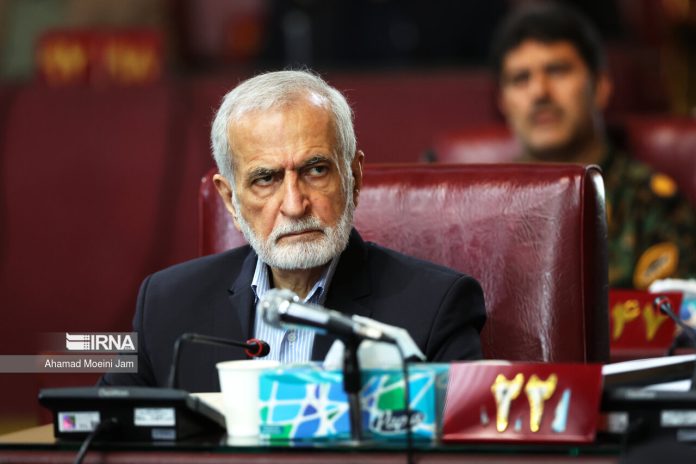
Kamal Kharazi

“If the Islamic Republic of Iran faces an existential threat, we will inevitably change the policy of our military doctrine,” Head of Iran’s Strategic Council on Foreign Relations Kamal Kharrazi said in an interview with al-Mayadeen television.

He stressed that Iran is capable of producing nuclear weapons, but what prevents it is the fatwa (religious decree) issued by Leader of the Islamic Revolution Ayatollah Seyyed Ali Khamenei against weapons of mass destruction.

“We now have the necessary capability to produce [nuclear] weapons, and the only obstacle is the Leader’s fatwa that prohibits the production of nuclear weapons.”

Regarding the range of Iran’s missiles, Kharrazi stated, “We have so far considered the Westerners’ sensitivity, particularly the Europeans’. But when they don’t consider our sensitivities, especially regarding the issue of the territorial integrity of the Islamic Republic of Iran, there is no reason for us to continue to consider their sensitivities.”

“Therefore, there is a possibility that the range of Iran’s missiles will increase.”

Commenting on Israel’s recent deadly strikes on military sites in Iran, Kharrazi stressed that the country “will definitely respond at the right time and in the right way”.

He reiterated that Iran is not interested in the expansion of the war into the entire region, but stressed that, “We are ready for a war.”

Noting that Israel has made “miscalculations” since it waged aggressions on Gaza and Lebanon, Kharrazi added, “They thought they could destroy Hamas and Hezbollah by attacking Gaza and Lebanon. They thought that with the martyrdom of the leaders of Hamas and Hezbollah, these popular movements would collapse. These were their miscalculations. In Israel itself, many admit these miscalculations.”

Since early October 2023, Israel has been waging brutal two-front aggression that has killed more than 43,259 people in the Gaza Strip and at least 2,867 others in Lebanon so far.

Over the same period, the usurping regime has also assassinated several resistance leaders, including Hamas’s political bureau chief Ismail Haniyeh and Hezbollah Secretary General Seyyed Hassan Nasrallah.

In support of Palestinians in Gaza, resistance groups have launched retaliatory attacks on Israeli targets and vowed to keep fighting until the Gaza onslaught ends.

In response to Israel’s barbaric acts of assassination against the resistance front’s top leaders, Iran carried out Operation True Promise 2 earlier last month.

Iran has announced it is resolved to respond to the recent Israeli act of aggression against the country and will not abandon its rights.

Ex Iran FM: Israeli-Palestinian conflict should not be framed as an Iran-Israel dispute

Ali Akbar Salehi

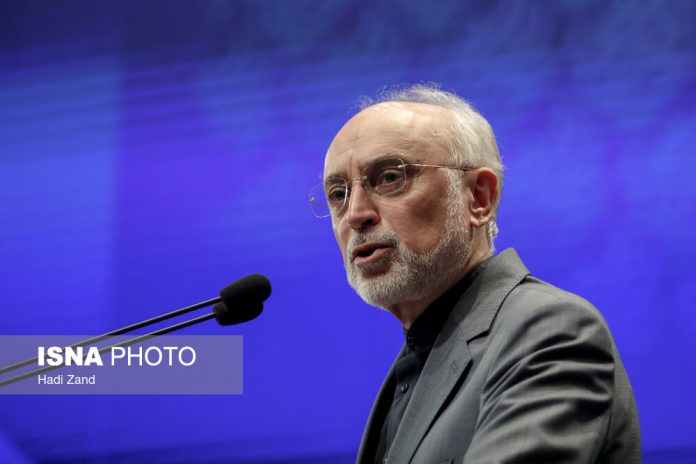
In an interview with Entekhab news website, Iran’s former foreign minister and atomic chief, Ali Akbar Salehi explained that Iran’s involvement in the Palestinian issue is driven by humanitarian, political, strategic, and national security reasons.

Salehi also underscored the significant costs Iran bears in supporting the Palestinian cause and warned against the ‘naïve’ belief that ignoring Israel would lead to mutual non-interference. “It is naive to think that if we leave Israel alone, they will leave us alone,” he added.

He highlighted the need for a long-term perspective, noting that Israeli officials, despite being stuck in a quagmire, have made bold claims about their territorial ambitions.

“With complete audacity, (Israeli prime minister Benjamin) Netanyahu’s minister has said that two-thirds of Saudi Arabia, Iraq, Syria, Lebanon, and Egypt are ours,” Salehi pointed out.

Salehi said Israel’s strategy to eliminate perceived threats, such as Iran and the resistance movement, is ‘simplistic’, explaining it won’t guarantee its existence as an occupying entity.

He argued that the short-sightedness ignores the potential for future resistance to emerge even stronger. “This is short-sightedness,” he remarked. “How can they be sure that these obstacles won’t grow again in the future, stronger than before?”

The Iranian former top diplomat concluded by stressing the need for Iran to maintain its strategic foresight and protect its long-term interests, despite internal disagreements on how to achieve these goals.

Official: Lifting internet filtering will save billions for Iranian households, businesses

Internet restrictions in Iran

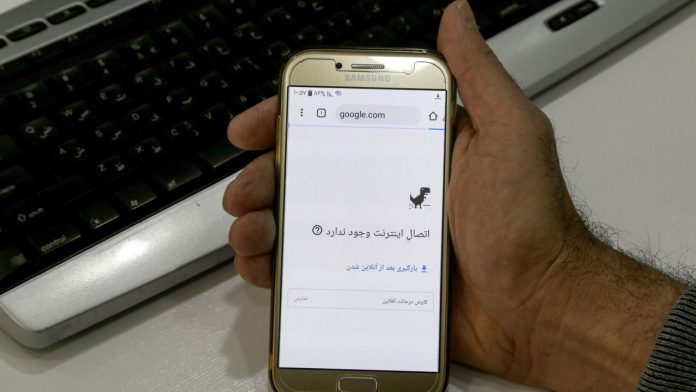
Mir Nima Ghazi highlighted the significant economic impact of filtering, noting that approximately 83 percent of internet users in the country resort to using VPNs, which imposes a multi-trillion-toman burden on citizens and operators.

Ghazi explained that the internet is the backbone of modern economies, yet Iran’s internet quality ranks among the lowest globally due to restrictive domestic policies and foreign sanctions.

In addition, Ghazi pointed out that temporary internet disruptions further challenge the country’s internet infrastructure, saying a recent report from the Internet Quality Commission of the Electronic Commerce Association revealed that short outages of 5 to 10 minutes in various operators disrupt user connectivity, causing unquantifiable economic losses and significantly affecting the digital economy and online businesses.

The official noted that filtering has failed to achieve its policy objectives.

He explained, “Despite two years of restrictive measures on popular foreign services like Instagram and WhatsApp, a data report from the Governance Lab of Sharif University shows that 90 percent of users returned to Instagram within a year of its blockage.”

Ghazi concluded, “Beyond quantitative losses, filtering also inflicts qualitative damages, such as continued human capital flight and decreased morale among specialists, which are invaluable national losses.”

“The harm to the country’s innovation and technology ecosystem from filtering, alongside sanctions, may never be fully assessed,” he warned.

Emirates, Turkish Airlines resume flights from Iran’s int’l airport 

Emirates Airlines have also resumed regular flights on the Tehran-Dubai route and vice versa as of Thursday.

The flights had been previously suspended due to tensions caused by the Israeli aggression on Gaza and its spillover effects on the region which made the flight routes unsafe.

The resumptions mark a return to normalcy for international travel between the destinations, providing relief for passengers who rely on the routes for business or leisure.

The airlines have ensured that all necessary precautions and safety measures are in place for the convenience and safety of their passengers.