Thursday, January 1, 2026
Home Blog Page 660

Iranian president orders review of internet filtering, warns public dissatisfaction will backfire

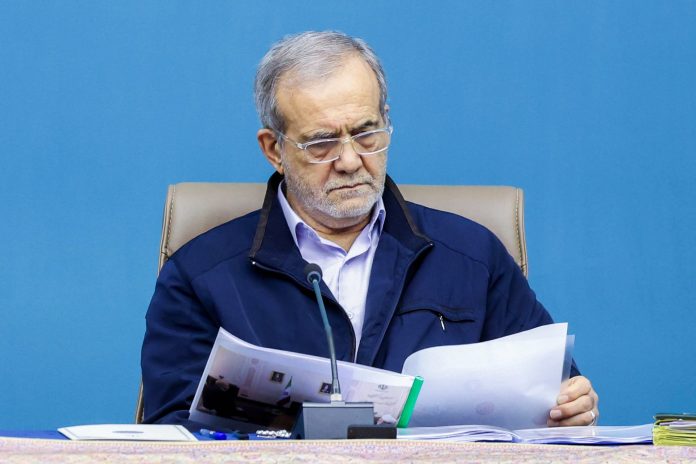
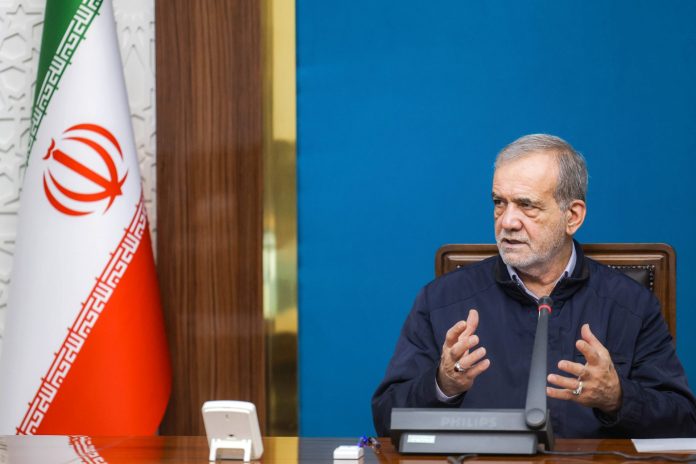
Masoud Pezeshkian

During a council meeting on Tuesday evening, President Pezeshkian stated, “Continuing internet filtering, given the widespread dissatisfaction it has caused, is unacceptable.”

“Decisions that do not satisfy the public could backfire, eroding social capital and posing security challenges,” he warned.

He instructed the working group to urgently examine various aspects of the issue and present their findings at the next council meeting.

He noted that surveys indicate the goals of the filtering policy have not been achieved and stressed the need for all governing bodies to reach a common understanding on the issue.

President Pezeshkian highlighted that governance should not be based solely on assumptions without considering public satisfaction and stressed the importance of understanding how society perceives the decisions made for their lives.

Iran has blocked access to many popular websites and online services, with the Internet Filtering Committee, headed by the prosecutor general, deciding on access to which websites must be curtailed. This has led many internet users to turn to VPNs, which, according to unofficial sources, cost people millions of dollars annually.

Removing the years-long internet filtering was one of the campaign promises of President Pezeshkian.

Political analyst: Iran should not reject talks with US

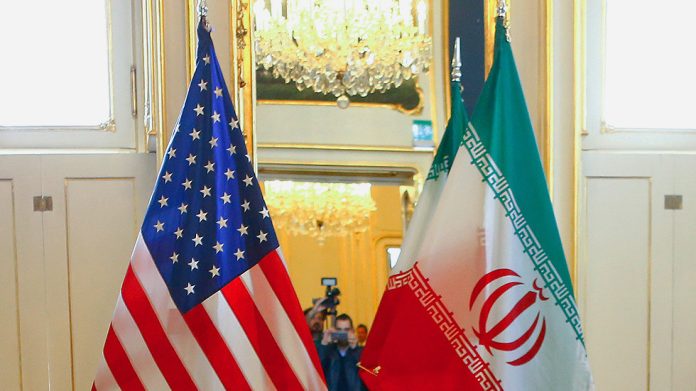
Iran US Flags

Abbas Abdi made the remarks in an interview with the Etemad newspaper on Wednesday, while reviewing the first 100 days of Iranian President Massoud Pezeshkian’s administration.

Abdi called for reducing tensions and overcoming the mental barriers to Iran-US relations, citing the cooperation between Tehran and Washington in Iraq, Afghanistan, and Bosnia despite lacking diplomatic relations.

The analyst highlighted that the main issue in foreign policy is not the lack of power to respond to aggressors but the limited options available amid tensions with Israel, warning that relying solely on missile responses will not work.

He praised Pezeshkian’s commitment to serious and sustainable reforms, his approach to foreign policy, human rights, women’s issues, and combating discrimination and injustice.

Abdi, however, criticized the administration’s appointments, calling them the worst and most discreditable aspect, as many individuals from certain political factions “seek personal gain.”

He stressed the need to rebuild trust between the people, political forces, and governments, which has been damaged by past events.

UN official warns Israeli acts in Gaza ‘reminiscent of gravest international crimes’

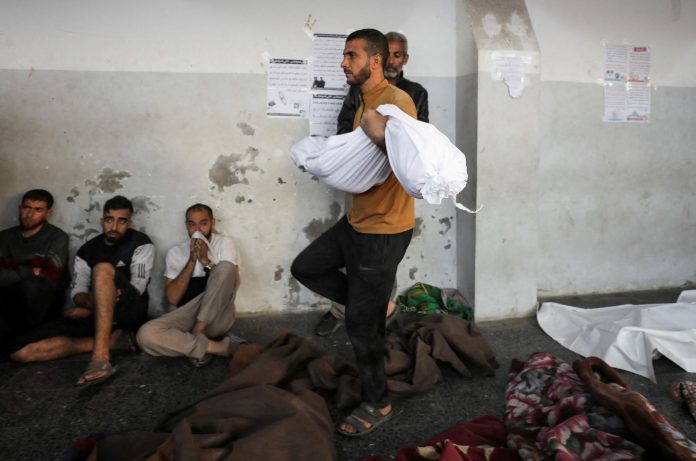
Gaza War

“Since the escalation of this conflict in October 2023, we have briefed this Council on no fewer than 16 occasions,” Joyce Msuya, Acting Under-Secretary-General for Humanitarian Affairs and Acting Emergency Relief Coordinator, told a UN Security Council session on Palestine.

Condemning the toll of the recent escalations, Msuya said civilians have been “driven from their homes, stripped of their sense of place and dignity” and often forced to witness the deaths of their family members.

She recounted the horrific conditions facing injured children, who in some cases have had the words “Wounded Child, No Surviving Family” written on their arms.

Emphasizing that Gaza’s destruction has reached an unprecedented scale, with over 70% of civilian housing damaged or destroyed, Msuya asked: “What distinction was made, and what precautions were taken?”

“We are witnessing acts reminiscent of the gravest international crimes,” she stressed.

She noted that the “latest offensive that Israel started in North Gaza last month is an intensified, extreme and accelerated version of the horrors of the past year.”

Israel’s relentless attacks are now affecting approximately 75,000 people trapped in North Gaza with limited food and water supplies, she added.

Criticizing the Israeli blockade of fuel needed to operate digging equipment to rescue civilians trapped under rubble, Msuya decried that “the daily cruelty we see in Gaza seems to have no limits”.

“People under siege now tell us they are afraid that they will be targeted if they receive help,” she continued.

Msuya further raised alarm over the Israeli Knesset’s recent bill that aims to ban the activities of the UN agency for Palestinian refugees (UNRWA) starting in January.

“If implemented, this bill will be another devastating blow to efforts to provide lifesaving aid and avert the threat of famine. No other organization can fill these gaps,” she warned.

Calling for immediate international action, Msuya urged UN member states to use “diplomatic and economic pressure, responsible arms transfers, and combating impunity” to prevent further suffering.

She implored the Security Council to employ “its powers under the UN Charter to ensure compliance with international law and full implementation of its resolutions”.

The Israeli army has continued a deadly onslaught in northern Gaza since early October to reportedly prevent the Palestinian resistance group Hamas from regrouping amid a siege on the area. Palestinians, however, accuse Israel of seeking to occupy the area and forcibly displace its residents.

More than 1,900 people have been killed and thousands more wounded in northern Gaza since the offensive began, according to the Gaza Health Ministry.

The aggression is the latest episode in a brutal Israeli war on Gaza since an attack by Hamas in October last year, despite a UN Security Council resolution demanding an immediate cease-fire.

More than 43,600 people have since been killed, mostly women and children, and over 102,000 others injured, according to local health authorities.

The Israeli assault has displaced almost the territory’s entire population amid an ongoing blockade that has led to severe shortages of food, clean water, and medicine.

Israel faces a genocide case at the International Court of Justice for its actions in Gaza.

Iran, Russia, Turkey censure Israeli crimes in West Asia

Gaza War

A closing statement from the three countries following the 22nd international meeting on Syria in the Astana format, held in Kazakhstan’s capital, expressed their “strong condemnation and deep concern over the ongoing mass killings and criminal attacks by Israel in Gaza, as well as Israeli aggression in Lebanon and the West Bank”.

They called on the international community, in particular the United Nations Security Council, “to secure an immediate and permanent ceasefire and unhindered humanitarian access in Gaza”.

The trio also condemned Israeli military attacks on Syria, deeming such actions as violations of international law.

“[The sides] condemned all Israeli military strikes in Syria. [They] considered these actions as a violation of international law, international humanitarian law, the sovereignty and territorial integrity of Syria, and recognized them as destabilizing and exacerbating tensions in the region and called for the ceasing of these attacks,” the statement said.

The sides acknowledged the negative impact of the escalation of tensions in the region on Syria, underscoring the urgency for the United Nations High Commissioner for Refugees (UNHCR), UN agencies, and all humanitarian actors to develop an emergency response for those who were forced to cross from Lebanon into Syria following the escalation of hostilities in Lebanon.

The Zionist regime has been conducting a genocide in Gaza for over a year, resulting in significant casualties. The regime has recently expanded its military aggression to Lebanon, causing numerous fatalities in the Arab country.

Israel has also conducted repeated attacks on Syria and others in the region as part of its escalated campaign of violence.

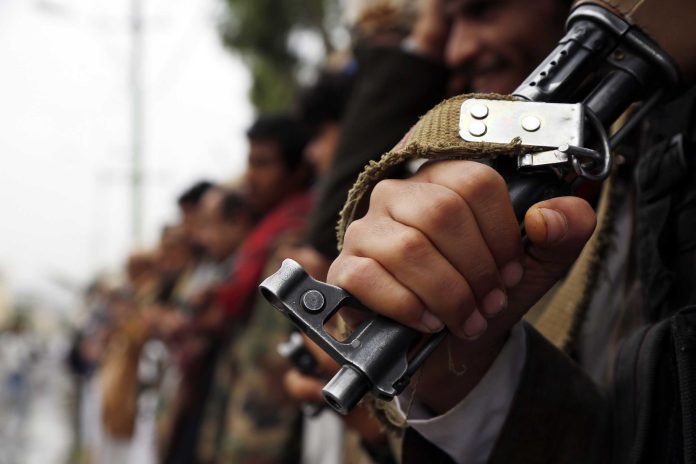
Yemen’s Houthis say conducted missile, drone attacks on US warships

Yemen Houthi

Pentagon spokesperson Air Force Major General Patrick Ryder said on Tuesday that the United States military’s Central Command (CENTCOM) forces “successfully repelled multiple Iranian backed Houthi attacks during a transit of the Bab al-Mandeb strait”, which connects the Red Sea to the Gulf of Aden.

Ryder told reporters at a news conference that two US-guided missile destroyers – the USS Stockdale and USS Spruance – were attacked by at least eight one-way attack drones, five antiship ballistic missiles and three antiship cruise missiles.

All the Houthi drones and missiles “were successfully engaged and defeated”, and neither of the US Navy ships were damaged or personnel hurt, he noted.

Ryder added that he was not aware of any attacks against the aircraft carrier USS Abraham Lincoln.

Earlier on Tuesday, Houthi fighters announced that they had carried out two “specific military operations” against the US Navy in an assault lasting eight hours.

“The first operation targeted the American aircraft carrier (Abraham) located in the Arabian Sea with a number of cruise missiles and drones,” Houthi military spokesman Yahya Sarea announced in a statement.

“The other operation targeted two American destroyers in the Red Sea with a number of ballistic missiles and drones,” he said, adding that the operation had “successfully achieved its objectives”.

The Houthis, who control large areas of Yemen, including the capital Sanaa, have been carrying out attacks on Israel-linked shipping in the Red Sea and Gulf of Aden since November 2023, in what it says is a campaign of solidarity with Palestinians.

The Houthis have targeted more than 90 vessels with missiles and drones, killing four sailors and sinking two ships.

The Yemeni group has demanded that Israel end its war on Gaza as a condition for stopping the attacks, which have severely disrupted trade in one of the world’s busiest maritime routes.

The US, with support from the United Kingdom, has carried out repeated strikes on targets in Houthi-controlled areas of Yemen in response to the Red Sea shipping attacks.

On Sunday, the US and UK launched air strikes on Sanaa and the northern Amran governorate, with the Pentagon saying it had targeted Houthi advanced weapons storage facilities.

The attacks came just weeks after intensive US raids on Houthi targets in which B-2 strategic bombers participated for the first time, carrying out strikes against five underground weapons storage locations.

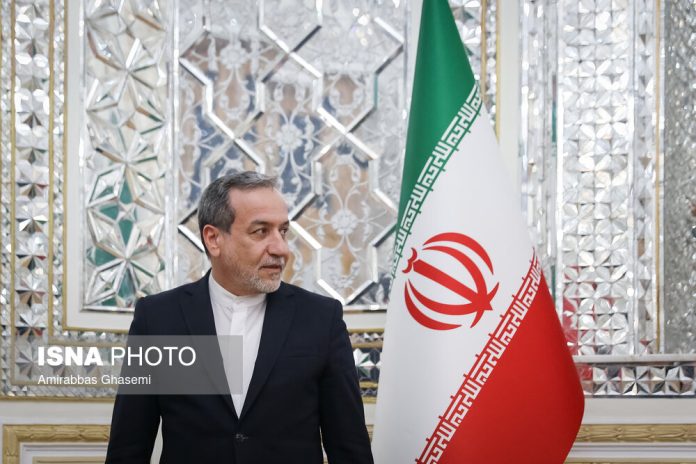
Iran cautions US against resumption of ‘maximum pressure’ campaign

Abbas Araghchi

On Tuesday, Araghchi wrote on X that the first version of Maximum Pressure was met with Maximum Resistance from Tehran, resulting in Washington’s Maximum Defeat.

“Attempting ‘Maximum Pressure 2.0’ will only result in ‘Maximum Defeat 2.0’. Better idea: try ‘Maximum Wisdom’—for the benefit of all,” he tweeted.

The minister pointed to Iran’s advances in its peaceful nuclear program after the US imposed unilateral sanctions back in 2018.

Instead, he called for a maximum wisdom policy that would benefit everyone.

The warning follows reports that US President-elect Donald Trump is considering imposing further sanctions on Tehran after taking office in January.

Back in May 2018, the US began to unilaterally impose sanctions against Iran after the former left the Joint Comprehensive Plan of Action (JCPOA).

The US administration, under former president Donald Trump, launched what it called a maximum pressure campaign against Iran at the time, targeting the Iranian nation with the “toughest ever” sanctions.

Although Trump failed to reach his professed goals with his maximum pressure campaign, the bans have badly hurt the Iranian population.

The sanctions, preserved under the administration of US President Joe Biden, have restricted the financial channels necessary to pay for basic goods and medicine, undermining supply chains by limiting the number of suppliers willing to facilitate sales of humanitarian goods to the country.

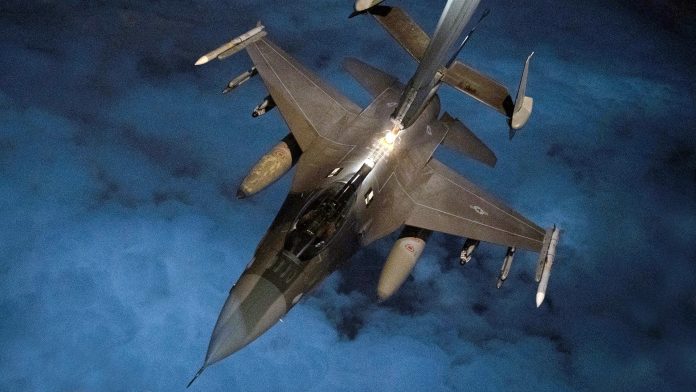
US military says targeted ‘Iranian-backed’ fighters in Syria for a second day

US Air Force

US Central Command (CENTCOM), which is responsible for US forces deployed in the Middle East, did not specify on Wednesday how many air strikes were conducted – or who the targets were – stating only that the Iranian-aligned “group’s weapons storage and logistics headquarters” were hit.

The unnamed fighters had fired rockets at the US Patrol Base Shaddadi, in northeast Syria, but inflicted no damage to the facility or injuries to US or “partner forces”, CENTCOM added.

On Tuesday, CENTCOM also announced it had carried out attacks against “Iranian backed groups” in Syria, hitting nine targets at two separate locations in the country over the previous 24-hour period.

“US Central Command, alongside our regional partners, will aggressively pursue any threat to US forces, allies, partners, and security in the region,” CENTCOM’s commander Michael Erik Kurilla said in a statement following the latest strikes.

An estimated 900 US soldiers are based in the eastern part of Syria – and 2,500 in neighbouring Iraq – as part of a longstanding operation that continues to focus on preventing a resurgence of Daesh group, which seized large areas of both Syria and Iraq in 2014 before being militarily defeated.

CENTCOM’s strikes on Monday reportedly killed four Syrian members of Iranian-backed armed groups and wounded 10 others, some of them severely, in the Al Mayadeen area of eastern Syria’s Deir Az Zor countryside, according to the United Kingdom-based monitoring group Syrian Observatory for Human Rights.

CENTCOM did not specify the locations of their separate attacks in Syria.

Then-US President Donald Trump ordered the withdrawal of all US forces from Syria in 2018 on the grounds that Daesh had been defeated.

The US military, however, later announced that a contingency force would remain in the country, where some see them as both a deterrent to Daesh as well as an attempt to limit neighbouring Iran’s spreading influence in Syria.

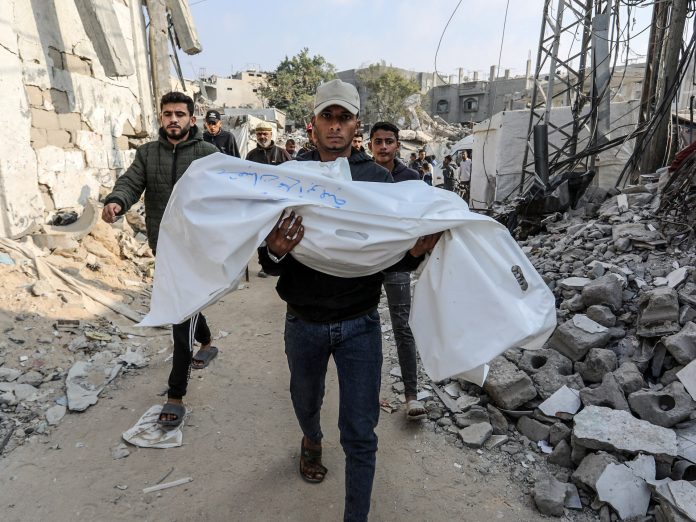
At least 2,000 civilians killed in northern Gaza amid Israeli attacks

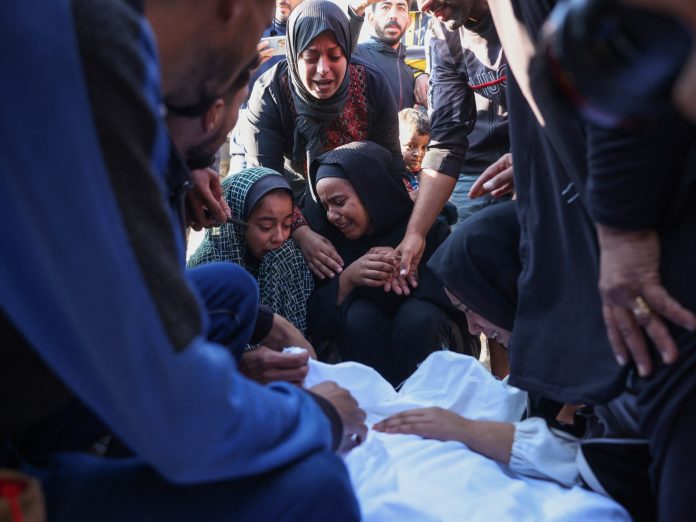
Gaza War

Ismail al-Thawabta, the office’s director, told Anadolu that the attacks have disproportionately affected women, children and the elderly.

Al-Thawabta called on the international community to intervene immediately, condemning the Israeli actions as a campaign of mass extermination against Palestinians in Gaza, particularly in the north.

He attributed responsibility for the humanitarian crisis to the US, UK and European nations, accusing them of complicity in policies of “starvation and mass killing”.

Al-Thawabta also accused Israel of misleading the global community with “false maps” showing expanded “safe zones” for civilians in Gaza.

He added that despite these zones being marked as “safe”, they are frequently bombarded.

“The Israeli military distributes maps with yellow-colored areas labeled as humanitarian and safe, only to target these areas with bombs and missiles, resulting in civilian casualties, including women, children and the elderly.”

Al-Thawabta criticized Israel for blocking essential humanitarian aid from entering Gaza, noting that food and medicine have not been allowed through.

The closure of the Rafah crossing, a vital aid route with Egypt, for the past 190 days has led to severe shortages of essential supplies, he said.

He estimated that roughly 600,000 tons of aid and food supplies remain stuck on the Egyptian side of Rafah, with Israel refusing to permit entry.

International and UN agencies recently warned that northern Gaza is on the verge of a famine due to relentless Israeli bombardments and a blockade that began on Oct. 5.

According to aid organizations, critical shortages of food, clean water and medical supplies have made survival increasingly dire for residents in the north.

In recent weeks, similar crises have spread southward as food staples, particularly flour, have been exhausted in markets and homes across central and southern Gaza.

In many cases, families have resorted to using spoiled flour to feed their children as well as other unsafe substitutes, raising further health concerns among an already vulnerable population.

Northern Gaza has been under a full military blockade since Israel’s ground operation began on Oct. 27, 2023, compounding a pre-existing scarcity of food, medicine and fuel that has led to widespread suffering, particularly among children and the elderly.

Israel has continued a devastating offensive on Gaza since an attack by the Palestinian resistance group Hamas in October 2023, despite a UN Security Council resolution demanding an immediate cease-fire.

Nearly 43,700 people have since been killed in Gaza, mostly women and children, and over 103,000 injured, according to Palestinian health authorities.

Israel also faces a genocide case at the International Court of Justice for its deadly war on Gaza.

President Pezeshkian emphasizes need for improved foreign relations

Masoud Pezeshkian

He reassured that Iran should approach friends with kindness and adversaries with measured diplomacy.

President Pezeshkian reviewed the efforts of the current Iranian administration to address foreign policy challenges, highlighting positive progress with neighboring countries.

He noted successful meetings and agreements with China and Russia aimed at accelerating bilateral projects, such as China’s interest in infrastructure projects and Russia’s cooperation on transit routes and gas pipelines.

The Iranian President also mentioned talks with India, which has expressed a strong desire to expedite the development of Iran’s Chabahar Port, along with the Persian Gulf countries seeking to activate transit corridors with Iran.

President Pezeshkian reaffirmed Iran’s commitment to expanding relations globally, including with European nations, though he noted recent disruptions instigated by the Israeli regime.

Pezeshkian underscored the need for carefully managed relations, including with the United States, to navigate inevitable regional and international interactions.

Qatar’s Emir orders cabinet reshuffle

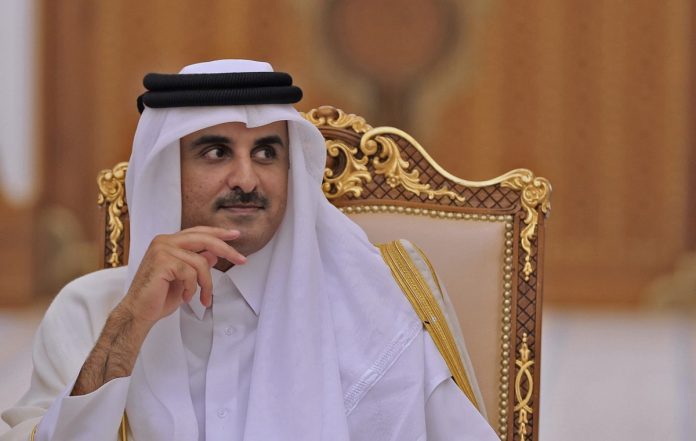
Qatari Emir Tamim bin Hamad Al Thani

Al Thani on Tuesday appointed the CEO of the Qatar Investment Authority (QIA), Mansour Ibrahim al-Mahmoud, as the country’s next minister of health.

The Emir appointed Mohammed Saif Saeed al Suwaidi as QIA’s next CEO.

As part of Tuesday’s cabinet shuffle, Qatar’s Emir also appointed Sheikh Faisal bin Thani bin Faisal Al Thani as the country’s new minister of commerce and industry.

Sheikh Faisal is QIA’s chief of Asia-Pacific and Africa investments and the chairman of Qatari telecoms group Ooredoo. It is unclear if he will remain in those roles.

The Emir appointed Lolwah bint Rashid Al-Khater as the new education minister. She served previously as minister of state for international cooperation and led Qatar’s global humanitarian efforts, especially in Gaza and Lebanon.