Wednesday, December 24, 2025
Home Blog Page 66

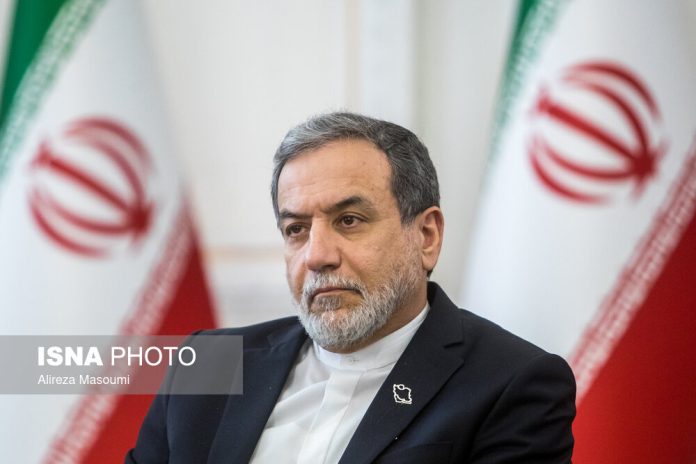
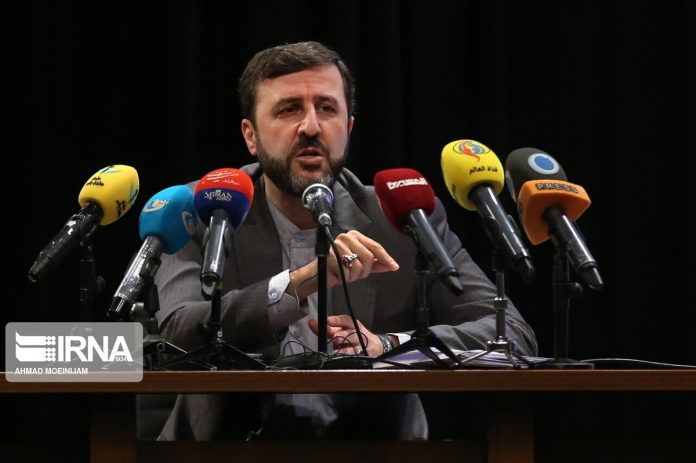
Iran FM says no basis for resuming talks with US

Abbas Araghchi

His remarks came in an interview published by the Iranian government’s official information platform.

Araqchi stated that Tehran sees “no positive or constructive approach” from the US that could justify restarting diplomatic talks.

According to him, any future negotiations would require the US to demonstrate readiness for “equal and mutually beneficial discussions.”

He emphasized that Iran is not rejecting diplomacy in principle, but conditions are not in place.

“Whenever they are prepared for negotiations on an equal basis and for a beneficial agreement for both sides, talks could become possible, and Iran can consider them,” he said.
“However, the approach we see from the Americans does not indicate such readiness.”

Relations between the two countries remain strained amid ongoing disputes over sanctions, regional policies, and Iran’s nuclear activities.

The US withdrew from the 2015 nuclear agreement in 2018, reimposed sanctions, and launched strikes on Iran’s nuclear and civilian targets in June in collaboration with Israel.

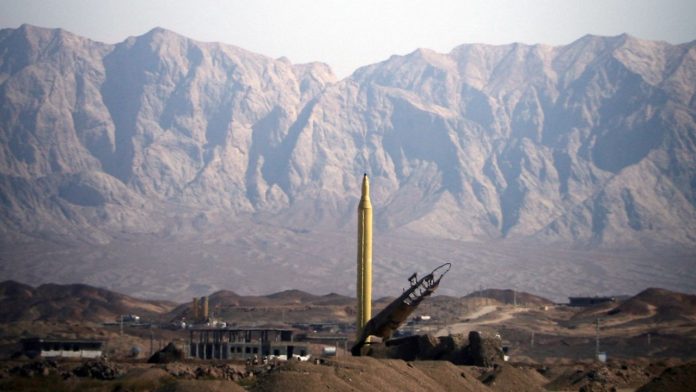
Iran says underground missile, nuclear infrastructure remains intact after US-Israeli strikes

Iran Missile

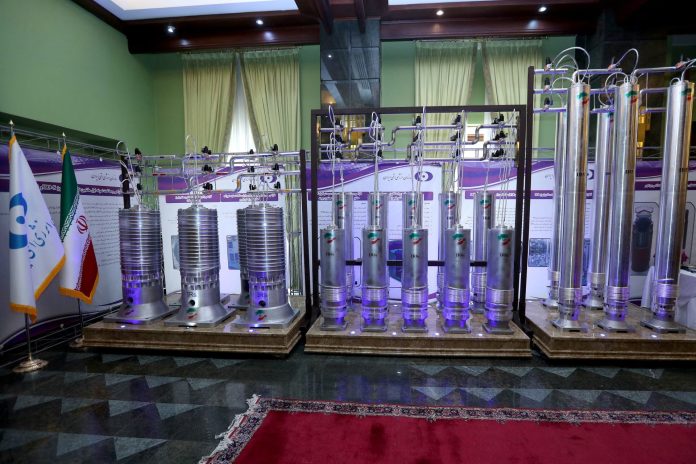
Brigadier General Gholamreza Jalali, head of Iran’s Passive Defense Organization, stated on Saturday that “almost all of Iran’s underground and mountain-based missile infrastructure remains intact,” noting that only minor surface-level damage occurred at some entrances.
He said these could be repaired without affecting operational readiness.

According to General Jalali, Iran has spent the past 20 years developing deeply buried missile bases and secure storage sites under mountains, based on “persistent threat assessments and priority given to aerospace and missile systems.”

He credited the late General Amir Ali Hajizadeh, former IRGC aerospace commander, for overseeing major advancements, including the simultaneous launch of multiple missiles from underground silos.

General Jalali also said Iran adopted similar fortification measures for its nuclear facilities, particularly Fordow and Isfahan, after evaluating threats such as US bunker-buster bombs.

He suggested that claims of extensive US destruction during the strikes in June were inaccurate but added that some details remain classified.

On cyber defense, General Jalali stated that while his organization provides planning and oversight, operational responsibility lies with individual agencies.
He noted previous vulnerabilities in banking software and said fuel station networks have since been redesigned to prevent nationwide disruptions.

General Jalali also raised concerns over foreign digital platforms and surveillance risks, saying data transmitted through external servers can be monitored and analyzed by adversaries.

He provided examples of security vulnerabilities found in imported surveillance cameras and stressed the need for national control over digital infrastructure.

Regarding civilian preparedness, General Jalali confirmed that Tehran has underground spaces, including metro stations, that could serve as public shelters, though upgrades in sanitation and security systems are still needed.

He said authorities refrained from publicly announcing shelter plans to avoid causing public anxiety.

Syrian president arrives in US for landmark visit

Sharaa, whose rebel forces ousted longtime ruler Bashar al-Assad late last year, is due to meet US President Donald Trump at the White House on Monday.

It’s the first such visit by a Syrian president since the country’s independence in 1946, according to analysts.

The interim leader met Trump for the first time in Riyadh during the US president’s regional tour in May.

US envoy to Syria Tom Barrack stated earlier this month that Sharaa would “hopefully” sign an agreement to join the international US-led alliance against the Islamic State (IS) group.

The United States plans to establish a military base near Damascus “to coordinate humanitarian aid and observe developments between Syria and Israel”, a diplomatic source in Syria told AFP.

The State Department’s decision Friday to remove Sharaa from the blacklist was widely expected.

State Department spokesman Tommy Pigott said Sharaa’s government had been meeting US demands including on working to find missing Americans and on eliminating any remaining chemical weapons.

“These actions are being taken in recognition of the progress demonstrated by the Syrian leadership after the departure of Bashar al-Assad and more than 50 years of repression under the Assad regime,” Pigott continued.

The spokesman added that the US delisting would promote “regional security and stability as well as an inclusive, Syrian-led and Syrian-owned political process.”

After his arrival in the United States, Sharaa shared a video on social media of him playing basketball with CENTCOM commander Brad Cooper and Kevin Lambert, the head of the international anti-IS operation in Iraq, alongside the caption “work hard, play harder”.

Sharaa’s Washington trip comes after his landmark visit to the United Nations in September — his first time on US soil — where the ex-jihadist became the first Syrian president in decades to address the UN General Assembly in New York.

On Thursday, Washington led a vote by the Security Council to remove UN sanctions against him.

Formerly affiliated with Al-Qaeda, Sharaa’s group, Hayat Tahrir al-Sham (HTS), was delisted as a terrorist group by Washington as recently as July.

Since taking power, Syria’s new leaders have sought to break from their violent past and present a moderate image more tolerable to ordinary Syrians and foreign powers.

Sharaa is expected to seek funds for Syria, which faces significant challenges in rebuilding after 13 years of war.

In October, the World Bank put a “conservative best estimate” of the cost of rebuilding Syria at $216 billion.


EU economies will suffer without tapping Russia’s funds: Brussels

The paper was circulated to EU capitals following last month’s failure to reach consensus on the so-called “reparations loan” of around €140 billion ($160 billion), the FT reported on Friday.

Without tapping Moscow’s immobilized central bank reserves, the EU would need to either authorize joint borrowing or issue direct grants – both of which would “directly affect” national budgets and increase public debt, the Commission warned. It remains unclear whether the option of not bankrolling Kiev was even considered.

The potential cost to EU economies is substantial, as servicing a collective loan of that size could result in up to €5.6 billion in annual interest payments. The Commission cautioned that borrowing at such a scale could also raise general EU borrowing costs and undermine other financial instruments.

Kiev expects its Western backers to cover a nearly $50 billion deficit next year, with its 2026 draft budget projecting some $114 billion in spending and only $68 billion in revenue – nearly all of which is earmarked for military purposes. Most non-military government expenses, including salaries, pensions, healthcare, and education, will rely entirely on foreign aid.

Belgium continues to oppose the use of Russian assets as loan collateral, citing serious financial and reputational risks. The frozen funds, totaling around $300 billion globally, with roughly $200 billion held at Belgium’s Euroclear, are technically not confiscated and could be reclaimed by Moscow if EU sanctions are not continually renewed. The EU has already stretched legal definitions by classifying the interest generated on these frozen funds as windfall profits not belonging to Moscow, and using them to arm Kiev.

The new plan hinges on the assumption that Moscow will eventually repay the loan as part of a future peace settlement – an outcome Belgian Prime Minister Bart De Wever has described as improbable. On Friday, EU Commission officials once again failed to convince Belgium to back the asset seizure.

Moscow has repeatedly said it would regard any use of its frozen assets as theft, and could retaliate by seizing €200 billion ($172 billion) in Western assets held in Russia by foreign governments and companies.


Gaza death toll surges past 69,000

Gaza War

The latest killings on Saturday came as Hamas also announced retrieving the remains of an Israeli soldier from a tunnel near Rafah in southern Gaza.

The Ministry of Health in the coastal enclave announced that the total number of people killed in Gaza since October 7, 2023, had risen to 69,169, after more of the dead were identified and more bodies were recovered from the rubble.

It also added that Israeli soldiers have killed more than 240 Palestinians since the ceasefire accord came into effect on October 10.

Despite some progress in delivering food to Palestinians in the besieged territory – ravaged by Israeli bombardment and racked by hunger – remains in urgent need of humanitarian assistance, the United Nations has said.

The UN and its partners have been able to get 37,000 metric tonnes of aid, mostly food, into Gaza since the October 10 ceasefire, but much more is needed, UN Spokesperson Farhan Haq told reporters on Friday.

“Despite significant progress on the humanitarian scale-up, people’s urgent needs are still immense, with impediments not being lifted quickly enough since the ceasefire,” Haq noted, citing reports from the UN’s humanitarian service, OCHA.

Haq was critical that entry of humanitarian supplies into Gaza continues to be limited to only two crossings – the Al-Karara (also known as Kissufim) and Karem Abu Salem (Kerem Shalom) crossings.

There is no direct access to Northern Gaza from the occupied territories or to Southern Gaza from Egypt, while NGO staff are being denied access, he continued.

Earlier this week, the UN stressed it had distributed food parcels to one million people in Gaza since the ceasefire, but warned it was still in a race to save lives.

The UN’s World Food Programme stressed all crossing points into the Gaza Strip should be opened to flood the famine-hit territory with aid, adding that no reason was given for why the Northern crossings with Israel remained closed.

Palestinians across Gaza continue to face shortages of food, water, medicine and other critical supplies as a result of Israeli restrictions.

Many families also lack adequate shelter as their homes and neighbourhoods have been completely destroyed in Israel’s two-year military bombardment.


Israeli attacks kill 3 in Lebanon

Two brothers have been killed in an Israeli air raid on a vehicle between the southeastern Lebanese towns of Ain Ata and Shebaa.

In a separate attack on Saturday, an Israeli drone struck a car near Salah Ghandour Hospital in the southern town of Bint Jbeil, injuring seven people, Lebanon’s Ministry of Health Affairs reported. Two missiles struck the vehicle in the densely populated area.

Another Israeli drone attack, the third strike of the day, later hit a car in the Baraachit area, NNA reported. A photo shared by the agency showed smoke rising over blazing wreckage on a road following the attack, which the ministry says killed one and injured four, according to NNA.

Israel’s military claimed the attacks were aimed at Hezbollah targets, without providing evidence.

Despite the November 2024 truce, Israel has continued near-daily attacks on its northern neighbour while maintaining forces in areas around the south.

Hezbollah maintains that it remains committed to the truce but insists it will not disarm while Israel occupies Lebanese territory and continues its attacks.

The European Union condemned recent Israeli strikes in a strong statement on Saturday and called for immediate adherence to the ceasefire.

“The EU calls on Israel to cease all actions that violate resolution 1701 and the ceasefire agreement reached a year ago in November 2024,” EU foreign affairs spokesman Anouar El Anouni stated.

He urged Hezbollah and other Lebanese groups to “refrain from any measures or responses that could further inflame the situation”.

The Lebanese army accused Israel of trying to “undermine Lebanon’s stability” and obstruct the full deployment of Lebanese forces in accordance with the ceasefire.

Lebanese President Joseph Aoun condemned the recent spate of attacks, describing them as a “flagrant breach” of international law, while Iran denounced them as “savage” and urged the global community to intervene.

On Thursday, at least one person was killed and nine injured in a series of Israeli attacks across southern Lebanon.

The United Nations peacekeeping force in Lebanon, known as UNIFIL, announced that Israel’s attacks threaten civilians and undermine efforts by the Lebanese military to assert control over “unauthorised weapons and infrastructure” in southern Lebanon, a likely reference to Hezbollah.

Israeli Prime Minister Benjamin Netanyahu, wanted by the International Criminal Court (ICC) for war crimes and crimes against humanity in Gaza, warned last week that Israel could intensify operations in Lebanon.

Defence Minister Israel Katz echoed the threat, saying, “Maximum enforcement will continue and even intensify – we will not allow any threat to the residents of the north.”

Aoun has condemned Israel for ramping up its attacks after he signalled willingness to discuss de-escalation. The Lebanese government, under heavy pressure from the United States, has ordered the army to draft a plan to disarm Hezbollah – a move the group condemned as “hasty” and dangerous.

Last week, Aoun instructed the armed forces to confront any further Israeli incursion in the country’s south after Israeli forces crossed their shared border and killed a municipal worker during an overnight raid.

Since the ceasefire, Israel has maintained troops in five areas in southern Lebanon and carried out regular attacks, which it claims target Hezbollah positions.

The situation remains volatile nearly a year after Israel assassinated Hezbollah’s longtime leader Hassan Nasrallah in September 2024, decimating much of the group’s senior leadership.

Under the ceasefire terms, Lebanon’s army is tasked with disarming Hezbollah in the south by the end of the year before expanding operations nationwide. Hezbollah insists Israel is exploiting this process to tighten its grip on Lebanese territory and refuses to disarm as long as Israel continues its attacks and occupation of Lebanese territory.


Ukraine hits desertion record amid war with Russia: BBC

Russia Ukraine War

This was the largest single monthly number of desertion reports in the past four years of the Ukraine conflict, the broadcaster said, citing the latest data from the Prosecutor General’s Office.

According to former Ukrainian MP Igor Lutsenko, who now serves in the military, the actual number could be even higher.

On Facebook on Friday, he wrote “21,602 in October… This is a record. This is a very bad record,” adding, “This is just official data. In reality, many AWOL or desertion cases are not registered.”

Ukrainian forces on the front lines are under “enormous strain, because a double, triple load falls on every soldier who hasn’t fled,” Lutsenko continued.

“We have huge holes in our defense at the front because of this.”

Kiev has ramped up its forced draft campaign in recent months to compensate for its army’s thinning ranks, as Russian forces have pushed their advance.

There have been twice as many complaints about forced conscription since early June as there were during the first five months of the year, Ukrainian parliamentary human rights commissioner Dmitry Lubinets told Ukrainskaya Pravda on Wednesday.

Emerging eyewitness videos have regularly shown Ukrainian press gangs ambushing and chasing military-age men on the streets and wrestling them into vans, often brawling with the would-be conscripts and bystanders. The practice, now colloquially known as ‘busification,’ has sparked growing discontent across Ukraine.

Last month, Nikita Poturaev, the head of the Ukrainian parliamentary Committee on Humanitarian and Information Policy, claimed that such videos were either fake or made using AI.

Earlier in October, Ukrainian conscription authorities urged citizens to stop filming and sharing videos of press gangs violently detaining prospective recruits.


Germany says NATO to deploy 800,000 troops in case of war with Russia

NATO

The hypothetical deployment is part of Operations Plan Germany, which was revealed last year. The 1,000-page-long document governs Berlin’s response if Article 5 of the NATO treaty is triggered in a confrontation with Moscow. It includes turning Germany into a major logistics hub for the deployment of hundreds of thousands of soldiers and pieces of equipment from various NATO nations against Russia. The deployment must be completed within 180 days of the start of the conflict.

According to Sollfrank, the plan may be implemented sooner rather than later.

“Russia possesses a very large military potential despite the war in Ukraine,” he told an annual Bundeswehr conference in Berlin on Friday, adding that “Russia is already capable of [launching] a limited attack on the NATO territory.”

Speaking to Reuters the same day, the general claimed that Moscow could do it “as early as tomorrow.”

German officials have increasingly spoken of the alleged Russian threat while taking an increasingly belligerent stance towards Moscow.

Chancellor Friedrich Merz has previously declared that diplomatic options for resolving the Ukraine conflict are “exhausted” and doubled down on providing weapons to Kiev.

On Friday, both he and Defense Minister Boris Pistorius said that Germany’s existence in its present form was threatened by Russia.

“It is not alarmism… when I say that our way of life is in danger,” Pistorius told the military conference.

Moscow has repeatedly stated it has no intention of attacking NATO. It also dismissed Berlin’s claims as “nonsense” aimed at justifying skyrocketing military spending. Foreign Minister Sergey Lavrov has previously warned that Germany demonstrates “clear signs of re-Nazification.”

Politico reported last month that Germany’s rearmament plans would cost it €377 billion ($440 billion).

Israeli settler attacks hit highest monthly toll in nearly 2 decades: UN

Citing the Office for the Coordination of Humanitarian Affairs (OCHA), UN spokesperson Farhan Haq reported “a sharp rise in settler violence against Palestinians, both in frequency and severity,” during a news conference, adding: “Last month, OCHA recorded 264 settler attacks that caused casualties, property damage or both.”

He noted: “That’s the highest monthly toll in nearly two decades of record keeping, averaging more than eight incidents every single day since 2006.”

According to OCHA, more than 9,600 such attacks have been documented, with about 1,500 occurring this year alone — roughly 15% of the total, he said.

Emphasizing the “severe” impact on the humanitarian situation since October 2023, Haq stated: “More than 3,200 Palestinians have been displaced due to settler violence and related access restrictions. Entire herding communities have been completely depopulated. People have been killed, hundreds injured, including with live fire, and many more have lost access to their livelihoods.”

Haq also cited OCHA data showing that “the number of Palestinian children killed by Israeli forces in the West Bank so far this year has reached 42,” meaning “one in every five Palestinians killed by Israeli forces in the West Bank in 2025 has been a child.”

Israeli attacks have escalated across the occupied West Bank since October 2023, killing more than 1,066 Palestinians and injuring 10,300 others, according to Palestinian figures.

According to the official Colonization and Wall Resistance Commission, Israeli forces and illegal settlers carried out 766 attacks against Palestinians, their homes, property, and sources of livelihood across the West Bank in October alone.

In a landmark opinion last July, the International Court of Justice declared Israel’s occupation of Palestinian territory illegal and called for the evacuation of all settlements in the West Bank and East Jerusalem.

Israeli military lawyers doubted legality of Gaza onslaught: Reuters

Gaza War

Israel launched its military campaign in response to the Hamas-led raid on October 7, 2023, which killed around 1,200 people. The retaliatory strikes and ground operations have since killed nearly 69,000 Palestinians, according to Gaza’s health authorities.

A UN commission has accused Israel of committing acts amounting to genocide, as Tel Aviv is the subject of two international proceedings – one before the International Court of Justice (ICJ) and another at the International Criminal Court (ICC).

According to the Reuters report, even the Israeli military itself had doubts “about the legality of its tactics that contrasted sharply with Israel’s public stance defending its actions.”

Former officials from then-President Joe Biden’s administration, who spoke on condition of anonymity, described the material gathered and circulated by US intelligence ahead of a congressional briefing in December 2024 as among the “most startling shared with top US policymakers during the war.”

“There were concerns Israel was intentionally targeting civilians and humanitarian workers,” Reuters reported, without specifying which incidents had prompted the alarm.

US officials were also worried that the rising civilian death toll “might breach international legal standards on acceptable collateral damage,” the publication added.

Washington publicly defended Israel throughout the war, even after the Biden administration acknowledged in a May 2024 report that it had “reasonable concerns” Israel may have violated international humanitarian law. A formal determination that Israel had committed war crimes would have required the US to halt arms transfers and suspend intelligence cooperation.

Under President Donald Trump, Washington has launched a pressure campaign against the ICC. The Intercept recently described a broader US-backed effort to suppress documentation of alleged Israeli war crimes, noting that hundreds of related videos had been removed from YouTube.

Last month, the Israel Defense Force’s top legal officer, Maj. Gen. Yifat Tomer-Yerushalmi, admitted she had leaked footage showing soldiers abusing a Palestinian detainee and resigned amid pressure to halt the investigation into the incident.