Thursday, January 1, 2026
Home Blog Page 658

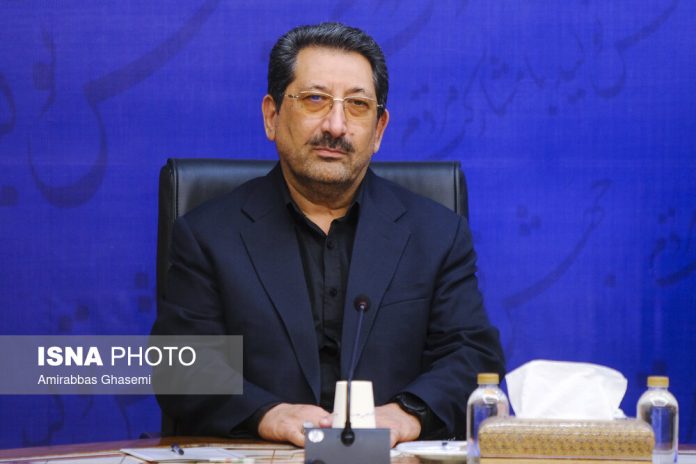
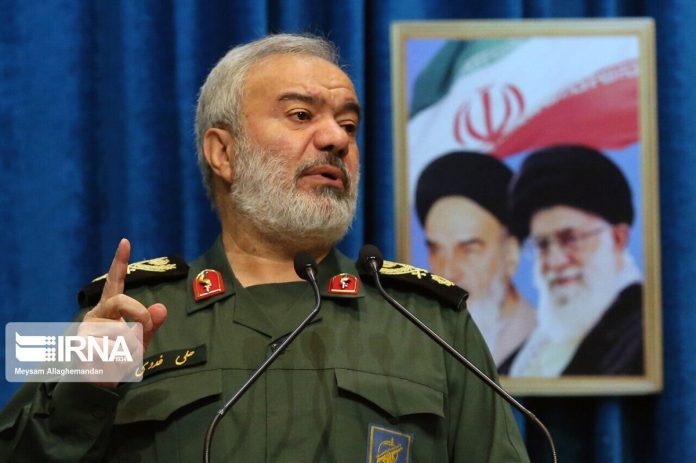
IRGC deputy commander vows strong response to Israel

Rear Admiral Ali Fadavi

Speaking at a ceremony in Qom commemorating the martyrdom of Hezbollah resistance movement’s leader Sayyed Hassan Nasrallah and other Resistance Front commanders on Wednesday evening, General Fadavi emphasized that the Islamic Republic has consistently retaliated against all acts of hostility over its 45-year history.

Dismissing speculations that Iran might have forgone a planned retaliatory operation against Israel, Fadavi stated, “The Islamic Revolution has never left any act of malice unanswered, and we will undoubtedly give Israel a regretful response.”

The senior commander urged individuals from all backgrounds to fulfill their roles in supporting the resistance front “based on their position and abilities.”

He pointed out that the belligerent parties, especially the US, have waged a war against Iran since the Islamic Republic’s inception in 1979 but have never achieved victory.

“Even the Americans, who have led these actions against us, acknowledge that they have not won a single victory,” he remarked.

Fadavi reaffirmed Iran’s unwavering support for Hezbollah and the resistance front, promising even stronger and quicker backing than before.

For the first time since the history of the Israeli regime, Iran has directly targeted positions inside the occupied territories in two operations dubbed True Promise I and II during the past months, and has promised a third retaloatory one.

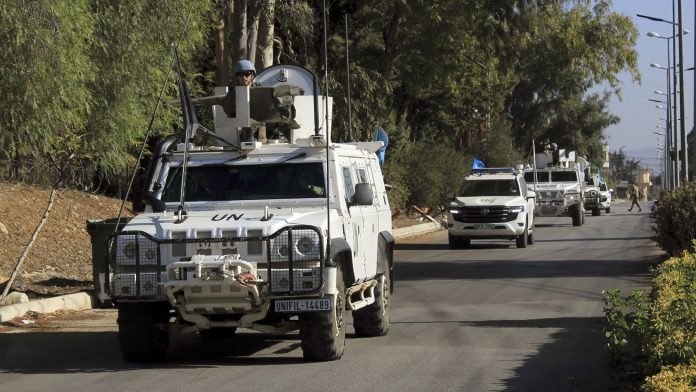
UN Security Council condemns Israeli attacks on UNIFIL

UNIFIL

In a statement, the Council condemned the attacks on October 29, November 7 and November 8, which wounded several Blue Helmets.

“They urged all parties to take all measures to respect the safety and security of UNIFIL personnel and premises,” the Council announced.

The Security Council “recalled that peacekeepers must never be the target of an attack” and offered its “full support” to UNIFIL.

The Council members also “expressed their deep concern for civilian casualties and sufferings” in the conflict in general, as well as “the destruction of civilian infrastructure” and “damage to cultural heritage sites in Lebanon”.

It specifically expressed worry about the “endangerment of the UNESCO world heritage sites, and the rising number of internally displaced people”.

Israel launched a ground invasion of Lebanon on 1 October. Since then, the occupation forces have repeatedly fired on positions held by UNIFIL, an international body of over 10,000 civilian and military personnel from 50 countries.

Last week, UNIFIL announced that the Israeli military’s “deliberate and direct destruction” of its property is a flagrant violation of international law.

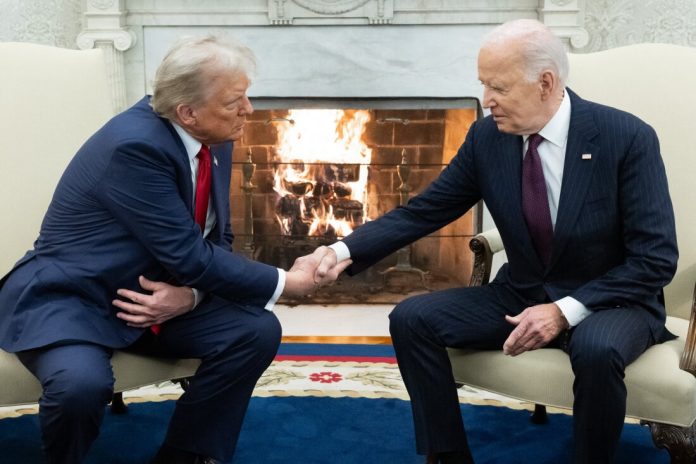
Trump, Biden discuss Ukraine, Middle East in White House

Trump Biden

“I asked for his views and he gave them to me,” Trump said in an interview with the New York Post.

“Also, we talked very much about the Middle East, likewise. I wanted to know his views on where we are and what … he thinks. And he gave them to me, he was very gracious.”

Trump also told the Post he and Biden “both really enjoyed seeing each other”.

“You know, it’s been a long, it’s been a long slog,” the president-elect continued, adding, “It’s been a lot of work on both sides, and he did a very good job with respect to campaigning and everything else. We really had a really good meeting.”

“We got to know each other again,” he noted.

The former president stated they discussed the transition and said his team and Biden’s team have a “very, very good relationship.”

The White House also announced the two leaders talked about foreign policy, as well as domestic issues.

Press secretary Karine Jean-Pierre said earlier Wednesday that Trump “came with a detailed set of questions”.

Biden answered his successor’s questions and “offered up his thoughts,” she added.

National security adviser Jake Sullivan also told reporters Biden reinforced in the meeting his view that it’s in the US national security interest not to walk away from Ukraine so “we don’t end up getting dragged directly into a war”.

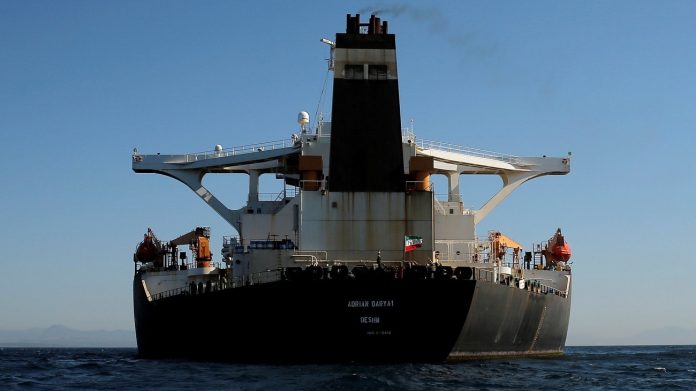
Iran’s oil output drops slightly in October: Report

Iran Oil Tanker

OPEC figures cited in a Wednesday report by the Fars news agency showed that Iran had produced 3.259 million barrels per day (bpd) of oil in October, down 68,000 bpd from figures reported in September.

Despite the drop in output, Iran remained the third largest OPEC producer in October, the data showed.

Saudi Arabia topped the ranking with 8.968 million bpd, up 4,000 bpd from the previous month, and was followed by Iraq at 4.068 million bpd which reduced its output by 66,000 bpd compared to September, showed the figures.

Iran has steadily increased its oil production this year. The country returned to its position as the third largest producer in OPEC in August after reports showed it had ramped up its exports to private refiners in China despite a regime of US sanctions that impose major penalties on buyers.

Iran, along with Libya and Venezuela, are exempt from a series of cuts agreed by OPEC members to stabilize global oil prices.

The drop in Iran’s October oil output can be attributed to reports suggesting the country launched repair works in oil export facilities in Kharg, an Island in the Persian Gulf which hosts the country’s largest oil export terminal.

OPEC figures showed Iran’s average quarterly output had hit 3.306 million bpd in July-September, up from 3.238 million bpd in the previous quarter.

OPEC’s October output increased by 0.466 million bpd compared to September to reach 26.535 million bpd mainly thanks to a major increase in production in Libya.

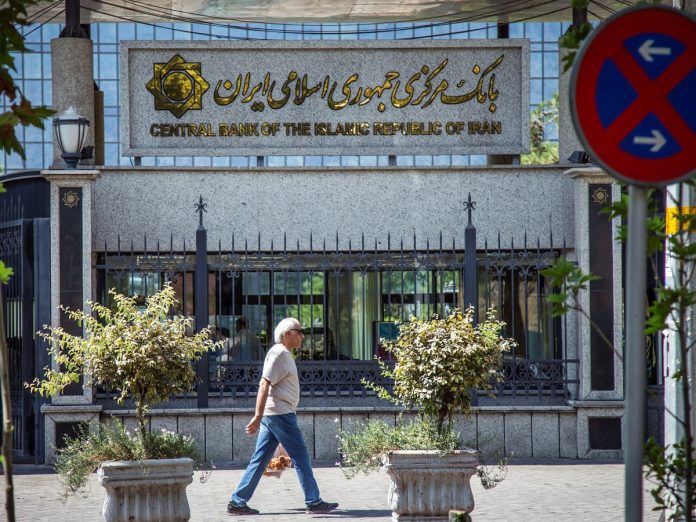
Lebanon bombing victims’ Iran judgment overturned by US appeals court

Iran Central Bank

The 2nd US Circuit Court of Appeals in Manhattan said a lower court judge should have addressed questions of state law before ruling against Bank Markazi and Luxembourg intermediary Clearstream Banking, a unit of Deutsche Boerse.

In a 3-0 decision, the panel also rejected a claim that a 2019 federal law designed to make it easier to seize Iranian assets held outside the United States waived Bank Markazi’s sovereign immunity.

That law “neither abrogates Bank Markazi’s jurisdictional immunity nor provides an independent grant of subject matter jurisdiction”, Circuit Judge Robert Sack wrote.

The court returned the case to US District Loretta Preska in Manhattan to address state law questions in the 11-year-old case, and whether the case can proceed at all in Bank Markazi’s absence.

Bombing victims sought to hold Iran liable for providing material support for the Oct. 23, 1983, suicide attack that killed 241 US service members, by seizing bond proceeds held by Clearstream in a blocked account on Bank Markazi’s behalf.

Bank Markazi claimed immunity under the Foreign Sovereign Immunities Act, which generally shields foreign governments from liability in US courts.

In the Bank Markazi case, the plaintiffs sued in 2013 to partially satisfy a $2.65 billion default judgment they had won against Iran in 2007.

Another judge dismissed the case in 2015, but the 2nd Circuit revived it in 2017.

Then in 2020, the US Supreme Court ordered a fresh review in light of the 2019 law, which then-President Donald Trump signed as part of the National Defense Authorization Act.

The plaintiffs have announced they hold more than $4 billion of judgments against Iran and have been unable to collect for decades.

Iran minister slightly injured in road accident

Mohammad Atabak

The accident occurred at around 5 a.m. local time, while Mohammad Atabak was en route from Karaj to the western province of Kordestan.

He was immediately transferred to a hospital in Karaj for treatment.

According to reports, the minister sustained minor injuries and is expected to make a full recovery soon.

IRNA news agency quoted an official with the ministry as confirming that no serious injuries occurred to the minister or his companions.

The director of the internal affairs of Aaram Hospital in Karaj stated that the minister suffered a minor surface injury and is in good health condition.

Atabak’s visit to Kordestan included plans to inspect several industrial and construction projects in the cities of Qorveh and Bijar, as well as meetings with businessmen.

Despite the accident, the minister’s advisors and experts remain in Kordestan to ensure that scheduled visits and plans proceed as intended.

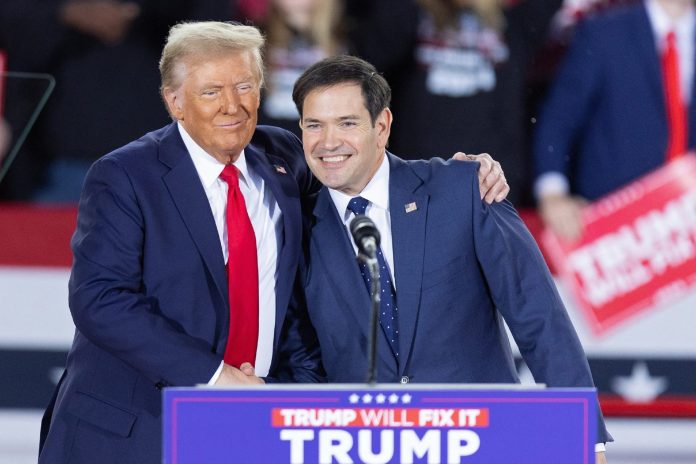
Trump taps Iran hawk Marco Rubio for secretary of state

Trump Rubio

Trump in a statement praised Rubio as a “Highly Respected Leader, and a very powerful Voice for Freedom”.

“He will be a strong Advocate for our Nation, a true friend to our Allies, and a fearless Warrior who will never back down to our adversaries,” he added.

Rubio’s selection to serve in Trump’s Cabinet completes a drastic turnaround from 2016, when the two were fierce rivals in a GOP presidential primary and exchanged personal insults.

Earlier this year, Trump nearly chose Rubio as his running mate before selecting Sen. JD Vance (R-Ohio).

The Florida senator is seen as a foreign policy hawk who is tough on China and Iran. In a September interview with NBC, Rubio stated it was apparent the war between Ukraine and Russia would end “with a negotiated settlement”.

Trump has vowed to quickly restore his “America First” foreign policy vision upon taking office. He has expressed skepticism about continued US support for Ukraine in its war against Russia and called for European allies to do more to aid Kyiv and to support their own defense through the NATO alliance.

Lawmakers on both sides of the aisle have given the Rubio choice a warm reception since it was first reported late Monday.

In a statement following the nomination announcement, Rubio said he is honored by the trust Trump has placed in him and will work every day “to carry out his foreign policy agenda”.

“I look forward to earning the support of my colleagues in the US Senate so the President has his national security and foreign policy team in place when he takes office on January 20,” he added.

The Florida senator spoke to reporters on Capitol Hill minutes before his nomination was announced, and offered thoughts on some of Trump’s proposals, voicing opposition to the strategy of recess appointments, something Trump has pushed for commitment from senators as a way around the confirmation process for his administration’s posts.

“Ideally you’d have a nominations process where people are getting voted on and people can vote any way they want,” he continued, noting, “Recess appointment is something that you would use as a last resort, if you have these really important positions and people are just being unreasonable in their obstruction in terms of time.”

Rubio stated he has concerns about the national security risks of the app TikTok but said Trump holds the power on whether to reverse a ban that was passed into law.

“I still have concerns about the app and the vulnerability it poses, but ultimately I’m not the president of the United States,” he added.

When asked about Ukraine, Rubio deferred to Trump, saying “he wants the war to end,” and it’s “the president’s job to figure his way through it. I’m not going to discuss his strategies or the decisions he makes in that regard”.

“I think he’s made it pretty clear that that’s a war that needs to end. It’s become a stalemate and it’s setting Ukraine back a century,” Rubio added.

Rubio would not commit to more Ukraine funding ahead of the transition.

“Let’s wait until the new administration’s in place before we can figure that… We, still have to fund government next month.”

Trump also announced Wednesday that former Hawaii Rep. Tulsi Gabbard would serve as his director of national intelligence

Trump has rapidly rolled out his national security team after winning last week’s election. He has chosen Rep. Elise Stefanik (R-N.Y.) as his ambassador to the United Nations and tapped Rep. Mike Waltz (R-Fla.) to serve as his national security adviser. Trump also tapped Fox News host and veteran Pete Hegseth as his nominee to lead the Pentagon.

US charges CIA official with leaking document on Israeli attack on Iran

CIA

The man, Asif William Rahman, was indicted in the US District Court in Eastern Virginia by the Department of Justice on Nov. 7, on two counts of the willful retention and transmission of national defense information.

The case was filed Wednesday in the US District Court in Guam after Rahman was arrested by the FBI in Cambodia and brought to the American territory.

Rahman had access to top secret information in his role at the CIA. The indictment does not identify his role in the government or what documents he leaked.

The pair of leaked documents from the National Geospatial-Intelligence Agency and the National Security Agency circulated online late last month, just days before Israel struck sensitive military sites in Iran.

The documents showed the types of aircraft or weapons Israel might use in a possible attack on Iran and revealed the movement of munitions. They also tracked Israeli exercises in preparation for an attack.

The arrest comes just a day after Pentagon leaker Jack Teixeira was sentenced to 15 years in prison for leaking classified documents in 2023 about the war in Ukraine and US thinking about allies and other nations.

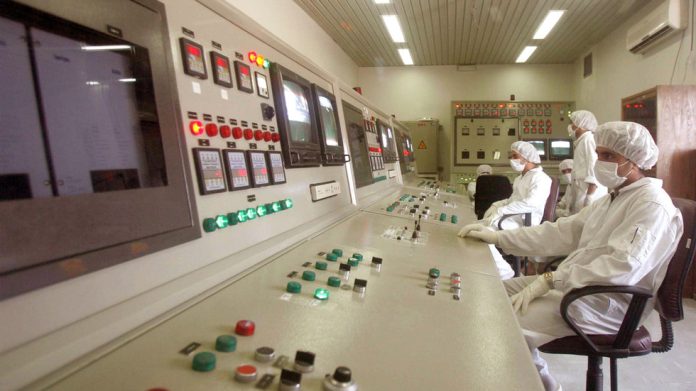
UK, France, Germany pushing for anti-Iran resolution at IAEA: Report

Iran nuclear program

The resolution would task the IAEA with issuing a so-called “comprehensive report” on Iran’s nuclear activities in addition to its regular quarterly ones, which would describe in more detail and put further focus on uranium traces allegedly found at undeclared sites.

Reuters claims that the aim is to force Iran back to the negotiating table to agree new restrictions on its nuclear activities in exchange for sanctions relief – both less far-reaching than those in a 2015 nuclear deal with major powers that Donald Trump pulled the United States out of in 2018, prompting its collapse.

“Our concerns about Iranian nuclear activity are well known. It feels a natural point to be asking the IAEA for a thorough report. That then provides a basis to deal with Iranian behavior,” a European diplomat was quoted as saying.

The United States has not been the driving force behind the resolution but is still expected to back it, as happened with the last resolution against Iran in June, diplomats said, adding that European powers are discussing the draft with the outgoing US administration.

The news agency wrote that such a resolution carries the risk of escalating diplomatic tensions as Grossi is in Tehran to hold talks in continuation of a joint statement issued in March with the aim of resolving all remaining issues.

Three European countries- Britain, France and Germany- known as Troika or E3, had issued a statement and reiterated their claims and accusations regarding Iran’s peaceful nuclear program in the IAEA board meeting in Vienna in June.

Without mentioning which country is to blame for failing to implement the 2015 nuclear agreement or the Joint Comprehensive Plan of Action (JCPOA), the statement pointed to Iran’s compensatory measures, saying it had continued to enrich uranium far beyond its commitments.

The statement then demanded the IAEA chief continuously inform the Board of Governors on the status of Iran’s nuclear program and make the agency’s report public.

The call was unusual since the IAEA in every three months, that is, on the eve of the quarterly meetings of the 35-member Board of Governors, publishes two reports on Iran’s nuclear activities under the titles “NPT Safeguards Agreement with the Islamic Republic of Iran” and “Monitoring and Verification in the Islamic Republic of Iran in light of UN Security Council Resolution 2231 (2015)”.

The IAEA in it’s over a dozen reports has already verified Iran’s compliance with the 2015 agreement, but non-adherence of the JCPOA by Britain, France, and Germany, along with the United States prompted Tehran to gradually scale down its commitments by invoking mechanisms enshrined in the clauses of the accord.

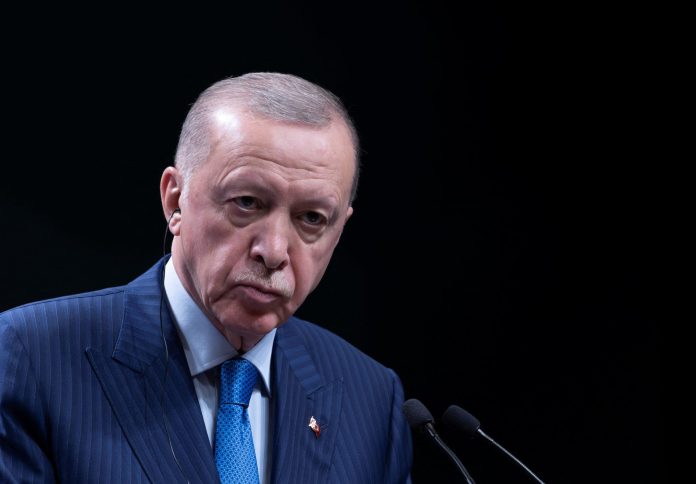
Erdogan says Turkey severed all relations with Israel

Erdogan

Erdogan made the comments to journalists aboard his plane following visits to Saudi Arabia and Azerbaijan.

“The government of the Republic of Turkey, under the leadership of Tayyip Erdogan, will not continue or develop relations with Israel,” Erdogan said.

“[Our ruling coalition] is resolute in its decision to cut ties with Israel, and we will maintain this stance in the future as well.”

“We, as the Republic of Turkey and its government, have currently severed all relations with Israel,” he added.

Despite imposing a trade embargo on Israel in May, Ankara continues to maintain diplomatic relations with Tel Aviv.

Although the Turkish government formally recalled its ambassador last year for consultations, Turkish diplomatic missions in Tel Aviv remain open and operational.

Similarly, Israel evacuated its embassy in Ankara last year, citing regional security threats.

Erdogan also emphasised on Wednesday that Turkey would do everything in its power to hold Israeli Prime Minister Benjamin Netanyahu accountable for his actions in Gaza, which international human rights groups have described as genocide.

Earlier this year, Turkey intervened in a genocide case against Israel at the International Court of Justice (ICJ) in support of Palestine and advocated for an arms embargo against Tel Aviv.

Erdogan said 52 countries and two international organisations had expressed their support for the arms embargo initiative Turkey launched at the United Nations in early November, aimed at preventing the shipment of weapons and ammunition to Israel.

“We recently submitted our formal letter regarding this initiative to the president of the United Nations Security Council and the secretary-general of the United Nations,” Erdogan added.

“During our summit in Riyadh, a decision was made to invite all organisations and members of the Arab League to sign this letter.”

Turkish-Israeli relations have deteriorated sharply since a meeting between Erdogan and Netanyahu in New York in September of last year, which was intended to symbolise reconciliation between the two nations.

However, following the Hamas-led attack on Israel on 7 October 2023 and Israel’s subsequent war on Gaza, which has killed more than 43,000 Palestinians, Ankara has intensified its criticism of the Netanyahu government.

This led to a series of actions, including legal measures and trade sanctions, especially after the local elections in Turkey where Erdogan’s ruling Justice and Development Party (AKP) was punished in part over its weak response to the war on Gaza.

Since September, ongoing Turkish trade with Israel through third countries and Palestine has sparked a public pressure campaign by the opposition, who accused Erdogan of failing to close loopholes that facilitate continued interaction.