Thursday, December 25, 2025
Home Blog Page 649

Trump chooses Iran hawk as UN ambassador

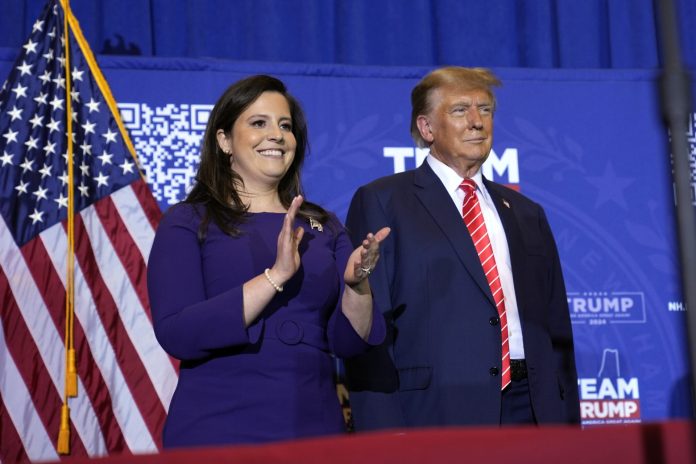
Elise Stefanik and Donald Trump

“I am honored to nominate Chairwoman Elise Stefanik to serve in my Cabinet as US Ambassador to the United Nations. Elise is an incredibly strong, tough, and smart America First fighter,” Trump said in a statement to the media on Monday.

If confirmed by the Senate, Stefanik, a congresswoman from New York, would replace career diplomat Linda Thomas-Greenfield, who has been representing the US at the UN since 2021.

In a post on X on Sunday, Stefanik wrote that the US was “ready for a return to President Trump’s MAXIMUM PRESSURE campaign against Iran”.

She argued that Tehran has been “emboldened by the weakness of the Biden-Harris Administration”.

During Trump’s first term, Washington scrapped the 2015 Iran nuclear deal and ramped up sanctions against Tehran. In January 2020, Iran’s senior commander, Qassem Soleimani, was killed in a US drone strike near Baghdad airport.

Stefanik has been one of the strongest supporters of Israel during its war against the Gaza Strip, and air attacks against Hezbollah in Lebanon. She backed the Israeli decision to ban the UN Relief and Works Agency for Palestine (UNRWA).

“The Biden-Harris Administration has sent over $1 billion to UNRWA since 2021, filling the coffers of this terrorist front. This must end,” Stefanik said earlier this month.

She also repeatedly drew attention to instances of antisemitism during pro-Palestinian protests on college campuses across the US.

Israel’s envoy to the UN, Danny Danon, welcomed Stefanik’s nomination, praising her “unwavering moral clarity”.

Outgoing President Joe Biden and Vice President Kamala Harris have been criticized by Arab American and Muslim American groups for not suspending military aid to Israel and not doing enough to bring about a ceasefire in the besieged enclave.

Iran, Russia payment networks connected

MIR payment system

Addressing this ceremony, Central Bank of Iran Governor Mohammad-Reza Farzin mentioned integration of the two countries’ banking subsystems as a big step towards creating integrated economic cooperation in the region, completing the de-dollarization process and facilitating economic and tourism relations between Iran and Russia.

By connecting the national payment networks of the two countries, the borders of electronic payments will be removed and a new chapter will begin in the economic and cultural cooperation of the two nations, the official emphasized.

He said: “The project that we are witnessing its inauguration today, started with the aim of creating integration in the payment networks and facilitating financial transactions between the citizens of the two countries.”

Emphasizing that this project is divided into three phases and in each phase, an important step is taken towards the realization of the final goal, the CBI governor added: “The first phase of this project, which was put into operation at the end of September and will be unveiled today, provides the possibility of using bank cards of Iran, which are under Shetab network, in Russian ATMs for tourists. In this way, now Iranian tourists can easily receive ruble notes from Russian ATMs using the riyal balance of their Shetab cards.”

Farzin further stressed that the next phases of this project will be unveiled soon with wider facilities and services.

In early July, the CBI governor said a monetary contract has been signed between Tehran and Moscow for carrying out bilateral trade exchanges.

Farzin told reporters that he and his Russian counterpart had a meeting in Saint Petersburg last Thursday where they finalized agreements already signed between the two countries.

During the meeting, the chief bankers of Iran and Russia also signed a memorandum of understanding (MOU) on joint measures to be taken by the two countries for the expansion of economic and monetary ties.

According to Farzin the new monetary contract enables Iran and Russia to trade in local currencies.

He added that based on agreements between the specialized delegations of the two countries, Iran’s Shetab banking system would link Russia’s MIR interbank system by the end of August.

The official said that the new scheme would allow Iranian nationals to take ruble from Russian ATMs using their Iranian banking cards.

“During the meeting, the two sides finalized the requirements to connect Russia’s Mir payment system to Iran’s Shetab and this project has entered the operational phase,” Farzin continued.

He stated that the scheme will further develop in the next phases to allow Russian nationals to use their banking cards in Iranian ATMs and will then enable using Iranian cards at the Russian poses.

“The second stage [involves the possibility of] paying with Russian citizens’ cards in Iran,” Farzin said, adding that in the third stage, Iranians will be able to pay with a Shetab card in Russian stores via an ordinary bank terminal.

In April 2024, the Iranian Foreign Ministry announced that the project to use Mir cards had entered the implementation stage. In May 2022, Russian Deputy Prime Minister Alexander Novak said that the countries were discussing how to connect the Mir and Shetab payment systems.

Iran and Russia have been taking serious steps to boost their mutual trade over the past few years.

In late January, Iran’s late President Ebrahim Raisi said that Tehran and Moscow have reached an agreement to boost the trade between the two countries up to $10 billion.

“We agreed to remove trade barriers and boost the economic exchanges between the two countries. Currently, the level of mutual trade is not acceptable, so the two countries agreed to increase trade to $10 billion a year,” Raisi said on January 21, upon arrival to Tehran after a two-day visit to Moscow.

He also noted that the two sides also discussed monetary and banking issues during his talks with Russian officials.

The two countries also agreed to identify mutual agricultural capacities as well as suitable areas for the exchange of agricultural products in order to increase the level of trade in the agricultural sector, according to the official.

He went on to say that the Islamic Republic of Iran has very good capacities in the field of transit and transportation, adding: “During this visit, it was agreed to activate the north-south corridor. This transit route will make the time and distance of transiting goods from Russia and different northern countries to the southern regions much shorter.”

Meanwhile, during a meeting between Iran’s Minister of Finance and Economic Affairs Abdolnasser Hemmati and Russia’s Minister of Economic Development Maxim Reshetnikov on September 30, the two sides called for strengthening economic ties between the two countries.

Hemmati met and held talks with Reshetnikov on the sideline of the talks between high-ranking delegations of Iran and Russia at the time.

Referring to the increasing trade between Iran and the member countries of the Eurasian Economic Union, Reshetnikov expressed hope that this process will accelerate further.

During the meeting, the two sides discussed customs issues, Russian investments in the oil industry, the progress of the Rasht-Astara railway, the North-South Corridor, truckers’ insurance, trade currency settlement, strengthening the Eurasian Economic Union, and other economic issues between the two countries.

In the same day, Iranian President Masoud Pezeshkian stated that an agreement to transform Iran into a regional transit and gas hub is a prime example of cooperation between Tehran and Moscow.

“We believe that if important joint projects between Iran and Russia are implemented, they will create significant capacities for both countries to counter cruel sanctions,” Pezeshkian said during a meeting with visiting Russian Prime Minister Mikhail Mishustin.

The president underscored that the Iran-Russia partnership not only serves the interests of both nations but will also promote sustainable development, economic growth and integration in the region.

Pezeshkian called for efforts from both sides to ensure the successful execution of the joint projects.

He pointed out that regional cooperation through international organizations like BRICS and the Shanghai Cooperation Organization (SCO) strengthens independent countries, including Iran, Russia, and China, in their efforts to resist the US unilateralism.

In response, the Russian prime minister reiterated Russia’s desire to enhance and expand interactions with Iran, particularly in energy, industry, transportation, agriculture, healthcare, and cultural sectors.

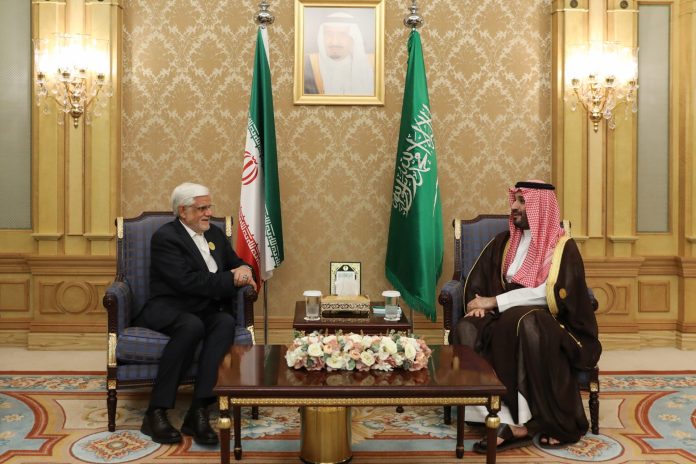
Iran VP praises OIC-Arab League summit, calls for closer relations with Saudi Arabia

Aref and Bin Salman

Upon arrival at Tehran’s Mehrabad Airport at the end of the day-long event in the Saudi capital, Aref remarked that the emergency OIC and Arab League summit, which was convened at Iran’s proposal, was warmly welcomed by the heads of Islamic and Arab states.

Praising Saudi Arabia’s hosting of the meeting, he noted that it sent a unified message to the world during this critical time, as the Zionist regime continues its crimes against Palestine and Lebanon.

Referring to the “good and inclusive” final communiqué of the summit, Aref stated that all countries in attendance called for an immediate halt to the Israeli regime’s crimes and aggressions.

He added that a call for the expulsion of Israel from the United Nations was also included in the communiqué, which would have significant political ramifications.

The Iranian First Vice President emphasized that the world must recognize that punishing the Zionist regime is essential and that the oppressed people of Gaza and Lebanon are living in dire conditions.

He also called for the establishment of a ceasefire in Gaza and Lebanon and for the dispatch of humanitarian aid to those areas.

Additionally, the Iranian First Vice President described his meeting with Saudi Arabia’s Crown Prince Mohammed Bin Salman as sincere and fruitful, stating that he believes the expansion of Iran-Saudi ties will further promote Islamic consolidation.

Iran executes man who raped 200 women

Iran Prison

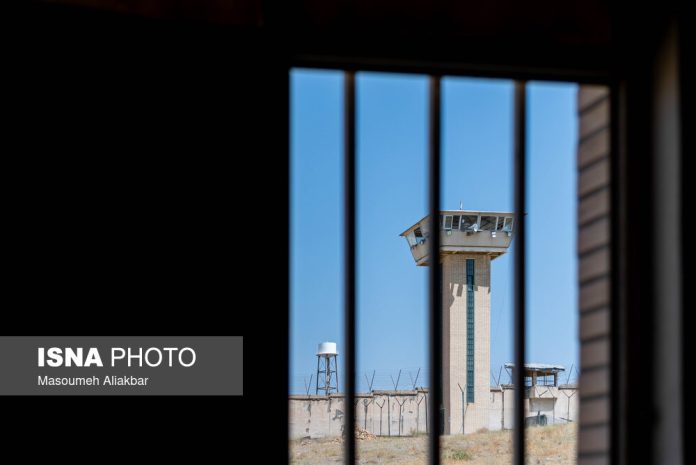
Mohammad Ali Salamat, reportedly about 40, had deceived his victims over the past years under various pretexts, including marriage and friendship, to take them to his hideout and rape them.

Many cases have been filed against him since May last year and the evidence proves the widespread crime.

The initial court issued a death sentence and the ruling was finalized in October, despite repeated appeals by the accused man and his lawyers.

Israel’s finance minister tells authorities to prepare for West Bank annexation

Israeli settlement

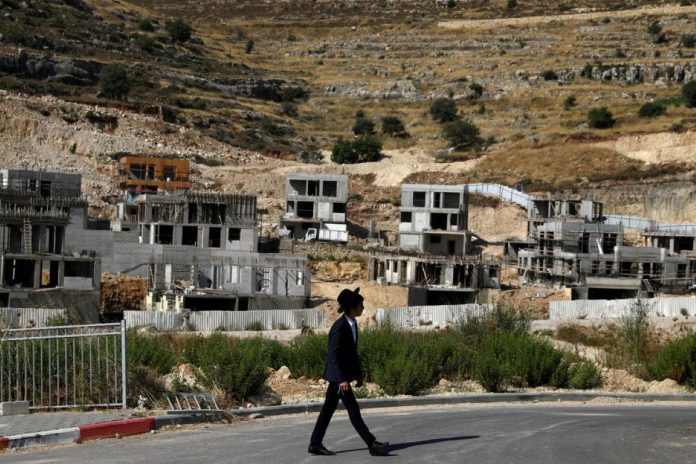
Speaking at a meeting of his far-right Religious Zionism party, Smotrich said that Trump’s victory provided an “important opportunity” and that “the time has come to apply sovereignty” over the West Bank.

According to a statement from his office, Smotrich stated that he had instructed Israeli authorities overseeing West Bank settlements “to begin professional and comprehensive staff work to prepare the necessary infrastructure” for extending sovereignty.

As well as finance minister, Smotrich has a role in the defence ministry overseeing illegal settlements in the West Bank and East Jerusalem.

Smotrich and other far-right politicians in Israel have hailed Trump’s triumph in the presidential elections last week, hoping he will give the green light for Israel to officially annex Palestinian territory captured in 1967.

Israel has already annexed East Jerusalem and Syria’s Golan Heights in unilateral moves that have never been accepted by the international community but were recognised by Washington during Trump’s first term in office.

At Monday’s meeting, Smotrich noted he would push the government to get the incoming Trump administration to recognise the annexation of the entire West Bank.

During Trump’s 2017-2021 term as president Israel seemed primed to announce it was annexing Area C, the part of the West Bank fully controlled by the Israeli military. However, those plans never came to fruition after intense international pressure and cold feet from Washington.

Smotrich has called for an aggressively expansionist Israeli policy and last month stressed Israel should expand “little by little” until its borders reached Damascus.

“It is written that the future of Jerusalem is to expand to Damascus,” he said in an interview for the documentary, In Israel: Ministers of Chaos, citing the “greater Israel” ideology, which envisions the expansion of the state across the Middle East.

US claims attacks in Syria targeted ‘Iranian backed groups’

US Air Force

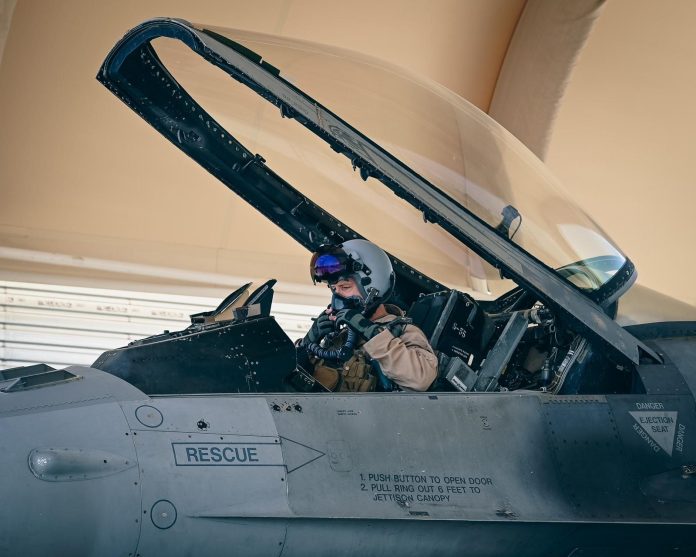
CENTCOM’s commander General Michael Erik Kurilla said in a statement early on Tuesday that the US military action sent a “clear” message to armed groups backed by Tehran and operating in Syria.

“Attacks against US and coalition partners in the region will not be tolerated,” Kurilla added, describing attacks on US military personnel in Syria over the past 24 hours as “reckless”.

“These strikes will degrade the Iranian-backed groups’ ability to plan and launch future attacks,” CENTCOM said, adding that nine targets in two locations were hit in the US attacks.

The US has about 900 soldiers based in the eastern part of Syria and 2,500 more in neighbouring Iraq, whose stated mission is to advise and assist local forces battling to prevent a resurgence of the group known as Daesh, which in 2014 seized large swaths of both Syria and Iraq but was later defeated in fierce fighting.

No US personnel were reported injured in the attacks that CENTCOM announced had been carried out over the previous 24 hours by Iranian-backed groups.

The US military also did not specify which armed groups were targeted in Syria or whether the strikes were thought to have resulted in casualties.

United Kingdom-based monitoring group the Syrian Observatory for Human Rights reported that four Syrian members of Iranian-backed armed groups were killed on Monday and 10 others were severely injured when fighter jets of the “international coalition” attacked a “headquarters” in the Al Mayadeen area of eastern Syria’s Deir Az Zor countryside.

Syria state media reported earlier on Monday that Israel’s Air Force had attacked an aid convoy in the Shamsin area, located approximately 20km (12 miles) from the border with Lebanon, forcing the closure of Syria’s main north-south highway that links the capital, Damascus, with the northern city of Aleppo.

There were no immediate reports of casualties and state television did not provide details about the convoy that was attacked, though the area is known as a gathering point for refugees fleeing from Israeli attacks on Lebanon.

On Sunday, an Israeli air raid also hit a residential building in the Damascus suburb of Sayyida Zeinab, killing seven civilians, including women and children, the Syrian Arab News Agency (SANA) reported. Twenty others were wounded in the attack, SANA reported.

Holding referendum sole democratic solution to Palestinian issue: Iran

Mohammad Reza Aref

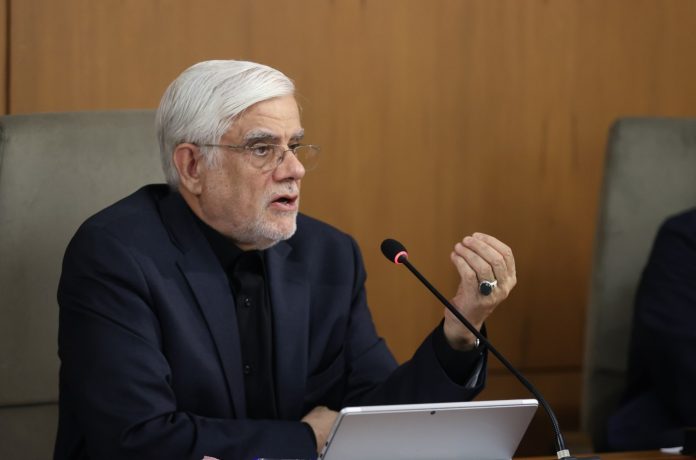
He said Iran proposes a referendum with the participation of all the Palestinians, including Muslims, Christians and Jews based on the principle of “every Palestinian, one vote”.

He added that this proposal will restore the right of Palestinians to determine their fate.

Iran also believes avoidance of division among Muslim countries serves as a macro strategy to deal with the conspiracies of ill-wishers against Muslims, Aref stated.

The Iranian vice president said all Muslim and Arab countries shoulder a heavy responsibility to take a firm and collective measure aimed at stopping the Israeli regime’s crimes against the Palestinians and occupation of their homeland.

He added that Muslim and Arab countries must develop strategies to ensure the non-repetition of Israel’s crimes and adequately compensate for the damages inflicted on the Palestinian and Lebanese people.

Aref noted the United Nations and the Security Council lack the ability to put an end to Israel’s genocide against the Palestinian people and onslaught on the Lebanese nation due to the unwavering support of the US and certain Western countries for the regime.

“Under such circumstances, our responsibility as heads of Muslim and Arab countries multiplies,” the Iranian vice president stated.

He censured the Israeli regime for shamelessly violating all the principles and rules of international law, tearing up the United Nations Charter at the General Assembly and declaring the UN Secretary General persona no grata.

“We all have a moral obligation not to remain silent in the face of one of the worst evils left over from the last century, namely the bloody occupation of the Palestinian land and continuous displacement and genocide of a nation,” the Iranian official said.

Aref added there is “shameful tragedy” in the crimes of Israel in Palestine for more than one year and in Lebanon for the past month, which is rooted in the “impunity of criminals” who consider themselves worthy of the “unquestioning support” of the US and certain Western countries.

“The American government is the main supporter of the actions of the Zionist regime (Israel) and the world is waiting for the promise of the new government of this country to immediately stop the war on the innocent people of Gaza and Lebanon.”

He stated the Israeli leaders have defined their survival in the existence of chaos and war inside the occupied territories and in the surrounding region.

The Iranian vice president called for firm condemnation of the crimes of Israel and unflinching support for the Palestinian cause.

Aref expressed hope that the Riyadh summit would take effective and coordinated measures to counter the Israeli regime’s barbarism.

Hezbollah says Israel failed to occupy one single village in Lebanon

Israeli Army

“After 45 days of intense fighting, Israel has failed to occupy even a single Lebanese village,” Afif said during a press conference held in the Dahiyeh neighborhood in the south of the country’s capital Beirut on Monday.

He stressed that it was rather Hezbollah fighters’ determination and their intimate knowledge of the land that were among the decisive elements on the battlefield.

He also addressed claims by the Israeli regime’s former minister for military affairs, Yoav Gallant, about alleged depletion of Hezbollah’s missile stockpiles.

“Our missile stockpiles are complete in the same way that they were on the first day [of the struggle against the Israeli regime],” the official asserted, citing the movement’s continued firing of the projectiles towards the cities of Tel Aviv and Haifa in the occupied Palestinian territories as proof of his assertion.

“Hezbollah continues to increase its missile stockpiles, both in quantity and quality,” he stated, and affirmed that the movement’s fighters on the frontlines “have enough weapons and supplies for a prolonged war on all fronts.”

Elsewhere in his remarks, the official insisted that the movement “does not accept defeat”.

“Our concept of victory comprises prevention of realization of the enemy’s political and military goals,” he said, adding that it was rather refusal to resist that would translate into defeat for the group.

“The realities of the battlefield are solely in their (the resistance fighters’) hands,” Afif stated, and noted that “these will ultimately decide the political outcome and strategy”.

The fate of the entire West Asia region would also be determined by the perseverance and combat efforts of the resistance’s fighters, the official remarked.

He, meanwhile, reflected on the emergence of Hezbollah, calling it “a natural response to occupation”.

In conclusion, the official asserted that the Israeli regime had suffered defeat across the entire world and the international public opinion.

He cited the existing international solidarity with the Palestinian cause as a case in point, saying the solidarity was recently witnessed by the popular confrontation that took place in the face of anti-Palestinian violence waged by Israeli thugs in the Dutch capital Amsterdam.

Israel launched a massive air campaign in late September in Lebanon against what it claims are Hezbollah targets in an escalation in a year of cross-border warfare between Israel and the group since the start of Israel’s brutal assault on Gaza.

More than 3,000 people have been killed and over 13,500 injured in Israeli aggression since last October, according to Lebanese health authorities.

Israel expanded the conflict by launching an incursion into southern Lebanon in early October.

Britain, France trying to persuade US to allow Ukraine to strike deep into Russia: Report

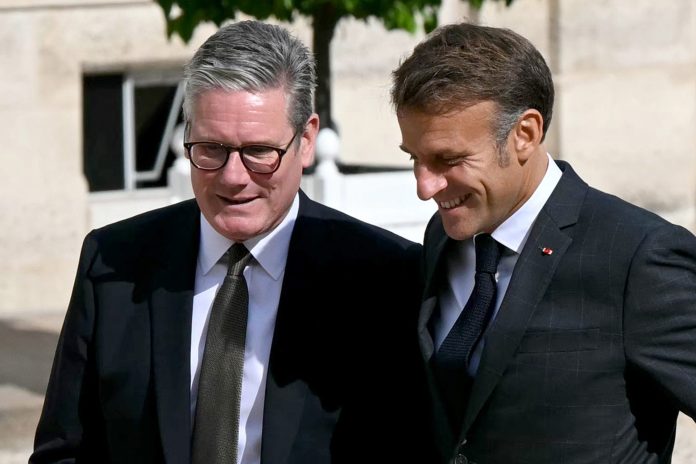
British Prime Minister Sir Keir Starmer and French President Emmanuel Macron

According to the newspaper, British Prime Minister Sir Keir Starmer and French President Emmanuel Macron hope President Joe Biden will give the approval sought by Kyiv for months as a step towards cementing his foreign policy legacy.

“We are very keen to make sure we can make the most of the time between now and Jan. 20 (when Trump takes office) and not just put everything on hold until the next administration,” one source was quoted as saying.

Trump’s comments on Ukraine have emphasized speedy results over long-term support, and he has refrained from saying he wants Ukraine to prevail over Russia.

He has repeatedly promised to end the war “in 24 hours”, and though he hasn’t yet elaborated a plan, it is largely expected to involve Ukraine ceding land to Russia.

However, with six weeks left to Trump’s inauguration, outgoing US President Biden could make decisions that he would have not made before, unburdened by the election campaign and responsibilities of another term in office.

Ukrainian President Volodymyr Zelensky’s concerted campaign to get permission to use Western-supplied weapons like the US-made ATACMs and the UK’s Storm Shadows to strike deep inside Russia has, to date, failed.

In his latest call he highlighted how Ukraine could preemptively target “every camp” in Russia where North Korean troops are currently gathering.

This would be on top of some of the airbases from which Russia launches missile attacks against Ukrainian cities.

“I think the Biden administration would be very well advised simply to just drop its objections,” Ambassador Kurt Volker, who served as the US special representative for Ukraine negotiations in 2017-2019, told the Kyiv Independent last week.

“Just let Ukraine use the weapons we’ve given them. And this can be done quietly, it doesn’t have to be a big announcement. It can be done on a case-by-case basis, if the Biden administration insists,” he added.

“But there’s no justification for allowing Russia to attack Ukraine from anywhere, and to tell Ukraine that they must not strike back.”

Customs: Iran’s non-oil trade in past 7 months surpasses $70bn

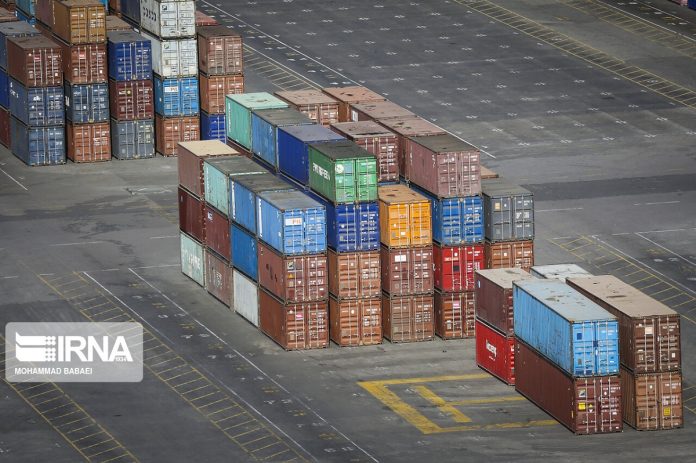
Iran Trade

The report shows that the total non-oil exports, excluding crude oil, fuel oil, and kerosene, reached 88.701 million tons, valued at $32.52 billion. This represents an 11.48% increase in weight and a 14.72% increase in dollar value compared to the same period last year.

During the same period, the country’s imports amounted to 21.719 million tons, worth $39.5 billion, reflecting a 2.7% increase in weight and an 8.8% increase in dollar value.

Consequently, Iran’s total non-oil foreign trade – imports and exports – for the first seven months of the year exceeded 110.42 million tons, valued at over $72 billion.

China was the top destination for Iranian exports, accounting for $8.6 billion and 26.4% of the total export value. Other major export destinations included Iraq ($7.2 billion, 22.4%), the United Arab Emirates ($4.2 billion, 12.9%), Turkey ($3.3 billion, 10.2%), and Afghanistan ($1.3 billion, 4%).

On the import side, the United Arab Emirates topped the list with $12 billion and 30.3% of the total import value. Other significant import partners were China ($10.2 billion, 25.8%), Turkey ($6.5 billion, 16.6%), Germany ($1.4 billion, 3.6%), and Russia ($958 million, 2.4%).

Notably, Iran’s foreign transit reached 13.239 million tons, a 41.7% increase compared to the same period last year.