Thursday, December 25, 2025
Home Blog Page 644

Biden, Xi to discuss China’s support for Russia at APEC summit

Xi Biden

The summit likely marks the two leaders’ final presidential meeting, as Biden will be replaced by President-elect Donald Trump on Jan. 20, 2025.

Ukraine is on the agenda for Biden’s talks with Xi, according to the White House.

Biden is expected to voice his “deep concern” regarding China’s “support for Russia’s war against Ukraine”. This extends to North Korea’s escalating military involvement, including the deployment of 10,000 troops who “have begun engaging in combat operations with Russian forces”.

The Pentagon has confirmed that North Korean soldiers had begun engaging in combat alongside Russian troops in Kursk Oblast. The announcement followed reports that Russia is mustering a force of 50,000 soldiers, including North Korean troops, to launch a counteroffensive against Ukraine in the Kursk region.

“We are increasingly concerned about the consequences for longer-term stability in both Europe and the Indo-Pacific of this deployment,” a senior White House official said, regarding Biden’s upcoming talks with Xi.

While the US has criticized China’s support for Russia, including sanctioning Chinese companies for producing drones used in Russia’s war, Biden’s status as a lame-duck president weakens his position ahead of the meeting with Xi.

US Secretary of State Antony Blinken has pledged that the outgoing administration would “continue to shore up everything we’re doing for Ukraine” and that NATO would issue “a firm response” to North Korea’s deployment, but he did not say what the response would entail.

Biden and Xi last met in person on the sidelines of the 2023 APEC Summit in San Francisco, California. Russia’s war against Ukraine was one of the key topics during those talks.

Rights group accuses Israel of crimes against humanity over forced displacement of Gazans

Gaza War

The US-based group added it had collected evidence that suggested “the war crime of forcible transfer [of the civilian population]”, describing it as “a grave breach of the Geneva conventions and a crime under the Rome statute of the international criminal court”.

The report was published amid mounting evidence that Israel is accelerating its efforts to cut the Gaza Strip in two with a buffer zone and is building new infrastructure to support a prolonged military presence, with an increased pace of demolitions and destruction.

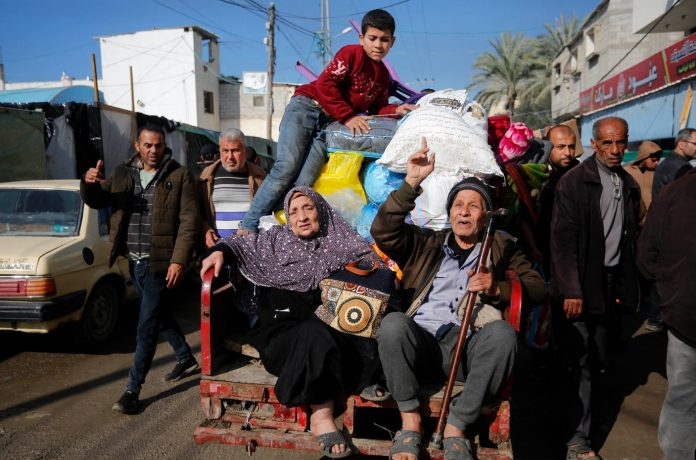
Residents in northern Gaza said Israeli forces were besieging displaced families and the remaining population, which some estimated at a few thousand, ordering them to head south through a checkpoint separating two towns and a refugee camp from Gaza City.

Men were held for questioning, while women and children were allowed to continue towards Gaza City, residents and Palestinian medics say.

Calling for Israel’s policy of forced displacement to be investigated by the international criminal court, Human Rights Watch also urged targeted sanctions against Israel including the cessation of arms sales.

The report by the prominent international rights group, titled ‘Hopeless, Starving, and Besieged’: Israel’s Forced Displacement of Palestinians in Gaza, takes aim at one of Israel’s most controversial policies: the use of evacuation orders, which have driven mass displacement inside Gaza, with many people being displaced on multiple occasions.

That has led to the displacement of more than 90% of the population – 1.9 million Palestinians – and the widespread destruction of much of Gaza over the last 13 months.

The HRW report is in stark contrast to the assessment by the US state department earlier this week that Israel had not breached American laws on blocking aid supplies after the lapse of a 30-day deadline it gave Israel to boost humanitarian aid access in Gaza or risk having some military assistance cut off.

The fourth Geneva convention stipulates that in territory occupied by a belligerent, displacement of civilians must only occur in exceptional circumstances for “imperative military reasons” or for the population’s security and requires safeguards and proper accommodation to receive displaced civilians. The UN’s guiding principles on internal displacement also state that, in all circumstances parties to conflict must “prevent and avoid conditions that might lead to displacement of persons”.

Despite those conditions, Israel has repeatedly used evacuation orders – in Lebanon as well as Gaza – to forcibly displace civilians even though that the evacuation orders have no legal status.

While Israeli leaders and the Israel Defense Forces have justified the use of the evacuation orders, arguing that their use demonstrates Israel’s adherence to protecting civilians in wartime, the group says that they have instead harmed Palestinians.

“Israel claims that the displacement of nearly all of Gaza’s population has been justified for the security of the population and for imperative military reasons, and it has taken the requisite steps to safeguard civilians,” added the report.

“Because Palestinian armed groups are fighting from among the civilian population, Israeli officials claim, the military has evacuated civilians to enable it to target fighters and destroy the groups’ infrastructure, such as tunnels while limiting harm to civilians, such that the mass displacements were lawful.”

“[But] rather than ensuring civilians’ security, military “evacuation orders” have caused grave harm,” the report finds.

“Demonstrably, Israel has not evacuated Palestinian civilians in Gaza for their security, as they have not been secure during evacuations or on arrival at designated safe zones. Nor has Israel convincingly claimed that it had a military imperative for forcing most Palestinian civilians from their homes,” it notes.

Under international law, Israel – as the occupying power in Gaza – is under a legal obligation to facilitate the return of displaced persons to their homes in areas where hostilities have ceased.

Instead, the reports say, Israel has “rendered large areas of Gaza uninhabitable” by carrying out demolitions, intentionally destroying or severely damaging civilian infrastructure, including schools and religious and cultural institutions, including after hostilities had largely ceased in an area.

HRW added that the permanent displacement of civilians to create military buffer zones within the Gaza Strip would also amount to ethnic cleansing.

Israel’s campaign in the north of Gaza, and the evacuation of tens of thousands of Palestinians from the area, have fuelled claims from Palestinians that it is clearing the area for use as a buffer zone and potentially for a return of Jewish settlers.

The Israeli military has denied any such intention, and Prime Minister Benjamin Netanyahu has claimed he does not want to reverse the 2005 withdrawal of settlers from Gaza. But hardliners in his government have talked openly about going back.

Iran to give ‘immediate response’ to any anti-Tehran resolution by IAEA: Nuclear chief

Eslami Grossi

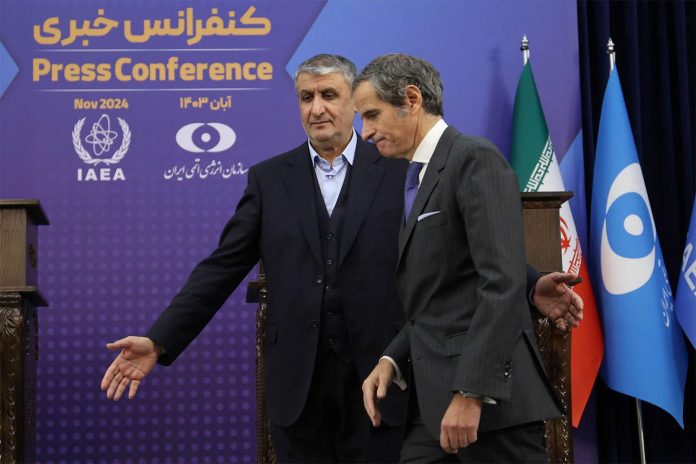
Eslami made the remarks during a joint press conference with Director General of the International Atomic Energy Agency (IAEA) Rafael Grossi in the Iranian capital of Tehran on Thursday.

“Any resolution against Iran’s nuclear program will be met with Iran’s immediate response,” he said, emphasizing that the Islamic Republic, undeterred by pressure, will advance its nuclear activities within the framework of its national interests.

The remarks came a day after Reuters reported that European powers are pushing for a new anti-Iran resolution at the IAEA’s Board of Governors meeting next week to pile up pressure on Tehran.

Eslami added that such resolutions will naturally establish the right for Iran to take countermeasures.

“The main issue is that if the opposite side takes the path of confrontation, resolution and disruption against Iran, it will receive a reciprocal response.”

“If they take the path of interaction, Iran is willing to interact, but if they choose another path, Iran will take necessary decisions,” he continued.

He also noted that Iran has always followed the path of interaction and honored its obligations under the Joint Comprehensive Plan of Action (JCPOA) before it was derailed by the United States.

In 2015, Iran proved the peaceful nature of its nuclear program to the world by signing the JCPOA with six world powers.

However, Washington’s unilateral withdrawal in 2018 and its subsequent re-imposition of sanctions against Tehran left the future of the deal in limbo.

In 2019, Iran started to roll back the limits it had accepted under the JCPOA after the other parties failed to live up to their commitments.

Elsewhere in his remarks, Eslmai stressed that Iran’s nuclear program has been used as an excuse to impose tough sanctions on the country.

Over the past 20 years, he said, the countries opposing Iran’s interests fabricated cases and created ambiguity surrounding the nation’s nuclear activities while assassinated scientists and committed acts of industrial sabotage.

However, Iran today enjoys the nuclear technology, which is not borrowed but built on endogenous research under the supervision of the IAEA, he added.

Also during the conference, Grossi was asked about Israel’s threats to strike Iranian nuclear facilities, to which he replied, “I say this with regards to Iran… nuclear installations should not be attacked.”

Trump seeking to bring Ukraine, Russia to negotiating table: US National security advisor nominee

Russia Ukraine War

Speaking to Voice of America (VOA), the Florida Congressman said that Trump is interested in ending the war instead of continuing it. Waltz stressed that Washington’s future policy does not depend on him but on Trump’s decisions.

Trump has pledged to end Russia’s war against Ukraine “within 24 hours” once reelected without explaining how he plans to achieve it. Multiple media reports indicated that this plan might entail freezing the war, suspending Ukraine’s NATO accession, and establishing a demilitarized zone in the east of the country.

Russia and Ukraine have not held direct talks since the unsuccessful negotiations in Belarus and Turkey in early 2022. Publicly, there appears to be little room for compromise as Kyiv has repeatedly rejected territorial concessions, while Russia has little reason to negotiate as it currently holds the upper hand on the battlefield.

Waltz is set to replace Jake Sullivan in the senior White House advisory role. In this position, he will brief Trump on main security issues and have a chance to influence key policy decisions.

Trump’s nominee has previously expressed reservations about continued extensive US military aid to Ukraine, arguing that European nations should increase their support to ensure regional stability. His stance includes backing a peace plan aimed at drawing Ukraine closer to Western alliances while diplomatically isolating Russian President Vladimir Putin.

This view, while reflective of a significant portion of Republican thought, contrasts with positions held by many Senate Republicans and most Democrats who continue to advocate for sustained or increased aid to Ukraine.

Trump’s cabinet picks have been met with mixed reactions in Ukraine. While some officials and observers reacted to Waltz and Secretary of State nominee Marco Rubio with “moderate optimism”, other choices sparked surprise and even concern.

The president-elect tapped military veteran and Fox News host Pete Hegseth to lead the Defense Department, a move that stunned Pentagon officials.

Trump’s nomination of openly Ukraine-skeptic ex-Democrat Tulsi Gabbard to the position of director of national intelligence is also not a positive signal for the besieged country.

The former Congresswoman and Army National Guard veteran has echoed Putin’s justification for the invasion of Ukraine in 2022, attributing the cause not to Moscow but to the Joe Biden administration’s failure to acknowledge “Russia’s legitimate security concerns”.

Army commander: Iran to deliver crushing response to Israel

Abdulrahim Mousavi

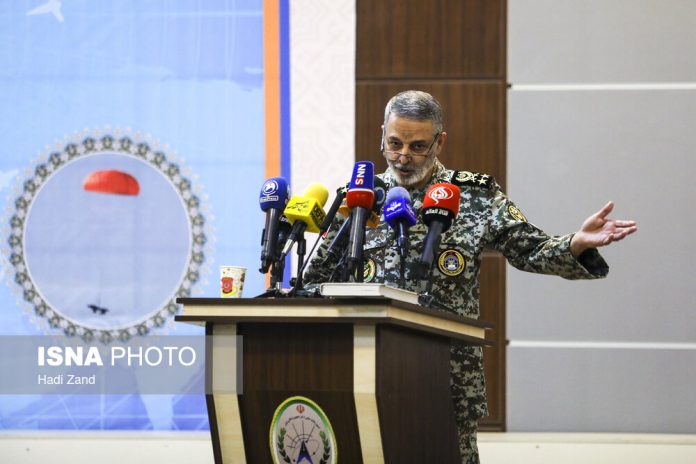
During a meeting with the family of Martyr Major Sajjad Mansouri on Thursday, who died in an Israeli strike on Iran’s military site on October 26, General Mousavi emphasized that Iran will hit back Israel.

He stated, “We will determine the time and manner of our response. There will be no hesitation when the time comes, and our reply will surely be crushing.”

General Mousavi presented the family with a Medal of Sacrifice and praised Martyr Mansouri for “sacrificing his life in defense of the country.”

He quoted the top Iranian anti-terror commander late General Qasem Soleimani, as saying, “One does not become a martyr unless they are already a martyr in spirit.”

The Iranian commander emphasized that, in addition to the military, all Iranians are ready to defend the country against the enemies.

In recent days, several Iranian officials have warned Israel will get a response for its strikes against Iran, stressing the change in the political scene in the US will not deter the Islamic Republic from carrying out its planned retaliatory operation.

Iran says will not negotiate under pressure and intimidation

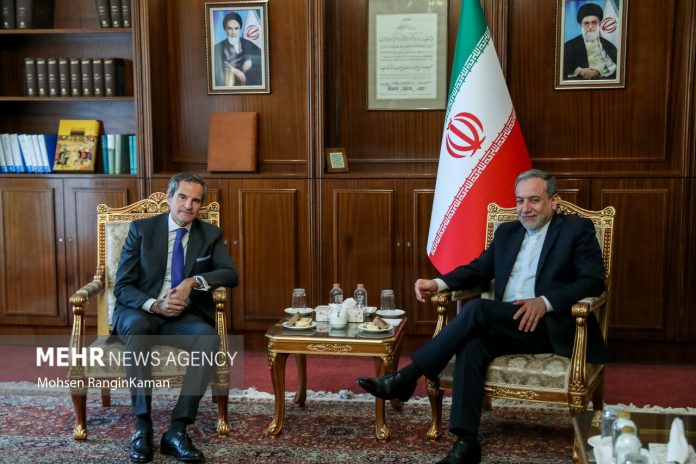
Araghchi and Grossi

Araghchi made the remark in a post on his X account following his “important and straightforward” talks with Director General of the International Atomic Energy Agency (IAEA) Rafael Grossi in Tehran on Thursday.

“The ball is in the EU/E3 court. Willing to negotiate based on our national interest & our inalienable rights, but NOT ready to negotiate under pressure and intimidation,” the top Iranian diplomat wrote.

Araghchi, who was among chief negotiators in the nuclear talks between Tehran and major powers that resulted in the 2015 nuclear deal — formally known as the Joint Comprehensive Plan of Action (JCPOA), emphasized that Iran, as a committed member of the Non-Proliferation Treaty (NPT), will continue its full cooperation with the IAEA.

“Differences can be resolved through cooperation and dialogue. We agreed to proceed with courage and good will,” he wrote.

The Iranian foreign minister added that his country has never left the negotiating table over its peaceful nuclear program.

Grossi arrived in Tehran Wednesday night at the head of a delegation to negotiate with top Iranian nuclear and political officials.

The trip, a continuation of interactions between Iran and the IAEA, is in line with the joint statement issued during Grossi’s visit to Tehran on March 4, 2023.

In their joint statement, Tehran and the UN nuclear agency recognized that bilateral positive engagements can pave the way for wider agreements among state parties.

They also agreed that bilateral interactions will be carried out in a spirit of collaboration, and in full conformity with the competencies of the IAEA and the rights and obligations of Iran based on the comprehensive safeguards agreement.

IRGC deputy commander vows strong response to Israel

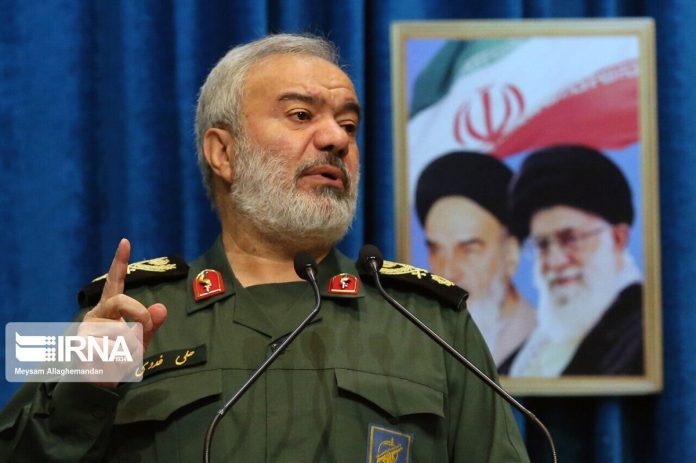
Rear Admiral Ali Fadavi

Speaking at a ceremony in Qom commemorating the martyrdom of Hezbollah resistance movement’s leader Sayyed Hassan Nasrallah and other Resistance Front commanders on Wednesday evening, General Fadavi emphasized that the Islamic Republic has consistently retaliated against all acts of hostility over its 45-year history.

Dismissing speculations that Iran might have forgone a planned retaliatory operation against Israel, Fadavi stated, “The Islamic Revolution has never left any act of malice unanswered, and we will undoubtedly give Israel a regretful response.”

The senior commander urged individuals from all backgrounds to fulfill their roles in supporting the resistance front “based on their position and abilities.”

He pointed out that the belligerent parties, especially the US, have waged a war against Iran since the Islamic Republic’s inception in 1979 but have never achieved victory.

“Even the Americans, who have led these actions against us, acknowledge that they have not won a single victory,” he remarked.

Fadavi reaffirmed Iran’s unwavering support for Hezbollah and the resistance front, promising even stronger and quicker backing than before.

For the first time since the history of the Israeli regime, Iran has directly targeted positions inside the occupied territories in two operations dubbed True Promise I and II during the past months, and has promised a third retaloatory one.

UN Security Council condemns Israeli attacks on UNIFIL

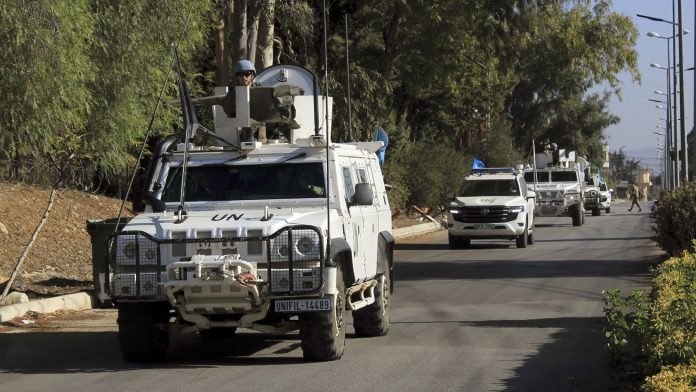
UNIFIL

In a statement, the Council condemned the attacks on October 29, November 7 and November 8, which wounded several Blue Helmets.

“They urged all parties to take all measures to respect the safety and security of UNIFIL personnel and premises,” the Council announced.

The Security Council “recalled that peacekeepers must never be the target of an attack” and offered its “full support” to UNIFIL.

The Council members also “expressed their deep concern for civilian casualties and sufferings” in the conflict in general, as well as “the destruction of civilian infrastructure” and “damage to cultural heritage sites in Lebanon”.

It specifically expressed worry about the “endangerment of the UNESCO world heritage sites, and the rising number of internally displaced people”.

Israel launched a ground invasion of Lebanon on 1 October. Since then, the occupation forces have repeatedly fired on positions held by UNIFIL, an international body of over 10,000 civilian and military personnel from 50 countries.

Last week, UNIFIL announced that the Israeli military’s “deliberate and direct destruction” of its property is a flagrant violation of international law.

Trump, Biden discuss Ukraine, Middle East in White House

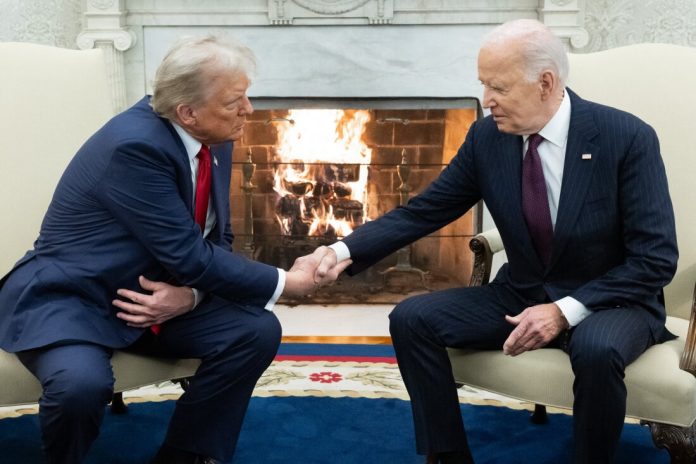
Trump Biden

“I asked for his views and he gave them to me,” Trump said in an interview with the New York Post.

“Also, we talked very much about the Middle East, likewise. I wanted to know his views on where we are and what … he thinks. And he gave them to me, he was very gracious.”

Trump also told the Post he and Biden “both really enjoyed seeing each other”.

“You know, it’s been a long, it’s been a long slog,” the president-elect continued, adding, “It’s been a lot of work on both sides, and he did a very good job with respect to campaigning and everything else. We really had a really good meeting.”

“We got to know each other again,” he noted.

The former president stated they discussed the transition and said his team and Biden’s team have a “very, very good relationship.”

The White House also announced the two leaders talked about foreign policy, as well as domestic issues.

Press secretary Karine Jean-Pierre said earlier Wednesday that Trump “came with a detailed set of questions”.

Biden answered his successor’s questions and “offered up his thoughts,” she added.

National security adviser Jake Sullivan also told reporters Biden reinforced in the meeting his view that it’s in the US national security interest not to walk away from Ukraine so “we don’t end up getting dragged directly into a war”.

Iran’s oil output drops slightly in October: Report

Iran Oil Tanker

OPEC figures cited in a Wednesday report by the Fars news agency showed that Iran had produced 3.259 million barrels per day (bpd) of oil in October, down 68,000 bpd from figures reported in September.

Despite the drop in output, Iran remained the third largest OPEC producer in October, the data showed.

Saudi Arabia topped the ranking with 8.968 million bpd, up 4,000 bpd from the previous month, and was followed by Iraq at 4.068 million bpd which reduced its output by 66,000 bpd compared to September, showed the figures.

Iran has steadily increased its oil production this year. The country returned to its position as the third largest producer in OPEC in August after reports showed it had ramped up its exports to private refiners in China despite a regime of US sanctions that impose major penalties on buyers.

Iran, along with Libya and Venezuela, are exempt from a series of cuts agreed by OPEC members to stabilize global oil prices.

The drop in Iran’s October oil output can be attributed to reports suggesting the country launched repair works in oil export facilities in Kharg, an Island in the Persian Gulf which hosts the country’s largest oil export terminal.

OPEC figures showed Iran’s average quarterly output had hit 3.306 million bpd in July-September, up from 3.238 million bpd in the previous quarter.

OPEC’s October output increased by 0.466 million bpd compared to September to reach 26.535 million bpd mainly thanks to a major increase in production in Libya.