Thursday, January 1, 2026
Home Blog Page 602

Militants informed Turkey about plan to oust Assad: Report

Syria War

The militants notified Turkey about their intention to conduct the attack around six months ago, Reuters reported on Monday, citing a “diplomat in the region” and an alleged member of the anti-Damascus groups.

The Syrian source told the agency that the militants “had shown Turkey details of the planning”, urging Ankara not to intervene in the attack.

After communicating the scheme, the militants “felt they had received its (Ankara’s) tacit approval”, the sources noted.

“There was no way” the militants “could go ahead without first notifying Turkey,” one added.

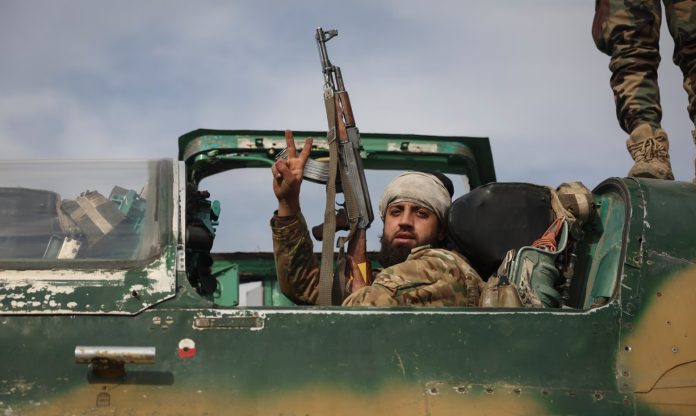
The comments came a day after the militants stormed the Syrian capital after scoring major gains in the Arab country’s north around two weeks following their staging a resurgence.

Reports, meanwhile, would point to strong support for the armed groups on the part of Ankara and some Western states, which have been acting as the main backers of anti-Damascus outfits since the outbreak of foreign-backed militancy in Syria in 2011.

On Sunday, Turkish Foreign Minister Hakan Fidan claimed that the country’s President Recep Tayyip Erdogan had tried in the months that ran up to the militant offensive to engage with Assad, adding Ankara “knew something was coming”.

Reuters’ sources also stated that the militants had “sensed a stiffening of Ankara’s stance towards Assad earlier this year.”

Turkish Deputy Foreign Minister Nuh Yilmaz, however, claimed that Ankara was not behind the offensive, and did not provide its consent.

A Turkish official also told the agency that Hayat Tahrir al-Sham (HTS), the main armed group that took on Syria during the invasion, “does not receive orders or direction from us [and] does not coordinate its operations with us either”.

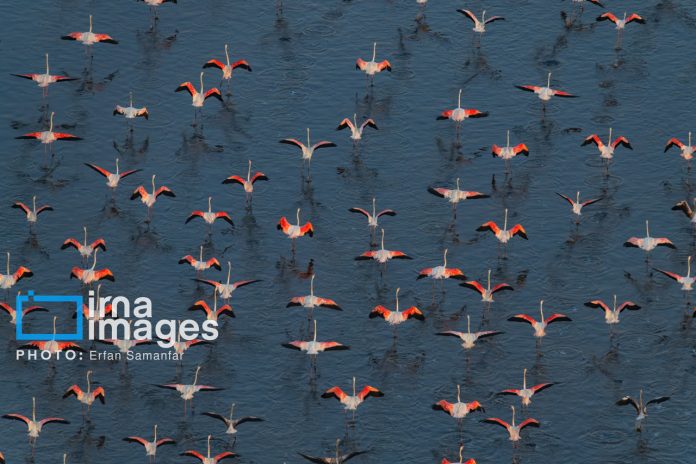
Soaring over Iran’s Maharloo Lake

It serves as a primary habitat for flamingos and various bird species, offering sanctuary to a plethora of avian life each year.

These breathtaking images, captured from the lofty heights of paragliders and at altitudes exceeding 3,000 meters, reveal the tranquil yet vibrant life that flourishes around the lake.

The lake’s landscape transforms dramatically with the seasons, painting a picturesque scene that is both serene and awe-inspiring.

Catch a glimpse of the lake in the following pictures:

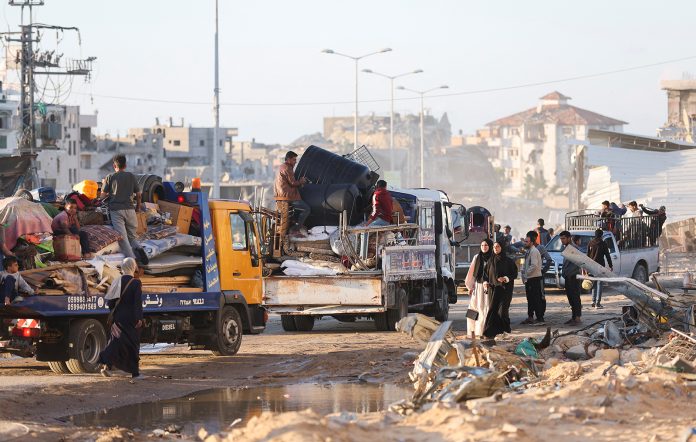
One million displaced Gazans face extreme winter cold: UN

Gaza War

“Displaced people in Gaza need protection from the rain and cold. Only around 23% of this need has been met, leaving 945,000 people at risk of exposure this winter,” the UN agency said in a statement.

“Aid is urgently required to address the overwhelming needs as the crisis deepens.”

UNRWA added that Palestinian civilians in the central city of Deir al-Balah and across the enclave “search through the rubble of their destroyed homes, trying to salvage what little remains after an Israeli airstrike.”

“As strikes continue, civilian casualties rise, and homes and vital infrastructure are reduced to ruins,” it said.

“The human cost of this war is unbearable,” UNRWA added, reiterating its call for an immediate cease-fire in Gaza to prevent further suffering.

Israel has launched a genocidal war on the Gaza Strip that has killed more than 44,700 people, mostly women and children, since Oct. 7, 2023.

Last month, the International Criminal Court issued arrest warrants for Israeli Prime Minister Benjamin Netanyahu and former Defense Minister Yoav Gallant for war crimes and crimes against humanity in Gaza.

Israel also faces a genocide case at the International Court of Justice for its war on Gaza.

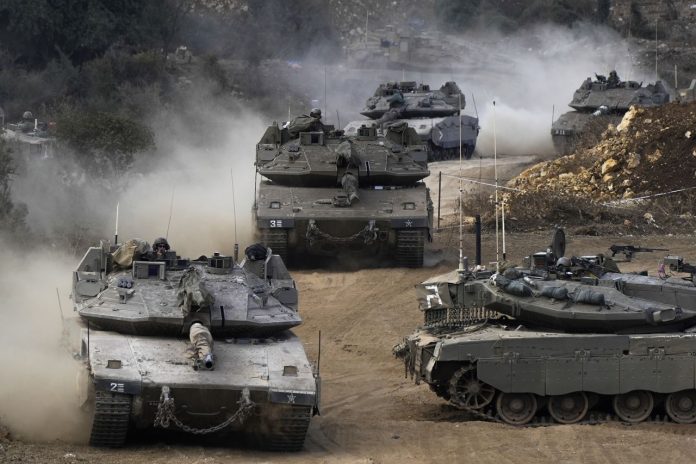
Israeli soldiers occupy more territory in Syria: Report

Israel Army

The outlet quoted Katz as saying he instructed the military on Sunday night “to act immediately in Syria” and that soldiers “continued to seize additional points in the buffer zone”.

Katz also added he instructed the military “to create a security zone free of heavy strategic weapons and terrorist infrastructures that could threaten Israel”.

The move aims “to thwart the renewal of the weapons smuggling route from Iran to Lebanon through Syria and at border crossing points”.

The Israeli military on Sunday morning moved to seize a buffer zone in the occupied Golan Heights as the Bashar Assad government falls in Damascus.

The Golan Heights was partly occupied by Israel in 1967, with a buffer zone separating territory they control and territory still held by Syria created in 1974.

Following the ousting of Assad on Sunday, Israeli Prime Minister Netanyahu said the end of his rule meant that the 50-year-old “disengagement agreement” between the two countries had collapsed and “Syrian forces have abandoned their positions”.

“I directed the [Israeli military] yesterday to seize the buffer zone and the commanding positions nearby. We will not allow any hostile force to establish itself on our border,” he added.

He made the announcement during a visit to the Golan Heights, which is recognised by the vast majority of the world as occupied, with the notable exception of the US.

Later, reports suggested that Israel has seized territory in Syrian-controlled areas of the Golan Heights. The Israeli army also ordered residents of five communities in Syria-controlled territory not to leave their homes until further notice. The communities named were Ofania, Quneitra, Al-Hamidiyah, Al-Samdaniyah Al-Gharbiyah and Al-Qahtania.

Although Netanyahu has publicly welcomed the fall of Assad, he has remained wary about the opposition forces led by Hay’at Tahrir al-Sham (HTS), a former al-Qaeda affiliate that has been traditionally deeply hostile to Israel.

The Israeli army on Sunday announced a troop deployment to the Golan Heights, citing “the possible entry of armed individuals into the buffer zone”.

“Following the recent events in Syria … the [military] has deployed forces in the buffer zone and in several other places necessary for its defence, to ensure the safety of the communities of the Golan Heights and the citizens of Israel,” it said in a statement, adding that it would “continue to operate as long as necessary in order to preserve the buffer zone and defend Israel”.

It noted that Israel was “not interfering with the internal events in Syria”.

On Sunday, Israeli military aircrafts reportedly bombed Syrian military bases that have fallen into rebel hands. Later on Sunday, there were reports that Israel had struck a scientific research centre in the capital.

Syrian rebels seized Damascus early on Sunday, and announced that Assad had fled to an unknown destination, ending more than five decades of brutal dynastic rule.

Opposition fighters entered Damascus around 5am local time without resistance, quickly capturing the airport, the state TV building and many other strategic government facilities.

Assad had reportedly boarded a plane before the rebels reached the capital and fled to Russia.

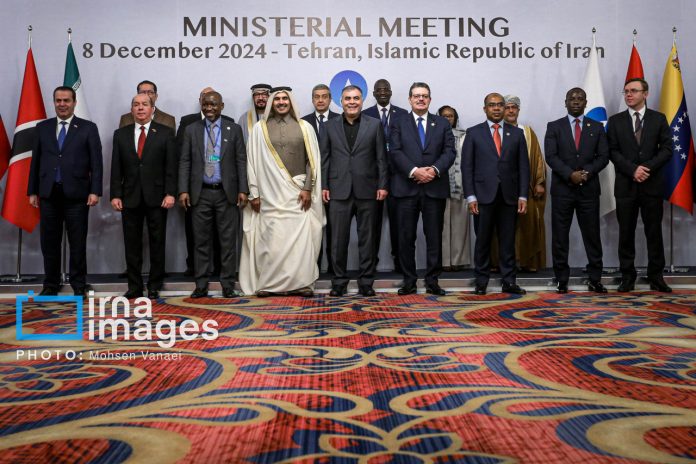
Energy giants voice deep concern over Israel deliberate attacks on Iran

Issuing a final statement at the end of its 26th ministerial meeting in Tehran on Sunday, the GECF said it is deeply concerned over acts of deliberate attacks against Iran and added that such tensions affect vital supply chains, exacerbate energy poverty, and heighten market volatility.

Iran is a key member of the GECF as it sits on the world’s second-largest natural gas reserves and is the world’s third-largest gas producer.

Iran’s Oil Minister Mohsen Paknejad, who chaired GECF’s ministerial meeting, said that his country plays a major role in global energy security through its continued efforts to develop gas export infrastructures.

Paknejad said Iran had expanded its key gas resources, including the South Pars gas field in the Persian Gulf, which is the world’s largest gas field, despite oppressive sanctions imposed by the United States.

In its final statement in the Tehran meeting, the GECF reiterated its commitment to cooperate with other global energy stakeholders and the United Nations agencies to create a more balanced approach in dealing with international energy issues.

The statement highlighted the pivotal role of natural gas in economic development, social progress, and environment protection.

It said stronger multilateral collaboration can “ensure a balanced and inclusive approach to global energy governance,” and can address “challenges related to energy security, affordability, and environmental sustainability.”

The GECF was established in the late 2010s upon an idea raised by Iran earlier that decade. The Forum currently has 11 members and 8 observers.

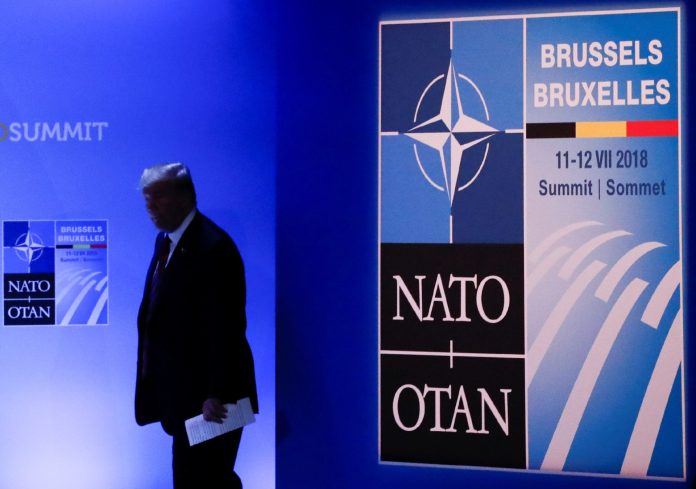
Trump says he will consider leaving NATO

Donald Trump NATO

Trump suggested in a Meet the Press interview aired that Ukraine could receive less aid under his presidency. When asked whether Ukraine should prepare for reduced U.S. assistance, Trump responded, “Possibly, sure.”

Trump reiterated that he is working to end the war in Ukraine, building on his previous campaign claim that he could resolve the war within 24 hours if he were in charge.

However, he confirmed that he has not spoken to Russian President Vladimir Putin recently, adding, “I don’t want to say that because I don’t want to do anything that could impede the negotiations.”

Trump also wrote on his Truth Social platform earlier that President Volodymyr Zelensky “would like to make a deal” and “stop the madness” of the war in Ukraine, following their meeting in Paris.

Trump and Zelensky met in Paris as world leaders convened for the reopening of the Notre Dame Cathedral. The meeting, hosted by French President Emmanuel Macron, marked the first in-person discussion between the two since Trump’s election victory in November.

Trump also refrained from guaranteeing the U.S. would remain in NATO but emphasized that the U.S. would continue its membership if treated “fairly” in terms of contributions.

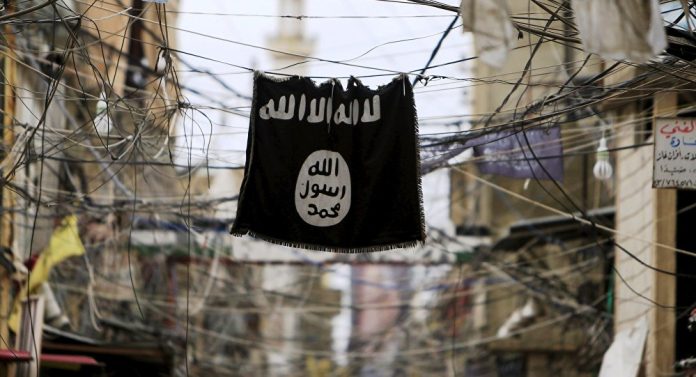
US says launched airstrikes against Daesh camps in Syria following Assad fall

Daesh

The military operation consisted of “dozens of precision airstrikes” and struck more than 75 targets in central Syria using Air Force assets, including B-52s, F-15s and A-10s.

“The strikes against the Daesh leaders, operatives, and camps were conducted as part of the ongoing mission to disrupt, degrade and defeat ISIS, in order to prevent the terrorist group from conducting external operations and to ensure that ISIS does not seek to take advantage of the current situation to reconstitute in central Syria,” CENTCOM’s statement read.

Earlier Sunday, the Syrian government fell after rebels entered the capital city and ended President Bashar Assad
and his family’s 50-year rule.

Assad and his family fled to Russia, where they were welcomed and approved for asylum.

Citizens took to the streets in celebration of the overthrow and pivotal moment in the war.

The uprising has raised questions about what lies ahead for the country and region, but Gen. Michael Erik Kurilla stated there “should be no doubt” that the US will not allow ISIS to reconstitute in the wake of the current situation.

“All organizations in Syria should know that we will hold them accountable if they partner with or support Daesh in any way,” he said in a statement.

President Joe Biden stressed Sunday that the US will continue its anti-Daesh operations. He called Assad’s fall a “fundamental act of justice” but added the current moment was full of “risk and uncertainty”.

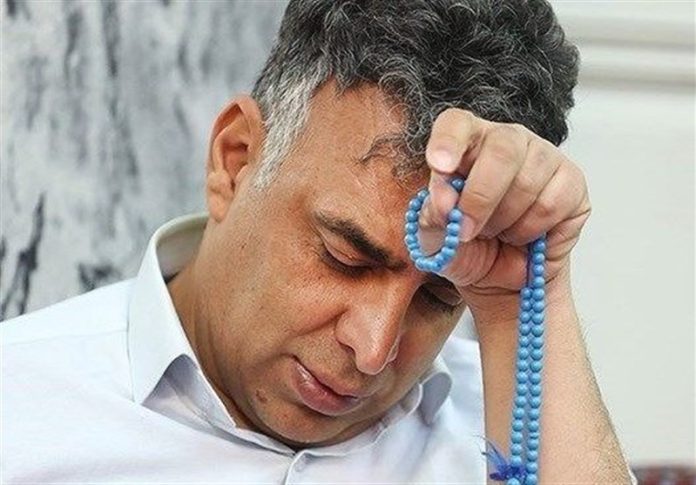
Mehdi Alirezaei, Iran’s Tasnim news agency reporter, passes away

Mehdi Alirezaei

Alirezaei had over 15 years of experience covering various sectors, including municipalities, the Ministry of Interior, social security, and more, contributing to different media outlets such as Hamshahri magazines, urban websites, Fars News Agency, and Tasnim News Agency.

Throughout his career, Alirezaei focused on addressing the needs of vulnerable communities, including those supported by welfare organizations, patients with special conditions, retirees, and persons with disabilities.

His impactful report on child labor gained international attention and was nominated for the 2023 Real Story Award in Switzerland.

His sudden demise has prompted condolences from numerous officials, including the head of the government’s Information Council, Elias Hazrati, and urban managers in Tehran, who expressed their sympathies through various messages.

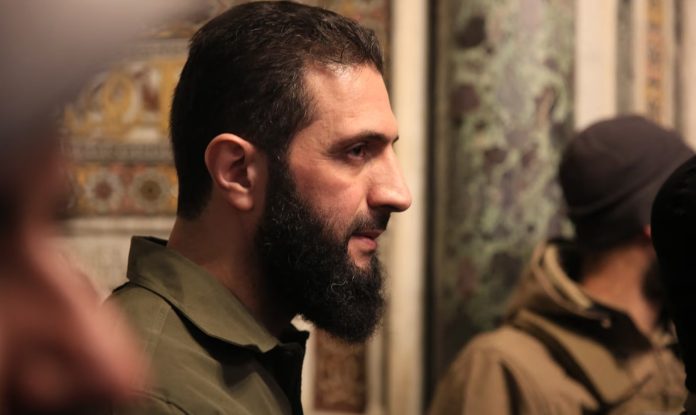
US officials discussed merits of removing $10m bounty on militant group HTS head: Report

Abu Mohammad al-Jolani

Ahmed al-Sharaa, commonly known as Jolani, has been designated as a terrorist by the United States since 2013, whilst his organisation, HTS, was proscribed by the Trump administration in 2018 when a $10m bounty was placed on his head.

For years, HTS lobbied to be delisted, but its pleas largely fell on deaf years with the group relegated to governing just a sliver of northwest Syria.

But the lightning blitz by the rebels, which saw Assad’s iron-grip rule end in spectaular fashion on Sunday, has since forced Washington to rethink how it engages with the former al-Qaeda affiliate.

The senior Arab official, who requested anonymity due to sensitivities surrounding the talks, told MEE that the discussions had divided officials in the Biden administration. Meantime, when asked about the discussions, one Trump transition official disparaged the Biden administration.

Jolani, 42, gave a rousing victory speech in Damascus’ iconic Umayyad Mosque on Sunday and is widely expected to play a key role in Syria’s transition after 54 years of Assad family rule.

“Today, Syria is being purified,” Jolani told a crowd of supporters in Damascus, adding that “this victory is born from the people who have languished in prison, and the mujahideen (fighters) broke their chains”.

He said that under Assad, Syria had become a place for “Iranian ambitions, where sectarianism was rife”, in reference to Assad’s allies Tehran and Hezbollah.

Speaking several hours after the fall of Damascus, US President Joe Biden called the rebel takeover a “fundamental act of justice,” but cautioned it was “a moment of risk and uncertainty” for the Middle East.

“We will remain vigilant,” Biden said, adding, “Make no mistake, some of the rebel groups that took down Assad have their own grim record of terrorism and human rights abuses,” adding that the groups are “saying the right things now.”

“But as they take on greater responsibility, we will assess not just their words, but their actions.”

Later, a senior Biden administration official, when asked about contact with HTS leaders, said Washington was in contact with Syrian groups of all kinds.

The official, who was not authorised to publicly discuss the situation and spoke on condition of anonymity, also said the US was focused on ensuring chemical weapons in Assad’s military arsenal were secured.

Meanwhile, the New York Times reported that US intelligence agencies were in the process of evaluating Jolani, who it said had launched a “charm offensive” aimed at allaying concerns over his past affiliations.

Jolani was born to a family originally from the occupied Golan Heights and fought in the Iraq insurgency and served five years in an American-run prison in Iraq, before returning to Syria as the emissary of Islamic State founder Abu Bakr al-Baghdadi.

“A charm offensive might mean that people are turning over a new leaf and they think differently than they used to so you should hear them out. On the other hand, you should be cautious because charm offensives can sometimes be misleading,” the US official said.

“We have to think about it. We have to watch their behavior and we need to do some indirect messaging and see what comes of that,” the official added.

But, US President-elect Donald Trump, who will be entering office in just five weeks, has left few doubts where he stood on the conflict, saying Washington “should have nothing to do with it [Syria]”.

In a social media post on Saturday, Trump wrote that Assad “lost” because “Russia and Iran are in a weakened state right now, one because of Ukraine and a bad economy, the other because of Israel and its fighting success”.

Syrian army’s inability to counter militants was surprising: Iran’s FM

Abbas Araghchi

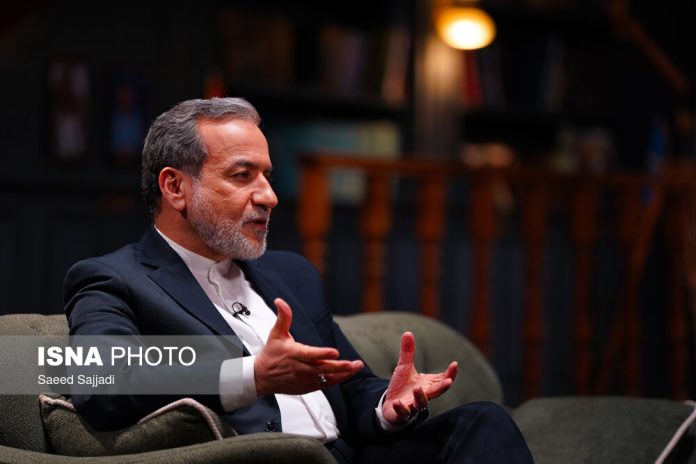
Araghchi made the remarks on Sunday following the fall of the Syrian government after militant groups led by Hayat Tahrir al-Sham (HTS) stormed the capital Damascus.

The minister said that during his recent meeting, he found President Bashar al-Assad surprised and complaining about the state of his army.

The Iranian foreign minister added that the main responsibility to protect the country was of the Syrian army, and Iran did not consider itself a duty in this regard.

“The Syrian government did not expect this from us either, because this issue was related to the internal matters of Syria, the government’s relationship with the opposition groups and the people of the country.”

“In this regard, Iran could only provide guidance and advice,” he continued.

“I remember that one of our serious recommendations to the Syrian government has always been to have dialogue and interaction with opposition groups and try to resolve issues peacefully without harming the people,” the top Iranian diplomat stated.

“The formation of the Astana process has largely been in this direction. As you know, Iran, Russia and Turkey created an ‘Astana’ negotiation process,” he added.

“The purpose of this process was to provide a basis for these three countries, which are somehow involved in the internal developments of Syria, to help reforms and achieve political solutions,” he said.

“The last meeting of this process was held yesterday, which was the continuation of the same path and goals,” Araghchi stressed.

“The Astana process was trying to help reduce tensions and promote internal reforms in Syria through the cooperation of these three countries,” he noted.

Iran’s foreign minister said the developments in Syria will not weaken the Lebanese resistance movement Hezbollah.

Araghchi added Hezbollah’s current munitions, equipment and facilities are enough for its resistance over the next one or two years.

The top diplomat stated Syria has been one of the important members of the axis of the resistance and played a significant role in confronting Israel and supporting Palestinians.

Araghchi noted that Iran is closely monitoring the developments and its approach will depend on the policy militant groups in the Arab country adopt toward the Islamic Republic.

On Saturday, Araghchi met with the foreign ministers of Russia and Turkey in the Qatari capital of Doha.

The top diplomats of the three guarantor states of the Astana peace process discussed the developments in Syria following the resurgence of militancy in the Arab country.

Araghchi called for a “political dialogue” between the Syrian government and militant groups.

He noted the “most important” issue agreed by the parties was that “political dialogue between the Syrian government and the legitimate opposition groups” should begin.

However, on Sunday, militants seized control of the capital Damascus. President Assad resigned and issued instructions for a peaceful transition of power.

Abu Mohammad al-Jolani, the HTS commander, said Sunday that Syrian state institutions would be supervised by Jalali until a transition of power takes place.

The HTS said it would work with the prime minister and called on Syrian armed forces in Damascus to stay away from public institutions.

In a statement earlier, Russia’s Foreign Ministry announced President Assad had resigned and left Syria, but it did not provide details on where he had gone.

However, later in the day, Russian media reported that Assad arrived in Moscow along with his family.

Citing a source in the Kremlin, several Russian media outlets reported that the Russian government has granted Assad and his family asylum.

Assad’s departure came after armed militants swept through the country in an offensive that saw them first capture Aleppo in the northwest and then advance south towards the key cities of Hama and Homs before storming into Damascus.

Assad’s exit raises concerns about who will lead Syria, a country that has grappled with years of foreign-backed militancy with rival factions vying for control over different areas of the country.