Saturday, April 4, 2026
Home Blog Page 6

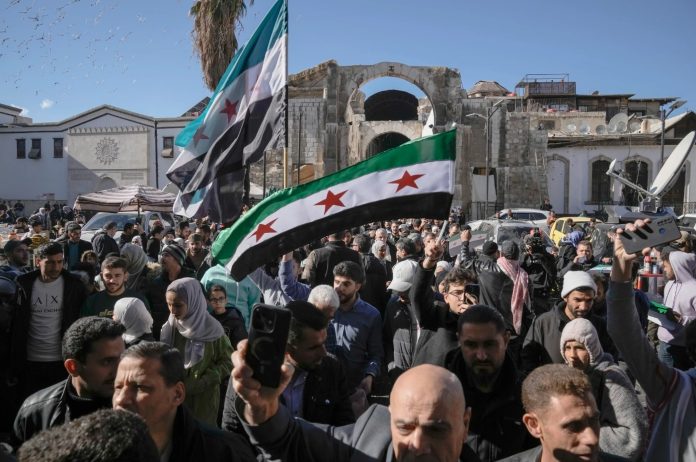
Syria’s FM taking part in new round of negotiations with Israel: SANA

Syria War

Quoting a government source, SANA said the talks were coordinated and mediated by Washington, adding that the discussions were focused on reaching “a balanced security agreement” between the two sides.

Two diplomatic sources told AFP that the US-mediated talks were being held in Paris.

SANA added the negotiations were focused on reactivating a 1974 disengagement agreement and guaranteeing “the withdrawal of Israeli forces” to their positions before the overthrow of longtime ruler Bashar al-Assad in December 2024.

After Assad’s ousting, Israel sent troops into the UN-patrolled buffer zone which has separated Israeli and Syrian forces on the Golan Heights for decades.

Israel has also carried out repeated incursions deeper into Syrian territory since then, as well as bombings, and has announced it wants a demilitarised zone in the country’s south.

The United States has been pushing Syria and Israel to reach a deal that would halt hostilities between the two countries, technically at war since 1948.

“The resumption of these negotiations is confirmation of Syria’s firm commitment to restoring its non-negotiable national rights,” the government source told SANA, adding that intelligence chief Hussein al-Salama was also part of the delegation.

Syria and Israel opened direct negotiations after Assad was toppled by militants.

Officials have met on several occasions, most recently in September, but Israel’s insistence on a demilitarised zone in southern Syria has been a major stumbling block.

Last month, Syrian President Ahmed al-Sharaa stated that the demand would endanger his country and urged Israel to respect the 1974 deal.
UN chief “deeply concerned” by impact of US military action in Venezuela

In a statement read out at a meeting of the UN Security Council on Monday, Guterres stressed that international law “provides the foundation for the maintenance of international peace and security.”

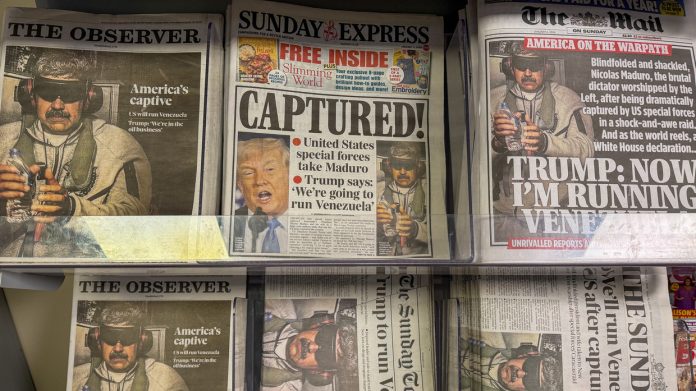
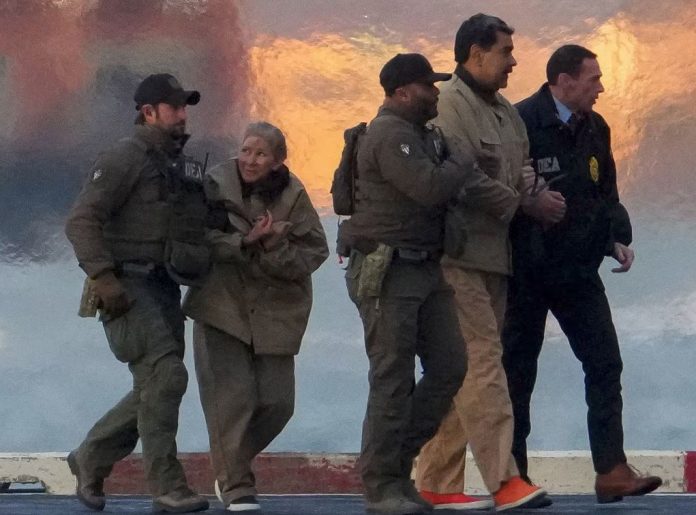
He also highlighted concerns around the knock-on effects of the detainment of deposed Venezuelan leader Nicolás Maduro and his wife Cilia Flores.

“I am deeply concerned about the possible intensification of instability in the country, the potential impact on the region and the precedent it may set for how relations between and among states are conducted,” Guterres said.

“Venezuela has experienced decades of internal instability and social and economic turmoil,” he stated.

“Democracy has been undermined. Millions of its people have fled the country. The situation is critical, but it is still possible to prevent a wider and more destructive conflagration,” Guterres added.

“In situations as confused, as complex, as the one we now face, it is important to stick to principles,” he said.

“International law contains tools to address issues such as illicit traffic in narcotics, disputes about resources and human rights concerns,” added Guterres.

“This is the route we need to take.”

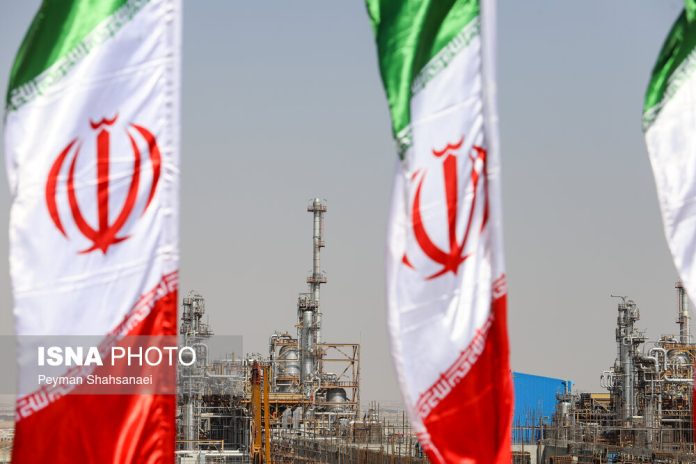
Iran sets new daily gas production record in Asalouyeh

Iran Oil Gas

Paknejad praised the efforts of South Pars platform teams for achieving this milestone. He noted that a major portion of Iran’s domestic, commercial, and industrial gas needs comes from this field.

Paknejad spoke about the reconstruction of the Fajr Jam refinery, where two trains were damaged during the 12-day war. He said the refinery has returned to production in less than six months and adding 12–13 million cubic meters of gas daily.

The oil minister also confirmed that Phase 14 of South Pars is undergoing reconstruction and will soon resume operations, supporting electricity generation.

He said since the start of the year, an additional 3.5 billion cubic meters of gas has been delivered to power plants, ensuring uninterrupted electricity supply.

According to the minister, adequate liquid fuel has also been provided to prevent any shortages, which ensures homes across Iran remain heated and powered during peak demand.

Iran dismisses NYT report on “survival mode” as misinformation

Abbas Araghchi

In a post on X, Mohsen Shamsizadeh said some Western sides are determined to turn even trivial matters into tools for misinformation and tension.

Shamsizadeh added that the Israeli-funded news channel Iran International amplified the claim with a prominent headline.

“Apparently, some Western sides insist on using every minor issue as a pretext for spreading false information and fueling tensions,” Shamsizadeh said.

He noted that holding regular and periodic meetings by the foreign minister or the ministry’s spokesperson with journalists and media representatives on foreign policy issues is a completely normal and routine practice.

However, he stressed that no such meeting, with the specifications claimed by the New York Times, took place at all.

Earlier, the New York Times, citing three Iranian officials, claimed that amid escalating protests in Iran, senior government figures have acknowledged in private meetings that the Islamic Republic has entered what the newspaper described as a “survival mode” driven by current crises including demonstrations over economic conditions.

Iran’s Judiciary chief: No leniency will be shown to rioters

Mohseni Ejei

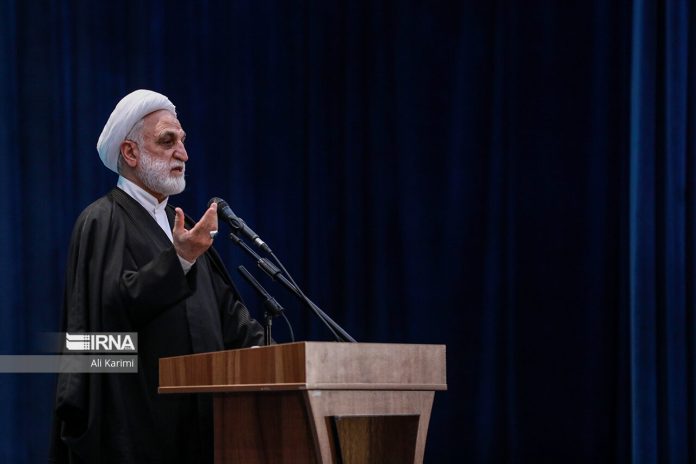
Speaking on Monday amid public calls for firm action against rioters, Ejei said there could be no tolerance toward individuals seeking to undermine public security and stability.

He argued that the US and the Zionist regime have openly supported the unrest, making decisive action imperative.

Ejei reiterated that this time there would be no leniency toward rioters.

He instructed the prosecutor general and provincial prosecutors to pursue detainees who played a role in the unrest or assisted rioters and to deny them any form of clemency.

“The main elements must be identified”, Ejei said.

He noted that some instigators may not appear on the streets but should still be tracked down and dealt with.

His comments come as some Iranians have in recent days launched a campaign titled “Decisive Action Against Rioters and Enemy Agents”, urging the Judiciary to take serious measures against individuals acting against  the Islamic Republic system.

US threatens India with higher tariffs over Russian oil

Russia Oil

Trump’s remarks come amid ongoing negotiations between New Delhi and Washington to clinch a trade deal.

“They do trade. And we can raise tariffs on them very quickly, and it would be very bad for them,” Trump said on board Air Force One.

Trump was adding to comments made by Senator Lindsey Graham, who said India had substantially reduced its oil purchases from Russia after Washington hit it with tariffs.

“I really do believe that what he [Donald Trump] did with India is the chief reason India is now buying substantially less Russian oil,” Graham told reporters.

The Senator is pursuing legislation that would make it possible to impose additional sanctions on nations that conduct trade with Russia.

“I was at the Indian ambassador’s house about a month ago, and all he wanted to talk about is how they’re buying less Russian oil. ‘Would you tell the president to relieve the tariff?’ This stuff works. So, I’m hoping we’ll bring the bill up,” Graham told reporters aboard Air Force One on Sunday.

India, the world’s third-largest oil consumer, became a key market for Russian crude following the escalation of the Ukraine conflict in 2022.

Data from analytics firm Kpler shows Russia has been the South Asian nation’s top oil supplier since then, providing over 36% of India’s crude imports.

However, key Indian refiners have temporarily halted new orders and sought alternative supplies in response to US sanctions.

Others, including the state-backed Indian Oil Corporation, say they will continue buying oil from Russian producers that haven’t been sanctioned.

Trump slapped India with a 25% tariff in August of 2025 after the two countries failed to reach a trade agreement and then announced an additional 25% levy on India as a penalty for purchasing Russian oil, claiming the trade was prolonging the Ukraine conflict.

New Delhi has dismissed the criticism, saying its energy policy is driven by national interests.

In December, Trump threatened to impose additional tariffs on India, accusing it of “dumping” rice into the American market.

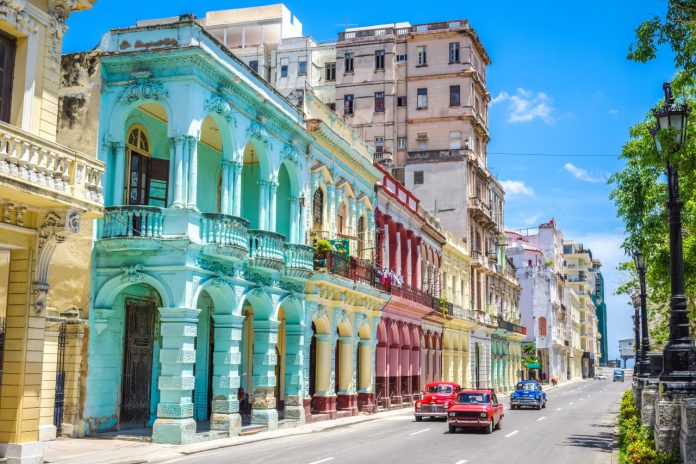
Trump: Cuba is ‘ready to fall’

Trump said Cuba’s fate is now directly tied to Maduro’s ouster and the collapse of Venezuela’s ability to bankroll allies in the region.

Asked if he was considering U.S. action in Cuba, Trump replied: “I think it’s just going to fall. I don’t think we need any action. Looks like it’s going down. It’s going down for the count.”

The president’s comments during a press gaggle with reporters aboard Air Force One come after Saturday’s capture of Maduro and his wife on charges tied to a narco-terrorism conspiracy. The audacious operation has sent shockwaves through allied governments in the region, with Cuban officials calling for rallies in support of Venezuela and accusing the U.S. of violating sovereignty.

U.S. officials say Cuban security forces played a central role in keeping Maduro in power. Secretary of State Marco Rubio stated that Cuban operatives effectively ran Venezuela’s internal intelligence and security operations – including personally guarding Maduro and monitoring loyalty inside his government.

“It was Cubans that guarded Maduro,” Rubio continued, adding, “He was not guarded by Venezuelan bodyguards. He had Cuban bodyguards.”

Cuba’s government acknowledged Sunday that 32 Cuban military and police officers were killed during the American operation in Venezuela, marking the first official death toll released by Havana. Cuban state media said the officers had been deployed at the request of Caracas and announced two days of national mourning.

Trump confirmed Cuban casualties while traveling back to Washington.

“A lot of Cubans were killed yesterday,” he said, adding, “There was a lot of death on the other side. No death on our side.”

Trump also took aim at neighboring Colombia, accusing its leadership of fueling drug trafficking into the U.S.

“Colombia is very sick, run by a sick man who likes making cocaine and selling it to the United States,” Trump said, adding that the country, “is not going to be doing it for a very long time.”

He suggested the U.S. was prepared to act against narco-trafficking networks operating by land and sea, citing recent interdictions.

Trump also revived his long-standing focus on Greenland, arguing the Arctic territory is critical to U.S. security amid growing Russian and Chinese activity.

Iranian Leader’s office responds to Elon Musk over Trump remarks

Elon Musk

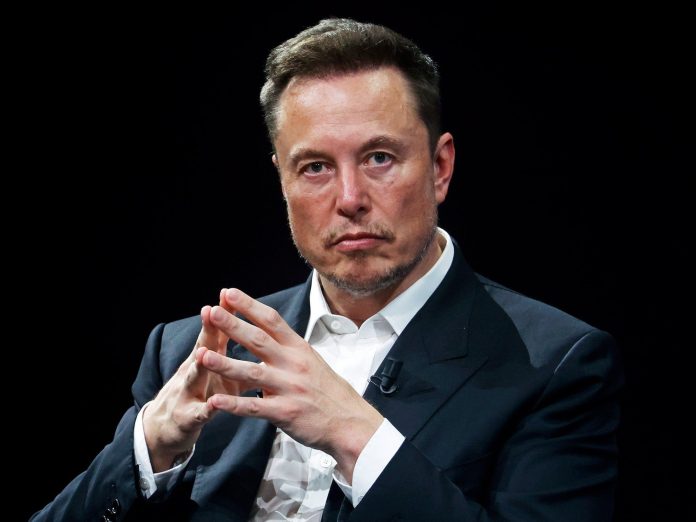
Mehdi Fazaeli, a member of the Leader’s office, reacted by posting four historical images highlighting past confrontations between Iran and the US. The images referred to the failed US military operation in Iran’s Tabas desert in 1980, the detention of US Navy boats in the Persian Gulf in 2016, Iran’s missile strike on the Ain al-Asad airbase in Iraq in 2020, and a Iranian missile response targeting the US al-Udeid base in Qatar in 2025.

Alongside the images, Fazaeli addressed Musk directly, writing in Persian: “Ask your elders,” a phrase widely interpreted as a warning referencing historical precedents and past US setbacks.

The response comes amid heightened rhetoric following recent statements by Trump regarding Iran. It also follows remarks by Iran’s Leader Ayatollah Seyyed Ali Khamenei earlier this month, delivered during a meeting with families of those killed in the 12-day war.

In that address, Ayatollah Khamenei stressed that Iran would not retreat in the face of its enemies and said the country, relying on divine support and public backing, would ultimately prevail. Musk had replied the tweet in Persian, questioning the Leader’s remarks.

80 people killed in US attack on Venezuela: NYT

Venezuelan Defense Minister Vladimir Padrino Lopez confirmed that US forces had killed a “large part” of Maduro’s security detail in the operation, without giving a figure. Venezuelan officials also accused the US of hitting civilian areas but have not released an official death toll yet.

Meanwhile, Cuban officials say 32 of its citizens, including military personnel, were killed in the attack. Cuban President Miguel Diaz-Canel has announced that January 5th and 6th will be official days of mourning.

“Our compatriots fulfilled their duty with dignity and heroism and fell, after fierce resistance, in direct combat against the attackers or as a result of the bombings,” he said.

Venezuelan Foreign Minister Yvan Gil Pinto paid tribute to the deceased Cubans who “offered their lives” while carrying out duties as part of cooperation and defense missions, while describing the US raid as a “criminal and infamous” attack.

US President Donald Trump stated that no American troops had been killed, while suggesting some service members may have been wounded. Two unnamed US officials told the New York Times that about half a dozen soldiers were injured during the operation to capture Maduro and his wife.

Media reports have suggested that the US bombardment targeted several key military sites, communication infrastructure, and depots. However, American officials have said the airstrikes were meant to provide cover for seizing Maduro so that he could be brought to America to stand trial on drug trafficking and weapons charges.

Venezuela’s leadership has long denied accusations that it is connected with the drug trade, arguing that the charges coming from the US only serve as a pretext for regime change.

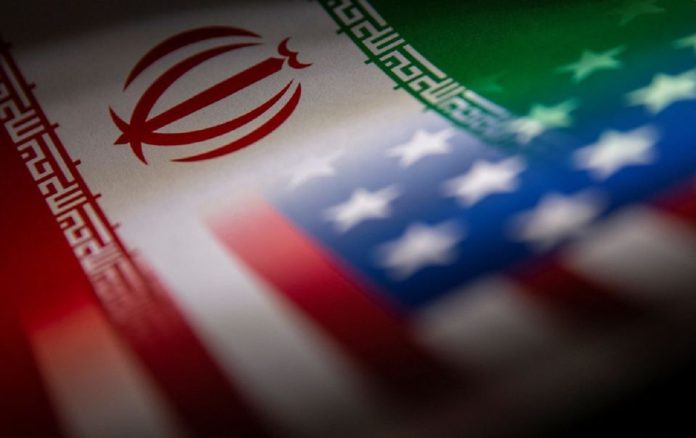
Iran says US signals readiness for talks but pairs diplomacy with threats

Iran US Flags

In an interview, Gharibabadi said Iran has never opposed dialogue in principle, but “not at any price.” He noted that if talks were merely for the sake of talking, negotiations could begin immediately, but result-oriented dialogue requires proper conditions.

According to him, the final decision on negotiations is made at the level of the Iranian system as a whole, not by a single institution.

Gharibabadi noted that during five rounds of indirect talks, Washington’s formal demand was “zero enrichment,” a position Iran has consistently rejected. He added that the US side failed to present a clear or coherent proposal, reflecting a lack of internal consensus.

He also referred to a letter sent by US President Donald Trump, describing it as containing both an expression of readiness for negotiations and an explicit threat of military action if talks failed. Iran, he said, responded firmly, rejecting threats while agreeing only to indirect negotiations.

Gharibabadi emphasized that diplomacy has not reached a dead end, but warned that negotiations under the shadow of military threats amount to coercion rather than genuine dialogue.