Wednesday, December 31, 2025
Home Blog Page 590

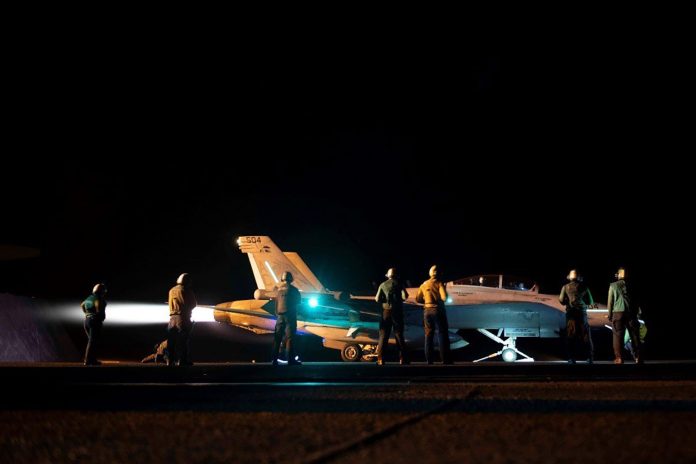
US and UK militaries jointly strike Houthi targets in Yemen

US-led coalition Yemen

The broadcaster, which is affiliated with the Houthi-associated Ansar Allah movement, reported that the attacks and a raid targeted the At-Tuhayta district in Al-Hodeidah Governorate.

The report, confirmed by a security source in the governorate, has not provided information on casualties or any other details of the bombing.

Sunday’s raid was the first since the attacks in mid-November when American-British air forces jointly bombed targets in the country’s Saada and Amran governorates.

The Houthis, a group that controls a large part of Yemen, have been attacking Israel-linked commercial shipping in the Red Sea since October last year, in response to Israel’s bombardment of the Gaza Strip.

The Yemeni group has fired missiles or drones at more than 80 merchant ships since Israel declared war on Hamas in Gaza. Initially, the Houthis targeted just vessels “linked to” Israel but expanded their interdictions to US and UK vessels after Anglo-American airstrikes in January.

The Houthis have also attacked Western warships in the region and launched missiles directly at Israel on several occasions, describing their actions as a campaign of solidarity with Palestinians.

No lifting of Syria sanctions until rights and unity are guaranteed: EU

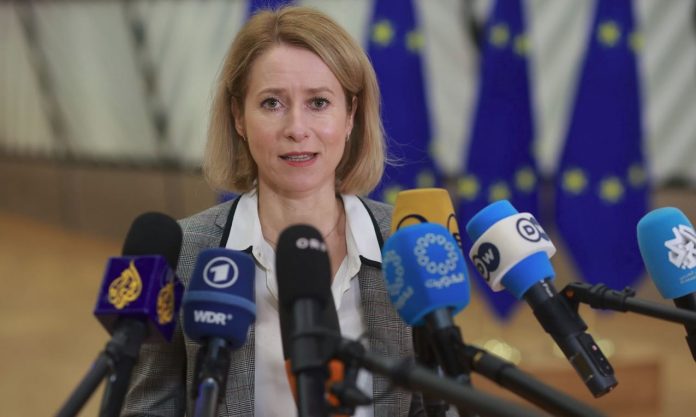
An EU foreign ministers’ meeting in Brussels on Monday, which had Syria on the agenda, would not discuss expanding financial support to the country beyond that already provided by the EU through United Nations agencies, the EU’s new foreign policy chief, Kaja Kallas, said.

“One of the questions is whether we are able to, in the future, look at the adaptation of the sanctions regime. But this clearly is not the question of today, but rather in the future where we have seen that the steps go in the right direction,” Kallas told Reuters in an interview.

While the EU has in place a tough sanctions regime against Syria, the opposition group Hayat Tahrir al-Sham has also been under sanctions for years, complicating matters for the international community.

The EU was already the biggest donor of humanitarian aid to Syria, Kallas continued.

“We need to discuss what more can we do. But as I say, it can’t come as a blank cheque,” she added.

“Syria faces a hopeful but uncertain future,” said Kallas, who is making her first visit to the Middle East in her new post. Syria’s new interim leaders had made “positive signals” but these were not enough, she said.

“What everybody is looking at is, of course, the treatment of women and girls also, which shows the society and how it goes, how the institutions are built up, so that there is a government that takes on board everybody,” she added.

480 meteorological stations in Iran report subzero temperatures, 190 stations below -10°C

Of the 675 meteorological stations nationwide, 480 have recorded temperatures below zero, with 190 stations reporting temperatures below -10°C. Temperatures in 28 provincial capitals dropped below freezing on Tuesday.

Sadegh Ziaian, the head of the National Weather Forecasting Center, highlighted that the lowest temperature recorded was -21.6°C in Khosavich, North Khorasan province.

Ziaian noted significant temperature drops in northeastern Iran on Tuesday. Other notable temperatures included -21.3°C in Sarcham, -20.6°C in Neishabour, -20.4°C in Khalkhal, and -20.3°C in Fariman.

Among provincial capitals, Mashhad reported the coldest temperature at -14.6°C, followed by Zanjan at -13.2°C and Hamedan at -12.8°C.

Ziaian emphasized that only provincial capitals Ahvaz, Bushehr, and Bandar Abbas in southern Iran have not experienced subzero temperatures.

On Monday, Ardabil Airport registered the coldest temperature at -27°C, followed by Khalkhal at -25°C, Takht-e Soleyman and Zanjan both at -24°C.

The forecast organization predicts a temperature increase of 2 to 5 degrees across most regions on Tuesday, with stability on Wednesday and a slight rise of 1 to 2 degrees on Thursday.

Assad airlifts $250mn in cash to Russia in 2018-2019: FT

Bashar Assad

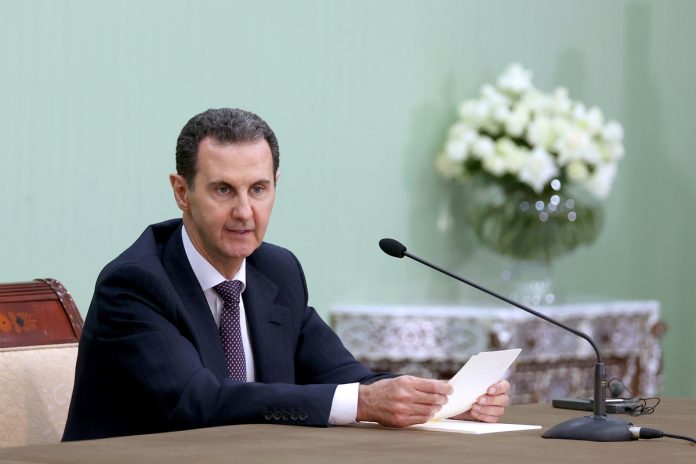
Documents obtained by the British daily reveal that Syria’s central bank flew shipments of US dollars and euros, weighing nearly two tons, to Moscow’s Vnukovo Airport. These funds were deposited into Russian banks sanctioned by the US.

The transfers came during a period when Syria, struggling with depleted foreign reserves, relied heavily on Russian military backing, including support from the Wagner Group.

“The regime would have to bring their money abroad to a safe haven to be able to use it to procure the fine life… for the regime and its inner circle,” said David Schenker, former US Assistant Secretary of State for Near Eastern Affairs.

Syrian cash was used for various purposes, including payments for wheat, military expenses, and money-printing services in Russia.

A source familiar with the transactions noted: “When a country is completely surrounded and sanctioned, they have only cash.”

The newspaper investigation also highlighted how Assad’s family and associates moved assets into Russia.

Since 2013, Assad’s relatives purchased at least 20 luxury apartments in Moscow using intricate financial arrangements.

Eyad Hamid, a senior researcher at the Syrian Legal Development Program, stated, “Russia has been a haven to the Assad regime’s finances for years,” underscoring its role as a hub for sanctions evasion.

US officials have accused Assad’s government of widespread corruption and criminal activity to finance its war efforts.

The US Treasury has sanctioned multiple Syrian and Russian entities involved in facilitating these cash transfers.

Malik al-Abdeh, a Syrian analyst, noted: “The Syrian state could be paying the Russian state for a military intervention.”

These revelations shed light on how Assad’s government sustained itself financially during Syria’s devastating war while Western sanctions pushed it further into Moscow’s orbit.

Assad, who ruled Syria with an iron fist for nearly 25 years, fled to Russia last week after armed groups seized control of Damascus.

The takeover came after Hayat Tahrir al-Sham (HTS) fighters captured key cities across the country in a lightning offensive that lasted less than two weeks.

Britain confirms diplomatic contact with new Syrian leadership

“We want to see a representative government, an inclusive government. We want to see chemical weapons stockpiles secured, and not used, and we want to ensure that there is not continuing violence,” Foreign Secretary David Lammy said, as reported by the BBC.

Lammy clarified that this contact does not mean he has personally communicated with the HTS, emphasizing that interactions have been carried out through diplomatic and intelligence-led channels.

“For all of those reasons, using all the channels that we have available, and those are diplomatic and of course intelligence-led channels, we seek to deal with HTS where we have to,” he added.

The revelation coincides with the UK’s announcement of a £50-million (about $63.1 million) humanitarian aid package to support vulnerable Syrians affected by the ongoing crisis.

Lammy reiterated that the UK’s primary goal is to assist the Syrian people while fostering regional stability.

The announcement follows comments from US Secretary of State Antony Blinken, who on Saturday confirmed that the US has made “direct contact” with the HTS, which now controls most of Syria.

Meanwhile, British Prime Minister Sir Keir Starmer stated that no decision has been made on the potential removal of the HTS from the UK’s list of banned terrorist organizations.

The HTS was designated a terrorist organization in 2017 due to its classification as an “alternative name” of al-Qaeda.

Iranian official do not rule out issuing a death sentence for Netanyahu over Gaza war crimes

Netanyahu Gallant

“In my opinion, this is not impossible. It is possible if efforts are made,” Kazem Gharibabadi said in an interview with Khamenei.ir published on Sunday.

He pointed to the lack of a fair court to investigate the crimes of the Israeli regime and its criminal officials and added that the International Criminal Court (ICC) has only issued an arrest warrant which is the most basic action of a judicial authority.

He said two or three countries which support the Palestinian people and oppose Israel’s crimes can come together and form a “joint court” that issues death sentence for the regime’s officials.

“We should try to see if it is possible to form a court consisting of two or three like-minded countries that support the Palestinian people. Within the framework of that court, it will be possible to issue such rulings [death sentence],” Gharibabadi emphasized.

However, he added, it should be noted to what extent this ruling can be enforced and what will be the guarantee of its implementation.

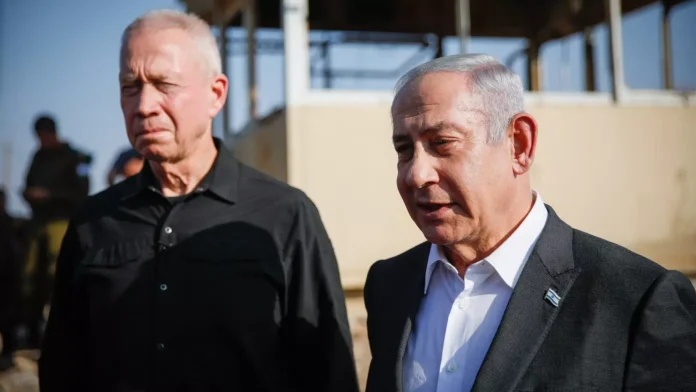
In November, the ICC’s Pre-Trial Chamber I issued warrants of arrest for Netanyahu and his former minister of military affairs Yoav Gallant “for crimes against humanity and war crimes” committed from at least October 8, 2023 until at least May 20, 2024, the day the Prosecution filed the applications for warrants of arrest.

It is the first instance in the court’s 22-year history it has issued arrest warrants for Western-allied senior officials.

Gharibabadi said before the ICC ruling, the International Court of Justice (ICJ) in The Hague issued a ruling regarding a case brought by South Africa under the Convention on the Prevention and Punishment of the Crime of Genocide with the support of some other countries, which was another condemnation of the Israeli regime and its crimes.

South Africa had initially filed the genocide case against the Israeli regime at the ICJ in late 2023, weeks after the Israeli regime unleashed its brutal killing machine on Gaza in October.

In addition to South Africa, several other countries, including Spain, Mexico, Libya, Turkey, Nicaragua, and Colombia have joined the case, which began public hearings in January.

In May, the top UN court ordered the Tel Aviv regime to halt its invasion of the southern Gaza city of Rafah.

The 15-judge ICJ panel issued three preliminary orders seeking to rein in the death toll and alleviate humanitarian suffering in the blockaded enclave where at least 44,976 have been killed and some 106,759 more have been injured in the ongoing Israeli invasion.

Elsewhere in his remarks, Gharibabdi said the United States is “completely complicit in and responsible” for the Israeli regime’s crimes.

“The US has not only provided military and intelligence support to the Zionist regime, but also gives political and diplomatic support,” the Iranian diplomat explained.

He emphasized that Israel would definitely not survive without the US support.

Israel is committing crimes in Gaza and other regions due to the US opposition to a ceasefire and its unwavering support for the regime, he pointed out.

Israel approves plan to increase settler population in Golan Heights

Israel Army

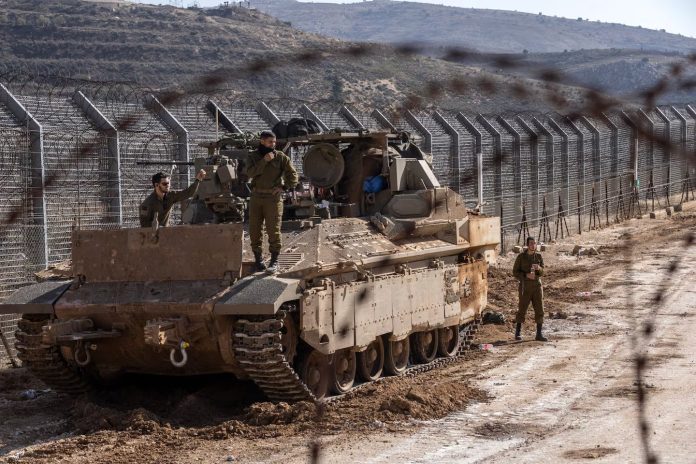
Israeli Prime Minister Benjamin Netanyahu’s office said the government had “unanimously approved” the “demographic development” of the occupied territory, which would seek to double the Israeli population there.

The new plan is only for the portion of the Golan Heights that Israel has occupied since 1967. In 1981, Israel’s Knesset moved to impose Israeli law over the territory, in an effective annexation.

The plan does not relate to the portion of Syrian land seized by Israel in the wake of al-Assad’s toppling a week ago. The seized area, which had been demilitarised as part of an agreement reached after the 1973 war, also includes Mount Hermon overlooking the Syrian capital Damascus.

In a statement, Netanyahu praised the plan, which provides more than 40 million shekels ($11m) to increase the settler population.

There are about 31,000 Israeli settlers spread across dozens of illegal settlements in the Golan Heights already. They live alongside minority groups, including the Druze, who predominantly identify as Syrian.

“Strengthening the Golan is strengthening the State of Israel, and it is especially important at this time,” Netanyahu stated.

“We will continue to hold onto it, cause it to blossom, and settle in it.”

While Israeli occupation of the Golan Heights is illegal under international law, during his first term in office, from 2017 to 2021, US President-elect Donald Trump made the United States the first country in the world to officially recognise Israeli sovereignty over the area.

Trump is set to retake office again on January 20 after winning the US presidential election in November.

Meanwhile, Netanyahu’s office said he had discussed the situation in Syria during a phone call with Trump on Saturday. He also discussed efforts to reach a ceasefire agreement in Gaza.

Despite Israel launching hundreds of strikes on Syrian sites since opposition groups led by Hayat Tahrir al-Sham (HTS) overthrew al-Assad and moved to create a transitional government, Netanyahu said: “We have no interest in conflict with Syria.”

He added the attacks were to “thwart the potential threats from Syria and to prevent the takeover of terrorist elements near our border”.

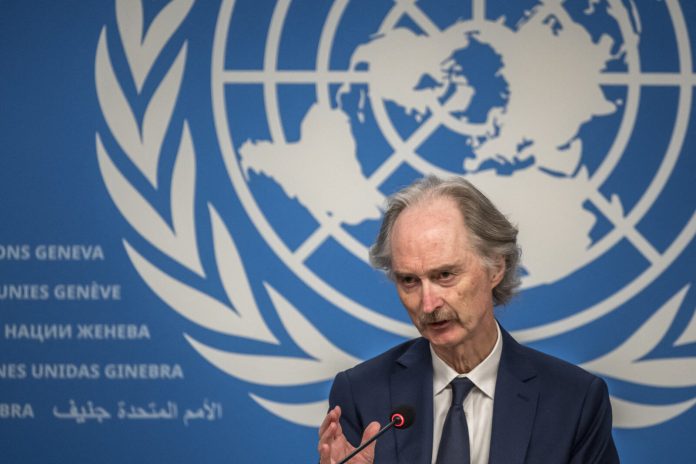
UN special envoy hopes for Syria’s swift recovery after Assad’s fall

Geir Pedersen

Speaking to reporters in Damascus, Pedersen emphasized the importance of Syrian state institutions fully resuming their functions under secure conditions.

“We are working with all segments of the Syrian people … and we want to see no acts of revenge. Instead, we must ensure that institutions return to work, backed by the necessary security measures,” he said.

The UN envoy expressed hope that the removal of sanctions on Syria would be expedited, paving the way for a swift start to the nation’s economic recovery.

“We hope to see a quick end to sanctions so that the recovery process can begin soon,” Pedersen added.

While acknowledging the complexity of the political landscape, Pedersen urged all parties to maintain calm, focus on rehabilitation, and prioritize the welfare of ordinary Syrians.

He affirmed the UN’s commitment to supporting a stable and inclusive transition that avoids further violence and ensures a better future for the country.

Pedersen came to the Syrian capital to meet with officials of the new interim government set up by the former armed opposition groups who toppled Al-Assad, led by the militant group Hayat Tahrir Al-Sham.

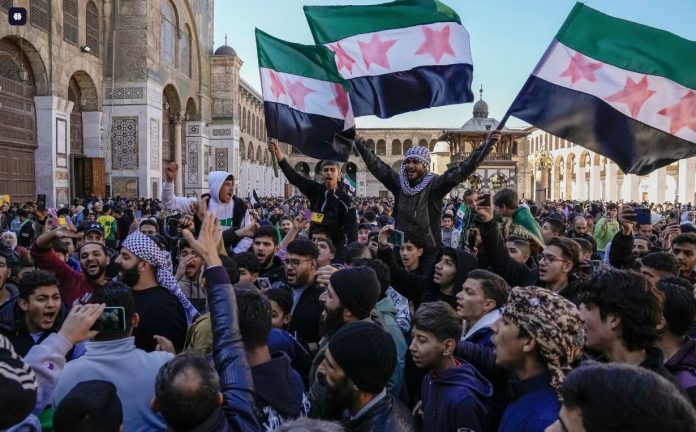
On November 27, foreign-backed militants, led by HTS, announced the fall of al-Assad’s government following a rapid two-week onslaught.

Shortly afterward, Israel launched a bombing campaign on Syria’s infrastructure and expanded its occupation of the Arab country.

Several regional countries have warned Israel is taking advantage of the chaotic situation in Syria to grab more land.

Cold weather, energy shortages extend closure of schools, offices in Iran

Officials from the National Center for Climate and Drought Crisis Management stated that the ongoing cold wave and snowfall have necessitated the closures.

The affected provinces are mostly in the northern half of the country, including Tehran, West Azarbaijan, Golestan, Kermanshah, Semnan, Mazandaran, Qom, Ardabil, Kordestan, North Khorasan, South Khorasan, and two southern provinces of Fars and Hormozgan.

On Sunday, similar closures were implemented due to severe weather conditions and energy supply challenges.

Ahad Vazifeh, the head of the National Center for Climate and Drought Crisis Management, mentioned that the cold wave affecting the western regions would start to subside on Monday, while the eastern regions would see a decline in cold temperatures by Tuesday.

Meanwhile, Tehran’s Deputy Governor for Coordination of Civil Affairs, Mir Mohammad Gharavi, hinted the possibility of continued closures on Tuesday if air pollution levels exceed 150.

He emphasized the positive impact of the current closures on reducing fuel consumption and maintaining gas supply for residential areas.

The measures aim to manage energy consumption, prevent gas outages, and ensure public health amid the severe cold spell.

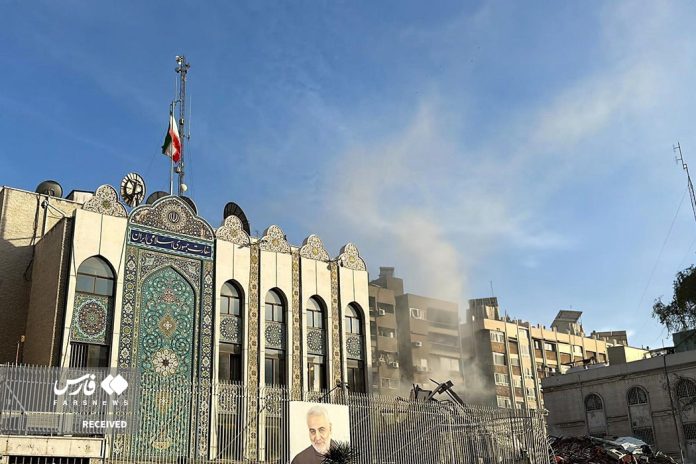
Ambassador: Iranian Embassy in Syria to reopen soon

Israeli strike on Iranian consulate in Syria

In an interview with Iran’s IRIB television on Sunday, Hossein Akbari said discussions are ongoing about reopening the consulate, to which the new rulers in Syria have agreed.

Akbari stated that the embassy’s security was ensured by Hayat Tahrir al-Sham (HTS) militant group that toppled the government of Bashar al-Assad.

He said before the arrival of HTS in Damascus, unidentified individuals looted parts of the capital, including the Iranian Embassy, but dismissed claims about the embassy holding $43 million and about refugees taking shelter there, calling them “baseless.”

The Iranian envoy said the high speed of the developments in Syria surprised even the perpetrators, explaining the initial move by the militants was retaliatory strikes against Syrian and Russian bombings, but expanded due to minimal resistance from the Syrian army, leading to the fall of Aleppo in a matter of days.

Akbari emphasized that Syria will not become like Libya due to different geographical and regional dynamics.

He, however, warned of Israel’s desire to prevent the establishment of a strong government in Syria and the influence of US policies.