Tuesday, December 30, 2025
Home Blog Page 582

US drops $10M terrorism reward offered for capture of Syrian rebel leader who toppled Assad

Abu Mohammed al-Jolani

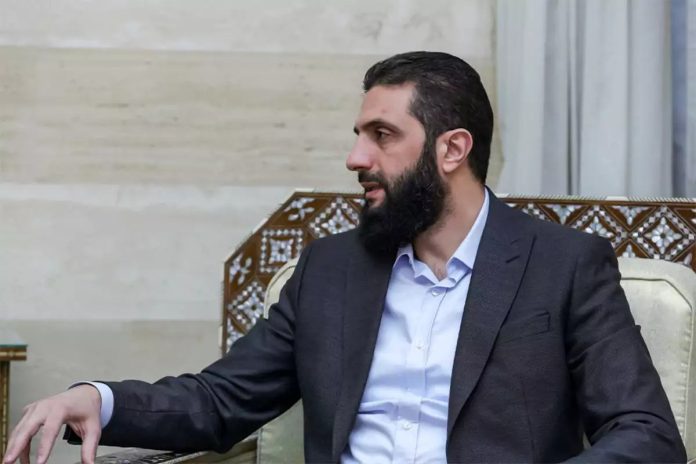
The announcement followed a meeting in Damascus between the leader of Hayat Tahrir al-Sham, or HTS, Ahmad al-Sharaa, who was once aligned with al-Qaida, and the top U.S. diplomat for the Middle East, Barbara Leaf, who led the first U.S. diplomatic delegation into Syria since Assad’s ouster.

HTS remains designated a foreign terrorist organization, and Leaf would not say if sanctions stemming from that designation would be eased. But, she told reporters that al-Sharaa had committed to renouncing terrorism and as a result the U.S. would no longer offer the reward.

“We discussed the critical need to ensure terrorist groups cannot pose a threat inside Syria or externally, including to the U.S. and our partners in the region,” she stated.

“Based on our discussion, I told him that we would not be pursuing the Rewards for Justice reward offered,” Leaf said in a telephone news conference from Jordan where she traveled after visiting Syria.

Leaf and other U.S. officials have noted al-Sharaa’s public statements about protecting minority and women’s rights are welcomed, but they remain skeptical that he will follow through on them in the long run.

“He came across as pragmatic,” she continued, adding, “It was a good first meeting. We will judge by deeds not just by words.”

The U.S. delegation’s visit was aimed at pushing for an inclusive government and seeking information on the whereabouts of missing American journalist Austin Tice.

Along with Leaf, former special envoy for Syria Daniel Rubinstein and the Biden administration’s chief envoy for hostage negotiations, Roger Carstens, joined the meetings with interim leaders and members of civil society.

Carstens said there was no new information confirming Tice’s fate or whereabouts but vowed that efforts to find him would continue. He traveled previously to Lebanon to seek information. More U.S. officials are expected to visit Syria in the coming days to pick up the search, he added.

“We’re going to be like bulldogs on this,” Carstens said, adding that the U.S. was focusing on about six prisons where it believed Tice may have been held in the past. He stated the U.S. also had information about three more prisons where Tice might have been incarcerated, and up to 40 sites may end up being examined for evidence of Tice’s presence.

Tice, who has had his work published by The Washington Post, McClatchy newspapers and others, disappeared at a checkpoint in a contested area west of Damascus as the Syrian war intensified.

A video released weeks after Tice went missing showed him blindfolded and held by armed men and saying, “Oh, Jesus”. He has not been heard from since. Assad’s government publicly denied that it was holding him.

Leaf’s team was the first group of American diplomats to formally visit Syria in more than a decade, since the U.S. shuttered its embassy in Damascus in 2012, although a small number of U.S. diplomats had been assigned to political advisory roles with military units inside Syria since then.

Shortly before the delegation arrived in Damascus, the U.S. military announced it had conducted airstrikes in northeastern Syria on Thursday, killing a leader of the Islamic State group and one other militant. The strike was part of an ongoing effort to prevent IS insurgents from taking advantage of the upheaval in Syria, including any plan to release the more than 8,000 IS prisoners held in detention by Kurds who have partnered with the U.S., Central Command said in a statement.

The Pentagon revealed Thursday that the U.S. had doubled the number of its forces in Syria to fight IS before Assad’s fall. There are roughly 2,000 there now.
Israeli officials say Tel Aviv hit by missile fired from Yemen

Yemen Missile Israel

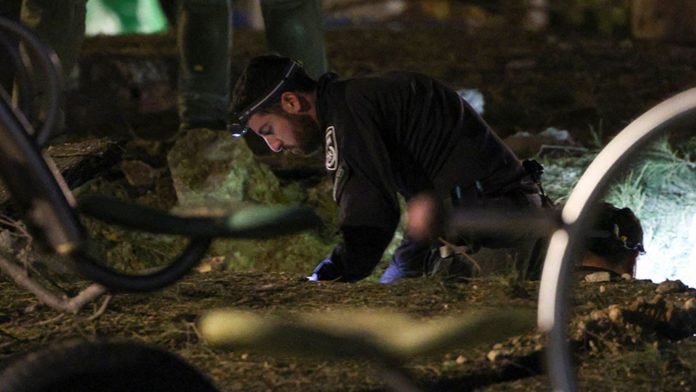
The projectile landed in Tel Aviv’s southern Jaffa area, Israel’s military said, adding that attempts to intercept a missile from Yemen failed shortly after sirens sounded in central Israel.

It noted a fallen projectile was identified in the area.

At least 16 people sustained minor injuries from glass fragments that broke in nearby buildings, Israel’s Magen David Adom (MDA) emergency service reported.

In addition, 14 victims were treated for slight injuries they sustained seeking shelter, as well as seven panic victims.

Israel’s second-largest city, Tel Aviv is the commercial and diplomatic center. Direct hits from projectiles fired at the coastal city are rare, due to its extensive air defenses.

Since Israel’s war with Hamas in Gaza started in October last year, the regime has come under fire from missiles and rockets from Hezbollah in Lebanon and the Houthis in Yemen.

Israel’s besiegement and bombardment of Gaza has led to tens of thousands of deaths and a humanitarian catastrophe, while its attacks on Lebanon have killed about 4,000.

The Houthis have for months targeted ships in the Red Sea, one of the world’s busiest waterways, calling the attacks a response to the war in Gaza.

The Houthis, Hamas and Hezbollah say they won’t stop striking Israel and its allies until a ceasefire is reached in the Palestinian enclave.

Israeli soldiers fire at protesters in Syria’s Deraa, wounding one

Syria War

Israeli fire injured the man, identified by local media as Maher al-Hussein, in the leg on Friday as protesters gathered in the town of Maariyah to demand an end to the Israeli military presence in the area.

A local journalist told Al Jazeera that al-Hussein was transported to a nearby hospital for medical treatment.

Since opposition forces toppled Syrian President Bashar al-Assad on December 8, Israel has carried out hundreds of air strikes on Syria in what it said is a bid to prevent military equipment from falling into hostile hands.

In a move widely condemned internationally, Israel also sent troops into a United Nations-patrolled buffer zone in the occupied Golan Heights and beyond, calling it a defensive and temporary measure.

“During a protest against [Israeli military] activities in the area of Maariya in southern Syria, [the Israeli army] called on protesters to distance themselves from the troops,” the military said.

The village is just outside the southern point of the UN-patrolled zone.

“After the troops identified a threat, they operated in accordance with standard operating procedures against the threat. … The protester was shot in the leg,” the military added.

The London-based Syrian Observatory for Human Rights (SOHR), a war monitor, announced the Israeli soldiers were stationed at a barracks in the village.

“During a protest condemning the Israeli incursion, a young man was injured by Israeli forces’ gunfire in the village of Maariya, in the Daraa region,” the SOHR added.

“During the protest, the Israeli forces stationed at the Al-Jazeera barracks opened fire directly at the demonstrators, injuring a young man in the leg.”

It remains unclear how Syria’s new interim government, headed by Hayat Tahrir al-Sham (HTS) leader Ahmed al-Sharaa, also known as Abu Mohammed al-Julani, plans to handle Israel’s military actions across the country.

In an exclusive interview with Al Jazeera this week, the interim government’s spokesman Obaid Arnaut said the government’s approach “will be outlined in the near future” without providing details.

“People are angry and think that the regime has been replaced by the Israeli aggression. I currently have no further details on this matter,” he continued, adding, “Our primary goal is to ensure Syria is safe from any external threats.”

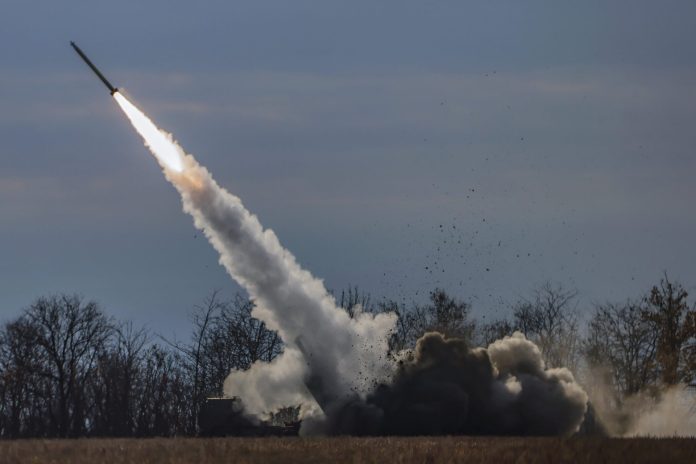
Five killed, many wounded in Ukrainian strikes on Russia using US-made HIMARS: Governor

HIMARS

The strikes caused extensive damage to civilian infrastructure throughout the city, damaging a a house of culture, a primary school, and living and study quarters belonging to Rylsk Aviation College. The attack also shattered windows in apartment buildings and impacted several private homes as well as 15 or more vehicles.

Initial reports suggested that at least one child was among the casualties, but in the latest update on Saturday morning, Khinshtein clarified the death toll, stating that five adults, but no minors, lost their lives in the attack.

“What happened today is a huge tragedy for all of us,” Khinshtein wrote in a Telegram post.

The work of emergency services has been complicated by repeated attacks from the Ukrainian Armed Forces, the governor added.

He expressed confidence that those responsible for the attack would face retribution and that all destroyed infrastructure will be repaired.

In a short video message posted on his Telegram channel on Friday, Khinshtein accused Kiev’s forces of “deliberately choosing civilian facilities [and] social facilities as their targets”.

Several Russian Telegram channels and media outlets have published what appears to be footage of the aftermath of the attack shot by eyewitnesses. In some of these video clips, several burning cars and damaged buildings can be seen.

Rylsk is located about 30 kilometers from the Ukrainian border and has a population of around 15,000.

Ukrainian forces invaded Kursk Region on August 6, with a force reportedly of some 35,000 troops. The area they control has been steadily shrinking in recent months, but they still maintain a presence in some parts of the region.

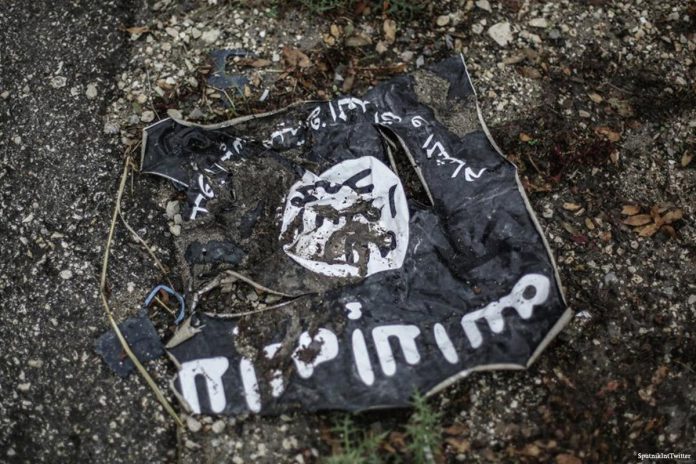
US says Daesh leader killed in Syria

Daesh Flag

Washington has stepped up military action against the terror group since the fall of Bashar Assad’s government earlier this month, hitting areas that were shielded by Syrian and Russian air defenses before a lightning offensive by rebels who now control the country.

The strike took place on Thursday in Deir Ezzor province in eastern Syria, killing Daesh leader “Abu Yusif” and another operative, the US Central Command, or CENTCOM, said on social media, without providing further details on the two terrorists.

“This airstrike is part of CENTCOM’s ongoing commitment, along with partners in the region, to disrupt and degrade efforts by terrorists to plan, organize, and conduct attacks,” CENTCOM noted.

The strike “was conducted in an area formerly controlled by the Syrian regime and Russians,” it added.

The US has for years carried out periodic strikes and raids to help prevent a resurgence of Daesh but has launched dozens of strikes since Assad’s fall.

On Dec. 8 — the day militants took the capital Damascus — Washington announced strikes on more than 75 Daesh targets that CENTCOM announced were aimed at ensuring it “does not seek to take advantage of the current situation to reconstitute in central Syria”.

And on Monday, CENTCOM said US forces killed 12 terrorists from the group in strikes it said were carried out “in former regime and Russian-controlled areas”.

The announcement of the latest strike came a day after the US noted it had this year doubled the number of troops it has in Syria as part of the anti-IS fight.

The US had for years said it has some 900 military personnel in the country as part of international efforts against the terror group, which seized swathes of territory there and in neighboring Iraq before being defeated by local forces backed by a US-led air campaign.

But there are now “approximately 2,000 US troops in Syria” and have been for at least a few months, Pentagon spokesman Major General Pat Ryder told journalists, adding he had just received the updated figure.

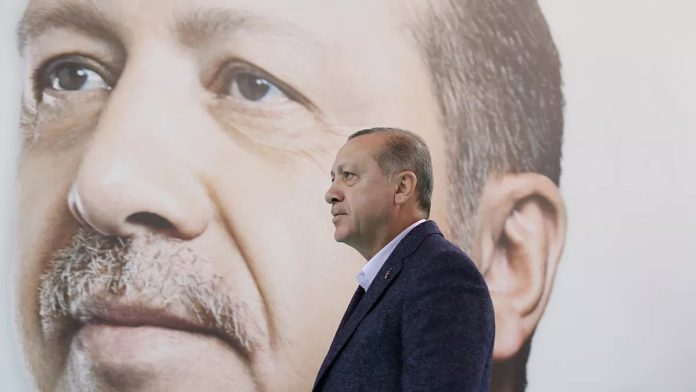
New evidence discloses ‘routine’ oil shipments from Turkey to Israel

Turkey Erdogan

In November, the Stop Fuelling Genocide campaign released evidence that suggested that the “Seavigour” tanker shipped crude oil from Turkey’s Ceyhan port to a pipeline near Ashkelon in Israel.

The port is the last stop on the BP-owned Baku-Tbilisi-Ceyhan (BTC) pipeline, which transports Azeri crude oil from Azerbaijan. The oil is then shipped from the Heydar Aliyev Terminal at Ceyhan to Israel, accounting for almost 30 percent of its crude oil imports.

The researchers have since tracked 10 journeys made in the past year by the “Kimolos” tanker between Ceyhan and Ashkelon, with eight of them occurring after Turkey announced its embargo in May.

Despite the ship turning off its tracking signal for several days in the Eastern Mediterranean to mask its route, the researchers managed to identify it as docking in Israel 10 times using satellite imagery.

Port logs for the Kimolos reveal that on a typical trip to Israel, the tanker is registered as being bound for Egypt, leaving with a full load of oil. But the tanker does not dock in Egypt, instead “disappearing” for a few days in the Eastern Mediterranean.

This strategy follows a similar pattern to that of the Seavigour, which also turned off its location transponder and reappeared in Sicily days later.

Both the Kimolos and the Seavigour are Suezmax size vessels, which are chartered specifically for crude oil shipments.

Citing official state export records, the researchers announced Azerbaijan has exported 1.3 million tonnes of crude oil to Israel per month since the start of its war on Gaza in October 2023.

As both the Kimolos and the Seavigour can transport approximately 140,000 metric tonnes, an export of 1.3 million tonnes of crude oil would require an average of eight to 10 trips a month.

“Not only is this transfer of crude oil violating the economic embargo, but the rate and frequency of the refuelling is actively sustaining war crimes,” the researchers said, adding that the crude oil exports are refined to fuel F-35 fighter jets used by Israel in Gaza.

An investigative report by Energy Embargo for Palestine documenting how crude oil supplied to Israel by the BTC pipeline is refined into fighter jet fuel suggested that Turkey could be viewed as violating the duty to prevent genocide by the International Court of Justice if it rules that Israel is committing genocide in Gaza.

A researcher at the Stop Fuelling Genocide campaign said the findings were evidence of “a systematised trade of crude oil shipped from Turkish ports to Israel”.

“We warned that our previous evidence was only the tip of the iceberg,” the researcher noted.

The Turkish energy ministry has repeatedly denied that any oil tankers bound for Israel have left Ceyhan since May, stating that “companies transporting oil through the BTC pipeline for export to global markets from Haydar Aliyev Terminal have respected Turkiye’s recent decision not to engage in trade with Israel”.

The campaign said the new revelations constitute a “second and more serious exposure” of the ministry’s claims.

Azerbaijan’s oil exports to Israel increased four-fold since the beginning of this year, ballooning from 523,554 tonnes in January to 2,372,248 tonnes in September.

Middle East Eye previously reported that the advocacy group Oil Change International, which authored a report tracking oil shipments to Israel up until July 2024, said its data sources showed multiple shipments from Ceyhan since May.

A Turkish official previously told MEE that BP sells oil to intermediary companies, which Ankara cannot control, and tankers pick up the oil “without declaring their final destination”.

The revelations come after Ankara announced in November that it was severing all ties with Israel.

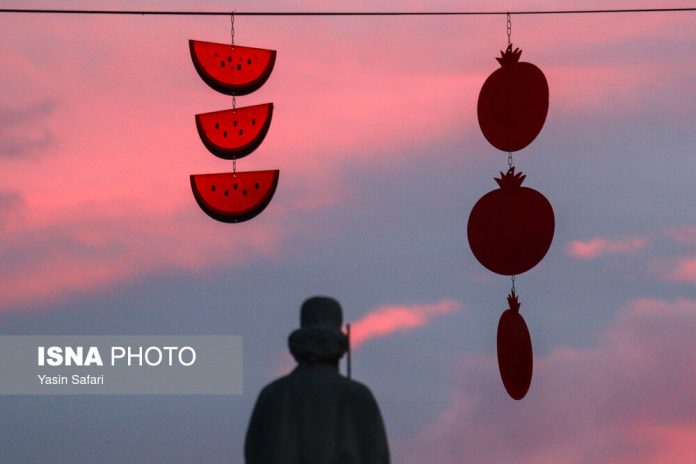
Yalda Night: Ancient Persian celebration of Winter Solstice

The festive night marks the winter solstice, the longest night of the year and has been celebrated annually by Iranians since antiquity.

Yalda Night begins at sunset on the last day of autumn, 30th of Azar on the Iranian calendar, and ends at sunrise on the first day of winter 1st of Dey. In the Gregorian calendar, it typically coincides with December 21st, or December 20th in leap years.

The word “Yalda” is derived from a Syriac term meaning “birth,” reflecting the celebration of the birth of the sun, according to the polymath Al-Biruni who noted this in his book “The Remaining Signs of Past Centuries.” Similarly, “Chelleh,” referring to traditional Iranian calendrical periods, is also used.

The origins of Yalda date back to Zoroastrianism, the pre-Islamic religion of Persia. It can be traced back over 7,000 years, with evidence from ancient pottery. Officially, it became part of the Persian calendar around 500 BCE during the reign of Darius I.

One of the primary reasons for celebrating Yalda Night is the victory of light over darkness. This celebration marks the lengthening of days as a symbolic triumph of light over darkness. Moreover, in the ancient Persian religion of Mithraism, Yalda Night marks the birth of Mithra, the sun god.

Traditional customs of Yalda Night include gathering around fire or modern heating, with older members of the family often taking the center stage, sharing stories and poetry, particularly the works of Hafez, and narrating tales from the Shahnameh, or The Book of Kings, by great Iranian poet Ferdowsi.

The works of Hafez, a revered Persian poet, are often read aloud. It is a common tradition to perform Fal-e Hafez, where individuals seek guidance and divination by randomly opening a collection of Hafez’s poems and interpreting the verses on the selected page.

Families also enjoy feasts with tables adorned with pomegranates and watermelons, symbolizing fertility and the sun, along with nuts, dried fruits, delicacies, and sweets.

While the essence of Yalda remains rooted in tradition, modern celebrations have incorporated contemporary elements. Many Iranians around the world celebrate Yalda Night, maintaining their cultural heritage and passing on these cherished customs to future generations. Social media and virtual gatherings have also become a part of the celebrations, allowing friends and families separated by distance to share the joy of Yalda together.

Yalda Night holds special customs for newlyweds, with traditions passed down through generations, adding a sweet and memorable touch to this ancient celebration.

The millennia-old tradition is officially registered by the United Nations Educational, Scientific and Cultural Organization (UNESCO)’s Intangible Cultural Heritage of Humanity.

The event is celebrated in other Persian-speaking communities in the world, including in Afghanistan, the Republic of Azerbaijan, Iraqi Kurdistan, Tajikistan, Uzbekistan, Turkmenistan, and Turkey.

May the light of Yalda shine brightly in the hearts of all who celebrate it.

Iran rejects UK, Australia’s claims, highlights double standards

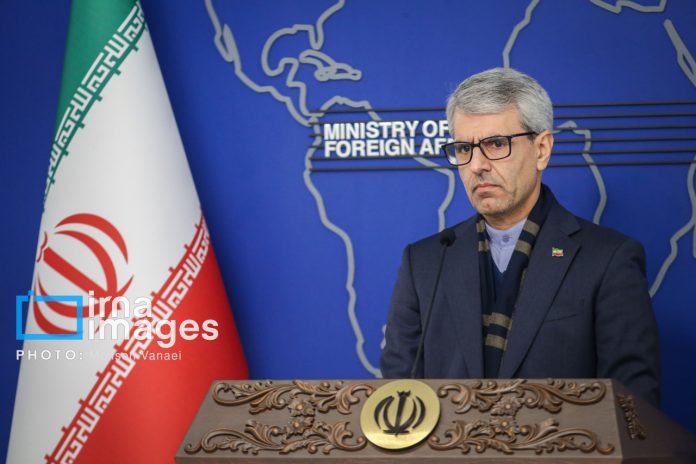
Baqaei called on the two countries to reconsider their policies that contradict international law and interfere in the internal affairs of other countries and the West Asian region.

The spokesperson pointed to the continuous support by the UK and Australia for the Zionist regime’s illegal actions, crimes, and aggressions in occupied Palestine and West Asia and censured their one-sided and biased stance regarding Iran’s defensive operations following the Israeli regime’s attack on the Iranian embassy in Damascus.

He emphasized that Iran’s defensive operations, dubbed True Promise 1 and 2, were fully in line with the principle of legitimate defense according to international law and the UN Charter.

The spokesperson also rejected the repeated claim that Iran is sending ballistic missiles to Russia, describing the accusation as part of the US and UK’s scheme to increasingly securitize international relations and globalize the Ukraine conflict. He noted that even the Ukrainian president has denied the claim of Iran sending ballistic missiles to Russia.

Baqaei pointed out that the root cause of instability in West Asia is the ongoing occupation and aggressive expansionism of the Zionist regime, which has always been fully supported by the US, UK, Australia, and some other Western countries.

He noted that over the past 14 months, the policy has continued in the form of genocide against the Palestinian people and aggressions against Lebanon, Syria, and Yemen, adding, “Undoubtedly, the UK, Australia, and other supporters of the regime must be held accountable as accomplices in Israel’s heinous crimes.”

The spokesperson also took a swipe at the UK and Australia’s blatant and widespread human rights violations, including systematic human rights abuses in prisons and detention centers for refugees in both countries, their complicity in the crimes committed by the Zionist regime against the Palestinian people, and the continuation of Australia’s colonial extermination plans against the aboriginal people.

Baqaei called for an end to the instrumental and hypocritical approach to human rights by these two countries.

Citing the recent remarks by the UK foreign secretary that proving genocide in occupied Palestine requires the killing of millions of people, he slammed the UK’s policy of ‘genocide denial’ in Gaza as shameful. He also stated that such a government lacks the moral authority to preach about human rights.

The spokesperson also dismissed the accusations regarding Iran’s peaceful nuclear program, noting that the Iranian nuclear activities and projects are based on the country’s technical and practical needs within the framework of its legal obligations and rights as a member of the Non-Proliferation Treaty (NPT) and under the Safeguards Agreement, supervised by the International Atomic Energy Agency (IAEA).

He emphasized that, according to the atomic agency’s reports, Iran’s nuclear activities have never deviated from the peaceful path.

Baqaei referred to the transfer of nuclear submarines by the US and UK, as two nuclear-armed states, to Australia under the AUKUS pact, which has raised widespread proliferation concerns and has been widely criticized by the IAEA.

He also highlighted their inaction regarding Israel’s arsenal of weapons of mass destruction, describing their policies as clear examples of double standards towards nuclear non-proliferation and their disregard for international peace and stability.

The spokesperson called for an end to the double standards by the UK and Australia regarding international norms and rules.

Iran FM: US, Zionists Seek Disintegration of Islamic States

Abbas Araghchi

In an exclusive interview with the Egyptian Al-Ghad network on the sidelines of the D-8 Islamic developing countries summit in Cairo, Araghchi emphasized the behavior of the Zionist regime during the Gaza war and the genocide of more than sixty thousand women, children, and civilians in Gaza and Lebanon, as well as its aggression against Syria and the destruction of its defensive, economic, and infrastructural foundations, illustrate the accuracy of Iran’s warnings about Israel’s threat to the entire region.

The foreign minister highlighted Iran’s presence in Syria in advisory roles to fight Daesh and other terrorist groups, warning about the resurgence of the terrorism threat to Syria due to the country’s fragmentation, which poses a threat to all countries in the region.

The foreign minister stated that the main purpose of forming the Resistance Axis in the region was to fight and confront the Zionist regime’s occupation and aggression in Palestine and to restore the Palestinians’ rights.

He emphasized that despite sustaining losses in the developments following the Gaza war and the martyrdom of some its leaders, the resistance inflicted heavy blows on the occupiers, which forced the Israeli regime to negotiate and accept a ceasefire in Lebanon.

Araqchi also dismissed the perception that resistance groups are followers and under the command of Iran as incorrect and noted that the Islamic Republic shares the goal of fighting the Zionist regime and supporting the Palestinian people with the components of the resistance front, stressing each resistance group operates independently.

Iranian cheetah sighted in Miandasht: Last ray of hope to reverse extinction

Reza Shekarian, the director general of the North Khorasan Environment Department, credits recent conservation measures, including habitat improvement and predator control, for the cheetah’s return.

Shekarian emphasized the critical role of local communities and environmentalists in creating a safe environment for these majestic animals.

Once a proud symbol of Iran’s wildlife, the Asiatic cheetah now faces the grim reality of extinction due to habitat loss, overhunting, and dwindling prey.

Recent statistics reveal that only seven adult cheetahs and ten cubs remain in Iran, an alarming decline that has spurred urgent conservation efforts.

Miandasht’s vast plains and diverse prey have historically made it a key habitat for cheetahs.