Tuesday, December 30, 2025
Home Blog Page 580

Israel leaves Palestinian bodies for stray dogs in Gaza: Report

Israel Army

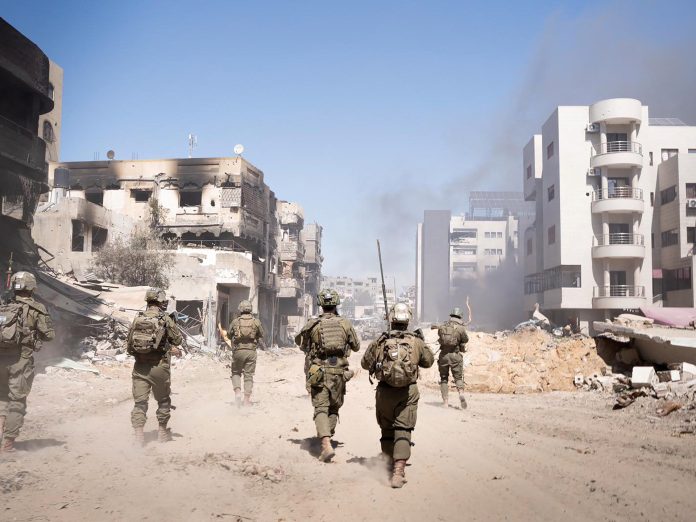
In a statement, the Civil Defense explained that Israeli forces have repeatedly targeted rescue teams and ambulances, specifically when they attempt to approach the bodies of those killed.

It emphasized that Israel has also obstructed efforts to recover the bodies of thousands of Palestinians who have died under the rubble of homes destroyed in Israeli airstrikes.

It added that it had found several Palestinian bodies that had been reduced to skeletons.

In other instances, it described seeing stray dogs feeding on the bodies in several neighborhoods, including Zeitoun, Shujaiya, Tel al-Hawa, the Jabalia area, Tal al-Zaatar, Beit Hanoun, and parts of the eastern areas of Khan Younis and Rafah.

Stressing that these actions by Israel constitute violations of the Geneva Conventions, it called on the signatory countries to “take immediate action to ensure Israel’s compliance with international law”.

They urged the international community, including the International Committee of the Red Cross (ICRC) and the World Health Organization (WHO), to “pressure Israel to follow proper protocols for handling the bodies of the deceased during wartime”.

Israel launched a genocidal war on Gaza that has killed more than 45,200 people, mostly women and children, since a cross-border attack by the Palestinian group Hamas on Oct. 7, 2023.

The International Criminal Court issued arrest warrants last month for Israeli Prime Minister Benjamin Netanyahu and his former Defense Minister Yoav Gallant for war crimes and crimes against humanity in Gaza.

Israel also faces a genocide case at the International Court of Justice for its war on Gaza.

FT: Trump plans to continue US military assistance to Ukraine

Weapons Arms Russia Ukraine War

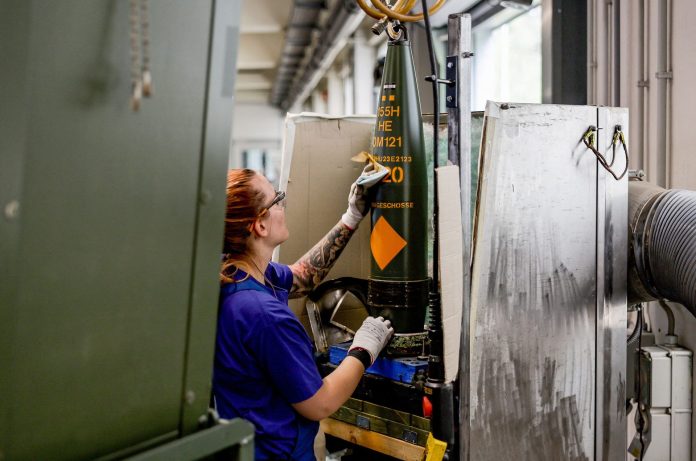
Three officials familiar with discussions revealed that Trump intends to keep supplying US military equipment to Ukraine after his inauguration.

Trump’s foreign policy team also informed European officials that he plans to push NATO allies to raise their defense spending to 5% of their GDP. NATO member states currently follow a goal of allocating 2% of their GDP to defense spending.

British officials noted that Trump sees providing weapons after a ceasefire as aligning with his “peace through strength” philosophy.

However, he remains opposed to Ukraine joining NATO and advocates for an immediate resolution to the conflict.

This contrasts with his earlier campaign rhetoric, where he suggested cutting off aid to Ukraine and pushing for peace talks.

Trump has pledged to quickly bring an end to the war but has not provided details on how he plans to do it.

He has not invited President Volodymyr Zelensky to his January inauguration but noted that Zelensky would be “welcome” if he chose to attend.

Tehran condemns assassination of embassy staffer in Damascus

Iranian Foreign Ministry

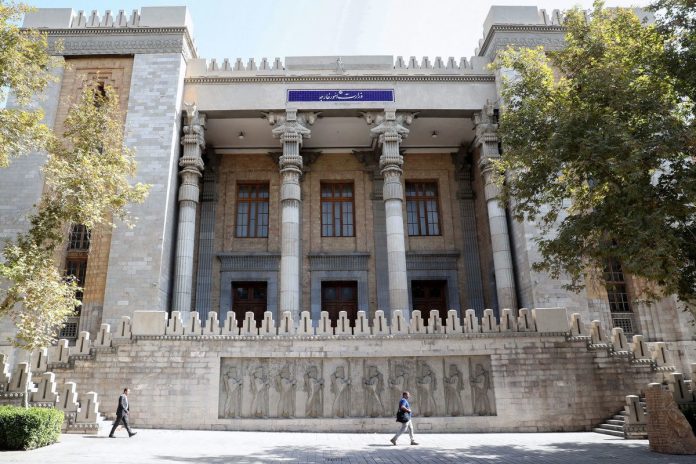
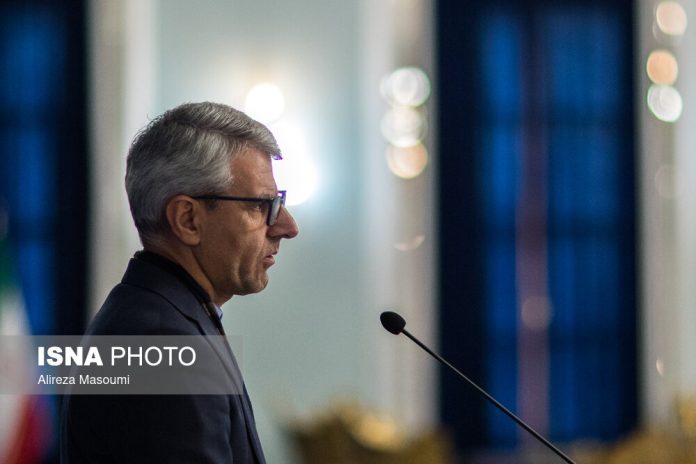
In a statement on Saturday, Foreign Ministry spokesperson Esmaeil Baqaei expressed his condolences to the family of Seyed Davoud Bitaraf, a local staffer of Iran’s embassy in Syria who was martyred after his vehicle was shot by “terrorist elements” in Damascus on December 15.

The spokesman strongly condemned the “criminal measure”, adding the body of Bitaraf has been found, identified and transferred to Iran in recent days.

Baqaei also reminded Syria’s transition government of its responsibility to identify and punish the perpetrators of the crime, saying, “The Ministry of Foreign Affairs is pursuing the matter seriously through various diplomatic and international channels in the appropriate manner.”

NATO states working on Ukraine force deployment: WaPo

NATO

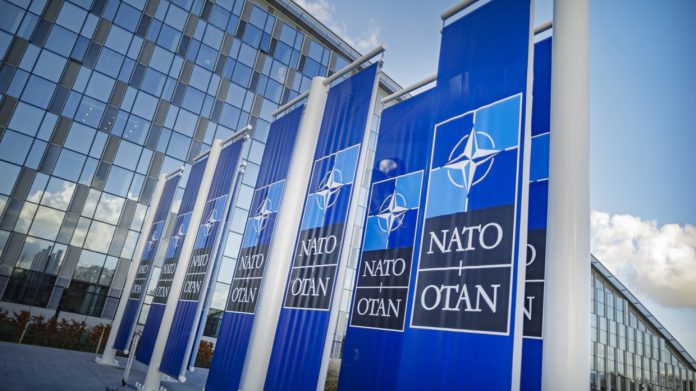
The idea was reportedly raised during a meeting hosted by NATO Chief Mark Rutte in Brussels on Wednesday, which included Ukrainian leader Volodymyr Zelensky and several of the bloc’s leaders.

It was also floated to US President-elect Donald Trump during recent talks in Paris, which were attended by Zelensky and French President Emmanuel Macron. Officials familiar with the discussions, who spoke on condition of anonymity, noted that Trump expressed interest but has yet to commit to a position as his team is still formulating its policy.

The proposal envisions a European-led peacekeeping force operating outside the framework of NATO. Leaders apparently view this as a potential security guarantee for Ukraine, which remains unlikely to achieve membership in block in the near future. Macron, who first broached the idea in February, has solicited support for the plan among a number of European countries, including Britain and several Baltic and Nordic states.

While the details remain unclear, the force would require significant commitments—potentially tens of thousands of troops—to ensure effectiveness without appearing vulnerable to attacks, the newspaper added. Reported discussions also revolve around defining the force’s mandate.

Zelensky has publicly supported the proposal, emphasizing that it should complement Ukraine’s aspirations for NATO membership rather than replace them. He reiterated on Thursday in Brussels that the bloc’s mutual defense clause remains the only “real guarantee” of security for the country, in his opinion.

On Thursday Russian President Vladimir Putin reiterated his readiness for peace talks with Ukraine, emphasizing that any agreement must address key security concerns, including Kiev’s renunciation of NATO ambitions, the recognition of new territorial realities, and commitment to a neutral status.

At his annual Q&A session in Moscow, Putin stressed that these measures are vital for achieving lasting regional stability and ensuring mutual security. He affirmed Russia’s willingness to negotiate without preconditions, framing the proposed steps as a pragmatic foundation for enduring peace while safeguarding the strategic interests of all involved parties.

The Post claimed that Western European leaders see the proposal as a way to influence any US-led negotiations with Moscow and to demonstrate their commitment to Ukraine.

“We need something sustainable”, an unnamed European diplomat told the outlet, highlighting the importance of clear planning before engaging with officials in Washington.

EU struggles to reach agreement on security guarantees for Ukraine: FT

EU Ukraine

Ukrainian leader Volodymyr Zelensky left the summit without clarity on what the EU will do should Trump “abandon” Kiev, the report said.

“For every leader who suggested something new, such as deploying troops to Ukraine as trainers, there were others who dismissed such talk,” the FT added.

German Chancellor Olaf Scholz reportedly said that there is “no discussion” about deploying boots on the ground, calling it a mistake to engage in detailed discussions on the matter. He added that support should be provided in a way that does not risk escalating tensions with Russia.

French President Emmanuel Macron’s earlier proposal to deploy European troops to Ukraine faced opposition. Polish Prime Minister Donald Tusk recently dismissed the idea as speculation, while a senior EU diplomat told the Financial Times that there is “no structured discussion in the EU on this yet”.

“Some leaders openly disagreed with each other. Some stuck to the well-trodden rhetoric of ‘whatever it takes’, without providing specific details of what they would be prepared to do,” the Financial Times reported.

The summit concluded with a statement pledging to support Ukraine “for as long as it takes and as intensely as needed”.

The EU’s chief diplomat, Kaja Kallas, advised Western leaders against pressuring Zelensky into peace talks in an interview with the Financial Times prior to the summit.

“The big question is, what is the security guarantee?… What actually is it, that is tangible?” Kallas told the outlet. “All the member states who have signed security guarantee agreements with Ukraine need to answer: what are they?”

Zelensky reiterated on Thursday that NATO membership is the only ultimate security guarantee, insisting that promises from EU countries alone, without US involvement, would be insufficient. However, the US and Germany have expressed reluctance, while Hungary has openly opposed Kiev’s aspirations.

Some Russian officials have suggested that Western boots on the ground could be perceived in Moscow as an occupying force. The Kremlin reiterated on Monday that it is too early to discuss any peacekeeping missions, as even direct negotiations with Kiev remain impossible due to Zelensky’s obstruction.

On Thursday, Russian President Vladimir Putin reaffirmed his readiness for talks with Ukraine, emphasizing that any agreement must address key security concerns, including Kiev’s renunciation of NATO ambitions, recognition of new territorial realities, and commitment to a neutral status.

At his annual Q&A session in Moscow, Putin stressed that these measures are vital for achieving lasting regional stability and ensuring mutual security and strategic interests for all parties involved.

Iran’s presence in Syria changed after fall of Daesh: Spokesman

Esmael Baghaei

Baqaei has said that the advisory presence of the Islamic Republic in Syria was aimed at supporting the Syrian army, combating terrorism, and preventing insecurity from spreading to the broader region.

“Iran’s advisory presence in Syria was initially aimed at supporting the Syrian army, combating terrorism, and preventing insecurity from spreading to neighboring areas and the broader region. The decision to withdraw advisory forces was also a responsible move, considering the prevailing conditions in Syria and the region,” he noted.

Recently, Russian President Vladimir Putin addressed questions regarding the developments in Syria during his annual press conference titled “Direct Line”, providing insights into the battlefield dynamics leading to President Bashar al-Assad’s fall, as well as the coordination between the Islamic Republic of Iran and the Russian Federation.

Putin noted that Russia had no ground forces in Syria, stating, “We have two bases there (Syria)—an air force base and a naval base. The ground forces consist of Syria’s own military and, as is well known, certain Iran-aligned combat units. At one point, we even withdrew our special operations forces from the area. Our mission there was not solely about fighting.”

He also shared his account of the military developments in Syria, saying, “When opposition groups approached Aleppo, approximately 30,000 troops were defending the city. Around 350 militants entered the city. Syrian government forces, alongside Iranian-aligned units, retreated without resistance, detonating their positions as they withdrew. Except for isolated armed clashes, this was the general pattern across Syrian territory.”

He noted, “Previously, our Iranian allies would request assistance to deploy their forces into Syria. Now, they are asking for help to withdraw them. We evacuated 4,000 Iranian fighters from the Hmeimim base to Tehran. Some Iranian-aligned units, avoiding direct engagement, relocated to Lebanon, while others moved to Iraq.”

Since the onset of a new phase of developments in Syria and Assad’s departure to Russia, multiple Iranian officials—including the foreign minister, the foreign ministry spokesperson, and Iran’s ambassador to Syria—have addressed the situation through various television programs and press conferences.

They discussed the events leading up to the collapse of Assad’s government in the weeks and days preceding his departure. However, Putin’s remarks during his annual press conference introduced new details that had not been previously disclosed.

Reflecting on the long-standing cooperation and coordination between Iran and Russia in their joint fight against terrorism in Syria, Baqaei stressed, “It is not unusual for parties involved in Syria’s developments to present their own narratives about the causes and actors behind these events.”

“However, it seems that some of the comments made regarding Iran’s advisory role in Syria during the final days leading to Damascus’s fall may not have been based on precise information,” he added.

He reiterated that Iran’s advisory presence in Syria was initially aimed at supporting the Syrian army, combating terrorism, and preventing insecurity from spreading to neighboring areas and the broader region.

According to Baqaei, the decision to withdraw advisory forces was also a “responsible move,” considering the prevailing conditions in Syria and the region.

The spokesperson highlighted that Iran entered Syria at the invitation of its legitimate government, stating, “Iran and Syria have had effective cooperation over the years in combating terrorism, successfully preventing the dangerous spread of Daesh in Syria and Iraq, as well as curbing terrorism in the region.”

He explained, “Following the fall of Daesh, Iran’s military presence on Syria’s defensive lines shifted. It became limited to providing advisory assistance aimed at preventing the resurgence of Daesh and Takfiri terrorism while strengthening Syria’s military capabilities against the Zionist regime’s provocations.”

He stated that this approach proved successful. As witnessed, immediately after the withdrawal of Iranian advisory forces, the occupying regime seized strategic parts of Syrian territory and destroyed critical defensive infrastructure in the country.

Baqaei also pointed to Iranian nationals evacuated from Syria. “These individuals included the families of diplomats, staff from Iran’s diplomatic, consular, and cultural missions in Syria, Iranian pilgrims, some non-Iranian pilgrims, and others who had traveled to Syria to assist Lebanese refugees.”

The diplomat also added that all Iranian nationals were evacuated to Iran using Iranian aircraft via the Hmeimim airbase, which, in coordination with Russia, was consistently used as a supplementary airport alongside Damascus International Airport.

The spokesperson also emphasized that Iran and Russia maintain significant relations across various fields, with continuous dialogue taking place at multiple levels, saying, “We prefer that the exchange of views and experiences occurs through official channels.”

Most Israelis believe war victory can only be achieved with captives’ return from Gaza: Survey

Israel Hostages

Israeli news outlet Channel 13 reported that 12 percent of respondents believed that victory would be achieved by annexing Gaza and imposing Israeli sovereignty.

About 8 percent said that the best outcome of the war would be for a moderate Palestinian party other than Hamas to govern Gaza.

The poll suggested that only 29 percent of respondents trusted Prime Minister Benjamin Netanyahu, while 47 percent trusted army chief Major General Herzi Halevi.

About 24 percent of people trusted Defence Minister Israel Katz.

On October 7, 2023, Hamas carried out a surprise attack on Israel, killing some 1,200 people and abducting over 250. According to Israeli officials, around 100 hostages remain in captivity.

Immediately after the attack, the regime launched a war in Gaza, killing more than 45,000 Palestinians, according to the Gaza Health Ministry.

Iranian legal expert lambasts internet filtering as ‘unlawful’

Internet

Mohsen Borhani expressed his views on the X social media platform, stating, “The current filtering is an illegal action and has no legal basis. Therefore, lifting it does not require permission from any authority.”

“Compliance with an illegal act through inaction or its gradual removal has no legal legitimacy and is a form of legitimizing previous law-breaking,” he explained.

Removing the internet restrictions, one of Iranian President Massoud Pezeshkian’s campaign trail promises, has taken center stage these days.

Also on Saturday, Mohammad Mohajeri, a principlist political analyst, said if the promise to lift the filtering is implemented decisively, it would boost public confidence in other promises made by the president.

He urged Pezeshkian not to yield to a few members of the Supreme Council of Cyberspace which oversees the internet in Iran.

The Iranian Minister of Communications Sattar Heshemi indicated on Thursday that the filtering might be lifted gradually.

The minister acknowledged that the current state of cyberspace is multifaceted and cannot be viewed solely from a technical perspective.

He pointed out that there is a broad agreement among council members that the current situation is unacceptable, but added determining the appropriate course of action involves complex considerations.

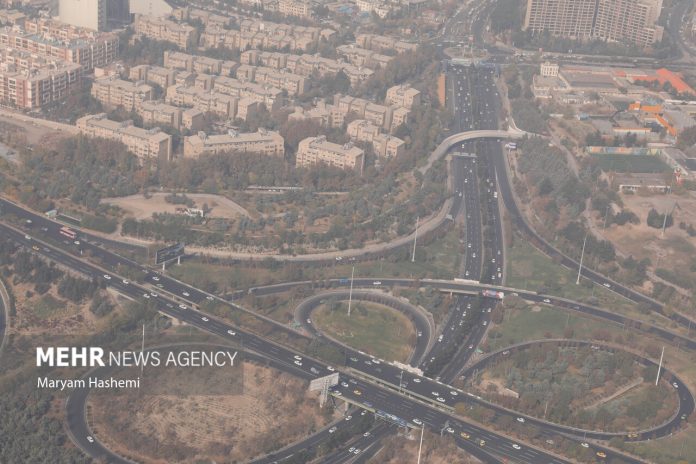
Tehran experienced 18 days of unhealthy air in past 30 days

Air Pollution

Tehran experienced its cleanest air on November 29 with an Air Quality Index (AQI) of 63, while December 19 marked the most polluted day with an AQI of 174.

Particulate matter smaller than 2.5 microns was the primary pollutant on all polluted days, with one day also recording particulate matter smaller than 10 microns in the undesirable range.

Research shows that exposure to these fine particles, which are often byproducts of combustion and industrial processes, leads to several health complications.

These include premature death in heart and lung disease patients, nonfatal heart attacks, irregular heartbeat, lung cancer, worsened asthma, reduced lung function, and increased respiratory symptoms.

Tehran’s air quality on Saturday morning stood at an AQI of 91, indicating acceptable conditions after four continuous days of unhealthy air.