Sunday, December 28, 2025
Home Blog Page 556

Ukraine claims Russia lost 430k soldiers in 2024

Russia Ukraine War

Russia’s gradual, grinding advance in parts of Ukraine’s eastern region of Donetsk succeeded in wresting away 4,168 sq km (1,609 square miles) of fields and abandoned villages in 2024 – equivalent to 0.69 percent of the country.

That was the assessment of the Institute for the Study of War, a Washington-based think-tank, based on satellite imagery and geolocated video footage.

“Russian forces have seized four mid-sized settlements – Avdiivka, Selydove, Vuhledar, and Kurakhove – in all of 2024, the largest of which had a pre-war population of just over 31,000 people,” said the ISW.

Russian forces spent four months taking Avdiivka, and two months each for Selydove and Kurakhove.

“Seizing these settlements has not allowed Russian forces to threaten any notable Ukrainian defensive nodes,” noted the ISW, adding that Moscow’s troops failed to conduct the kind of rapid, mechanised manoeuvre necessary to convert these “tactical gains into deep penetrations of Ukraine’s rear”.

At this rate, Russia would need two more years to complete its conquest of Donetsk alone, the ISW assessed – something Russian President Vladimir Putin had ordered his commanders to do by October 1.

Russia’s sacrifices to achieve these advances have been immense, as Ukrainian forces used their defender’s advantage to inflict high casualties, especially in urban settings where they fought building-to-building, street-to-street.

Ukrainian Commander-in-Chief Oleksandr Syrskii stated on Monday that Russian forces had suffered an estimated 427,000 wounded and killed in 2024. A few days later, Ukraine’s Ministry of Defence put Russia’s losses last year at 430,790 soldiers – the equivalent of 36 Russian motorised rifle divisions – outnumbering its losses in 2022 and 2023 combined.

These losses amounted to an average of 1,180 a day, but casualty figures rose substantially towards the end of the year, as Russian forces increased their assaults in an apparent effort to influence the US election.

The highest monthly losses, the Defence Ministry said, came in November and December – 45,720 and 48,670 respectively – as Russia intensified its attacks in Donetsk.

“This year, the Russians paid the highest price for the war against Ukraine, as our army and all of our defence and security forces of Ukraine destroyed more enemy equipment and manpower than in any of the previous years of the war,” Syrksyi told his forces in an address on December 31.

Russia did manage to increase its daily land grab from 14 sq km (5.4 square miles) in October to 28 sq km in November but fell back to 18 sq km (11 square miles) a day in December. Apparently, its losses did not fall commensurately.

“Over the past week, the invaders have been losing about 1,700 people killed and wounded every day,” Syrksyi said on Monday.

December also produced two possible Russian casualty records.

On December 29, Ukraine’s general staff said Russian forces lost 2,010 people. They suffered a possible all-time record of 2,200 daily casualties in a total of 191 combat clashes on December 19.

Ukraine also estimated it had taken out 3,689 Russian tanks, thousands of armoured combat vehicles, and more than 13,000 artillery pieces. Ukraine’s navy said it sank five ships and 458 smaller craft.

Russia recruited North Korean fighters in an effort to relieve pressure on its manpower, but Ukrainian President Volodymyr Zelensky stated a quarter of them had been wiped out.

“According to preliminary data, the number of killed and wounded North Korean soldiers in the Kursk region already exceeds 3,000 people,” Zelensky added in his evening address on December 23.

He more recently claimed Russia was killing North Koreans in danger of falling into the hands of Ukrainian forces.

“Everything is arranged in a way that makes it impossible for us to capture the Koreans as prisoners – their own people are executing them, there are such cases,” Zelensky noted in an evening address on December 27.

Ukraine’s military intelligence, GUR, announced more North Koreans were being brought to Kursk to replace losses.

Putin appears to have prioritised manpower for the war over workers for the economy.

He signed a decree on Monday forcing all undocumented migrants to depart Russia by the end of April, but joining the military allows them to circumvent normal legal status requirements.

Ukraine’s Foreign Intelligence Service estimated Russia suffered from a labour shortage of 1.5 million people last year, as the available labour force declined by a million. Yet Putin’s decree would suck foreign workers out of the economy and put them on the front lines.

Putin acknowledged shortages of “hundreds of thousands” in an end-of-year news conference on December 19, but did not connect those shortages to the war. Instead, he proposed bringing more migrant workers from Central Asian countries.

He dwelled on the need “to develop a network of Russian schools there, to study the Russian language, to introduce people who are going to come to work here” and spoke of the need to increase labour productivity through higher technologies.

Ukraine and Russia have both transitioned to war economies, Russia’s financed by income from fossil fuels and Ukraine’s by aid from its Western allies.

Both have sought to become as weapons-autonomous as possible.

In his New Year’s address, Zelensky said 30 percent of the weapons Ukraine used last year were domestically made.

“I felt ashamed as a citizen that since the 90s, the state hadn’t noticed such people of ours,” he continued, adding, “And I am proud… that Ukraine is once again building its own, its own missiles. And for the first time, it produces over a million drones in a year.”

Ukraine has used aerial and naval drones of its own design to strike deep inside Russia and across the Black Sea.

Ukraine’s military intelligence said on Tuesday it used a SeaDragon missile launched from a Magura V naval drone to down a Russian Mi8 helicopter.

“Today, for the first time, a helicopter was shot down, it fell into the water. That is, the fact of the destruction of an air target over the Black Sea has been recorded,” Kirill Budanov, Ukraine’s intelligence chief, told a telethon.

GUR released footage of the strike. Previously, Russian helicopters struck in this war had managed to reach an airfield, he added.

Russia has also invested in drones, though it is hampered by Western sanctions on imports of sensitive technology.

Its drone plant in Alabuga, 1,000km (620 miles) east of Moscow, produced 5,760 drones in the first nine months of last year, Ukrainian intelligence sources told CNN, double its 2023 output.

Ukraine’s air force said in 2024, it faced a much greater missile and drone threat against critical infrastructure than in 2023, partly because Russia was also using decoy Shahed drones that do not carry explosives but confuse and overwhelm air defences.

“The enemy is trying to complicate the air situation as much as possible, overload our air defences and exhaust our sky defenders,” the air force added.

Throughout last year, Ukraine announced it shot down 11,200 “attack” drones, of which 7,800 were Shaheds.

Kyiv alone faced 200 aerial assaults last year, the municipality said, involving 1,300 drones, more than 200 cruise missiles and 46 ballistic missiles.

Ukraine’s prosecutor general reported a civilian death overnight on New Year’s Eve, after a Russian drone crashed into a residential building in Kyiv. Another drone caused a fire at the National Bank of Ukraine.

The drones were part of a huge attack involving 111 Shahed kamikaze drones, Ukraine’s air force said, 63 of which it said it shot down.

Despite its rising weapons output, Ukraine remained highly dependent on supplies from its allies.

United States President Joe Biden on Monday announced $2.5bn in military aid to Ukraine, half of it in immediately drawdown capability.

Biden stated the package represented the remainder of the $60bn in aid he signed into law for 2024, and included “hundreds of thousands of artillery rounds, thousands of rockets, and hundreds of armored vehicles” as well as air defence equipment.
Italy’s ambassador to Tehran summoned to Foreign Ministry over detention of Iranian citizen

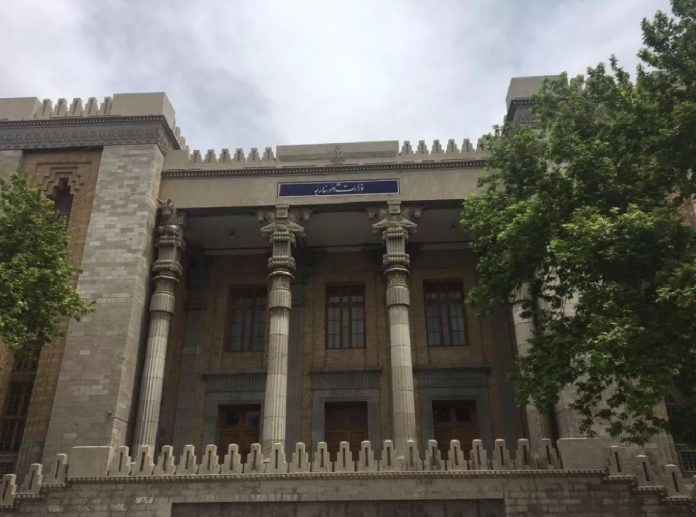
The Iranian Foreign Ministry

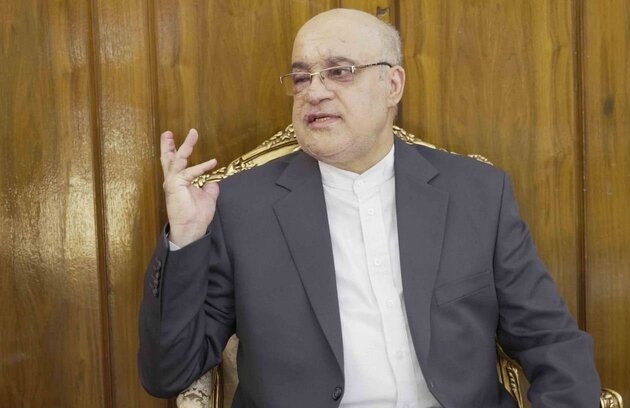
During the meeting, Majid Nili Ahmadabadi, Director General for Western Europe at the Foreign Ministry, described the arrest of Iranian citizen Mohammad Abedini as an illegal act carried out at the request of the U.S. government.

The Iranian official stated that Abedini’s detention reflects Washington’s ongoing political and hostile approach of targeting Iranian citizens worldwide through the extraterritorial application of U.S. domestic laws.

Nili emphasized that the detention not only undermines the long-standing relations between Iran and Italy but also violates international legal principles, including human rights standards, and constitutes a form of arbitrary detention.

He urged Italy to reject the U.S. policy of hostage-taking and called on Rome to take immediate steps to secure Mr. Abedini’s release, thereby preventing any harm to bilateral relations caused by external pressures.

In response, the Italian ambassador assured that she would convey Iran’s protest and concerns to her country’s Foreign Ministry in Rome.

Envoy: Iran wouldn’t have supported resistance for 45 years if it intended to withdraw 

Amani made the remarks during a visit to the southern suburbs of Beirut, stating, “If Iran had intended to withdraw its support for the resistance, it would not have continued this effort for 45 years.”

The envoy made the assertion in response to rumors that Iran has changed its stance regarding the resistance in the region.

Iran has repeatedly reaffirmed its support for the anti-Israel resistance movements, describing it as among its unchanging foreign policy principles.

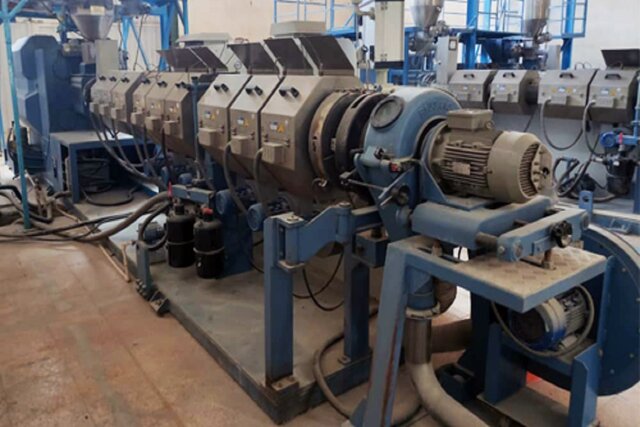
Four countries place orders for Iranian-made advanced polymer production equipment

In an interview with ISNA news agency, Alireza Naeimi, head of research and development at the company, shared that their research focuses on designing and manufacturing various polymer process equipment, such as extruders, plastic injection machines, and hot presses, for both laboratory and industrial-scale polymer product manufacturing.

Naeimi noted that extruders can simulate industrial production processes with minimal error on a laboratory scale, providing reliable results with very small quantities of raw materials.

He also highlighted the flexibility of the devices, which can produce a wide range of polymer shapes, from filaments to blown films, by altering the arrangement of screws and extrusion molds.

One of the primary activities of the company is polymer material processing, especially in the production of masterbatches and polymer compounds, which are essential for manufacturing polymer parts.

The system, connected to gearboxes and shafts designed and built domestically, eliminates the need for imports.

The company has also designed and implemented a production line for a French client in Iran, which is now operational.

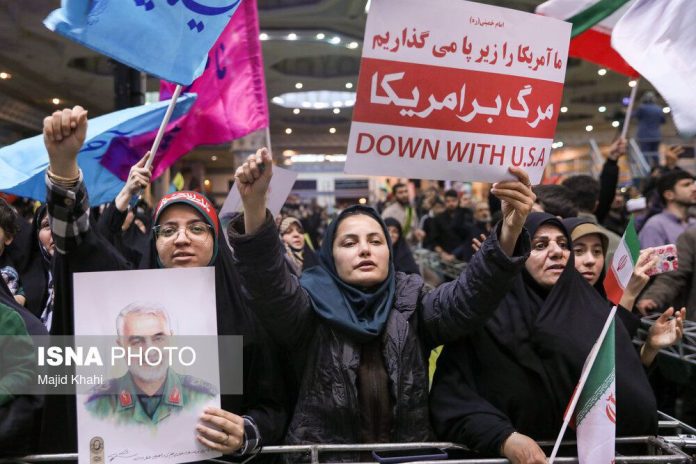
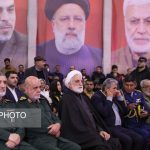
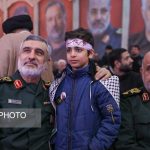
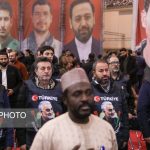
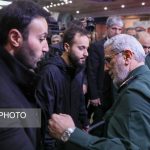
Pictures: 5th anniversary of General Soleimani martyrdom commemorated in Tehran

The event was attended by Martyr Soleimani’s family, political and military officials, and thousands of people from various walks of life.

General Soleimani, commander of the Quds Force of Iran’s Islamic Revolution Guards Corps (IRGC), and his companions were assassinated in a US drone strike near the Iraqi capital Baghdad’s International Airport on January 3, 2020.

More in pictures:

Iran deputy parliament speaker: President has no opposition to military operation against Israel

Ali Nikzad, speaking on Thursday evening to commemorate the fifth anniversary of Lieutenant General Qassem Soleimani’s martyrdom in Ardabil, northwest Iran, said the Supreme National Security Council has reviewed all matters and is seeking to properly implement True Promise 3.

He strongly refuted the allegations of the military commanders seeking comfort, or opposition from the government and the President regarding the implementation of True Promise 3, emphasizing that these claims have no basis.

Nikzad also referred to two military operations by the Iranian armed forces against Israel, stating that there was no disagreement among the branches of power regarding Operation True Promise 2, and the different information and tactics in that operation resulted in over 85% effectiveness of the missiles launched at the occupied territories.

He pointed out: “The child-killing Zionist regime assassinated our guest, who had come to Iran by official invitation, and we will definitely take revenge for the blood of our martyrs.”

Nikzad’s reference was to the martyrdom of Ismail Haniyeh, the former leader of Hamas, who was assassinated by the Zionist regime in Tehran.

In another part of his speech, the Deputy Speaker criticized recent statements by Joulani, the commander of the Al-Nusra Front, who claims to be the ruler of Syria, saying Joulani has handed Syria over to Israel; he is an officer and spy for Israel.

He also praised the character and sincerity of General Soleimani, stating that he was a national hero and an unparalleled, unique personality.

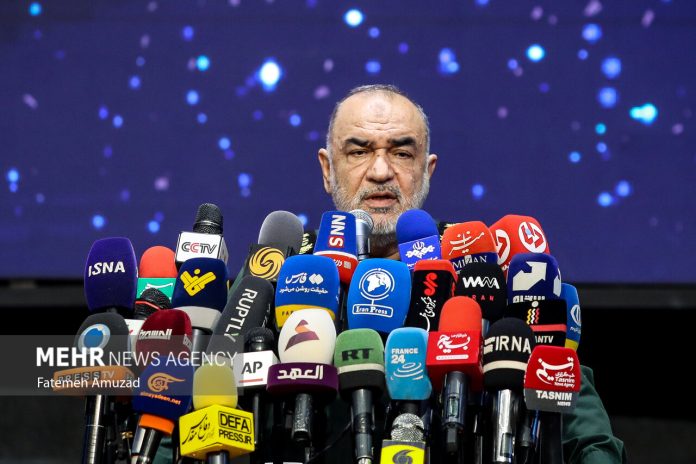
IRGC commander: Resistance will triumph

Hossein Salami

Addressing young resistance fighters across Iraq, Yemen, Lebanon, and other regions, he stated, “The enemy is in decline and nearing collapse. Their psychological warfare reflects their impending end.”

Speaking during the fifth martyrdom anniversary of General Qassem Soleimani, the anti-terror icon, General Salami reiterated the steadfastness of the resistance. “As the Supreme Leader of the Islamic Revolution emphasized, victory is achievable through resilience and perseverance. Resistance will triumph,” he affirmed.

Salami highlighted recent failures of the Israeli regime, particularly its inability to counter the missile power of Yemen’s Ansarullah forces, which he described as a critical componence of the resistance axis. “The Zionist regime has faltered against the strength of these forces, and by God’s will, the resistance will achieve victory,” he concluded.

General Qassem Soleimani, a prominent Iranian military commander and commander of the Quds Force, was killed on January 3, 2020, in a U.S. drone strike near Baghdad International Airport in Iraq.

The strike, ordered by then-President Donald Trump, targeted Soleimani’s convoy shortly after his arrival in Iraq. Along with Soleimani, Abu Mahdi al-Muhandis, a senior Iraqi militia leader and deputy commander of the Iraqi Popular Mobilization Forces (PMF), was also assassinated.

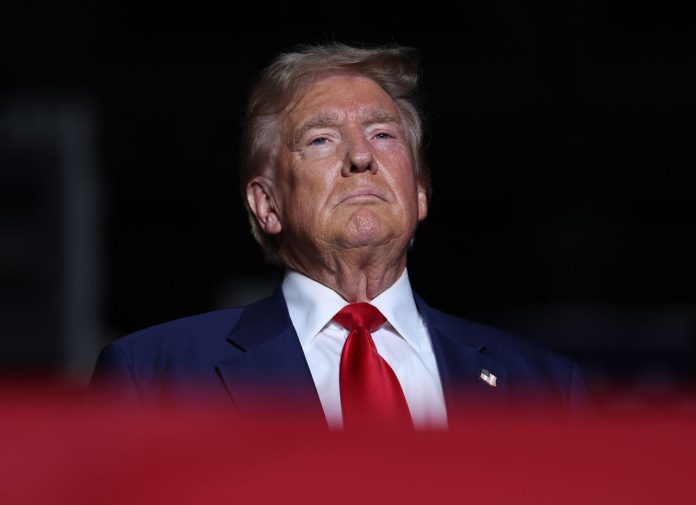
Sources say Trump preparing to intensify activity against Yemen’s Houthis

Donald Trump

Trump and other officials in the incoming administration are interested in increasing the activity against the Houthis, including air attacks.

“President Trump likely will add the Houthis back on the [State Department’s] Foreign Terrorists Organizations list, after President Joe Biden’s wrongheaded decision to remove them, as one of his first acts of president in 2021,” Mark Dubowitz, the CEO of the Foundation for Defense of Democracies, said.

Elliott Abrams, who served as the US Special Representative for Iran from 2020 to 2021, also stated, “Trump will not stand for having US Navy ships attacked every day by the Houthis using Iranian missiles.”

“He will hit the Houthis harder, and he will threaten Iran that if a missile [that] Iran supplied kills an American, Iran will get hit directly,” he added.

Tehran has repeatedly stressed that regional resistance groups do not take orders from Iran, nor does the Islamic Republic have a role in their decisions to carry out retaliatory operations in defense of the Palestinian people.

Over the last month, the Biden administration has decided to change its strategy in Yemen, increasing the number of airstrikes against Houthi targets.

Among other things, the Trump administration is expected to appeal to Persian Gulf states in an effort to upgrade the regional coalition against the Houthis.

Since November 2023, the Houthis have launched nearly 100 attacks on ships in the Red Sea, actions they say are in solidarity with Palestinians suffering under Israel’s war on Gaza, which has killed more than 45,500 people and wounded over 108,000 Palestinians.

The Houthis have stressed they will stop their attacks if Israel’s war on Gaza stops.

Despite attacks by the United States, Britain and Israel on Yemeni territory, the Houthi military operations have continued unabated.

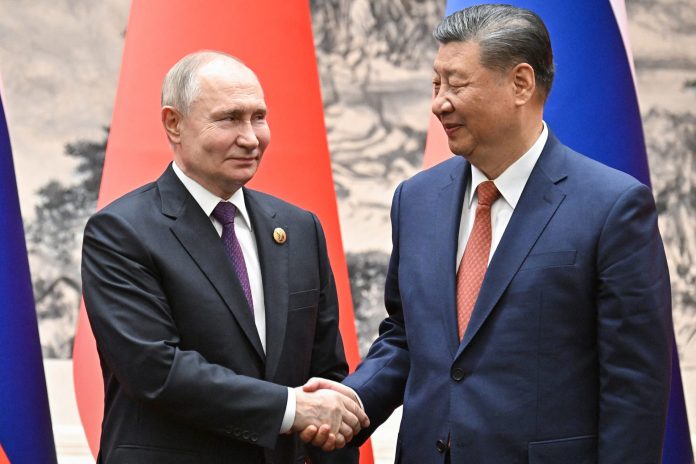
Putin orders Russian govt., top bank to work with China on AI tech

Putin Xi

Moscow’s alliance with Beijing has helped Russia gain access to technology and equipment that have been blocked by Western sanctions due to the full-scale invasion of Ukraine.

Putin told the government and Sberbank to “ensure further cooperation with the People’s Republic of China in technological research and development in the field of artificial intelligence”.

Sberbank has been tasked with leading Russia’s AI development effort.

International sanctions have limited Russia’s ability to develop its AI industry. Major producers of microchips no longer ship to Russia due to restrictions, though the country still obtains products via third-party sellers in other countries.

Graphics processing units (GPUs), microchips essential for AI development, have been difficult for Russia to replace, Sberbank CEO German Gref said in 2023.

Putin stated in mid-December that he wanted to develop a new AI Alliance Network with members of BRICS and other interested countries. Sberbank claimed that AI associations from Brazil, China, India, and South Africa had already joined the network.

BRICS is a bloc of emerging economies often portrayed as a counterweight to the Western-led world.

China has deepened its ties with Russia since the start of the Kremlin’s full-scale war against Ukraine, although Beijing has denied accusations of supporting Russia’s military efforts.

Chinese President Xi Jinping exchanged New Year greetings with Putin, stating “the political mutual trust and strategic coordination between the two sides have continuously marched to a higher level under the strategic guidance of the two leaders.”

Italy summons Iran envoy over detention of journalist

Cecilia Sala

“The government, as it has from the first day of Cecilia Sala’s arrest, is working tirelessly to bring her home, and we demand that all her rights be respected,” Tajani posted on X.

“We will not leave Cecilia and her parents’ side until her release.”

On December 30, the Iranian Ministry of Culture and Islamic Guidance issued a statement on the arrest of Sala, saying she was detained on December 29, 2024, for violating Iranian laws.

Sala had entered Iran on a journalist visa on December 23, 2024, to cover news stories.

The Ministry of Culture and Islamic Guidance, which handles journalists’ affairs among others, emphasized its commitment to supporting foreign journalists and ensuring their legal rights while pursuing a policy of welcoming international media’s presence in the country.

According to a report from IRNA, Sala’s case is currently under investigation, and her arrest was conducted in compliance with relevant regulations.

The Italian embassy in Tehran has been informed and has ensured that Sala has access to consular services during her detention.

The journalist has also been able to communicate with her family via phone.

The Italian Foreign Ministry is actively monitoring the situation, with Ambassador Paola Amadei meeting with Sala to assess her conditions.

Tajani has denounced her arrest as “unacceptable” but stated efforts to free her from Tehran’s Evin prison are complicated.