Saturday, December 27, 2025
Home Blog Page 545

Six killed in Israeli drone attack on West Bank’s refugee camp

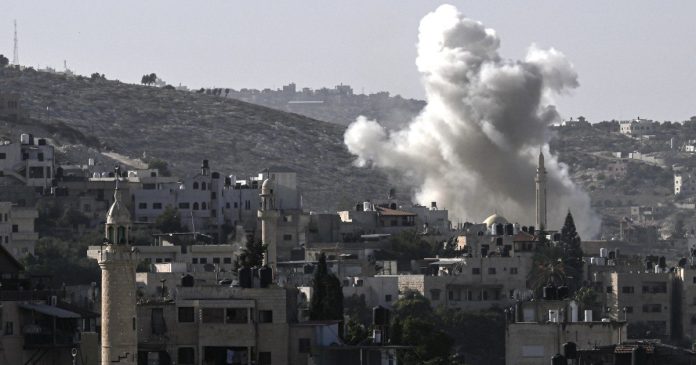
The Palestinian news agency Wafa said an Israeli drone fired three missiles at a group of people near a traffic roundabout in the camp on Tuesday evening, killing six people, including a 15-year-old boy, and injuring several others.

Five other victims of the attack were aged between 23 and 34, and included three brothers, Wafa Added.

Earlier this month, an Israeli drone attack on the West Bank’s Tammun town killed two Palestinian children and a 23-year-old from the same family.

The deadly drone attack also comes amid a military operation launched in the Jenin camp by the Palestinian Authority’s (PA) security forces over the last several weeks, targeting Palestinian resistance fighters, which has resulted in more than a dozen people killed.

Anwar Rajab, a spokesperson for the PA’s security forces, said the attack was intended to “disrupt efforts” by the authority to achieve security and stability in Jenin.

Hassan Khraisheh, the deputy speaker of the Palestinian Legislative Council, stated the drone attack demonstrated Israel’s willingness to kill Palestinians indiscriminately.

“This is a clear message from the Israeli occupation that every Palestinian is a target,” Khraisheh told Al Jazeera.

The drone strike has also sparked rage among locals as coming amid the PA’s military operation in Jenin, Khraisheh continued, adding that the PA should now withdraw from Jenin and unite with other Palestinian groups in opposing the Israeli occupation.

“Our enemy is one – whether as resistance fighters or [PA] security forces,” he noted, adding, “No one is protected against Israeli attacks.”

Earlier on Tuesday, the Jenin Battalion of Palestinian Islamic Jihad announced it agreed to a local initiative to end the Palestinian infighting and stop the bloodshed between Palestinians in the occupied territory. The group did not reveal details of the agreement, but it said it affirms the “legitimate right to resist the criminal occupation”.

Alongside its campaign to crack down on fighters in Jenin, which it brands as “outlaws”, the PA has also suspended Al Jazeera in the occupied West Bank in what is seen as further silencing of dissent and freedom of expression by the authority.

Iran faces challenges in managing undocumented migrants, says MP

Afghan Refugee

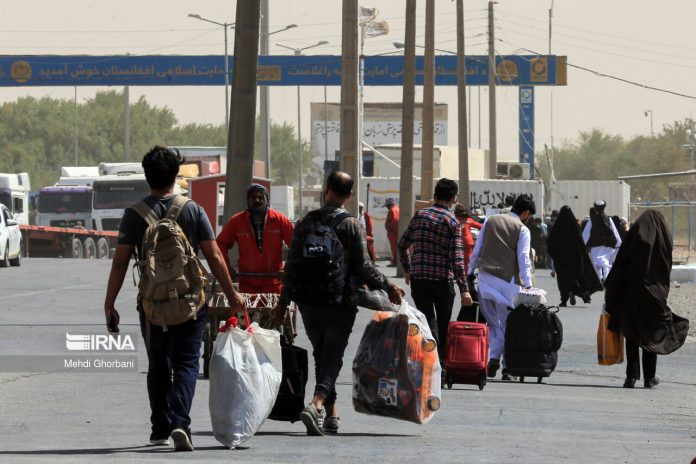
In an interview with Shafaqna, Gholamreza Tavakkol emphasized that the return of undocumented migrants has not been successful as there is no accurate data on them.

He noted, “If four buses of migrants leave the border, the same number replaces them.”

Tavakkol suggested that closing the borders could help manage the influx of illegal migrants into the country.

The lawmaker pointed out that undocumented migrants often work in hard labor jobs in rural areas without proper oversight, leading to deviations in insurance and wages that should be regulated by the ministry of labor.

He acknowledged that the Iranian government’s plan to repatriate about 2 million undocumented Afghan migrants by mid-March has not been as successful as hoped.

According to unofficial estimates, there are over 10 million illegal Afghan migrants in Iran, an issue many officials have warned pose serious social and security threats to the country.

South Korea’s president detained after hours-long standoff at residence

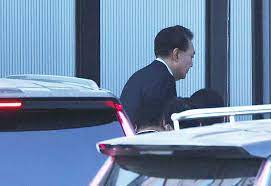
His detention makes him the first sitting president in the nation’s history to be arrested.

CIO officials said Yoon was refusing to talk during questioning but did not give further details as to why he remained silent.

Yoon said in a video message released before his arrest that he had agreed to cooperate with anti-corruption authorities to “avoid bloodshed” in the latest chapter of a saga that has rocked South Korean politics and triggered concern among its international allies. Yoon claimed the rule of law had “completely collapsed” after his detention.

“President Yoon has decided to personally appear at the Corruption Investigation Office (CIO) today,” his lawyer Seok Dong-hyeon wrote on Facebook, adding that the impeached leader would also make a speech. But investigators announced shortly afterwards that Yoon had been arrested.

A convoy of vehicles, one of which was presumably carrying Yoon, was seen leaving the presidential residence and later arrived at the offices of the anti-corruption agency heading the investigation. Yoon was later seen entering the offices.

The operation to detain the president began in the early hours of Wednesday, with investigators sealing off streets around the compound with police buses and thousands of officers deployed.

An unarmed team of investigators from the CIO and police officers tried to enter the residential compound but were blocked by unidentified personnel at the entrance gate, according to witness accounts.

TV footage then showed about 20 personnel believed to be investigators climbing ladders into Yoon’s residential compound. Images showed scores of officers with “police” and “CIO” marked on their backs inside the compound.

Investigators were also attempting to enter the residence via an alternative mountain hiking trail, according to Yonhap News TV.

Investigators were involved in clashes with those defending the residence. Video footage showed investigating officers from the CIO trying to push through a crowd of Yoon’s supporters gathered outside his hillside villa in Seoul

The investigating officials said they would detain anyone who tried to block their bid to execute a new warrant, Yonhap news agency reported. Police denied reports that they had arrested the acting head of the presidential guard.

At least one person was injured during the standoff. They were transported away from the scene by fire authorities.

Investigators were seeking to execute a warrant for Yoon’s arrest over allegations that his declaration of martial law amounted to insurrection – a crime that can come with life imprisonment or even the death penalty.

Yoon has been holed up inside his Hannam-dong residence protected by an armed security detail since his impeachment in mid-December.

Earlier there were fears that the latest attempt to arrest Yoon could end in a repeat of a tense standoff earlier this month, when investigators were blocked from detaining the suspended president by the presidential security service.

Acting President Choi Sang-mok announced in a statement early on Wednesday as the operation unfolded: “This situation is a crucial moment for maintaining order and the rule of law in South Korea.”

Crowds of Yoon supporters, most of them elderly, gathered near the residence gates and around makeshift stages hosting speeches describing the arrest warrant “fake” and calling for the arrest of opposition leader Lee Jae-myung.

Braving the freezing early morning, many held up red light sticks, US flags and banners in both Korean and English, including “Stop the steal” and “CCP out”, embracing unfounded claims of electoral manipulation and alleged Chinese interference – despite the fact that no major election observers or courts have raised concerns about last April’s parliamentary vote that saw the opposition secure a decisive victory.

Nearby, a smaller group of pro-impeachment protesters, kept apart from Yoon’s supporters by a police cordon, was chanting “Enter! Enter! Arrest him!”

Activists on both sides had set up tea stations and were distributing heat packs.

Yoon’s short-lived imposition of martial law plunged South Korea into its worst political crisis in decades after he sent soldiers to storm parliament, shaking the vibrant east Asian democracy and briefly sending it back to the dark days of military rule.

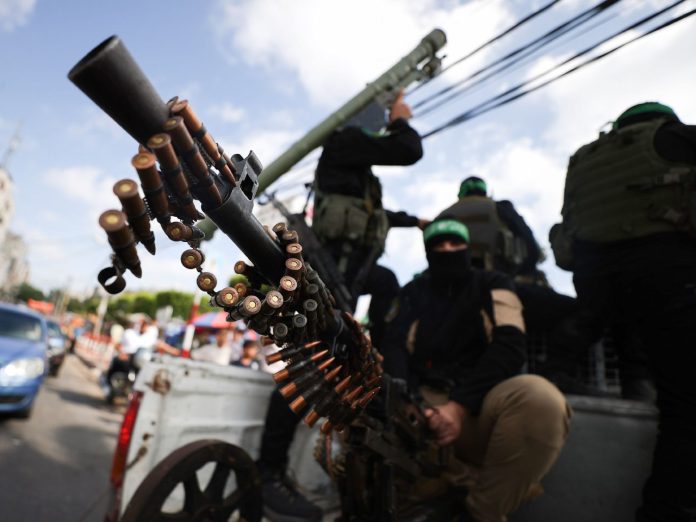
Hamas has replaced almost all killed fighters with new recruits: US

Hamas

Blinken’s remarks on Tuesday at The Atlantic Council in Washington DC provide a rare window into US intelligence assessments of Hamas’s strength, which is likely to ruffle Israel’s positioning after a potential ceasefire, given its stated objective of “total victory and the eradication of Hamas”.

While Israel succeeded in decapitating Hamas’s leadership in Gaza, Lebanon and Iran, Blinken suggested that the group remains a power in the Gaza Strip and could complicate plans for post-war governance of the enclave.

Blinken’s speech comes in the final countdown of the Joe Biden administration’s days in office. It was unusually forthright and laced with criticism of the US’s ally.

“Israelis must abandon the myth that they can carry out de facto annexation without cost and consequence to Israel’s democracy,” Blinken said, adding that Israel is expanding settlements and nationalising land “at a faster clip than any time in the last decade” and that “violent attacks by extremist settlers against Palestinian civilians have reached record levels”.

At the event, Blinken unveiled his plans for post-war governance of Gaza, but they were overshadowed by his assertion that he would have to hand them off to President-elect Donald Trump’s administration after the 20 January inauguration.

The Donald Trump transition team has made few statements on the incoming administration’s vision for Gaza and the occupied West Bank. However, Trump’s nominee for ambassador to Israel, Mike Huckabee, has previously stated “there’s no such thing as a settlement”.

Blinken said Israel would “have to accept reuniting Gaza and the West Bank under the leadership of a reformed PA (Palestinian Authority)” and “must embrace a time-bound, conditions-based path toward forming an independent Palestinian state”.

He added that the Biden administration wants the PA to invite “international partners to help establish and run an interim administration” in the demolished enclave. He also said an interim security mission would comprise forces from “partner nations” and vetted Palestinian personnel.

Blinken spent months working on the plan for post-war Gaza governance. His speech comes as the Biden administration is already being overshadowed by Trump, whose return to the White House appears to have injected fresh urgency into the ceasefire negotiations.

Blinken’s speech was also interrupted by a heckler, who screamed over him for nearly a minute, describing him as “bloody Blinken, secretary of genocide”.

The draft of a ceasefire agreement circulating widely, which a senior western official told MEE could be agreed upon by Friday, appears nearly identical to those introduced in the summer and fall of 2024.

Israel has long insisted that a deal must allow it to restart the war when it wants, while Hamas says it will only release the hostages in return for a permanent end to the fighting.

Israeli news site Haaretz reported on Tuesday that Trump’s incoming Middle East envoy, Steven Witkoff, pressured Netanyahu into the deal, pulling him into his office on Jewish Shabbat to agree on the proposal, which was the same one he rejected previously.

Israeli media and sources close to the talks told AFP that the first phase of a deal would see 33 Israeli hostages freed. In contrast, two Palestinian sources close to Hamas said that Israel would release about 1,000 Palestinian prisoners in exchange.

An Israeli government official told AFP that “several hundred terrorists will be released” as part of the first phase of the deal.

Israeli media also reported on Tuesday that under the proposed deal, Israel would be allowed to maintain a buffer zone inside Gaza during the implementation of the first phase.

Hamas said it hoped for a “clear and comprehensive agreement”, adding it had held consultations with other Palestinian factions and informed them of the “progress made”.

Iranian FM reaffirms non-military objectives in strategic partnership with Russia, emphasizes FATF review to remain technical

Abbas Araghchi

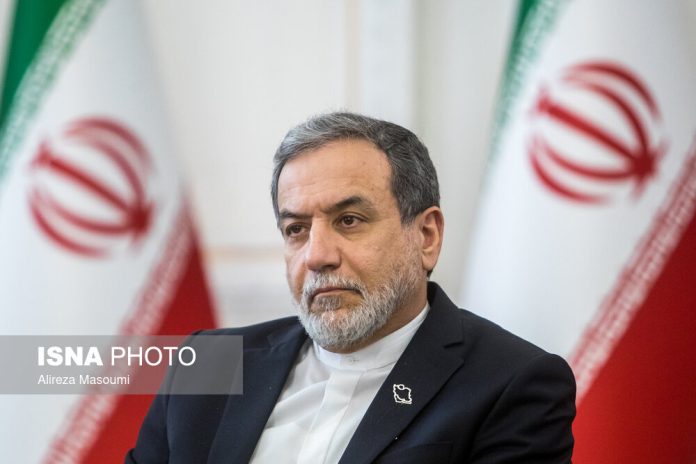
In an interview with the IRIB state-run television on Tuesday night, Araghchi stated that the matter should not be polarized and should remain a technical discussion.

He highlighted that different viewpoints exist regarding the benefits and potential harms of FATF for Iran, but left the final decision to the Expediency Council.

Araghchi also addressed the Comprehensive Strategic Partnership Treaty between Iran and Russia, which is set to be signed during President Massoud Pezeshkian’s upcoming visit to Moscow.

He clarified that the treaty is not for a specific military alliance and has been in preparation for four years.

“The treaty is based on mutual interests and does not target any third party, nor does it restrict either country from expanding relations with other nations,” he explained.

During President Pezeshkian’s visit to Tajikistan and Russia on Wednesday and Friday, he will engage in various diplomatic and economic activities, including meetings with political leaders and participation in joint business forums, the foreign minister said.

Araghchi reiterated that the treaty with Russia is an updated version of an agreement that has existed since 2000.

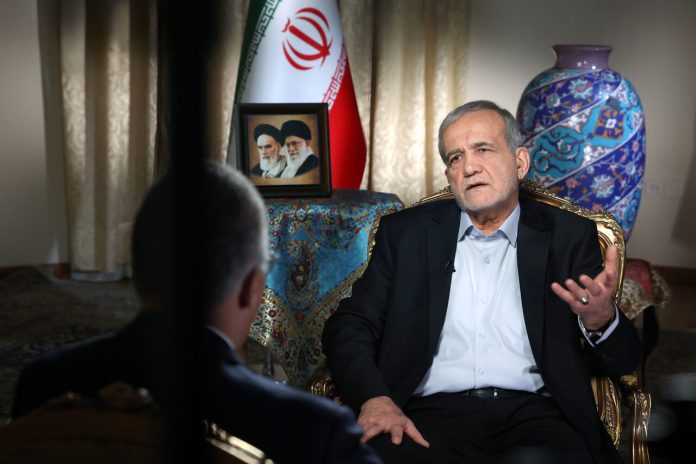
Iran ready for talks with second Trump administration, says President Pezeshkian

Masoud Pezeshkian

In an exclusive interview with NBC News in Tehran, President Pezeshkian emphasized that the issue lies not in the act of dialogue itself, but in the commitments that arise from such negotiations.

He reminded that when Iran engaged in talks with major powers regarding its nuclear program, it adhered to all its commitments, but the other parties failed to fulfill their promises.

He was referring to the talks over Iran’s nuclear program which led to the signing of the Joint Comprehensive Plan of Action (JCPOA) nuclear deal in 2015. The US, under Donald Trump, withdrew from the deal in 2018 and reimposed anti-Tehran sanctions.

The Iranian president also firmly denied claims that Iran had plans to assassinate Trump, stating that such accusations are part of a campaign by Israel and others to promote Iranophobia.

President Pezeshkian asserted that Iran has never attempted to assassinate anyone and has no plans to do so in the future.

During the interview, the president reiterated that Iran does not seek war but is prepared to defend itself if its nuclear sites are attacked.

He expressed hope that such a conflict would not occur, warning it would be detrimental to all parties involved.

The interview took place amid intense diplomatic efforts to reach a ceasefire agreement in Gaza between Israel and Hamas. President Pezeshkian stated that Iran is willing to do whatever it can to promote peace in the region.

This interview marks President Pezeshkian’s first with a foreign media outlet since assuming office in July last year.

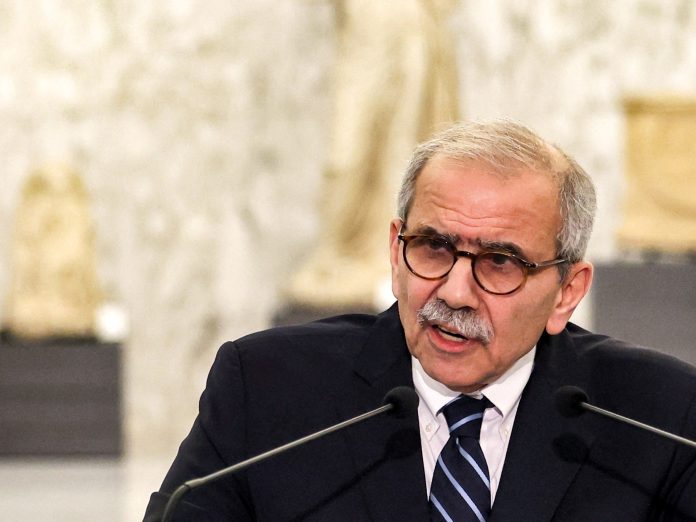
PM-designate promises to ‘rescue, reform and rebuild’ Lebanon

In his first speech in the role on Tuesday, Salam stated he was reaching out across the political spectrum after winning the backing of more than half of Lebanon’s parliamentarians.

“My hands are extended to all to set off together on this mission,” said Salam, who was serving as president of the International Court of Justice before his designation as prime minister.

“I am not of those who exclude but those who unite,” he added, calling for a “new chapter” in Lebanon.

The newly elected president, Joseph Aoun, asked him to form a new government on Monday.

Salam’s nomination highlights the weakened position of Iran-backed Hezbollah after a devastating war with Israel and the toppling of its ally Bashar al-Assad in Syria last month.

Hezbollah had supported caretaker Prime Minister Najib Mikati to remain in office.

Salam said he would “extend the authority of the Lebanese state across all its territory” and “work seriously to completely implement UN Resolution 1701”, which calls for Hezbollah to withdraw from southern Lebanon.

Referring to Israel, Salam added he would work to “impose the complete withdrawal of the enemy from the last occupied inch of our land”.

In a country grappling with its worst financial crisis since 2019, he pledged to work towards forming a government that could “build a modern and productive economy”.

In religiously diverse Lebanon, nominating a premier does not guarantee a new government will be formed imminently.

The process has previously taken weeks or even months due to deep political divisions and horse-trading.

But Salam’s designation as prime minister is viewed with hope by some after the 14-month Israel-Hezbollah war, which killed 4,000 people and injured more than 16,000. A United States-brokered, 60-day truce came into effect in November.

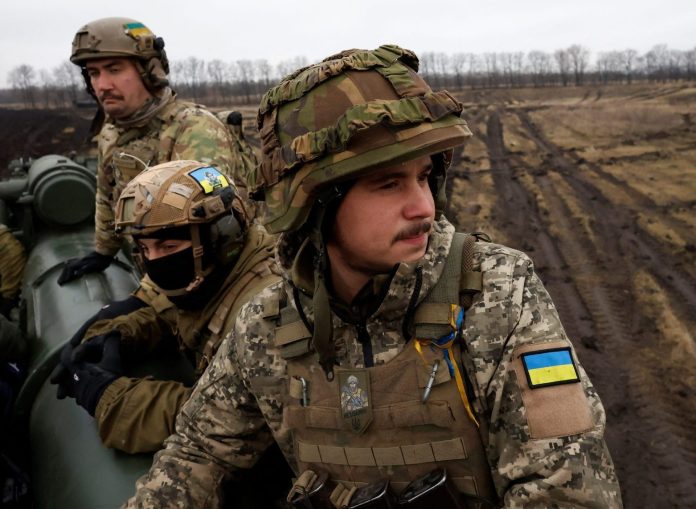
Equipping Ukrainian soldiers takes priority over lowering draft age: Zelensky

Russia Ukraine War

“When we talk about increasing the number of our people (in the military), we must first address the issue of adequately equipping our brigades. Our partners have all these requests,” Zelensky said.

Zelensky noted that Ukraine fields over 100 brigades, all requiring sustained staffing and consistent resupply of equipment to maintain their combat effectiveness.

The remarks follow reports that U.S. lawmakers and NATO allies are urging Ukraine to lower its draft age from 25 to 18 to address manpower shortages. U.S. President Joe Biden’s administration has reportedly advocated for the move as part of broader efforts to address Ukraine’s personnel needs at the full-scale war with Russia stretches into its third year.

However, Kyiv has resisted the proposal, citing concerns over equipment shortages and the economic impact of drafting younger workers.

Under martial law, men aged 18 to 60 are prohibited from leaving Ukraine, but only those aged 25 and older are eligible for the draft.

The Ukrainian government lowered the draft age from 27 to 25 in April 2024, adding 50,000 troops to its forces. While the measure bolstered numbers, it fell short of meeting the military’s full requirements.

Israel faces ‘generational’ challenge with future American policymakers: Outgoing US envoy

White House

Speaking at length to the Times of Israel, US ambassador Jack Lew stated that American public opinion “is still largely pro-Israel” but that could shift in the next decades as a result of the war in Gaza.

“What I’ve told people here that they have to worry about when this war is over is that the generational memory doesn’t go back to the founding of the state or the Six Day War, or the Yom Kippur War, or to the intifada even,” Lew said, referring to Israel’s creation in 1948 in what Palestinians call the Nakba (catastrophe), and the 1967 and 1973 Wars.

“It starts with this war, and you can’t ignore the impact of this war on future policymakers – not the people making the decisions today, but the people who are 25, 35, 45 today and who will be the leaders for the next 30 years, 40 years,” he continued.

Lew added that outgoing US President Joe Biden, who has regularly proclaimed himself as a “Zionist”, is “the last president of his generation, whose memories and knowledge and passion to support Israel go back to the founding story”.

The US was the first country under Democratic President Harry S Truman to recognise Israel, although that move faced opposition among so-called “Arabists” in the US State Department and intelligence agencies. Biden became a US senator in 1973 and met former Israeli Prime Minister Golda Meir roughly five weeks before the 1973 War between Israel, Egypt and Syria started.

In the interview, Lew, a longtime Democratic insider who served as former President Barrack Obama’s chief of staff and Treasury Secretary, defended Israel’s position on the war, including that it was fighting Hamas in a “fierce battle” in Gaza’s Kamal Adwan hospital.

In a press release in early January, the UN announced more “than 1,057 Palestinian health and medical professionals have been killed so far and many have been arbitrarily arrested in Gaza since the war began and called “on Israeli authorities, as the occupying power, to respect and protect the right to life and the right to health in Gaza and the whole occupied Palestinian Territory”.

Lew criticised US media coverage of the war, saying that it hurt Israel, specifically criticising editorial word choices.

“I frequently see language like ‘the Palestinian Health Authority reports and the IDF claims’…I think ‘claims’ is a little bit arch for a trusted ally. You could say they ‘say’.”

He stated Israel’s government had not done a good job of getting information out “more quickly”, adding that “America has been fed a media coverage of this war that Israel has just not done an effective job countering”.

“And there’s only so much you can do through diplomatic channels to fix that.”

Media analysts and rights groups have called out what they say is one-sided and pro-Israel coverage of the war in Gaza.

In April, a leaked New York Times memo was revealed, instructing reporters to avoid using words like “slaughter” and “massacre” when describing Israeli-perpetrated violence against Palestinians.

Israel’s war on Gaza, and US support for it, has been widely termed a “genocide” by several states, leaders, human rights organisations, and experts on the subject.

Lew, a former Columbia University professor, also spent time defending his legacy.

According to a report in September, Lew clashed with junior embassy officials over a US Agency for International Development report, which said that Israel’s blocking of aid into the besieged Gaza Strip potentially puts it in violation of the Foreign Assistance Act, which bars military support from going to any nation that restricts the delivery of assistance.

Lew told Washington that Israeli Prime Minister Benjamin Netanyahu and Defence Minister Yoav Gallant could be trusted to facilitate aid shipments to Gaza and rebuffed junior officials at the embassy, saying “no other nation has ever provided so much humanitarian assistance to their enemies”.

Lew said the Gaza Strip had not tipped into a famine. “I don’t think Israel has gotten credit, and I don’t think the United States has gotten credit, for keeping the situation from crossing that line. And it’s hard.”

In northern Gaza, Israel has been accused of implementing parts of the so-called “General’s plan”, which involves depopulating the area and then besieging the region – including preventing the entry of humanitarian supplies – to starve out anyone left, including Palestinian fighters.

In March, experts from the United Nation’s relief agencies said more than a million people in the Gaza Strip, around half of the enclave’s population, were experiencing famine-like conditions.

Lew added it was “a little jarring” for him to hear Israelis call for no water, food or fuel entering Gaza “when they were talking about feeding babies and innocent civilians,” but noted a “herculean effort” had been made to keep “things from crossing over into malnutrition and famine”.

Since the start of the war on Gaza in October 2023, more than 46,000 Palestinians have been killed so far, with thousands presumed dead under Gaza’s rubble.

Iranian commander says Navy to receive advanced destroyer, inaugurate strategic military base

Shahram Irani

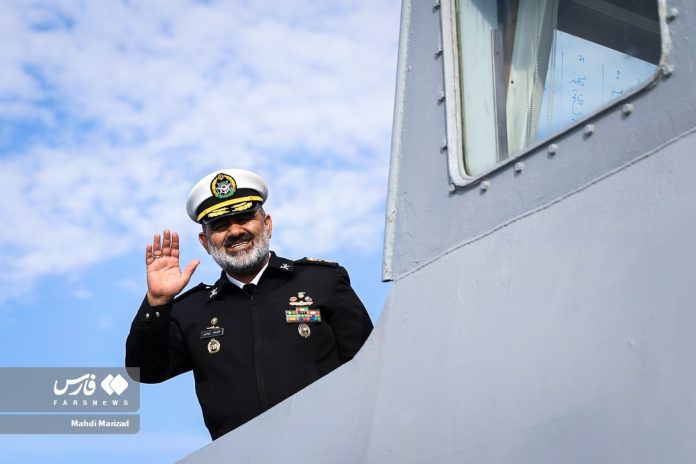
Navy Commander Rear Admiral Shahram Irani announced on Monday that the domestically-developed destroyer Zagros will soon join the naval forces.

“This week, a unique military vessel called Zagros, (which is developed) with Iranian knowledge and capabilities and (enjoys) distinctive features, will be launched into the water to start operating in the region,” Irani stated.

The Zagros destroyer, described as the Navy’s most advanced vessel, is designed for both combat and intelligence missions.

Additionally, Irani revealed that Iran’s largest military hub will open in Jask this week, featuring specialized dock posts equipped with the latest technology.

Praising the quality of vessel manufacturing industry in Iran as very high, he stated that “the 86th fleet of Iran’s Navy, by overcoming various obstacles, managed to show the world powers the maritime capability of the Islamic Republic, and provide a platform for exploiting blue economy.”

Irani acknowledged the contributions of knowledge-based companies and scientists, adding, “With your capabilities, you have defeated the so-called American exceptionalism in the seas, proving that these waters belong to all nations.”

Referring to the Navy’s international presence, he noted, “Today, the power of Iran’s Navy has reached a level where other countries seek to utilize our capacity and capability.”
Referring to the presence of Iran’s naval forces in international waters, he stated, “Today, the power of Iran’s Navy has reached such a level that other countries seek to use our capacity and capability.”

In recent years, Iran’s Navy has achieved self-sufficiency in manufacturing surface and sub-surface vessels and has increased its presence in international waters to secure naval routes and protect merchant vessels and tankers.

Iranian naval forces have conducted joint military drills with countries like Russia, China, and Pakistan to enhance combat readiness and have participated in efforts to counter piracy and maritime terrorism. These initiatives also involve exchanging information on naval rescue operations and sharing operational experiences to bolster the security of international maritime trade.