Sunday, January 18, 2026
Home Blog Page 538

Hamas: Israel delaying Gaza relief, reconstruction deal

Gaza War

Israel “continues to stall implementation of the relief and reconstruction process outlined in the ceasefire agreement, and there are humanitarian aid commitments it has not fully adhered to,” spokesperson Hazem Qassem said in a statement, without providing further details.

“Despite the massive destruction of the healthcare sector, the occupation has not allowed any restoration efforts or the entry of essential medical supplies,” Qassem added.

“Fuel deliveries remain far below what was stipulated in the agreement, and the amount reaching northern Gaza is negligible,” he continued.

The spokesperson noted that “the heavy machinery specified in the agreement has not been allowed in, preventing the retrieval of martyrs’ bodies and hindering the recovery of (hostage) bodies set to be exchanged, especially at the end of this phase.”

Hamas called on mediators, Qatar and Egypt, as well as guarantors of the ceasefire agreement, to “compel the occupation to immediately allow the entry of the relief materials outlined in the agreement, particularly tents, fuel, food supplies, and heavy machinery, while also ensuring an end to all other violations and breaches.”

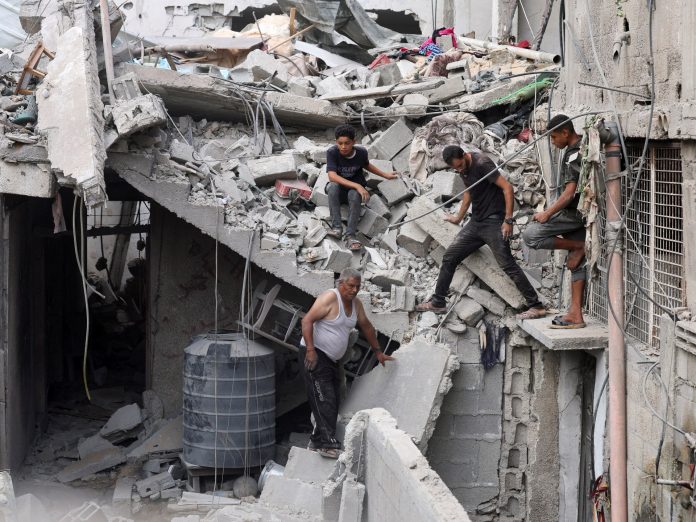
Earlier in the day, Salama Marouf, head of Gaza’s media office, stated that Gaza is a “humanitarian disaster zone” devoid of “all basic necessities for survival and human dignity.”

The media office on Wednesday had urged for pressure on Israel to allow the entry of tents and caravans to shelter more than a quarter of a million displaced families whose homes were destroyed in the genocide.

The ongoing six-week truce is the first part of a three-stage deal that could permanently end Israel’s war in Gaza. The military campaign has killed more than 47,000 Palestinians and left the territory in ruins.

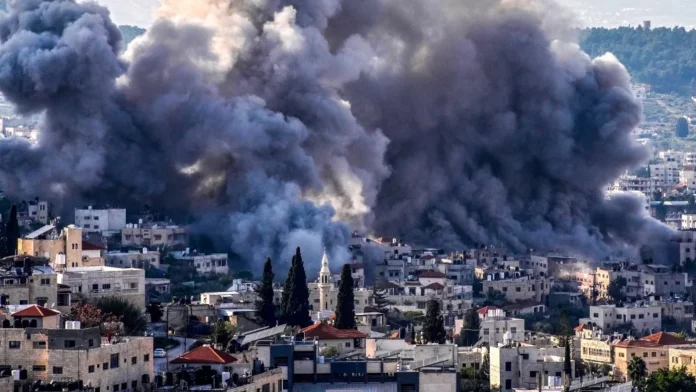
Israel demolishes neighbourhood in Jenin refugee camp in West Bank

Footage released by locals on social media appeared to show a large swathe of the camp being destroyed.

The Wafa news agency said Israeli forces simultaneously blew up nearly 20 buildings on the eastern side of the camp after rigging them with explosives.

The director of the main governmental hospital in Jenin, Wisam Baker, told the news agency that some sections of the hospital had been damaged as a result of the explosions.

So far, no casualties have been reported.

Earlier on Sunday, a 73-year-old Palestinian man was shot dead in Jenin, according to Wafa.

The Palestine Red Crescent Society (PRCS) reported that its crews recovered the body of Walid Lahlouh from the entrance of the camp, transferring it to the hospital.

Lahlouh’s killing brings the total number of Palestinians killed since Israel launched its military assault on Jenin 13 days ago to 25.

According to Wafa, Israeli bulldozers have levelled around 100 homes in the camp, with local hospitals facing severe water shortages after Israeli forces damaged pipelines.

Around 35 percent of the city’s population cannot access water.

Since the beginning of the war in Gaza on 7 Oct0ber 2023, Israeli soldier and settler attacks in the West Bank have skyrocketed, leaving hundreds dead.

In the early hours of Sunday, Israeli settlers set fire to a mosque in the Arab al-Mleihat community, northwest of Jericho in the occupied West Bank.

Hassan Mleihat, general supervisor of the local Al-Baydar Organisation for the Defence of Bedouin Rights, told Wafa that the settlers poured a flammable substance inside the mosque before setting it ablaze.

The fire destroyed everything in the mosque, even the copies of the Qur’an that were in it, and efforts were unsuccessful in extinguishing the fire.

Community official Suleiman Mlihat told Middle East Eye that four settlers infiltrated the area between the cities of Ramallah and Jericho in the dawn hours, coming from the pastoral settlement outpost they had recently established.

The fire also affected residents’ property that was located near the mosque.

Under the pretext of grazing their sheep, settlers regularly carry out attacks against residents in the community, including stealing and destroying their property, or directly assaulting them.

“Settlers from time to time poison the livestock raised by Palestinians here or deliberately trample them, knowing that livestock are our main source of livelihood,” Mlihat added.

The settlers also do not hesitate to shoot at livestock while they are grazing near the community, and they also closed all pastures, preventing Palestinians from being there.

“We demand the protection of the residents of the community and the rest of the Bedouin communities that are subjected to unprecedented attacks by settlers with the aim of seizing lands,” he stated.

According to the report, the fire tore through the building, destroying it completely.

Wafa added that the group also torched a tractor.

These practices come in conjunction with the Israeli Knesset’s vote to enact a draft law allowing settlers to own and purchase land in the West Bank, which allows for an unprecedented acceleration of the pace of settlement.

During the war on Gaza, settlers established seven new settlement outposts in Area B of the West Bank, which the Palestinians considered a dangerous escalation that would lead to the seizure of more lands.

The Palestinian foreign ministry on Sunday said “settler militias and their terrorist elements” were increasingly attacking Palestinian citizens and their properties.

In a statement, it condemned the surging “aggression of the occupation and its settlers” in the occupied West Bank and called on the international community to intervene.

“The foreign ministry views with great concern the colonial projects that fuel this ongoing aggression and holds the Israeli government fully and directly responsible for its repercussions on the efforts made to establish calm, ceasefire, and end the cycle of wars,” it added.

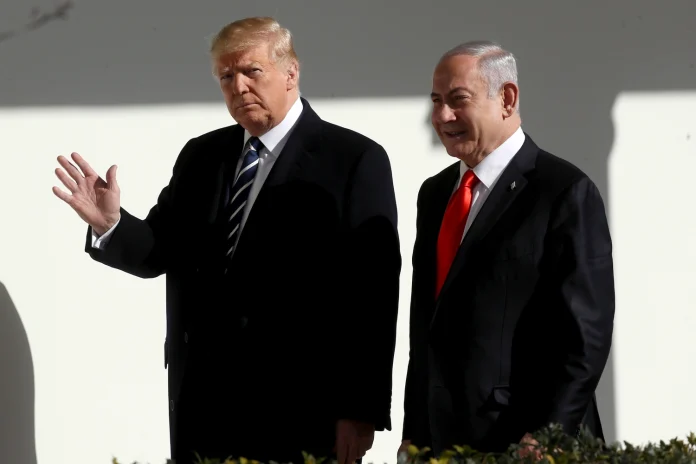
Trump, Netanyahu expected to announce progress on Saudi-Israeli normalization: Report

According to a report by the Israeli daily Haaretz published on Sunday, a potential deal to normalize relations between Israel and Saudi Arabia was high on the agenda of Netanyahu’s meeting with Trump at the White House this week, adding that the two officials are set to announce progress on the agreement.

The report went on to say that the Trump administration wants to move fast on it and therefore, it is considering several conditions to fall into place to make this deal viable, including holding the ceasefire in the Gaza Strip.

The deal would produce economic benefits for the US and some speculate that Trump’s repeated mention of relocating Palestinians from Gaza to Egypt and Jordan may be a negotiation tactic, allowing Saudi Arabia to later claim it successfully blocked such plans.

Back in 2020, the United Arab Emirates, Bahrain, Sudan, and Morocco entered US-brokered rapprochement deals with the Israeli regime.

Washington has also reportedly been trying to add Riyadh to the list in a bid to bolster regional support for Tel Aviv, its most cherished ally.

In July 2023, the administration of former US President Joe Biden announced that a deal for the regime and Saudi Arabia to normalize relations might be on the horizon following National Security Adviser Jake Sullivan’s talks with Saudi officials in the kingdom’s port city of Jeddah.

To sign a deal with Israel, Riyadh publicly asked Tel Aviv to implement the 2002 so-called Arab Peace Initiative, conditioning normalizing ties with Israel on the establishment of an independent, sovereign Palestinian state within the 1967 borders.

However, members of the far-right Israeli regime, led by Netanyahu, say they will not make any concession to the Palestinians as part of a potential deal for normalization of relations with Saudi Arabia.

At the time, reports emerged of an agreement on the general outline of an Israeli-Saudi normalization pact.

Under the deal, Riyadh would secure American backing for a civilian nuclear program, as well as access to advanced weapons. In exchange, the kingdom would take major steps to distance itself from China and Israel would allow an independent Palestinian state.

In September, though, the kingdom was reported to have informed the United States of its decision to suspend all negotiations on the potential rapprochement due allegedly to the Israeli cabinet’s unwillingness to make any concessions to the Palestinians.

A month later, following the onset of the regime’s yet-ongoing war on the Gaza Strip, the Reuters news agency also reported that Riyadh was “putting US-backed plans to normalize ties with Israel on ice.”

Iranian female referee released after 40 days of detention in Denmark

Ms. Ghorbani explained in court that she obtained the visa in Turkey by paying an intermediary and admitted she had intended to seek asylum in Edinburgh, as reported by the local Danish newspaper Ekstra Bladet.

Ghorbani had left Iran due to undisclosed issues and stayed in Turkey for a while. She was detained at Copenhagen Airport while en route to Scotland. The forgery charge was related to a fake German visa stamp in her passport, detected during a passport scan.

In court, Ghorbani stated she was unaware of the visa’s forgery and believed it to be legitimate. She admitted her primary goal was to seek asylum in Scotland.

Despite the prosecutor’s argument that Ghorbani, as an experienced international referee, should have ensured her documents’ legality, the court found no evidence of her knowledge of the forgery and acquitted her.

Upon hearing the translated verdict, Ghorbani wept with joy.

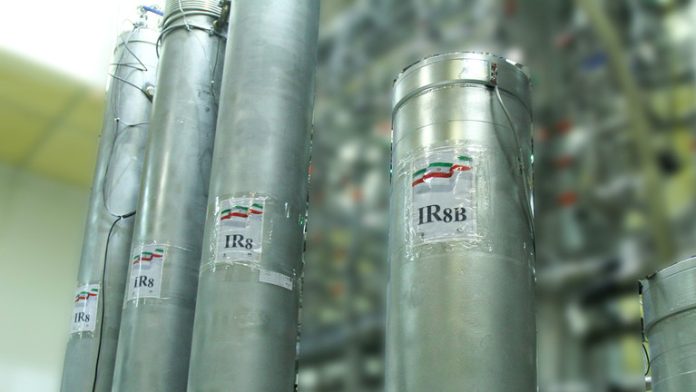
Iran says its nuclear program completely transparent

Iran nuclear program

Mohammad Eslami made the remarks in an interview on Sunday where he explained the latest achievements and developments in the country’s nuclear industry.

“We have now reached a stage in the nuclear industry where we can exploit this technology,” Eslami said.

He added that advanced technologies have become a decisive area at the international level.

Eslami clarified that Iran has broken the monopoly and is standing on its own feet with endogenous research.

He stated, “Accessing technology is prohibited from the point of view of regional arrogance, and we do our work independently.”

“The next point is that this technology benefits the people. When you create the capability, you can get the results. We are now on this path and we can use nuclear technology to advance and influence various issues.”

Eslami stated that costs are not an issue in developing the nuclear program.

He said that nuclear technology is a platform for development in other sciences. Talking about the weapons nature of Iran’s program is an excuse for the West, he added.

The required enrichment percentages vary from country to country, he said.

He stated that Iran has accepted inspections to clarify its nuclear program.

Regarding the Iranian nuclear file and sanctions against Iran, Eslami noted: “In order for us to get a real picture, let’s take a look at the Davos meeting.”

“There is an opportunity to show the orientations and see what points countries are focusing on. One of the most important axes was new technology, which is in the fierce competition between developed countries,” he added.

“The main condition from their point of view is to support the interests of the United States. This was in the middle of all the talks of the maximum pressure group. The main issue is advanced technology and since we are not a member of the blocs, this is prohibited for us,” he stated.

The AEOI head said that the “IAEA statute clearly states that the laws and parliament of the IAEA must be approved within the countries. One is safeguards and the second is the NPT. These two must become laws in every country that wants to operate.”

“The International Atomic Energy Agency must support all countries’ access to peaceful nuclear technology,” he added.

“The IAEA must facilitate, and support so that every country can obtain nuclear technology, but behind the scenes, the US Congress passed the One Two Three Act in 1955 and says that anyone who wants to enter this field must have a contract with the US.”

“This law says that if you do not have relations with the US and do not comply, you cannot operate, and the US strictly controls and does not allow any country to operate. We are facing a political and security trend that created maximum pressure and was able to create disturbances,” he stated.

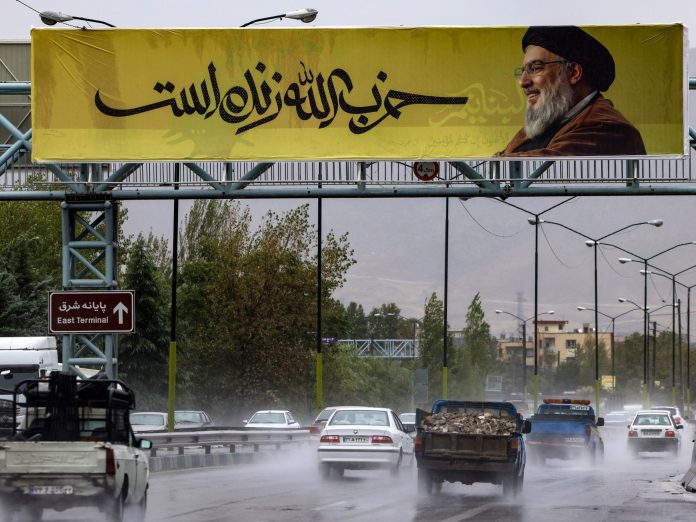
Longtime Hezbollah leader to be buried in Lebanon within weeks

Hezbollah Nasrallah

Nasrallah, who had served as Hezbollah’s secretary general for more than 30 years, was killed on September 27 as Israel ramped up its air attacks on Hezbollah targets in Beirut’s southern suburbs.

His successor Naim Qassem said in a televised address on Sunday that Nasrallah was killed “at a time when circumstances were difficult”, forcing the group to conduct a temporary burial for him according to religious tradition.

Qassem added the group had now decided to hold “a grand funeral procession with a large public presence” for both Nasrallah and Hashem Safieddine, another top Hezbollah official killed in an Israeli strike nearly a week after Nasrallah.

He also confirmed for the first time that Safieddine had been elected as Nasrallah’s successor but was killed before the announcement was made. He said Safieddine would also be buried with the title of secretary general.

Nasrallah will be buried on the outskirts of Beirut “in a plot of land we chose between the old and new airport roads”, while Safieddine will be buried in his hometown of Deir Qanoun in southern Lebanon, he continued.

Hezbollah announced on October 29 that Qassem, the group’s deputy leader, had been elected as its head, after the killings of many of the group’s top military commanders threw the group into disarray.

A ceasefire agreed in late November ended hostilities between Hezbollah and Israel and set a 60-day deadline for Israeli troops to withdraw from southern Lebanon, Hezbollah to remove its fighters and arms from the area and Lebanese troops to deploy there.

That deadline was extended last month until February 18. Israel has been accused of violating the terms of the ceasefire by refusing to leave Lebanon and continuing to carry out occasional air attacks in some parts of the country. Israel itself accuses Hezbollah of violating the terms of the ceasefire.

Hezbollah faced one of its biggest challenges after the Iranian-backed group opened up a front against Israel to help relieve pressure on its ally Hamas in Gaza in October 2023. The group suffered losses after months of cross-border fighting and Israeli attacks that targeted the group’s leading figures.

Syria’s new President meets Saudi crown prince in first foreign trip

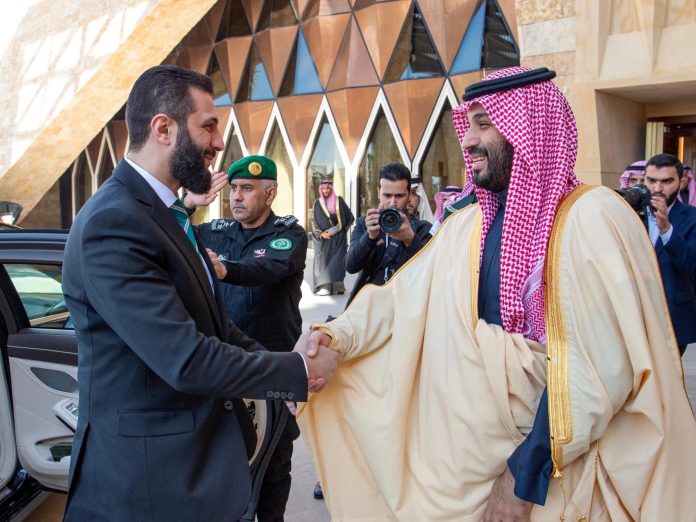
The Saudi Press Agency (SPA) showed al-Sharaa meeting MBS – Saudi Arabia’s de facto leader – after the Syrian president had first been greeted by the Deputy Governor of the Riyadh Region Prince Mohammed bin Abdulrahman bin Abdulaziz after he landed at King Khalid International Airport in Riyadh on Sunday.

Al-Sharaa was accompanied for the talks in Riyadh by Syria’s foreign minister, Asaad al-Shaibani.

After the meeting, al-Sharaa said that the meeting with MBS had shown that Saudi Arabia had “a genuine desire to support Syria in building its future”. The Syrian president added that his meetings in Riyadh had included plans for cooperation in the fields of energy, technology, education, and health.

Al-Sharaa led the Syrian opposition in overthrowing the government of longtime President Bashar al-Assad on December 8, after a lightning advance across the country. Since then, the new Syrian administration has sought to gain regional and international legitimacy and to have damaging Western sanctions on Syria removed.

However, concerns over al-Sharaa’s past membership of al-Qaeda have tempered support from some quarters, even as Syria’s new leadership emphasises regional integration and protections for religious and ethnic minorities.

During a visit to Damascus last week, Saudi Foreign Minister Prince Faisal bin Farhan stated his country was engaged in an active dialogue with Europe and the United States to help lift economic sanctions imposed on Syria.

Last month, al-Sharaa told Al Arabiya TV that Saudi Arabia “will certainly have a large role in Syria’s future”, pointing to “a big investment opportunity for all neighbouring countries”.

Sunday’s trip comes after al-Shibani, Syria’s foreign minister, also travelled to Riyadh last month.

Iranian president unveils three new homegrown satellites 

The satellites are Navak 1, Pars 2 and an upgraded version of Pars 1.

Navak 1 is a telecommunications satellite designed for a weight class of 20 to 50 kilograms and its primary purpose is to test the performance of the optimized Simorgh launcher.
Navak 1 will establish communication with ground stations using the S-band frequency.

Meanwhile, the upgraded version of Pars 1 is an imaging remote sensing satellite developed using a platform designed for satellites weighing between 100 to 150 kilograms. The first version of this satellite was successfully launched last year using.

The upgraded Pars 1 satellite will be launched into a low Earth orbit at an altitude of approximately 500 kilometers. Pars 2, which weighs 150 kilograms, is equipped with two imaging payloads featuring different types of sensors.

The three satellites were unveiled by the Iranian president on Sunday, February 2 which marks the National Day of Space Technology.

Iranian specialist warns: Water scarcity and droughts threaten Iran’s wetlands 

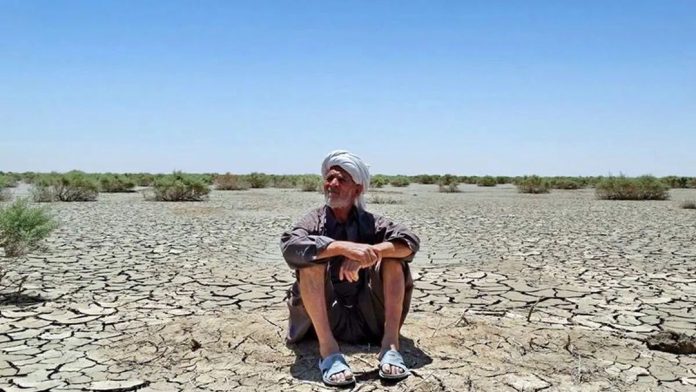
Wetlands in Iran parched into deserts

While noting that Iran sits approximately on 3.4 million hectares of wetlands, including 21 major sites like Lake Urmia and the Iranian section of the Hour al-Azim, Ali Arvahi said two-thirds of these areas are severely threatened by water scarcity and prolonged droughts.

Arvahi pointed out that pollution from industrial and urban wastewater continues to plague wetlands like Anzali and Shadegan.

He added that invasive species have also added insult to injury, jeopardizing native flora and fauna.

Arvahi however noted that the most pressing issue remains the lack of allocated water rights for these ecosystems.

He further voiced concern over the future of these vital ecosystems and questioned whether anything of the wetlands will remain for future generations of Iran at all.

Ukraine says NATO membership ‘cheapest’ security guarantee, ‘victory’ for US

Donald Trump NATO

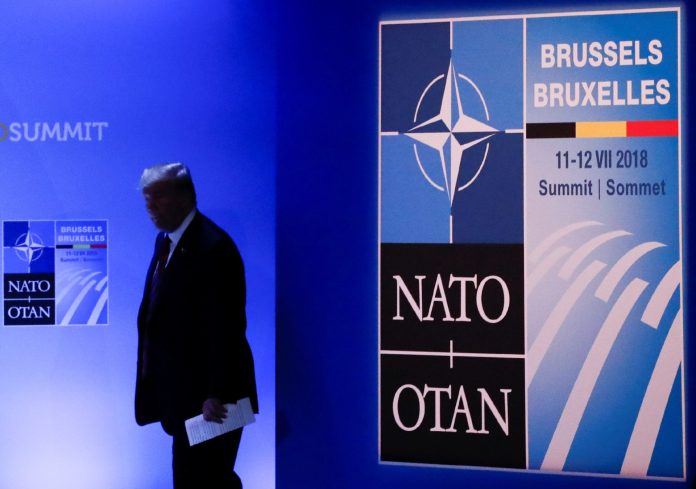
The question of Kyiv’s future accession to the Alliance is likely a key point of contention in the expected Russia-Ukraine peace negotiations, which Trump has pledged to initiate within the next few months.

NATO membership is the best possible security guarantee for Ukraine and the “cheapest” option for Western allies, Zelensky told the AP.

“I really believe that these are the cheapest security guarantees that Ukraine can get, the cheapest for everyone,” he said.

“It will be a signal that it is not for Russia to decide who should be in NATO and who should not, but for the United States of America to decide. I think this is a great victory for Trump.”

Ukraine officially applied to join NATO in September 2022 following Russia’s full-scale invasion. While NATO members asserted at the 2024 summit in Washington, D.C. that Ukraine’s path to membership is “irreversible,” they have yet to extend a formal invitation.

Russian propaganda narratives frequently cite Ukraine’s potential NATO membership as a justification for the invasion.

Trump himself has echoed this talking point, saying that former President Joe Biden’s support for Ukraine’s NATO aspirations provoked the full-scale war.

“That’s been like written in stone,” Trump had stated, referring to Russia’s opposition to Ukraine joining the Alliance.

“And Biden said, ‘No, they should be able to join NATO.’ Then Russia has somebody right on their doorstep. I could understand (Russia’s) feelings about that.”

Moscow has announced that a ban on Ukraine’s entry to NATO is a key condition of any ceasefire agreement.

Ukrainian officials, including Zelensky, have disputed Trump’s narrative and dismissed Russia’s demands. Ukraine’s Foreign Ministry called Russia’s proposed ban “utter bul***it” in a Jan. 24 statement.

Zelensky told the AP that Ukraine’s accession to the Alliance would be mutually beneficial to Kyiv and to member states. The addition of Ukrainian defense forces would also be an asset to NATO, potentially allowing the U.S. to withdraw its troops stationed overseas.

French President Emmanuel Macron’s proposal to deploy European peacekeepers to Ukraine to monitor a ceasefire is also being discussed, Zelensky continued. Questions remain as to its feasability, and it would have to be backed by other security measures.

“That’s not enough,” Zelensky added.

“Imagine, there is a contingent. The question is who is in charge? Who is the main one? What will they do if there are Russian strikes? Missiles, disembarkation, attack from the sea, crossing of the land borderline, offensive. What will they do? What are their mandates?”

Macron and Zelensky are “still in the process of this dialogue,” the president stressed.