Monday, December 22, 2025
Home Blog Page 5088

World’s Muslims celebrate ‘Laylat al-Qadr’

World's Muslims celebrate Laylat al-Qadr

Muslims believe Ramadan is an auspicious month for the revelations of God to humankind.

‘Laylat al-Qadr’ in Ramadan is believed to be the night when first verses of Qur’an were revealed to the Prophet Muhammad (PBUH): “Read! In the Name of your Lord, Who has created (all that exists),” Qur’an, Surat Al-Alaq.

It is also believed to be the night when God decides the destiny of everyone for the coming year. Muslims believe Laylat al-Qadr is a good time to ask for forgiveness.

During the ‘Night of Destiny’ or ‘Night of Power’ the angels and the Spirit descend therein, by God’s permission, to carry out every command.

While the exact date of the great night has not been mentioned, most scholars believe it falls on one of the odd-numbered nights of the final ten days of Ramadan, such as the 19th, 21st, 23rd, 25th, or 27th days of Ramadan.

Ramadan, the ninth month of the lunar Islamic calendar, is the time to focus on self-reformation and prayer. Muslims throughout the world spend the nights worshipping God.

They recite the holy book of Qur’an more, hold vigils until dawn in prayers and supplications and ask God to forgive their sins. Muslims on this night have also special wishes and prayers.

Laylat al-Qadr has double significance for Shia Muslims as the night of the 21st of Ramadan marks the anniversary of the martyrdom of the first Shia Imam, Ali Ibn-Abi Taleb (PBUH).

Shia Muslims mourn the martyrdom anniversary of Imam Ali from the 19th of Ramadan, marking the day he was wounded and the day of his martyrdom, two days later.


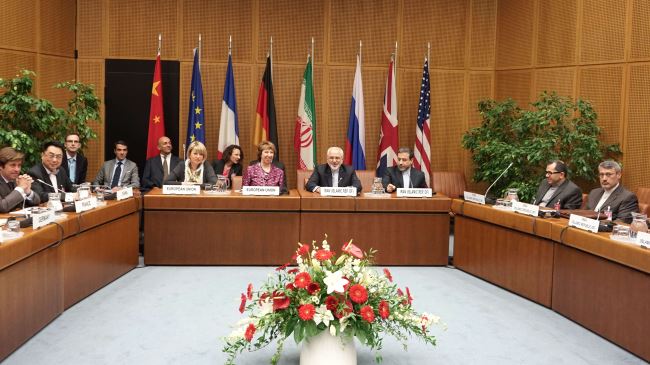
Iran nuclear talks extended for 4 months

Vienna-zarif and ashton Press Confrence
Vienna-zarif and ashton Confrence

Iranian Foreign Minister Mohammad Javad Zarif and European Union foreign policy chief Catherine Ashton made the announcement at a joint press conference on Friday after extensive negotiations between the two sides continued in the Austrian capital Vienna.

The original deadline for a comprehensive deal between the two sides was due to expire on Sunday.

“We have made tangible process on some of the issues,” a joint statement said, adding that there were still “significant gaps on some core issues, which will require more time and effort.”

The statement said a new round of negotiations will kick off in the “coming weeks.”

US Secretary of State John Kerry said at a different presser in Vienna that 2.8 billion dollars of Iranian funds will be unfrozen during the new round of talks.

Iran and the five permanent members of the United Nations Security Council – China, Russia, Britain, France and the United States – plus Germany clinched a landmark interim deal in Geneva on November 24, 2013.

Under the deal, dubbed the Geneva Joint Plan of Action, the six countries undertook to provide Iran with some sanctions relief in exchange for Iran agreeing to limit certain aspects of its nuclear activities during a six-month period. It was also agreed that no nuclear-related sanctions will be imposed on Iran within the same timeframe. The agreement took effect on January 20.


ICHHTO introduces Tabriz and Yazd as Iranian creative cities to OIC

Iran tourism Yazd Tabriz
ICHHTO has introduced Tabriz in northwest Iran and Yazd in central Iran as creative cities to the Organization of Islamic Cooperation.

Mohammad Reza Pouyandeh added that UNESCO’s Cultural Department has implemented a project named “Creative Cities”.

“OIC has also defined a similar project and asked member-states to introduce two creative cities for 2016 and 2017,” he said.

“We introduced Tabriz for 2016 and Yazd for 2017 to OIC on the basis of seven UNESCO criteria for creative cities such as food, music, literature, customs and urban furniture. “

Pouyandeh noted that all information regarding these cities are prepared and will be sent to the OIC Secretariat.

“Recently, in a global conference held in Malaysia, good ideas titled Think City were raised. Currently, it is being implemented in some cities of Malaysia,” he said.

The official also said the plan to designate creative cities could also be implemented at the national level.

“We have planned a similar project inside Iran to select certain cities to create competition and use the potentials of their municipalities. This is a plan implemented by ICHHTO annually to introduce the iranian creative cities ,” he said.

 Tabriz is the fifth most populous city in Iran after Tehran, Mashhad, Isfahan and Karaj, one of the historical capitals of Iran and the present capital of East Azarbaijan province.

Tabriz

Tabriz is the fifth most populous city in Iran after Tehran, Mashhad, Isfahan and Karaj, one of the historical capitals of Iran and the present capital of East Azarbaijan province.The city boasts many historical monuments, but repeated devastating earthquakes and several invasions caused substantial damage, Wikipedia reported.

Many monuments in the city date back to the Ilkhanid, Safavid and Qajar periods, including the large Tabriz Bazaar Complex which was registered as a World Heritage Site in 2010.

The oldest signs of the city’s ancient civilization are an excavation site and museum in the city center with a history dating back to 2,500 years.

The early history of Tabriz is not well documented. Some archeologists believe Garden of Eden was located in Tabriz.

A recent excavation at the site of the Iron Age Museum, in the northern section of Blue Mosque, uncovered a graveyard of 1st millennium BCE.

The city was destroyed several times either by natural disasters or by invading armies.

The oldest elements of present-day Tabriz are claimed to be built at either in the Sassanid era in the 3rd or 4th century CE, or later in the 7th century.

Tabriz Bazaar

The historical bazaar of Tabriz is one of the oldest marketplaces of Middle East and an Iranian architectural masterpiece.

The historical bazaar of Tabriz is one of the oldest marketplaces of Middle East and an Iranian architectural masterpiece.

Tabriz Bazaar’s foundation is dated 2nd millennium BC. It is about three square kilometers in area and the largest roofed brick complex in the world.

The main structure of the bazaar consists of two main roofed north-south lanes and several west-east lanes.

The bazaar complex consists of a series of interconnected brick structures, buildings and enclosed spaces for different functions.

Souvenirs of Tabriz include carpet tableaux, metalwork, dried fruits and nuts, as well as chocolates.

Yazd

Yazd is the capital of Yazd province and a center of Zoroastrian culture. The city is located 270 km southeast of Isfahan.

Yazd is the capital of Yazd province and a center of Zoroastrian culture. The city is located 270 km southeast of Isfahan.

Because of generations of adaptations to its desert surroundings, Yazd is an architecturally unique city. It is also known for the high quality of its handicrafts, especially silk weaving, and its confectionary.

The city has a history of over 3,000 years and dates back to the time of Medean Empire when it was known as Ysatis or Isatis.

The city’s name is linked to Yazdegerd I, a Sassanid ruler. The city was definitely a Zoroastrian center during the Sassanid rule.

Under the Safavid rule (16th century), some people migrated from Yazd and settled in an area along the Iran-Afghanistan border.

The settlement named Yazdi was located in what is now Farah city in the province of the same name in Afghanistan.

Even today, people from the area speak with an accent very similar to that of the people of Yazd.

People of Yazd are well known for their peaceful, hardworking and systematic nature.

One of the notable things about Yazd is its very family-centric culture.

Its historical monuments, especially Amir Chakhmaq monument, Fire Temple and Jame’ Mosque, and famous sweets, such as

baqlava, qottab and loz-e badam, appeal to domestic and foreign tourists.

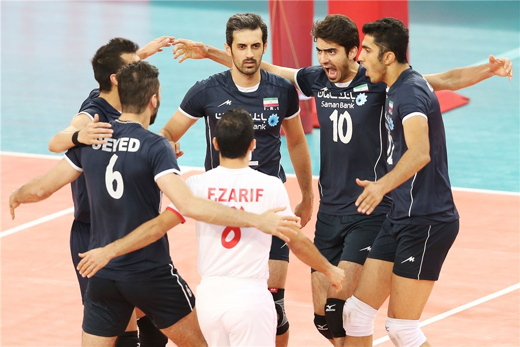
Iran Volleyball President Dedicates Victory over Brazil to Gaza People

Mohammadreza Davarzani President of Iran Volleyball

World No.12 ranked Iran beat world No.1 Brazil 3-1 (25-22, 25-19, 23-25, 28’26) in its FIVB World League match on Friday.

Iran will play US on Friday night at the Nelson Mandela Hall in Florence, Italy.

“In the days that the hapless people in Gaza have come under the most brutal Israeli attacks, Iran volleyball team gained a good result and we dedicate that (victory) to the family of Gaza’s martyrs as well as family of Iran’s martyrs,” Davarzani told Iran’s Volleyball website.

2014 Volleyball World League: Iran Beat Brazil 3-1 to Advance to Semifinals

2014 Volleyball World League Iran Brazil FIVB
Iran and Brazil match in 2014 world league volleyball

The Iranian men’s national volleyball team overpowered Brazil 3-1 (25-21, 25-19, 23-25 and 28-26) in Florence, Italy, this afternoon.

Iran had lost its first match against the Russians 3-2 on Wednesday, gaining 1 point and giving 2 to the 2013 world champions.

Brazil won Russia 3-1 on Thursday and reserved a place in the semifinals with 3 points.

Iran now stands atop Group 1 with 4 points, Brazil are the second with 3 and Russia are placed third and last with 1 point.

Now Iran and Brazil from Finals Group 1 along with Italy and USA from Finals Group 2 will prepare for the FIVB Men’s Volleball World League semifinals in Italy tomorrow.

The final round of the FIVB Men’s Volleyball World League group matches was held from July 16 to 20 in Florence, Italy, and Iran’s national volleyball team had been pooled in Group 1 with Russia and Brazil. Italy, USA and Australia were in Group 2.

Iran should now prepare for their semifinal match against the USA and Brazil should play against Italy who stood atop Group 2 after beating Austrialia and the USA.

To advance to this last episode of the 2014 World League, Iran played 12 games in the preliminary round of the International Volleyball Federation (FIVB) 2014 World League against Brazil, Italy and Poland, winning six games and losing as many. The Iranian volleyball athletes began their performance in the preliminary round on May 30 with a game versus Italy in that country’s Christie City, and played their last preliminary round game on July 5, in Poland’s Gdansk, gaining 19 points all together and standing second only to Italy who had gathered the same points, but had a better sets ratio.

Italy who host the finals and stood first in the preliminary round, Iran who stood second in preliminary Pool A, and Brazil who stood third in Pool A as well as USA, the Pool B winners, Russia who stood second in preliminary round in Pool B and Australia who championed in a series of matches among the winners of other pools were the six nations present in this year’s World League Finals in Florence.

Australia qualified for this round after it fought against Belgium (Pool C winners), France (Pool D winners), the Netherlands (Pool E winners) in Sydney from July 12 to 13 and collected more points than others.

Now after the end of this round in Italy, winners of each group will play with the second team of the other group (19 July), and the winners of these matches will fight for the title of volleyball world league champion (20 July). Iran will play against USA tomorrow and if they win, they will wait to see the winner of the Italy-Brazil match in the final on Sunday.

Experts have expressed deep surprise after Iran powerfully qualified for this round. In their previous performance in the FIVB World League in 2013 – Iran’s first ever presence – under their former Head Coach Julio Velasco, they gained the 9th place, registering an effective and historical presence in the world volleyball competitions.

At the end of the preliminary round earlier this month, Iranian volleyball athlete Mohammad Moussavi Araqi was selected as the best defender of the FIVB 2014 Men’s Volleyball premier league with 96 points.

The Russian and Italian volleyballers stood second and third, respectively.

The Iranian national team is comprised of Saeed Ma’roof, Mohammad Moussavi Araqi, Farhad Ghaemi, Adel Gholami, Mojtaba Mirza Jaanpour, Farhad Zarif, Mehdi Mahdavi, Amir Ghafour, Armin Tashakori, Milad Ebadi Pour, Pourya Fayyazi, Reza Ghara, Abdolreza Alizadeh and Saeed Mostafavand.

Iran’s head coach, Slobodan Kovac, started training sessions to get his men prepared for the final round of the World League after inviting three new players to the team last week.

Saeed Mostafavand, Alireza Mobasheri and Abdolreza Alizadeh were called last Wednesday to help Iran in the finals.

The Iranian national team flew to Italy on Monday morning. Iran’s coach, Hossein Ma’dani, is not accompanying Kovac because of medical problems.

Brazil (9), Italy (8), Russia (3), Cuba, the Netherlands, Poland and USA (all 1) are the seven countries who have won the World League during its previous 24 editions. Serbia and France join as the only countries to have medaled in the past.

World Travel Website Awards Hafez Historical Structure

Hafez

The tomb was awarded with certificate of excellence for the site’s unique architecture and the perfect behavior of its staff, said the director of Fars Province Cultural Heritage, Handicraft and Tourism Organization, Mosayyeb Amiri.

The agency also expressed its positive view on the historical tomb for the great facilities offered to its visitors.

While the view released after conducting a survey from visitors who are members of TripAdvisor, the website has recently named Hafez Tomb one of the world’s top historical sites, Amiri added.

Hafez tomb (Hafezieh) is one of the most popular attractions of Iranian southern city of Shiraz that is situated in a garden on the banks of Rukn-Abad river.

Built in 1773, the mausoleum acquired its present form in 1935 and designed by the French architect and archaeologist André Godard.

Hafez (1315-1390) is best known for his melodious sonnets and for intertwining a taste of Persian culture into his poetry.

Hafez has greatly influenced Persian and Western writers including Ralph Waldo Emerson and Goethe.

His collected works composed of series of Persian poetry (Divan) was first translated into English in 1771 by William  Jones.

His poetry has also inspired many artists and musicians and his verses are recited during national occasions such as the Persian new year (Nowruz).

The 10th edition of Dowlatabadi’s three-volume novel released

Mahmoud Dowlatabadi
Mahmoud Dowlatabadi is an Iranian writer and actor, known for his promotion of social and artistic freedom in contemporary Iran and his realist depictions of rural life, drawn from personal experience.

‘Passed Times of the Elderly’ illustrates the lives of trees generation of a rural family who describe the past events from their own views. One of the main characters of the novel is Abdous, A MAN who has had to work from childhood as the breadwinner of his family and the harsh realities he has faced has turned him into a hard-boiled man.

Dowlatabadi who has an international reputation, is a master of combining rural speech with the lyrical feature of Persian poetry. He is particularly gifted in portraying the social and moral difficulties of the poor specially in rustic areas where he has himself lived.

His key works such as ‘Kelidar’; ‘The Colonel’ and ‘Missing Soluch’ were translated into Norwegian, German, English, Italian and have been released in the West.

Bushehr Exports Up 10% in Value

bushehr exports
bushehr exports

The exports, which involved 3.079 million tons of products, show a 10 percent rise from a year ago, Bushehr customs chief officer Ahmad Pour-Heydar said.

The products were mainly exported to the United Arab Emirates, India, China and Qatar, he said.

The Commodities included petrochemicals, chemicals, fishes, agricultural produce and cement.

During the same period, Pour-Heydar said, more than 412,000 tons of commodities worth 2.179 billion dollars were imported through Bushehr, showing 282 percent rise in value compared with the preceding year.

The imported products – cement, vehicles, audiovisual kits, banana and rice – mainly came from South Korea, UAE, China and India.

Americans want US to work with Iran against ISIL, poll

ISIL terrorist group in Iraq

According to the poll conducted by  The University of Maryland’s School of Public Policy and the Program for Public Consultation, 61 percent of the American people believe Washington should seek to cooperate with Iran in Iraq, according to Press TV.

The Takfiri militants from the so-called Islamic State of Iraq and the Levant (ISIL) have been wreaking havoc in Iraq since June 10 when they took control of Mosul, Iraq’s second largest city, which was followed by the fall of Tikrit, the birthplace of former Baathist dictator Saddam Hussein.

Iraqi armed forces have been pushing back the ISIL terrorist militants, who enjoy support from loyalists of Iraq’s former Baathist regime. Media reports said on Tuesday that the Iraqi army regained full control of Tikrit during a major offensive against the terrorist militants.

Last month, US Secretary of State John Kerry said the Obama administration is “open to discussions” with Iran and does “not rule out” military cooperation with the Islamic Republic to help the Iraqi government beat back ISIL militants.

However, Iran said the Iraqi army is capable of dealing with the crisis itself and Tehran sees no need to negotiate with Washington on the issue.

Several reports, observers, and even some US officials like Senator Rand Paul (R-Kentucky) have said that the US has been behind the rise of ISIL. 

Last month, Paul said the US has been arming the ISIL militants in Syria. “I think we have to understand first how we got here,” Paul said on CNN’s ‘State of the Union.’ “We have been arming ISIS in Syria.”

In a phone interview with Press TV on June 30, Wayne Madsen, an American investigative journalist, said that CIA director John Brennan who is “a known Saudiphile” has been instrumental in training and arming these militants in Iraq and Syria.

Iran’s 3-month carpet exports rise 23%

Iranian Carpet
The exports amounted to $57 million in value in spring 2014, which corresponds to the first quarter of current Iranian calendar year, the Tasnim news agency quoted Hamid Karegar as saying.
He said Iran exported $314 million worth of hand-made carpets in the past Iranian calendar year, which ended on March 20, 2014.
Iran’s carpet exports declined in recent years, mainly because of the Western sanctions imposed  against the country over its nuclear program, he added.
In February, the former director of Iran’s National Carpet Center said sanctions against exports of Iranian carpet may be lifted in the second half of 2014.
Mohammad Baqer Alikhani added that the Ministry of Foreign Affairs has negotiated with the 5+1  group (the five permanent members of the UN Security Council plus Germany) to lift the sanction in the second half of the current year.
Sanctions against exports of Iranian carpets had been imposed directly by the U.S., he noted.