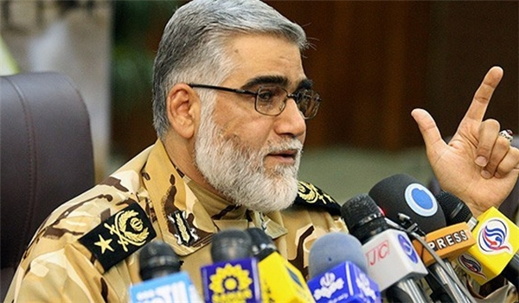
“The Zionists’ crimes are beyond imagination; they have left 2,000 martyrs and over 10,000 injured people, destroyed many residential buildings and even didn’t deny demolishing hospitals, schools and mosques in an area stretched over only a few tens of square kilometers within two or three weeks,” Amoli Larijani said, addressing high-ranking Judiciary officials in Tehran on Wednesday.
“These actions are war crimes,” he underlined.
Amoli Larijani blasted the Islamic governments for their weak reaction to the crimes, but, meantime, said the people of Gaza have grown more powerful than the past, and the Zionist regime which thought it could defeat the resistance in a few days has now withdrawn from Gaza with humiliation.
His remarks came after the Palestinian Authority announced its determination to sue Israel at the International Criminal Court (ICC) for its war crimes against Palestinian civilians in its nearly one-month terror campaign on the Gaza Strip.
“Everything that has happened in the last 28 days is clear evidence of war crimes committed by Israel, amounting to crimes against humanity,” Palestinian Foreign Minister Riad al-Malki told reporters after meeting prosecutors at the ICC on Tuesday.
“There is no difficulty for us to show or build the case. Evidence is there … Israel is in clear violation of international law,” he added.
The complaint filed by Palestine details war crimes committed by the Israeli army over the past few weeks in Palestine.
Legal experts say the complaint is valid although the Palestinian Authority (PA) has yet to sign up to the Hague-based ICC.
Palestine is a non-member observer state at the United Nations and its ICC membership has been delayed only because of political quarrels.
Al-Malki has also asked the UN to end what he called Israel’s impunity, saying Tel Aviv must be held accountable for its crimes in Gaza.
The development comes days after the UN Human Rights Council passed a resolution calling for an independent probe into Israel’s war crimes in Gaza.
Meanwhile, Amnesty International has urged the United States to halt fuel shipments to the Israeli military due to mounting evidence of war crimes.
The Israeli military aggression has taken the lives of more than 1,900 Palestinians, mostly civilians, and wounded nearly 11,000 others in Gaza since July 8.
The Tel Aviv regime has not even spared hospitals in its large-scale military offensive and continues to pound the medical centers that are in desperate need of medicine and equipment.
International bodies and human rights groups say civilians account for the majority of the victims of the ongoing Israeli war. Women and children make the bulk of the civilian casualties there.
Mohsen Rezaei and Austrian Ambassador to Tehran Friedrich Stift in meeting
An August 6th issue of Resalat Newspaper covered a meeting between Secretary of the Iranian Expediency Council Mohsen Rezaei and Austrian Ambassador to Tehran Friedrich Stift. The following is a report the daily ran on the meeting:
The problem stems from the fact that Europe and the United States draw on fabrications and biased reports to issue statements against Iran and then slap sanctions on us, Mehr News Agency quoted Secretary of the Expediency Council Mohsen Rezaei as telling the Austrian diplomat in Tehran.
At the meeting, Rezaei recalled the pacifist nature of the Austrian nation and said Vienna can fairly reflect the realties on the ground in Iran to the rest of Europe and prevent unfair fuss-making against Tehran.
He further said the political system of the Islamic Republic of Iran incorporates democracy and novel Islamic principles, adding the model of governance that has proved effective in achieving security is that of Iran which is based on our version of Islam, not that of some other regional countries or Al-Qaeda and the Islamic State.
On human rights, he said that Iran does not deny oversight, the problem stems from the fact that Europe and the United States draw on fabrications and biased reports to issue statements against Iran and then slap sanctions on us. That is why Iranians view human rights and the nuclear case as mere excuses [for the West] to put pressure on the Iranian people.
Recalling the status of Iran, especially on the economic front, he said that closer interaction between the two sides serves the interests of both. For instance, we can sell natural gas to European countries including Austria, he concluded.
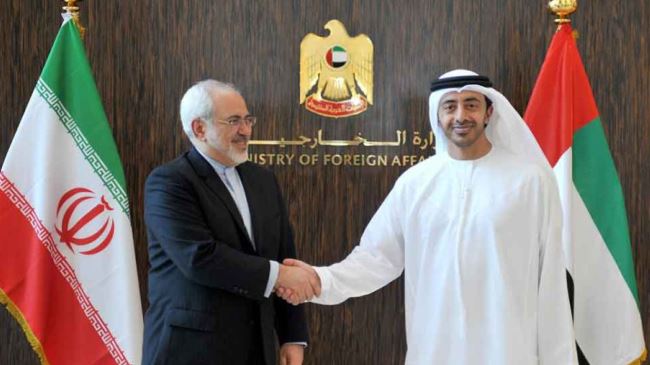
Zarif, who is visiting Oman, talked to the press during the quadrilateral meeting on transit cooperation with Iran, Oman, Turkmenistan and Uzbekistan. “The implementation of the transit treaty known as Ashgabat Treaty would be a good start for improved cooperation of signatories in regional and international levels,” Zarif said.
“Global trade and goods exchange in regional and international dimensions is ever-increasing and a secure transit corridor joining ports in the Persian Gulf and Sea of Oman to Central Asian countries is necessary to facilitate goods transit,” he added.
Zarif believed that Iran should see these transit and trade corridors as tools in path to development; however, “the path adopted in recent years as the roadmap for transit cooperation has fallen to disuse; notwithstanding, with Iran’s key role in the same transit route, we could work it out as a major route for transit in the region; thus reducing poverty and, extremism and terrorism emanating from that through development in the regions the route passes through,” Zarif told reporters.
“The region has long had a unique geostrategic position with a crucial role in transit; with growth of industries and the emergent global economy, the need to transportation and using logistics technology has found increasing weight over the time,” the foreign minister said.
“Such a position gives member countries strategic advantage which would be a source of considerable profit if they exploit the possibilities of the advantage in a well-planned manner,” Zarif asserted.
“Iran, with extensive transpiration network including in the land and sea, and having borders with 15 countries and rich natural resources, enjoys a special place in the region in terms of connecting transit routes,” added he, and believed that the meeting provided an exceptional opportunity for boost trade and goods transit to Asia and Europe.
He also believed that a ‘strong and efficient infrastructure’ in transportation and logistics was indispensible along with other opportunities.
Opportunities and threats facing women’s employment in society
In recent years girls have taken about 70 percent of university seats across the nation. Efforts by a growing number of female graduates to land a proper job have affected, in one way or another, the labor market in so many ways. Morteza Talaie, the deputy chairman of Tehran City Council, has explained in an article published in a July 28th issue of the Hamshahri Newspaper the challenges and harms associated with female employment and its impact, both positive and negative, on the institution of family.
Post-revolution Iran witnessed social developments take on a form different from what they were like in the years before the 1979 Islamic revolution. The revolution prompted government efforts to render more public services and brought a handful of changes to social and cultural views in society. The changes in question found their way to the individual and social lives of members of the public and contributed to the emergence of new lifestyles. Such developments introduced far more fundamental changes – than in the past – to the lives of women in society.
[…]
Today Iranian women face no social and legal restrictions and can take part in social activities shoulder to shoulder with men, provided that they appear in Islamic covering and maintain their chastity and modesty. The women do so without being dragged into the modernist mindset that prevailed during the first and second Pahlavi regimes and the mentality of the feminist intellectuals of the 21st century, and without viewing their veil and chastity as an impediment to their progress and growth [in society].
A look at the Koran (verse 32 of An-Nisa Chapter which says women can lay claim to what they have earned or Al-Qasas Chapter in which God points to the occupation of the daughters of Prophet Shuaib (Peace be upon him)) as well as the narratives by the infallible members of the Muslim Prophet’s household and the views of great Shiite scholars reveals that women are allowed, according to the principles of Sharia, to get involved in social events alongside men and take part in economic, social, cultural and scientific activities providing that they don’t push to the sidelines their main responsibility which is training children and trying to march toward human perfection and growth. They are expected to do their utmost to bring up their children, not let go of their marital duties and not hand over their motherly role to the media, daycare centers and schools under the pretext of undertaking their occupational responsibilities.
Morteza Talai
Unfortunately, social changes show that women’s employment involves a lot of shortcomings. [….] Attempts by public and economic agencies to overlook women’s social and human responsibilities and the destructive role the feminist cast of mind plays in trampling on their innate rights seem to lie at the center of measures meant to exploit women in the 21st century.
Women, who are tasked with tough jobs in a male-dominated administrative workplace, bear the brunt of such social losses which are caused by efforts to prompt the intermingling of sexes in public places. This would also be a serious challenge to development of women’s social lives. It comes as some civil society activists, through the line of thinking they pursue, push – unknowingly though – the females to the brink of degeneration, regardless of the losses women might sustain due to equal social responsibilities such as employment with men. [….]
Turning a blind eye to such pressing issues and inattention to their dire consequences constitute not only an unethical and inhuman act but also an unforgivable sin. A careful scan of the growing number of social ills discloses that they have their roots mostly in unprincipled and unprofessional intermingling of women and men in society. I don’t want to defend or endorse gender segregation plans in society; such plans are basically out of the question. I am talking about unprincipled and unnecessary intermingling of men and women which is harmful. Besides, the cession to women of the affairs which cause them to put in much time, energy and costs spells yet another injustice. The transfer of roles that are beyond their means would cause irreparable damage to women, both physically and psychologically.
With regard to this, Imam Ali (Peace be upon him) says in a letter to his elder son, Imam Hassan (Peace be upon him), “Do not cede jobs to women which are beyond what they can afford. This is better for them and is more appropriate for their lives, because women are tender creatures, not heroic beings.” Imam Ali’s word for women is delicately and beautifully pointing to the temperamental and physical differences between men and women and the latter’s vulnerability. In my opinion the decisions made by the city management on such issues are justifiable both from rational and religious points of view. In addition to the reasons provided for the issue [segregation of city employees by gender], the feedback received so far is indicative of contentment on the part of female employees in the city management system
I very much hope that other institutions take heed of women’s physical and mental conditions in their march toward materialization of women’s rights in society, at least in the employment sector. Civil society activists too are expected to pay due attention to society’s economic, cultural and religious realities, and try to push for equal rights of women and men according to the duties of each so that women are not entangled in social ills under the cover of valuable causes and ideals.
Mehdi Mohsenian-Rad has recently launched a new book he says he wants everyone to read. To mark the release of Human Communication, a 48th issue of Modiriat-e Ertebatat (Communications Management), out in April 2014, conducted an interview with this Iranian sociologist who currently teaches at the capital’s Imam Sadegh University. The following is an excerpt of the monthly magazine’s Q and A with Professor Mohsenian-Rad:
In your new release which is a revised edition of a book you published 36 years ago, you have looked at communications from two angles: semiotics and speech. Why the distinction?
I started compiling Communicology in 1985 and developed a semiotic model. The result was published by Sorush Publishing House in 1990. A few years later, a member of faculty at University of Tehran released Human Communication. In 2010, a senior manager at SAMT Publishing House contacted me and asked me to write a book on human communication. Back then Communicology was on its ninth reprint. I felt it was necessary to revise it.
Since I was already working on Norms in Three Holy Books, I didn’t have much time to dedicate to a new book. So the publishing house gave me one year to finish the book at hand. When I was writing this book I thought it was aimed at educating science majors, so I tried to build on models which were taught overseas. The revised book also features research I have conducted in recent years in cooperation with my top students whose names appear in the foreword of the book.
The models presented in this book are widely used. When I was putting the finishing touches to the book, the Department of Social Sciences reviewed the book and found it suitable for being taught as part of communication courses. That was why the logos of both the Education Department and the Social Sciences Department appear on the cover of the book.
You placed Communicology and Human Communication in two separate categories. Tell us about the difference between the two.
Human communication is a distinct part of social sciences and communications. It is made of three parts: interpersonal communication, group communication and mass communication. Mass communication is little known in Iran. Across the world when the question of communication comes up these three disciplines spring to mind.
I believe communicology has four different modalities: The first one focuses on interpersonal relationships which cover mass communication and self-communication, a rather new discipline. The second modality deals with relations between humans and animals, which is interdisciplinary and draws little attention in our academic circles. The third modality focuses on human to machine communication which has been on the rise of late. And metaphysics is at the center of the fourth modality.
There is little known about the fourth group. Would you tell us more about it, please?
Although it is a relatively vast field, there is little literature about it. What is described as extra-sensory perception in psychology – telepathy, for instance – is part of this modality. That [Iranian mystic figure Mansur] al-Hallaj floated the idea of “I am the Truth” [which is viewed by some as a claim to divinity] along with Koranic verses which talk about stones praising Almighty God can be placed in this category.
Recent discoveries crediting protein molecules for storing long-term data in hippocampus prompt me to think that 500 years from now, communicology experts would view us as illiterate as we think of Stone Age humans.
The simple language this book employs is a standout feature that allows people with little expertise to understand it. Some believe application of difficult words and jargons would render their book more impressive. What’s your thought on that? Why did you write this book in simple language?
In interviews, it is customary for the interviewee to say, “That’s a good question.” Unfortunately, most of the times, it is a way of complimenting the interviewer. But I truly believe the question you just asked was a good one. Most of the attributes you mentioned about my book stem from the way I have been trained.
In the late 1960s when I took journalism courses taught by late Dr. Motamednejad, I was required to use simple language. In high school, anytime I read out my essay for my fellow students, they would applaud. In 1967 I was admitted to university. One year later I took a journalism course with Dr. Motamednejad. He would give us homework and his assistant would grade the assignments.
I learned back then that my compositions in high school were good for storytelling and not for journalism. Dr. Motamednejad once asked us to write a story about Neil Armstrong, the American astronaut who was in Iran at the time. The headline I chose for the story read, “Moon conqueror lands in Tehran.” I was given a low grade for that because according to Dr. Motamednejad the headline I had chosen was good for poetry not for a news story.
Our professors kept telling us what we wrote should be understandable to a shop clerk, a university professor and the prime minister and that everyone should enjoy reading it if and when they opted to do so.
More than forty years on, still when I see one of my Ph.D. students tries to impress others by showering his/her thesis with Western names, I ask him/her to learn how to write in simple language. I remind them that anyone who is capable of developing in-depth knowledge about something, no matter how small, will be able to write about it in simple language. […] Only when you know how to talk about something in simple language, are you immersed in it.
If you were to choose one standout quality for the book you have just released, what would that be?
Human Communication is the only book I want everyone to read, including my own daughter, my neighbor, and my grandchildren when they grow up, because I know it helps them and helps improve their lives. […] I believe the book should be presented to the public because reading it is vital to them. A considerable number of divorces in our society stem from the fact that we live in a country with cultural variety and there is yawning gaps among generations.
For instance, the feminist daughter of a traditional woman marries a young man with a mentality similar to her mother’s. They soon hit the snag without knowing that their problems emanate from communication or lack thereof. I also believe that many political problems in our country stem from inability to establish relations and maintain them. That’s why I think everyone, including newlyweds and politicians, should read this book.
Hashemi Rafsanjani met with a host of Sunni political, social, cultural and religious figures from across the nation
Chairman of the State Expediency Council Ayatollah Akbar Hashemi Rafsanjani met with a host of Sunni political, , cultural and religious figures from across the nation on August 5. The Jomhouri Islami (Islamic Republic) Newspaper quoted Mr. Rafsanjani in its August 6 issue as saying that unity is what Muslims need most at this juncture. He stated anyone who drives a wedge among Muslims, no matter what his or her motive, is committing a big sin. The following is the report the daily ran on the meeting:
At the meeting Ayatollah Rafsanjani said that the demands of Sunni Muslims do not clash with the principles of Shi’ism and the Muslim faith or with the country’s national interests, adding, “We all care about the dignity of Islam and Iran, but some are fanning the flames of differences.”
He touched upon what is currently happening in Occupied Palestine and warned Islamic governments that when world powers ignore diplomatic norms and human laws to lend full support to crimes committed at the hands of Zionists and provide the Tel Aviv regime with assistance, any move that creates religious and tribal differences in the ranks of Muslims is tantamount to political ignorance.
He recalled the emphasis the Supreme Leader laid on Muslim unity in a meeting with members of the Assembly of Experts and said Ayatollah Khamenei blames the problems of Muslims on extremist attitudes among both Shiites and Sunnis.
The top councilor then said the fact that extremists think they are serving the interests of Islam through their acts lies at the center of the problems the world of Islam is grappling with.
Mr. Rafsanjani said that up to 1.7 billion Muslims currently live in 60 Islamic countries around the globe, and that despite enjoying big political and human capital, the Islamic world is witnessing crimes by Zionists against defenseless Gazans, including women and children.
He then condemned the support the US president lends to the usurping regime in Tel Aviv and said it defies the standards of human ethics to help criminals kill innocent people.
Ayatollah Hashemi Rafsanjani said Palestine is part and parcel of Islam, adding, “The shouts of millions of oppressed people who were driven from their homes more than 60 years ago are now falling on deaf ears across the world and their actions in self-defense are regarded as terrorism.”
Recalling the fact that Sunni Muslims live in the country’s border provinces, the chairman of the Expediency Council said such presence is indicative of the peak of their nationalist zeal and shows that despite the publicity hype of the enemy, they are there to safeguard the territorial integrity of the country.
In a sentence addressing Sunni Muslims, Mr. Rafsanjani said, “Let me assure you, the policies of the establishment are meant to defend the followers of all divine faiths. Arbitrary approaches come from nowhere other than personal and, at times, vengeful mindsets which seek to fuel ethnic disputes and widen the existing gaps.”
Hashemi Rafsanjani also praised the unity between Shiites and Sunnis in Iran, and said, “We can be good teachers for world nations. We shouldn’t let Muslims get mired in differences anymore.”
Prior to Mr. Rafsanjani’s remarks, some participants including Sunni prayer leaders and past and present MPs representing Sunni Muslims in parliament […] spoke about the necessity of Shiite-Sunni unity, importance of meritocracy and significance of steering clear of extremism.
Hashemi Rafsanjani met with a host of Sunni political, social, cultural and religious figures from across the nation
Ali Akbar Hashemi Rafsanjani
Hashemi Rafsanjani met with a host of Sunni political, social, cultural and religious figures from across the nation
Alireza Sami-Azar, a former director of Tehran Museum of Contemporary Art and a visual arts expert
No doubt, women have been a major contributor to the development of arts in post-revolution Iran. That is what Alireza Sami-Azar, a former director of Tehran Museum of Contemporary Art and a visual arts expert, has said in an interview with a 30th issue of Tajrobeh (Experience) Monthly, out in July 2014. During his stint at the helm of the museum, Sami-Azar helped organize Iranian exhibitions overseas and set the stage for visits to Iran by prominent world artists in a bid to present Iranian arts to the rest of the world. He also paved the way for Iranian works of art to go under the hammer at major international auctions. He’s been in charge of Tehran Auction for the past three years. The following is an excerpt of the interview:
That the items sold at Tehran Auction fetched more than $4 million in one evening caught the eyes of many. What went largely unnoticed was the fact that Iranian artists had worked at least half a century on those precious items. Iranian works of art have seldom been sold at such a high price, except on a few occasions at the Christie’s. How do you think the Iranian artists pulled off that feat?
Over the past three decades, specifically after the Islamic revolution, arts has gained much popularity in Iran. A few decades ago, art was limited, to a large extent, to a few big cities, including Tehran, and the number of good artists barely hit the 100 mark. There were only a handful of heavyweights. Arts belonged to the elite, and there were only two schools of art in Iran: University of Tehran’s School of Fine Arts and the Faculty of Arts, which was called the University of Decorative Arts back then.
[…] Annually up to 70 students would graduate from those two schools, most of whom would seek employment in areas which had nothing to do with arts. After the revolution though, arts in general, and visual arts in particular, gained momentum. Unlike pre-revolution Iran, the number of arts majors is constantly on the rise. It comes despite the fact that arts has always faced restrictions and at times been looked at suspiciously. In short, artists have gone through a lot, but arts in general has come a long way and a new generation of artists has found its way into an array of professions.
Did our education facilities have the capacity to accommodate the new art form?
These young artists have tried to inject new perspectives into arts, but our education system usually does not tolerate novelty. […] In fact, European Modernism which was introduced to the world through Bauhaus School in Germany and France’s Beaux-arts still prevails in our schools of art. Post-modernism is held at bay, whereas youngsters seek novel thoughts and new artistic waves in satellite TV and on the Internet which are available to the present generation. In fact, students’ interest in research and novel thoughts has prompted them to want to get familiar with the latest developments of the cotemporary world outside classic classrooms.
This in turn has turned contemporariness into a very lofty goal for the younger generation. What is interesting to know is that the most important developments of Western arts began to unfold in the East right when we slammed the doors on the West and boarded up our windows. As a result of these developments, Modernism collapsed and was replaced by post-modernism. Today being contemporary has gained a lot momentum among Iranian artists, still our schools of art continue to defy this new tendency.
Why is that?
Schools are academic in nature and thus do not tolerate new things which are difficult to teach. Outside this official channel though, many Iranian artists have shown interest in a contemporary look at arts. Although the doors to the world of avant-garde art were closed, our young artists are the most contemporary in the region. They are far ahead of artists in other regional countries who have kept in touch with the West. For instance, when you compare our artists with those of Arabic countries or even Turkey, it becomes obvious that the Iranians are far ahead and the roots of this should be looked for in the fact that Iranians are always in quest of cultural novelty and have built on that quality throughout history to help their culture evolve.
They have never had a biased attitude toward other cultures, even those of invaders. On the contrary, they have adopted anything they have found useful in the other cultures. That’s why our culture has borrowed important elements from Arabs, Mongols, Turks, and Europeans and earlier from Greeks and Romans and infused them into its own culture and thus enriched it. That is exactly what is happening on the arts scene now and our arts is marching on contemporariness.
However, on certain fronts, for instance on the arts market, some Modernist masters are still leading the way.
[…] Just like the museums, the arts markets are conservative and have a tendency to stick to Modernist masters. They usually do not get along with young artists. Similarly, arts schools prefer to allow a few decades to pass before making the works of an artist part of their textbook subjects. Museums, schools of art and arts markets are conservative in nature. That is why they pay more attention to masters and less to young artists. They always wait for young artists to mature before putting them on the artistic map.
You said doors to with the rest of the artistic world were shut, yet Iranian artists developed an interest in what was on offer there. How can one account for the paradox in this equation?
What is so important here that warrants further research is the question as to why the Iranian arts, which was under pressure and felt a lack of support from decision-makers, has made so much progress. […] I can make a guess about the answer, but my response is not based on reliable research. […] No doubt, women have been a major contributor to the development of arts in post-revolution Iran.
That is strange too, because there has always been opposition to women’s presence on the social scene.
On all social and cultural fronts, women launched a new wave which, among other things, led to the development of arts. In the wake of the revolution, the number of male artists increased two- or three-fold, whereas the number of female artists went up 20-fold or so. In other words, with the stage the revolution set, whether or not it was willing to do so, for women to make their presence felt on social fronts, women found their way into arts and thus the number of female artists rose dramatically.
Making a comparison between arts here and elsewhere in regional countries is not enough, is it?
Certainly, it is not. We want to be compared with those at the forefront of arts. All Iranian artists want to be present on the most important arts scenes in the world, and in the most famous museums. As I said, our neighbors whose artists have always maintained their relations with avant-garde nations are no more contemporary than we are.
Have we managed to fully bridge the gap? Or are we still 20 or 30 years behind?
In certain areas the gap has been bridged, and in others we have fallen further behind. That the doors were shut prompted the Iranian youth to use every means available to them to find out what was going on. Those who faced no restrictions and thought they knew what was going on were less enthusiastic. So the attention of the youth has been directed toward learning more and more, but the infrastructure has drawn much less attention that it deserves.
Mere enthusiasm in a generation does not lead to development of arts and our infrastructure is too underdeveloped. The Contemporary Museum of Art has been designed for a city of 2 million, not one that is home to 15 million. That museum can no longer answer the needs of the capital. We cannot simply build on the talent of the younger generation and expect our arts to grow without allocating budget to infrastructure. […]
Shahr-e Sukhteh (The Burnt City), whose secrets were buried under tons of charred rubble when life came to an end there millenniums ago, has been placed on the World Heritage List of UNESCO. The following is an excerpt of a report by Nasser Mollazadeh published in a 58th issue of Sarzamin-e Man (My Land) Magazine:
Shahr-e Sukhteh (The Burnt City) in the southeastern Iranian province of Sistan and Baluchestan near the border with Afghanistan has become Iran’s 17th entry on the World Heritage List of UNESCO.
The historical site was placed on the World Heritage List of the United Nations Education, Scientific and Cultural Organization at the 38th session of the World Heritage Committee in Doha, Qatar on June 22, 2014. Iran’s proposal to put the Burnt City on the list drew no opposition at the meeting.
Mohammad Hassan Talebian, the deputy director of the Iranian Cultural Heritage, Handicrafts and Tourism Organization who attended the Doha session, later said, “At the meeting, the countries that came down in favor of the Iranian proposal said in light of the fact that the site is near the Iran-Afghanistan border it can help advance the cause of global peace and play a crucial role as a world heritage hub.”
The Burnt City, which has been only partly excavated, was the largest urban settlement in eastern Persia during the Bronze Age. A city that brought together two ancient civilizations of Persia and India and was one of the most advanced settlements of the ancient times. Its heyday spanned more than a millennium (3200 BC – 2000 BC).
What lends additional significance to this city is that it is said to be the first place in the world where a brain surgery has been conducted. The world’s earliest known artificial eyeball has been found in this historical site, which has been explored for years, among others, by Seyyed Mansur Seyyed-Sajjadi.
Residents of the city seem to have perfected shoemaking skills, and the world’s oldest animation drawings on a pottery vessel have been found there. A wooden ruler with an accuracy of 0.5 millimeter has been unearthed at the site too.
The Burnt City’s industries were located out of town and some pottery pipes, which are believed to have been used for purposes such as irrigation or disposal of wastewater, have been unearthed in the city where craftsmanship – weaving, pottery, metalworking – were perfected.
Palestine Committee of the Non-Aligned Movement (NAM) in Tehran
Addressing the ministerial meeting of the Palestine Committee of the Non-Aligned Movement (NAM) in Tehran on Monday, Rouhani said “the continuation of the UN Security Council’s indifference and inaction” has emboldened the Tel Aviv regime to continue its crimes against the oppressed Palestinian people in Gaza.
“The inaction and flagrant indifference of the UN Security Council toward the current catastrophe in Palestine, particularly in Gaza, is a blatant symbol of injustice in the Security Council,” said Rouhani.
He said effective measures have to be adopted to put an end to such crimes because Tel Aviv is violating human principles.
Rouhani, the rotating president of the NAM, further called on the movement to roll up its sleeves to put an end to Israeli “war crimes and genocide” in the coastal sliver.
NAM, based on its fundamental standards, should take action to stop the current trend of war crimes and genocide committed by the Zionist regime, said Rouhani.
“The Non-Aligned Movement, as an international circle with ample potential and capacities, can and should take basic and firm steps toward the realization of real peace and social justice in line with the inalienable rights of the oppressed Palestinian people,” said the Iranian president.
Rouhani further said the crisis in Gaza would not be resolved without the return of Palestinians to their homes.
Following Rouhani’s speech, Palestinian Foreign Minister Riyad al-Malki said the humanitarian situation in Gaza is at breaking point and people are experiencing unspeakable horrors.
He called for an arms embargo on Israel, which, he said, uses military equipment against defenseless Palestinians.
Over 1,820 Palestinians have so far been killed and some 9,400 others injured since the Israeli military first launched its offensive against the Gaza Strip on July 8.
The Israeli military says three Israeli civilians and 64 soldiers have been killed in the conflict, but Palestinian resistance movement Hamas puts the fatalities at more than 150.
Palestine Committee of the Non-Aligned Movement (NAM) in Tehran
The following are excerpts from an interview with Dr. Taqi Azad Armaki, a sociologist and a member of faculty at Tehran University’s School of Social Sciences. In the introduction to the interview which was conducted by Nafiseh Zarekohan and published in the 5th issue of Gozar (Transition) Monthly, the interviewer points out, “I saw Mr. Azad Armaki on a late spring day in his office at the School of Social Sciences shortly before his class. Although he was pressed for time, he responded to my questions patiently and willingly as if an early class had been tucked into his morning schedule.”
In this interview, Mr. Armaki talked about the social reasons behind the emergence of Mohammad Khatami’s reformist government and Hassan Rouhani’s government of moderation and described what he called the “Hashemi Phenomenon” as effective in shaping both governments. In his analysis, he touched on the social and merely internal causes which saw “The Reform Movement” collapse, citing the transition from “Hashemi” and later from “Khatami” as the movement’s Achilles’ heel. He also had a warning for the moderate movement.
Unlike other Iranian political and social analysts, he did not refer to the role of any foreign factor in the “emergence and collapse” of the political movements over the last two decades. Some experts believe Mr. Ahmadinejad’s rise to power and his decision to opt for offensive tactics as the best defense against countries deemed as hostile was due to the fact that the flexibility demonstrated by the reformist government of Mohammad Khatami went unanswered and efforts by Iranian nuclear negotiators led by Hassan Rouhani – the then secretary of Supreme National Security Council – to clinch a deal acceptable to both parties were largely ignored. As a matter of fact, greed on the part of America and other Western countries ploughed the field of reformists and planted seeds of extremism. That’s why I think this key foreign factor is conspicuous by its absence on the list put forth by this famous Iranian sociologist of issues which led to the marginalization of the moderate party that advocated “interaction with the West”.
In the interview which was arranged rather hastily, the effects of the West’s extensive psychological warfare against Iran – under the pretext of suspicious nuclear activities – on the fate of the reformist government and on the emergence of an imbalanced and hard-line government which replaced it have been largely ignored. The following are the thought-provoking excerpts of the interview with Dr. Azad Armaki:
I want to seize this opportunity to analyze the origin of the moderate and the reformist governments and their interrelations. In short, what are the similarities and distinctions between them?
In my opinion, in terms of the prevailing political atmosphere, the two governments have one thing in common, and that is moving ahead in the shadow of a phenomenon by the name of “Hashemi” whose presence can be easily felt in the reformist government which succeeded his reconstruction-oriented government. Likewise, the government of moderation has been under the shadow of Hashemi’s name, and therefore this phenomenon has created some similarities in the political behavior of the two governments.
The reformist government was nurtured by Akbar Hashemi Rafsanjani [President of Iran 1989-1997]. Over his eight years in office, which is also known as the reconstruction period, he directly and indirectly trained political factions which later formed the reformist government. I must say that the reformist current has not been either for or necessarily against Hashemi’s government. In fact, the first reformist government was born under the shadow of Hashemi and carried on with its life in the same shadow.
Mohammad Khatami, Hashemi Rafsanjani, Hassan Rouhani
A clash erupted when Mohammad Khatami won re-election and started to take on the policies introduced by Hashemi. Eventually, the same opposition sent his government crumbling. As a matter of fact, being under the shadow of Hashemi helped the reformist current forge ahead at first. However, after it stood up to the principles established by Hashemi, it took the movement years to put its house in order before eventually collapsing.
The government of moderation is in the same condition. When the social, political and cultural machine of Hashemi was called in, a moderate government emerged. I can say that both the reformist and the moderate governments are different versions of the “Hashemi Phenomenon”. That is particularly true about the government of moderation which has been a reflection of the phenomenon since its emergence on the political landscape. Shared beliefs, interactions, and relations between Hashemi and Rouhani are completely obvious. Hence the presence of Hashemi is a point of resemblance between the two governments. […]
What about their origins?
[…] In the post-revolution era, the social dimension [of governance] suffered a major blow which was cushioned to some extent under President Hashemi. One might think that the period of reconstruction only empowered the upper class. However, his presidency paved the way for other classes of society to be propped up too, so much so that the middle class emerged transformed and dynamic during Khatami’s presidency. The middle class, which was resuscitated, grew and found its way to universities. In fact, that social force worked in sync with the intellectual men around Khatami and brought about an unexpected new current to society.
But unfortunately, in terms of power, the higher a government goes, the harder it falls. The first thing that happened was that Hashemi ended up in the crosshairs, came under fire and eventually was left alone. Of course, it was followed by criticism of Khatami and a final transition from him too. When a society leaves Hashemi behind, it will definitely do the same when it comes to Khatami. Undoubtedly, the driving force behind such transition takes aim at other figures, for it hastily pursues progress.
Now, things in Hassan Rouhani’s government of prudence and hope are similar to those of the reformist government, though less intense, because the moderate current is not a strong current and only carries the tag of a political current, and that is only because of the present conditions. Under Hashemi, society was not hit by political or economic crises, but Rouhani’s government faced a crisis from the get-go. In spite of numerous woes, society has been going from strength to strength. Under principlist Ahmadinejad, the country actually was in a fundamental crisis from which the moderate government came into existence.
However, the reformist government showed up on the back of a reconstruction current and that’s the distinction between the two governments. For the very reason, the moderate government lacks a robust intellectual force and suffers from the lack of such a current of thoughts and a group of people who can think deeply and analyze different topics and, one way or the other, generate a ‘moderate discourse’.
So are you suggesting that unlike moderation, the reformist discourse was well-developed and deep-rooted?
In fact, the moderate government doesn’t go beyond an attitude, or a political behavior, as they call it. And that can be said to be one of the most important differences between the reformist and moderate governments. Although both governments were founded by a social force, they are strikingly different, because the social force which constructed the moderate government is crisis-hit, whereas the reformist government was formed when there was no crisis and only the social force was critical of the conditions. Since the moderate government was born in the aftermath of a crisis, the government is reeling under the present chaos, and the country is somehow ruled by oil, budget, economy and political and international conditions.
To sum up, the moderate government’s existence is influenced by the “Hashemi Phenomenon” and a crisis which is a legacy of the principlist government. What annoys the moderate government is this contradiction. Another flaw in the government is that it does not have the chance to rethink. The reformist current was a representative of religious open-mindedness. Although the moderate current is not in contrast with enlightenment, they won’t coexist. That’s why Rouhani’s government is not in tandem with it and this can be viewed as a weakness of his government.
As you mentioned, it was the middle class who established “the reformist government”, the very class took a hit under Ahmadinejad, so with regard to that, can we put down the formation of the moderate government to the determination of the middle class to get back up on its feet? Or did the very crisis you mentioned set the stage for its emergence?
One of the worst things that Ahmadinejad did, which was in his opinion the best move, was the manipulation of the class structure of society. In his estimation, he did it in order to lend importance to the needy and therefore have a special social force on his side forever. So the first step he took was to annihilate the upper class, including the middle class and entrepreneurs, the class that he labeled as thieves. Also, he later sparked off a controversy surrounding Hashemi’s children.
In fact, having dealt a heavy blow to the upper class, he started to attack the middle class, the class whose most dismal days came during Ahmadinejad’s eight years in office. It bore the full brunt to the point of total annihilation. Have you ever noticed the gloomy atmosphere that prevailed in universities over that time? Over his two terms in office, he tried to expand the lower class at the expense of the middle class in society. As a result, universities, art, the press and lots of other parts of society were marginalized. The crackdown on the middle class gave rise to an atmosphere in which more chaos and marginalization came to pass. Consequently, the middle class was plagued with daily problems of life and members of the middle class quit their jobs thanks to the unpleasant atmosphere of the time.
For instance, during the period principlists were in power, underground music grew and critical rhetoric got louder and gained momentum. As a matter of fact, under such circumstances, the middle class turned to self-run associations and non-governmental organizations. In my opinion, although the middle class went through its darkest chapter under the principlist government, it was given the best opportunity to reflect and create a new atmosphere. That’s why unlike in the past, it did not get overexcited when Rouhani emerged victorious in the vote. You have probably noticed that since his government came to power, time and again the youth have been asked to give a hand to the government. However, no considerable step has been taken by them, because they were placed under pressure for eight years in the previous government.
So, you mean that the middle class has sunken into apathy and social matters have lost their importance to this group?
No! That’s not true. From my perspective, the Iranian community has developed a relative understanding and won’t be easily fired up to step up to the plate and tap into its full potential. In my opinion, that’s a good change as far as the survival of Iran is concerned. As a result, impulsive acts that might snowball into wider disputes won’t take place. Therefore, the government should act cautiously. This reflective hesitation helps it survive. In short, the civil class in society is not dead. Rather, it is on the fringe, monitoring and acting guardedly. We should expect changes in this class of society. Fortunately, this equanimity in Iranian society is a win-win situation. Despite commotions caused by different currents on the political front, it is no longer possible to fire up and mobilize this class.
Dr. Armaki, how did the approach you talked about lead to the moderate government and its victory in the election?
[…] The Iranian community is not defined or shaped in the political arena. […] Over the past 10 to 15 years, society has grown strong; for such a society, a powerful government should be at the helm, but unfortunately, under Ahmadinejad, society wielded more power than the government. As a result, his government was boisterous in challenging rivals. His clamor exposed us to global ridicule, because his loudness revealed his weakness rather than his strength.
Hashemi Rafsanjani, Mohammad Khatami
My next question is about the missteps taken by the reformist government. In fact, I want to know about the similarity in mistakes made by the moderate and reformist governments; about those that are likely to all but land the moderate government where the reformist one ended up. If the same mistakes are remade, will the government of moderation share the same fate that befell the reformist government?
[…] The reformist government surfaced under the shadow of ‘Hashemi’ and was not opposed to him. Actually, the same matter prompted the initial logic behind the reformist government to fade away. (Earlier, I pointed out the transition from Hashemi and then from Khatami.) Consequently, all institutions which could have streamlined things were destroyed and this triggered the implosion of the reformist system. Another misstep on the part of the reformist government was that although it was intended for the middle class, it was entangled by all classes. Had it focused its attention on the whole social system, it would not have met such a fate.
Today’s criticism leveled at the reformist government basically centers on the fact that although the middle class was granted all social rights, why was the lower class excluded? Where did the needy stand on the list of the government’s priorities? Why did the sources of emulation, religious culture and things like this slide into oblivion? I am not suggesting that the reformist government was either anti-religion or anti-culture, but as a result of the policies it pursued it immersed in itself and ignored other matters such as other classes of society.
Firstly, the moderate government should take the whole social system into consideration and secondly, it should keep the middle class connected to other classes. If the government fails to do so, it will get into trouble, after all the reformist government failed to keep those bonds in place.
So if action must be taken, then how can the class you just mentioned be engaged and brought to the government’s attention?
Hassan Rouhani, Hashemi Rafsanjani
[…] There should be representatives of those who have been ignored. Unfortunately, as we speak, there are not such representatives and the country is ruled by bureaucrats. At least in this government, I do not know anyone who represents the educated, artists, scientists, or those who work in the film industry. There is no will to do so, and if such indifference persists, cries of protest will get louder and those ignored will be able to make a profound difference in society. And then this class will reach out to the lower class spontaneously.
[…] Another thing is the welfare policy. In Iran, we intentionally task other institutions and bodies that mostly give rise to dissatisfaction and poverty with implementing the welfare policy.
[…] If the moderate government fails to act on my suggestion about creating a bond between the middle and the lower class, it will help a current similar to principlism emerge.
[…] The moderate current can play a key role in helping it emerge or stopping it from surfacing. It can either nip it in the bud, or act as a catalyst for it. What matters here is how other currents will exploit the emergence of a third group.
Given the analysis you made, what do you suggest the moderate government do to return to the right path and escape the fate of the reformist government? Of course, you pointed out some solutions over the course of the interview, but if you want to give us a package of solutions, what will it be?
[…] The government should return to society and deal with its real issues. The thing which happened in the moderate government, something that has been unique so far, was the transition from the period in which there was wrangling between the leader and the president. In fact, the two share common ground now. I am of the opinion that it is very intelligent of the president to maintain the relationship at this level, […] whereas Ahmadinejad made his disagreements with the leader public.
Supreme Leader, Hassan Rouhani
Anyway, common ground between the leader and Rouhani is a great opportunity for his government to turn things around. I must say that the government should take advantage of this opportunity in favor of development not as a democratic gimmick. Society must be given a chance to develop. Ahmadinejad insisted that society was not capable of developing and that in fact it opposed development. However, Rouhani must know that attention to development will revive the government and the political system. Besides, as I told you, if the government is planning to stay in power, it has to let the middle class pick up the pieces. All of today’s concerns are those of the middle class. If this class is empowered, society will be lively and move toward unity. Under such circumstances, the conflict between the middle class, the upper class, and the lower class will be settled. Actually, when the middle class is alive and well, society will grow and this growth will narrow the gap between the middle and lower class, and therefore it will boost the government and let it streamline society easily.
[…] We will get to the point when science, sociology, psychology and economy find their true meanings. It is when economists rather than bureaucrats will be important; there is no denying that for the time being, bureaucrats make decisions about the economy, social matters and so on. Unfortunately, no one now represents culture, science, and economy in the government. When the government allows such representatives to be influential, then civil action will be taken, which in turn can transform a gloomy community into a lively one, even in the presence of poverty. In conclusion, I must say that the extent of poverty in Iran is similar to that of many other countries, but the bleakness of poverty has taken root within our society. There are a lot of people in our society who are quite well-off, yet they are still sad. It’s because we haven’t taught them how to be happy and enjoy life. We must educate people on that issue.