Tuesday, December 23, 2025
Home Blog Page 5082

Romantic Poles

Heavenly Lady book
Heavenly Lady book

A 17th issue of Andisheh Pouya (Dynamic Thought) magazine, which came out in July 2014, featured an interview with Roshan Vaziri, the translator of The Heavenly Lady, a collection of short stories by Polish writers. The monthly magazine seized the opportunity to bring up the subject of the culture and lifestyle of the Poles and their long-rooted ties with Iranians in a chat with the translator and her husband of Polish origin. The lead to the interview and excerpt of it come below:

Roshan Vaziri studied medicine in the University of Warsaw many years ago. She married a Polish man there and then returned to Iran with her husband, Leshek Wozniak. More than five decades into his stay in Iran, Mr. Leshek views himself as an Iranian. Roshan Vaziri too has developed a liking for Poland and its people.

A one-month trip to Poland is a fixture in their annual timetable, the souvenirs of which are books written by Polish authors that Roshan Vaziri renders into Persian. The Heavenly Lady is the latest of these books, a collection of six short stories by five Polish writers, selected and translated by Roshan Vaziri.

The release of the translated version of the book was one good reason for a friendly chat with the translator. Since the interview was to touch on issues beyond the book and talk about the culture and life of the Poles, her husband of Polish origin was also on hand for the friendly heart-to-heart. […]

The final story in the book focuses on the final days of Vincent van Gogh. As a matter of fact it is not a story; it is a literary piece on the renowned Dutch painter. What motivated you to pick this piece and place it along the other five stories?

Roshan: Yes, you’re right. It is not a fiction; it is just a feature on van Gogh. I loved this piece. I do like van Gogh. I picked this item and put it beside the other five because my life centers on love. The piece in question properly features the dying moments of van Gogh and his tragic life, not to mention the fact that it is a brilliant literary work.

In a foreword to The Heavenly Lady, you have cited efforts to familiarize the Iranian readers with the Polish literature and its great literary figures as a criterion for selecting the stories of this book. The question is why you have collected only six short stories for the book, whereas the fictions are appealing enough to make the book still thicker. I think it would have been better if you had translated a few more stories for the book.

Roshan: The main reason why I found only six stories sufficient for the book is my own state of health. My eye problem didn’t let me skim through Polish stories and come up with more fictions for rendering. That I have chosen a small number of stories for the book has another reason as well. We shouldn’t forget the fact that text screening remains in place here, so one always needs to bear in mind that not all books can get a permit to go to press. […]

Four out of six stories in the book depict the sufferings and hardships a Pole goes through outside of his homeland. We can say they narrate the agony of a displaced person or an emigrant who is far from his birthplace. Why is the pain associated with emigration highlighted in Polish literature?

Roshan: Yes you got it right. Emigration plays a key role in the characterization of people in these stories. The point is that emigration has the most influence on the culture and life of the Poles. A sense of being a Pole and homesickness stays strong with Polish emigrants. For instance, about 13 million Poles and those of Polish descent live in the United States.

Leshek: Many people in Poland emigrated to other countries in the late 19th century and early 20th century due mainly to poverty and financial straits. That’s why emigration, homesickness and nostalgia have become an inseparable part of the Polish culture. Emigrants [or the Polish diaspora] who left the country prior to and after the 1980 Solidarity Movement in Poland have recently started to go back home, especially after the country’s economy began to grow.

Mr. Leshek! Are you a Polish emigrant too?

Leshek: I wasn’t, or let’s say I emigrated for the sake of love. On the other hand, I chose not to live in a Communist-ruled country. The elder members of my family had been anti-Communist from the start. It was back in the Second World War when my grandma insistently refused to use the term “the Polish government”. Instead she would say that it was the government of Russians.

One of the issues the stories as such impart to the readers is that religion has had deep roots in the culture and public beliefs of Poland. Is the role religion is said to play in Poland the direct result of the anti-faith measures taken during the Communist rule? Or has it been there untouched all through the Polish history?

Leshek: Church has always played a powerful role in Poland. The part it played during the Solidarity Movement was of great consequence. People used to go to church to display their protest at the Communist regime, even those who lacked any religious beliefs would join the churchgoers [to take part in the protest]. The church put up stiff resistance when Communists were in power. Many priests were imprisoned, but rarely did they work with the Communist government which was in office.

Roshan: In fact, the church served as the bastion of protest back then.

Did the marriage between the revolutionaries and the church continue well after the (downfall of the) Communist regime and the rise to power of the new government?

Roshan: The situation is now different from what it was in the past and the church is no longer a key cultural player in people’s lives. New issues have surfaced in people’s social life, which have pitted individuals against the church. The church still matters in regulating social ties and the personal lives of people, though. […]

In The Trumpeter of Samarkand the audience reads a narrative on the presence of Poles in Gulags [the Soviet forced labor camps] and their release which sees them head southward and into Iran. It’s a story a narrator in Tehran tells his friend about a public belief in Samarkand. Has any story been written on the time those Poles spent in Iran?

Leshek: In Iran several books have been written and compiled on these emigrants. The Poles did stay in Iran for two years. Back then, professor [Saeed] Nafisi was the first person who studied the culture of these people. The Poles who came to Iran from the Gulag Camps hailed from affluent and intellectual families that had been sent to Siberia by the Russians. They published two newspapers when they were in Iran. The Poles do love Iran very much. Thanks to the hospitality of the Iranians, the Polish refugees feel indebted to their hosts.

Roshan: Iran, Isfahan in particular, turned out to be like Heaven on Earth for the Poles, especially in the wake of the gruesome experience they had in the Gulag Camps. The Trumpeter of Samarkand makes mention of the Iranians’ hospitality and their warm welcoming of the Poles. It may be interesting for you to know that I had been learning the Polish language for two months with a Polish woman who had married an Iranian army officer and it was well before I left for Poland to pursue my studies.

The majority of the Poles stayed in Iran, got married and led a normal life here. They have now passed away. A large number of Polish men left for the battlefields right after their release from the Gulag Camps. Some Polish women and children left Iran after World War II. The memory of Isfahan, its pleasant sunshine and tasty dishes were matchless for those refugees who had come from the Gulags. The Poles did love Iran very much and for them the memories of the Iranian city have stayed.

Are you suggesting that Iran was in fact like a hotel for the Poles?

Roshan: Exactly! A number of Polish women tied the knot with Iranian men and therefore their children are of Iranian origin. When the Solidarity Movement was on the rise in Poland, some of these young people went there. It is surprising to know that Poland had traditional ties with Iran for about 54 years and the history of their mutual ties goes back to Safavid King Shah Abbas I.

Leshek: Yes! A Polish businessman has built the Armenian Church in New Julfa neighborhood in Isfahan.

Has any book written by Iranian authors been translated or published in Poland?

Roshan: Yes! Actually the number of such books has recently increased. Another interesting point is that a large number of Polish students do learn the Farsi language. Many students are learning the Persian language in Krakow and Warsaw universities. I think the moving spirit behind this is their strong interest in ancient Persian literature. When I was a medical student there, I taught Persian in the University of Warsaw for one year.

At that time the number of students who liked to learn Farsi was not high. It is also interesting that I had trying times in Poland at a young age, but the memory of that country has lived on in my mind thanks to its kind people. So that’s why my love for Poland is more than that of Leshek’s. I’ve found it necessary for myself to visit Poland once a year. I am crazy about Poland, because I have spent my young days, although it was tough, in that country. […]

From among the six short stories, which one do you like most?

Roshan: Latarnik (The Lighthouse Keeper) [by Genrik Senkevich]. It is an extraordinary, romantic story. Narrating the life of an old lighthouse keeper, the writer reveals the in-depth impact poetry leaves on the culture and viewpoints of the Poles. It may sound hard to believe, but pieces of poetry are published in all magazines and publications in Poland. Poetry is still of great significance to the Poles and substantially affects their lives.

Leshek: I do like The Lighthouse Keeper more than other stories in the book. It does not give an account of the life and fate of a Pole alone; it also explains the fate of an entire generation of the Poles.

If so, the Poles must be very romantic?

Roshan: Yes, very much so. I translated this story because I think Iranians would like it due to the fact that poetry counts much in their lives too.

Leshek: The Poles are widely said to be good poets, the ones who do know music well and outdo others in ballet, but they don’t know much about economy.

Roshan: But in practice, it has proved otherwise. Poland rose above the economic crisis of 2008. It is the only country in Europe which has posted economic growth in the aftermath of the 2008 financial crisis. It managed to escape the fate that befell Spain, Portugal and Greece. Poland is a successful model of liberal democracy. Close on the heels of the Solidarity Movement, Communist and Socialist economies were replaced by an open market economy. To tell the truth, the rulers sent shockwaves through society and the big shock saw many people sustain huge losses.

String theory seeks to unravel basic mysteries of physics

Cumrun Vafa - String Theory

Cumrun Vafa, an Iranian physicist who teaches at Harvard University, paid a visit to Iran in late June and delivered a speech on the so-called string theory and quantum physics at the University of Tehran and later at the Iranian Physics Association. In the final hours of his stay in Tehran, he was the guest of Night Sky, a TV program on IRIB Channel Four, and answered the questions posed by the program host: Siavash Safarian. The following is an excerpt of the interview as covered by a 108th issue of Danestaniha Weekly out on July 12:


Q. You and your colleagues have been trying to unravel one of the most important mysteries of the world. Tell us about the project you’re working on.

I am working on the so-called string theory which seeks to unravel the basic mysteries of physics. There are two main issues this theory seeks to incorporate: Einstein’s theory of relativity and quantum mechanics.

Q. What is this theory all about?  

If you look at tiny particles such as electrons and protons from a different angle, you can replace those particles with strings. This theory is the only one which goes beyond the bounds of gravity and quantum physics and places them in a logical framework.

Q. What is it aimed at?

It is about physics, about the origin and end of the world, about the so-called black holes, and about primary particles. It covers masses from very small to very large and constitutes a core theory for physics.

Q. Would you tell us about your decision to go abroad?

After graduating from high school I moved to the US to further my studies. Seven or eight years later, the string theory which seeks to translate geometrical quantities to physical quantities and vice versa caught my eye.

Q. Does your work leave an impact on your mentality?

Scientific equations are always on my mind, because I find it difficult to push them out. Definitely, this leaves an impact on my mentality which differs from those who have little knowledge about scientific principles.

Q. Does that make your life any easier?

It makes my life stranger. Things that might sound interesting to others are not interesting to me. That is interesting because it brings you closer to the ultimate reality. Of course, as a physicist,   I know that all theories could have holes. That is interesting too, because it helps you feel different.


Q. Everyone wants to contribute to efforts to make the world a better place. How do you think we can makethat happen?

I wish I could say I am making efforts toward that end. But the driving force behind my research is the pleasure I find in conducting research.


String theory
String theory

Deputy FM Negates Sherman’s Assessment of Iran N. Talks

Deputy FM Negates Sherman's Assessment of Iran N. Talks
Araqchi and Sherman in N-Talk

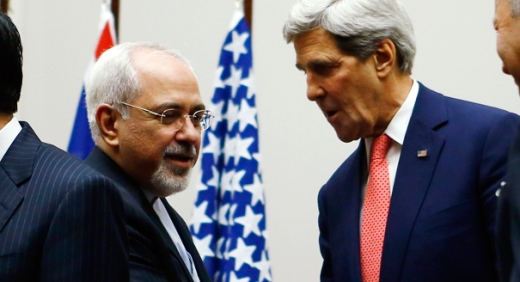
Seyed Abbas Araqchi’s was reacting to comments by US Under Secretary of State Wendy Sherman who had cited “significant and steady” progress in Iran nuclear talks.

“We’ve exchanged ideas, narrowed gaps on key issues, and identified areas where more hard work is required,” Xinhua quoted Sherman as telling senators at a hearing.

The top Iranian nuclear negotiator played down the remarks and said:

no deal has been made on any specific issue in the course of negotiations, including Arak heavy water reactor or Fordow nuclear site.

Basically, there has been no agreement on any of the topics, and differences still remain, Araqchi underlined.

“The only criterion for the Islamic Republic is the country’s needs, and during the talks, decisions are made exclusively according to the country’s needs,” Araghchi said.

On July 18, after more than two weeks of intensive diplomatic negotiations in the Austrian capital of Vienna, Iran and the Group 5+1 (also known as P5+1 or E3+3) agreed to continue talks on Tehran’s nuclear program for another four months.

The two sides decided to extend the nuclear talks until November 24 in the hope of clinching a final deal to resolve the decade-long standoff over Iran’s nuclear energy program.

Iran and the sextet on November 24, 2013, signed an interim nuclear deal in the Swiss city of Geneva.

The breakthrough agreement (the Joint Plan of Action), which came into effect on January 20, had given the parties extendable six months to draw up a comprehensive nuclear deal.


IRGC Quds General Stresses Need for Aiding Palestinians Armed Resistance

IRGC Quds General Stresses Need for Aiding Palestinians Armed Resistance against Israeli Aggressors
IRGC-General Qassem Soleimani

The Iranian commander underlined that confronting the Zionist enemy is a necessity, and expressed hope that the Palestinian resistance movement would turn land and sky into hell for the Zionists soon through its massive defensive operations.

He further rooted out the issue of preventing the Palestinians from receiving weapons and ammunitions, and said, “Disarmament of resistance is daydream that will only come true in the graveyard (for the Zionists).”

Earlier, Supreme Leader of the Islamic Revolution Ayatollah Seyed Ali Khamenei strongly condemned the recent Israeli attacks on the Palestinians, and underlined that Palestinians should continue their armed struggle against Tel Aviv.

“The armed resistance by the Palestinians is the only way to confront Israel,” Ayatollah Khamenei underscored.

The Iranian Supreme Leader noted that criminal acts of wolfish, child-killer Zionist regime in Gaza have revealed its true nature, and said, “Only way to solve this problem is full annihilation and destruction of the Zionist regime.

Israel has been pounding the blockaded Gaza for 24 consecutive days, killing at least 1,360 people and injuring more than 7,600 others.

Iran Desk to be set up at Italian industrial promotion agency

Iran Desk to be set up at Italian industrial promotion agency

Following a thaw in relations between Iran and Europe that came in the wake of a preliminary nuclear deal between Tehran and P5+1, an Italian trade delegation visited Iran in late July to explore ways of forging closer bilateral cooperation and clear the hurdles standing in the way of more trade ties between the two nations. Here is a report Sharq Newspaper ran on the story on July 26:

The Italian delegation was led by Director General for the Country Promotion Andrea Meloni who told the director of the Iranian Trade Promotion Organization Valiollah Afkhami-Rad that Rome is interested in promotion of ties with and investment in Iran. […]

The Iranian official, for his part, said long-term tax exemptions and visa-free entries are some of the incentives on offer in the country’s free trade zones.

He further said the Iranian automotive industry is all set to receive investment by Italy, adding that after the gradual easing of sanctions, Iranian carmakers have set the stage for expansion of relations with other countries.

At the meeting, another Italian delegate said an Iran Desk is to be set up in the Italian industrial promotion agency to pursue better relations between Tehran and Rome.

In conclusion, he signaled the willingness of Italian industrialists to establish a presence in Iran and said the two sides need to join forces to respond to growing calls among Italian industrialists for such presence.


In picture: Quotes of global leaders and public figures about the issue of Palestine

Quotes of global leaders and public figures about the issue of Palestine
Nelson Mandela-Quotes -Palestine

Rouhani Asks Muslim States to Help Gaza People Immediately

Rouhani Asks Muslim States to Help Gaza People Immediately

“Silence against Gaza catastrophe is not wise and people of Gaza will not tolerate repetition of former tyrannical conditions and continuation of several years of siege,” Rouhani said during the telephone conversation on Tuesday.

He noted that regional conditions necessitate closer cooperation and consultation between Iran and Qatar.

The Iranian president said that all Muslims are in a big historical test, adding, “Unity and cooperation is needed among Muslims to change living condition of the people of Gaza and attain sustainable ceasefire.

The Qatari emir, for his part, underlined the need for cooperation among Muslim states to break the siege of Gaza, and said, “Palestinian resistance movement defends it own pride and no one can prohibit it from it.”

He also welcomed the meeting of the Palestinian Committee of the Non-Aligned Movement (NAM) due to be held at the ministerial level in Tehran later this week.

The foreign ministers of the Non-Aligned Movement are slated to take part in an emergency meeting of the block’s Palestine Committee in Tehran to discuss the aggravating conditions in the Gaza Strip, Iranian Foreign Ministry Spokeswoman Marziyeh Afkham announced on Sunday.

“The one-day meeting of NAM’s Palestine Committee will be hosted by Iranian Foreign Minister (Mohammad Javad Zarif) in Tehran,” Afkham said.

She noted that the ambassadors of the member-states of NAM’s Palestine Committee, in a meeting held in New York earlier this month at Iran’s initiative and presided by Iran’s Ambassador to the UN Hossein Dehqani, selected Tehran for hosting the day-long emergency meeting.

“Subsequent to the outbreak of the recent crisis in Gaza and the order of President Hassan Rouhani and within the framework of the intensive diplomatic efforts made by Iran as rotating head of the NAM, several emergency and intensive meetings have been held in New York in the past 10 days as a result of the prompt action of the Iranian mission at the UN following a relevant order by Dr. Zarif to the mission,” Afkham said.

“Ways of utilizing the political capacities of the NAM member-states and relevant attempts and actions have been discussed and the (emergency) meeting of the NAM’s Palestine Committee will be held within the same framework,” she added.

Earlier this month, President Rouhani, as the Head of the NAM, in a declaration seriously condemned the recent massive attacks by the Israeli forces against the innocent people of Gaza Strip, and called on international bodies and world states to force Tel Aviv to stop its blind raids on civilians.

“Siege of Gaza Strip must be fully and immediately lifted and humanitarian aids must be forwarded to the Palestinians in need of them there,” said President Rouhani in the NAM declaration.

“The intensive air strikes against the residential areas of Gaza that have killed dozens of Palestinians so far and wounded so many others, including many women and children, once again echoed the sad tragedy of the Palestinian nation, and the obvious breaching of the entire international law by the Zionists before the open eyes of the world nations” the NAM declaration said.

“The recent aggressive acts have led to the creation of a catastrophic condition that has put at stake both the regional and the international peace and security,” it added.

“Military invasion against Gaza Strip takes place under such conditions that the region is still due to the lingering siege of Gaza throughout the past many years suffering from a dilemma due to the heavy shortage of medical and health facilities and the Palestinians face numerous hardships even for curing their wounded victims of the recent attacks,” the declaration went on to say.

“The occurrence of a great human catastrophe is feared under the current conditions and while expressing deep concern about its occurrence in Gaza Strip, I emphasize the need for offering humanitarian aids to the people of that region, immediately,” the Iranian President underlined.

“I, as the president of the Islamic Republic of Iran, and the rotating head of NAM, seriously condemn the systematic, illegal, and inhumane crimes against the Palestinians, and call on the entire concerned regional and international bodies to heed their legal responsibilities immediately, in line with full lifting of the Gaza siege and in forwarding of humanitarian aids for the Palestinian people, as well as blocking the path for more aggressive acts and the greater massacre of the oppressed Palestinian people through adoption of an effective legal and international mechanism to pursue and put to trail the criminal Zionists,” President Rouhani stressed.

The NAM declaration ended with deep pessimism on the impotence of the UN Security Council for adopting immediate measures to stop the ongoing aggressions and asked the UNSC members to immediately heed their responsibilities for putting an end to those unjust aggressions.

Israel has been pounding the blockaded Gaza for 23 consecutive days, killing at least 1,260 people and injuring more than 7,000 others.

Iran to Unveil New Missile, Radar Systems in September

Iran to Unveil New Missile , Radar Systems
Iran to Unveil New Missile, Radar Systems

“On September 22 (parades), a number of missile and radar systems will be unveiled in Iran and we have spread these systems and radars in different parts of the country,” Esmayeeli told FNA.

The annual September 22 parades mark the start of the Week of Sacred Defense, commemorating Iranians’ sacrifices during the 8 years of Iraqi imposed war on Iran in 1980s.

During the parades last year, the Iranian armed forces displayed different weapons and military tools and equipment, including different kinds of fighters, choppers, drones, ground-to-ground missiles, air-to-ground missiles, surface-to-surface missiles, tactical and armed vehicles, surface and underwater vessels, electronic and telecommunication equipment, light and mid-light weapons, different kinds of artillery and mortar-launchers, air defense systems and engineering and logistic equipment.

The Iranian armed forces also displayed the tactical troposcatter system which is an advanced home-made communications system unveiled by Farzad Esmayeeli in September.

Also, Nebo tactical radar system, Kasta surveillance radars, Matla’ al-Fajr local radar system, national radar, a model of Shahab (Meteor) cosmic radar, a model of Samen radar, optimized Sky Guard radar system, high-altitude S-200 missile system, home-made Mersad missile system armed with indigenous Shahin (Eagle) missiles, mobilized Hag missile system, home-made mid-altitude Ya Zahra 3 missile system, and the low-altitude Rapier missile system were among the other weapons and military equipment on display.

The Iranian Armed Forces also displayed Saafaat electro-optic tracking system, mobile 35 and 23 mm cannons, mobile tactical communications vehicle, vehicle equipped with chemical decontamination system, DZ vehicle and communication system, Kheybar tactical vehicle, Same’ van built by the air defense base and central communication shelter manufactured by Khatam ol-Anbia Air Defense Base in the parades.

The Iranian Armed Forces have recently test-fired different types of newly-developed missiles and torpedoes and tested a large number of home-made weapons, tools and equipments, including submarines, military ships, artillery, choppers, aircraft, UAVs and air defense and electronic systems, during massive military drills.

Defense analysts and military observers say that Iran’s wargames and its advancements in weapons production have proved as a deterrent factor.

The Iranian officials have always stressed that the country’s military and arms programs serve defensive purposes and should not be perceived as a threat to any other country.

Iran Condemns Terrorist Attack in China’s Xinjiang

Marzieh Afkham

Dozens of civilians were killed or injured in a terrorist attack on Monday morning in Shache County, northwest China’s Xinjiang Uygur Autonomous Region.

A gang armed with knives and axes attacked a police station and government offices, while some moved on to the nearby Huangdi Township, attacking civilians and smashing vehicles as they passed. Dozens of Uygur and Han civilians were killed or injured.

“Police officers at the scene shot dead dozens of members of the mob,” reported the Chinese official news agency, Xinhua.

UNRWA slams Israel for attacking UN-run school in Gaza

Israeli Attacking UN-school in Gaza

The condemnation comes after Israeli forces shelled the UN-run school in Jabalia refugee camp on Wednesday. Initial reports say at least 19 Palestinians were killed and about 90 injured in the deadly attack.

The United Nations Relief and Works Agency for Palestine Refugees in the Near East (UNRWA) said there is solid evidence that Israel was behind the attack. The UNRWA added that it had already announced the locations of its shelters to Israel.

“We have visited the site and gathered evidence. We have analyzed fragments, examined craters and other damage. Our initial assessment is that it was Israeli artillery that hit our school, in which 3,300 people had sought refuge,” Pierre Krahenbuhl, Commissioner General of the UNRWA, said in a statement.

The senior official also condemned “in the strongest possible terms this serious violation of international law by Israeli forces,” adding that Israel’s inhumane acts of violence were bringing shame to the world.

“Last night, children were killed as they slept next to their parents on the floor of a classroom in a UN-designated shelter in Gaza. Children [were] killed in their sleep; this is an affront to all of us, a source of universal shame. Today the world stands disgraced.” the statement read.

The UNRWA says it is the sixth time that one of the schools housing the fleeing Gazans has been struck by Israeli forces.

UN Humanitarian Chief Valerie Amos has also said that she is shocked by Israeli attacks on the world body’s shelters in Gaza.

Amos noted that civilians, among them children, are the main victims of Israeli attacks on the UN schools which are used as shelters by Palestinians.