Tuesday, December 23, 2025
Home Blog Page 5074

Spokeswoman: Iran Supporting Peaceful Settlement of Differences in Pakistan

Marzieh Afkham
Marzieh Afkham

“I hope that any difference in the opinions of the different Pakistani political parties and groups would end peacefully and without any tension in line with the interests of people of Pakistan,” Afkham said on Monday.

Underlining the need to respect democracy, Afkham called on all political parties in Pakistan to solve their dispute at the negotiating table.

The protests in Islamabad, that began August 15, entered the 10th day Monday as Pakistan Tehreek-e-Insaf (PTI), Pakistan Awami Tehreek (PAT) and the government remained deadlocked over the issue of resignation by Prime Minister Nawaz Sharif whom they accused of rigging the 2013 general elections.

Opposition leader Imran Khan and cleric Tahir ul-Qadri, who controls a network of Islamic schools and hospitals, have been leading protests in the capital Islamabad since last Friday.

Both want Prime Minister Nawaz Sharif to resign over allegations of “corruption and election rigging”. Sharif, who won the last election by a landslide, has refused.

FM: Iran Supporting National Unity, Security in Iraq

Zarif in Iraq
Zarif in Iraq

“Iran’s objective, as already declared, is national unity, territorial integrity, development and security of Iraq which as a necessity,” Zarif told reporters after he met religious authorities and ulemas (scholars) in the Iraqi holy city of Najaf.

The Iranian foreign minister noted that during his meetings with several Iraqi officials as well as the country’s religious authorities and ulemas he has laid emphasis on the need for preserving the national unity in Iraq.

“All efforts should lead to helping the Iraqi nation and government and God willing, it should result in the fight against terrorism in the country,” Zarif said.

Also, in a meeting with Head of the Iraqi National Alliance Ibrahim Jafari on Sunday, Zarif underlined the necessity for the establishment of political unity and practice of Islam’s ideology in Iraq to fight the terrorist groups.

“Terrorism in Iraq is threatening all the world people from all the different religions, sects and tribes,” Zarif said during the meeting, also participated by representatives of different Iraqi political groups.

“Fighting terrorism in Iraq is not limited to military confrontation, but we also need political unity, increasing security and Islamic thinking to confront perverted thoughts of the Daesh (the Islamic State of Iraq and the Levant- ISIL),” he added.

Zarif arrived in the holy city of Najaf earlier today to exchange views with Ayatollah Seyed Ali Sisitani to discuss ways to soothe the ongoing crisis in the Muslim country.

The Iranian foreign minister plans to also meet with other grand Shiite clerics in Iraq, including Ayatollah al-Fayadh, Ayatollah Bashir Najafi and Ayatollah Hakim.

Zarif arrived in Baghdad on Sunday to meet the country’s new cabinet members to felicitate them on their appointment and start of work as the new Iraq government and discuss bilateral and regional developments as well as the latest security conditions in Iraq.

Several high-ranking Iranian officials congratulated Al-Abadi and the Iraqi nation on his appointment as the new premier last week and expressed their support for the new government.

Iranian Supreme Leader Ayatollah Seyed Ali Khamenei hailed the appointment of the new Iraqi premier, saying that enemies’ plot to push Iraq into further chaos through political disputes over premiership would be foiled once the new cabinet starts work.

Following Iran’s approach, Maliki also dropped his bid and voiced support for al-Abadi in a show of unity which is much needed in the crisis-hit country which has come under a surge of terrorist attacks by savage Takfiri terrorists of the Islamic State of Iraq and the Levant (ISIL) in the last few months.

Iran and Iraq have enjoyed growing ties ever since the overthrow of the former Iraqi dictator, Saddam Hussein, during the 2003 US invasion of the Muslim country.

Iraq’s Foreign Minister Hoshyar Zebari was in Tehran in February. During his stay in the Iranian capital, Zebari and Zarif discussed mutual cooperation on economy and trade as well as joint efforts to address environmental issues.

Will sexist attitudes toward the presence of women in stadiums end?

Iranian Women in Stadium

The head coach of the Iranian women’s national volleyball team Sima Sedighi was quoted by Islamic Republic News Agency (IRNA) on August 23 as saying that, “A professional approach has to be adopted to the presence of women in sports arenas.” Here is what else the official news agency reported on the issue:

Sedighi went on to say, “Sportswomen hope that the bylaw granting the green light to women to watch sports competitions in stadiums will be swiftly crafted and approved, because under such bylaw, true fans of sports and athletes will be gradually handed a chance to watch sports events at sporting venues.”

It came after Deputy Minister of Sports and Youth for Cultural, Educational and Research Affairs Abdul-Hamid Ahmadi said that a bylaw is being crafted to give the go-ahead to women to attend sport events.

Top MP describes damage to Gaza environment unprecedented

Gaza war and Invironment

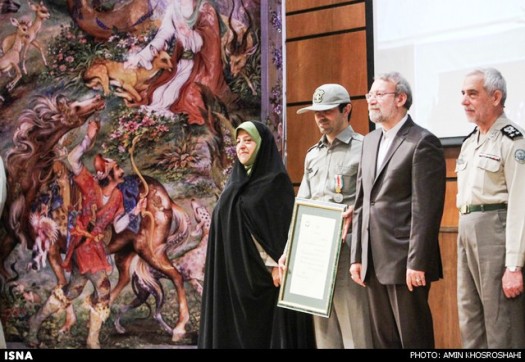
On Sunday August 24, Javan Newspaper quoted Parliament Speaker Ali Larijani as saying that in addition to human catastrophe, the recent Israeli invasion of Gaza has done unprecedented damage to the environment of the Palestinian coastal enclave. Here is an excerpt of the article that appeared in the daily:

A 17th General Assembly of the Asia-Pacific Parliamentarian Conference on Environment and Development, also known as APPCED, opened in Tehran on August 23, 2014. The gathering was meant to raise awareness about the significance of efforts to preserve Mother Nature and promote laws that govern the protection of the environment. Economic development as well as the environmental damage the Gaza Strip has suffered as a result of the Israeli invasion was brought up at the gathering. […]

In a keynote speech at the meeting, Iran’s Parliament Speaker Ali Larijani said improper treatment of the environment has put the entire planet in danger. […]

He further said, “For almost two months, the Zionist regime’s bombs which have been as powerful as six nuclear devices in total, have been raining down on the defenseless people of Gaza. I regret to say that the Zionist crimes have met with silence and/or indifference on the part of the international community and many countries.”

The top MP further said that more than 2,000 Palestinians, most of them children, women and elderly people have been martyred in the Gaza Strip. “Thousands more have been injured and urban facilities have suffered substantial damage. What concerns this gathering here is that the damage caused to the environment during the offensive has been unprecedented.” […]


Iran shoots down Israeli spy drone near Natanz nuclear facility

Iran shoots down Israeli spy drone near Natanz nuclear facility

The IRGC’s Aerospace Force has intercepted and shot down an Israeli spy drone, the IRGC announced in a statement on Sunday.

It added that the stealth and radar-evading spy drone intended to reach the nuclear facility in Natanz, but was targeted by a surface-to-air missile before it reached the area.

“This mischievous act once again reveals the adventurist nature of the Zionist regime [of Israel] and added another black page to this fake and warmongering regime’s file which is full of crimes,” the IRGC statement said.

The statement emphasized that along with other Armed Forces, the IRGC is fully and strongly prepared to defend the Islamic Republic’s territory and airspace against any aggression and reserves the right to respond in kind to such moves.

Iran’s nuclear facilities have always been a regular target for espionage activities by US and Israeli secret services, which have at times used drones for this purpose. However, all efforts made to this end have been successfully thwarted by the Iranian military forces.

On December 4, 2011, the Iranian military’s electronic warfare unit announced that it had successfully downed the American RQ-170 reconnaissance and spy drone in the eastern part of Iran with minimal damage.

The RQ-170, an unmanned stealth aircraft designed and developed by the Lockheed Martin Company, had crossed into Iran’s airspace over the border with Afghanistan.

The drone was one of America’s most advanced spy aircraft and its loss was considered a major embarrassment for Washington.

Tehran Seeks Closer Ties with New Iraqi Government

Zarif and Al-Abadi meeting in Iraq

“Tehran-Baghdad relations expanded during Nouri al-Maliki’s term, and we hope the ties would be upgraded during the new (Iraqi) government’s tenure,” Mohammad Javad Zarif said in a meeting with Abadi in Baghdad on Sunday.

The top Iranian diplomat is on an official visit to Baghdad in a bid to hold talks with high-ranking Iraqi officials on issues of mutual interest and regional developments.

Elsewhere in the meeting, Zarif underlined that relations with Iraq are of “strategic significance” for the Islamic Republic.

Back on August 11, Iraqi President Fouad Massoum officially commissioned Abadi, the Shiite coalition’s nominee for prime minister, to form the new government.

Massoum refused to nominate the country’s two-time Prime Minister Nouri al-Maliki for a third term in office.

Following Abadi’s election, Secretary of Iran’s Supreme National Security Council (SNSC) Ali Shamkhani voiced Iran’s support for the legal procedure in which the Iraqi prime minister has been elected.

“The legal frameworks determined in Iraq’s constitution are the basis for the election of the prime minister by the majority bloc in Iraq’s national parliament,” Shamkhani said.

President Rouhani: Iran Needs No One’s Permission to Defend Itself

Iran-President Rouhani

“Our military doctrine is based on defense and we don’t design any weapon for aggression; we don’t carry out any research on how to occupy the regional states. All our researches are based on this defense principle that how we can defend ourselves or how we can stop the enemy,” Rouhani said, addressing a ceremony to unveil two new home-made cruise missiles and two new drones in Tehran on Sunday participated by Defense Minister Brigadier General Hossein Dehqan and other senior officials.

He said Iran’s defense programs are based on a deterrence strategy to prevent the breaking out of war in the region, reiterating that “our military capability is at the service of regional security”.

He underscored Iran’s strategy of preventing war in the region, and said Tehran is not after an arms race and the Weapons of Mass Destruction (WMDs) “but it doesn’t ask for anyone’s permission to defend itself and to develop our defense industries to whatever degree” that we deem necessary.

The President once again reiterated the necessity of a nuclear weapons-free Middle-East, saying that all WMDs in the Middle-East should be dismantled.

Rouhani also stressed Iran’s special geopolitical conditions, and asked, “Given Iran’s position in the region and the world, is it possible to speak about stability in the region and avoid mentioning Iran? Is it possible to speak of regional welfare and development without naming Iran?”

Senior regional officials have on many occasions praised Iran for the constructive role the country has always played in the reinvigoration of peace and tranquility in the region, and called for expansion of ties with Tehran.
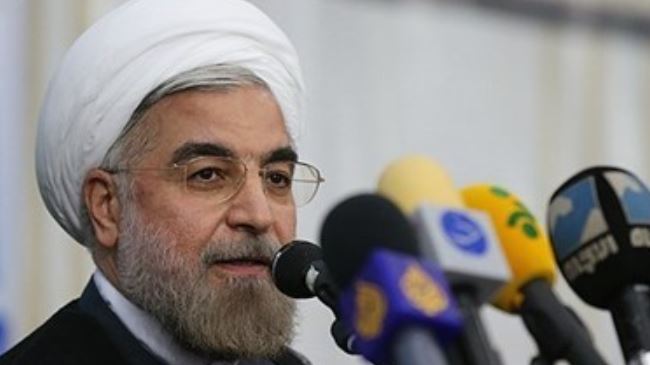
Lebanese Foreign Minister Gebran Bassil and Parliament Speaker Nabih Berri in separate meetings with former Iranian Ambassador to Beirut Qazanfar Roknabadi in May extended their full support for Tehran’s logical and positive interactions with the world and regional states, and described Iran’s foreign policy as one of the major caused of restoration of security in the region, particularly in Lebanon.
In this country life goes on

Dr. Hossein Entezami

Iran Front Page (IFP) was officially launched at a gathering dubbed Iranian Media and the International Community in Tehran on August 20, 2014. One of the main speakers at the event was Dr. Hossein Entezami, who represents the managing editors of the Iranian publications at the Press Supervisory Board. The following is the translation of the speech of Dr. Entezami, who has also served as deputy minister of culture and Islamic guidance for media affairs ever since President Hassan Rouhani’s government took office in August 2013:

The so-called soft power naturally takes shape in soft areas such as civilization and culture, science, tourism, arts, media, knowledge and anything which is related to the nations. That is why Joseph Nye, who has developed the concept of soft power, describes Harvard, McDonald’s and Hollywood as sources of his country’s power in the modern world.

Before the emergence of this discourse [soft power], it was cultural power which drew much attention. In fact, after the Second World War components of power, other than military might – economic, cultural, political and scientific strength – emerged as the building blocks of power. Consequently, although countries such as Germany and Japan did not have armies, they were viewed as powerful nations, and the march toward perfection of nuclear science, genetics, robotics, and nanotechnology in countries which had developed such technologies became a source of power.

The picture the world is painting of Iran is weak, blurred and upside down. That should be all the more reason for us to roll up our sleeves. They don’t even monitor our media. They rely on old classifications and definitions, either intentionally or unintentionally. It comes despite the fact that in our country all aspects of life go on in parallel with politics.

While under traditional diplomacy, governments reign supreme in international relations, in cultural diplomacy nations are the main players. One should not forget the fact that in the new world order, governments which used to be the only players have lost part of their clout. Instead multinational companies, international and regional organizations, NGOs, and even individuals have secured a foothold on the international stage. That is why lines marking national borders are not as important as they used to be and geopolitical frontiers have replaced geographical boundaries.

Over the past 15 years governments have taken public diplomacy on board and have signaled commitment to such diplomacy, at least in terms of planning. Why haven’t we had a deserving share of the components of such diplomacy? Why have we fallen behind?

The fact that we look at non-governmental things from a governmental angle may be one reason behind it. We should know that governmental administration of affairs which is usually slow, non-creative and entangled in restrictions, does not allow areas which are in need of creativity and fast pace to act creatively and jump forward.

Measures to highlight these aspects of Iranian life, develop media ties with others, and facilitate the presence of foreign journalists in Iran can slow down and even neutralize the mischaracterizations which are designed to give rise to Iranophobia.

Involvement of the private sector breaks the spell of inefficiency. Modern governments which are slim solely focus their attention on sovereignty-related questions and on protection of the rights of citizens, transparency, regulation and efforts to pave the way for realization of macro-policies. Thus, they contribute to different components of public diplomacy such as universities, tourism, culture and arts. Accordingly, the overall policy of the 11th government, both in word and in deed, is to step back in favor of the private sector. In other words, in all areas where the private sector can make its presence felt, the government steps back and encourages private players to get involved.

The media atmosphere of the world is shaped by hegemonic powers. They decide which development should be given prominence and which one should receive little or no attention at all. That is why they want a distorted picture to be painted of potentially inspiring countries and nations in the court of public opinion.

Unwittingly we are contributing to their push. Our media focus the better part of their attention on local developments and in the process ignore efforts to help shape the world public opinion. Does this approach have its roots in a lack of need or in insufficient understanding of developments, opportunities and media? Or maybe in inability?

This gathering is organized by the private sector, specifically by a creative pioneer of the media industry. We hope to see more gatherings like this so that they can give synergy and coordination a shot in the arm. The two reasons I just mentioned fill me with hope that Iran Front Page, which is still in the process of evolution, will rise to prominence and become inspiring in the near future.

The picture the world is painting of Iran is weak, blurred and upside down. That should be all the more reason for us to roll up our sleeves. They don’t even monitor our media. They rely on old classifications and definitions, either intentionally or unintentionally. It comes despite the fact that in our country all aspects of life go on in parallel with politics. We make scientific headway and our scientific indexes grow. Although the public culture is still facing several problems, it is developing and marching toward improvement. Who should shoulder the responsibility to reflect the realities of Iranian society?

Measures to highlight these aspects of Iranian life, develop media ties with others, and facilitate the presence of foreign journalists in Iran can slow down and even neutralize the mischaracterizations which are designed to give rise to Iranophobia.

This gathering is organized by the private sector, specifically by a creative pioneer of the media industry. We hope to see more gatherings like this so that they can give synergy and coordination a shot in the arm. The two reasons I just mentioned fill me with hope that Iran Front Page, which is still in the process of evolution, will rise to prominence and become inspiring in the near future.

Hossein Entezami was born in the northeastern city of Mashhad in 1967. He holds a Ph.D. in strategic management. He has written several books and held many positions such as the representative of the managing editors of the Iranian publications at the Press Supervisory Board, managing director of Hamshahri Daily, managing editor of Jam-e Jam Daily, spokesman of the Supreme National Security Council, a member of the Press Jury, etc.

Zebari Stresses Iran-Iraq Cooperation in Fight against ISIL

Zarif and Zebari meeting

Zebari made the remarks in a joint press conference with his Iranian counterpart Mohammad Javad Zarif who arrived in Iraq on Sunday to meet the country’s new prime minister and other high-ranking officials.

He also appreciated Iran for its cooperation in the fight against terrorism in different parts of Iraq, and said, “At present, a new reality has emerged in the region, and the international community has come to feel the danger of ISIL.”

“We have demanded international support for our war on terrorism, which is a normal move in the contemporary world. When we asked for international support against the ISIL, we didn’t want military forces since there are no deficiencies in the number of Iraqi army forces and the peshmerga (the Iraqi Kurdish fighters),” the Iraqi prime minister said, implying that cooperation with Iran does not include presence of Iranian soldiers in his country.

His remarks came after Iranian Defense Minister Brigadier General Hossein Dehqan rejected media reports on the presence of the country’s military forces in Iraq to fight the ISIL, saying that Baghdad does not need assistance of Iranian troops in its combat against the terrorist group.

“We have made official announcements that we would not spare any effort to assist and back up the Iraqi government and nation in grounds of combat against terrorists, but when it comes to military assistance we believe that there is no need to Iran’s direct presence in Iraq to confront Daesh (ISIL) as the Iraqi nation and government, relying on the central role of the religious authority, are able to confront it,” Dehqan said in a press conference in Tehran on Saturday.

He described the ISIL as a terrorist group at the service of the Zionist regime, and said, “Those who supported them yesterday and support them today too have now come to realize the correctness of Iran’s words that they (the ISIL members) contribute to insecurity in the region.”

“Today the US and France should take action to compensate for their supports (for the ISIL) and become united against Daesh,” Dehqan said.

Late in June, Iraqi Ambassador to Tehran Mohammad Majid al-Sheikh rejected certain media claims about the presence of Iranian military forces and Commander of Iran’s Islamic Revolution Guards Corps (IRGC) Quds Force General Qassem Soleimani in Baghdad.

The US Wall Street Journal in a report in June claimed that Tehran has sent two elite units of its IRGC to Iraq to fight against the ISIL terrorists – an Al-Qaeda offshoot.

Upon arrival in Iraq today, the Iranian foreign minister renewed Tehran’s support for the Iraqi people’s fight against terrorism.

“The Islamic Republic of Iran has always stood and will stand beside the Iraqi people (in their campaign against terrorism),” Zarif told reporters on Sunday.

He said the Iraqi people have felt the serious threat of terrorist groups to their country, adding that the nation sees this threat not “as a sectarian strife among different tribes or religious groups but as a major danger to all Iraqi people which needs to be confronted by all”.

Zarif expressed the pleasure that the wave of terrorist attacks has been controlled in Iraq by the help of religious leaders, and said, “We hope that this danger will be obviated with solidarity and coordination among all Iraqi groups, and that peace and tranquility will return to Iraq again.”

Araqchi: Iran, G5+1 Members to Hold Bilateral Talks

Abbas Araqchi

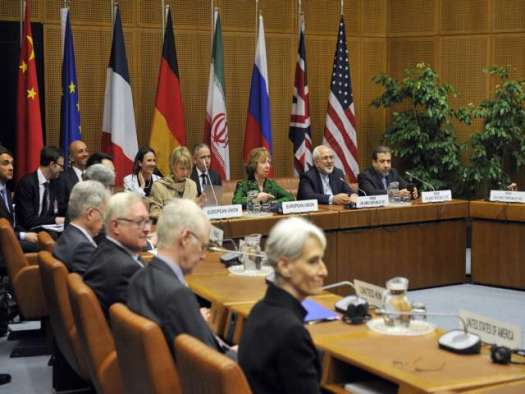
Iranian Deputy Foreign Minister for Legal and International Affairs Seyed Abbas Araqchi said Saturday that the next round of nuclear talks will be held prior to the UN General Assembly session in September.

Araqchi noted that Iran’s Foreign Minister Mohammad Javad Zarif and EU Foreign Policy Chief Catherine Ashton along with their deputies are scheduled to discuss the latest developments regarding the nuclear talks in Brussels on September 1.

“Other bilateral meetings will also be held before the New York meeting and we are arranging the schedule and level of the discussions,” Araqchi added.

The Iranian diplomat said there will also be a meeting with US officials if necessary.

On Saturday, Iranian President Hassan Rouhani said Tehran plans to continue talks with the G5+1 very seriously until it succeeds in restoring its inalienable nuclear rights.

“We will continue our (present) path in foreign policy and will seriously continue our negotiations based on logic, our rights and international undertakings,” Rouhani said.

On July 20, the deadline for reaching a final agreement on Iran’s future nuclear activities was postponed by four months—until November 24—to give more time for diplomatic efforts.

Zarif and Ashton in a joint statement after over two weeks of talks stressed the need for more efforts and time to reach an agreement with the world powers over Tehran’s nuclear program.

The two officials who presided the negotiating sides, emphasized at the end of Iran-G5+1 negotiations that they have held different sessions in different forms and in a constructive atmosphere to reach a final comprehensive agreement.

Due to certain differences over some fundamental issues the two sides agreed to extend the Joint Plan of Action by November 24, they added.