Saturday, December 27, 2025
Home Blog Page 5019

Tehran bids tearful farewell to pop singer Morteza Pashaei

Morteza Pashaei
Morteza Pashaei

Morteza Pashaei

Thousands of people from the capital and elsewhere in the country turned out for the funeral procession of the late Morteza Pashaei, an Iranian musician, composer and pop singer, on Sunday (November 16), according to Fararu, a news website.

The emotion-filled farewell ceremony caused gridlock on the streets of Tehran, and the capital’s subway was almost brought to a standstill as a large influx of the late singer’s fans tried to reach the funeral procession.

The ceremony went off to a euphonious start when some of Pashaei’s songs were played in his memory with participants repeating the lyrics, among them Mohammad Alizadeh, a famous singer. Sounds of Senj (Cymbal) and Dammam were all in the air as more people joined the huge crowd.

Carrying photos of the late singer, the young music lovers had a strong presence in the ceremony joining other attendees to express condolences to the bereaved family of Pashaei.

Pashaei gained fame for singing Negaran-e Mani (You Are Worried About Me), the closing credit song of Maah-e Asal (Honeymoon) – a famous anthology TV talk show in Iran which goes on air each year in the holy month of Ramadan in the hours leading to Iftar, when the faithful break their day-long fast.

The 30-year-old Pashaei passed away on Friday November 14 after a long battle against gastric cancer.


[Dammam is the Persian drum which is played with a wooden stick and/or with hand. In southern Iran it is played in religious ceremonies.]

ISIL militant beheads US aid worker

Peter-Kassig
Peter-Kassig

The footage, which was aired on Sunday, shows the masked terrorist claiming to have chopped off Kassig’s head as a warning to the government of the United States. However, there has been no verification of the clip.

The 26-year-old American was kidnapped in October 2013 on his way to Syria’s eastern city of Deir al-Zour.

The nearly 16-minute video also shows what appeared to be the mass execution of several abducted Syrian soldiers.

The ISIL militants first showed Kassig in the video of the beheading of British aid worker Alan Henning in early October. The terror group has posted numerous videos of its atrocities as a terror tactic.

ISIL have executed several foreign nationals including American journalists James Foley and Steven Sotloff and British aid workers David Haines, and Henning.

The ISIL terrorists currently control large areas of Iraq. The group sent its militants into Iraq in June, seizing large parts of land straddling the border between Syria and Iraq.

Oil Minister: Iran has tools to minimize damage by drop in oil prices

bijan namdar zangeneh

Oil Minister Bijan Namdar Zanganeh has said that Tehran has been affected by the recent plunge in the oil price but there are tools to minimize the damage.

[…]

By withdrawing money from the National Development Fund of Iran (NDFI), which is the country’s sovereign wealth fund, and paying those who are working in the upstream sector of oil industry, Iran will cushion the damage caused by the fall in oil price, the minister said in an interview with Azerbaijan’s Trend News Agency.

[…]

Turkish architects urge Pope not to visit Erdogan’s palace

Erdogan palace
Erdogan palace

The controversial decision by Turkey’s Recep Tayyip Erdogan to build a new presidential complex near Ankara continues to meet with outcry at home. On November 12 Alef website reported that Turkey’s Chamber of Architects has taken its opposition beyond national borders, asking Pope Francis not to go to the Ak Saray (White Palace) when he visits Turkey in late November. What you go through below is the translation of the report:

The Ankara branch of the Chamber of Architects has in a letter asked Pope Francis to turn down an invitation by President Recep Tayyip Erdogan to go to his palace when he visits Turkey on November 28.

The leader of the Catholic Church is the first foreign guest Erdogan is to host in his new palace.

The Turkish architects have argued that the palace has been erected illegally and that the Pope should not legitimize the construction of the [sprawling] palace during his [three-day] stay.

The Chamber has also stressed in the message that it would send similar letters to heads of states, Ankara-based foreign embassies, and heads of international organizations urging them not to show up in the new presidential palace if and when they make a trip to Turkey.

The letter comes against a backdrop of fierce opposition to the gigantic palace by members of the public and environmentalists who say Erdogan has destroyed one of the few remaining green spaces in the capital to construct his mega mansion.

Several court orders blocking the project failed to halt the construction of the presidential palace [which was inaugurated on October 29 when Turkey celebrated the 91st anniversary of the Republic Day].


Erdogan’s new palace is a reminder of Iran’s Alighapoo


Turkey-Erdogan-Illegal-100-Room-New-Presidental-Palace


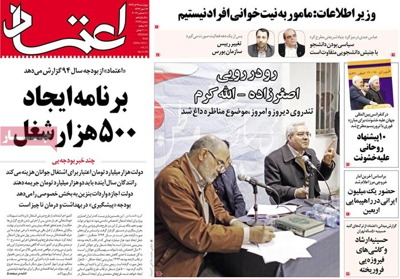
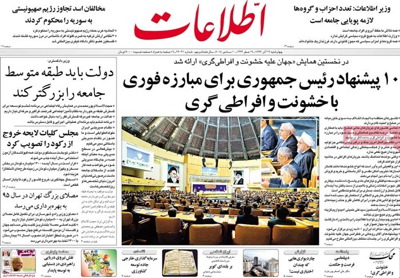
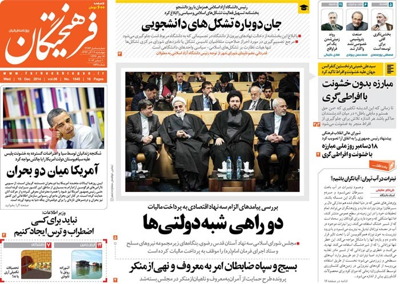
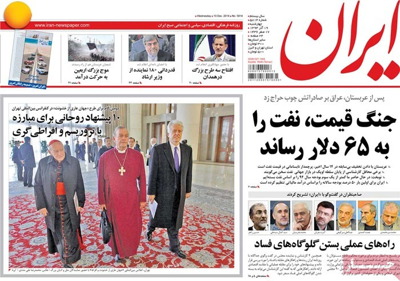
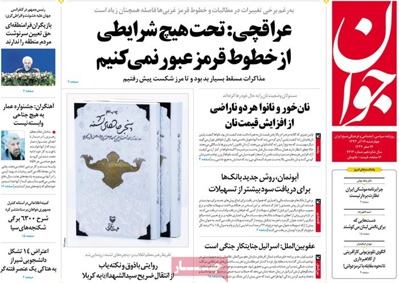
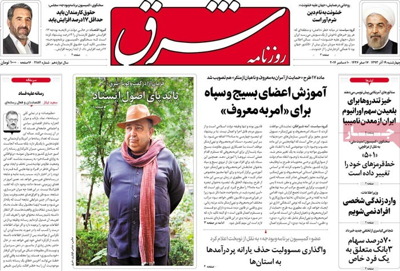
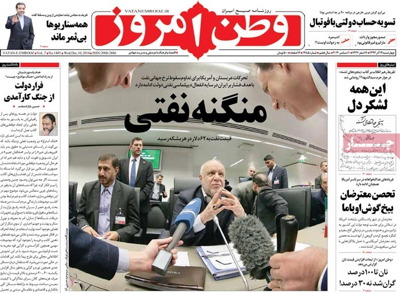
A look at Iranian newspaper front pages on Nov. 16

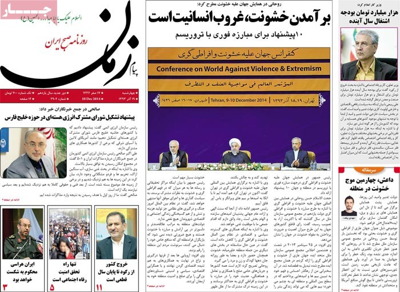
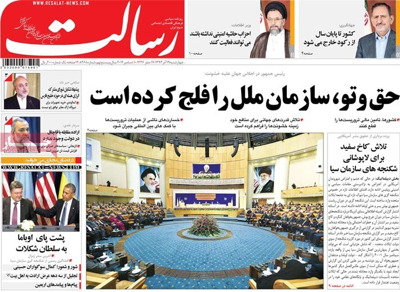
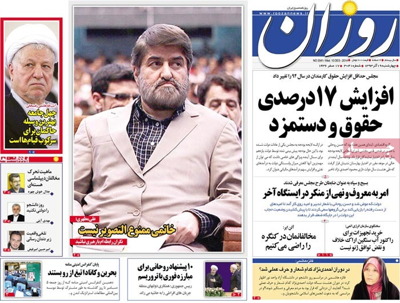
Iranian Newspapers Headlines

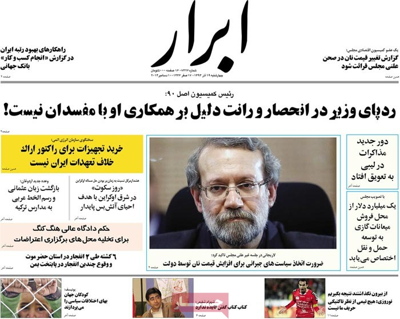
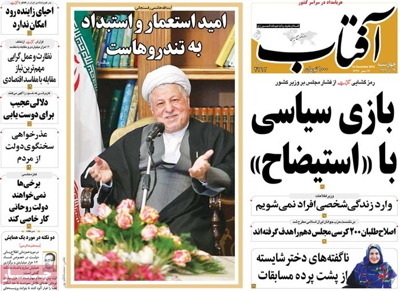
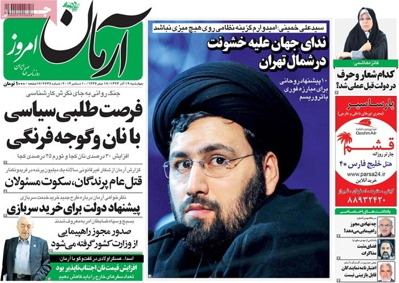
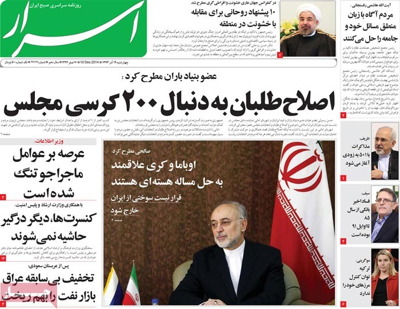
Iranian newspaper front pages were dominated on Sunday by speculations on whether the Islamic Consultative Assembly will endorse President Rouhani’s fourth nominee to take over the Ministry of Science, Research and Technology. Another pervasive front-page headline was the confirmation by the Supreme Court of a lower court verdict barring Saeed Mortazavi, a former Tehran prosecutor, from the bench for life and from public office for five years.

Afkar: The Middle East’s largest gold factory has been inaugurated in northwestern Iran.


Afkar newspaper 11 - 16


Asr-e Eghtesad: “Iran is 17th in the world when it comes to tourist security,” said the director of the Cultural Heritage, Handcrafts and Tourism Organization.


Asre eghtesad newspaper 11 - 16


Asr-e Iranian: Some 100 MPs have signed a petition to question Foreign Minister Mohammad Javad Zarif on parliament floor.


Asre iranian newspaper 11 - 16


Asrar: “The government [of President Rouhani] will not change its nominee for minister of science,” said the president’s deputy.

Asrar: “I hope the culture minister does not give in to pressures when it comes to defending press freedom,” said Rasoul Montajabnia, a reformist activist.


Asrar newspaper 11 - 16


Ebtekar: Foreign Minister Mohammad Javad Zarif has once again been summoned to appear before parliament.

Ebtekar: Pressure is building on President Rouhani to change his pick for the science ministry. Jafar Nili-Monfared, the deputy science minister and Saeed Semnanian, an advisor to the minister, have both resigned their posts amid a showdown between the Cabinet and parliament on who will take over the Ministry of Science, Research and Technology.


Ebtekar newspaper 11 - 16


Emtiaz: “Iran has the tools to minimize the damage caused by a slump in oil prices,” said Oil Minister Bijan Namdar Zanganeh.


Emtiaz newspaper 11 - 16


Esfahan Emrooz: “Officials have discovered some leads based on victim accounts about acid attacks in Isfahan,” said an MP representing the central city where the attacks took place.


Esfehane emruz newspaper 11 - 16


Etemad: “Some members of parliament desire to become minister of science,” said Ali Motahari, a Tehran MP, in an interview with the daily.

Etemad: Iran Air, Iran’s flagship carrier, says it has built on the Geneva Interim Agreement between Iran and P5+1 to purchase spare parts from Boeing.


Etemad newspaper 11 - 16


Ettela’at: Fierce clashes have broken out between the Palestinians and the Israeli police in the West Bank and Quds.


Ettelaat newspaper 11 - 16


Farhikhtegan: “Iran’s oil revenues have plummeted to $26 billion from a previous $110 billion,” said Government Spokesman Mohammad Bagher Nobakht.


Farhikhtegan newspaper 11 - 16


Financial Tribune: Gasoline imports halved on lower consumption.


Finational tribune newspaper 11 - 16


Hambastegi: “A draft bill on parties has been submitted to the government,” said Interior Minister Abdolreza Rahmani Fazli.

Hambastegi: “Proper management is needed to promote the public culture,” said Minister of Culture and Islamic Guidance Ali Jannati.
Hambastegi: “The reform camp is moving according to the law and in line with Islam and Iran’s interests,” said Hadi Khamenei, a reformist cleric.


Hambastegi newspaper 11 - 16


Hamshahri: Renowned Iranian director Majid Majidi is to head the jury of the upcoming Fajr International Film Festival.


Hamshahri newspaper 11 - 16


Hemayat: “The Supreme Court has upheld the conviction of Saeed Mortazavi [a former Tehran prosecutor],” said a deputy Judiciary chief, confirming that the former Tehran prosecutor will be banned from judicial positions for ever. Other reports also indicate that he will be barred from all government portfolios for five years.


Hemayat newspaper 11 - 16


Hosban: A historical gate dating back to the Achaemenian era has been discovered 3 km away from Takht-e Jamshid (a.k.a. Persepolis) in southern Iran.


Hosban newspaper 11 - 16


Iran: Global leaders meet in a tense atmosphere for the annual G20 summit in Australia.


Iran newspaper 11 - 16


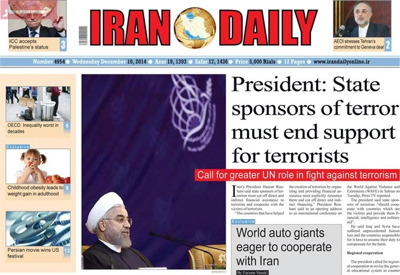
Iran Daily: IAEA removes UAE’s fake Iran map.


Iran daily newspaper 11 - 16


Jamejam: Air pollution has made a comeback to metropolises.


Jame jam newspaper 11 - 16


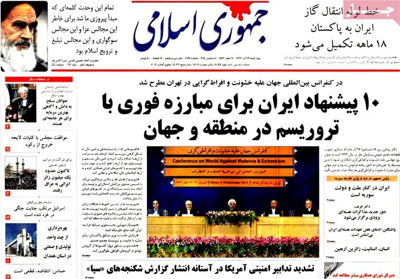
Jomhouri Islami: “The government will draw up the country’s spending package for next year (starting March 21, 2015) based on an oil price of $70-80 per barrel,” said the vice-president for planning affairs.


Jomhorie eslami newspaper 11 - 16'


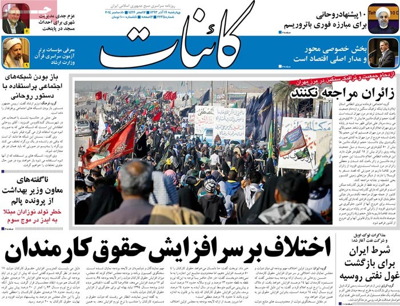
Kaenat: Efforts are underway to implement the National Document on Senior Citizens.

Kaenat: Access to Viber and Instagram will not be banned.


Kaenaat newspaper 11 - 16


Kar va Kargar: “More time is needed [for Iran and P5+1] to reach a final nuclear agreement,” said the Russian Foreign Ministry.


Karo kargar newspaper 11 - 16


Kasbokar: Truck transit is cut in half between Iran and Turkey following a rise in tariffs.


Kasbo kar newspaper 11 - 16


Kayhan: Iran and China have concluded a major economic and industrial deal, the Iranian Energy Ministry announced.


Kayhan newspaper 11 - 16


Khorasan: Iran and China have inked a $50-billion agreement.


Khorasan newspaper 11 - 16


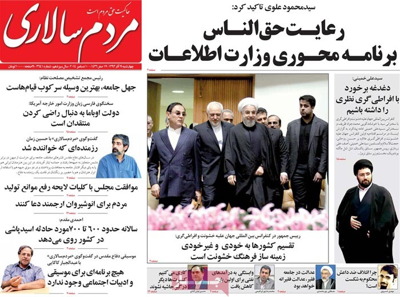
Mardomsalari: “Gastric cancer is the number one killer cancer in Iran,” said the health minister, offering condolences on the death of pop singer Morteza Pashaei [who died on Friday at the age of 30].


Mardom salari newspaper 11 - 16


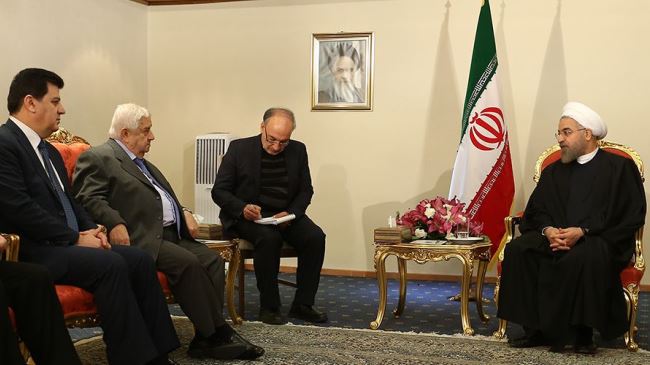
Payam-e Zaman: “Efforts should be made to set balanced prices for oil,” said President Rouhani in a meeting with the Venezuelan foreign minister.

Payam-e Zaman: “We will offer a clear report on recent acid attacks to people,” the interior minister told reporters.


Payame zaman newspaper 11 - 16


Resalat: “Political bickering counters production and justice,” said Ahmad Tavakoli, a Tehran MP.

Resalat: The Iraqi Army and people are getting prepared to liberate Tikrit in northern Iraq. It comes as reports indicate that ISIL terrorists have lost ground in Baiji.


Resalat newspaper 11 - 16


Roozan: “Efforts to dispute the nuclear talks [between Iran and P5+1] run counter to the policies of the establishment,” said Deputy Foreign Minister Hassan Qashqavi.


Ruzan newspaper 11 - 16


Sepid reported that the country’s complementary insurance companies have lent overwhelming support to the [government’s] Healthcare Transformation Plan.


Sepid newspaper 11 - 16


Shahrvand: A deputy foreign minister has warned Iranian nationals that they risk death by trying to illegally find their way to Australia.


Shahrvand newspaper 11 - 16


Sharq: The chairman of the Iranian National Olympic Committee has said in an exclusive that in some sports women’s presence in arenas is acceptable.


Shargh newspaper 11 - 16


Taadol: “The Supreme National Security Council makes the final decision on a final nuclear deal,” said Deputy Foreign Minister Hassan Qashqavi, in response to calls by some MPs that any possible deal should secure parliament’s approval.


Taadol newspaper 11 - 16


Tafahom: Record stagnation in ten years has hit the Iranian car market.


Tafahom newspaper 11 - 16


Tejarat: Interest rates might change in the next six months.


Tejarat newspaper 11 - 16


Vatan-e Emrooz: Some Iranian MPs say the parliament should confirm the final nuclear agreement between Iran and P5+1.


Vatane emruz newspaper 11 - 16

VP Underlines Respect for All Faiths in Iran

elham-aminzadeh
elham-aminzadeh

An Iranian vice-president said the country treats people of different religions with respect.

“In Iran, the rights of all religions are held in high regard,” Vice-President for Legal Affairs Elham Aminzadeh said in a meeting with Meng Jianzhu, a member of the Central Committee of the Communist Party of China, held in Tehran on Saturday.

She also noted that the prevailing spirit in Iran is rejection of extremism and violence, making a reference to the Iranian President Hassan Rohani’s proposal for the fights against those threats in the world.

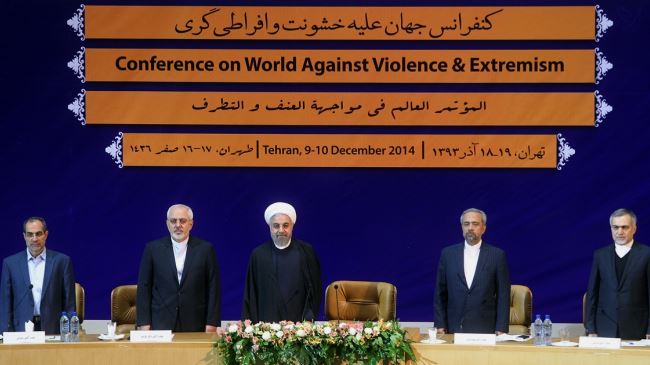
On December 18, 2013, the United Nations General Assembly overwhelmingly voted to approve Rouhani’s WAVE (World against Violence and Extremism) proposal, which calls on all nations across the globe to denounce violence and extremism.

Back on Friday, Armenia’s ambassador to Tehran also dismissed Western media outlets’ propaganda on alleged discrimination against religious minorities in Iran, and hailed the Islamic Republic for creating ideal conditions for Armenian Christians.

“The Armenians residing in Iran are offered tremendous possibilities for maintaining their national identity,” Grigor Arakelian said, noting, “Presence of two (Armenian) legislators in the Iranian parliament signifies that Armenians enjoy really good conditions in Iran and get great respect from the Muslim brothers.”

Iran inaugurates ME’s biggest gold-processing plant

Zarshooran-plant
Zarshooran-plant

Iran has inaugurated the Middle East’s biggest gold-processing plant that will double the country’s annual production of gold bullion in the near future.

The Zarshouran plant, located in West Azerbaijan Province in northwest of the country, was inaugurated by First Vice President Eshaq Jahangiri on Saturday.

With the completion of the first phase of the plant, Iran is expected to produce an estimated three tons of pure gold, 1.25 tons of silver and 500 kilograms of mercury in the future.

After undergoing development, the plant will bring the country’s annual production of pure gold to six tons. The new processing facility will also produce an estimated 2.5 tons of silver and 1.5 tons of mercury per year in the near future.

The plant is fed by a nearby gold mine, situated some 35 kilometers from the city of Takab and is estimated to hold over 100 tons of gold.

Iran president stresses need to balanced oil price

Iran-Venezuela-Rouhani-Ramirez

Iranian President Hassan Rouhani has stressed the need for stability in global oil prices, warning against consequences of sharp price fluctuations on world’s economy.

“Market turmoil and sharp rises or falls in oil prices will affect the stability of global economy; therefore, efforts should be made for oil to have a balanced price,” Rouhani said in a meeting with Venezuelan Foreign Minister Rafael Ramirez in Tehran on Saturday.

He also underlined the need for mutual consultation on major global economic issues, including oil price instability.

Rouhani’s remarks come as the 166th ministerial meeting of OPEC is scheduled to be held in Vienna on November 27 to discuss sharp reduction in oil prices.

Oil prices have plunged in Asia, with analysts laying the blame on the rise in the value of the US dollar and the improbability that the intergovernmental OPEC body cuts crude output.

[…]

Iran is to offer healthcare services to Afghan refugees

Healthcare afghans in Iran

Iran’s Health Ministry has voiced readiness to provide Afghan refugees, who live in Iran, with healthcare services in cooperation with national and international institutions, the Islamic Republic News Agency (IRNA) reported on November 15.

In a meeting at the Presidential Office, officials from the Ministry of Health, Foreign Ministry, Planning and Budget Organization, Iran Health Insurance Organization, Red Crescent Society and the Presidential Office itself compared notes on how healthcare services can be offered to Afghan immigrants and refugees.

Political instability and security woes gripping Afghanistan, over the past decades, turned Iran into one of the countries that house the largest number of refugees. The failure of the international community to maintain and shore up peace and sustainable security is one of the core reasons behind a rise in migration and subsequent failure of migrants to return to Afghanistan.

Given the sporadic distribution of Afghan immigrants and refugees in different urban and rural areas of Iran, one of the gravest challenges they face is the lack of access to proper healthcare services. Such an issue also poses a serious threat to the country’s health system and can leave a vacuum in the national health system when it comes to prevention and control of contagious diseases.

At the meeting, the vulnerability of refugees, inefficiency of complementary insurances and the need for prevention of any disruption to the national health system were discussed. Also, ways of keeping contagious diseases away from Iran’s borders, identifying and treating those suffering from refractory diseases and providing basic healthcare packages for refugees, immigrants and those who legally cross the Iran-Afghanistan border came up for discussion.

It was decided that in line with its objective and commitment to implement the National Health Transformation Plan, the Health Ministry tap into national and international resources to create basic healthcare packages for Afghan nationals.

There is no win-win situation; only one winner emerges from the conflict between Islam and atheism

Hossein kachooian
Hossein kachooian

Ramze Obour (Passcode) Magazine in its sixth issue featured a speech in mid-July by Hossein Kachouyan, a member of the Supreme Cultural Revolution Council, a member of the Faculty of Social Sciences of the University of Tehran, and a member of the Research Center of the Islamic Consultative Assembly at a conference dubbed “Red Line” organized by The Committee for the Protection of Iranian Interests.

Dr. Kachouyan led off his speech by focusing on how [ongoing nuclear] talks can affect the strategic layers of the Islamic Revolution’s discourse in the world, given that the Iranian revolution, which came to power on a platform of “No to the East, No to the West”, and spread its motto to the four corners of the world. The following is the translation of his remarks:

There are multiple causes for concern at the current situation. Do not pay much attention to those who claim to be calm or brave despite expression of concern by the Worriers [who are concerned about the current state of affairs and the direction the government of President Hassan Rouhani is taking the country in]. They are either claiming this out of intransigence or they think in a childish way.

There is another possibility which I am not about to bring up here. The fact of the matter is that this possibility stands to reason: one cannot develop a thorough understanding of the Islamic Revolution and its historic requirements and still enter the [nuclear] talks the way we have done to date.

I wonder if you know that from the get-go we have made concessions in many cases to the other party [involved in the talks], something they could hardly dream of.

Back then we hadn’t built up a clear picture of what we had achieved. We were told by UN officials how far we had come along down the [nuclear] path. Regardless of what we had, we offered everything we possessed, and we still continue to do so.

A major mishap that unfolded in recent nuclear talks is that Iran suspended all its nuclear activities three months prior to the start of the talks and hot on the heels of the 2013 presidential election. Strategically, Iran has always moved a few steps ahead of what the West normally expects.

What creates ambiguities and dims the existing prospect is the sole strategy we have had so far and that is how we look at the enemy, or I should say a friendly attitude toward the enemy; an attitude which is void of any insight into the future of the establishment as well as into what it seeks to become and what it is today.

Through this frame of mind the best-case scenario is that Iran finds a place somewhere in the world according to the existing global topography; this way the West could throw us a bone from the loots it has collected from different places and the preys it has hunted [here and there].

And it is the view which frowns upon the independent nature of the Islamic Republic and has no proper understanding of it. What would be the outcome of such a cast of mind? What should Iran do if it ever wants to adopt a strategy for the nuclear talks?

That would culminate in a situation which would embrace failure from the very start. What is Iran’s strategy in the talks and what does it pursue? What does it have at hand for pursuing its strategy?

Strategy means setting a set of clear objectives and providing tools which can help us achieve our goals in the best possible manner and in a cost-effective fashion. During the talks when you suspend yourself from the outset, do nothing and appear empty-handed before the other party takes any measure, how do you expect to see the other party cooperate with you? I mean based on what, or fearing what?

Such strategy spells total failure from the get-go. The only positive which would come out of the talks, the very reason the West [insistently] pursues the talks, is this: the friendly attitude [of Iran’s negotiators], which does not seem likely to know who the enemy is. The only signal such an attitude sends to the other side is that if the current Iranian team is replaced, the West would have to deal with another [Iranian] group which drives a hard bargain.

Should that happen, the new Iranian team would leave the West with no choice. Iran would run more centrifuges and advance its objectives and the West would get its hands on nothing.

This helps us come to the conclusion that meetings like this are to the benefit of the country’s nuclear negotiating team. I’m talking from a strategic perspective. We seem to be empty-handed; what we have already achieved is the result of 20 years of resistance Iran has put up. In other words, that [rich] stock of resistance has brought the Western side to the negotiating table, and we used up that stock in short order.

Now we are sitting at the negotiating table; naturally, we are expected to beg because nothing has been left for us to bargain over. What are we going to haggle over with the West? We cannot choose but bargain over our own interests, capabilities and what we have at our disposal.

It means we should create a situation for them to salivate [over what we offer] and make them agree. We can offer things that are not very serious. That reflects the way the Westerners use the Rubik’s Cube when they analyze the nuclear talks with Iran.

[The US has used the “Rubik’s Cube” analogy – a 3-D combination puzzle – to explain the moving parts and complexity that make the Iran nuclear negotiations so difficult, saying that all of the pieces have to fit together just so to reach a final agreement. The West believes nothing is agreed until everything’s agreed.]

Some complexities have surfaced in the talks which play down whatever they offer; they are likely to accept 20 percent enrichment by Iran, but the point is that they are seeking to overshadow all aspects of Iran’s nuclear life and obviate the need for Tehran to independently take care of and manage its atomic plan.

The Supreme Leader stated before the talks started that he was not optimistic at all. The strategy Iran currently follows has given a boost to those skepticisms, pessimisms and concerns several months into the talks. What does the future hold for Iran with such a mindset?

It was less than ten years ago (2005-07) when the Iranian nuclear dispute first arose and the military option against Iran was put on the table that I penned an article explaining where we stood back then.

Drawing on the [stormy] debates raging inside the US administration, I wrote that we were at a crossroad and that if we crossed that point successfully, we would escape unscathed for good.

The bottom line: the West has openly and outspokenly said it does not view Iran as a friend, nor does it treat Iran as an impartial country; rather, to them Iran is an enemy. As [US President] Obama has said the US would have dismantled the Iranian nuclear program if it had been able to. I can even tell you that they would have launched a nuclear attack on us if they had been able to. That’s quite clear and simple. And I can even think of the time when they resort to such a move in the current circumstances.

We had – and still have – an opportunity to take advantage of and rise above the current situation. In that case, we can strike a balance and create a situation in which the requirements of the Islamic revolution are met.

The Islamic revolution was not an upheaval confined to the inward layers; in other words, it was not a game changer meant to unseat a government and bring another to power, or replace a handful of people [in power] with some others. Nor did it seek to bring about a regime change. If this question is to be examined in depth, it will become clear that it was not a social revolution which had to be restricted to the inside.

The Islamic revolution played out at a point in history when it – willingly or unwillingly – had, and still has, the potential to challenge the world. As you see, Iran’s contention or friction with the West is incessantly rising. With regard to what has taken place over the past few years, we can say that regional disputes are becoming a cause for international concern.

Iran’s presence in the Mediterranean Sea, and its role in what is happening in the Palestinian territories, Syria and Lebanon as well as its naval upgrade are all good examples to back this argument up.

The revolution has not developed such potential by chance; it was present deep inside this giant event which swept Iran from the very start. To see this giant event reach its intended, eventual destination, we need to equip ourselves and expand our capacities. You cannot claim that you are pushing hard for an ideal, but fall short of providing the necessary tools for that.

But unfortunately, those who are engaged in the talks seem not to share such a view. This is the very issue on which we part ways.

The core issue is how you look at the West and where you stand on the current [nuclear] dispute. If you see it as a conflict between Islam and atheism, it can be defined clearly.

I want to attach importance to the interpretation of Mr. Nabavian – something I have elaborated on in a separate book – that you need to let go of the terms “modern” and “modernity”. Had we not been entrapped by such terms from the outset, we would have not been mired in such a [worrying] trend which has hit the country over the past several decades.

These terms are deceptive. You have to inevitably use these terms, but you have to take a look at the depths of the question as well. These words tend to paper over some realities.

The reality here is that there is a conflict from which only one winner can come out. Islam and atheism are in conflict; for a struggle like this, you have to prepare whatever tools and equipment which are needed.

As things stand, one such view is absent in the talks and the strategies which should be worked out for that view remain elusive.

The only ray of hope is coming from meetings which are expected to reverse directions and put us back on the right track that leads to the Islamic revolution.


Hossein Kachouyan, born in Tehran in 1958, received his diploma in mathematics from Kharazmi High School in 1978. One year later he began to take theology lessons in Shahid Motahari School as he continued his collegiate studies. He got his B.A. in social sciences from the University of Tehran in 1985 and his M.A. in sociology from Tarbiat Modares University five years later. Then he started his studies at the doctoral level in the same university, but dropped out in 1995. He was admitted to the University of Manchester in England the following year and in 2000 he got his Ph.D. which focused on “Sociology and Religion after Moderation”.
 
He has penned multiple books among them: Studies of Modernity and the West: Conflicting Facts; Theories of Globalization: the Aftermath of Challenges between Culture and Religion; Evolution of Iran’s Identity Discourse: an Iran in Conflict with Modernization and Post-Modernization; Theories of Globalization and Religion: a Critical Study; Foucault and Archeology of Knowledge, A Narrative of the History of Human Sciences from Renaissance to Post-Modernism; Exploration of Iran’s Architectural Identity; and Modernism from Another Aspect, an Untold Story of How Modernism Emerged and Grew.