
Alangdareh is a natural resort adjacent to Gorgan, Golestan province, north of Iran. Its beauty is so breathtaking that it is among the top seven tourist resorts in the country.
The following is a photo gallery of the jungle park in northern Iran:

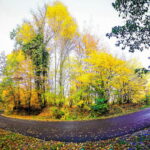



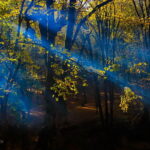



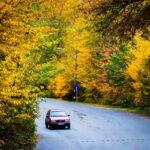
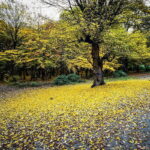


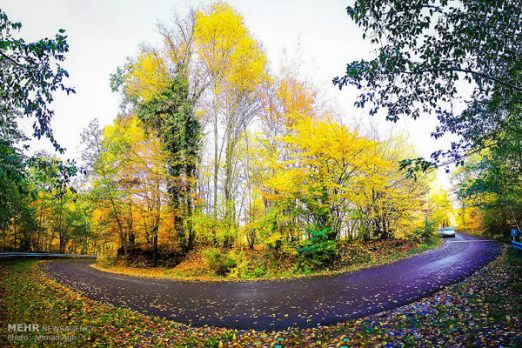
Alangdareh is a natural resort adjacent to Gorgan, Golestan province, north of Iran. Its beauty is so breathtaking that it is among the top seven tourist resorts in the country.
The following is a photo gallery of the jungle park in northern Iran:
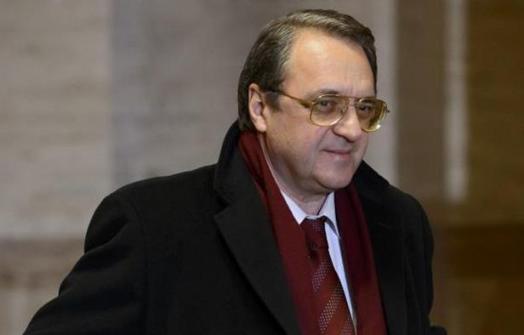
Irdiplomacy.ir, an Iranian website that focuses on international issues and Iran’s foreign relations, carried a report on December 7 about the comments of Russian Deputy Foreign Minister Mikhail Bogdanov about the future of nuclear negotiations between Iran and world powers. The following is a partial translation of what Beirut-based Arabic-language newspaper al-Akhbar quoted the Russian diplomat as saying during a recent visit to Lebanon:
“The only knot which is yet to be untied and has put back a final deal between Iran and P5+1 was the timeline for a final accord as well as for the removal of sanctions. Iran wants sanctions swiftly lifted, while America wants an interval to come between clinching a deal and the time it comes into effect. Such matters have brought the forward-moving resolution process of Iran’s nuclear dispute to a halt. Other than that, an agreement has been reached over other questions,” the Russian deputy foreign minister said.
Mikhail Bogdanov would not go into detail about nuclear talks between Iran and P5+1 and just added, “From my perspective, the White House is dealing with some complexity. As a result both negotiating sides have been mired in domestic issues. Based on what we have realized, while there were fierce electoral campaigns in America [to secure seats in the Senate] the Obama-Kerry negotiating team could not tell the American public that they wanted to lift the sanctions against Iran. Because it would have robbed the White House of the trump card it so badly needed in a tougher race at home. Loss of public support would translate into governance with Republicans at the helm on Capitol Hill, they thought.”
He went on to say, “As for the Iranian negotiating team, things did not look any better either. The return of Zarif-led Iranian negotiating team to Tehran with a deal that would keep Western sanctions in place would have resulted in prompt changes to the government and power composition in Iran even though Supreme Leader Ayatollah Ali Khamenei had openly thrown his weight behind Iran’s negotiating team.”
“In fact, both sides are constrained by the stance of hardliners at home. However, the same issue helped both parties to the talks agree on one thing: they both represented the moderate factions of their capitals, despite all known differences that existed between them,” he stated.
“What matters is that an agreement between the two sides was secured which led to their announcement that they needed more time. Time could solve the issue with hardliners on both sides. We have three kinds of sanctions. European sanctions which are in effect for a certain, limited period of time. They are expected to run out before long and are unlikely to be extended. In practice, their expiry would translate into practical removal of sanctions eliminating the need for their lifting.
The same pattern applies to the second type of sanctions which are international ones. American sanctions are the third group which is expected to be discussed over the time left by July1, 2015 when both sides return to the negotiating table. By that time, America is expected to be able to clinch a final deal without having to secure the domestic go-ahead to lift the sanctions. Likewise, Iran could return to the negotiating table without having to deal with unattainable domestic demands and ink the deal. We will be present throughout the whole process, follow up the case carefully and insist on the conclusion of a deal,” he concluded.
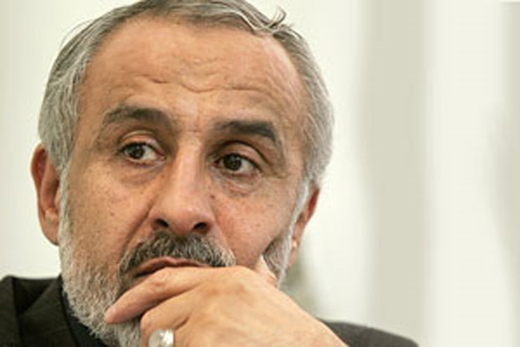
On December 8, Resalat, a daily, ran a concise report about the comments of Elias Naderan, a faculty member at Tehran University, an economics professor and a principlist member of parliament’s Planning and Budget Committee. What appears below is the translation of his remarks at an expert-level gathering about the position and role of the government in the resistance-based economy:
Through efficient management, the dependence of government’s public funds on oil revenues should come to an end.
Government coffers rely on revenues generated by its monopoly over oil industry and other natural resources. One of the major problems with the structure of our government is that since it is directly provided with funds, it does not see it a necessity to answer to the public about its revenues.
In 1999, the Supreme Leader issued the general policies of Article 44 of the Constitution [which deals with the privatization of state companies]. Those polices which amounted to a pattern based on religious management were aimed at addressing the major structural issue of dependence on oil revenues.
Article 44 underlines the fact that the link between government’s coffers and oil revenues should be severed; instead jobs should be created with the help of such revenues. Also, taxes collected from the public should be used to pave the way for transforming the staple economy into a resistance-based economy.
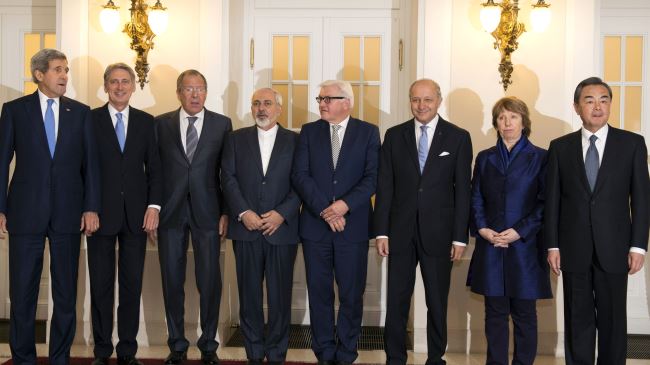
A top Iranian nuclear negotiator says the Sextet of world powers has made some changes in their demands and redlines in the course of its nuclear talks with Iran.
Araghchi made the remarks at a Tuesday meeting with Iran’s Parliament (Majlis) Committee on National Security and Foreign Policy members, said Seyyed Hossein Naghavi Hosseini, the spokesman for the parliamentary body.
Commenting on the extension of Iran’s nuclear talks until June 2015, Araghchi said the two sides have agreed to reach a general agreement in four months and work out the details in the next three months, Naghavi Hosseini added.
According to the lawmaker, Araghchi also warned that if the negotiations drag on for a longer period, the situation will become further complicated as the Western side will face further pressure from lobbyists.
During the session, Naghavi Hosseini said, Araghchi also noted that Israel and some of the regional countries opposed any nuclear agreement with Iran and they even sought to prompt the West to engage in a military conflict with Tehran.
Last month, Iran and P5+1 – Russia, China, Britain, France, the US and Germany – failed to meet the November 24 deadline to sign a permanent nuclear deal. They agreed to extend their discussions until June 2015, so that they could resolve their differences and clinch a permanent accord.
US Secretary of State John Kerry said in a Sunday address to the Brookings Institution in Washington that Iran and P5+1 could reach a final deal on Tehran’s nuclear issue months “sooner” than the new deadline.
The 8th edition of the Iranian international festival for documentary films, Cinéma Vérité, has awarded top films.
This year’s winners were honored during the closing ceremony held at Tehran’s Andisheh Hall on December 7, 2014.
Atlan, directed by Moein Karimeddini, won the best documentary award of the international section of the festival, which kicked off on November 30.
The film narrates the life story of an Iranian Turkmen horse-riding instructor in the northeastern Iranian region of Turkmen Sahra.
The award for best medium-length documentary was given to Italian filmmaker Filippo Ticozzi’s Chasing the Wind.
The festival’s best short documentary award went to White Chimney by Finnish filmmaker, Jani Peltonen.
Producers, Mohammad Ali Farsi and Fathollah Amiri, were named the Grand Prix winners of the national section of the event for their films Clouds on the Way and Life in Cold Veins.
Best medium-length documentary award of the section was presented to Mr. Unemployed directed by Ali Hamraz, and the best short documentary award went to Spoon by Jalal Veisi.
The films competed in various categories including short documentaries, medium-length documentaries and full-length ones as well as the special international competitive and non-competitive sections.
Iran’s Cinéma Vérité Festival screens a wide range of productions such as political, historic, ritualistic, religious, social, environmental, scientific, ethnological, and war documentaries.
Organized by Iran’s Documentary and Experimental Film Center (DEFC), the annual festival tries to express the relationship between reality and truth.

A European court has ordered that an Iranian firm be paid compensation for the inclusion of its name on the anti-Iran sanctions list.
The European General Court issued its verdict with regard to the legal case of the Iranian company, Safa Nicu Sepahan, on Tuesday, saying the firm should be paid 50,000 euros in compensation for being unwarrantedly included on the European Union’s anti-Iran sanctions list.
This is while the litigant firm had demanded seven million euros in indemnity.
Safa Nicu Sepahan was put on the sanctions list in 2011 for what was claimed to be providing equipment for Iran’s Fordow nuclear site.
The court dismissed the allegations against the Iranian company and ruled that there is no evidence to prove the charges.
This is the first time that a European court has ordered the payment of redress to an Iranian firm in a legal case related to Tehran’s nuclear energy program.
Iran has been hit by sanctions from the EU and the US over unsubstantiated allegation that its nuclear activities are geared to military purposes.
Iran rejects the allegation, arguing that as a committed signatory to the nuclear Non-Proliferation Treaty (NPT) and a member of the International Atomic Energy Agency (IAEA), it has the right to use nuclear technology for peaceful purposes.
In addition, the IAEA has conducted numerous inspections of Iran’s nuclear facilities but has never found any evidence showing that Iran’s civilian nuclear program has been diverted to nuclear weapons production.
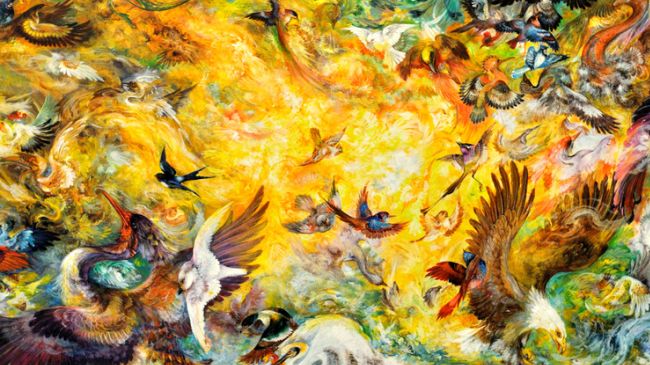
Iran has mounted an exhibition of Persian arts in Macedonia to introduce the country’s traditions and artworks.
The event presents Iran’s cultural achievements along with Persian paintings, photographs, pottery, calligraphy and handicraft.
A photo exhibition of Iranian historical city of Isfahan has been also held at the one-week event in Macedonia’s capital, Skopje.
Taken by the Iranian photographer, Hamid Reza Malakouti-Khah, the exhibited photos, which include over forty 3D works, depict traditional architecture and tourism in Isfahan.
The program has been organized by Iran’s cultural office in Macedonia.
Iran regularly holds cultural events in Turkey, Venezuela, Tunisia, China, Japan and Serbia.
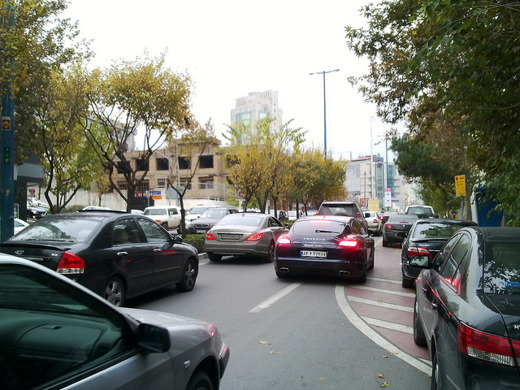
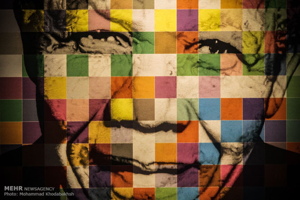 Africa Street in northern Tehran has been renamed after Nelson Mandela during a ceremony in the presence of two members of Tehran City Council and South African ambassador to Iran.
Vice Chairman of Tehran City Council Morteza Talaei pointed to the similarities between Iran and South Africa in fighting against hegemony […] and highlighted the key role the two prominent leaders, the late Imam Khomeini and Nelson Mandela, played in helping humanity and virtues prevail in their societies.
“Nelson Mandela does not belong to a nation, he belongs to all humanity, all history and the whole world,” said Talaei, adding that Iran is proud of naming one of its best streets after deceased leader Mandela on the twentieth anniversary of the revolution in South Africa and the first anniversary of the death of Mandela.
Tehran City Council member Gholamreza Ansari said Mandela’s name shines in the history of mankind and due to Tehrani citizen’s spirit of freedom seeking, they would welcome the renaming of Africa Street after Mandela.
South African ambassador to Iran, for his part, expressed surprise at the event and said “South Africa was formed in 1994 and today we celebrate the twentieth anniversary, but it should be noted that our people owe their victory to the Islamic Revolution and the personality of Imam Khomeini.”
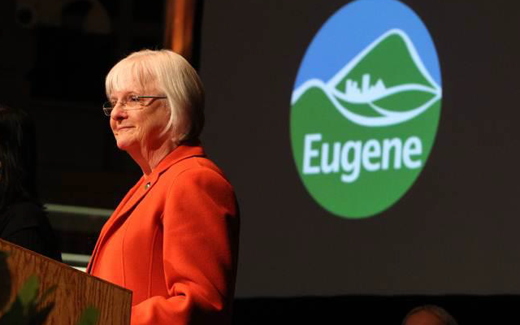
A letter by Mayor Kitty Piercy of Eugene, in the US state of Oregon has been handed over to Tehran Mayor Mohammad Bagher Ghalibaf.
The following is the translation of a report by the Iranian Students News Agency (ISNA) on the letter by the American mayor:
Kitty Piercy, the mayor of Eugene, in the US state of Oregon, has written a letter to Tehran mayor expressing satisfaction with the establishment of cultural ties between the Oregon-based Archeological Legacy Institute (ALI) and the Documentary and Experimental Film Center (DEFC) in Iran.
The letter was timed to coincide with the eighth edition of an international festival for documentary films “Cinema Vérité” (November 30 – December 7) in Iran.
The Public Relations Office of the Cinema Vérité International Documentary Film Festival has released the letter which was handed over to Ghalibaf by Richard Pettigrew, the ALI executive director and an honorary guest of the 2014 Cinema Vérité film festival. The letter partly read:
[…] I have heard that the ALI, an Oregon-based institute, has recently started to establish cultural ties with the Documentary and Experimental Film Center based in Tehran. These two institutes have had cooperation through exchanging cinematic works for The Archaeology Channel (TAC) International Film and Video Festival and The Cinema Vérité International Documentary Film Festival which is held in Tehran each year.
I am very pleased that these yearly events have caused our citizens in Eugene and Tehran to get familiar with each other through fruitful exchanges of cultural and artistic works, and to get engaged in a cultural dialogue. I very much hope this contact continues to grow constantly and can serve the interests of the residents of the two cities.
I strongly believe that cultural cooperation between organizers of film festivals in our cities are a positive step toward establishing brotherly ties between the two countries based on good intentions.
Despite the fact that our cities are far apart, geographically, I think we have many things to share with and learn from each other. Hereby, I express my willingness and readiness to have cooperation and consultation with you to explore ways of narrowing the gap between us.
[…]
Kitty Piercy
Mayor of Eugene, Oregon, US

Head of the Atomic Energy Organization of Iran (AEOI) Ali Akbar Salehi made it clear on Tuesday that the country will not transfer any shipment of uranium to any country for conversion into fuel for nuclear reactors.
“We will not give any fuel to anybody, and we have no plans to transfer any fuel out of the country,” Salehi told reporters in Tehran on Tuesday.
He made the comments in reaction to media speculations that Tehran would transfer part of its uranium stockpile to Russia as part of a final, comprehensive nuclear deal with world powers.
In November, The New York Times claimed that under a proposed agreement, Russia would convert the uranium into specialized fuel rods for Iran’s Bushehr nuclear power plant.
Iran and P 5+1 (Russia, China, the US, Britain, France and Germany) wrapped up seven days of intensive nuclear talks in Vienna on November 24 without securing a long-awaited comprehensive deal.
They decided to extend talks on Tehran’s peaceful nuclear program for seven more months.
On November 24, 2013, Iran and P5+1 signed an interim nuclear deal in the Swiss city of Geneva.
The Geneva deal (the Joint Plan of Action) came into effect in January and expired in July, when the parties decided to extend negotiations until November 24 in the hope of clinching a final deal that would end a decade of impasse over Tehran’s peaceful nuclear energy program.
© All Content by IFP News ( Iran Front Page ) is licensed under a Creative Commons Attribution 4.0 International License.
