Sunday, December 28, 2025
Home Blog Page 5008

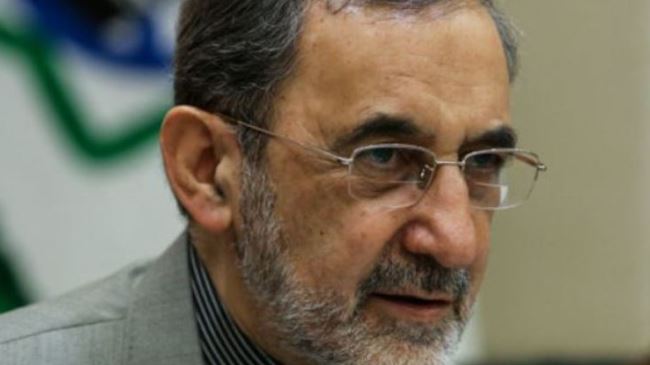
Iran to host confab on extremism: Zarif

Mohammad-Javad-Zarif

Iran plans to host an international conference on violence and extremism in the near future, Iranian Foreign Minister Mohammad Javad Zarif says.

He made the remarks in a meeting with Nickolay Mladenov, the special representative of UN Secretary General Ban Ki-moon to Iraq, in the Iranian capital Tehran on Sunday.

Zarif added that distinguished international and regional figures will attend the gathering entitled “World against Violence and Extremism,” yet he did not provide any details on the exact date and place of the conference.

He described relations between Tehran and Baghdad as strategic, stressing, “Iraq’s stability, security, development, and progress are among the priorities of the Islamic Republic of Iran and we will spare no effort in this regard.”

The UN should identify key elements that can play an instrumental role in the resolution of the crisis in Iraq and Syria, Zarif said, adding, ongoing consultation among regional countries is necessary to uproot the menace of extremism in Iraq.

“Any country that aims to help improve the situation in Iraq…should quit supporting Takfiri terrorist groups,” the top Iranian diplomat added.

The UN official, for his part, called the situation in Iraq hard and complicated, urging the participation and cooperation of all countries in the fight against terrorism.

Mladenov also appreciated Iran’s assistance for the Iraqi people and government, underscoring that the UN is prepared to play a more effective role to stem terrorism in the Arab country.

The ISIL terrorists launched an offensive in Iraq in June and took control of the country’s second largest city, Mosul, before sweeping through parts of the country’s Sunni Arab heartland.

The extremist group has threatened all communities, including Shias, Sunnis, Kurds and Christians, during its advances in the violence-torn Arab state.

Shakespeare my magic carpet to Iran

iran-shakespeare
iran-shakespeare

Pulitzer Prize-winning author Professor Stephen Greenblatt visited Iran during the First International Conference on Shakespeare Studies at the University of Tehran.
“I never thought that Shakespeare would become my magic carpet to the land of Persia, where I wished I could have seen someday,” said Harvard scholar Prof. Greenblatt when he expressed his enthusiasm for Iran and Persian cultural and historical heritage during the conference.
One of the world’s most celebrated Shakespearean scholars, Greenblatt took part in the conference and delivered a keynote speech on November 26.
He is best known for his biography of Shakespeare titled “Will in the World: How Shakespeare became Shakespeare,” which was on the New York Times Best Seller List for nine weeks.
He also won the Pulitzer Prize in 2012 for his groundbreaking book, The Swerve: How the World Became Modern.
Organized by the Faculty of Foreign Languages and Literatures, the University of Tehran, the conference was held on November 26-27, 2014.
The conference explored themes such as ‘Shakespeare and Political Discourse’, ‘Shakespeare under the Iranian Eye’, ‘Shakespeare and Adaptation’, ‘Radical Shakespeare’, ‘Shakespeare and Mysticism’ and ‘Shakespeare and Popular Culture’.
Prof. Mark Burnett from Queen’s University in Belfast, was another keynote speaker whose discussion focused on cinematic representations of Shakespeare in Iran.
He talked about an Iranian adaptation of Shakespeare’s Hamlet entitled Doubt (Tardid), a 2009 Iranian Crystal Simorgh-winning film directed by Varuzh Karim Masihi.
Iranian scholar, author and lecturer on literature, art and mysticism Hossein Elahi Ghomshei also spoke at the literary gala.
The event was organized by Dr. Ismail Salami and Dr. Maryam Soltan Beyad, professors at the University of Tehran.

Iran’s Beauties in Photos: Garden of Stones in Sirjan

Iran Stones gaudren
Iran Stones gaudren

The Garden of Stones is located in the vicinity of Balvard Village, 45 km to the southeast of Sirjan, a town in the southeastern province of Kerman. Darvish Khan Gong Esfandiyarpour, who festooned his dried and dead trees with stones back in 1961 in protest at a series of planned land reforms introduced by Mohammad Reza Pahlavi, never thought that his garden would one day find a place on the list of tourist attractions in Kerman Province. Darvish Khan passed away in 2007 at the age of 90 and was buried in the same stone garden he had created.

Among other filmmakers, Parviz Kimiavi, a famous director and screenwriter, has made two films about Darvish Khan. His first film featuring Darvish Khan and his family was produced in 1971. The second was a documentary entitled The old man and his garden of stones which came out 23 years later.

The following is a photo gallery of the Garden of Stones that Irandesert.com has posted on its website:


Victim of acid attack in Tehran says he’s much better; health chief visits him in hospital

Dr. Anvari
Dr. Anvari

There was an acid attack late Saturday on the administrator of the capital’s Ziaeian Hospital. On Sunday, Fars News Agency quoted Dr. Siamand Anvari, who had undergone eye surgery, as saying that he was better and that he was praying for those behind the attack to be led to the correct path.

Dr. Anvari’s comment came after Health Minister Seyyed Hassan Hashemi, a veteran ophthalmologist himself, paid a bedside visit to him in Tehran’s Farabi Hospital. In other news, Alireza Zali, the director of the Islamic Republic of Iran Medical Council, called on judicial officials and the police to seriously deal with those who staged the acid attack. The following is the translation of part of the agency’s report:

Doctor Anvari said Sunday, “I am much better. I underwent eye surgery last night. Doctors are satisfied with how the operation went. It could have been much worse.”

He went on to say that he believes those behind such attacks seek to disturb the peace and quiet of society. “Anytime people are happy, these microbes step in to create chaos. But they should know that our people won’t budge in the face of such trivial measures.”

At around 9 p.m. Saturday, when Dr. Anvari was on his way home, acid was thrown on him by two assailants on a motorbike.

OPEC; the known unknowns

OPEC-OIL
OPEC-OIL

A recent meeting of the Organization of the Petroleum Exporting Countries (OPEC) failed to lower its crude output. The reason is not simple to explain. Whether the decision was the result of unknown aspects of political or economic gamesmanship, refusal to cut production has had a shattering impact on jittery world markets, sending prices tumbling. The plunge is still continuing and the market remains on edge, thanks to the psychological impact of the status-quo strategy.

Shargh newspaper on November 29 ran an opinion piece by Seyyed Hamid Hosseini, the former chairman of the board at the Association of Iranian Exporters of Oil, Gas and Petrochemical Products, who is not pleased with the OPEC session, saying it achieved nothing. What comes below is a partial translation of the piece:

[…] Nothing came out of the recent OPEC meeting. That a politically charged atmosphere prevailed in the Vienna session contributed to the inconclusiveness of the gathering. The nuclear talks between Iran and P5+1 in Vienna, an unexpected trip by Saudi Foreign Minister Prince Saud Al-Faisal to the Austrian capital, his consultations there over Iran’s nuclear program and Putin’s refusal to meet him all helped sour the climate. (Russia, Iran and Venezuela were calling for a cut in oil production).

Better results could have been produced if other tactics had been adopted to soften the atmosphere. This proves that when it comes to international questions, extensive lobbying is needed, and efforts should be made to prepare the region and help regional states figure out where they stand.

If not, it would be harder for those seeking “change” to get results than for those countries which are merely trying to maintain the status quo.

Another question which arises here in Iran is the budget deficit. In spite of plummeting crude prices, the country’s budget deficit which is projected to run into $3 billion won’t be much of a problem since Iran is hopeful to earn around $11.7 billion in tax revenues. In addition, Iran can tap into its development budget which is somewhere in the neighborhood of $10.5 billion to make up for the budget deficit.

There is no denying that the government budget has no impact whatsoever on the economic condition in the country. A wealthy, interventionist government does more harm than a government which is short of cash and has no intention of meddling in the economy.

If Iran can leave behind the current tough times, next year [starting March 21, 2015] the government will have tools such as targeted subsidies and increases in foreign exchange and energy prices at its disposal to ride out the budgetary storm.

Besides, with the nuclear talks seem more likely to result in a deal, the psychological effects of sanctions will be undone and countries will begin to ask for imports of Iran’s oil. And finally, strict conditions on other fronts would ease even before the conclusion of a comprehensive nuclear deal.


A look at Iranian newspaper front pages on Nov. 30

Iranian Newspapers Headlines

Economy should not be tied to the outcome of talks: Senior businessman

asadollah asgar oladi

In an opinion piece in Arman-e Emrooz daily on Saturday, November 29, Asadollah Asgar-Oladi, a business magnate who heads the Iran-China Joint Chamber of Commerce, said the Iranian economy has learned how to skirt sanctions and its future should not be tied to the success of nuclear negotiators to strike a deal with P5+1. The following is the translation of the piece:

The Iranian economy has known the complex labyrinth of sanctions for years. Of course, one cannot deny that the past few years have seen an uptick in the intensity of sanctions. What should not be forgotten, though, is that despite all restrictions, Iran has managed to bypass the sanctions and keep its economy on track. In other words, conclusion of a deal [in nuclear talks] or failure to do so won’t have much of an impact, either positive or negative.

There are two points worth mentioning, though. Conclusion of a nuclear deal can help the country’s economy by having the banking and oil sanctions lifted. In light of the fact that the US has said in case of a deal, sanctions would be lifted gradually, clinching a deal or failure to arrive at one won’t introduce immediate change. That is why the Iranian government has not pinned much hope on the talks, rather it is trying to manage the sanctions and turn them into an opportunity.

In other words, in exerting pressure on Iran sanctions are not as powerful a tool as they used to be, because Iran has developed the know-how to bypass or manage them. Besides, many countries are no longer as eager as in the past to keep the sanctions regime in place.

Some economists are talking about the economic jolt of the sanctions which seems unlikely, whether or not a deal is struck. The only thing that is of the essence is the kind of management which is employed to handle these sanctions. Employment of a resistance-based economy can help us secure that goal. The country gets some $150 billion in revenues per year. In the worst-case scenario, that figure would remain unchanged. So the economy won’t suffer a jolt as a result of a potential failure to sign a deal.

That Iran should do all its planning based on the likely conclusion of a deal is too simplistic. Of course, if the talks lead to the termination of oil and banking sanctions, the stage will be set. But if talks fail to produce a breakthrough, it won’t present a big challenge to the economy.

Ayatollah Khamenei urges Navy to bolster defense capabilities

Ayatollah-Khamenei-naval

Leader of the Islamic Revolution Ayatollah Seyyed Ali Khamenei has emphasized the role of Iran’s Navy in protecting national security, calling on the naval forces to further boost their preparedness in the face of enemy threats.

In a Sunday meeting with a group of senior Iranian Navy officers in Tehran, the Leader said the Islamic Republic’s naval forces play a “great” and “important” role in safeguarding the country’s national security.

Iranian naval forces should increase their preparedness and further bolster their military capabilities as well as “their faith and spirit of sacrifice” to fulfill their role of defending the nation, Ayatollah Khamenei added.

Ayatollah Khamenei further pointed to Iran’s vast maritime borders and enemy threats against the country, adding that the Navy should overcome its shortcomings and develop strategies to deal with enemy threats.

The Leader also praised the sacrifices made by the country’s naval forces at different junctures, particularly during the eight-year war imposed on the Islamic Republic by the regime of former Iraqi dictator Saddam Hussein in 1980s.

In recent years, the Iranian Navy has been increasing its presence in high seas to protect naval routes and provide security for merchant vessels and tankers.

In line with international efforts to combat piracy, the Iranian Navy has been also conducting anti-piracy patrols in the Gulf of Aden since November 2008 to safeguard the vessels involved in maritime trade, especially the ships and oil tankers owned or leased by Iran.

An acid attack on a Tehran hospital administrator

Dr. Anvari
Dr. Anvari

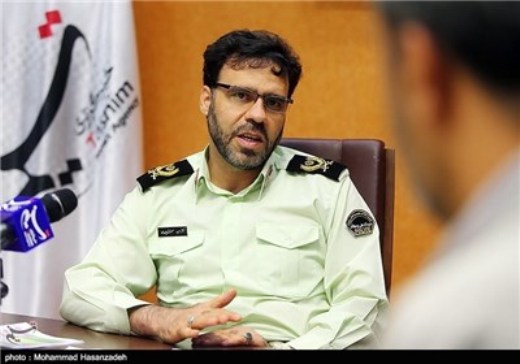
On November 30, the Islamic Republic News Agency (IRNA) posted a brief report which featured an interview with Tehran Police Chief Brigadier General Hossein Sajedinia about an acid attack on Dr. Siamand Anvari, the administrator of the capital’s Ziaeian Hospital. The following is the partial translation of the report:

The capital’s police chief said that the acid attack on Dr. Anvari has caused injury to his eyes and that the Greater Tehran Police have tasked a special team to identify and arrest those behind the assault.

“Around 9 p.m. local time on Saturday [November 29] when Dr. Anvari was on the way home, acid was thrown on him by two assailants on a motorbike,” he said. “Dr. Anvari, who picked up injuries in both eyes, was rushed to Farabi Hospital to get medical care there.”

In the meantime, the head of the Public Relations Office of Tehran Emergency Medical Services said, “Immediately after the acid attack, Dr. Anvari washed his face and eyes with water. That helped minimize the corrosive impact of acid and prevented serious damage to his face and eyes.”

A look at Iranian newspaper front pages on Nov. 30

Iranian Newspapers Headlines

The international news story that made front-page headlines in Iranian dailies on Sunday was the ruling of an Egyptian court that dismissed all charges against the toppled Egyptian ruler Hosni Mubarak, his interior minister and sons Alaa and Gamal [charged with corruption] over the killing of protesters during the 2011 uprising.

Remarks of First Vice-President Eshagh Jahangiri at the induction ceremony of the new minister of science, research and technology came under the spotlight too. The refusal of Hossein Alizadeh, an Iranian musician and composer who is known as the master of tar, to receive France’s Chevalier of Legion of Honor also drew the attention of dailies, as did the presence of Foreign Minister Mohammad Javad Zarif in a closed-door parliament session to brief MPs on what went on in Vienna nuclear talks.

Abrar-e Eghtesadi: “The peace of foreign currency market has been shattered by [falling] oil prices. The Iranian currency is down 1,600 rials against the greenback.”


Abrare eghtesadi newspaper 11-30


Afarinesh: “The negotiating team did not allow the topics of human rights and Iran’s missile program to be placed on the agenda of the negotiations,” Foreign Minister Mohammad Javad Zarif told parliament in a briefing on the Vienna nuclear talks.


Afarinesh newspaper 11 - 30


Aftab-e Yazd: “Cash subsidies granted to Iranian expatriates have been cut.”

Aftab-e Yazd: “To pay its debts to Iran, India is to export steel to Iran! The decision comes as Iran tops the list of steel producers in the region.”


Aftabe yazd newspaper 11 - 30


Arman-e Emrooz: “The defendant in the Trial of the Century has been acquitted” is the headline that the daily put on his front page about the verdict handed down in a case against ousted Egyptian President Hosni Mubarak [who was charged with murdering protestors in 2011] along with his sons and the former interior minister.

Arman-e Emrooz: “The number of women contracting AIDS has been on the rise; the disease has claimed 5,000 lives in Iran,” said the UN resident coordinator.


Armane emruz newspaper 11 - 30


Asrar: “Hossein Alizadeh, an Iranian composer, researcher and tar and setar instrumentalist and improviser, has turned down France’s Chevalier of Legion of Honor.”

Asrar: “The current trend of elections needs to be reformed and reevaluated,” said Chairman of the State Expediency Council Akbar Hashemi Rafsanjani.


Asrar newspaper 11 - 30


Ebtekar: “Mohammad Farhadi [the minister of science, research and technology who finally secured a vote of confidence from parliament on November 26] has got a lot in common with the previous picks of President Rouhani [who failed to get confirmed by the chamber],” said First Vice President Eshagh Jahangiri.


Ebtekar newspaper 11 - 30


Ettela’at: “Interaction with universities and the elite is the policy of the government; no one group has monopoly over the Ministry of Science, Research and Technology,” said First Vice President Eshagh Jahangiri.

Ettela’at: “The outlines of general election policies have been approved in the State Expediency Council.”


Ettelaat newspaper 11 - 30


Iran Daily: “Germany’s SPD calls for normalization of ties with Iran.”

Iran Daily: “Tehran to host information ministers of Islamic states.”

Iran Daily: “Iranian movie Fish &Cat awarded in Vietnam.”


Iran dayli newspaper 11 - 30


Javan: “The range within which Iranian-built drones can operate has increased to 3,000 km,” said Commander of the Islamic Revolution Guards Corps’ (IRGC) Aerospace Division Brigadier General Amir Ali Hajizadeh.


Javan newspaper 11 - 30


Jomhouri Islami: “The United Nations has harshly criticized the violation of human rights and racial discrimination in America.”

Jomhouri Islami: “Following the decision of parliament, immediate and unconditional medical services must be offered to those injured in car accidents.”

Jomhouri Islami: “An induction ceremony has been held for the new minister of science, research and technology.”

Jomhouri Islami: “Egyptians took to streets in protest against the verdict that cleared former Egyptian strongman Hosni Mubarak of all charges.”


Jomhurie eslami newspaper 11 - 30


Kaenat: “Joint venture is the condition that Iran Khodro [the leading Iranian carmaker] has set for cooperation with foreign automakers.”


Kaaenat newspaper 11 - 30


Kayhan: “Foreign Minister Mohammad Javad Zarif only touched upon general outlines in his briefing in parliament on nuclear talks,” said a number of MPs.


Kayhan newspaper 11 - 30


Mardomsalari: “We hope to clinch a nuclear deal ahead of the deadline,” said the first vice president.


Mardom salari newspaper 11 - 30


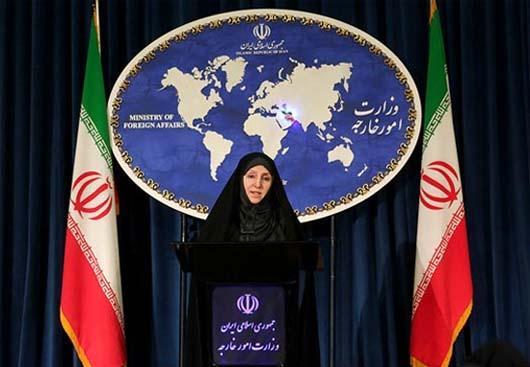
Payam-e Zaman: “The three Persian Gulf islands of Abu Musa, Greeter Tunb and Lesser Tunb are an inseparable part of Iranian territory,” said Foreign Ministry Spokeswoman Marzieh Afkham.


Payame zaman newspaper 11 - 30


Siasat-e Rooz: “If Baghdad is threatened, we will take action,” said Deputy Chief of Staff of Iran’s Armed Forces Major General Mohammad Bagheri.


Siasate ruz newspaper 11 - 30


Tafahom: “Iran’s population is on the threshold of 78 million,” reported the Statistical Center of Iran.


Tafahom newspaper 11 - 30


Wars are fought on and off the battlefield

Iran-Basij

In Iran November 21-27 marks the Week of Basij, a popular force which was formed on November 26, 1979 by order of the late Imam Khomeini. When Saddam’s Iraq waged war against Iran in 1980, Basij forces rushed to the battlefields to defend their homeland along with their comrades in arms at IRGC and the army. After the war, Basij got involved in yet another campaign to help the country pick up the pieces and rise above the conflict.

On November 29, Sharq newspaper released a supplement “Basij, Yesterday and Today” to mark the occasion featuring, among other things, the remarks of different political officials on the role of the Basij volunteer force during and after the war. What appears below is the translation – in part – of what Chairman of the Expediency Council Ayatollah Akbar Hashemi Rafsanjani, President Hassan Rouhani, Speaker of the Islamic Consultative Assembly Ali Larijani and Commander of the Basij force Brigadier General Mohammad Reza Naghdi, said in the supplement about the force:


Rafsanjani: Peacetime struggle for reconstruction


Ayatollah-Hashemi-Rafsanjani[…] That we are not engaged in any war does not mean that Basij and its activities are no longer relevant. Battlefields are only one of the fields where Basij can show itself.

We can tap into the potential of Basij to solve any problem that arises in society. The organization of young volunteers can be a big help in efforts to mobilize people to get the job done.

Gratitude makes for a great attitude. We have used the force at high-stakes junctures in the past, now we should not forget them in peacetime when the going is not tough. […]


Rouhani: Basij should go beyond partisan agenda


Iran-Rouhani

[…] The great heroic Basij belongs to the whole nation. It belongs to no specific party. No one can cast a greedy eye on Basij. The volunteer force belongs to every single Iranians and all those who approve of the [Islamic] establishment, revolution, the Constitution and Velayat-e Faqih (the Governance of the Jurist). Iranians of every age are members of Basij. It belongs to all Iranians. […]

Basij is meant to safeguard national and Islamic interests. That means one can say that this country is home to some 75 million Basijis. […]


Larijani: Basij should pursue entrepreneurship to stimulate production


Ali Larijani

[…] The policies of the Resistance-based Economy championed by the Supreme Leader should be carried out. These policies primarily focus on ways of helping production boom and giving the public a bigger role to play in the economy.

The public economy has not been able to mobilize the country’s national potential; nor have the state-run companies been able to pull their own weight. However, Basij can do big jobs in this regard. […]

Entrepreneurship in the agricultural and industrial sectors in rural areas can empower the nation. If Basij is seeking to address the country’s serious challenge, it needs to take care of entrepreneurial efforts which will encourage and maximize production. […]


Naghdi: Basij is ready to cooperate with the government


General Reza Naqdi

[…] In religious democracy, people are not separated from the establishment and government, and they form an integrated whole. The government and its institutions have come from the fabric of society to serve the people. And all people should offer a helping hand when it comes to serving the public. […]

To cut through the red tape people involved in the agriculture and production sectors are tied up in, Basij can enter the scene, muster people and launch redoubled efforts to make the problem a thing of the past.

This mindset is what is usually lacking in governments, and it has nothing to do with where they stand, whether they follow right- or left-leaning doctrines. […]