Saturday, April 4, 2026
Home Blog Page 5

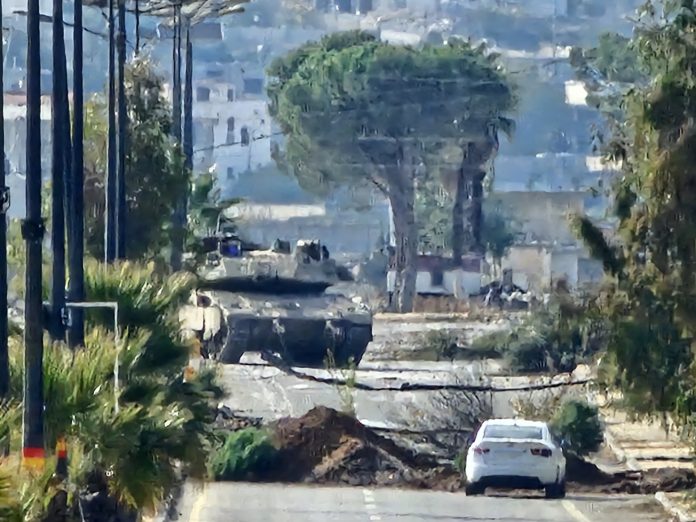
Israeli military vehicles enter Quneitra countryside village in Syria

This latest Israeli incursion on Tuesday, a further violation of Syrian sovereignty, comes as a Syrian delegation is holding a new round of negotiations with Israeli counterparts in the French capital Paris, under the coordination and mediation of the United States, according to Syrian state news agency SANA.

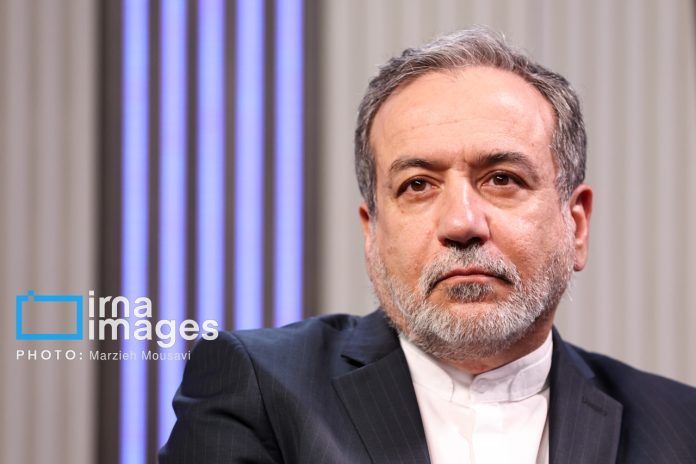
Iranian daily criticizes FM Araghchi over ‘snapback’ sanctions, calls diplomacy ineffective

Abbas Araghchi

In an editorial published on Tuesday, the newspaper warned that Iran is facing a “critical and unprecedented” situation marked by economic imbalances, public discontent and external threats.

It argued that unresolved livelihood problems have heightened social tensions and created conditions that could be exploited by hostile actors at home and abroad.

Turning to foreign policy, Ettela’at questioned the performance of Iran’s diplomacy, particularly in negotiations held in Oman and Italy, saying officials presented no clear initiatives and failed to anticipate hostile actions by adversaries.

The paper was especially critical of Iran’s handling of the UN “snapback mechanism” and sanctions, asking what had been achieved “beyond slogans and repeated references to international law.”

The editorial accused the foreign minister of portraying diplomatic stagnation as a “benefit of sanctions” and urged accountability instead of deflection.

It also described Iran’s representation at the UN as passive, saying Iranian diplomats failed to adequately respond to insulting remarks by US and Israeli representatives.

Domestically, the paper emphasized dialogue as the only rational path forward, warning that ignoring legitimate public grievances risks deepening instability.

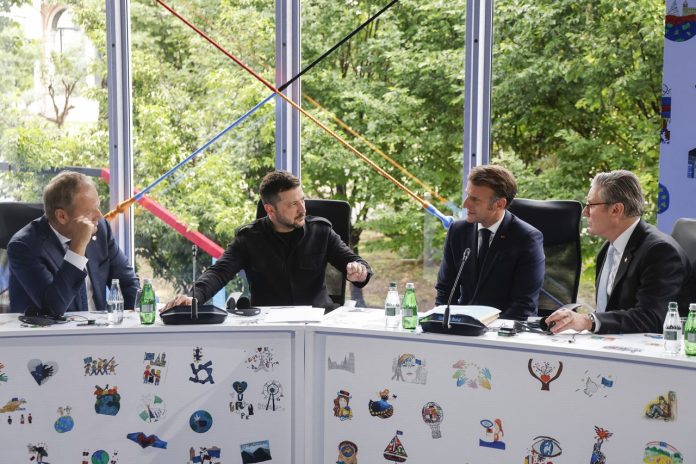
Ukraine’s European, US allies meet on security guarantees: AFP

Zelensky European Leaders

The summit of the group of Ukraine supporters dubbed the “Coalition of the Willing” is the latest of several meetings planned for the new year as diplomatic efforts to end Europe’s deadliest conflict since World War II have gained pace in recent weeks.

Representatives of 35 countries, including 27 heads of state, will gather in Paris, with the French presidency saying the meeting aims to show the “alignment” between Washington, Kyiv and European allies on security guarantees for Ukraine.

US President Donald Trump’s special envoy Steve Witkoff and son-in-law Jared Kushner will attend the meeting of the coalition, launched in the spring by France and the United Kingdom.

An adviser to French President Emmanuel Macron said the new meeting is the culmination of efforts launched after Donald Trump’s arrival at the White House to prevent “the United States from abandoning Ukraine”.

“We have succeeded in this exercise of realignment between Ukraine, Europe and America,” the adviser told journalists on Monday.

According to diplomatic sources, Ukrainian President Volodymyr Zelensky is also expected to attend, along with British Prime Minister Keir Starmer, German Chancellor Friedrich Merz, Italy’s Giorgia Meloni and Canada’s Mark Carney.

The leaders are set to commit in particular to their shared vision of what a ceasefire would look like between Ukraine and Russia, and their response in case of violations.

They will also discuss the deployment of a multinational force to “reassure Ukraine” as part of a possible political agreement, the French presidency said, with decisions still being “finalised” on Monday.

To lay the groundwork, security advisers from 15 countries, including Britain, France and Germany as well as representatives from NATO and the European Union, gathered in Kyiv over the weekend, with Witkoff joining virtually.

Kyiv announced in recent days a deal was “90 percent” ready, though both Moscow and Kyiv remain at odds over the key issue of territory in any post-war settlement.

Russia, which occupies around 20 percent of Ukraine, is pushing for full control of the country’s eastern Donbas region as part of a deal.

But Kyiv has warned ceding ground will embolden Moscow and said it will not sign a peace deal that fails to deter Russia from invading again.

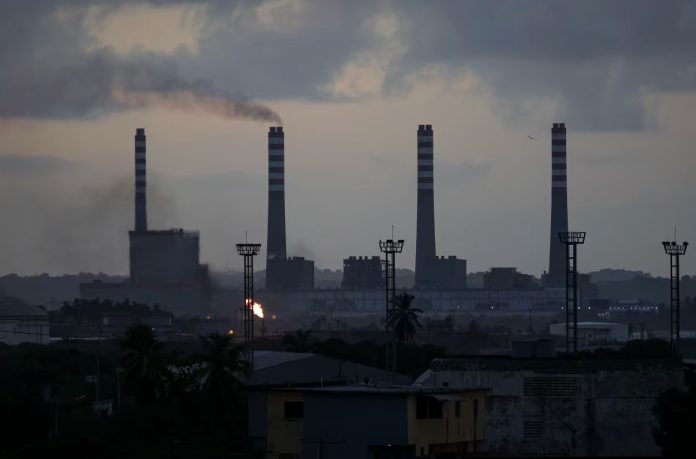
Trump administration sets meetings with oil companies over Venezuela: Reuters

The meetings are crucial to the administration’s hopes of getting top U.S. oil companies back into the South American nation after its government, nearly two decades ago, took control of U.S.-led energy operations there.

The three biggest U.S. oil companies – Exxon Mobil (XOM.N), ConocoPhillips (COP.N) and Chevron (CVX.N) – have not yet had any conversations with the administration about Maduro’s ouster, according to four oil industry executives familiar with the matter, contradicting Trump’s statements over the weekend that he had already held meetings with “all” the U.S. oil companies, both before and since Maduro was seized.

“Nobody in those three companies has had conversations with the White House about operating in Venezuela, pre-removal or post-removal to this point,” one of the sources said on Monday.

The upcoming meetings will be crucial to the administration’s hopes to boost crude oil production and exports from Venezuela, a former OPEC nation which sits atop the world’s largest reserves and whose barrels can be refined by specially designed U.S. refineries. Achieving that goal will require years of work and billions of dollars of investment, analysts say.

It is unclear what executives will be attending the upcoming meetings, and whether oil companies will be attending individually or collectively.

The White House did not comment on the meetings but stated it believed the U.S. oil industry was ready to move into Venezuela.

“All of our oil companies are ready and willing to make big investments in Venezuela that will rebuild their oil infrastructure, which was destroyed by the illegitimate Maduro regime,” added White House spokesperson Taylor Rogers.

Trump told NBC News the U.S. may subsidize oil companies to enable them to rebuild Venezuela’s energy infrastructure.

Asked if the administration had briefed any oil companies ahead of the military operation, Trump said, “No. But we’ve been talking to the concept of, ‘what if we did it?'”

“The oil companies were absolutely aware that we were thinking about doing something,” Trump told NBC News, adding, “But we didn’t tell them we were going to do it.”

He told NBC News it was “too soon” to say whether he had personally spoken to top executives at the three companies.

“I speak to everybody,” he added.

CBS News, citing an unnamed source, said executives from the three were expected to meet on Thursday with Energy Secretary Chris Wright.

One oil industry executive told Reuters the companies would be reluctant to talk about potential Venezuela operations in group settings with the White House, citing antitrust concerns that limit collective discussions among competitors about investment plans, timing and production levels.

Veteran Iranian actor Saeed Pirdoust dies at 85

Pirdoust passed away at his home on Tuesday after a long battle with cancer. He had been hospitalized several times in recent months due to complications related to his illness. His death coincided with his 85th birthday.

Pirdoust was widely recognized as a prominent supporting actor in Iranian cinema, with a career that spanned several decades. He appeared in numerous acclaimed films, including The Deer, Snake’s Tooth, Red, Dirty Hands, Domestic Killer, and There, at the Same Time.

In addition to his work in cinema, Pirdoust was also a familiar figure on Iranian television. His notable television appearances included popular series such as Detective Alavi, and Tiptoe.

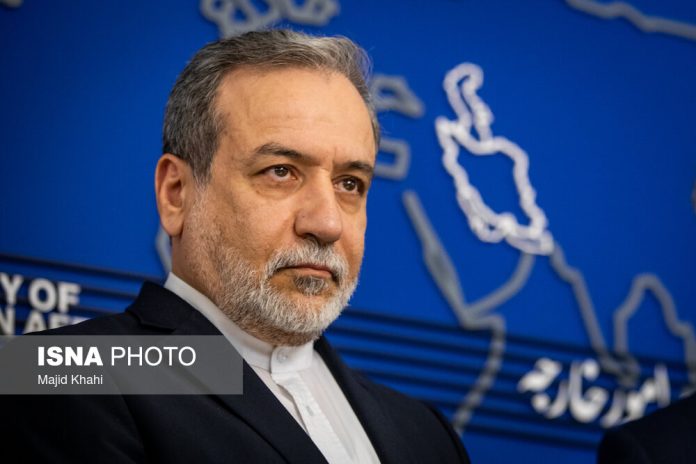
US ‘peace through strength’ means ‘law of jungle’: Iran FM

Abbas Araghchi

The Iranian minister said, “When Trump speaks of peace through the language of force, he is in fact speaking of the law of the jungle, suggesting that whoever has more power can do whatever he wants. This comes at a time when the international community had long sought to achieve peace through diplomacy and dialogue.”

He stated that almost all countries and many thinkers in international relations consider Washington’s rhetoric of peace through force a problem.

The top Iranian diplomat further noted Iran’s Embassy in Venezuela is still operating.

The Islamic Republic, he added, is regularly monitoring the situation of Iranian nationals in Venezuela, who are in good conditions.

“No problems have been reported, and preparations have been made for any situation,” Araghchi stressed.

Trump ran in 2024 as what he called a “peace” candidate who would not engage in long-term wars. But since assuming office last year, he has engaged in acts of aggression against several countries, including Venezuela.

The military attack on Venezuela followed months of escalating US military, economic, and political pressure on President Nicolas Maduro, including the seizure of oil tankers going in and out of the South American country and lethal strikes on suspected drug boats in the eastern Pacific and Caribbean.

The US military bombed Venezuela and kidnapped Maduro and his wife, Cilia Flores, from their residence in the capital of Caracas early on January 3.

Trump claimed to be acting to prevent illegal narcotics from flowing into the US via Venezuela, but many analysts and politicians believe the White House dweller is trying to steal Venezuelan oil.

Since the aggression against Venezuela, Trump and members of his administration have issued warnings to other countries, including Colombia, Cuba, Mexico, Iran, and Greenland, a self-governing territory of Denmark.

US critics and allies condemn Venezuela president’s abduction at UN Security Council

The 15-member bloc met for an emergency meeting on Monday in New York City, where the Venezuelan pair were also due to face drug trafficking charges in a US federal court.

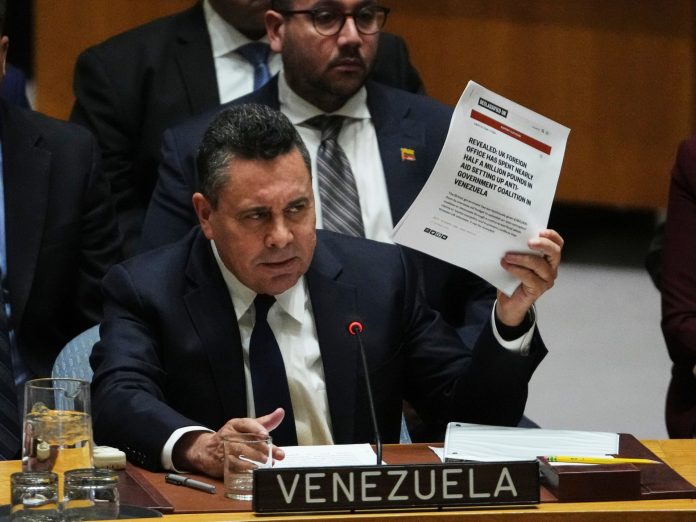
Venezuela’s ambassador to the UN, Samuel Moncada, condemned the US operation as “an illegitimate armed attack lacking any legal justification”, in remarks echoed by Cuba, Colombia and permanent UNSC members Russia and China.

“[The US] imposes the application of its laws outside its own territory and far from its coasts, where it has no jurisdiction, using assaults and the appropriation of assets,” Cuba’s ambassador, Ernesto Soberon Guzman, said, adding that such measures negatively affected Cuba.

Russia’s ambassador, Vassily Nebenzia, said the US cannot “proclaim itself as some kind of a supreme judge, which alone bears the right to invade any country, to label culprits, to hand down and to enforce punishments irrespective of notions of international law, sovereignty and non-intervention”.

Notable critics at the emergency session included traditional US allies, Mexico and Denmark, both of whom Trump has separately threatened with military action over the past year.

Mexico’s ambassador, Hector Vasconcelos, said that the council had an “obligation to act decisively and without double standards” towards the US, and it was for “sovereign peoples to decide their destinies,” according to a UN readout.

His remarks come just days after Trump told reporters that “something will have to be done about Mexico” and its drug cartels, following Maduro’s abduction.

Denmark, a longstanding US security ally, said that “no state should seek to influence political outcomes in Venezuela through the use of threat of force or through other means inconsistent with international law.”

“The inviolability of borders is not up for negotiation,” Denmark’s ambassador, Christina Markus Lassen, told the council in an oblique reference to Trump’s threat that the US would annex Greenland, a self-governed Danish territory.

France, another permanent member of the UNSC, also criticised the US, marking a shift in tone from French President Emmanuel Macron’s initial remarks that Venezuelans “can only rejoice” following Maduro’s abduction.

“The military operation that has led to the capture of Maduro runs counter to the principle of peaceful dispute resolution and runs counter to the principle of non-use of force,” stated the French deputy ambassador, Jay Dharmadhikari.

Representatives from Latvia and the United Kingdom, another permanent UNSC member, focused on the conditions in Venezuela created by Maduro’s government.

Latvia’s ambassador, Sanita Pavļuta-Deslandes, said that Maduro’s conditions in Venezuela posed “a grave threat to the security of the region and the world”, citing mass repression, corruption, organised crime and drug trafficking.

The UK ambassador, James Kariuki, said that “Maduro’s claim to power was fraudulent”.

The US ambassador, Mike Waltz, characterised the abduction of Maduro and his wife as a “surgical law enforcement operation facilitated by the US military against two indicted fugitives of American justice”.

The White House defended its wave of air strikes on Venezuela, and in the waters near it, and Maduro’s abduction as necessary to protect US national security, amid unproven claims that Maduro backed “narcoterrorist” drug cartels.

Maduro pleads not guilty to drug charges, stressing he was ‘kidnapped’ by US

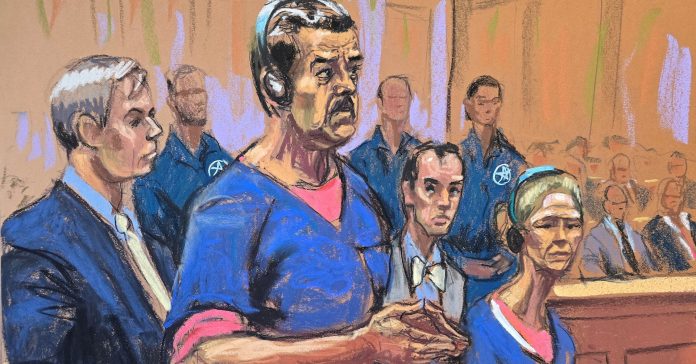
“I am innocent. I am not guilty. I am a decent man. I am still president of my country,” Maduro, 63, said through an interpreter, before being cut off by U.S. District Judge Alvin Hellerstein in Manhattan federal court.

Maduro’s wife Cilia Flores also pleaded not guilty.

The next court date was set for March 17.

Dozens of protesters, both pro- and anti-Maduro, gathered outside the courthouse before the half-hour hearing.

Inside, as he stood shackled at the ankles and wearing orange and beige prison garb, Maduro declared he had been “kidnapped” and remained president of Venezuela. He listened to an interpreter through headphones as Hellerstein summarized the charges.

Maduro is accused of overseeing a cocaine-trafficking network with international drug cartels and faces four criminal counts: narco-terrorism, cocaine importation conspiracy and possession of machine guns and destructive devices.

Maduro has long denied the allegations, saying they were a mask for imperialist designs on Venezuela’s rich oil reserves.

Maduro’s defense lawyer Barry Pollack stated that he anticipated voluminous and complex litigation over what he called his client’s “military abduction.”

Hours later in Caracas, Maduro’s vice president, Delcy Rodriguez, was sworn in as Venezuela’s interim president with words of support for Maduro but no indication she would fight the U.S. move.
A recent U.S. intelligence assessment determined Rodriguez would be best positioned to lead a temporary government in Maduro’s absence, finding that opposition figures such as Nobel Peace Prize winner Maria Corina Machado or onetime presidential candidate Edmundo Gonzalez would struggle to gain legitimacy, the Wall Street Journal reported, citing people familiar with the classified report.


Asked by Reuters about the report, White House spokeswoman Karoline Leavitt said, “The President and his national security team are making realistic decisions to finally ensure Venezuela aligns with the interests of the United States.”

While many anti-Maduro activists had assumed this would be their moment, Trump appeared to have sidelined the Venezuelan opposition for now. Instead, he has suggested Rodriguez was willing to work with Washington.

Leavitt told Fox News that Secretary of State Marco Rubio was in “constant correspondence” with the remaining Maduro government, and that Washington maintained “leverage” over Caracas.

In Caracas, senior officials from Maduro’s 13-year-old government remained in charge of the South American oil producer of 30 million people, alternating between angry defiance and possible cooperation with the Trump administration.

The intelligence assessment concluded that Rodriguez was among the few Venezuelan leaders capable of maintaining order, along with the interior and defense ministers, in a government dominated by ideological opponents of the U.S., the Wall Street Journal added.

Trump told NBC News the U.S. was not at war with Venezuela but rather, “we’re at war with the people that sell drugs.”
The U.S. would need to help address the South American country’s problems before any new elections, Trump said, calling a 30-day timeline for a vote unrealistic.
“We have to fix the country first. You can’t have an election. There’s no way the people could even vote,” Trump added.

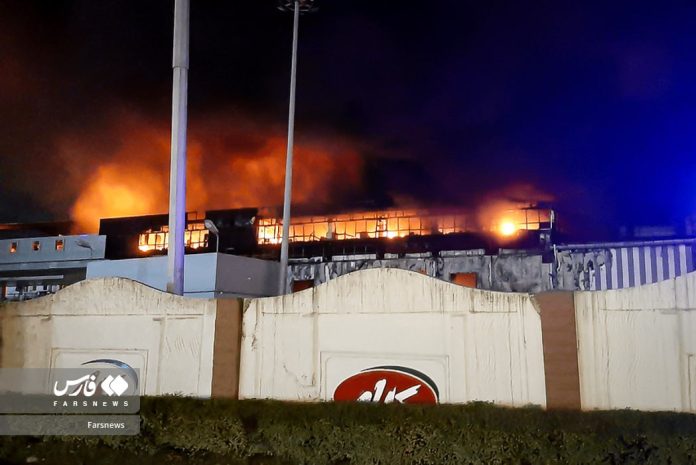
Fire breaks out at Kaleh Dairy Factory in Amol, northern Iran

The huge blaze disrupted operations at the factory, one of Mazandaran Province’s largest industrial complexes.

Reports indicate that the fire is extensive and has caused significant damage. According to local sources, the fire started at around 4:00 p.m. in one of the factory’s sections, where repair and welding work was underway, and soon spread to one of the factory halls.

Emergency and firefighting teams were dispatched to the scene from the early minutes of the incident, with the number of firefighting and rescue vehicles continuing to increase.

There are no immediate reports of casualties yet. Officials in Amol say all firefighting capacities of the city and nearby areas, along with Red Crescent teams, have been deployed to contain the blaze.

Damascus denies Syria’s president targeted in any security incident

Ahmad Al Sharaa

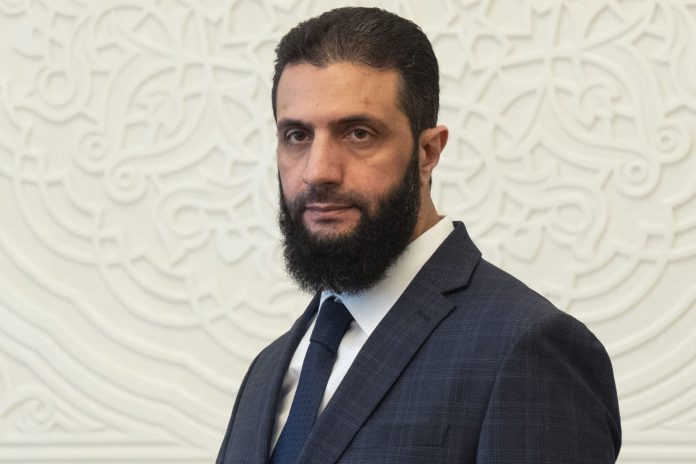
For days, social media users have been circulating reports of gunfire on December 30 at the palace, which overlooks the capital — and Sharaa has not been seen in public since then.

But interior ministry spokesman Noureddine al-Baba said “reports claiming a security incident targeted” Sharaa or other senior figures were “totally baseless”.

“We categorically affirm that these claims are entirely false,” he added.

A diplomat from a country that supports Syria’s new authorities told AFP on condition of anonymity that “a shooting took place at the presidential palace on the evening of December 30”.

Separately, Rami Abdel Rahman, head of the Syrian Observatory for Human Rights monitor, told AFP a shooting inside the palace that evening lasted “around 12 minutes” and left several wounded.

Abdel Rahman, whose Britain-based Observatory relies on a network of sources inside Syria, added the incident was caused by “an internal dispute” between individuals at the palace and did not target Sharaa.

The Syrian leader, who appears sporadically, has not been seen in public since he unveiled the country’s new currency last Monday.