Wednesday, December 31, 2025
Home Blog Page 4998

We do not know the rules of the game: Former parliament speaker

Ali Akbar Nategh Nuri

On December 16, Iran, a daily, filed the remarks of Ali Akbar Nategh Nouri, a member of the Expediency Council and a former parliament speaker, on the role of political parties in promoting democracy in the country. What comes below is the translation of what he had to say at the 3rd National Seminar on the role of Research in the Legislative Process on Monday:

Highlighting the need for democratic tools in the country, Nategh Nouri said, “Unfortunately, we do not know the rules of the game and the country cannot be run in the absence of political parties.”

Hailing parties as the tools of democracy, he added, “A democratic country should have parties and without them, administration of affairs in the country becomes difficult.”

Recalling verses from the holy Koran he stated, “If ordinary people want to vote for a real expert to represent them in the Assembly of Experts, presidential office or parliament, they do not know [well] about the individuals [candidates] who can best represent their province, city or region, so they cannot opt for the right candidate.”

“In the absence of experts, we run the risk of getting entangled in conflicts between ethnic and tribal groups or making impulsive decisions. Unfortunately, studies suggest people act on a whim in national affairs. A country cannot be run on a whim, with different factions coming and going.”

Expressing regret about the absence of democratic tools and the lack of knowledge about the rules of the game, he said, “When Party A takes office [and replaces Party B], it is entitled to replace top-level ministers, advisors and deputies, but employees who hold lower positions, working under advisors and deputies should not be affected. But what we see here is that as soon as Party A rises to power, the scale of employee shakeup stretches into the lowest positions. Accordingly when Party B succeeds Party A, it follows suit, citing the fact that its predecessor has done the same thing.”

“Thirty five years have passed since the revolution. We are no longer inexperienced, and we cannot claim that we are going through trial and error. After 35 years, such [wrong] measures cannot be sold to anyone,” he added.

“We do not know the rules of the game, nor do we have the tools, therefore the need for parties should be institutionalized in the country so that parties can introduce candidates and experts so that people can vote for them. This is one of the necessities of the country,” Nategh Nouri said.

“Irregularity has caused substantial damage to our country and we have incurred a lot of losses. From now on, we need to pay closer attention to such matters to suffer fewer losses,” he stated.

“The Islamic Republic of Iran considers parliament one of the pillars of the establishment and under the Constitution, the Islamic Consultative Assembly is one of the most powerful bodies not only among Iran’s institutions but also among world parliaments,” he said.

“As the Constitution was being drafted, one of the individuals fundamentally opposed to inclusion of a term which would allow the dissolution of parliament was the Supreme Leader Ayatollah Khamenei who was of the opinion that parliament cannot be dissolved and its bills cannot be signed into law as long as they are not approved by the Guardian Council.

“However when those acts get the go-ahead no official in the country can veto them. Of course, under the very Constitution, aside from lawmaking, parliament can oversee the performance of the government as well as other branches,” he concluded.

Organization of Arba’een ceremonies shows Iraqis do not need foreign security assistance

Iran-shamkhani
Iran-shamkhani

Secretary of the Supreme National Security Council Ali Shamkhani has sent a message to Iraqi Prime Minister Haider al-Abadi to congratulate him on the victory Iraqi armed forces and volunteers pulled out in ensuring the security of the largest human congregation across the world. The following is a translation of part of the message Javan daily released on December 16:

In the message, Shamkhani said although Takfiri terrorists were bent on disrupting the event, Iraqi security and intelligence forces did an excellent job in ensuring the security of the congregation. “That Iraqi government tapped into the enormous potential of volunteers to provide security for the ceremonies displayed the matchless power of popular determination in countering terrorists.”

The message further said, “The glorious organization of the event which, thanks to the presence of different groups such as Shiites, Sunnis, and Kurds turned into manifestation of Iraqi national unity, proved that the Iraqis are capable of maintaining their security without reliance on foreigners.

“No doubt, determined Iraqis can build on the support of religious scholars to beat the remainder of terrorists and restore peace, welfare and security to their nation.”

In conclusion, Shamkhani thanked the Iraqis for hosting more than 1.5 million Iranians and thousands of others from 60 different countries during the ceremonies.

[…]

Iran thanks Iraq for “glorious” organization of Arba’een

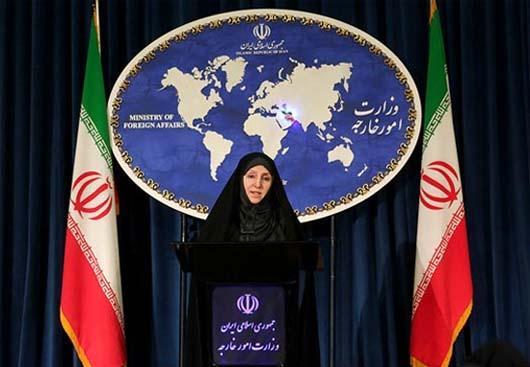
Iranian Foreign Ministry Spokeswoman Marziyeh Afkham

Iranian Foreign Ministry Spokeswoman Marzieh Afkham has thanked the Iraqi people, government and senior Shiite clerics for setting the stage for glorious organization of ceremonies to mark Arba’een [a Shiite observance marking 40 days after Ashura, which is the day when Imam Hussein, the grandson of Prophet Muhammad fell a martyr in an uprising centuries ago].

According to Mehr News Agency, Afkham hailed this year’s ceremony as manifestation of spirituality and unity inspired by the epic uprising the grandson of the Prophet led against tyrannical rulers of his time.

Australia supported the Iranian-fugitive-turned-Sydney-hostage taker; Western media hype the Islamophobia scenario

Manteghi

An Iranian national wanted at home, through Interpol, for fraud was behind the bloody hostage-taking that unfolded in Sydney, Australia on Monday. The hostage-taker, who was granted asylum by the Australian officials who turned a deaf ear to appeals by their Iranian counterparts to extradite him to face trial at home, was out on bail despite being implicated in 40-plus sexual assault cases and being an accessory to the murder of his ex-wife. The following is the translation of two reports the Islamic Republic News Agency filed, one on the Western media hypocrisy and the other on the comments of the Iranian police chief:

What is reported in Western media is meant to hide the support the Australian government has lent to this fugitive wanted by Interpol. That Western media call the hostage taker an Iranian national is also designed to associate the tragedy with the Iranians and Islam. It comes despite the fact that the hostage taker had previously renounced Shiism on his website and despite the Iranian government’s appeal almost two decades ago for his extradition.

Iran Police chief: Ahmadi Moghadam

On Tuesday Iranian Police Chief Esmail Ahmadi Moghaddam said the Sydney hostage taker [Mohammad Hassan] Manteghi was a fraudster who ran a travel agency in 2006 and fled to Australia through Malaysia.

He further said the Australian police failed to return him to Iran, citing the absence of an extradition deal between the Islamic Republic of Iran and Canberra. “Instead he was granted asylum on the grounds that he was a [dissident] clergyman facing persecution in Iran.”

The top police officer went on to signal the readiness of the Iranian law enforcement force to help the Australian police with the investigation.

[…]


Sheikh Haron Monis: I am no longer Rafezi!

sheikh-haron


Wildlife of Golestan National Park in Photos

Iran-Wildlife-Golestan National Park6

Golestan National Park, in northern Iran, is the oldest registered national park in the country and a unique haven for wildlife. This park is home to more than 1,350 species of flora and around 300 fauna species.


Some 2 million Iranian manuscripts are in poor conditions abroad

manuscripts

Ettela’at newspaper on December 14 quoted Seyyed Reza Salehi Amiri, the director of the National Library and Archives of Iran (NLAI), as saying that some two million Iranian manuscripts are kept in less-than-perfect conditions in foreign museums. The following is the translation of what the director of the national library had to say to Mehr News Agency:

SAlehi Amiri
Seyyed Reza Salehi Amiri

Currently about one million Persian and Arabic manuscripts which belong to Iran are kept in India and Pakistan, and around 500,000 copies are in Central Asian countries.

The conditions in which these copies are kept, both on the Indian Subcontinent and in Central Asia, are regrettable. We need to provide money to get back these handwritten texts.

These copies are part of Iran’s cultural heritage. We have only two options: either buy the original copies and transfer them to Iran or bring in digitized versions which are the imitations of the original copies. To do both, we need foreign currencies.

Recently I visited Paris to attend the International Federation of Library Associations and Institutions (IFLA) World Library and Information Congress. While there I learnt that the National Library of France alone is home to 2,600 rare, priceless manuscripts. That number is even higher in Spain. Therefore, we should try to bring these valuable collections back to our country.

The information we have received suggests that the Iranian manuscripts are in poor condition in foreign countries and this is alarming. We have entered talks with the government for retrieving the collections of Iranian manuscripts; they have made some pledges. I hope they could be materialized.

Iran’s missile capabilities not negotiable at all: Velayati

Ali-Akbar-Velayati

A senior advisor to Leader of the Islamic Revolution Ayatollah Seyyed Ali Khamenei has ruled out any negotiations whatsoever over the Islamic Republic’s defensive missile capabilities.

“Iran’s missile issue is not up for any type of negotiation,” Ali Akbar Velayati told reporters on Monday.

The senior Iranian official added that the issue of the country’s missile program would not be part of the upcoming nuclear talks with the P5+1 group of countries in the Swiss city of Geneva.

Some Western officials, particularly in the US, have called for Iran’s missile program to be included in the country’s nuclear talks with the P5+1 – Russia, China, France, Britain, the US and Germany.

“Iran will do whatever is necessary for its defensive purposes,” Velayati, who also serves as Head of Iran’s Strategic Research Center, pointed out.

He emphasized that Iran’s missile program is solely designed for peaceful defensive objectives.

“Deterrence is the most important feature of [Iran’s] missiles,” Velayati said, adding, “In order to strengthen its defense [capability], Iran does not need to obtain permission from anybody.”

His remarks came as senior officials from Iran and the P5+1 are scheduled to resume a new round of talks in Geneva on December 17.

Iran, Russia must be engaged to defeat ISIL: EU

Federica-Mogherini

The European Union’s foreign policy chief says the 28-Nation bloc must engage Iran and Russia to defeat the ISIL Takfiri terrorists and end the conflict in Syria, Press TV reports.

Federica Mogherini made the comments on Monday, following a meeting by EU foreign ministers.

“Iran is not only the country with which we have nuclear talks, it is also a regional important player and this practically means that we will have to engage with Iran also on its neighborhood,” said Mogherini during a news conference.

Over the recent months, EU member states have been debating the union’s approach to Syria.

“The European Union is ready to engage with all regional and international actors with influence over the Syrian parties,” Mogherini added.

She added that the EU backs efforts by the United Nations to arrange a ceasefire between government troops and foreign-backed militants in Syria’s northwestern city of Aleppo.

The aim of the ceasefire is to help ease the desperate plight of people in Syria’s second-largest city.

Syria has been grappling with a deadly conflict since March 2011. Western powers and their regional allies – especially Qatar, Saudi Arabia, and Turkey – are the main supporters of the ISIL militants operating inside Syria.

More than 200,000 people have so far died in the conflict, according to the UN.

Iranian doctors successfully conduct thyroplasty surgery

surgery

Iranian surgeons successfully conducted thyroplasty type III surgery to change a patient’s female voice to a male one at a hospital in Mashhad City, northeastern Iran.

Dr. Ehsan Khadivi, an Otolaryngology Associate Professor at Mashhad medical Sciences University said the operation was conducted on a 21-year old patient from Mashhad.

The surgery is conducted on people who have signs of maturity but their voice is still a female type.

He said speech-language pathology is prescribed for these kinds of patients before the surgery, but operation is offered in case it fails.

According to Khadivi, the surgery can be conducted for people who have gone through sex reassignment surgery. Female voice frequency stands at 180-200 for women and reaches 100-120 for men.

The patient has gone through the surgery one year after speech-language pathology, he said, adding the operation took half an hour and under Local anesthesia during which frequency of the patient’s voice was investigated.

Iran voices satisfaction with US talks

Abbas-Araqchi

A top Iranian nuclear negotiator has expressed satisfaction with the general atmosphere of the ongoing negotiations between representatives of the Islamic Republic and the United States over Iran’s nuclear program.

Seyyed Abbas Araghchi, who is also Iran’s deputy foreign minister for legal and international affairs, made the remarks after the two sides ended their first day of the new round of talks in Geneva on Monday.

The Iranian negotiating team is headed by Araghchi and Deputy Foreign Minister for European and American Affairs Majid Takht-e Ravanchi, while Acting Deputy Secretary of State Wendy Sherman leads the US team.

The Iranian official said that the two sides had detailed discussions, including on the US-led sanctions against Iran, during the expert-level meeting.

Iran will hold another round of talks with the US negotiating team on Tuesday morning.

Araghchi said Iran would also hold one-on-one talks with the other members of P5+1 later on Tuesday.

Iran and P5+1 – Russia, China, France, Britain, the US and Germany – will begin their new rounds of nuclear talks on Wednesday. The two sides failed to reach a final agreement by a previously-set November 24 deadline. Given the progress that had been made, however, Iran and P5+1 agreed to extend their discussions for seven more months until July 1, 2015. They also agreed for the interim deal they had signed in Geneva in November 2013 to remain in place during the negotiations.