Friday, December 19, 2025
Home Blog Page 4996

Leader dubs partisan view of education system as ‘lethal poison’

Leader of the Islamic Republic

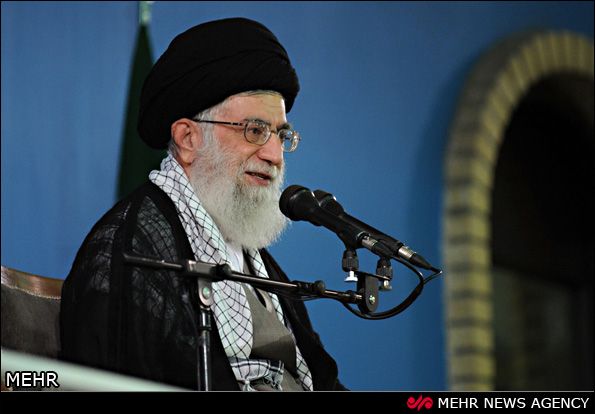
Ayatollah Seyyed Ali Khamenei addressed a meeting of teachers in the occasion of Teachers’ Day; a day designated by the establishment for veneration of teachers and coincides with the day of martyrdom of Morteza Motahari, widely supposed to be the one of the spiritual fathers of the Revolutionary mentality in Iran.

The Leader said that the more the veneration and tribute paid to teachers, the more their prestige in the society. He addressed specifically the officials of educational system that they should recruit teachers with commitment to the Revolutionary ideas and religious faith.

The Leader believed that the meeting aimed at a singular objective of veneration of teachers, and that “honoring of teachers should be public across the society.”

“Education deals with millions of students and the young generation directly and indirectly, and the priority should be with the recruitment of forces loyal to the Revolutionary ideals of the system and commitment to religious tenets of the Islamic system,” he emphasized.

The Leader also called the authorities to “take serious the Fundamental Change Document,” which he maintained, once was undreamed-of, “beyond the official statements.”

“Recruit managers whose major concerns are education and rearing; fostering partisan views inside the educational system is a lethal poison to the system,” he demanded the authorities.

The Leader also called for “inculcating the thinking” in society, and that “the child should be received due training on how to think rationally,” believing that “superficial learning can cripple society.”
Persian carpet registered as worldˈs intellectual property

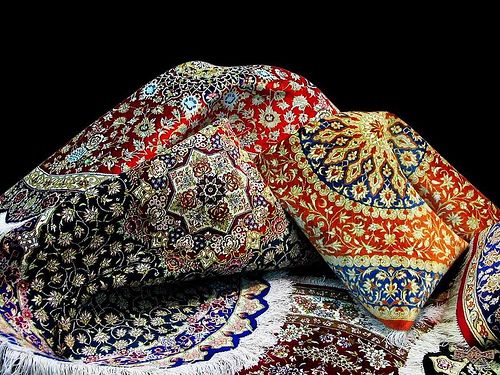
Iran hand-woven carpets

Referrig to the formation of a department to pursue registration of Iranian carpets as the worldˈs intellectual property, Mohammad Bagher Agha Alikhani said that Persian carpet is considered as a national asset and other countries producing carpets immitate Persian carpet designs.

Hand-woven carpet is one of the leading merchandises in the world and Iran is the pioneer in this market, he said, adding that sanctions do not affect Iranˈs carpet exports due to its unique feature on the global markets.

Persian carpets are exported to 70 countries in the world, 45 percent of which were shipped to Asian countries and 43 percent to European states worth dlrs 500 million in the past year.


Islamic Republic News Agency

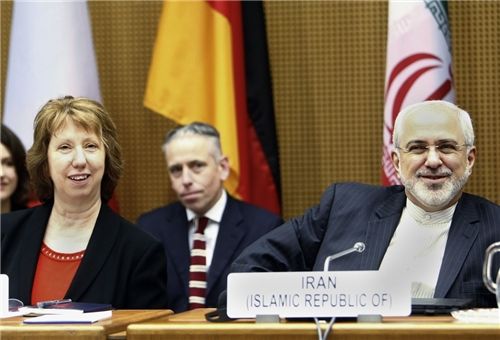
Expert talks underway with Group 5+1

Iran and 5+1
Iran and 5+1


Head of Iranˈs negotiating team for the expert meeting, Hamid Baeedinejad told IRNA prior to the beginning of expert talks that the two sides will continue their technical and expert issues to draft the Comprehensive Agreement for the next round of political meeting to be hosted by Vienna next week.

The expert meeting will run through Wednesday, he said.

Baeedinejad further noted that since the experts of Iran and Group 5+1 are on a visit to New York to take part in the third meeting of preliminary committee for conference on revisiting NPT, they preferred to hold the expert meeting here this time.

Third meeting of preliminary committee for conference on revising NPT opened on April 28 and will continue until May 9.

Foreign Minister Mohammad Javad Zarif told reporters Monday that political talks will be organized next week to draft the Comprehensive Agreement.

He noted that early conclusion of the Comprehensive Agreement depends on the good faith of the western governments.

Four rounds of political talks have been planned, which will begin in Vienna as of next week, he said.

In response to a question whether the Comprehensive Agreement can be concluded according to the six-month timetable set in the interim agreement on November 24, Zarif said that one year had been envisaged for the settlement of the nuclear dispute.


Islamic Republic News Agency

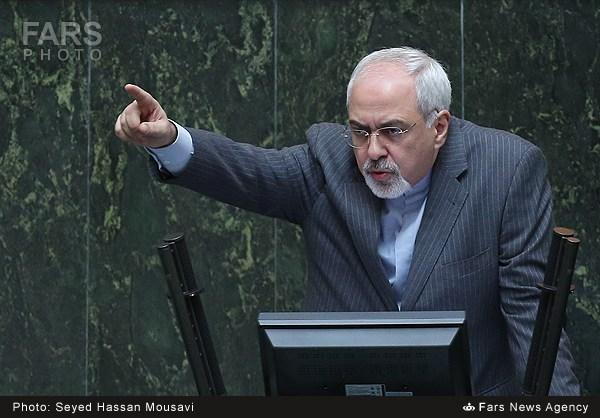
Zarif: Iran’s Foreign Policy Grabs Sleep from Netanyahu’s Eyes

Mohammad Javad Zarif
 

“Iran is a powerful and stable country, but massive propaganda and political activities are made to induce that Iran is a threat to the region and the international peace and stability,” Zarif said, addressing the Iranian parliamentarians in Tehran on Tuesday.

He described the West’s “cruel sanctions” against Iran as among the plots hatched by the enemies to weaken the country’s national might and power, and said such plots have failed and the new government is also trying to make such victories more numerous.

“The government’s foreign policy has taken away peace and comfort from Netanyahu and has isolated him internationally and this is a great victory that all the resistance forces of the region have each appreciated us for,” Zarif underlined.

His remarks came after Iran and the Group 5+1 (the five permanent UN Security Council members plus Germany) sealed a six-month Joint Plan of Action on November 24 to lay the groundwork for the full resolution of the West’s decade-old dispute with Iran over the latter’s nuclear energy program.

In exchange for Tehran’s confidence-building bid to limit certain aspects of its nuclear activities, the Sextet of the world powers agreed to lift some of the existing sanctions against Tehran and impose no nuclear-related sanctions on Iran during the six-month period.

During the talks Iran managed to build confidence and the country’s capital witnessed visits by different European officials and businessmen, foiling enemies’ plots to isolate Tehran.

Fars News Agency

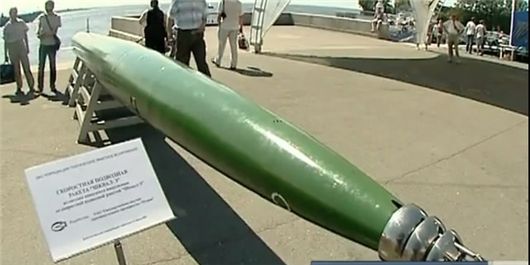
Commander: Iran One of Only Two World Countries in Possession of Super Hi-Tech Torpedo

Super Hi-Tech Torpedo

Speaking to FNA, IRGC Navy Commander Rear Admiral Ali Fadavi said when the home-made missile/torpedo, Hout, was displayed in a series of wargames a few years ago, over 2,000 world media covered the news.

He said the speed of the missile is 100 meters per second (360km/h) under water.

The Admiral explained that the gruesome weapons has originally been made by the Russians, adding that Americans have spent a sum of 20 billion dollars in 15 years to develop its technology, but failed.

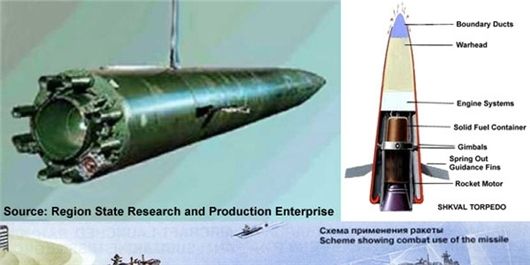
The Russians call the torpedo Shkval. The speed of this missile or torpedo far exceeds that of any standard torpedo currently fielded by NATO. This speed is a result of supercavitation: the torpedo is, in effect, flying in a gas bubble created by outward deflection of water by its specially shaped nose cone and the expansion of gases from its engine. By keeping water from coming into contact with the surface of the body of the torpedo, drag is significantly reduced, allowing extremely high speeds.

The Russians started designing it in the 1960s when the NII-24 research institute was ordered to produce a new weapon system capable of combating nuclear submarines. In 1969, the GSKB-47 merged with NII-24 to create the Research Institute of Applied Hydromechanics in Kiev, Ukraine (constructor Merkulov); the Shkval being a product of this merger.

Super Hi-Tech Torpedo

Announced as being deployed in the early 1990s, although previously operational as early as1977, the Shkval is designed as a countermeasure against torpedoes launched by undetected enemy submarines. It may also be used as a counter to incoming torpedoes whereby it is launched at the enemy submarine, forcing it to evade, and hopefully cutting the guidance wire to the enemy torpedo in the process.

Super Hi-Tech Torpedo

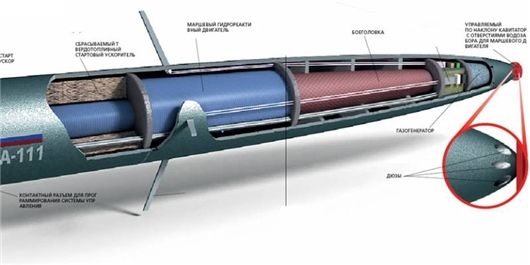
Launched from 533 mm torpedo tubes, the VA-111 exits the tube at 50 knots (93 km/h). Shortly afterwards, its liquid-fuel rocket ignites and propels it to speeds of up to 200 knots (370 km/h). Some reports indicate that speeds of 250+ knots may be achieved, and that work on a 300-knot (560 km/h) version was underway. The rocket engine uses a combination of high test peroxide and kerosene; the propellant tanks contain about 1500 kg of hydrogen peroxide and 500 kg of kerosene.

The torpedo controls its direction using four fins that skim the inner surface of the supercavitation envelope. To change direction, the fin or fins on the inside of the desired turn are extended, and the opposing fins are retracted. To make faster turns, the push plate on the nose can be used to control the shape of the bubble the missile is traveling in.

Super Hi-Tech Torpedo

Spokeswoman: Iran’s N. Rights Only Framework of Talks with Powers

iran p-5+1
iran p-5+1


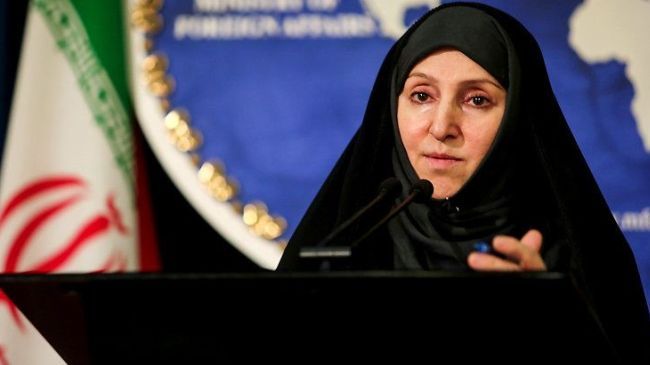
“The Islamic Republic of Iran’s redlines fall on the people’s inalienable and evident rights to access peaceful nuclear technology and this redline has been under the focus and attention of the (Iranian) negotiating team since the very first day and we won’t withdraw from this right,” Afkham said in her weekly press conference in Tehran on Tuesday.

She also said that the framework of negotiations is Iran’s nuclear rights and maintaining the indigenized nuclear knowhow.

On November 24, Iran and the Group 5+1 sealed a six-month Joint Plan of Action to lay the groundwork for the full resolution of the West’s decade-old dispute with Iran over the latter’s nuclear energy program.

In exchange for Tehran’s confidence-building bid to limit certain aspects of its nuclear activities, the Sextet of the world powers agreed to lift some of the existing sanctions against Tehran and impose no nuclear-related sanctions on Iran during the six-month period.

In April, Iranian Deputy Foreign Minister for legal and international affairs Seyed Abbas Araqchi confirmed that Iran and the Group 5+1 plan to hold an expert-level meeting in New York early in May.

Araqchi, who is also senior Iranian negotiator in talks with the Sextet, said negotiations will be held from May 5-9 on the sidelines of a session of the Preparatory Committee for the 2015 Non-Proliferation Treaty (NPT) Review Conference.

The Iranian official said the talks will take place a few days ahead of the new round of high-level negotiations between Tehran and the six countries, which is scheduled to be held in the Austrian city of Vienna on May 13.

Deputy chief negotiators from Iran and the six world powers wrapped up their last round of talks in Vienna on April 9. The talks were headed by Araqchi and EU foreign policy deputy chief Helga Schmidt.

The Iranian Foreign Ministry in a statement on April 8 reiterated that its team of negotiators would not discuss any topic but the country’s nuclear standoff with the West in its talks with the six world powers, including the present round in Vienna.

The talks between Tehran and the six world powers are part of efforts to seal a final deal on Iran’s nuclear energy program.

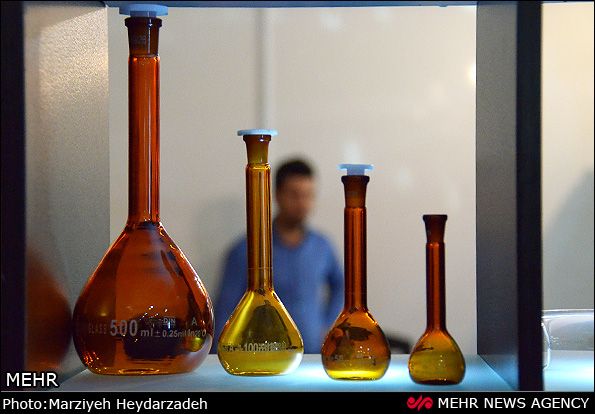
Alborz Company produces heat-resistance lab glassware

heat-resistant glassware


Ali Khosravi the managing-director of Alborz Science and Technology Park told Mehr News that the company working with the Park produced the glassware combining art and technique. “Reactor, the name designating the glassware, is two-wall glass vessel resistant to acid and alkaline environments and material. It provides the optimal space where chemicals would react safely,” he added.

“Reactor and bio-reactor is best for cell culture which needs special temperature, pressure, and cycling system to mix the material provided by the vessel itself,” he said.

Khosravi also said that reactors and bioreactors had wide applications in pharmaceutical and chemical industries, research centers, and university laboratories. “The scientific glassware making traces back to western Germany; however, after the Revolution, advancements in glassware production contributed to our competitive powers in heat-resistance glass vessel market,” he asserted.

Khosravi also told Mehr News that within a year, the company has developed six products and predicted production of 15 others, which he believed, could bring about saving of foreign money paid to foreign similar products.

“Production of bioreactor brings together a host of sciences and art including pharmacology, chemistry, and electro-mechanics,” he added.

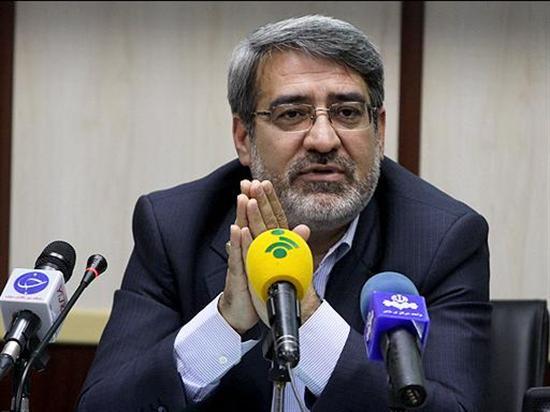
Boosting ties with neighbors, Iran’s policy: Interior minister

Abdolreza Rahmani Fazli


Talking to IRNA here, the minister said that Iran and Pakistan share the same religion, culture and history. “We consider Pakistan as our close friend and brother,” he said.

He added that it is the policy of Iran to further boost its cooperation with Pakistan. He; however, said that Iran and Pakistan should carry out joint activities to strengthen bilateral relationship.

He strongly believed that Iran-Pakistan strong relationship will bring peace and stability in the region. Abdolreza Rahmani Fazli said that Iran is making all out efforts to further improve its ties with Pakistan.

Talking to reporters, the Interior Minister of Iran said that there is absolutely no tension between Iran and Pakistan at borders.

He added that Iran and Pakistan are having strong cooperation in all sectors. He noted that after approval of a bill by Iranian parliament for enhanced cooperation with Pakistan, both countries would be able to effectively fight terrorism and stop human and drug trafficking.

“My visit is being carried out at the invitation of my Pakistani counterpart,” he said. He said that during the visit, he will discuss issues concerning mutual relations.

He said that it is our objective to implement security agreement between Iran and Pakistan as early as possible.

Replying to a question regarding foreign interference in the region, he said that ‘we have evidence that foreign elements that are interfering at Iran-Pakistan border and supporting the terrorists.’

The minister was hopeful that Iran, Pakistan and Afghanistan, with their joint cooperation, would defeat all conspiracies against them.

Abdolreza Rahmani Fazli giving his views, that it is the policy of Iranian government to develop country’s border regions.

Speaking to IRNA, Pakistan’s Acting Interior Secretary, Imtiaz Tajwar, said that ‘Iran and Pakistan are like two brothers and the two brothers are doing everything for the better security and better friendship.’

Earlier, the Iranian Interior Minister was accorded warm welcome by Pakistan’s Acting Interior Secretary, Imtiaz Tajwar, Iranˈs Ambassador to Pakistan Ali Reza Haghighian, Pakistani officials and Iranian diplomats upon his arrival at Nur Khan air base.

The minister will meet Prime Minister Nawaz Sharif, and his counterpart Chaudhry Nisar Ali Khan. During his stay, Rahmani Fazli will discuss issues concerning mutual relations, technical matters and border and security developments with Pakistani authorities.

Islamic Republic News Agency

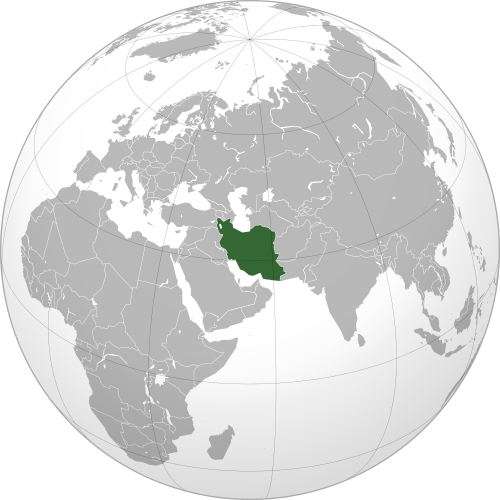
32 countries attending Iran Oil Show 2014

Iran in world map
Iran in world map


Over 1,200 Iranian and 600 foreign companies are taking part in the exhibition while the number of foreign participants in the last year event stood at 195.

Participation of such a large number of countries in this yearˈs event, compared to previous years, indicates the success of policies pursued by the government of President Hassan Rouhani at the international arena.

Foreign countries attending Iran Oil Show 2014 include Austria, Belgium, China, France, Russia, the US, the UK, Japan, South Korea, Malaysia, Spain, the UAE, Turkey, India, Germany, and Italy.

Consultation companies, spare parts manufacturers, technical and engineering service providers, oil processing equipment producers, fuel saving organizations, as well as research and development companies will showcase their latest achievements in the exhibition which will run until Friday.


Islamic Republic News Agency

World welcomes Iran’s ‘moderate and constructive spirit’

Marzieh Afkham
Marzieh Afkham

Government official website quoted Marzieh Afkham speaking about the swarming of EU countries’ officials to the Islamic Republic of Iran. “With the 11th government assuming office and display of a more moderate and constructive approach in foreign policy, the contacts between Iran and other countries especially in exchange of political and economic delegations are indications that world has welcomed the government’s moderate spirit,” Afkham said.

She pointed to high public turnout in the presidential election of last June, Geneva joint Action Plan, and a strong determination by Iran had contributed to an atmosphere where countries around the world sought to expand ties with the Islamic Republic of Iran. “Our foreign policy machinery seeks also to improve these ties and developments and hopes that this would secure our national interests,” she added, believing that esteem and honor lavished upon Iran during these interactions were undeniable and obvious.