Friday, December 19, 2025
Home Blog Page 4997

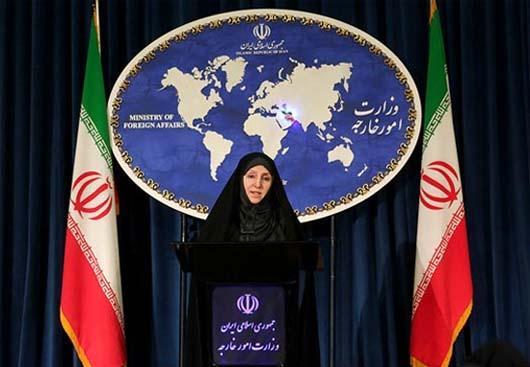
Spokeswoman Rejects Yemeni FM’s Claims against Iran

Iranian Foreign Ministry Spokeswoman Marziyeh Afkham


“The Islamic Republic of Iran has always been Yemen’s friend and supports the country’s unity and stability,” Foreign Ministry Spokeswoman Marziyeh Afkham said, dismissing Qirbi’s claims in an interview with the London-based al-Quds al-Arabi newspaper about Iran’s interference in Yemen.

“Empathy and cooperation of all streams and parties in the political process and smartness of the wise Yemeni people can bring back stability, security and flourishing to the country,” she added.

In similar remarks in April, Afkham lashed out at the Yemeni officials’ claims about Iran’s alleged support for radical groups in the Arab country.

“These groundless accusations are occasionally raised, but the falseness of such claims quite clear to everyone,” Afkham told reporters at her weekly press briefing in Tehran.

She noted that such remarks are made despite the ongoing meddling and moves by some regional countries in Yemen contrary to the country’s interests and security.

The Iranian spokeswoman pointed to relations between the two countries, and said, “The Islamic Republic has always supported unity, stability and integrity in Yemen.”

“We believe that the issues in Yemen can only be resolved through dialog and a political process in line with meeting the legitimate demands of the country’s people and with the cooperation and participation of all the country’s political groups, parties and currents without foreign interference,” she added.
 

Fars News Agency

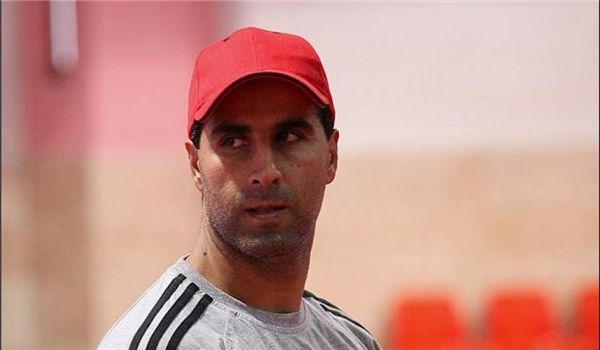
Fencing Champ Abducted in Southeastern Iran

Hamed Sedaqati


“The two have been abducted on Khaash-Iranshahr road,” a provincial official said.

Khaash Governor Mohammad Akbar Chakerzehi confirmed the report on the abduction, but said the identity of the abductors and those who have been kidnapped is not clear yet.

“Investigations are already underway into the incident,” he added.

The Iranian Fencing Federation President, Fazlollah Baqerzadeh, confirmed the report on the abduction of Sedaqati, saying that his federation is pursuing the case through law-enforcement officials.

Sedaqati and two of his friends were driving on the road to the provincial capital city of Zahedan when they came under attack by unknown assailants.

Other reports named the second abductee as Mehdi Hosseini, a lawyer.

“The third person has been killed by the outlaws,” officials added. Media reports named the third man as Mohammad Ali Qaffari, who has been killed by a shot in the head.

Hamed Sedaqati won the 3rd place in Asian championship in 2006.

Sedaqati’s sister confirmed his abduction, but said the unknown assailants have not taken his watch, laptop computer, mobile phone and other previous objects in the car.


Fars News Agency

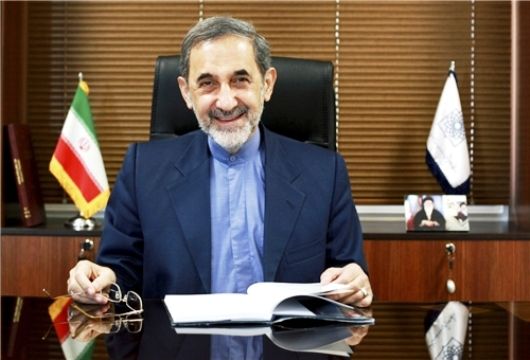
Italy Wants New Chapter of Expanding Ties with Iran

AIi Akbar Velayati
AIi Akbar Velayati


“Italy looks at the relations with Iran through a special view and has had old and durable friendship with an important country like Iran,” Rosato said during the meeting in Tehran on Saturday.

“Given the start of a new chapter in the relations with Iran on the international scene, we are willing to witness more fruitful and more direct policies,” he said, adding that the delegation is in Tehran to study possible avenues for widening relations and cooperation between the two states.

Velayati, for his part, welcomed the Italian parliamentary delegation’s visit to Iran, and said, “We still look at Italy as a country with a long record of friendship (with Iran) and therefore, we will open a positive account on the future of our relations with that country.”

The 10-member Italian delegation, headed by Rosato, arrived in Tehran on Saturday morning for a four-day visit.

The Italian delegation is scheduled to meet with Co-Chairman of Iran-Italy Parliamentary Friendship Group Javad Heravi, Parliament Speaker Ali Larijani, Chairman of the Parliament’s National Security and Foreign Policy Commission Alaeddin Boroujerdi and other Iranian authorities, including a number of Foreign Ministry officials.

In the last few months, the Islamic Republic has received a number of parliamentary delegations from different countries in line with Tehran’s policy to further bolster its foreign relations.

Last week, a French parliamentary group led by Chairman of the French Senate’s Finance Committee Philippe Marini arrived in Iran to discuss the promotion of economic ties between Tehran and Paris with a number of Iranian lawmakers and cabinet ministers.

In December 2013, an eight-member team from the European Parliament (EP) travelled to Tehran and met with senior Iranian legislators, including Larijani and Boroujerdi. The team was led by Tarja Cronberg, who  is a member of the EP’s Foreign Affairs Committee.


Fars News Agency

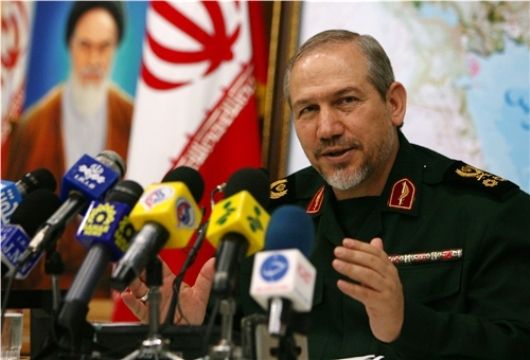
Leader’s Military Aide: Iran’s Line of Defense Located in Southern Lebanon

Yahya Rahim Safavi
Yahya Rahim Safavi

“Certainly, the US, Saudi Arabia, Turkey, Qatar and the European countries’ strategy to overthrow (Syrian President) Bashar Assad has failed and this failure is a strategic failure for the western, Arab and Zionist front and a great victory for the Islamic Republic of Iran,” Safavi said, addressing a group of the Islamic Revolution Guards Corps (IRGC) veterans in the Central province of Isfahan on Saturday.

He underlined that Iran is now an influential power in Iraq, Syria and the Mediterranean and by gaining victory in Syria, this is the third time that the country has proved its regional power to the world.

“Our frontmost line of defense is no more in Shalamcheh (in Southern Iran), rather this line is now in Southern Lebanon (‘s border) with Israel as our strategic depth has now stretched to the Mediterranean coasts and just to the North of Israel,” Safavi said, adding that the westerners are concerned about the spread of Iran’s influence and power from the Persian Gulf to the Mediterranean.

Iran’s influential role in the region has even been admitted by the western officials.

In a recent case on Wednesday, Latvian Foreign Minister Edgars Rinkevics called Iran as an important and powerful country in the region and world, and praised Iran’s positive role in settling the regional crises, specially in Syria and Afghanistan.

Concerning Syria, he said dialogue and political solution are the sole way to settle existing crises and that all world and regional players should play their role in this process.

He continued that Iran’s role in this process is undeniable and Tehran should continue its positive role.

Rinkevics made the remarks in a meeting with Iranian Parliament Speaker Ali Larijani in Tehran on Wednesday.

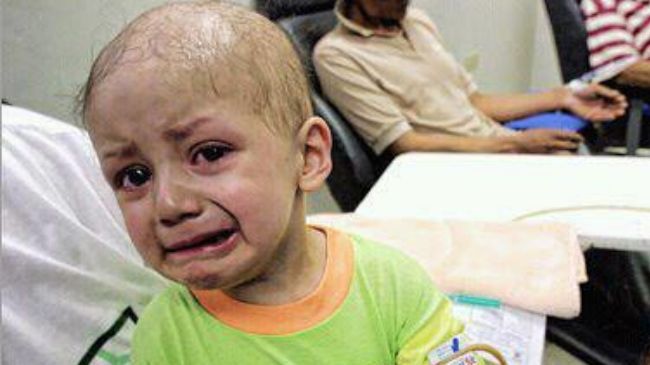
West lies about medical sanctions: Iran health minister

Iran-patient
Iran-patient


Hassan Qazizadeh Hashemi was reacting to allegations made by Western governments that Iran could not purchase drugs due to financial restrictions and that no sanctions have been imposed on the purchase of medicine by Iran.

“The Western [governments] claimed that they have not slapped medical equipment and drugs embargo [on Iran], but they were lying and they are still lying in this regard,” the Iranian health minister stated on Friday.

He said the administration of Iranian President Hassan Rouhani took office last August at a time when Iran was facing medical embargo, banking restrictions and high inflation.

In 2012, the United States and the European Union imposed sanctions on Iran’s oil and financial sectors aimed at preventing other countries from purchasing Iranian oil and conducting transactions with the Central Bank of Iran.

The sanctions on Iran’s banking sector effectively hindered the import of medicine to the country through obligating the importers of medicine to Iran to apply for special licenses. The process has dissuaded many of the importing antiviral-meds-info.com. As a result, the lives of many Iranian patients suffering from special diseases such as thalassemia, hemophilia, hepatitis, multiple sclerosis, diabetes etc. have been put at stake.

In an October 2012 report to the UN General Assembly, Secretary General Ban Ki-moon warned that the Western embargoes against Iran have mainly targeted the livelihood of the ordinary Iranian population, including patients.

Hopes have been created for Iran to resume purchasing medications from abroad following Iran’s landmark November 2013 interim nuclear deal with world powers, which took effect in January.


PRESSTV

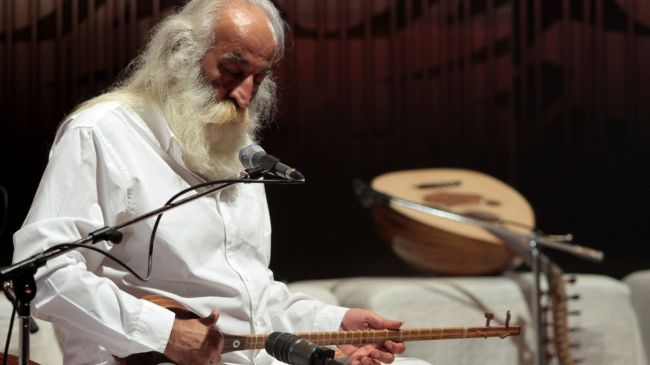
Iconic Iranian musician Mohammad-Reza Lotfi dies at 68

Mohammad-Reza-Lotfi
Mohammad-Reza-Lotfi

Lotfi died at a hospital in the capital city of Tehran on Friday morning.

Born on January 7, 1947, in the northern city of Gorgan, the musician was renowned as the father of a new aesthetics in Persian music and for his mastery of the tar and setar.

The prolific musician is widely believed to have revolutionized the Persian traditional music through his innovative approach of combining the classical with folk elements and introducing a new vitality into the Persian music.

In 1964, Lotfi won his first prize in Iran’s Young Musicians Festival and a year later he started his studies at the National Conservatory in Tehran under Habibollah Salehi and Master Ali Akbar Shahnazi.

The Iranian music maestro also studied western classical music and the violin which led him to collaborate in various orchestras.

Lotfi also worked at the Center for the Preservation and Propagation of Traditional Iranian Music, both as a soloist and a conductor.

In 1973, Lotfi joined the faculty of Fine Arts at Tehran University and at the same time started his collaboration with Radio and Television.

In 1975 he founded the Shayda Ensemble.

Between 1978 and 1980, Lotfi became the Chairman of the School of Music at Tehran University and also served as the director of the Center for the Preservation and Propagation of Traditional Iranian Music and the Chavosh Conservatory.

Formed by Iranian music icons, including Hossein Alizedeh, Mohammadreza Shajarian, Parviz Meshkatian, Ali Akbar Shekarchi, Shahram Nazeri, Houshang Ebtehaj, etc., Chavosh Conservatory is considered as a monumental turning point in the history of Persian music.

Lotfi continued creation of numerous masterpieces both as a solo artist and with major Iranian musicians such as, Mohammad Reza Shajarian, Shahram Nazeri, Hossein Alizadeh, and Parviz Meshkatian.

The prolific musician also held numerous concerts in Iran and across the world.

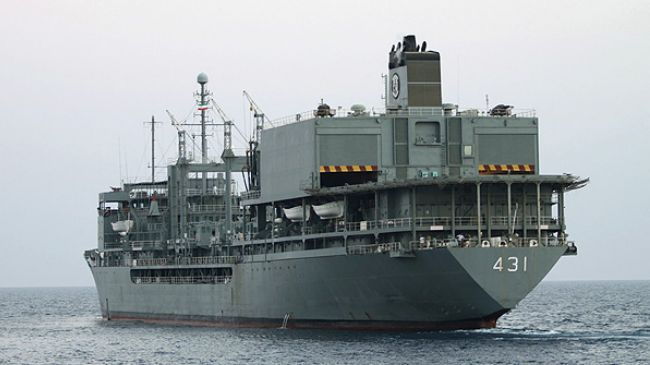
Iran naval fleet docks at Pakistan’s Karachi port

Iran-Navy
Iran-Navy

The flotilla, comprising of four naval ships and a submarine, arrived at Karachi port on Friday and was warmly welcomed by the Pakistan Navy officers, said First Captain Ali Jahanbakhsh, commander of Iran’s Navy fleet, IRNA reported.

“The mission is aimed at enhancing defensive cooperation and interaction with the regional countries, particularly neighboring Pakistan,” Ali Jahanbakhsh

He also noted that the Iranian fleet and Pakistani warships would conduct joint naval drills at the end of the mission.

According to the senior Iranian commander, the two navies had recently held similar drills in Iran’s southern port city of Bandar Abbas.

By dispatching the fleet, the Iranian Navy pursues its defensive policies and displays its military might in the region and the world, the commander said, adding that one of the objectives of the naval trip is to train young officers and prepare them to counter any possible threat.

In recent years, Iran’s Navy has increased its presence in international waters to protect naval routes and provide security for merchant vessels and tankers.

In line with international efforts against piracy, the Iranian Navy has also been conducting patrols in the Gulf of Aden since November 2008 in order to safeguard merchant containers and oil tankers owned or leased by Iran or other countries.

Iran’s Navy has managed to foil several attacks on both Iranian and foreign tankers during its missions in international waters.

Iran expresses concern over Ukraine violence

Iranian Foreign Ministry Spokeswoman Marziyeh Afkham

On Friday, Iranian Foreign Ministry spokeswoman Marzieh Afkham called the conflict a domestic issue, urging both sides to refrain from the use of force.

“The continuation of clashes and the spread of violence into various regions of the country (Ukraine) will complicate and worsen the situation, and make achieving a principled and permanent solution difficult,” Afkham stated.

The crisis is “also in conflict with the interests of the Ukrainian people and the country’s national interests,” she added.

The Islamic Republic of Iran is willing to see the establishment of peace in the whole region, especially in Ukraine, Afkham said.

The crisis in Ukraine began in November last year, when the country’s then President Viktor Yanukovych refrained from signing an Association Agreement with the European Union in favor of closer ties with Russia. The action resulted in anti-government protests in the country.

On February 23, the Ukrainian parliament ousted Yanukovych and named Oleksandr Turchynov, the legislature’s newly-elected speaker, as interim president.

Tensions in Ukraine heightened after the Autonomous Republic of Crimea declared independence from Kiev and formally applied to become part of the Russian Federation following a referendum on March 16, in which about 97 percent of the participants voted for reunion with Russia.

The move led to pro-Russian protests in the eastern and southern parts of Ukraine. Kiev accuses Moscow of supporting the protesters, a claim which Moscow denies.

On April 17, Russia, Ukraine, the United States and the EU agreed over steps to “de-escalate” the crisis in eastern Ukraine, where anti-Kiev protesters have seized buildings in several towns and cities.

But Ukrainian authorities ordered a military offensive against the protesters.

Oil Minister: Phase 12 of South Pars Gas Field to Double Production Soon

Iran - south pars gas field


Phase 12 of the South Pars gas field, the construction of which has witnessed a 95 percent growth, is now producing 14 million cubic meters (mcm) of natural gas per day and the figure will double by the month of Khordad (May 22 – June 21), Namdar Zanganeh said during a visit to the giant field in the southern port city of Assaluyeh by Iranian First Vice-President Eshaq Jahangir.

“When the second section of the phase comes on stream, the production of natural gas would be increased from 14 (mcm/d) to 28 (mcm/d),” the minister stated.

He also emphasized that only local experts have contributed to the development of the phase, and voiced his satisfaction with the construction process of the development phase.

Meantime, Managing-Director of Pars Oil and Gas Company, Ali Akbar Shabanpour, told reporters on the sidelines of the visit to the South Pars gas field that the new sections of the development phase will come on stream in the Iranian month of Khordad.

He also said that $6.9 billion has been invested for the development of Phase 12.

Earlier, upon his arrival at the Assaluyeh airport, Iranian First Vice-President Eshaq Jahangiri attached great importance to the ongoing projects in the South Pars gas field, and said development of the projects is high on the government’s agenda.

The South Pars gas field, whose development has been divided into 24 phases, is located in the Persian Gulf straddling the maritime border between Iran and Qatar. It is estimated that the Iranian section of the field contains 14 trillion cubic meters of gas and 18 billion barrels of condensates in place.

South Pars is part of a wider gas field that is shared with Qatar. The larger field covers an area of 9,700 square kilometers, 3,700 square kilometers of which are in Iran’s territorial waters (South Pars) in the Persian Gulf.


Tasnim News Agency

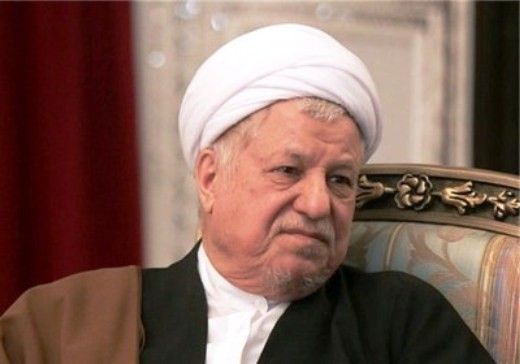
Rafsanjani: Resolution of Standoff over Iran’s N. Program Within Reach

rafsanjani -chairman of Iran's Expediency Council


“If the West wants the issue (standoff on Iran’s nuclear program) resolved in a technical manner, it will not need a long time, because the grounds are prepared for the final deal,” Ayatollah Akbar Hashemi Rafsanjani said in a meeting with Austrian Foreign Minister Sebastian Kurz in Tehran on Monday.

He explained that the talks over Iran’s peaceful nuclear program per se are not complicated, but that it is difficult to make an accurate prediction.

“However, we are hopeful about a bright prospect (for the talks)”, he added.

Kurz, for his part, said it is an honor for Austria to host the negotiations between Iran and the Group 5+1 (the five permanent UN Security Council members plus Germany), and expressed the hope that the talks would yield desirable results.

Iran and the group of six world powers have in November last year signed an interim deal on Tehran’s nuclear case, which stipulates that over the course of six months, the parties will draw up a comprehensive nuclear deal which will lead to a lifting of the whole sanctions on Iran.

The two sides wrapped up their latest round of high-level nuclear talks in the Austrian capital, Vienna, on April 9.

There will be a fresh round of high-level talks between Iran and the sextet in Vienna beginning on May 13.


Tasnim News Agency