Monday, December 22, 2025
Home Blog Page 4964

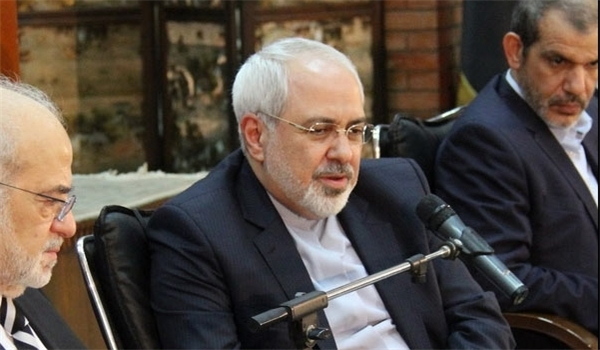
FM: Iran Supporting National Unity, Security in Iraq

Zarif in Iraq
Zarif in Iraq

“Iran’s objective, as already declared, is national unity, territorial integrity, development and security of Iraq which as a necessity,” Zarif told reporters after he met religious authorities and ulemas (scholars) in the Iraqi holy city of Najaf.

The Iranian foreign minister noted that during his meetings with several Iraqi officials as well as the country’s religious authorities and ulemas he has laid emphasis on the need for preserving the national unity in Iraq.

“All efforts should lead to helping the Iraqi nation and government and God willing, it should result in the fight against terrorism in the country,” Zarif said.

Also, in a meeting with Head of the Iraqi National Alliance Ibrahim Jafari on Sunday, Zarif underlined the necessity for the establishment of political unity and practice of Islam’s ideology in Iraq to fight the terrorist groups.

“Terrorism in Iraq is threatening all the world people from all the different religions, sects and tribes,” Zarif said during the meeting, also participated by representatives of different Iraqi political groups.

“Fighting terrorism in Iraq is not limited to military confrontation, but we also need political unity, increasing security and Islamic thinking to confront perverted thoughts of the Daesh (the Islamic State of Iraq and the Levant- ISIL),” he added.

Zarif arrived in the holy city of Najaf earlier today to exchange views with Ayatollah Seyed Ali Sisitani to discuss ways to soothe the ongoing crisis in the Muslim country.

The Iranian foreign minister plans to also meet with other grand Shiite clerics in Iraq, including Ayatollah al-Fayadh, Ayatollah Bashir Najafi and Ayatollah Hakim.

Zarif arrived in Baghdad on Sunday to meet the country’s new cabinet members to felicitate them on their appointment and start of work as the new Iraq government and discuss bilateral and regional developments as well as the latest security conditions in Iraq.

Several high-ranking Iranian officials congratulated Al-Abadi and the Iraqi nation on his appointment as the new premier last week and expressed their support for the new government.

Iranian Supreme Leader Ayatollah Seyed Ali Khamenei hailed the appointment of the new Iraqi premier, saying that enemies’ plot to push Iraq into further chaos through political disputes over premiership would be foiled once the new cabinet starts work.

Following Iran’s approach, Maliki also dropped his bid and voiced support for al-Abadi in a show of unity which is much needed in the crisis-hit country which has come under a surge of terrorist attacks by savage Takfiri terrorists of the Islamic State of Iraq and the Levant (ISIL) in the last few months.

Iran and Iraq have enjoyed growing ties ever since the overthrow of the former Iraqi dictator, Saddam Hussein, during the 2003 US invasion of the Muslim country.

Iraq’s Foreign Minister Hoshyar Zebari was in Tehran in February. During his stay in the Iranian capital, Zebari and Zarif discussed mutual cooperation on economy and trade as well as joint efforts to address environmental issues.

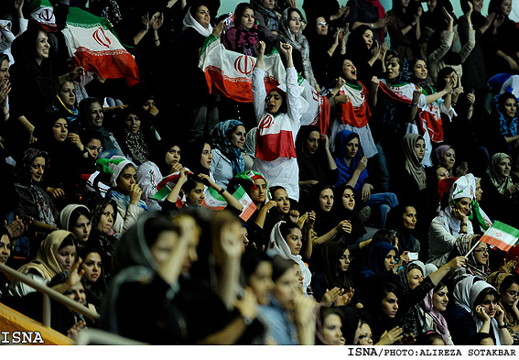
Will sexist attitudes toward the presence of women in stadiums end?

Iranian Women in Stadium

The head coach of the Iranian women’s national volleyball team Sima Sedighi was quoted by Islamic Republic News Agency (IRNA) on August 23 as saying that, “A professional approach has to be adopted to the presence of women in sports arenas.” Here is what else the official news agency reported on the issue:

Sedighi went on to say, “Sportswomen hope that the bylaw granting the green light to women to watch sports competitions in stadiums will be swiftly crafted and approved, because under such bylaw, true fans of sports and athletes will be gradually handed a chance to watch sports events at sporting venues.”

It came after Deputy Minister of Sports and Youth for Cultural, Educational and Research Affairs Abdul-Hamid Ahmadi said that a bylaw is being crafted to give the go-ahead to women to attend sport events.

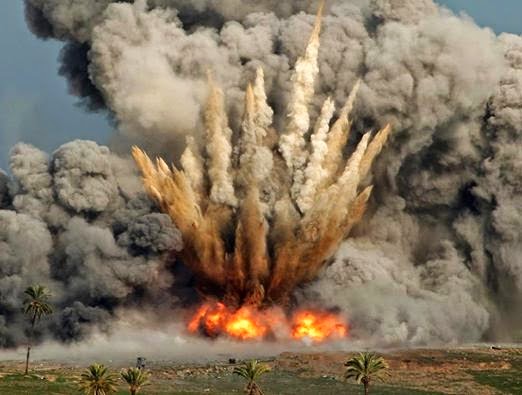
Top MP describes damage to Gaza environment unprecedented

Gaza war and Invironment

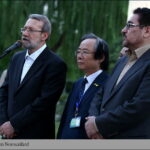
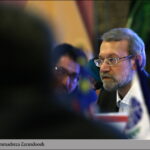
On Sunday August 24, Javan Newspaper quoted Parliament Speaker Ali Larijani as saying that in addition to human catastrophe, the recent Israeli invasion of Gaza has done unprecedented damage to the environment of the Palestinian coastal enclave. Here is an excerpt of the article that appeared in the daily:

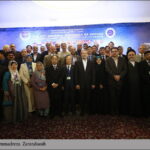
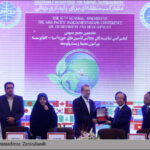
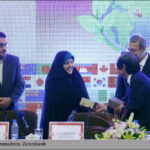
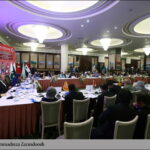
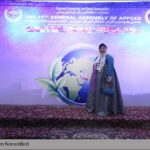
A 17th General Assembly of the Asia-Pacific Parliamentarian Conference on Environment and Development, also known as APPCED, opened in Tehran on August 23, 2014. The gathering was meant to raise awareness about the significance of efforts to preserve Mother Nature and promote laws that govern the protection of the environment. Economic development as well as the environmental damage the Gaza Strip has suffered as a result of the Israeli invasion was brought up at the gathering. […]

In a keynote speech at the meeting, Iran’s Parliament Speaker Ali Larijani said improper treatment of the environment has put the entire planet in danger. […]

He further said, “For almost two months, the Zionist regime’s bombs which have been as powerful as six nuclear devices in total, have been raining down on the defenseless people of Gaza. I regret to say that the Zionist crimes have met with silence and/or indifference on the part of the international community and many countries.”

The top MP further said that more than 2,000 Palestinians, most of them children, women and elderly people have been martyred in the Gaza Strip. “Thousands more have been injured and urban facilities have suffered substantial damage. What concerns this gathering here is that the damage caused to the environment during the offensive has been unprecedented.” […]


Iran shoots down Israeli spy drone near Natanz nuclear facility

Iran shoots down Israeli spy drone near Natanz nuclear facility

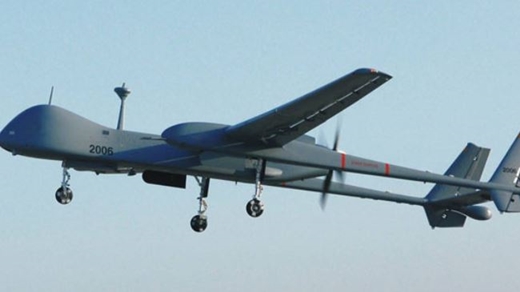
The IRGC’s Aerospace Force has intercepted and shot down an Israeli spy drone, the IRGC announced in a statement on Sunday.

It added that the stealth and radar-evading spy drone intended to reach the nuclear facility in Natanz, but was targeted by a surface-to-air missile before it reached the area.

“This mischievous act once again reveals the adventurist nature of the Zionist regime [of Israel] and added another black page to this fake and warmongering regime’s file which is full of crimes,” the IRGC statement said.

The statement emphasized that along with other Armed Forces, the IRGC is fully and strongly prepared to defend the Islamic Republic’s territory and airspace against any aggression and reserves the right to respond in kind to such moves.

Iran’s nuclear facilities have always been a regular target for espionage activities by US and Israeli secret services, which have at times used drones for this purpose. However, all efforts made to this end have been successfully thwarted by the Iranian military forces.

On December 4, 2011, the Iranian military’s electronic warfare unit announced that it had successfully downed the American RQ-170 reconnaissance and spy drone in the eastern part of Iran with minimal damage.

The RQ-170, an unmanned stealth aircraft designed and developed by the Lockheed Martin Company, had crossed into Iran’s airspace over the border with Afghanistan.

The drone was one of America’s most advanced spy aircraft and its loss was considered a major embarrassment for Washington.

Tehran Seeks Closer Ties with New Iraqi Government

Zarif and Al-Abadi meeting in Iraq

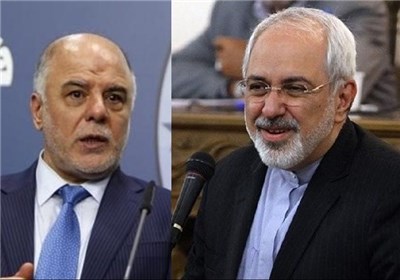
“Tehran-Baghdad relations expanded during Nouri al-Maliki’s term, and we hope the ties would be upgraded during the new (Iraqi) government’s tenure,” Mohammad Javad Zarif said in a meeting with Abadi in Baghdad on Sunday.

The top Iranian diplomat is on an official visit to Baghdad in a bid to hold talks with high-ranking Iraqi officials on issues of mutual interest and regional developments.

Elsewhere in the meeting, Zarif underlined that relations with Iraq are of “strategic significance” for the Islamic Republic.

Back on August 11, Iraqi President Fouad Massoum officially commissioned Abadi, the Shiite coalition’s nominee for prime minister, to form the new government.

Massoum refused to nominate the country’s two-time Prime Minister Nouri al-Maliki for a third term in office.

Following Abadi’s election, Secretary of Iran’s Supreme National Security Council (SNSC) Ali Shamkhani voiced Iran’s support for the legal procedure in which the Iraqi prime minister has been elected.

“The legal frameworks determined in Iraq’s constitution are the basis for the election of the prime minister by the majority bloc in Iraq’s national parliament,” Shamkhani said.

President Rouhani: Iran Needs No One’s Permission to Defend Itself

Iran-President Rouhani

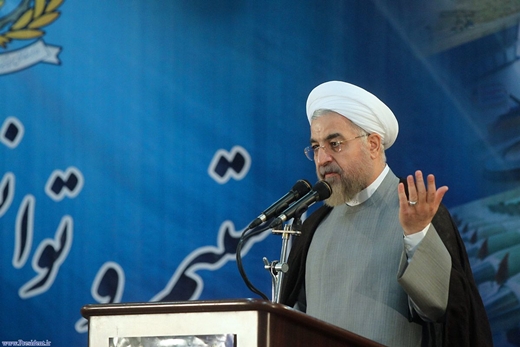
“Our military doctrine is based on defense and we don’t design any weapon for aggression; we don’t carry out any research on how to occupy the regional states. All our researches are based on this defense principle that how we can defend ourselves or how we can stop the enemy,” Rouhani said, addressing a ceremony to unveil two new home-made cruise missiles and two new drones in Tehran on Sunday participated by Defense Minister Brigadier General Hossein Dehqan and other senior officials.

He said Iran’s defense programs are based on a deterrence strategy to prevent the breaking out of war in the region, reiterating that “our military capability is at the service of regional security”.

He underscored Iran’s strategy of preventing war in the region, and said Tehran is not after an arms race and the Weapons of Mass Destruction (WMDs) “but it doesn’t ask for anyone’s permission to defend itself and to develop our defense industries to whatever degree” that we deem necessary.

The President once again reiterated the necessity of a nuclear weapons-free Middle-East, saying that all WMDs in the Middle-East should be dismantled.

Rouhani also stressed Iran’s special geopolitical conditions, and asked, “Given Iran’s position in the region and the world, is it possible to speak about stability in the region and avoid mentioning Iran? Is it possible to speak of regional welfare and development without naming Iran?”

Senior regional officials have on many occasions praised Iran for the constructive role the country has always played in the reinvigoration of peace and tranquility in the region, and called for expansion of ties with Tehran.

Lebanese Foreign Minister Gebran Bassil and Parliament Speaker Nabih Berri in separate meetings with former Iranian Ambassador to Beirut Qazanfar Roknabadi in May extended their full support for Tehran’s logical and positive interactions with the world and regional states, and described Iran’s foreign policy as one of the major caused of restoration of security in the region, particularly in Lebanon.

In this country life goes on

Dr. Hossein Entezami

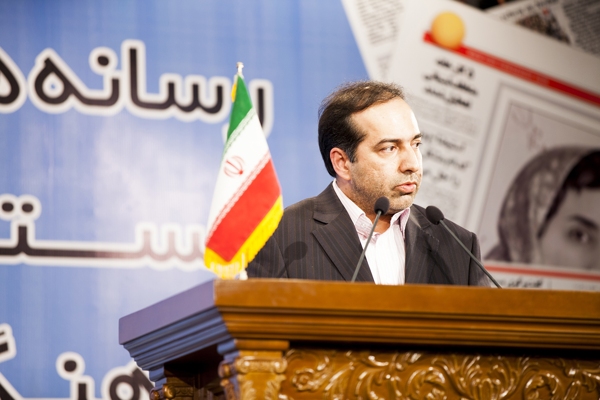
Iran Front Page (IFP) was officially launched at a gathering dubbed Iranian Media and the International Community in Tehran on August 20, 2014. One of the main speakers at the event was Dr. Hossein Entezami, who represents the managing editors of the Iranian publications at the Press Supervisory Board. The following is the translation of the speech of Dr. Entezami, who has also served as deputy minister of culture and Islamic guidance for media affairs ever since President Hassan Rouhani’s government took office in August 2013:

The so-called soft power naturally takes shape in soft areas such as civilization and culture, science, tourism, arts, media, knowledge and anything which is related to the nations. That is why Joseph Nye, who has developed the concept of soft power, describes Harvard, McDonald’s and Hollywood as sources of his country’s power in the modern world.

Before the emergence of this discourse [soft power], it was cultural power which drew much attention. In fact, after the Second World War components of power, other than military might – economic, cultural, political and scientific strength – emerged as the building blocks of power. Consequently, although countries such as Germany and Japan did not have armies, they were viewed as powerful nations, and the march toward perfection of nuclear science, genetics, robotics, and nanotechnology in countries which had developed such technologies became a source of power.

The picture the world is painting of Iran is weak, blurred and upside down. That should be all the more reason for us to roll up our sleeves. They don’t even monitor our media. They rely on old classifications and definitions, either intentionally or unintentionally. It comes despite the fact that in our country all aspects of life go on in parallel with politics.

While under traditional diplomacy, governments reign supreme in international relations, in cultural diplomacy nations are the main players. One should not forget the fact that in the new world order, governments which used to be the only players have lost part of their clout. Instead multinational companies, international and regional organizations, NGOs, and even individuals have secured a foothold on the international stage. That is why lines marking national borders are not as important as they used to be and geopolitical frontiers have replaced geographical boundaries.

Over the past 15 years governments have taken public diplomacy on board and have signaled commitment to such diplomacy, at least in terms of planning. Why haven’t we had a deserving share of the components of such diplomacy? Why have we fallen behind?

The fact that we look at non-governmental things from a governmental angle may be one reason behind it. We should know that governmental administration of affairs which is usually slow, non-creative and entangled in restrictions, does not allow areas which are in need of creativity and fast pace to act creatively and jump forward.

Measures to highlight these aspects of Iranian life, develop media ties with others, and facilitate the presence of foreign journalists in Iran can slow down and even neutralize the mischaracterizations which are designed to give rise to Iranophobia.

Involvement of the private sector breaks the spell of inefficiency. Modern governments which are slim solely focus their attention on sovereignty-related questions and on protection of the rights of citizens, transparency, regulation and efforts to pave the way for realization of macro-policies. Thus, they contribute to different components of public diplomacy such as universities, tourism, culture and arts. Accordingly, the overall policy of the 11th government, both in word and in deed, is to step back in favor of the private sector. In other words, in all areas where the private sector can make its presence felt, the government steps back and encourages private players to get involved.

The media atmosphere of the world is shaped by hegemonic powers. They decide which development should be given prominence and which one should receive little or no attention at all. That is why they want a distorted picture to be painted of potentially inspiring countries and nations in the court of public opinion.

Unwittingly we are contributing to their push. Our media focus the better part of their attention on local developments and in the process ignore efforts to help shape the world public opinion. Does this approach have its roots in a lack of need or in insufficient understanding of developments, opportunities and media? Or maybe in inability?

This gathering is organized by the private sector, specifically by a creative pioneer of the media industry. We hope to see more gatherings like this so that they can give synergy and coordination a shot in the arm. The two reasons I just mentioned fill me with hope that Iran Front Page, which is still in the process of evolution, will rise to prominence and become inspiring in the near future.

The picture the world is painting of Iran is weak, blurred and upside down. That should be all the more reason for us to roll up our sleeves. They don’t even monitor our media. They rely on old classifications and definitions, either intentionally or unintentionally. It comes despite the fact that in our country all aspects of life go on in parallel with politics. We make scientific headway and our scientific indexes grow. Although the public culture is still facing several problems, it is developing and marching toward improvement. Who should shoulder the responsibility to reflect the realities of Iranian society?

Measures to highlight these aspects of Iranian life, develop media ties with others, and facilitate the presence of foreign journalists in Iran can slow down and even neutralize the mischaracterizations which are designed to give rise to Iranophobia.

This gathering is organized by the private sector, specifically by a creative pioneer of the media industry. We hope to see more gatherings like this so that they can give synergy and coordination a shot in the arm. The two reasons I just mentioned fill me with hope that Iran Front Page, which is still in the process of evolution, will rise to prominence and become inspiring in the near future.

Hossein Entezami was born in the northeastern city of Mashhad in 1967. He holds a Ph.D. in strategic management. He has written several books and held many positions such as the representative of the managing editors of the Iranian publications at the Press Supervisory Board, managing director of Hamshahri Daily, managing editor of Jam-e Jam Daily, spokesman of the Supreme National Security Council, a member of the Press Jury, etc.

Zebari Stresses Iran-Iraq Cooperation in Fight against ISIL

Zarif and Zebari meeting

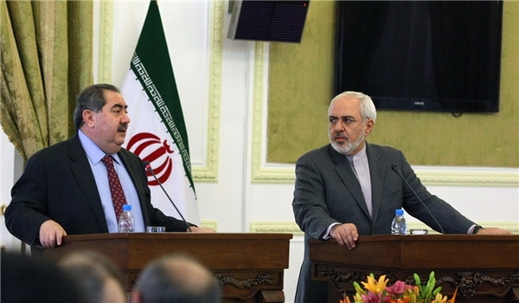
Zebari made the remarks in a joint press conference with his Iranian counterpart Mohammad Javad Zarif who arrived in Iraq on Sunday to meet the country’s new prime minister and other high-ranking officials.

He also appreciated Iran for its cooperation in the fight against terrorism in different parts of Iraq, and said, “At present, a new reality has emerged in the region, and the international community has come to feel the danger of ISIL.”

“We have demanded international support for our war on terrorism, which is a normal move in the contemporary world. When we asked for international support against the ISIL, we didn’t want military forces since there are no deficiencies in the number of Iraqi army forces and the peshmerga (the Iraqi Kurdish fighters),” the Iraqi prime minister said, implying that cooperation with Iran does not include presence of Iranian soldiers in his country.

His remarks came after Iranian Defense Minister Brigadier General Hossein Dehqan rejected media reports on the presence of the country’s military forces in Iraq to fight the ISIL, saying that Baghdad does not need assistance of Iranian troops in its combat against the terrorist group.

“We have made official announcements that we would not spare any effort to assist and back up the Iraqi government and nation in grounds of combat against terrorists, but when it comes to military assistance we believe that there is no need to Iran’s direct presence in Iraq to confront Daesh (ISIL) as the Iraqi nation and government, relying on the central role of the religious authority, are able to confront it,” Dehqan said in a press conference in Tehran on Saturday.

He described the ISIL as a terrorist group at the service of the Zionist regime, and said, “Those who supported them yesterday and support them today too have now come to realize the correctness of Iran’s words that they (the ISIL members) contribute to insecurity in the region.”

“Today the US and France should take action to compensate for their supports (for the ISIL) and become united against Daesh,” Dehqan said.

Late in June, Iraqi Ambassador to Tehran Mohammad Majid al-Sheikh rejected certain media claims about the presence of Iranian military forces and Commander of Iran’s Islamic Revolution Guards Corps (IRGC) Quds Force General Qassem Soleimani in Baghdad.

The US Wall Street Journal in a report in June claimed that Tehran has sent two elite units of its IRGC to Iraq to fight against the ISIL terrorists – an Al-Qaeda offshoot.

Upon arrival in Iraq today, the Iranian foreign minister renewed Tehran’s support for the Iraqi people’s fight against terrorism.

“The Islamic Republic of Iran has always stood and will stand beside the Iraqi people (in their campaign against terrorism),” Zarif told reporters on Sunday.

He said the Iraqi people have felt the serious threat of terrorist groups to their country, adding that the nation sees this threat not “as a sectarian strife among different tribes or religious groups but as a major danger to all Iraqi people which needs to be confronted by all”.

Zarif expressed the pleasure that the wave of terrorist attacks has been controlled in Iraq by the help of religious leaders, and said, “We hope that this danger will be obviated with solidarity and coordination among all Iraqi groups, and that peace and tranquility will return to Iraq again.”

Araqchi: Iran, G5+1 Members to Hold Bilateral Talks

Abbas Araqchi

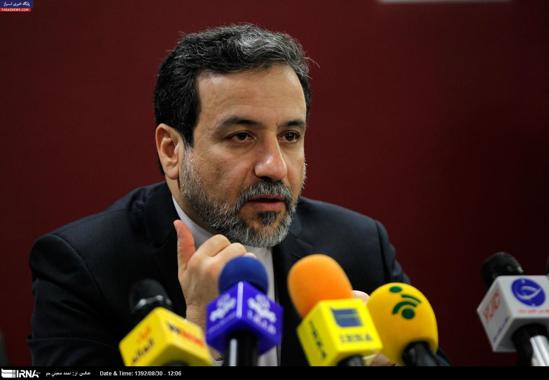
Iranian Deputy Foreign Minister for Legal and International Affairs Seyed Abbas Araqchi said Saturday that the next round of nuclear talks will be held prior to the UN General Assembly session in September.

Araqchi noted that Iran’s Foreign Minister Mohammad Javad Zarif and EU Foreign Policy Chief Catherine Ashton along with their deputies are scheduled to discuss the latest developments regarding the nuclear talks in Brussels on September 1.

“Other bilateral meetings will also be held before the New York meeting and we are arranging the schedule and level of the discussions,” Araqchi added.

The Iranian diplomat said there will also be a meeting with US officials if necessary.

On Saturday, Iranian President Hassan Rouhani said Tehran plans to continue talks with the G5+1 very seriously until it succeeds in restoring its inalienable nuclear rights.

“We will continue our (present) path in foreign policy and will seriously continue our negotiations based on logic, our rights and international undertakings,” Rouhani said.

On July 20, the deadline for reaching a final agreement on Iran’s future nuclear activities was postponed by four months—until November 24—to give more time for diplomatic efforts.

Zarif and Ashton in a joint statement after over two weeks of talks stressed the need for more efforts and time to reach an agreement with the world powers over Tehran’s nuclear program.

The two officials who presided the negotiating sides, emphasized at the end of Iran-G5+1 negotiations that they have held different sessions in different forms and in a constructive atmosphere to reach a final comprehensive agreement.

Due to certain differences over some fundamental issues the two sides agreed to extend the Joint Plan of Action by November 24, they added.

Chasing tragedy: James Foley and the violence of Empire

ISIL-James foley beheading

When one becomes a parent – even a middle class, white parent with all the privileges denied the majority of those whose tragedies litter our news feed – we see our sons and daughters in the gray corpses of Palestinian children, in the broken bodies of drone victims, in the slaughtered Yazidis, in the black, unarmed child hit six times by cops whose ostensible duty is to protect and serve, in the angry kid who charges up to a cop and says, ‘Kill me now. Shoot me now” just moments before nine shots ring unhesitatingly through his brain, his lungs and his other vital organs, rendering him a bleeding, empty, dead corpse on the sidewalk (one whose corpse, nonetheless, must be cuffed for good measure). Every day is an overwhelming exercise in restraining my horror, empathy and moral outrage into 800 words or less, with fewer cuss words and tears than the first draft. But then there are the exceptions. The times when something happens in the news that is so horrific, so vile, and so unpleasant, that I fail to feel anything at all.

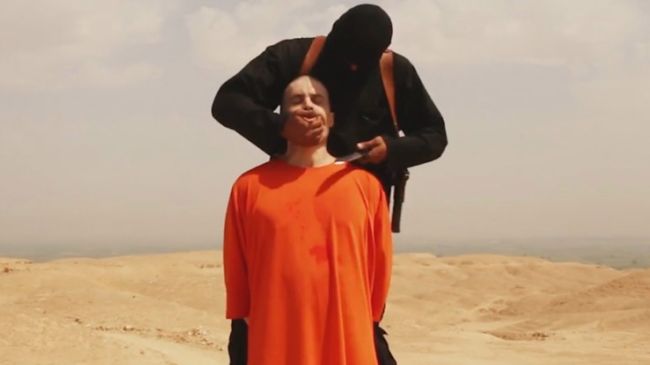
I was editing an article at my desk last night, my teething eight-month old baby playing happily with wooden blocks on the floor at my feet. My husband entered the room and casually asked: “What are you working on?” I looked up from a window I’d just opened: a sun-bleached landscape, shaven headed white man, orange jumpsuit, a black-clad terrorist standing next to him holding a knife. I smiled at my husband, distracted, as the video streamed and the man in orange awkwardly read from an auto-cue off camera. “I’m just watching that journalist gets beheaded. Can you take the baby outside?”

We could make this an article about how I – a young, white mother in Venice Beach – have become inured and desensitized to violence through my exposure to the internet, but to be perfectly honest, I don’t think my massively inappropriate reaction to James Foley’s brutal and horrific death is about the internet, films, movies, video games or the proliferation of violent images I’m saturated with, day after day. I think my inappropriate reaction to the murder of James Foley is a consequence of my daily, unwilling participation in the unrelenting violence of the United States of America, a country which – with every black life stolen, with every drone strike sanctioned, with every body held without trial, with every black life ruined in the prison industrial complex – proves itself the most violent perpetrator of all.

We are ordered to believe, time and again as Americans, that the violence sanctioned by our government is justified. That it is for our greater good. Collateral damage, we are told, is an essential part of our national and personal security. Yet the fall-out – particularly when it concerns white Americans – is barbarous and inhumane. In this enduring mythology of good vs. evil which our government streams relentlessly to the public, the cop holding a gun and shooting Kajieme Powell is behaving in an exemplary way, while the man holding a knife and slicing open James Foley’s threat is, in contrast, a barbarian, a beast, less than human.

When is violence “good”? When is violence “justified”? When is violence less horrifying, less sick, less disgusting, less inhumane, than other violence? When it is inflicted with one’s hands, or indirectly via a sensor operator, a grounded pilot in the baked Nevada desert, a man who gets up at the end of his shift, steps into the bright sunshine and drives his station wagon home past a sign which says “Drive Carefully: this is the most dangerous part of your day”? Is violence better when it’s performed in the dark against a large number of indiscriminate targets – human beings, we should say – the videos held in secret, only spilling into the light of day when a whistle blower steps forward or a FOIA reveals the truth? Is violence worse when it is against one individual: performed for the camera, taped, elaborate, ritualistic and dramatic? Is violence better when it is casual and habitual, inadvertently immortalized for the world to see? When the weapon is a knife or a gun? When it is done in defense or offense? State sanctioned or revolutionary? When it is retribution or vindication? When it is done in the name of one’s nation, or one’s religion?

I am reminded of that oft-quoted Martin Luther King speech, cited so often in the wake of the riots in Ferguson, most amusingly (and incorrectly) by Fox News who seemed to suggest MLK would have a moral and ethical issue with the protestors in Ferguson:

“It is not enough for me to stand before you tonight and condemn riots. It would be morally irresponsible for me to do that without, at the same time, condemning the contingent, intolerable conditions that exist in our society. These conditions are the things that cause individuals to feel that they have no other alternative than to engage in violent rebellions to get attention. And I must say tonight that a riot is the language of the unheard.”

A riot is also the language of the oppressor turned back whence it came. Pacifism and nonviolent resistance are the only morally defensible positions for victims to be in, not that this assures their protection.

I did not have a problem watching the video of James Foley’s murder. I did not avert my eyes. I did not find myself – as I had before, with Palestinian children or Michael Brown – mentally pasting my son’s eyes into those of the victims. Rather, I saw Foley as myself.

“Jim Foley’s life stands in stark contrast to his killers,” Obama said on Wednesday. “Let’s be clear about ISIS. They have rampaged across cities and villages killing unarmed citizens in cowardly acts of violence. … No faith teaches people to massacre innocents. No just God would stand for what they did yesterday and what they do every single day.” He goes on: “Their ideology is bankrupt. People like this ultimately fail. They fail because the future is won by those who build and not destroy.”

Obama describes the ideology of ISIS as “Bankrupt” as “slavery to the empty vision”, seeming to imply that the US, in contrast, offers – what? Great moral credit? Oppressors to a full reality? Following on from nearly two weeks of uprisings in Ferguson, the irony is not lost on many of us, particularly black Americans still struggling against the systemic racism that White America continually fails to acknowledge. In this narrative of Empire, James Foley is held up as a hero, applauded for his “bravery”. As someone who has been told, multiple times, that I was “brave” to go to Afghanistan, I can assure you it is certainly not heroism or bravery which drives people like James Foley and myself to these far flung corners of the world, to places where the empire goes to die and we might too, surrounded by languages we cannot speak and cultures we know about only through google, to report about conflicts and other horrors in a way pre-determined by the nature of whatever publication or organization will pay for our words. Call it nihilism or optimism, thrill seeking, war tourism, adrenalin addiction, or call it, simply, a commitment to ‘the truth’, it does not cancel out James Foley’s humanity, his life, his legacy, nor the unbelievable dignity and grace of his last moments on earth, captured for all the world to see. It does not justify extremists or find excuses for their actions. But it does, heartbreakingly, remind me once again that white lives like mine belong to a firm narrative of conviction, an infallible belief in our own moral and ethical superiority, while black and brown folks are merely the pawns in a game of empire, driven ever more incessantly towards an ineluctable conclusion. That conclusion could be a rebellion – but is more likely to be “a riot”. That conclusion could be the radicalization of large numbers of people – but will probably be “the creation of terrorists”. That conclusion could be an act of warning, a signal to those in the West to cease with their Imperialist meddling – but will more than likely be “an unforeseen terrorist attack” just like 9/11.

The sad truth is that the future does not belong to people like James Foley, whose lives are spent – like mine – chasing the next great tragedy, disaster, death and outrage to write about. The future does not belong to our children, depicted in grainy images on Facebook walls with holes in their blood-bleached, dust stained corpses. The future does not belong to the new, and yet overwhelmingly familiar horrors being churned up by yet another chapter in US Imperialism. Future implies we have somewhere to go: some momentum that propels us to a new destination, a new day, something different. Yet the future belongs only to this same interminable hamster wheel of cyclical violence, where the US, the emperor of the world systematically destroys black and brown people at home and abroad, and justifies it in terms of “defense”, ratcheting it up whenever that defense provokes any reaction which is not nonviolent.

Ruth Fowler is a journalist and screenwriter living in Los Angeles.