Monday, December 22, 2025
Home Blog Page 4963

Ayatollah Al-Sistani’s stance will go down in history

Matteo Renzi-Ayatollah Sistani

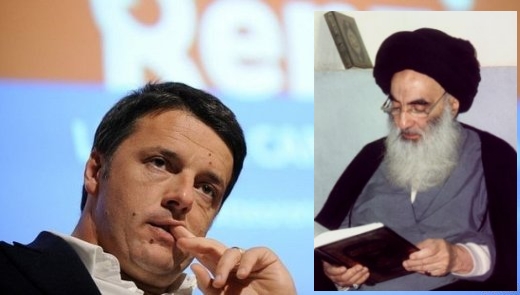
Italian Prime Minister Matteo Renzi has praised Iraqi top Shiite cleric Grand Ayatollah Ali al-Sistani for his remarkable role in preserving Iraq’s national unity, and painting a true picture of Islam in the face of attacks by the Islamic State of Iraq and Syria (ISIS). Ettela’at daily, on August 25, 2014 quoted the Italian PM as saying that the West came to know the true picture of Islam through his humanitarian fatwas [religious edicts]. The following is the translation of a short report the daily released on the comments of the Italian premier:

Renzi went on to say that crimes that Iraqi people have witnessed over the last four decades outnumber those experienced by the Jews in Germany.

As for brutal attacks at the hands of ISIS terrorists and Baathist loyalists since the ouster of Saddam Hussein in 2003, he acknowledged that despite such heinous crimes, not only have top Shiite clerics not persuaded Shiites to take revenge on followers of other faiths, but they have treated them as equals and part of their own community.

The Italian prime minister stressed the humanitarian stance taken by Grand Ayatollah Sistani will live on in history.

During impeachment there was no disrespect for science minister

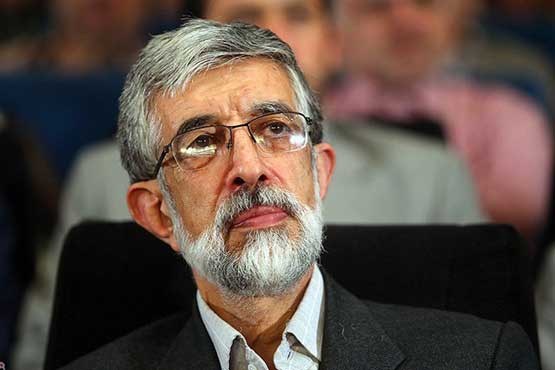
Golam-Ali Haddad Adel

Following the impeachment of the minister of science, research and technology there were claims and counterclaims that political motives played a role in the dismissal of President Rouhani’s science chief. On August 24, Aftab-e Yazd Newspaper published the comments of a principlist deputy who was once the speaker of the chamber:

In terms of naming an acting minister, no one was more set than Mr. Najafi,” he added. As for his assessment of the event, he stressed, “I don’t regard the appointment of Mr. Najafi as an act of defiance against parliament.

“Impeachment is not unusual as far as interactions between parliament and the government are concerned. Almost every government has to deal with such a thing. Mr. Rouhani was in parliament for two decades and is well aware of this parliamentary procedure,” Golam-Ali Haddad Adel, a member of the Islamic Consultative Assembly who was once the Speaker of parliament, commented on the impeachment hearing of Science, Research and Technology Minister Reza Faraji-Dana, who failed to re-win a vote of confidence from MPs and was dismissed on August 20, 2014.

“In terms of naming an acting minister, no one was more set than Mr. Najafi,” he added. As for his assessment of the event, he stressed, “I don’t regard the appointment of Mr. Najafi as an act of defiance against parliament.”

“Had the former minister paid more attention to concerns expressed by the MPs, the impeachment could have been averted. Parliament deputies granted Faraji-Dana a vote of confidence nine months ago, but certain developments led to his impeachment,” he went on to say.

Calling maintenance of stability and calm as the major concern of MPs, Haddad Adel, a member of the Education and Research Committee in the 9th parliament, reiterated, “Some falsely identified the issue of scholarships as the cause of the impeachment which was indeed a wrong impression. Instead, the real reason behind it was the return of a disturbed atmosphere to universities thanks to the admission of starred students [University students who were banned from continuing their education for committing offenses], presence of professors who did not fit the job, and other matters which were raised during the impeachment session. Personally, I am sorry that an experienced professor and a respected character like Dr. Faraji failed to carry on as a result of his performance.”

The impeachment hearing was truly serious. Those who were for and against it defended their stance with tenacity and in earnest, but the atmosphere sweeping the parliament was not poisoned by illogical behavior and there was no disrespect for any side, including proponents, opponents and even the minister.

He added: “The impeachment hearing was truly serious. Those who were for and against it defended their stance with tenacity and in earnest, but the atmosphere sweeping the parliament was not poisoned by illogical behavior and there was no disrespect for any side, including proponents, opponents and even the minister. Aside from a few comments made prior to the vote of confidence by the Speaker Ali Larijani which drew flak from a number of MPs, he otherwise handled the session very well.”

As for the formation of a “Moderation Caucus” in parliament he said, “The Commission does exist already, whether or not it hangs out its shingle will change nothing on parliament floor.”

On the nomination of Mr. Najafi as the acting science minister, Mr. Haddad Adel, who is also a member of the Expediency Council, stated, “In my opinion, given the short time that the president had to pick one to take the helm of the ministry temporarily, he did not come across anyone who is fitter than Mr. Najafi, and I don’t regard the appointment as an act of defiance.”

IS teaches child recruits how to sever heads

IS teaches child recruits how to sever heads

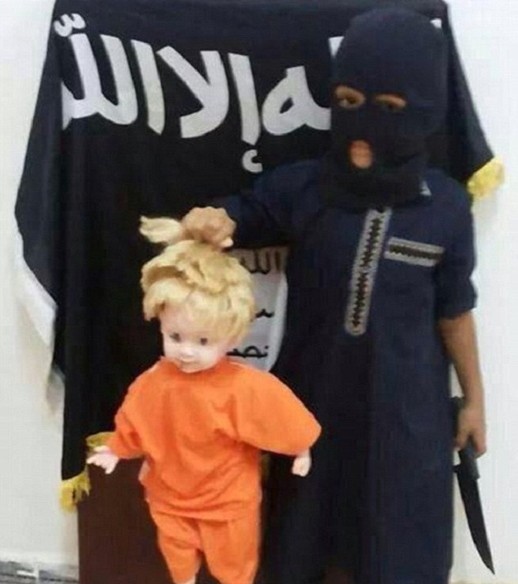
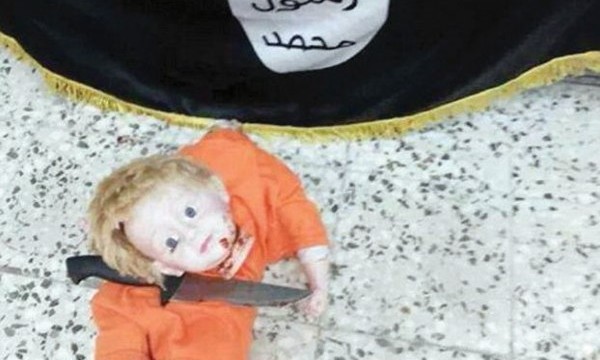
Alalam.ir news website reported on August 25 that websites operated by the Islamic State (IS) formerly known as ISIS have released images of a Libyan child decapitating a doll in imitation of the beheading of US journalist James Foley. Here is the translation of the story by Alalam:

“Teach your children how to behead so that they could help you out. There will be too many rotten heads [to be severed] tomorrow,” runs the caption of one photo.

In another photo a hooded child holding a knife in one hand and a doll in an orange jumpsuit in another poses for the camera with a black flag of the terrorist grouping in the background. In yet another photo the severed head of the doll lies on its chest.

The London-based daily Alhayat reports the terrorist group has set up training camps for children. And the Syrian Observatory for Human Rights, also based in London, has reported that IS has recruited thousands of children aged between 12 and 16 in Iraq, Syria, and other Arab countries. These children are being trained at special camps in Iraq’s Nineveh province.

Alhayat further reported that IS is training a new generation of terrorists, a generation that takes up arms at an early age and is devoid of any human feelings by the time they are grown up.

IS teaches child recruits how to sever heads


ISIS, a product of Western Irresponsibility

ISIL
ISIL

An August 24, 2014 issue of Arman-e Emrooz Newspaper featured a column by Jafar Golabi on those who share the blame for the rise to notoriety of the Islamic State, formerly known as the Islamic State of Iraq and Syria (ISIS). The following is the translation of the op-ed in its entirety:

The emergence of ISIS in Iraq is not a simple question to be overlooked. In fact, it has roots in multiple historical events, and therefore we cannot be totally immune to its direct or indirect consequences or to similar phenomena. After the emergence of ISIS in Iraq, when US President Barack Obama officially declared that America would not intervene militarily, he could never imagine that if the “cancer” of ISIS triggered bloodshed in Iraq, it would inflict suffering on Americans and put US interests in the region on the line.

An analysis of the issue and a detailed study into what gave rise to ISIS in Syria and Iraq calls for scientific dissection in the field as well as consideration of all regional and international factors at play. Nevertheless a cursory examination of how the West dealt with the issue can be food for thought for Iran.

After the outbreak of civil war in Syria, initially the West directly and indirectly supplied Syrian rebels, among them fundamentalists, with arms. However, when it saw their actions in rebel-held areas which posed a potential threat to the West as well as to Israel, it made extra efforts to make sure the aid was solely channeled to the Free Syrian Army.

When the demon of ISIS suffered overwhelming defeat in confrontation with the Syrian army in Syria, it took shelter in Iraq and drew international attention to its savage and inhumane measures. Apparently, such moves which defy political logic put Saudi Arabia and Qatar, which initially supported ISIS, in a dilemma and are likely to lead to international consensus on taking on the group.

The question that matters most is what set the stage for such groups to surface in the Middle East. Undoubtedly, these groups live on economic woes, discrimination, ignorance, superstition, and dogmatism. Such social ills help rebels recruit an army of disgruntled youth who are at their wits’ end.

However, if political conditions do not contribute to the emergence of such extremist groups, if governments stop taking sides and backing such groups, and if the interests of dominant powers do not play a role, the energy driving such violence – either orchestrated or haphazard – will find a vent in the form of sporadic incidents. Rare shooting incidents in which civilians are targeted in the West are examples of such eruption.

As long as Western interests lie in the establishment and the rise to power of the Taliban in a showdown with the Union of the Soviet Socialist Republics (USSR) at some time, and in providing Syrian rebels with arms and in capitalizing on and even inflating the ignorance and menacing religious divisions gripping the region at another, it won’t be a difficult task to locate the likes of Abu Bakr al-Baghdadi – the head of ISIS – and supply them with financial aid and weaponry.

In addition to this global chronic, nagging and agonizing pain, a phenomenon is in the making in which fomenting terrorism and provoking divisions and ignorance act like a double-edged sword which will come back to haunt those behind the scenes even more rapidly than the Taliban. Who would have thought that ISIS would ever surface in Iraq and brutally behead American journalist James Foley?

Probably, by now the West has come to the conclusion that it is not always possible to maintain stability, equilibrium, and welfare at home and send away crises to this part of the world.

In the aftermath of 9/11, former Iranian President Mohammad Khatami in his address to the United Nations pointed out that in order to avert such disasters, measures should be taken to stop people from getting so world-weary that they might want to claim numerous lives by killing themselves.

As a matter of fact, there should not be a deepening gap between the North and South, and as long as such widening and threatening chasm persists, there is always the danger of an eruption of spite and hostility.

Only if America gives up its presence in the Middle East and leaves, will it be able to escape such conflicts unscathed. Even if it is not planning to do so, it should not pursue its interests in stoking divisions and discord or keeping forces engaged. Taking advantage of Third-World indiscretions could one day bear inconceivable consequences.


Pentagon: US preparing military options against ISIL in Syria

US army
US army


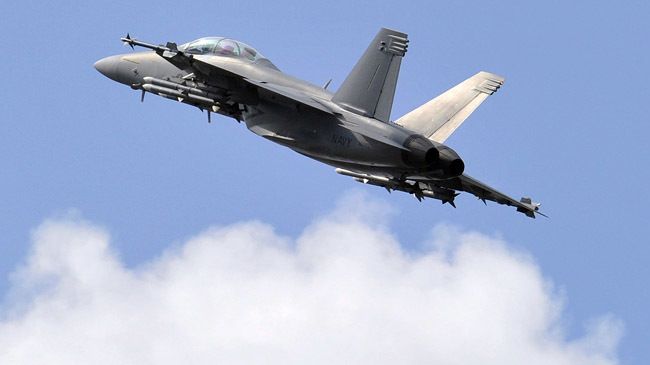
The spokesman of the Joint Chiefs of Staff on Monday said all military options to address ISIL, including airstrikes, are being reviewed, both in Iraq and Syria.

“With Central Command, [Dempsey] is preparing options to address [ISIL] both in Iraq and Syria with a variety of military tools including airstrikes,” Colonel Ed Thomas said.

He also highlighted the need to form a coalition with regional and European countries in the campaign against the militants.

President Barack Obama has made no decision on obtaining Syria’s approval, but the Defense Department says it is ready to use force against the militants operating in Syria to disrupt the groups’ operations and kill its senior leaders.

Last week, General Martin Dempsey, the chairman of the Joint Chiefs of Staff, said the group’s threat needed to be addressed in both Iraq and Syria.

The Pentagon has already begun airstrikes on the militants’ positions in Iraq.

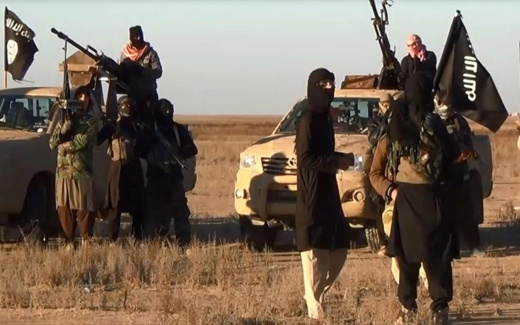
ISIL, also known as ISIS, controls large parts of Syria’s northern territory. The savage group sent its fighters into neighboring Iraq in June, quickly seizing large swaths of territory straddling the border between the two countries.

American officials say the militant group is growing in strength and is much more capable than the one US forces faced when the group was called “al-Qaeda-Iraq” during the US war in Iraq from 2003-2011.

On Monday, Syrian Foreign Minister Walid al-Moallem warned the US and its allies against attacking ISIL targets on Syrian soil.

“Syria is ready to cooperate and coordinate with regional and international efforts to combat terror in accordance with UN resolutions and respect of Syrian sovereignty,” he told reporters in Damascus.

“Everyone is welcome, including Britain and the United States, to take action against ISIS and Nusra with a prior full coordination with the Syrian government,” Moallem continued.

Senior US officials said Monday that the Pentagon was sending in manned and unmanned surveillance flights over Syria, using a combination of aircraft, including drones and possibly U2 spy planes.

The Obama administration has been planning military intervention in Syria since ISIL carried out what US officials called its first “terrorist attack” against the US, referring to last week’s killing of American journalist James Foley.


Israel launches attack on UN-run school in Gaza

Israel attack gaza
Israel attack gaza


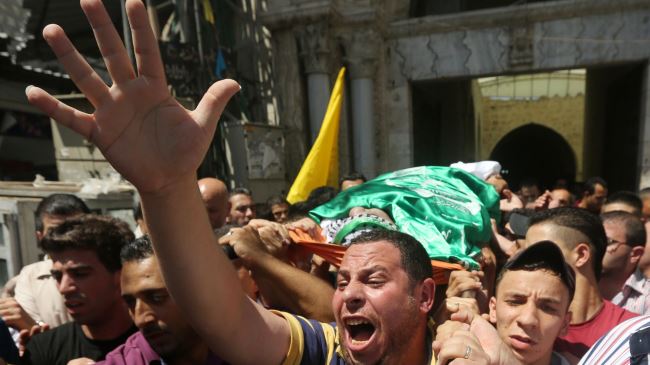
According to Palestinian media reports on Monday, several people were injured in the attack on the school in Jabalia, north of Gaza City.

Several UN-run schools have been hit since Israel launched its deadly offensive on the blockaded area.

Dozens of Palestinians have been killed in Israeli attacks on UN schools in the blockaded territory.

Israel shelled Abu Hussein School in Jabalia, located 4 kilometers north of Gaza City on July 30.

According to Gaza’s Health Ministry officials, at least 17 Palestinians were killed by Israeli shelling against the UN-run school.

Scores of people also suffered injuries in the deadly attack on the UN-run school.

On July 24, Israeli tank shells slammed into a school in Beit Hanoun in the northern Gaza Strip. Sixteen people were killed and hundreds of people were also wounded in the attack.

More than 2,130 Palestinians, including around 570 children, have been killed since Israel launched its onslaught on Gaza on July 8. Some 11,000 others have been wounded.

The United Nations says over 80 percent of the killed Palestinians have been civilians.

Nearly 400,000 Palestinian children are in immediate need of psychological help due to “catastrophic and tragic impact” of the Israeli war, according to the United Nations Children’s Fund (UNICEF).

Tel Aviv says 68 Israelis have been killed in the conflict so far, but Hamas puts the number at more than 150.

The Ezzedine al-Qassam Brigades, the military wing of the Palestinian resistance movement Hamas, has been launching retaliatory attacks against Israel.

Iran Front Page a symbol of the Communications Age

Forghani in Iran Front Page officially launched
Dr. Mehdi Forghani

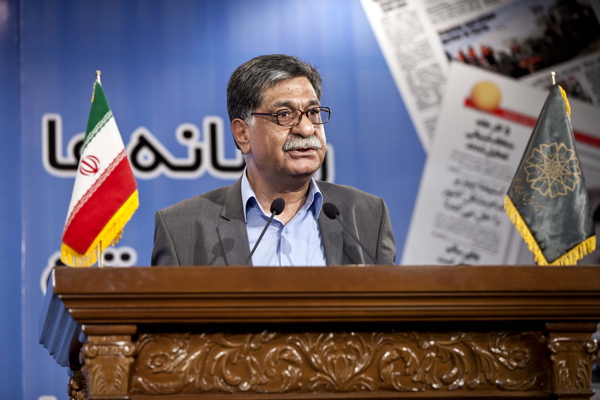
Iran Front Page (IFP) was officially launched at a gathering dubbed Iranian Media and the International Community in Tehran on Wednesday August 20. One of the speakers at the event was Dr. Mohammad Mehdi Forghani, a veteran journalist and prominent journalism professor at Tehran’s Allameh Tabatabai University. The following is the translation of the speech Dr. Forghani delivered at the meeting:

First of all, let me greet all those who have gathered here for this event. Thank you for giving me the opportunity to take up a few minutes of your time. I would like to offer congratulations to Mr. Askarieh on the latest of his innovative moves which is expected to be unveiled later tonight.

I know him for almost 38 years now. His willingness to take risks and sail into uncharted territory is his outstanding quality, something which is not so common these days. That is the quality I have always stayed away from. Naturally, I am a conservative person. Over the years, the people I know have asked me: “Why don’t you launch a newspaper or a magazine?” I have never done that because as the name uncharted waters suggests stress and anxiety come with the territory. He [Mr. Askarieh] has launched Safheyeavval [name of a magazine Mr. Askarieh has launched in the 1990s] and embarked on many other journeys. This latest push is meant to paint a better picture of Iran for the world public opinion.

I think what is going to be unveiled tonight is a symbol of the age we live in, an age which has been dubbed as the age of communications, an age in which media reign supreme.

Let me shift to another subject which is worth mentioning. I think what is going to be unveiled tonight is a symbol of the age we live in, an age which has been dubbed as the age of communications, an age in which media reign supreme. Willingly or unwillingly, we all live in an environment eclipsed by the media.

Jean Baudrillard has argued that all human knowledge comes from media, either directly or indirectly. In other words media have conquered our lives. Of course, such pervasive presence can be used for both positive and negative purposes. The presence of media in our lives is not always black and white. They are not necessarily an ailment, neither are they a cure. In some cases, they emerge as an ailment and in others as a cure. Depending on who is running them and what policies they follow, media can serve different purposes.

The website which is going to be launched later tonight is the result of what was thrust onto the world stage by communications technology, especially after the 80s. I believe, just like every other civilizational product, new technologies do have the potential to be used for negative goals. There are positive uses as well, just like the site which is going to be launched later tonight.

For decades we have complained about the hegemony of global media which are also known as mainstream media. We have complained about their monopoly, about the fact that they file reports containing millions of words on a daily basis without mentioning the Third World and if there is any mention of the Third World it simply involves things which are taken there from nearby countries to be processed.

Initially these technologies made cracks appear in the prevailing discourse of media. As time passed those cracks grew wider and wider. This is a great achievement. Media, whether within a country’s national borders or at an international level, have rivals. Although these rivals are mostly pressed for cash and lack a cohesive structure and strong human resources, they are very competitive.

Gaza provides a perfect example.People took to the streets in cities in the US, Britain, France, Spain and some other countries to condemn Israeli crimes and protest against their governments. The end result was not what the mainstream media covered. In those protest rallies participants even criticized the mainstream media for censorship.

How did the public learn about what was really happening? Governments were unable to censor the news that spread through social networks. As a result, cohesion developed in the court of public opinion. Never has the Israeli government been under so much pressure in the court of public opinion. Similarly, Western governments have never been under so much pressure at home to do something to stop this bloodletting and savagery.

That means each and every international citizen has been empowered. Sometimes an eye-witness account a person shares with others on a blog can not only compete with what Jean Baudrillard describes as hyper-reality but overshadows it to a large extent. We saw that happen during the wars in Iraq and Syria and in Arab countries swept by the Islamic Awakening and more recently in Gaza.

This is a positive phenomenon, it has some negative aspects too. It gives everyone a chance to speak, but who answers for what is published remains unanswered. It is also unclear how truthful the things which are published are. It is unclear how accurate the stories are and how much of a role personal hostilities have played in its content. These are two sides of a single incident. We need to make efforts to improve the positive aspect.

As Mr. Askarieh said he has received no government aid and that is what is important. We so badly need to get the private sector involved in these activities.

What is going to happen [the launch of the IFP website] is an auspicious move. As Mr. Askarieh said he has received no government aid and that is what is important. We so badly need to get the private sector involved in these activities.

Over the decades, in our country state-run media including print media have prevailed. When independence, freedom and pluralism are talked about in international communications and journalism, private media are being referred to.

I don’t want to imply that the government-run media cannot or should not exist. What I am saying is that private media should be given more room to focus on realities. Government elements should not trample them. We hope to see more such activities in our country and a more robust private sector on the media stage.

It seems that in local and global media spheres which are full of excitement we need a code of conduct more than ever before. I believe ethics are conspicuous by its absence in our society and in the international community today. Media should develop the code of conduct in question and remain committed to its provisions. However, one should not forget that such a thing cannot happen in vacuum. It should be part of a wider professional journalism structure.

Although journalism made its debut in Iran 180 years ago, journalistic professionalism is still absent in the country. There are some principles which should be worked into a comprehensive system of media rights. Professional independence is one of these principles. Any such system should cover the definition of professional journalists, their salary, and the terms of their insurance and retirement, etc. It should also guarantee their right to investigate and freely publish information, news and opinions.

Economic independence is of the essence too. In the absence of such independence a journalist’s performance might get dangerous.

A former student of mine who works for a news agency called me a few days ago and said he wanted to interview me on the phone. As part of the first question he asked he said he had heard reports that in the West journalists are encouraged to buy the shares of companies to minimize their financial dependence on the media company they work for. Is it true that such a practice gives them more independence, he demanded.

In response I said, the definition of a professional journalist is clear. A professional journalist is one who makes a living through working for an agency. When a person becomes a stakeholder in a company and the dividends that firm pays become the main source of his income, he cannot be viewed as a professional journalist. Such attitudes are becoming more and more mainstream these days.

A supreme media council that would protect the professional and social responsibilities of journalists on the one hand, and supervise their performance on the other should be created.

Professional and economic independence which brings about job security, specialized training, and a code of conduct should all be part of the package. A supreme media council that would protect the professional and social responsibilities of journalists on the one hand, and supervise their performance on the other should be created.

As a person who has been involved in journalism for more than four decades, I should tell younger journalists that in the absence of ethics journalism is a crime. When we are not committed to the truth, when we don’t make efforts to keep away from insults, slander and bribery, and when we don’t act in keeping with professional ethics, we are doing injustice to our fellow citizens. We need to be committed to global ethics and add our own cultural values to the universal convention.

In the absence of such criteria it would be difficult to determine when a journalist is serving his community and when he is committing treason. So let’s make a call for creation of an ethical movement in the journalistic community. That is the thing that should happen.

All of us should know how important this code of conduct is. We should also know that any profession which has its own code of conduct is viewed as more significant. You can’t expect journalists to answer for their conduct and abide by professional ethics without ensuring their professional rights.

I hope we can join hands and help realize something that has eluded us over the past 180 years. Thank you very much.

Active or passive presence on the global stage?

Iran Front Page officially launched
Dr. Sabah Zangeneh

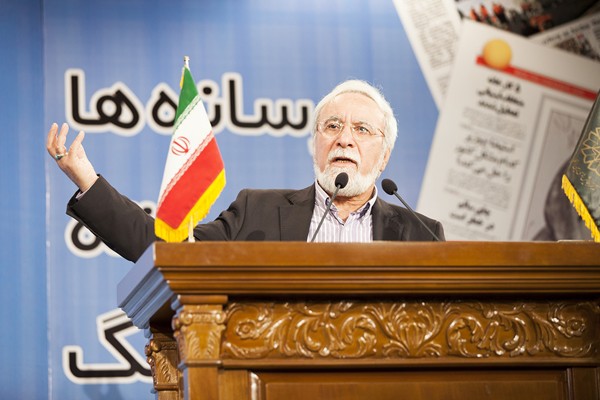
Iran Front Page (IFP) was officially launched at a gathering dubbed Iranian Media and the International Community in Tehran on August 20, 2014. One of the speakers at the event was Dr. Sabah Zanganeh, a veteran diplomat who quit politics a few years ago and began to offer counselling to private-sector players on cultural and economic fronts during his retirement years. In his speech, Dr. Zanganeh described Iran as a land of culture and civilization which continues to draw global attention to date. He called on the private sector to step into the realm of media, citing the fact that state-run media cannot be as successful as their private peers in interactions. He also offered congratulations on the launch of such a move in the form of Iran Front Page by veteran journalist Mahmoud Askarieh. The following is the translation of the speech Dr. Zanganeh delivered at the get-together:

It is an honor to be at a gathering which is at the center of an independent, constructive and vital push. As it was said earlier after leaving office as a member of parliament I was appointed as deputy director of the Islamic Republic News Agency. Dr. Kharrazi was to vacate the position, and I was offered the job, but later the then minister of culture and Islamic guidance asked me to take charge of the Cultural Department of his ministry which has since turned into two departments which separately deal with cultural and media affairs.

There were certain difficulties associated with that job. At the same time one had to deal with cultural questions which normally require patience and media affairs which are part of a fast-paced current. I feel duty-bound to recall the patience Mr. Khatami exercised back then. As part of my job, I had to sign off on applications for establishment of printing houses and oversee the distribution of paper to publishers of magazines and newspapers. [The Iran-Iraq] war was still in progress and we did not have much foreign currency at our disposal. Thanks to the support we received, we were able to raise some money.

Two big institutes whose owners were bitterly opposed to the then minister of culture applied to set up their own printing houses and I would not approve their applications. In a graceful way that was typical of him, Mr. Khatami criticized me and asked me why I had not approved their applications. “We don’t have any foreign currency to give to them,” I responded. “Don’t worry about it. They will handle that part of the job themselves. Just give them the opportunity to speak their mind,” he said.

The concentric circles behind me can provide an example for our society. Throughout history Iran has been at the center of cultural and civilizational circles, not just in the immediate vicinity of its borders but in places as far as China in the east and Mauritania and Morocco in the west. These cultural and civilizational circles required efforts to cement the Persian literature in these regions. The impact is still evident.

As a result of a decline in political power and other historical factors, the circles shrank both politically and economically. But the Iranian-Islamic culture maintained its influence. The question is: Why haven’t we been able to ride the wave of these concentric circles in our media? One of the most natural areas for our media to exploit is the cultural foundation which has its roots in history. But, Iranian media have not fully tapped into this valuable legacy at their disposal.

Active or passive presence of Iran? In recent decades Iran has always been at the center of world news. Before the revolution Iran always drew attention as an oil-rich country. After the revolution, what placed Iran under the spotlight was varied. But Iran had a passive presence rather than an active one. In other words, the name of Iran came popping up, but Iran was never there to reflect its own realities. Why did this happen?

It seems we are at the center of a storm, but we don’t have the tools to describe the developments unfolding around us. Just like a person who is being tossed around in a swirling vortex. Those who are away see the waves and can describe what is going on, but the person who is caught in the middle is unable to describe what his condition is like.

I wish Mr. Askarieh luck. I want to ask a few questions here: What percentage of Iranian media knows foreign languages? As a person who seeks to embark on a new journey, how much do you know about widely-spoken languages in the world? Can your fellow journalists directly follow cultural developments of other countries and prepare a response in a foreign language? What percentage of Iranian media coverage is dedicated to foreign news?

As I said Iran is at the center of the concentric circles of its own culture and civilization. What percentage of Iranian journalists are on the ground in regions where the Iranian civilization has a foothold to provide us with news? Of course, some people have taken measures to contribute to that cause. For instance, Mr. Doaei has always worked toward that goal and has set up representative offices in Europe which have been able to reflect the cultural, media and social issues of the country. Iran Institute has made efforts in this regard too. But how successful have other media outlets been in this regard?

What percentage of Iranian authors, analysts, journalists and news website owners can have their articles published in foreign newspapers and magazines? To find answers to these questions one need to work out statistics. Have we prepared our personnel to analyze things or publish articles in foreign media?

Media are one of the fundamentals of this important question which gives Iran a chance to play a role on the international stage. What percentage of the stories that are related to the culture circle comes directly from Iranian media? As you know, a great volume of our news stories are prepared by others. We just make small changes before making them available to our audience. For instance, we change the word Sunni rebels into ISIS. But we never get into the depths of what is happening in their societies from an Iranian perspective, so we have to contend with what they provide us with and add as little as possible in the way of dressing up.

How much have we trained in remaining unbiased in reporting news stories and in our reporting? How much have we trained in developing social depths and remaining close to civil society? I think the step IFP has taken is a sign of good things to come. I hope it will stay on its intended course.

Once I asked whether it was necessary to have an external TV or radio service in addition to Al-Alam Magazine, everyone responded “yes”. But as the notion came closer to becoming a reality, everyone said it should be run by the government. That was how Al-Alam, Al-Kawthar and other state-run services emerged. Naturally the global audience can easily spot signs that a medium is run by a government. That stains its reputation and results in the audience to turn their back on it.

It seems Iranian society is mature enough to be able to use this transformative move to make a difference on the world stage. Let me offer congratulations on this auspicious move. By the way, it was great to see my friends, old and new, at this event.

Benefactors, people and village councils are to help pave dirt roads in rural areas

Improvement of Rural Roads

Vatan-e Emrooz daily featured a brief report on 24 August, 2014 on public contribution to the improvement of rural roads. The following are comments by deputy transport minister in that regard:

“Some benefactors have signed up to make contributions to the pavement of roads in rural areas in the provinces of Fars, Hormozgan, Khorasan Razavi and Isfahan,” said deputy transport minister Seyyed Hossein Mirshafi.

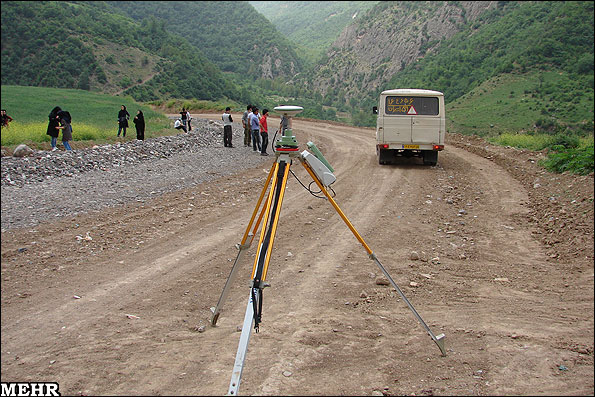
Speaking about a plan designed to maintain rural roads by means of contributions by the public and village councils, he said, “One of the measures adopted to bring down the number of road accidents and thus casualties is massive public contribution to the pavement of dirt roads.”

Pointing out that the maintenance of rural roads within villages is taken care of by villagers and those in charge of village councils, he went on to say, “The major issue on the agenda this year is the maintenance of rural roads with the help of the public and village councils. In doing so, we are going to collaborate with village and city councils across the county to tap into all present potential.”

Spokeswoman: Iran Supporting Peaceful Settlement of Differences in Pakistan

Marzieh Afkham
Marzieh Afkham

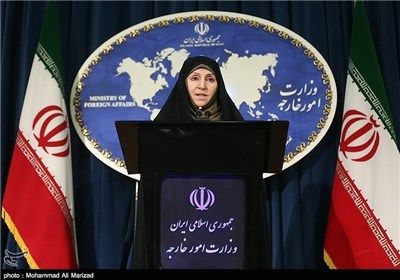
“I hope that any difference in the opinions of the different Pakistani political parties and groups would end peacefully and without any tension in line with the interests of people of Pakistan,” Afkham said on Monday.

Underlining the need to respect democracy, Afkham called on all political parties in Pakistan to solve their dispute at the negotiating table.

The protests in Islamabad, that began August 15, entered the 10th day Monday as Pakistan Tehreek-e-Insaf (PTI), Pakistan Awami Tehreek (PAT) and the government remained deadlocked over the issue of resignation by Prime Minister Nawaz Sharif whom they accused of rigging the 2013 general elections.

Opposition leader Imran Khan and cleric Tahir ul-Qadri, who controls a network of Islamic schools and hospitals, have been leading protests in the capital Islamabad since last Friday.

Both want Prime Minister Nawaz Sharif to resign over allegations of “corruption and election rigging”. Sharif, who won the last election by a landslide, has refused.