Monday, December 22, 2025
Home Blog Page 4962

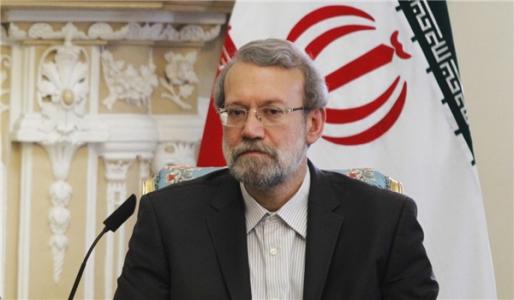
Parliament Speaker: Only Resistance Can Liberate Palestine

Larijani
Larijani

“I am glad to warmly felicitate you and all the pious and industrious men of the Islamic resistance on the great victory of the beloved Palestinian nation and warriors of the Islamic resistance in the recent Gaza war,” the Iranian parliament speaker added.

On the International Quds Day, Supreme Leader of the Islamic Revolution Ayatollah Seyed Ali Khamenei strongly condemned the recent Israeli attacks on the Gaza people, and underlined that there needs to be a change in the war strategy against the Israeli regime, stressing that all Palestinians, including those in the West Bank, should be armed to accompany Gazans in their armed struggle against Tel Aviv.

“We believe the West Bank, too, should be armed just like Gaza and those who are interested in the fate of the Palestinians must work in this respect so that the pains and miseries of the Palestinian people will be decreased due to their mighty hands and the weakness of the Zionist enemy,” he underlined in July.

Iranian officials, specially senior commanders, followed suit and underscored the necessity for arming the Palestinians in the West Bank, saying that the move would lead to Israel’s collapse.

“The continued war in Gaza will accelerate arming the West Bank and annihilation of the occupiers,” Deputy Chief of Staff of the Iranian Armed Forces Brigadier General Massoud Jazzayeri said in Tehran on Sunday.

“The holy Quds occupiers’ fear from arming the people and the resistance movement in the West Bank shows how deeply Tel Aviv is vulnerable to the start of a new phase of (Palestinians’) fight and resistance,” he added.

Jazzayeri said during the past decade and after the Zionist regime’s defeats in the 33-day, 8-day and 22-day wars in Lebanon and Gaza and the recent war against the Palestinians, the world public opinion has become aware of this bitter reality that the usurper Israeli regime is a cancerous tumor.

Earlier today, Commander of Iran’s Basij (volunteer) force Brigadier General Mohammad Reza Naqdi announced on Wednesday that arming the Palestinian resistance groups in the West bank has started.

“Arming the West Bank has started and weapons will be supplied to the people of this region,” Naqdi told FNA on the sidelines of the closing ceremony of a forum of Basiji university professors in Tehran on Wednesday.

He underlined that arming the West Bank will lead to the annihilation of the Zionist regime.

Stressing the need for Israel to return the Palestinian lands to their real owners, Naqdi said, “The Zionists should know that the next war won’t be confined to the present borders and the Mujahedeen will push them back.”

He also revealed that many of the equipment and possibilities used by the Palestinians in their recent defense against Israel were the products of the Islamic Republic of Iran, and added that Tehran has also trained them on how to use such technologies to defend themselves.

Yet, after an Israeli spy drone was shot down near Iran’s sensitive nuclear facilities in Natanz, Tehran grew even more furious at Israel, and said arming the West Bank should top Tehran’s agenda now.

“We will accelerate arming the West Bank and we think that we are entitled to give any response (to the recent aggression) which we deem appropriate,” Commander of the Islamic Revolution Guards Corps (IRGC) Aerospace Force Brigadier General Amir Ali Hajizadeh said on Monday, elaborating on the IRGC’s possible response to Israel’s recent aggression against Iran.

“The Armed Forces, including the IRGC and the Army, are fully prepared to trace and intercept (hostile flying objects) and if such moves are repeated, the aggressors will receive our crushing response,” he warned.

The IRGC Aerospace Force shot down an Israeli spy drone near Natanz nuclear enrichment facility in the Central parts of Iran on Sunday.

“A pilotless Israeli spy plane was shot down after it was traced and intercepted by the IRGC Aerospace Force,” a statement by the IRGC’s Public Relations Department announced on Sunday.

According to the statement, the Israeli pilotless aircraft was a radar-evading, stealth drone with the mission to spy on Iran’s enrichment activities by flying over Natanz nuclear enrichment plant.

The IRGC also pointed out in its statement that the Israeli hostile aircraft has been targeted by a surface-to-air missile.

“This mischievous attempt once again made the adventurous nature of the Zionist regime more evident and added another black page to the dark record of this fake and warmongering regime, which is full of crimes and wickedness,” the statement added.

The IRGC further warned that it “reserves the right of response and retaliation for itself”.
America uses battle against ISIS as pretext for meddling in the region

Obama-Asad
Obama-Asad

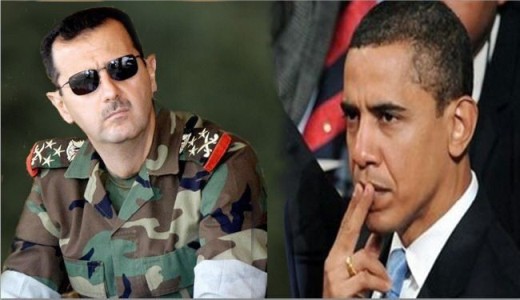
As ISIS keeps grabbing headlines, on August 24, 2014 Vatan-e-Emrooz, a daily, featured an article on the likelihood of US military action against Syria. What comes next is the translation of the analysis by the paper’s international desk:

Undoubtedly, the one who would reap maximum benefits from crises engulfing the Middle East is America, the country which made efforts to claw back its lost foothold in the region by turning to the pretext of taking on the terrorist group of ISIS [the Islamic State of Iraq and Syria].

Following its rapid advances in northern Iraq and the release of a video in which an ISIS militant beheads US journalist James Foley, the tone American officials and Western countries use to portray the danger posed by the group to America has become increasingly tinged with irony.

Building on the decapitation of James Foley at the hands of ISIS and its threat to the US and Europe, the West sent chills down the spine its own people in order to justify potential military action against the very terrorists it initially nurtured.

Actually, the reason behind Western adoption of such an approach is to regain a lost foothold in the region and facilitate the breakup of countries such as Iraq and Syria. The plot got more exposed when US Secretary of Defense Chuck Hagel on August 20 denounced ISIS as an imminent threat to American interests and said, “This is beyond anything that we’ve seen.”

Pentagon spokesman Rear Admiral John Kirby also said, “We do believe they have aspirations to strike Western targets,” but added the group is not believed to have the capability at the moment to attack the United States.

Meanwhile, French President Francois Hollande also acknowledged that his country’s supply of arms aid to armed Syrian insurgents was a mistake.

More than three years into the Syrian conflict, United Nations Secretary General Ban Ki-moon finally weighed in on the matter and pinned the blame of the lingering crisis in Syria on terrorism.

In Britain Sir Malcolm Rifkind, the chairman of the House of Commons’ Intelligence and Security Committee, and a former foreign and defense secretary in conservative governments, suggested cooperation with the government of Bashar al-Assad could be one way to take on ISIS and said focusing on the terrorist group only in Iraq while ignoring its operations on the ground in Syria was preposterous.

He told the Financial Times that the “ghastly” killing of US journalist James Foley underscored the need for action against the militant group and added, “The idea that we can have a military operation in Iraq that won’t have a Syrian dimension is inconceivable. For Syria to become an ISIS safe haven – that is ludicrous … I don’t see how we can avoid it.”

With such comments by US and Western officials becoming more frequent, on August 23, CNN reported that the US administration is considering the option of military action on Syrian soil. US officials contend that the probable strikes are intended to deliver a blow to ISIS positions.

Dropping hints on the likelihood of military action in Syria, Deputy US National Security Advisor Ben Rhodes earlier said, “We’re actively considering what’s going to be necessary to deal with that threat. And we’re not going to be restricted by borders.”

However, there is evidence that suggests America has created the terrorist group of ISIS to serve its own interests in Iraq as well as in Syria. By playing the ISIS card, US military presence in the region is going to be certain.

Under the pretext of fighting ISIS, America launched airstrikes on Iraqi Kurdistan despite the fact that it has been a few months since swaths of Iraq came under savage ISIS attacks.

In fact, such a step by America set the stage for Iraqi Kurdistan’s secession from the central government and helped define the borders of US influence in the region.

It is necessary to know that the Iraqi crisis was sparked off by America to have the country undergo the political changes Washington desired. Those changes came to light with the replacement of a prime minister and modification in the Iraqi government’s policy.

In other words, America felt the need for such changes in Iraq. However, what came out of it was a security crisis which spiraled out of control, something which Washington had never seen coming. The US, nonetheless, managed to exploit it to its own benefit and justify its return to Iraq.


A disabled Iranian war veteran becomes the oldest Mera Peak conqueror

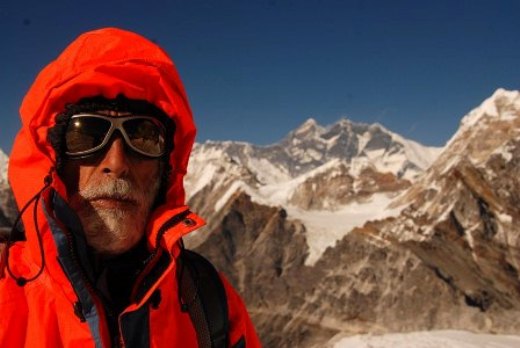
Farhad Eskandari Iranian Mountain Climber

An August 24 issue of Iran newspaper carried a brief report about a disabled Iranian war veteran Farhad Eskandari, who managed to secure the title of the oldest conqueror of Mera Peak [a mountain in Barun sub-section of the Himalayas with an elevation of 6,476 m]. Here is a translation of the report:

Farhad Eskandari, who is almost 80 years of age and has recently had his name recorded as the oldest climber of Mera Peak in the Himalayas, has scaled high peaks across Iran and around the world for more than four decades. He is a household name among his fellow climbers, a guy with a long white beard that not even young people can touch when it comes to climbing.

Never before has anyone managed to pull off such a great accomplishment at such an advanced age. Among the peaks he has conquered are Damavand [the highest peak in Iran, 5,670m], Sahand [the highest in the province of East Azerbaijan, 3,707 m], Sabalan [in Ardabil Province of northwestern Iran, 4,811m], Alam-Kuh [in the Alborz mountain range in the northern Iranian province of Mazandaran, 4,848 m] and lots of others in Iran. Mr. Eskandari, who is originally from Zanjan [the capital of Zanjan Province in northwestern Iran], has conquered Ararat, and Sobhan in Turkey four times and some other peaks in Central Asia.

However, his burning ambition was to climb the Himalayas and every time he looked at the picture of Mount Everest, he asked God to give him an opportunity to hoist up Iran’s flag on one of its lofty peaks.

The picture depicting him prostrating himself in prayer on Mera Peak is the most glorious scene ever recorded in Iran’s history of mountain climbing. Mr. Eskandari, who suffered injuries in his eyes and hands during the 8-year war between Iran and Iraq in the 80s, has added the title of the oldest climber of Mera Peak to his trophy cabinet. He has set his sights on Mount Everest with an elevation of 8,848m.


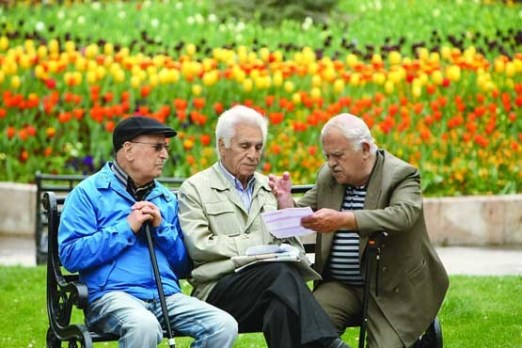
Will the aging tsunami sweep Iran?

aging tsunami sweep Iran

On August 25, Iranian Students’ News Agency (ISNA) quoted deputy director for rehabilitation at the Iranian Welfare Organization Dr. Yahya Sokhangooei as saying that the country’s population is aging and plans need to be worked out to prevent problems down the line. The following is an excerpt of the report the news agency filed on the welfare official’s remarks:

Given that the country is heading toward an aging generation, Dr. Sokhangooei called on all those over 60 years of age to gradually visit welfare centers in order to help the organization gather information on the elderly population and size up their needs.

Pointing out that day- and night-care welfare facilities offer services to 23,000 elderly people, he said, “Our society is aging and in the absence of adequate plans, the country’s healthcare system will be overwhelmed by the tsunami of aging.”

Over the course of such visits if a senior citizen is diagnosed with an ailment, a panel of doctors will meet to identify his/her needs. He went on to say, “Of course, many elderly people can be given a clean bill of health. However, there are some who might need medical care and equipment such as hearing aid, wheelchair, and so forth.

We are seeking to identify the health problems of senior citizens based on statistics and piece together future policy, he said, concluding with updated figures concerning the elderly at our disposal, we will be able to provide budget for our future policies and make predictions about their probable needs.

Iran warns of humanitarian crisis in Iraq’s Amerli

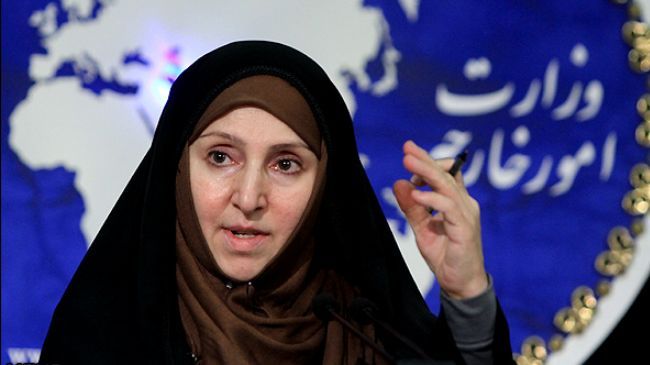
Ms. Marzieh Afkham

Iran has warned of a humanitarian catastrophe in the northern Iraqi town of Amerli and the killing of civilians at the hands of terrorists, urging swift international action to help people caught in the area besieged by Takfiri ISIL militants.

Iran’s Foreign Ministry Spokeswoman Marzieh Afkham on Tuesday praised the resistance of people in Amerli, which is now in its third month, in the face of ISIL terrorists despite a lack of arms and food.

The residents of this small Shia Turkmen community about 180 km north of Baghdad have been living under siege for more than two months.

Afkham criticized the double-standards of Western countries, particularly the US, in dealing with terrorism and humanitarian issues.

“At a time when Western media have admitted that death has cast its shadow on residents in this region of Iraq’s Salahuddin Province, no measure has been taken to lift the siege on civilians and transfer them to safe havens,” the Iranian Foreign Ministry spokeswoman said.

She urged international circles, particularly the United Nations, and other relief and humanitarian organizations to take prompt action to help women, children and the elderly in Amerli and to provide them with humanitarian aid.

The spokesperson also voiced Iran’s firm support for the Iraqi government and army in their fight against terrorism and said Tehran is prepared to dispatch humanitarian assistance to people in Amerli.

Afkham’s remarks came as Iraqi Prime Minister-designate Haider al-Abadi promised aid for the town and urged the army to send fresh troops and logistical support to Amerli.


Iran: Victory of Palestinians Result of Firm Resistance

“This victory showed again that the only way to restore the rights of the Palestinian people is emphasizing on the line of resistance against the expansionism of the Zionist regime, and that occupiers and usurpers of the Palestinian nation’s rights didn’t and won’t have any choice but to admit defeat in their confrontation against such a strong morale and faith,” the statement said on Wednesday.

The foreign ministry underscored Iran’s continued support for the resistance of the Palestinian people, and expressed its condolences and sympathy for the bereaved families of the Palestinians martyred and injured in the Zionist regime’s recent attacks on Gaza Strip.

“The Islamic Republic of Iran believes that this victory is a prelude and harbinger of the eventual freedom of all the occupied territories, including the holy Quds, from the hands of the Zionist occupiers,” the statement concluded.

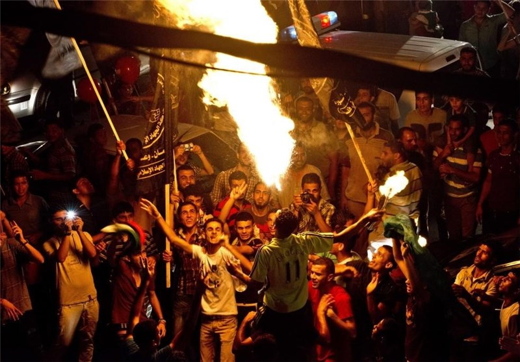
Joyous Palestinians streamed into the streets of Gaza and celebrated victory after seven weeks of resistance against the Israeli offensive.

On Tuesday, Palestinian groups and Egyptian mediators confirmed that the Cairo-based talks ended in truce.

Palestinian and Egyptian officials said the deal calls for an indefinite halt to the war, the immediate opening of Gaza’s blockaded crossings with Israel and Egypt and a widening of the territory’s fishing zone in the Mediterranean.

Under a second stage of the truce that would begin a month later, Israel and the Palestinians would discuss the construction of a Gaza sea port and Israel’s release of Hamas prisoners in the occupied West Bank.

After the ceasefire began, crowds and traffic filled the Gaza streets. Car horns blared and recorded chants praising God sounded from mosque loudspeakers.

“Today we declare the victory of the resistance, today we declare the victory of Gaza,” Hamas Spokesman Sami Abu Zuhri said.

The Iranian officials, including President Hassan Rouhani, have also earlier hailed the Palestinian people in Gaza for keeping their spirits high despite the Zionist regime’s aggression, and said this is while the Israelis are feeling growing fear of the resistance forces’ attacks.

Addressing a gathering of clerics in Tehran late July, President Rouhani referred to the fear felt by the Zionist regime of the Palestinians’ attacks, and said during the last days of war Tel Aviv has come under the Gazans’ missile attacks for the first time, Ben Gurion airport has been closed and over 4 millions of Israelis went to the basements for the first time to save themselves from the Palestinians’ missile attacks.

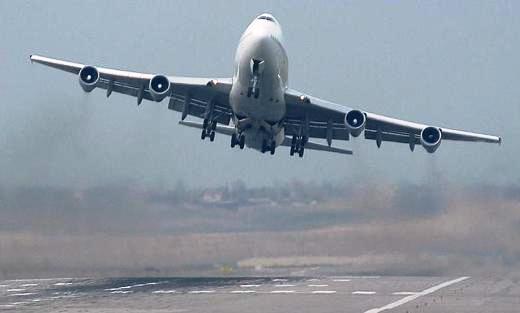
Hamas’s hitting of Ben Gurion airport made air carriers in the United States and Europe halt flights to Tel Aviv after warnings from governmental agencies concerned about passenger safety.

“The carriers are making the right call,” said Robert Mann, an airline consultant in Port Washington, New York, at the time. “They are ultimately legally responsible for their operations and thus, they have to be at least as cautious and in many cases more cautious than any guideline that they are given.”

The Israeli officials, including Prime Minister Netanyahu, called for US airlines to resume flights to Israel.

But a senior Obama administration official said, “We’re not going to overrule the FAA, period… when a rocket lands a mile from that airport, that kind of trips their wire.”

Strictly speaking Ben Gurion airport, near Tel Aviv, belongs to the Palestinians anyway. It was formerly Lydda airport; and Lydda, a major town in its own right during the British mandate, was designated Palestinian in the 1947 UN Partition. In July 1948 Israeli terrorist troops seized Lydda, shot up the town and drove out the population as part of their ethnic cleansing program. In the process they massacred 426 men, women, and children. 176 of them were slaughtered in the town’s main mosque.

More than 2,150 Palestinians, including around 570 children, have been killed since Israel launched its onslaught on Gaza on July 8. Some 11,100 others have been wounded.

The United Nations says over 80 percent of the killed Palestinians have been civilians.

Air accidents in the court of public opinion

Iran planes
Iran planes

On August 24, Iran, a Tehran-based daily, ran an op-ed dubbed “Air accidents in the court of public opinion” in which director of Iran Flight Association Mehdi Iranmanesh analyzed the attitude of members of the public toward the aviation industry. He also shed light on measures that can be taken by Non-Governmental Organizations to reclaim the lost public trust in the industry. The following is a translation of his thoughts on the matter:

It seems that a public perception has been already formed when it comes to air accidents, and people are under the impression that air travel is equal to accident and possible loss of life. Wide circulation of satirical text messages about air crashes and individual comments coupled with rumors are the result of a climate of distrust in the aviation industry.

It is worth noting that in terms of severity and extent of damage, air accidents have caused Iran’s civil society irreparable damage in recent years. Among other things, public doubt over air travel, distrust in flight crew, underappreciation of the tireless efforts of pilots, aircraft engineers, flight attendants, aircraft maintenance technicians, control tower experts, airport staff members and other aviation experts are striking examples of such profound distrust in the industry.

In light of the distrust hanging over the industry, however, one can claim that the services presented by Iran’s aviation society in recent years at a time when the country has been under unfair Western sanctions have been unrivalled and unique.

The Civil Aviation Organization and NGOs can play a noticeable role in efforts to win back the lost trust in the industry. Unfortunately, the Civil Aviation Organization has failed to present the public with enoughand adequate information. In other words, it has appeared weak when it comes to dissemination of information.

NGOs should hold different meetings and lend support to the aviation industry in order to give reassurances to the public. The following measures could improve the image the public has in mind about the aviation industry:

  1. NGOs can raise public awareness about public legal rights as far as air travel is concerned.
  2. NGOs should seek transparency when information about air accidents is released by state organizations and also demand further clarification about precautionary measures to stop similar accidents in the future.
  3. They should also fight for civil and social rights of aviation experts, and victims of air accidents, including flight crew as well as anyone who is injured, through legal means.
  4. They can finally study the impact of unfair sanctions on the aviation industry and try to elaborate on what unfolds in the aftermath of an air accident in Iranian families and then inform the countries who claim to be human rights advocates of the destructive effects of sanctions on Iranian people and flight crew in a bid to have the sanctions lifted.

Palestinians Joy as Israel Agrees Gaza Truce

Palestian is happy
Palestian is happy

The Palestinian president, Mahmoud Abbas, said on Tuesday from the occupied West Bank that a formula had been accepted by all parties and that a ceasefire had gone into effect at 1600 GMT.

He hailed the agreement as a chance to “build a new nation and end the occupation”, before thanking Egypt, Qatar and the US for their roles in brokering the agreement made during indirect talks in Cairo.

Hamas’s exiled deputy leader, Moussa Abu Marzouk, said the agreement was a “victory for the resistance”.

Crowds took to the bombed-out streets of Gaza to celebrate the end of hostilities. Many used the v-sign to signify Palestinian victory over Israel.

Al Jazeera’s Andrew Simmons, reporting from Gaza, said that the deal agreed an immediate easing of Israel’s blockade of crossings into Gaza, and a gradual lifting of restrictions on fishing off the coast of the strip.

“The embargo will be lifted and the five border posts will see considerable changes, with the Rafah border crossing opening,” he said in reference to the crossing between Egypt and Gaza.

Discussions on the creation of a seaport and airport will take place in a month, when indirect talks betwen Israel and Palestinians are scheduled to resume.

A total of 2,142 people, most of them civilians including more than 490 children, have been killed in Gaza since war broke out on July 8. A total of 69 people have been killed on the Israeli side, nearly all of them soldiers.


Int’l Ebola response ‘dangerously inadequate’

Ebola
Ebola

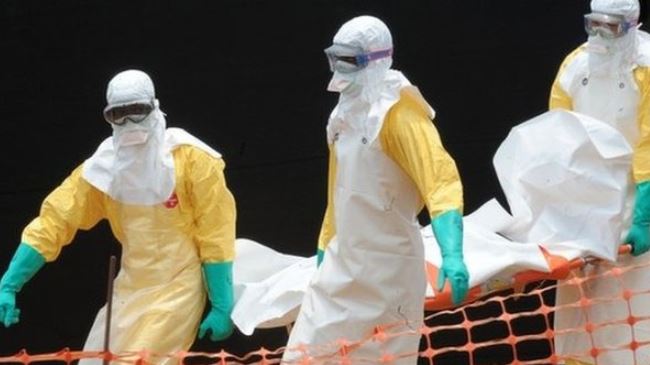
Nurse Anja Wolz, the emergency coordinator for the group, wrote in the New England Journal of Medicine on Wednesday that while the Ebola outbreak has been out of control for months, it has taken the international health community a long time to react.

“The current international Ebola response remains dangerously inadequate,” she said, warning that the situation is more than an Ebola outbreak and that the humanitarian crisis is getting worse every day.

Meanwhile, the United Nations (UN) health agency the World Health Organization (WHO) confirmed the death of Ebola doctor Sahr Rogers, who was infected with the deadly virus while working in a clinic in Sierra Leone.

The WHO also said a Senegalese epidemiologist was airlifted this week to Germany for treatment. The infected doctor reportedly received treatment in a Hamburg hospital on Wednesday.

More than 1,400 people across Sierra Leone, Guinea, Liberia and Nigeria have been killed in the world’s deadliest Ebola outbreak in history, with the number of infection cases now standing at over 26,000.

Ebola is a form of hemorrhagic fever whose symptoms are diarrhea, vomiting and bleeding. The virus spreads through direct contact with infected blood, feces or sweat. It can also be spread through sexual contact or the unprotected handling of contaminated corpses.

Ebola remains one of the world’s most virulent diseases, which kills between 25 to 90 percent of those who contract the virus.


Barzani hails Iran’s support for Iraqi Kurds in fighting ISIL

Iran Zarif and Barzani

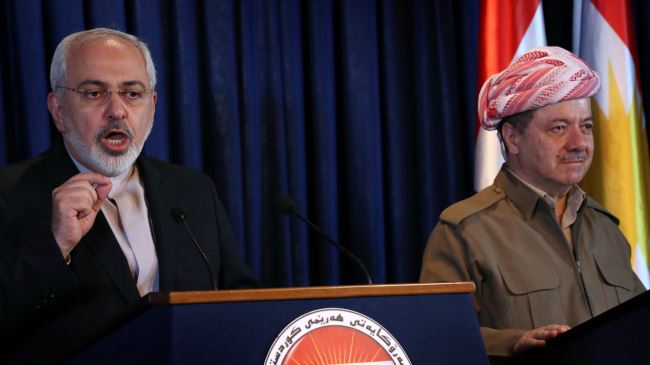
Speaking in a joint press conference with Iran’s Foreign Minister Mohammad Javad Zarif on Tuesday, Barzani added that Iran was the first country that supplied the Kurdish forces with arms and helped them fight ISIL terrorists.

He emphasized that Iraqi Kurds would never forget Tehran’s support that came at a crucial timing without any expectation for reciprocation.

Barzani also underlined the need to continue fighting ISIL terrorists and said the final defeat of these Takfiri militants is only possible through a joint effort on the part of all regional countries.

The Iranian foreign minister, for his part, said fighting the ISIL Takfiri militants is a comprehensive campaign that must be pushed ahead until a crushing defeat is inflicted on the terrorists.

“The ISIL is not an enemy only to Kurds, Arabs and Shia [Muslims] but is the enemy of all of us in the region,” Zarif said.

The Iranian foreign minister described ISIL as an “international threat” and added, “We call for unity and the establishment of security and stability in Iraq because we regard this country’s security as our own security.”

He threw Iran’s weight behind any agreement between Kurdistan Regional Government and Baghdad’s central government, hoping that formation of a “broad-based government” would settle all problems in Iraq.

Zarif, however, made it clear that Tehran has not sent any troops into Iraq, saying Iran believes that Iraq has no need to military aid.

The Iranian foreign minister arrived in Iraq’s semi-autonomous Kurdistan region on Tuesday for the second leg of his two-day visit to the Arab country.

The visit came as Iraq has faced turmoil caused by the ISIL in the north and west since early June. The crisis deteriorated in recent weeks, as the militants swept over new towns in the north, forcing members of the minorities out of their homes.

The ISIL terrorists have threatened all communities, including Shias, Sunnis, Kurds, Christians, Izadi Kurds and others, as they continue their atrocities in Iraq.