Monday, December 22, 2025
Home Blog Page 4961

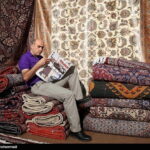
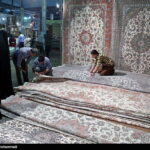
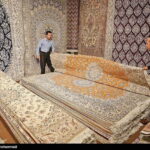
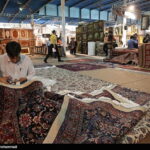
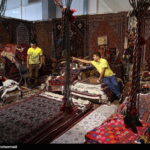
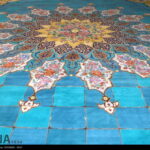
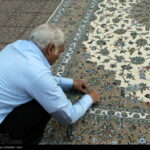
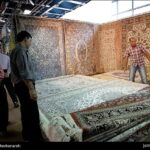
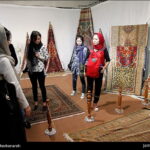
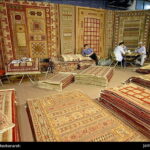
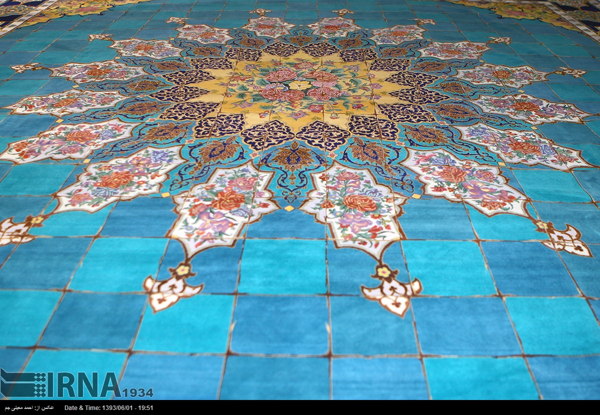
No expense is spared to pitch Iranian carpets internationally

Iranian Carpets-20

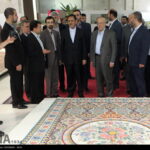
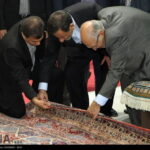
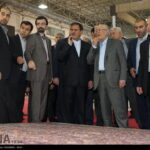
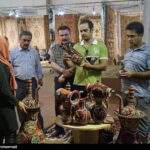
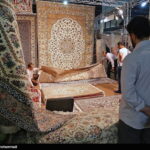
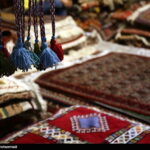
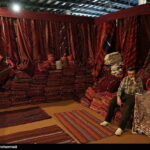
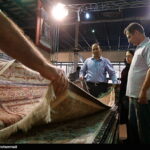
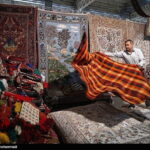
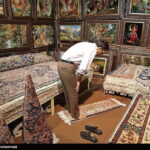
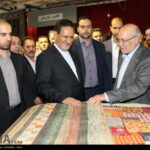
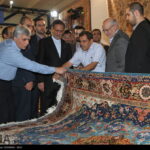
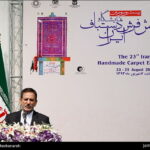
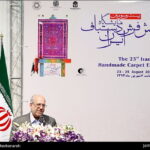
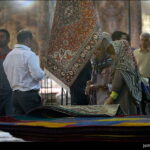
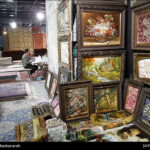
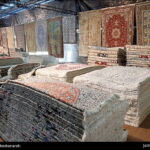
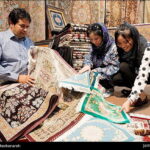
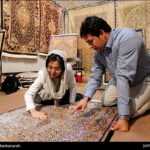
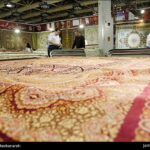
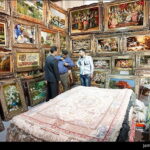
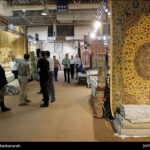
On August 24, a report in Asia, a Tehran-based daily, took a brief look at the stature of Iranian carpets on the international stage. Since a week-long hand-woven carpet exhibition opened on August 23, the paper found it suited to publish the comments of some officials including First Vice President Eshagh Jahangiri, Minister of Industry, Mine and Trade Mohammad Reza Nematzadeh, and Head of the National Center for Iranian Carpet (NCIC) Hamid Kargar, who delivered speeches on the opening day of the fair. About 120 foreign businessmen and researchers were invited to attend the event. What comes next is a report that the paper carried:

“Iranian carpets bear the huge responsibility of reflecting Iranian culture, civilization, and history, that’s why hurdles in the way of their production and trade need to be cleared,” said the vice president on the opening day of the exhibition, hailing carpets as a commodity that throws the economy a lifeline when non-oil revenues drop.

Taking a swipe at the lackluster performance of those who advertise hand-woven carpets on international broadcasting networks, the minister of industry, mine and trade told a large number of Iranian carpet producers and foreign businessmen in attendance, “This ministry stands ready to allocate the budget necessary to introduce and promote Iranian carpets. With government backing, the extensive promotion of hand-woven carpets across the world can see better days.”

Stressing the fact that creativity and innovation should not take a toll on the originality of Iranian carpets, he added: “In markets abroad, hand-woven carpets made in other countries are passed off as Iranian with the label of “The Islamic Republic of Iran” thanks to our highly-accredited carpets. It seems that we need to preserve our exemplary record. The government vigorously supports extensive TV advertisements aboard, especially in Europe. Unlike us, some companies trumpet their tiniest products. Anyway, as for carpet advertisement, there is a void in international TV networks that needs to be filled.”

Later the head of NCIC said: “The National Center for Iranian Carpet cannot afford to introduce and pitch Iranian carpets thanks to its limited budget, that’s why the ministry should attach special attention to the industry. As a result of sanctions, over the past four years, Iranian carpets have been banned from the American market and consequently, Iranian producers and tens of thousands of carpet weavers have taken an additional hit. I hope that the thaw in Iran’s political relations on the international front will make up for such losses.”

Hamid Kargar further stated: “One-on-one talks with foreign hand-woven carpet businessmen during the exhibition can help overseas trade boom and offer an opportunity to reach out to wholesale buyers.”

Special carpet trade training workshops covering topics such as electronic commerce, International Trade Law, transport, insurance, systems of purchase and storage, and techniques of trade negotiations are among other programs of the event, he concluded.


Sanctions oppression, aggression against Iran

Iran-Hassan Rouhani
Iran-Hassan Rouhani

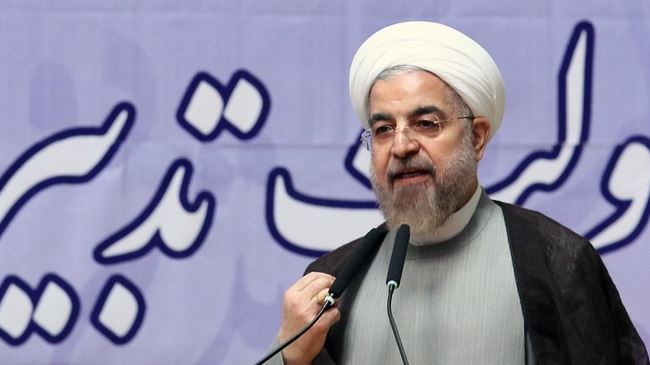
“Sanctions are oppression and infringement upon a nation’s rights and we must stand up to them and keep aggressors on the back foot,” Rouhani said on Saturday.

He added that despite the existence and continuation of sanctions, his administration has managed to carry out its tasks over the past year.

The Iranian president voiced his support for the nuclear negotiating team, stressing that Tehran would not waste time in its negotiations with the P5+1 countries and would put all its efforts and power into the path of nuclear talks.

“This does not mean that we have been scared of sanctions or will be scared. This does not mean that we cannot live with sanctions,” Rouhani stated.

He said efforts should be made to keep anti-Iran sanctions from continuing.

Rouhani’s remarks come a day after the US imposed sanctions on over 25 Iranian individuals and companies, including shipping firms, oil companies, airlines and six banks.

This is while Iran and the five permanent members of the UN Security Council – Russia, China, France, Britain and the US — plus Germany are in talks to reach a final agreement aimed at resolving the standoff over Tehran’s civilian nuclear work.

The two sides signed a historic interim deal in Geneva last November. The agreement entered into force on January 20 and expired six months later. In July, Tehran and the six states agreed to extend their discussions until November 24 in a bid to work out a final accord.

The new US sanctions violate the terms of the Geneva deal.


Iranian carpet-weaver replaces loom with canvas

By Monavar Ramezani
By Monavar Ramezani

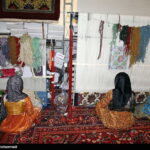
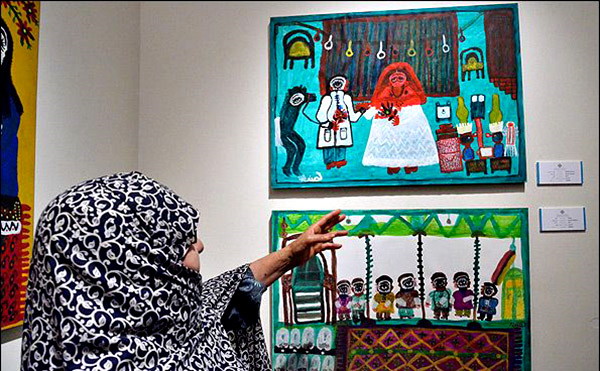
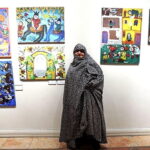
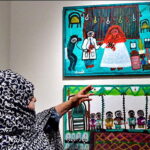
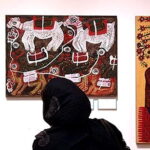
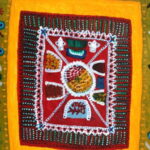
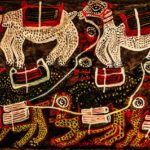
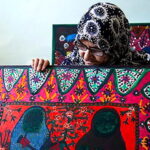
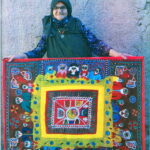
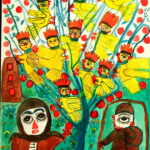
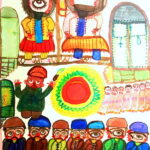
Application of varied colors and perfect juxtaposition of them are the standout features of the paintings by Monavar Ramezani, also known as Naneh Hassan. Inspired by Mother Nature and the designs of Persian rugs, these paintings take you by surprise because you don’t expect a self-taught painter to be so good at putting the brush to canvas. A career in weaving carpets that spans almost 70 years should be partly credited for the delicate designs and perfect choice of colors in her works.

According to a 280th issue of Tandis Biweekly which appeared on newsstands in mid-August Ramezani, whose failing eyesight has forced her to quit weaving, put her paintings on display at an exhibitionin Tehran. The photo gallery below features some of her paintings:


Paintings that are a nostalgia trip for many Iranians

Hossein Soltani-paint-peyan-1

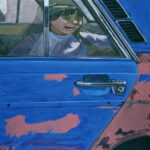
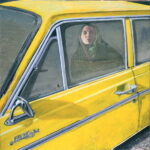
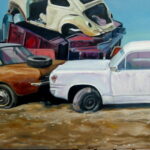
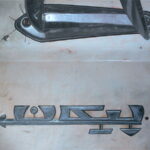
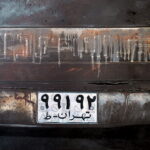
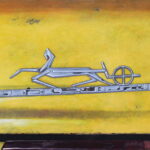
Paykan, which means arrow in Persian, was an automobile produced by the Iranian carmaker Iran Khodro Industrial Group. The design of the car, which was very popular in Iran from the late 1960s to the late 90s, was based on the 1967 Hillman Hunter originally manufactured by the British Rootes Group. Less than a decade after the production of Paykan came to a halt the sight of the car, which was once referred to as the “Iranian chariot”, makes many people feel nostalgic.

A 280th issue of Tandis Biweekly out in mid-August featured an interview with a painter Paykan has been a fixture of every painting of his. Hossein Soltani, 36, says he is inspired by the paintings of English painter John Salt. The photo gallery below features some of Soltani’s paintings:


US imposes more sanctions on Iranian individuals, companies

US-Treasury Department

The Treasury Department said on Friday that the sanctions’ targets include shipping firms, oil companies, airlines and six Iranian banks.

The Treasury Department also blatantly accused the Iranian businesses and individuals of ‘supporting terrorism’ and trying to evade previous sanctions.

Despite the additional measures, the White House National Security Council (NSC) on Friday reaffirmed Washington’s commitment to working with the five permanent members of the UN Security Council – the United States, France, Britain, Russia and China – plus Germany in seeking a comprehensive deal with Tehran over its nuclear energy program.

“Just as we announced these measures and continue to enforce pre-existing sanctions on Iran, the United States remains committed to working with our P5+1 partners toward a long-term, comprehensive solution that provides confidence that Iran’s nuclear program is exclusively peaceful,” said Caitlin Hayden, the NSC spokeswoman.

The new sanctions come as Iran and the five permanent members of the UN Security Council plus Germany are in talks to reach a final agreement aimed at resolving the standoff over Tehran’s civilian nuclear work.

The two sides signed a historic interim deal in Geneva last November. The agreement entered into force on January 20 and expired six months later. In July, Tehran and the six states agreed to extend their discussions until November 24 in a bid to work out a final accord.

Iran has previously slammed similar sanctions stating that the measures are contrary to the spirit of ongoing negotiations.

Tehran calls anti-Iran sanctions illegal and wants them to be lifted as part of a final nuclear agreement.


Sanctions will fail to stop Iran nuclear energy program: Zarif

Mohammad Javad Zarif

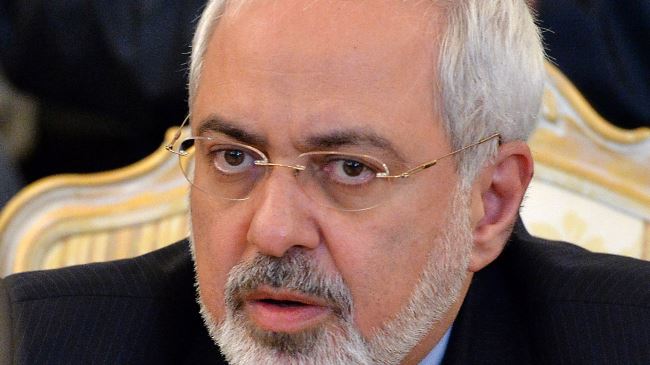
“We believe that sanctions can never yield results because sanctions are an illegal strategy to exert pressure and implement bullying policies, which contradict the international law,” Mohammad Javad Zarif said in a joint press conference with Russia’s Foreign Minister Sergei Lavrov in the Russian capital, Moscow, on Friday.

The Iranian foreign minister added that Iran’s negotiations with the five permanent members of the UN Security Council – Russia, China, France, Britain and the United States – plus Germany are aimed at resolving any ambiguity about the Iranian nuclear energy program.

In July, Tehran and the six states agreed to extend negotiations until November 24 after they failed to reach common ground on a number of key issues.

Zarif further described the “illegal” sanctions against Tehran as “fruitless” and added, “We had 200 centrifuges before sanctions but we currently have 20,000 centrifuges.”

The illegal US-engineered sanctions on Iran have been imposed based on the unfounded accusation that Tehran is pursuing non-civilian objectives in its nuclear energy program.

Iran rejects the allegation, arguing that as a committed signatory to the Non-Proliferation Treaty (NPT) and a member of the International Atomic Energy Agency (IAEA), it has the right to use nuclear technology for peaceful purposes.

Zarif also said sanctions may exert pressure on people, but the people of Iran and Russia would never give up on their rights under such pressure.

The European Union has imposed sanctions against Russia as well as pro-Russia figures after Ukraine’s then autonomous region of Crimea voted in a referendum to re-join the Russian Federation in March.

IRGC chief says Iran will continue to support Palestinian resistance

IRGC - Jafari
IRGC - Jafari

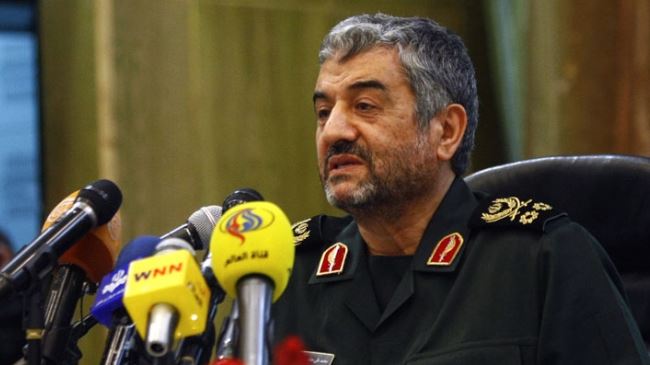
Major General Mohammad Ali Jafari said in a message on Friday that resistance by the Palestinians in the face of the 51-day Israeli military aggression against the besieged Gaza Strip was the starting point for the collapse of the Zionist regime.

The Iranian commander also said the “revolutionary people of Iran and the IRGC” will continue to provide “defense and social” support to the Palestinians.

Elsewhere in his message, Jafari said the Palestinians’ defense infrastructure has to be strengthened as much as possible in the occupied West Bank, adding, “You (Palestinian resistance fighters) should increase the volume, range and precision of your missiles.”

The remarks come after Palestinian resistance groups and Israeli officials reached an agreement on a permanent ceasefire for the besieged Gaza Strip on August 26.

The Israeli regime launched a military campaign against Gaza in early July and later expanded its operation with a ground invasion.

More than 2,130 Palestinians were killed in the Israeli onslaught on the Gaza Strip. Some 11,000 others were wounded.
Hamas Political Bureau chief, Khaled Meshaal, has flatly rejected any attempts to disarm the Palestinian resistance movement.

“The weapons of the resistance are sacred and we will not accept that they be on the agenda” of future talks with the Tel Aviv regime, Meshaal said at a press conference on Thursday.


Iran test-fires indigenous missile system

Iran-Commander Farzad Esmaili

Commander of Iran’s Khatam al-Anbiya Air Defense Base Brigadier General Farzad Esmaili announced on Thursday that Talaash 3, which has a range of more than 200 kilometers, had successfully been put to test and would be unveiled on September 22.

The country’s air defense range will be expanded from 3,600 spots to 5,000 in the near future, added the top Iranian military commander.

On August 24, Iranian Armed Forces unveiled two marine cruise missiles, Ghadir and Nasr-e Basir, as well as two unmanned aerial vehicles, Karrar-4 and Mohajer-4.

During a ceremony attended by Iranian Defense Minister Brigadier General Hossein Dehqan on August 21, Iran also launched production lines for energy density batteries used in the electronic systems of its sea-based, ground-based and air-based missiles.

The production lines will enhance the range and accuracy of the country’s missile systems.

In recent years, Iran has made great achievements in its defense sector and reached self-sufficiency in producing essential military equipment and systems.

Iran has repeatedly assured other countries that its military might poses no threat to other states, insisting that its defense doctrine is entirely based on deterrence.

Enforcers of morality laws on motorbikes need permission to hit the streets

Seyyed Shahabeddin Chavoshi

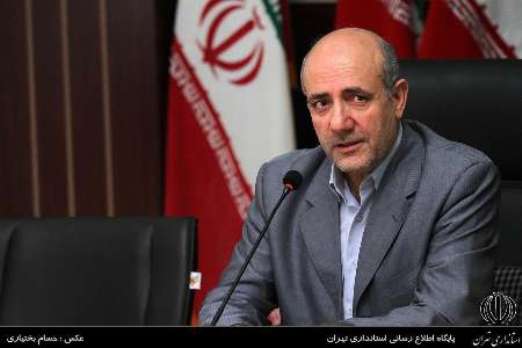
On August 24, Aftab-e Yazd Newspaper quoted Tehran Lieutenant Governor for Sociopolitical Affairs Seyyed Shahabeddin Chavoshi as saying that no one is above the law and all those who live in the Islamic Republic should abide by rules and regulations. Here is the translation of the report the daily ran:

In response to a question on applications for rallies and gatherings in Tehran Province, Chavoshi said over the past 12 months the governor’s office has received 67 such applications, out of which only two that lacked solid justification have been rejected. “It was unclear who was actually going to organize those two events.”
As for a gathering near Fatemi Street [where the Interior Ministry is located] in support of stricter measures to enforce the Islamic dress code, he said, “Social issues such as failure to comply with the Islamic dress code is not the concern of only a few hundred people. We wanted the event to be organized through the Islamic Propagation Coordination Council, but some opted to reject our suggestion.”

over the past 12 months the governor’s office has received 67 such applications, out of which only two that lacked solid justification have been rejected.
He further said, “The cultural and intellectual beliefs of a society should not be spent as political capital by certain groups,” adding one needs to go through proper channels to secure permission for legal gatherings and regulations should be respected by organizers.
Chavoshi went on to say that the Interior Ministry and the Governor’s Office do not take political questions into consideration in granting permission for legal assemblies.

In answer to a question as to whether permission has been issued for petitions by some hardliners to the government to allow unofficial enforcers of morality laws to hit the streets on motorbikes, he said that compliance with law is important and that during the past year the government has managed to contain those who seek to take the implementation of law into their own hands. “Although such defiant behavior still persists, these groups can never bypass the laws.”

He added: “When it comes to implementation of laws, those who feel more responsibility toward society need to secure the government permission to get involved. After all, verbal promotion of virtue and prevention of vice is everyone’s responsibility. But actual enforcement of this Islamic principle falls within the jurisdiction of the government.”

The Lieutenant Governor of Tehran Province stated, “We do not believe in gender-based segregation, but we support the security of women and families at large. We also believe that if there is any such plan it should be implemented only after the consent of women is secured.”

In conclusion, he said, “The proposed gender-based separation of female staff [a reference to plans at Tehran Municipality to separate the workplace of women from that of men] which is tantamount to more respect for women is nothing new and has been in place in government offices for years. It is in effect in the governor’s office too and has been avoided only in areas it has proved impractical. Minimizing contacts between male and female staff is a good thing to do.” […]

Supreme Leader Appreciates Gov’t for Firm Stances on Regional Events

Supreme Leader
Supreme Leader

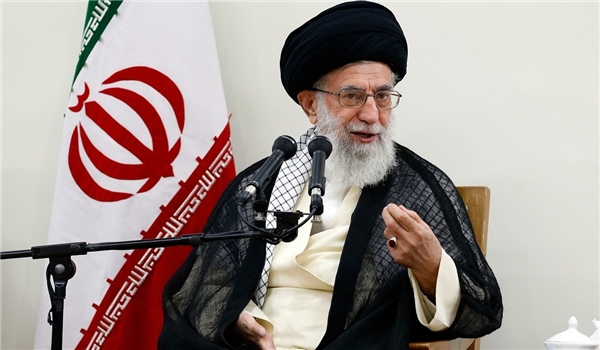
“Explicit and firm stances on issues, including Palestine, the Zionist regime, Gaza, Syria, Iraq, the Takfiris and the US interferences, provide for the Islamic Republic’s interests, while they don’t run counter to the language of diplomacy and negotiation (which is a main feature of Rouhani’s administration),” Ayatollah Khamenei said, addressing a meeting with cabinet ministers on the occasion of the Government Week in Tehran on Wednesday.

He underlined that explicit and transparent positions on the aforementioned issues will protect the Islamic Republic’s essence and strategic background and history among nations.

Elsewhere, Ayatollah Khamenei asked the government to increase efforts to maintain Iran’s rapid scientific growth and support knowledge-based companies and applied and basic research works.

He also thanked the government for the plans and measures it has taken to improve the health and hygiene conditions of the Iranian people.

In a relevant development earlier this month, Iranian ambassadors and diplomats in a statement appreciated Ayatollah Seyed Ali Khamenei, for his wise guidelines and support for the government’s policy of constructive interaction with the world states.

The Iranian foreign ministry and ambassadors in a statement issued after their meeting with Ayatollah Khamenei said that Supreme Leader’s wise and prudent guidelines were undoubtedly helpful and binding for all Iranian diplomats.

It added that Ayatollah Khamenei’s support for the foreign minister, the foreign ministry officials and ambassadors had encouraged them to strongly protect national interests and territorial integrity of the country and to proceed with the government’s policy of constructive interaction with the world.

The Iranian diplomats vowed to act in accordance with the Supreme Leader’s guidelines.